

Two Bottles That Define a Meal
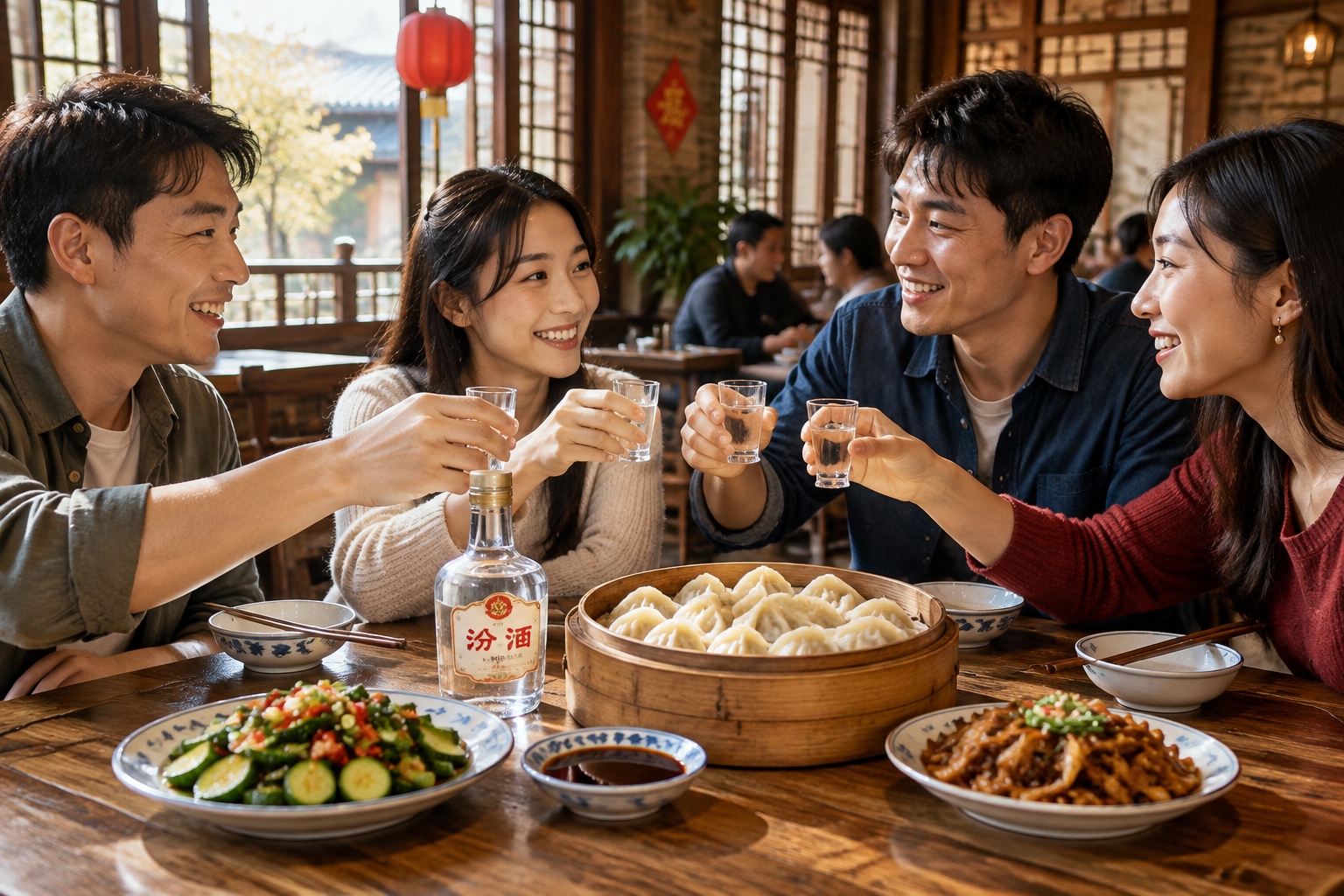
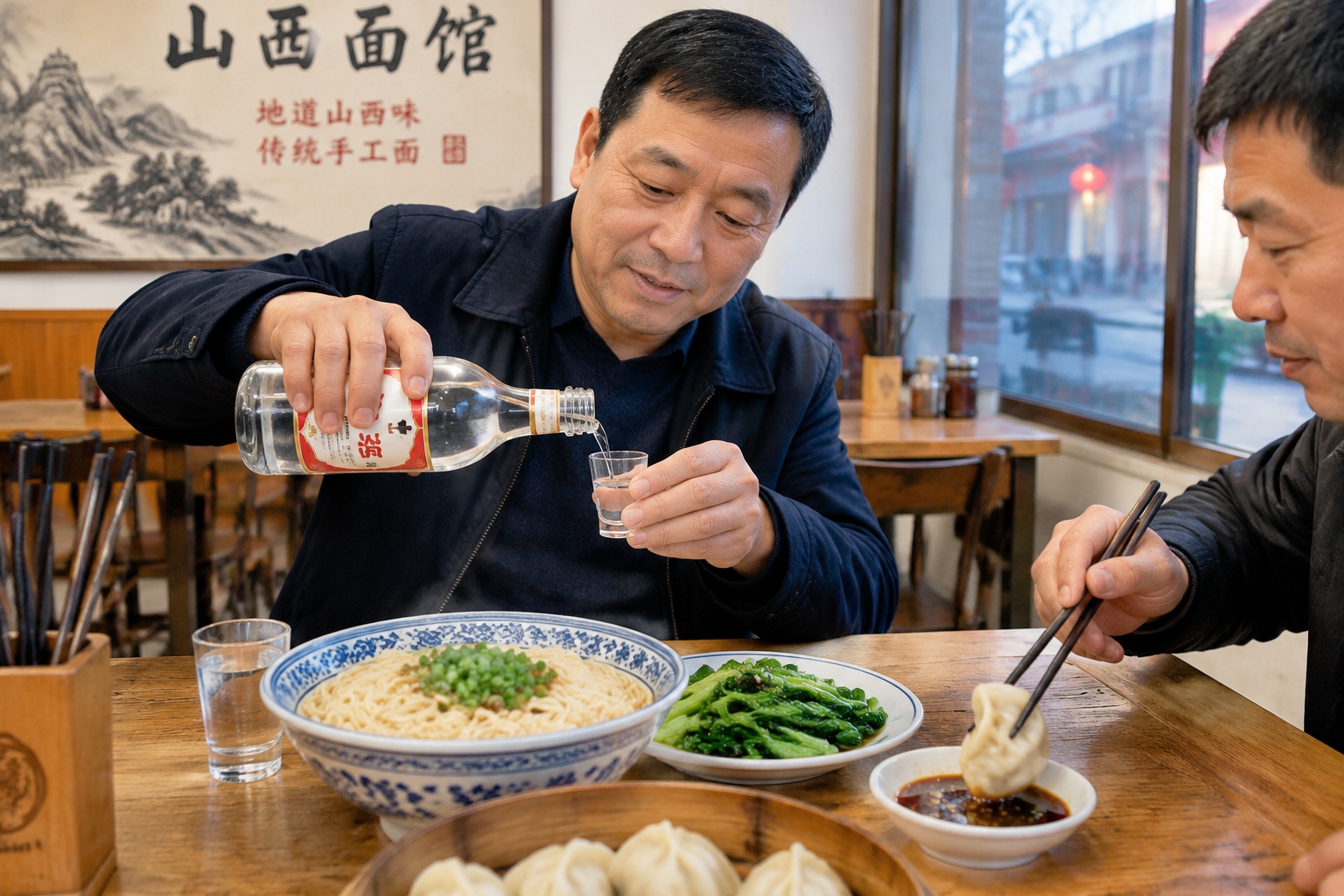
At a small noodle restaurant in Taiyuan, Shanxi’s capital, an ordinary dinner still looks like this: a round table, four small stools, a plate of sliced tomatoes with sugar, another of braised pork, and one bottle of fenjiu in the middle. Someone pours it into small glasses. Then a bowl of hand-pulled noodles arrives; the diner reaches for a bottle of mature Shanxi vinegar and sprinkles the dark liquid over the soup. It’s an almost reflexive gesture. To an outsider, these two bottles may seem like simple condiments. In Shanxi, though, they are local identity in liquid form and, just as importantly, a thriving business story.
The Chinese say a meal in Shanxi without vinegar is like a day without rest, and no celebration in a northern Chinese home feels quite complete without a glass of clear white liquor. That vinegar is usually laochencu (“old mature vinegar” in Chinese), and the liquor is often fenjiu. Both are made in the same province, share a similar philosophy of time and tradition, and both have successfully turned an old craft into a modern commercial legend.
Fenjiu: A Clean Spirit With a Long Memory
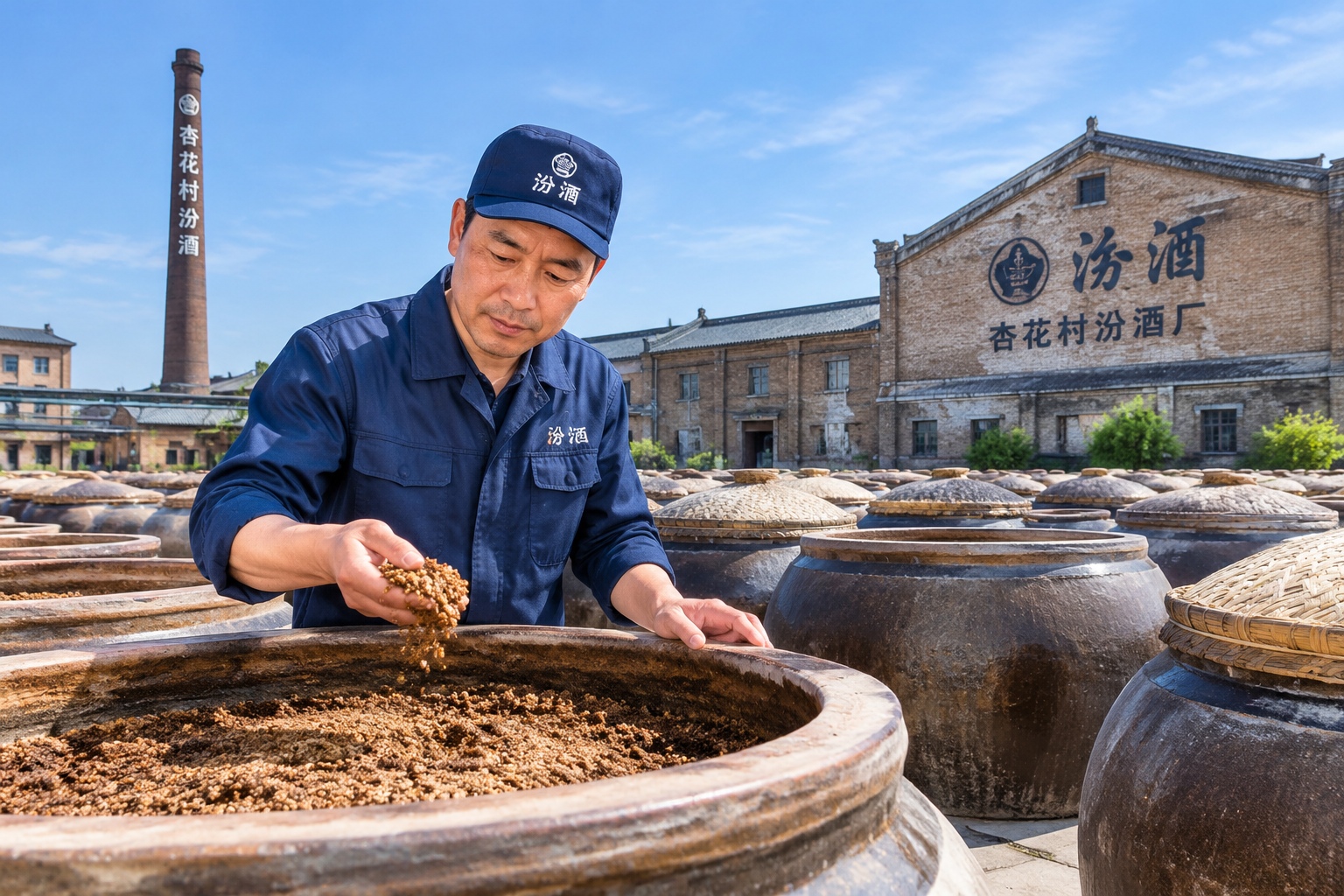
Fenjiu belongs to the light-aroma family of Chinese baijiu. Unlike the heavier, sauce-aroma style of Moutai, Fenjiu is distilled to be pure, sharp and almost floral. It is also one of the oldest named liquors in China. The production area is around Fenyang and Xinghuacun, a town whose name comes from a Tang dynasty poem about a shepherd boy pointing to a small village where an inn sells wine. That image still appears on the label of nearly every bottle.
The modern Fenjiu enterprise was born in the late Qing dynasty and became famous after winning a gold medal at the 1915 Panama–Pacific International Exposition in San Francisco. For decades, it was a symbol of northern hospitality. But as China’s economy opened and consumers grew more eager for prestige, Fenjiu lost ground to the heavy, sweet and more expensive baijiu brands from Guizhou and Sichuan. It was often seen as an old-fashioned drink, the kind your father’s friend would order – not the kind for a young person’s business dinner.
The turnaround was not a single moment but a slow, deliberate repositioning. Shanxi Fenjiu kept using the classic solid-state fermentation process: sorghum steamed and fermented with a starter made from barley and peas, then distilled in clay pots. Instead of chasing trends, the company leaned on its own story. In the last decade, new packaging, smaller bottles, short-video recipes and cocktail-friendly versions helped Fenjiu win back drinkers in their twenties and thirties. Today, the listed company behind Shanxi Fenjiu is one of the major players in China’s baijiu market, and its market value once exceeded four hundred billion yuan. More importantly, it is recognized as the guardian of the light-aroma style, a position that ensures its place at the table.
Shanxi Mature Vinegar: A Tangy Business That Takes Its Time
Now walk into a small supermarket in Taiyuan and you will find an entire shelf of mature vinegar. Some bottles are square, some are round; labels may read Donghu, Shuita, Ninghuafu or Zijiang. But the name that matters is “Shanxi old mature vinegar” (Shanxi laochencu), a geographical indication protected by the Chinese government.
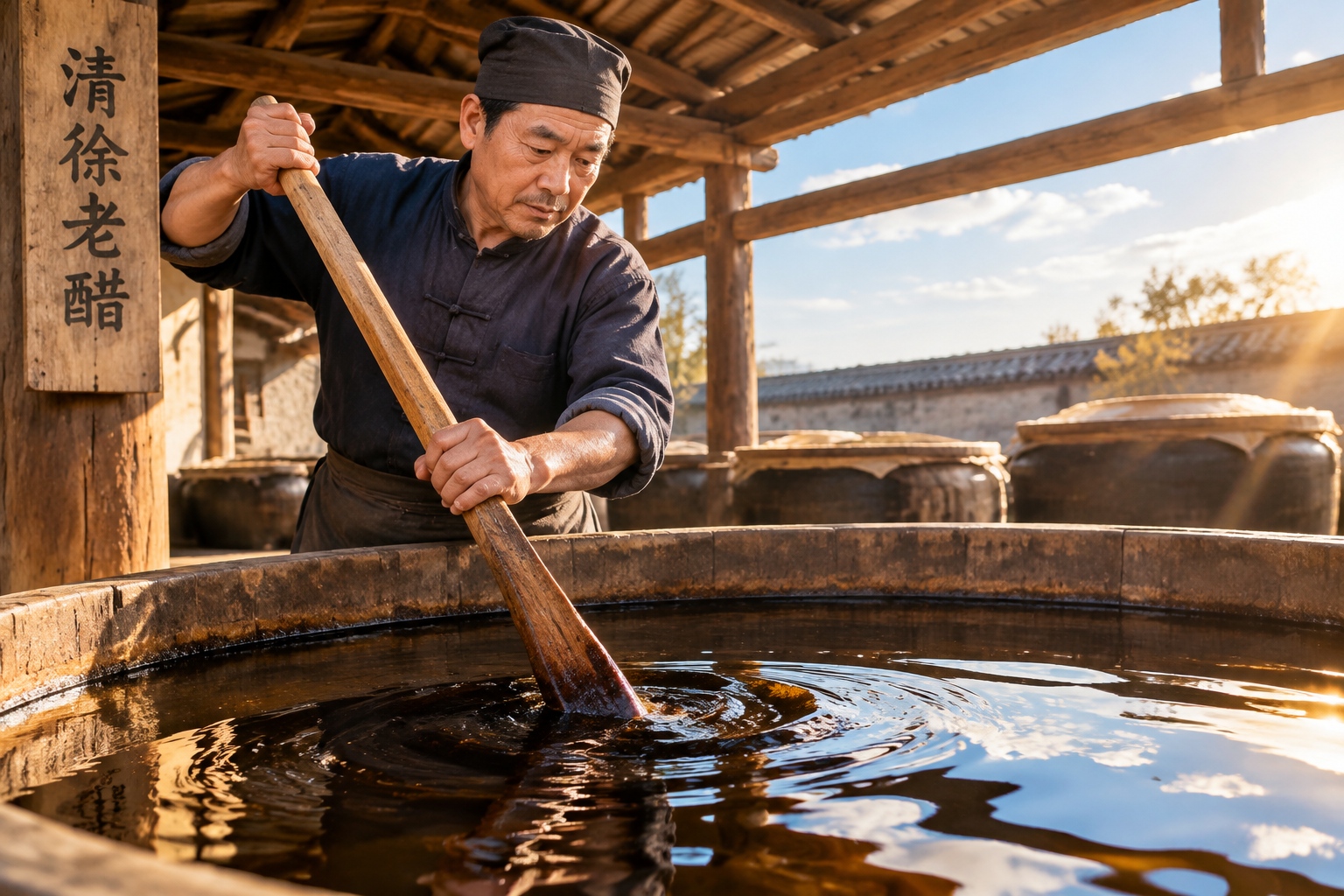
The vinegar starts from sorghum and bran, goes through solid-state fermentation in earthen vats, and then enters a slow aging phase that gives it its dark color and mellow sourness. The traditional process is tied to the seasons. In summer, the vats are left open in the sun to concentrate the flavor; in winter, a layer of ice is removed each morning. Some premium vinegar ages for more than six years. One of the oldest brands, Ninghuafu, has been made for over six hundred years on a site in Taiyuan that still supervises production.
The vinegar business is anything but small. Shanxi’s vinegar industry produces hundreds of thousands of tons every year, and its leading companies have turned a kitchen staple into a gift item. At price points from three yuan to several hundred yuan, there is an audience for every stage of aging. The commercial legend is built on trust: you cannot copy six warm summers and cold winters in a chemical lab without losing the name. That patient equation has made Shanxi mature vinegar one of the most recognizable condiments in China and a growing part of the province’s food exports.
The business is also changing with eaters. In the same way that balsamic vinegar was reimagined as a dessert ingredient in the West, Shanxi vinegar companies have started making vinegar drinks with honey and fruit, vinegar-based sauces for salad, even small single-dose bottles for airline meal trays. These new forms keep the old workshop interesting and give the vinegar brand a way to reach drawers and refrigerators it had never touched before.
The Shared Secret: Time, Place, and Reputation
Why do two very different products – a clear, fiery liquor and dark, sour vinegar – keep appearing side by side in business talks? Because they share the same commercial logic: craft rooted in a specific place, production that cannot be rushed, and a brand built on generations of word-of-mouth.
Shanxi was home to the famous Jin merchants, a group of trading families who dominated Chinese banking and commerce in the Ming and Qing dynasties. Their success was based on contracts, trust and a sharp eye for what would travel. Fenjiu and mature vinegar are the liquid descendants of that spirit. They left Shanxi on the backs of merchants, reached other provinces, and slowly became the measure of a restaurant’s authenticity wherever Shanxi people gather.
Today, both products face the modern temptation to shorten the process. But the ones that succeed in the long run are those that keep the old steps visible. Labels proudly mention “aged in an urn” or “brewed by solid-state fermentation.” Consumers pay a premium for a story they can taste. That’s why a bottle of thirty-year-old mature vinegar can be sold as a valuable gift, and a base-series Fenjiu remains the most honest pour at a wedding banquet.
Legends On A Dinner Table
Back in the small restaurant, the three men are arguing about who should pay the bill. One of them ends the argument by lifting his glass of Fenjiu: “If you still treat me as a Shanxi man, drink this, and let me pay for the dumplings.” His friend takes a sip, then knowingly dips the dumpling into vinegar, and gives a small smile. In that exchange, the two legends live on – as a bottle to negotiate with, a taste to negotiate over, and a flavor that remains untouched by time. It is not the loudest advertising, but it is exactly the kind of enduring business story that a bottle can tell.
Start the discussion at forum.chinacomes.com