

Introduction: A Province You Can Taste
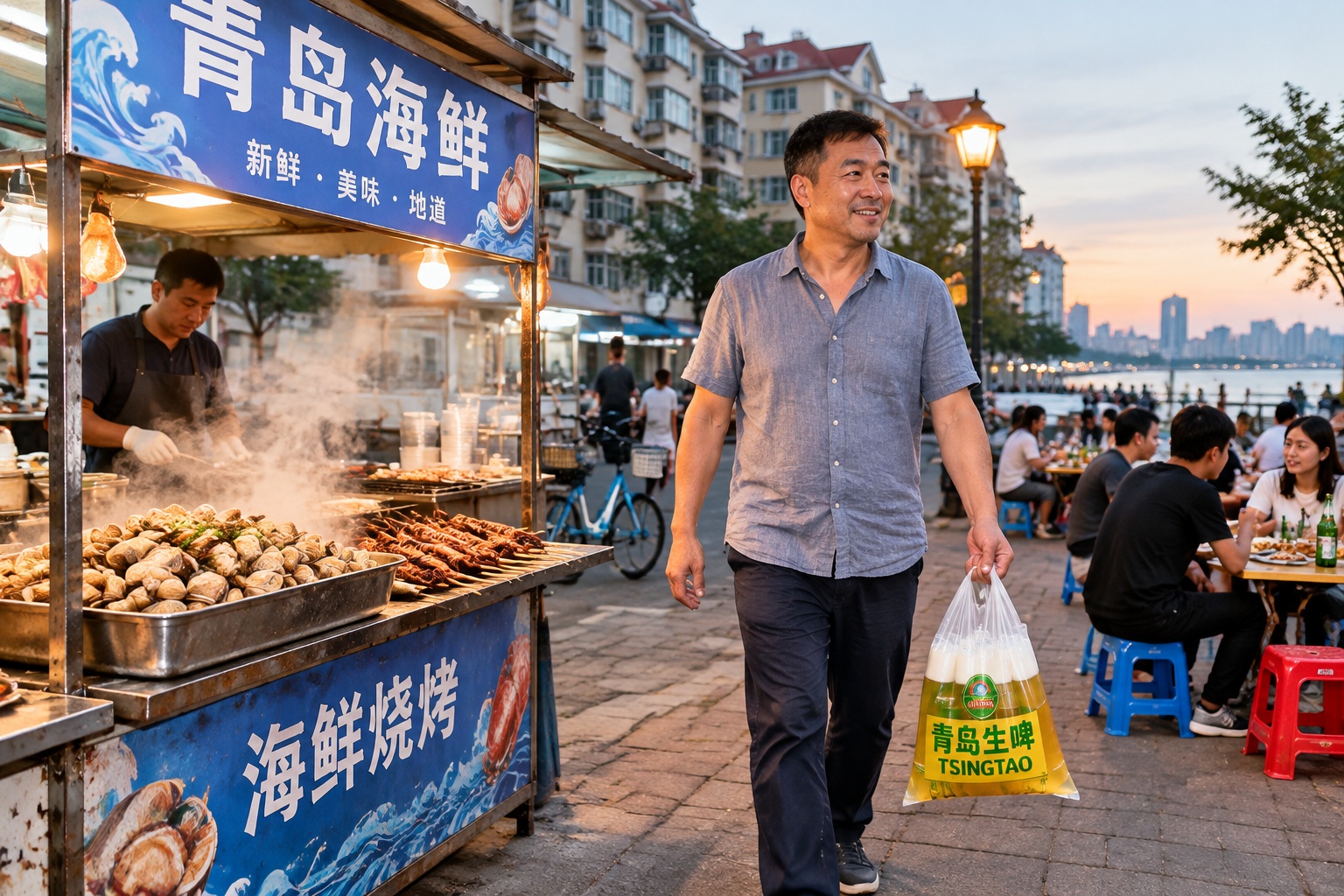
If you want to understand Shandong, don’t start with a map. Start with a plastic bag. In Qingdao, that bag is likely filled with fresh beer, sold straight from a keg at a corner shop. The bag bulges, the liquid sloshes, and the customer walks off to find a seafood stall. This is not a gimmick for tourists. It’s just how things are done.
Shandong sits on China’s east coast, halfway between Beijing and Shanghai. It’s known for Confucius, for its industrial heft, and for a coastline that stretches over 3,000 kilometers. But for the people who live here, the province is defined by simpler things: what’s for breakfast, where to drink after work, and when the tide goes out.
Qingdao: Beer in a Bag and Seafood on the Street
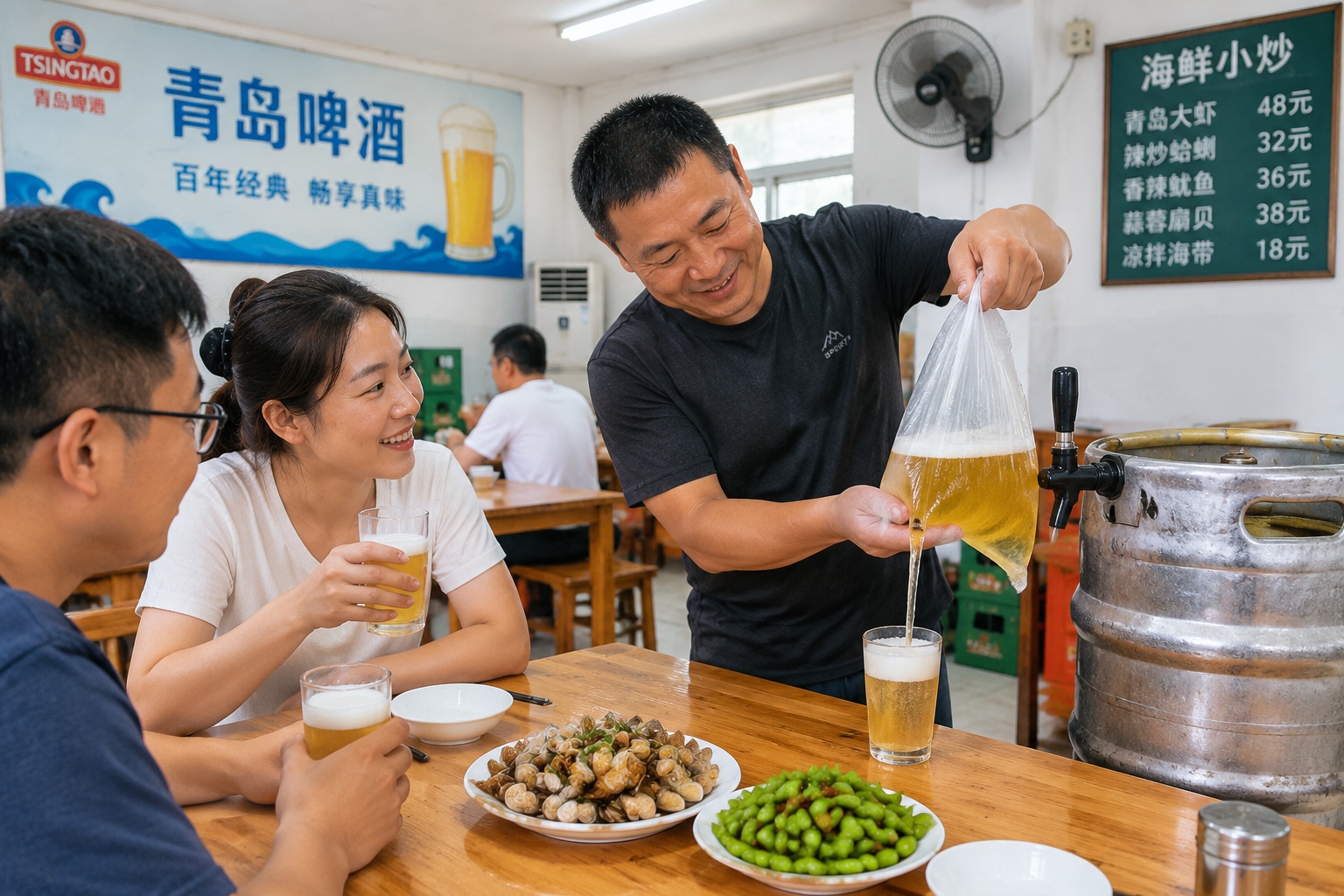
Qingdao is a city that smells like malt and salt. The local brewery, Tsingtao, was founded by German settlers in 1903, and beer is woven into the city’s identity. But the famous beer houses—known as pijiu wu—are not fancy bars. They are small, often cramped, and frequently just a few tables set up on a sidewalk.
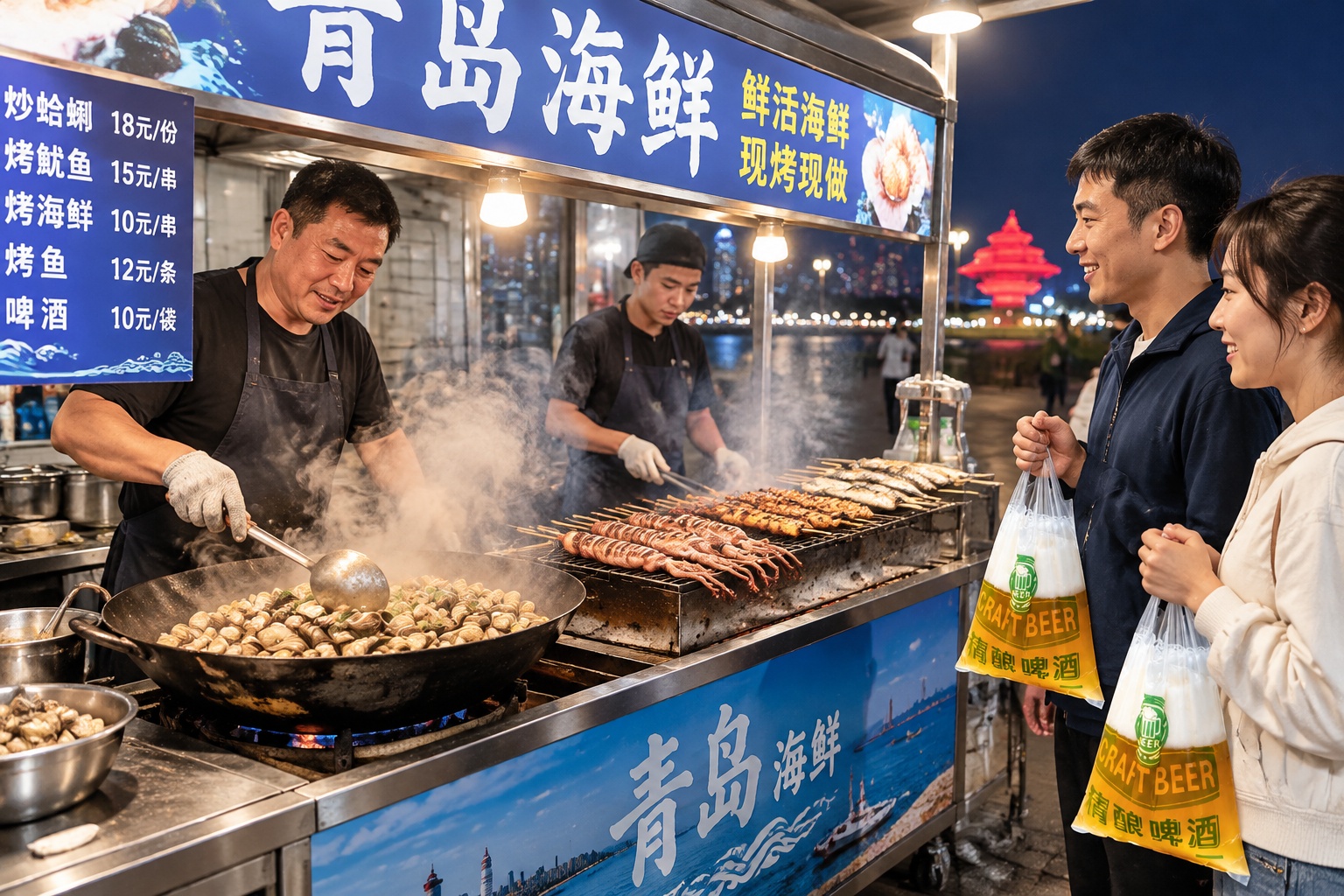
The signature move is the plastic bag. You buy a bag of draft beer, usually for around 10 to 15 yuan (about $1.50 to $2), and carry it to a nearby seafood stall. The stall owner steams clams, grills squid, and cracks open sea urchins. You sit on a plastic stool, pour the beer into a glass, and eat with your hands. Nobody rushes you.
This isn’t a new trend. It’s a working-class tradition that has survived gentrification. In summer, the whole city seems to spill onto the streets after 6 p.m. Families, retirees, and young office workers all mix together. The beer is cheap, the seafood is fresh, and the conversation is loud.
Why Beer Houses Matter
For overseas readers, the closest comparison might be a neighborhood pub in Britain or a beer garden in Germany. But there’s a key difference: in Qingdao, the food is not an afterthought. The seafood is the main event. You don’t order a full meal; you graze. A plate of clams, a few skewers of grilled fish, a bowl of edamame. The beer is the glue that holds the evening together.
It’s also remarkably affordable. A group of four can eat and drink well for under 200 yuan (about $28). That accessibility keeps the culture alive. It’s not a luxury; it’s a nightly ritual.
Jinan: Braised Pork and the Breakfast That Fuels a City
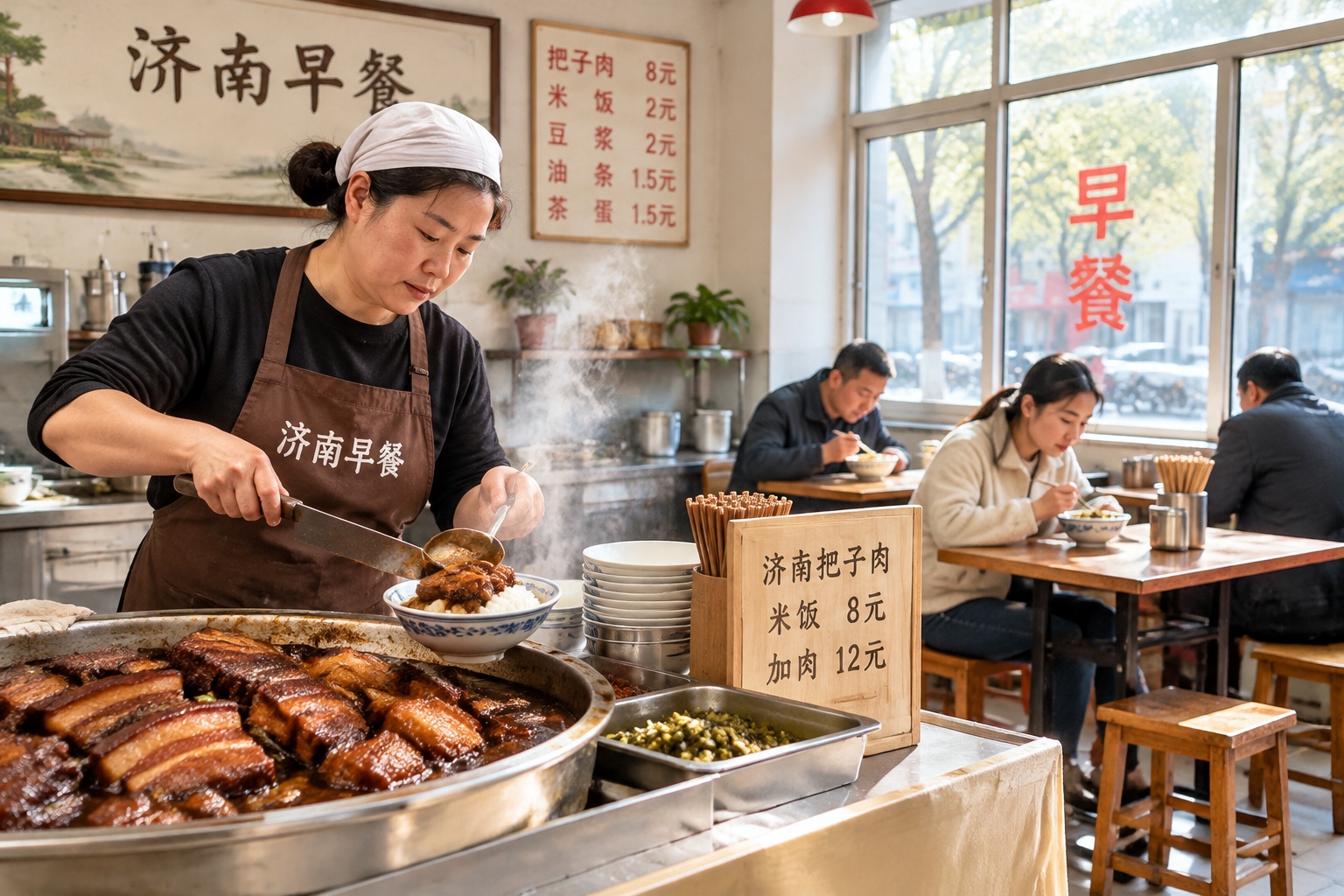
Three hundred kilometers inland, Jinan moves at a different pace. The capital of Shandong is known for its springs, but locals will tell you the real energy comes from breakfast. Specifically, bazirou—braised pork belly served over rice.
The dish is simple: thick slices of pork belly, braised for hours in soy sauce, star anise, and rock sugar until the fat turns translucent. It’s spooned over a bowl of white rice, often with a braised egg or a piece of tofu skin on the side. You eat it at 7 a.m., standing at a counter or sitting on a low stool.
It’s not light. It’s not trendy. But it’s exactly what you want before a long day. The pork is rich and salty, the rice soaks up the sauce, and the whole thing costs about 15 yuan (around $2).
The Rhythm of a Jinan Morning
Walk into any bazirou shop at 7:30 a.m. and you’ll see a cross-section of the city. Taxi drivers eating quickly before their shift. Office workers in suits, scrolling on their phones. Retired men reading newspapers. Nobody is in a hurry, but nobody lingers too long either. The meal is efficient and deeply satisfying.
This is Lu cuisine—one of China’s eight great culinary traditions—in its most democratic form. Lu cuisine is known for its emphasis on broth, its use of vinegar, and its hearty, savory flavors. Bazirou is not a banquet dish, but it carries the same DNA: slow cooking, balanced seasoning, and a respect for pork fat.
Coastal Foraging: The Vanishing Art of Ganhai
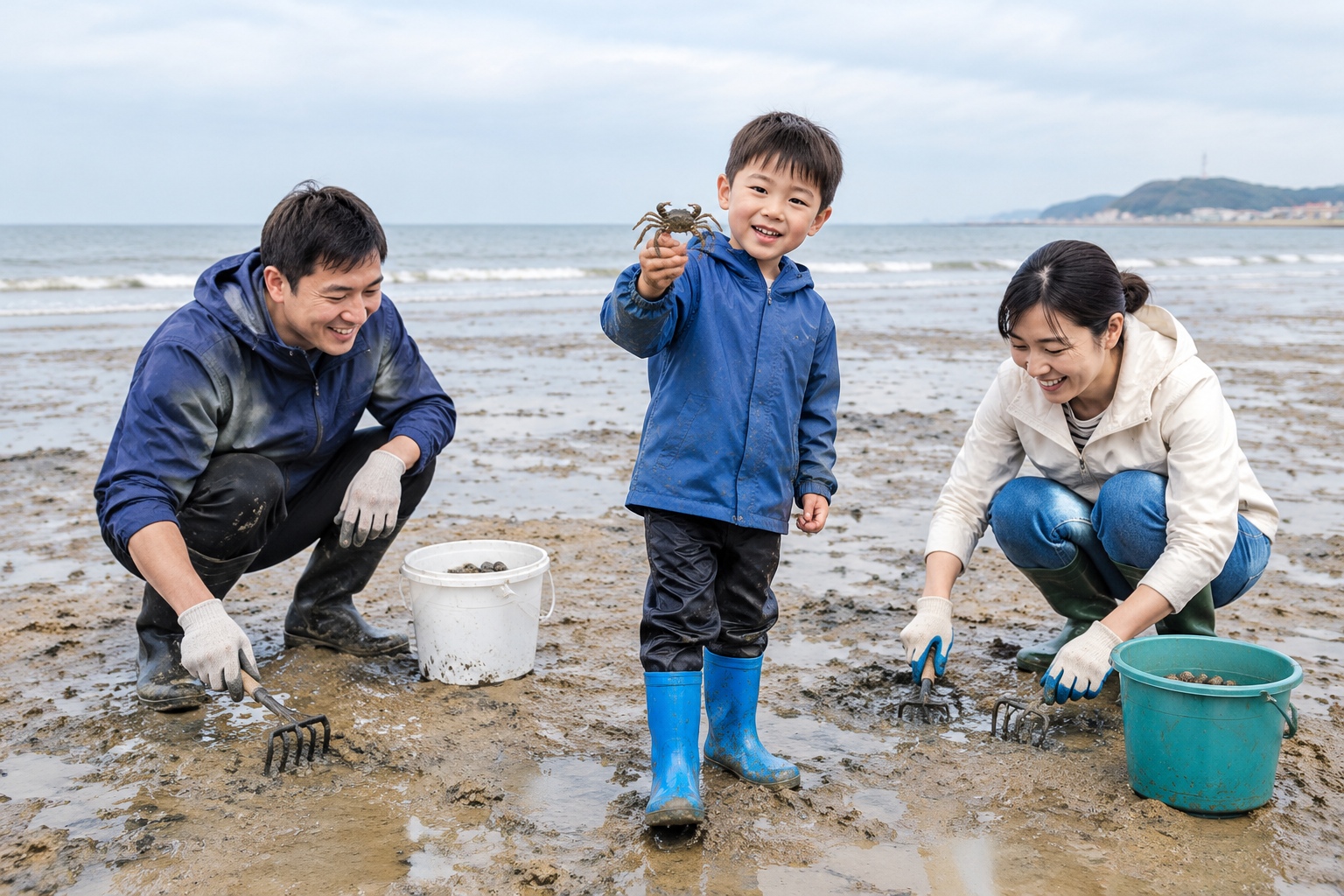
Along the Shandong coast, from Yantai to Weihai to Rizhao, there is a tradition called ganhai—literally “catching the sea.” It happens at low tide, when the water pulls back to reveal rocks, mudflats, and shallow pools. People walk out with buckets, small rakes, and sometimes just their hands.
What are they looking for? Clams buried in the sand. Crabs hiding under rocks. Snails clinging to pilings. Seaweed. Small shrimp. Anything edible and free.
For outsiders, this might sound like a hobby. For many coastal families, it’s a supplement. A bucket of clams can feed a family for a day. A few crabs can be sold at the local market. And for children, it’s a playground.
How Ganhai Works
The timing is everything. You need to know when the tide will be lowest, and you need to move quickly. The window is usually two to three hours. Experienced foragers wear rubber boots and gloves. They carry a small hoe to dig for clams and a net for shrimp.
It’s physical work. You bend, you dig, you sift. But there’s a meditative quality to it. The sound of the waves, the smell of salt, the focus on the task at hand. It’s a way to disconnect from screens and reconnect with the rhythm of the ocean.
In recent years, ganhai has become popular with young people from inland cities. They post videos on Douyin and Xiaohongshu, showing off their catches. But for locals, it’s not a performance. It’s just something you do when the tide is right.
Evening Barbecues and the Generosity of the Coast
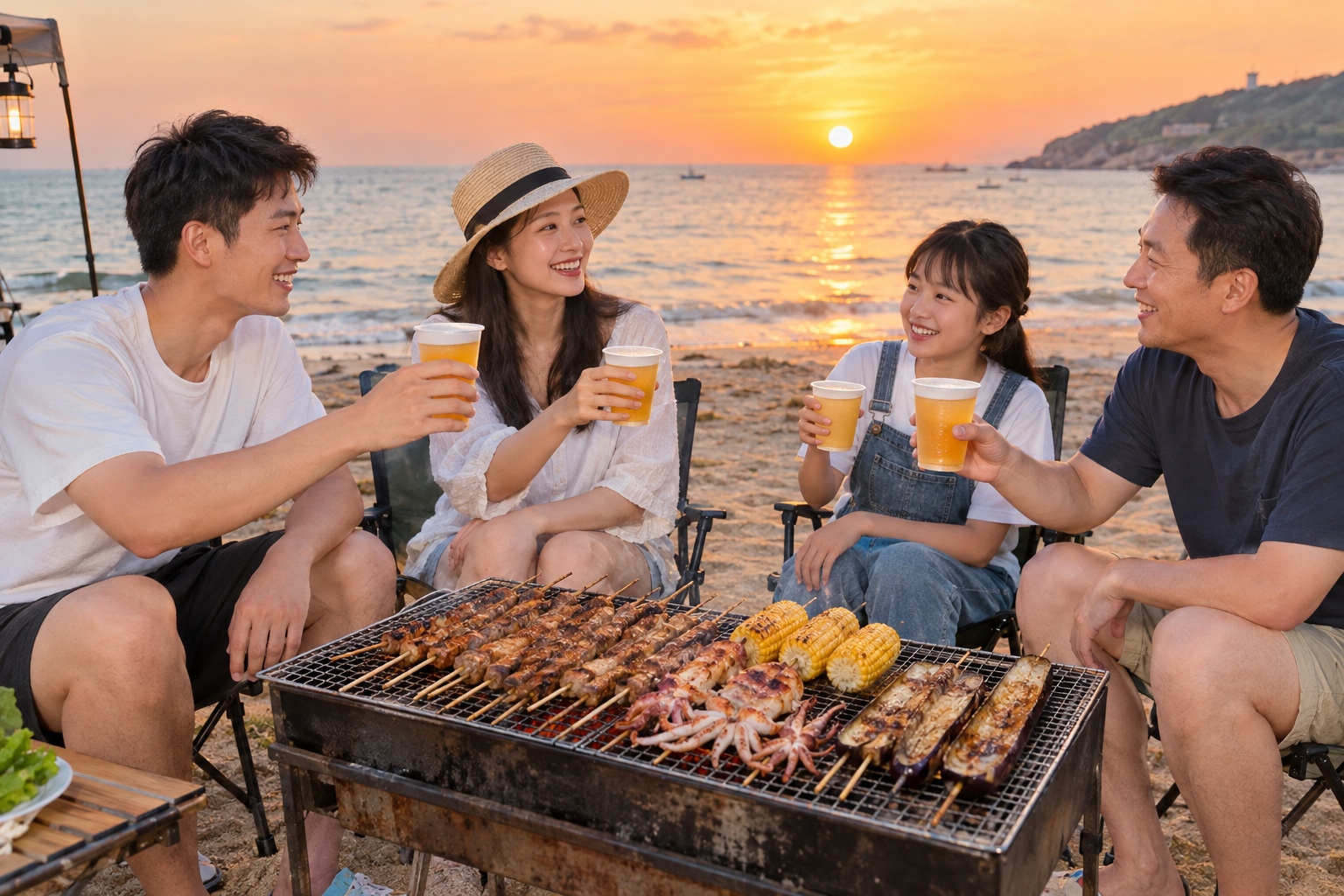
As the sun sets over the Yellow Sea, the coastline fills with smoke. Not from factories, but from charcoal grills. Families and friends gather on the beach or on rooftops near the water. They bring skewers of lamb, fresh squid, corn on the cob, and eggplant. Someone brings a case of beer.
The grilling is communal. Everyone takes a turn. The food is shared. The conversation flows. This is where Shandong’s reputation for being “generous” and “straightforward” comes from. It’s not about grand gestures. It’s about making sure everyone has a skewer and a glass.
A Different Kind of Night Out
Compared to the cocktail bars of Shanghai or the nightclubs of Shenzhen, a Shandong beach barbecue is almost aggressively casual. There’s no dress code. There’s no minimum spend. You can show up in flip-flops and a T-shirt. You can bring your kids or your grandparents.
And that’s the point. Shandong’s food culture isn’t about exclusivity. It’s about inclusion. The beer house, the breakfast stall, the tidal flat, the grill—they all welcome anyone who shows up.
Conclusion: The Pulse of a Province
Shandong doesn’t shout. It doesn’t try to be flashy. But if you pay attention, you’ll notice a rhythm that runs through everything: the morning rush for braised pork, the evening clink of beer glasses, the quiet focus of a forager at low tide.
For overseas readers, the lesson is simple. You don’t need a guidebook to understand a place. You just need to eat where they eat, drink where they drink, and walk where they walk when the water pulls back.

Start the discussion at forum.chinacomes.com