

6:30 a.m. — The First Sound Is a Pigeon Whistle
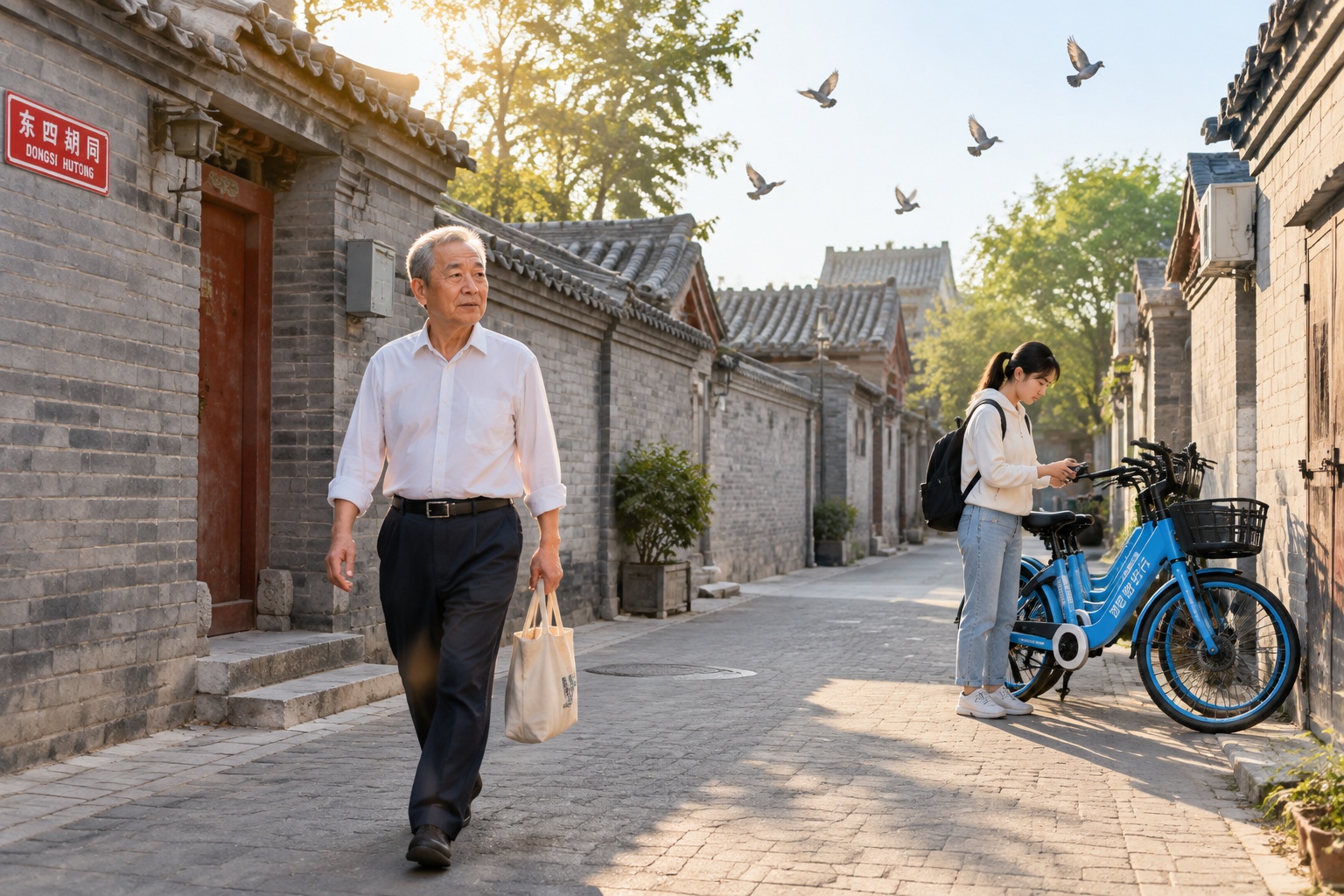
Before the shared bikes appear, before the delivery scooters start their engines, the first sound in Beijing’s Xisi area is a pigeon whistle. It comes from a small wooden box attached to the tail feathers of a flock circling above the gray-tiled rooftops — a high, thin hum that rises and falls with the birds’ flight. For Liu Guodong, 82, it is simply the sound of morning.
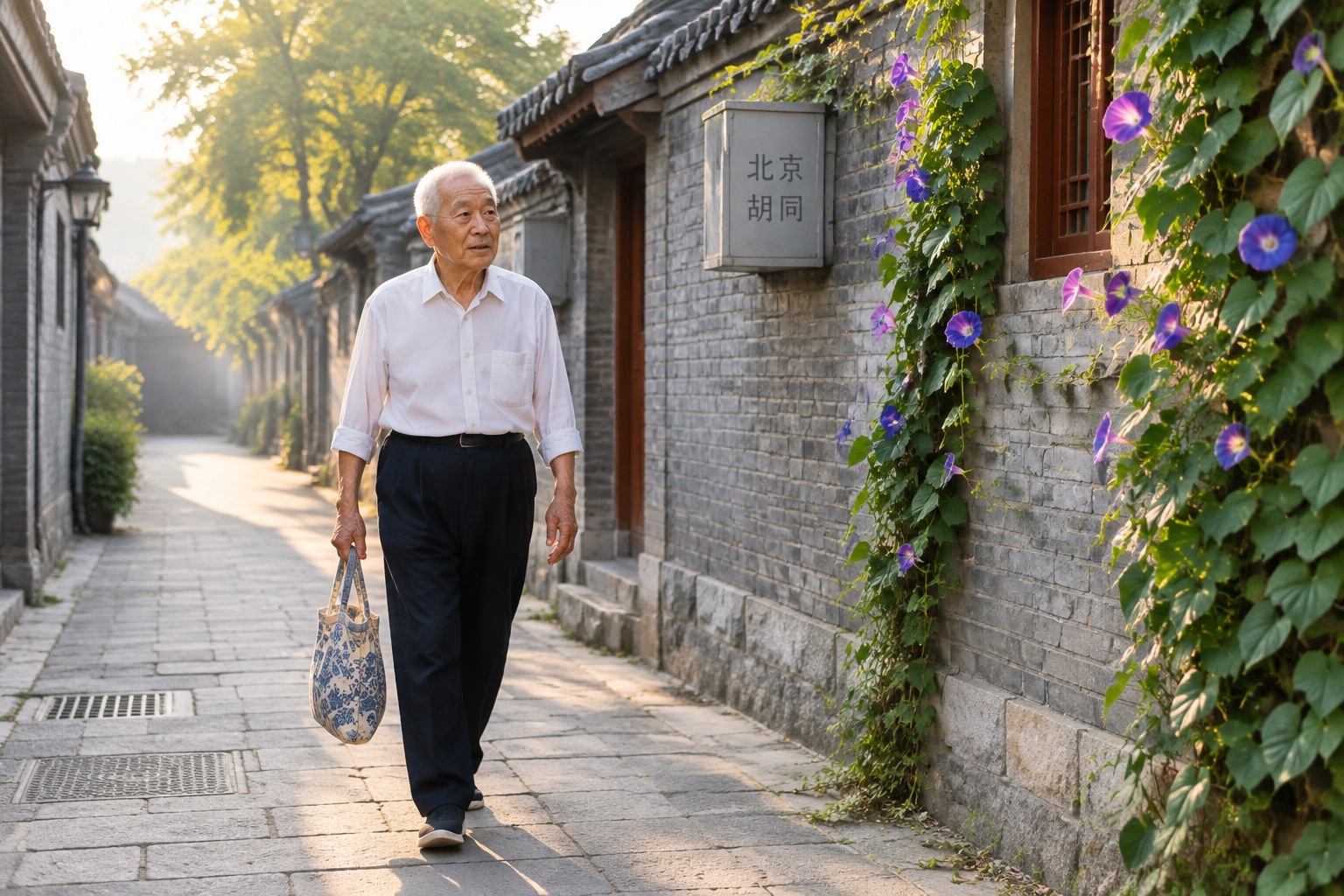
Liu has lived in the same courtyard house for 54 years. At 6:30, he walks out his door with a cloth bag and heads toward the breakfast stall on the main street. His route takes him through a narrow hutong — one of the old alleyway neighborhoods that once defined Beijing’s inner city. The walls are gray brick, the ground is uneven stone, and in summer, morning glories climb the fences.
“The pigeon whistle tells you the wind direction,” Liu says, not slowing down. “If it’s loud, the wind is from the north. If it’s soft, from the south. My father taught me that.”
Soy Milk, Youtiao, and a QR Code
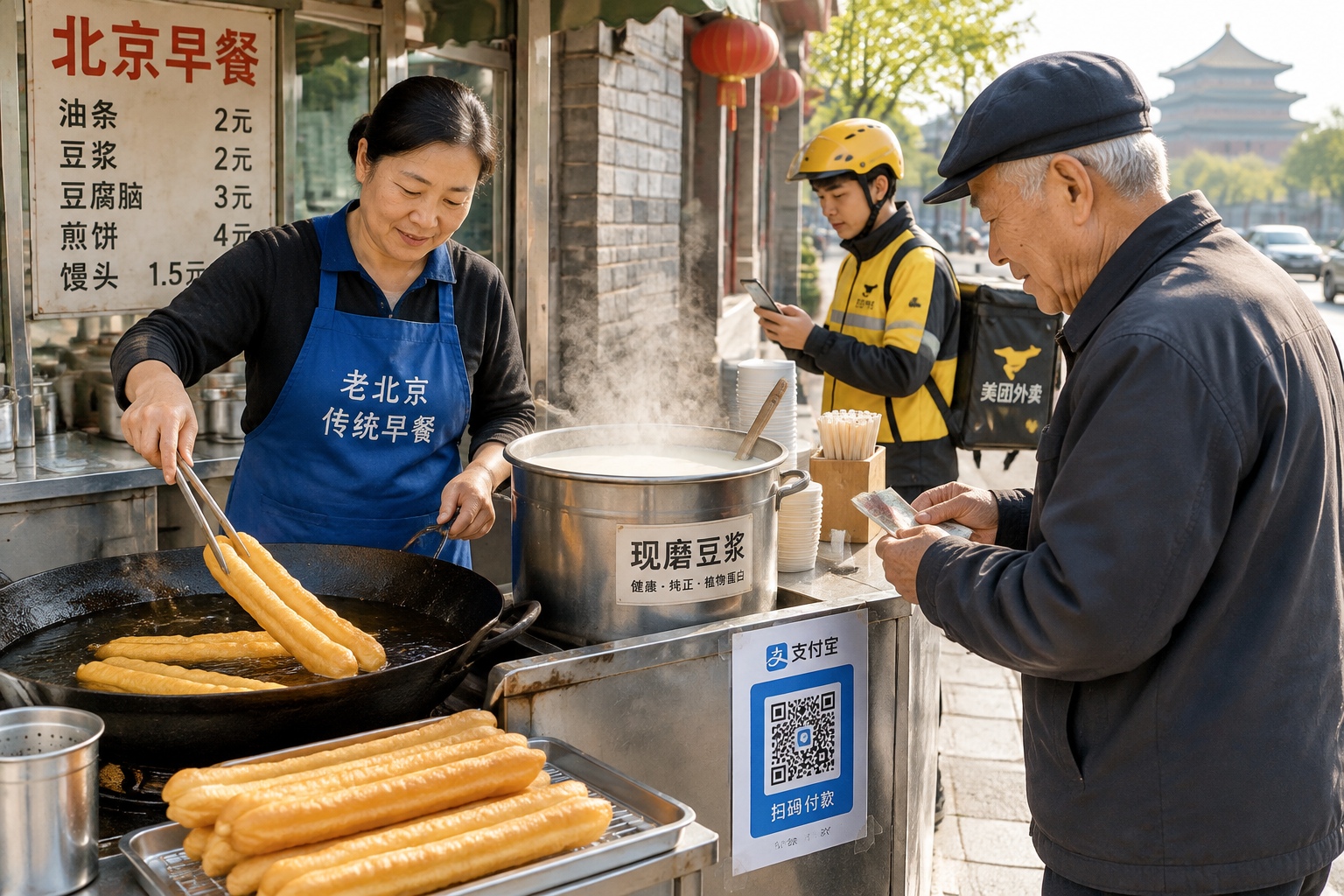
The breakfast stall sits at the mouth of the hutong, where the alley meets the wider street. A woman in a blue apron is lifting golden strips of youtiao — fried dough sticks — out of a wok of hot oil. The smell of soy milk, fresh and slightly sweet, mixes with the oil and the morning air.
Liu orders a bowl of hot soy milk and two youtiao. He pays with a 10-yuan note. Behind him, a young man in a delivery uniform scans a QR code taped to the counter and pays 4.5 yuan for the same thing.
“I still use cash,” Liu says, half smiling. “The young guy told me I should get a phone. I told him I’ve been eating here for 30 years. The soy milk hasn’t changed. Why should I?”
The stall has been run by the same family since 1987. The current owner, a woman in her fifties, says business is good but different. “Before, everyone sat down. Now half of them take it away. They’re in a hurry. But they still come back.”
The Wet Market: Where the Neighborhood Talks
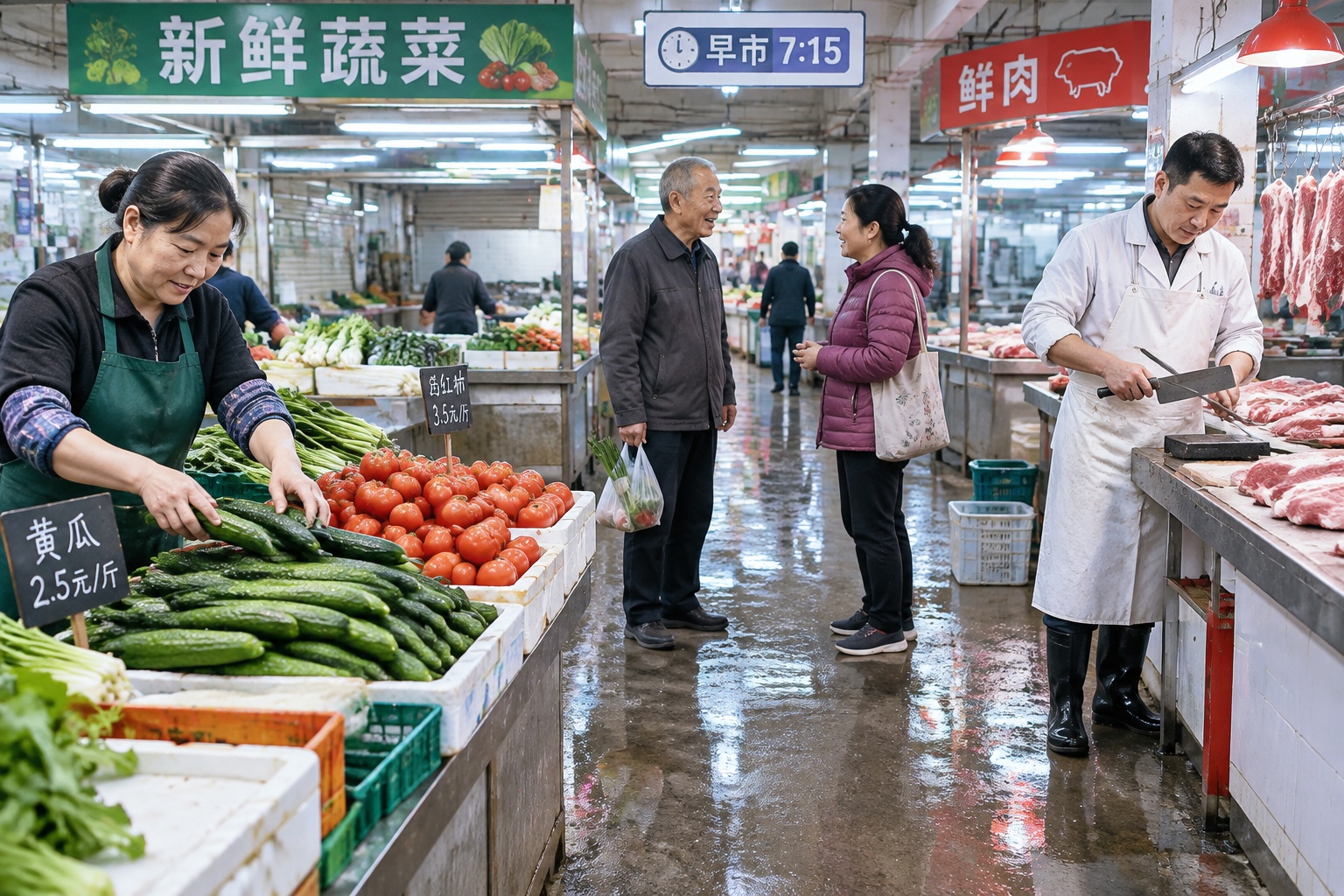
After breakfast, Liu walks to the wet market two blocks away. It is 7:15 a.m., and the market is already busy. Vendors arrange cucumbers and tomatoes in neat rows. A butcher in a white coat sharpens his knife. The floor is wet, the fluorescent lights are bright, and the air smells of cilantro and fish.
Here, Liu meets his neighbor, Zhang Ayi, who is 68. They talk about the price of pork — up slightly this week — and then about the building across the street, which is being renovated into boutique hotels and cafés.
“The rent for a one-bedroom in the hutong is now 6,000 yuan a month,” Zhang says. “When my son was born, it was 200.”
Liu nods. “The young people who move in, they like the old walls. They take photos. They drink coffee. It’s not bad. But they don’t know who lived here before.”
According to Beijing’s urban planning bureau, more than 200 hutongs have been renovated since 2017, with a focus on preserving historic architecture while adding modern plumbing and heating. The goal, officials say, is to keep the neighborhoods alive rather than turn them into museums.
Shared Bikes and the Morning Commute
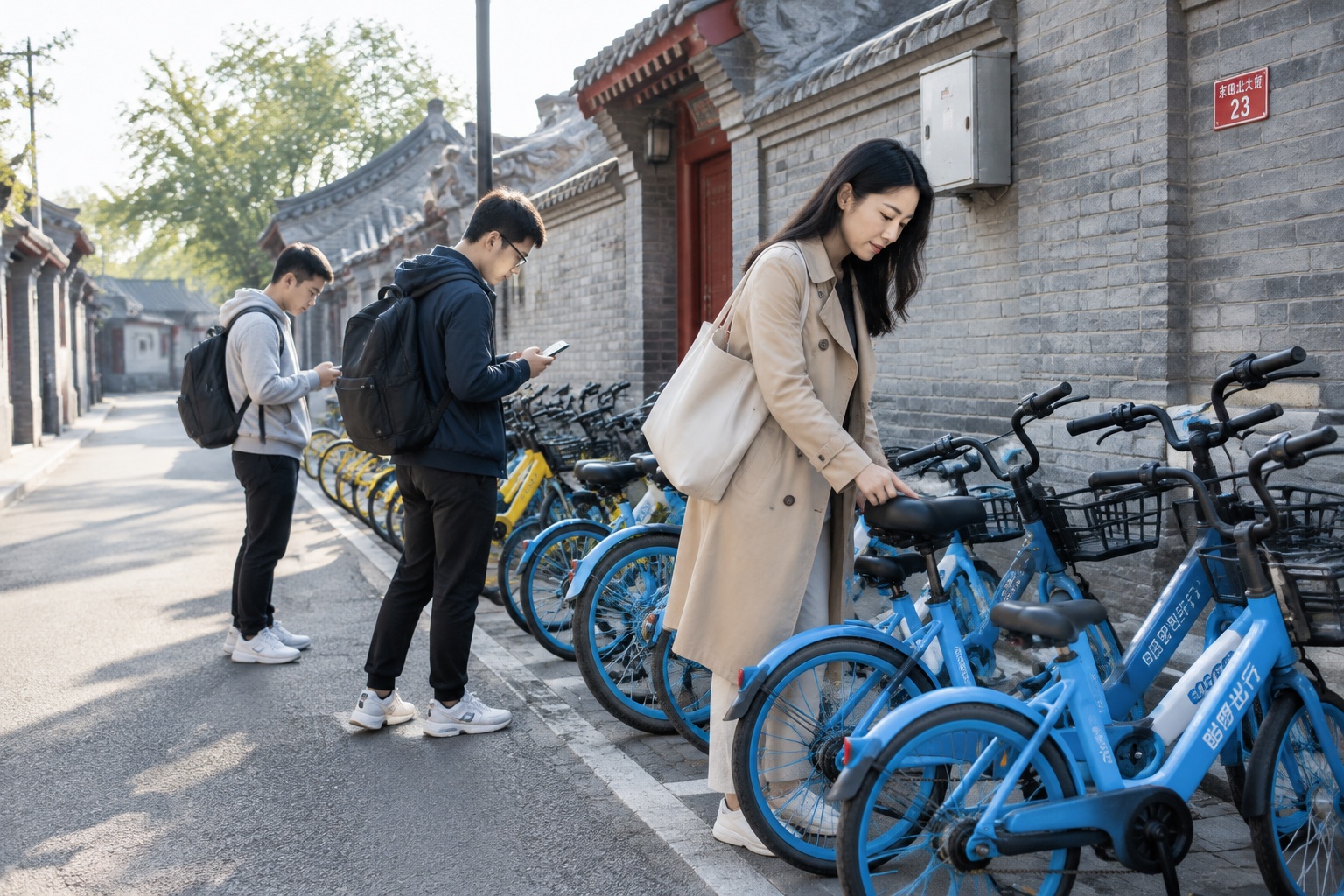
At 7:45, the hutong fills with the sound of bicycle bells. Young office workers in sneakers and backpacks scan shared bikes parked along the curb. A woman in a beige trench coat unlocks a blue bike, adjusts the seat, and rides toward the subway station.
One of them is Li Xuan, 26, who moved into a hutong courtyard three months ago. She pays 4,200 yuan a month for a small room with a shared bathroom. She works at a tech company in Zhongguancun, about 40 minutes away by subway.
“I chose this place because it feels like Beijing,” she says, pushing her bike off the kickstand. “In the apartment blocks, you don’t know your neighbors. Here, the auntie next door gave me dumplings last week. The grandpa across the courtyard told me to close my windows when it rains.”
She pauses. “But the walls are thin. And sometimes the sewage smells. It’s not perfect. But it’s real.”
Shared bikes, introduced in Beijing in 2016, now number over 1.5 million in the city. For many young renters, they are the last mile between the hutong and the subway — a daily bridge between the old city and the new economy.
What Is a Hutong? What Is Douzhi?
For readers outside China, a few terms help make sense of the scene.
Hutong refers to the narrow alleys and courtyard neighborhoods that formed the traditional fabric of Beijing. They date back to the Yuan Dynasty (13th century). A siheyuan is the courtyard house inside a hutong, often shared by multiple families.
Pigeon whistles are small wooden or bamboo devices attached to pigeon tails. When the birds fly, air passes through the whistle, creating a haunting, flute-like sound. Keeping pigeons was once a common hobby in Beijing; today, a few hundred enthusiasts keep the tradition alive.
Douzhi is a fermented mung bean drink, gray-green and famously sour. It is a traditional Beijing breakfast item, often paired with salty fried dough rings. Foreign visitors often find the taste challenging. Liu drinks it every morning. “It wakes you up,” he says.
Evening: Chess at the Hutong Entrance
By 5:30 p.m., the light turns golden. Liu returns to the hutong entrance with a folding chair. Two other men are already there, sitting on wooden stools around a chessboard. The game is xiangqi, Chinese chess. The pieces click against the board. A small crowd gathers — a delivery rider on a break, a woman walking her dog, two children with schoolbags.
Li Xuan walks by with her bike. Liu waves. “You want to play?” he asks.
She laughs. “I don’t know how.”
“Then watch. You’ll learn.”
She parks her bike and sits on a nearby step. The pigeon whistle sounds again overhead. The game continues.
This is the daily rhythm of Beijing’s hutongs — not a museum, not a theme park, but a living neighborhood where soy milk and QR codes, pigeon whistles and shared bikes, old residents and new renters share the same narrow streets. The city changes. The morning ritual remains.
Start the discussion at forum.chinacomes.com