
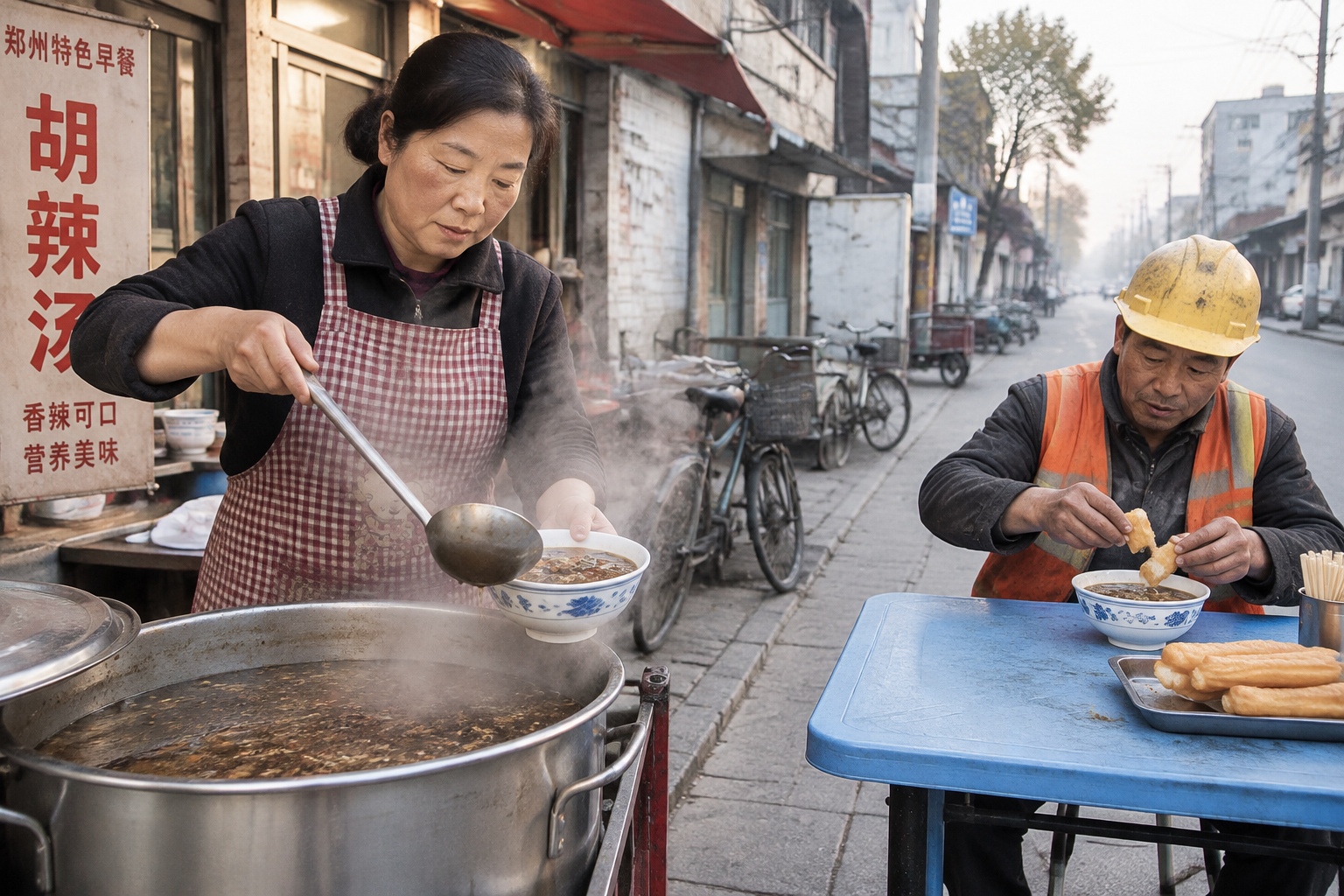

A Bowl of Soup Before the City Wakes
At 6:10 a.m. on a side street off Zhengzhou’s Zijingshan Road, steam rises from a stainless-steel pot in thick, peppery clouds. The woman behind the counter lifts a long-handled ladle, fills a ceramic bowl with dark, glossy hulatang, and slides it across the counter without a word. A construction worker in a faded orange vest drops four yuan on the counter, tears a piece of fried dough into the soup, and eats standing up.
Hulatang — literally ‘pepper soup’ — is Zhengzhou’s alarm clock. Its broth is thickened with starch, spiked with white pepper, and loaded with beef, gluten, wood-ear mushrooms, and peanuts. The heat doesn’t come from chili; it comes from pepper, a slow, warming burn that sits in your chest for the rest of the morning.
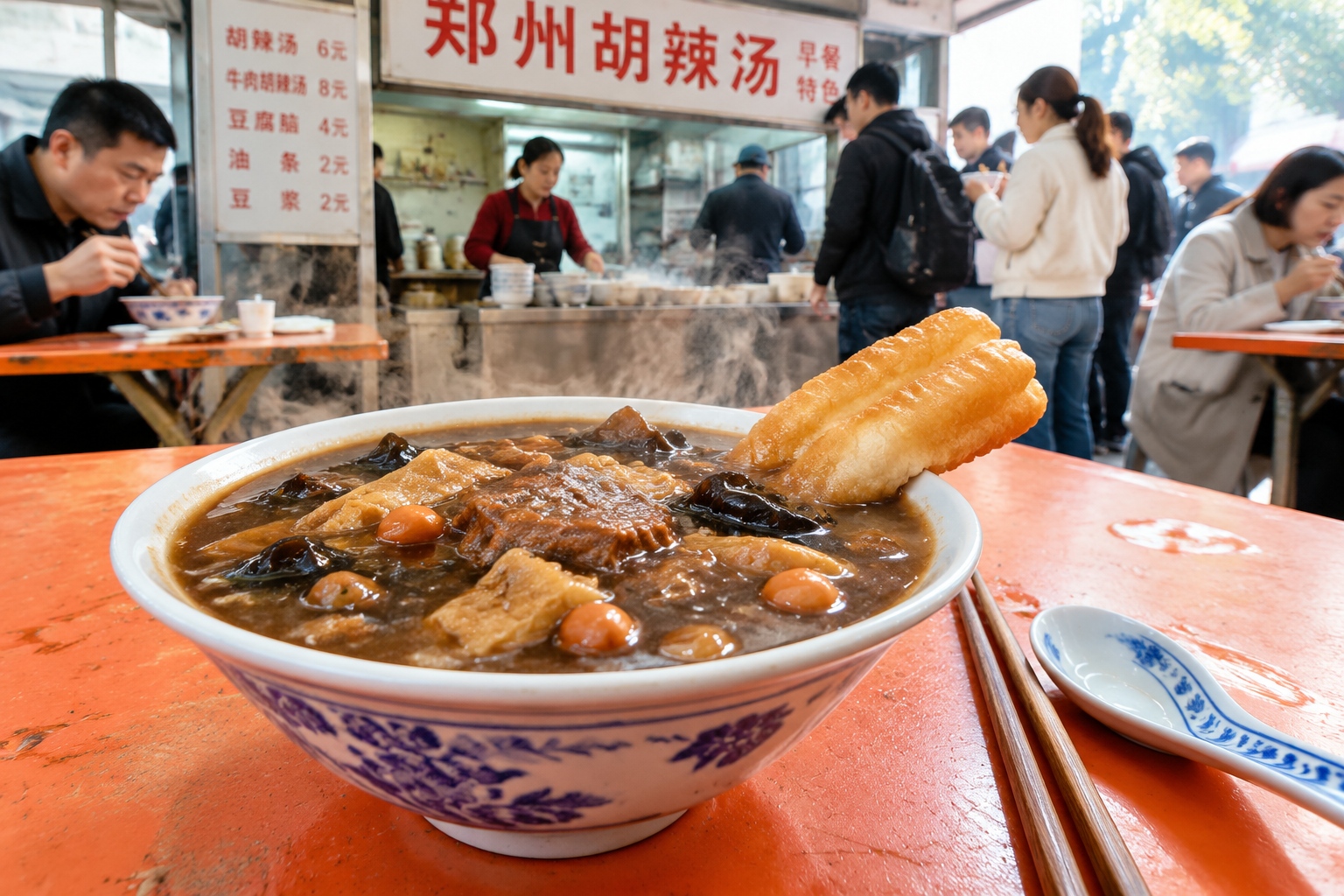
The breakfast stalls along Zhengzhou’s older neighborhoods open before sunrise and close by 9 a.m. Office workers, delivery riders, retirees, and schoolchildren crowd shoulder to shoulder at plastic tables. A bowl costs between four and eight yuan. A fried dough stick — youmotou — costs one or two. Nobody lingers. The point is to eat, warm up, and move on.
Why Pepper and Soup? A Central Plains Logic
Henan sits at the crossroads of China’s north and south. Wheat grows here, not rice. Winters are dry and cold, summers humid and harsh. The cuisine that evolved is thick, salty, and warming — designed to fuel bodies that work outdoors and travel long distances.
Hulatang is the most famous example, but it is not the only one. Luoyang has its own version — less peppery, more medicinal, sometimes served with pills made of traditional herbs. Kaifeng, the old Song dynasty capital, serves a milder soup with lamb. Every city in Henan has its own broth, and every local insists theirs is the correct one.
The pepper habit is practical. White pepper aids digestion, raises body temperature, and masks the taste of meat that has traveled far. In a province that has been a transport hub for over a thousand years, a bowl of soup that can be eaten quickly, cheaply, and standing up is not a tradition — it is a solution.
Luoyang After Dark: Hanfu, Skewers, and the Old City Reimagined
By 8 p.m., Luoyang’s old town is a different city. The Ming and Qing dynasty gates are lit in warm gold. The Luo River reflects strings of red lanterns. And the streets are full of young women in hanfu — the flowing, layered robes of imperial China — posing for photos against ancient brick walls.

This is not a theme park. It is a real neighborhood where people live, shop, and eat. The hanfu rental shops charge between 30 and 100 yuan for a few hours, including hair styling. Most customers are university students from Zhengzhou, Xi’an, and beyond. They come for the weekend, rent a costume, and walk the same streets that merchants walked during the Tang dynasty.
The night market food is more grounded. Luoyang is famous for its water banquet — a traditional feast of 24 dishes, most of them soups, served in a specific order. On the street, you get a simplified version: yanrou — thinly sliced pork belly — with flatbread, lamb soup, and sweet fermented rice balls. A full meal for two costs less than 60 yuan.
The local government has encouraged the night economy since 2019, extending shop hours, adding lighting, and promoting cultural tourism. But the energy feels less top-down than bottom-up. Vendors set up their own stalls. Young people organize their own photo shoots. The city provides the backdrop; the crowd provides the life.
Zhengzhou Station: The First Stop for Millions
Zhengzhou railway station is one of the busiest in China. Before the pandemic, it handled over 30 million passengers a year. On any given morning, you can see the same scene: men and women in their twenties and thirties, sitting on their suitcases outside the east exit, eating instant noodles from paper bowls.
They have come from villages in Henan, Shandong, Anhui, and further west. Some are transferring to trains heading to Beijing, Shanghai, or Guangzhou. Others are staying. Zhengzhou is a manufacturing and logistics hub — Apple’s iPhone assembler Foxconn has a massive plant here — and it absorbs labor from across the region.
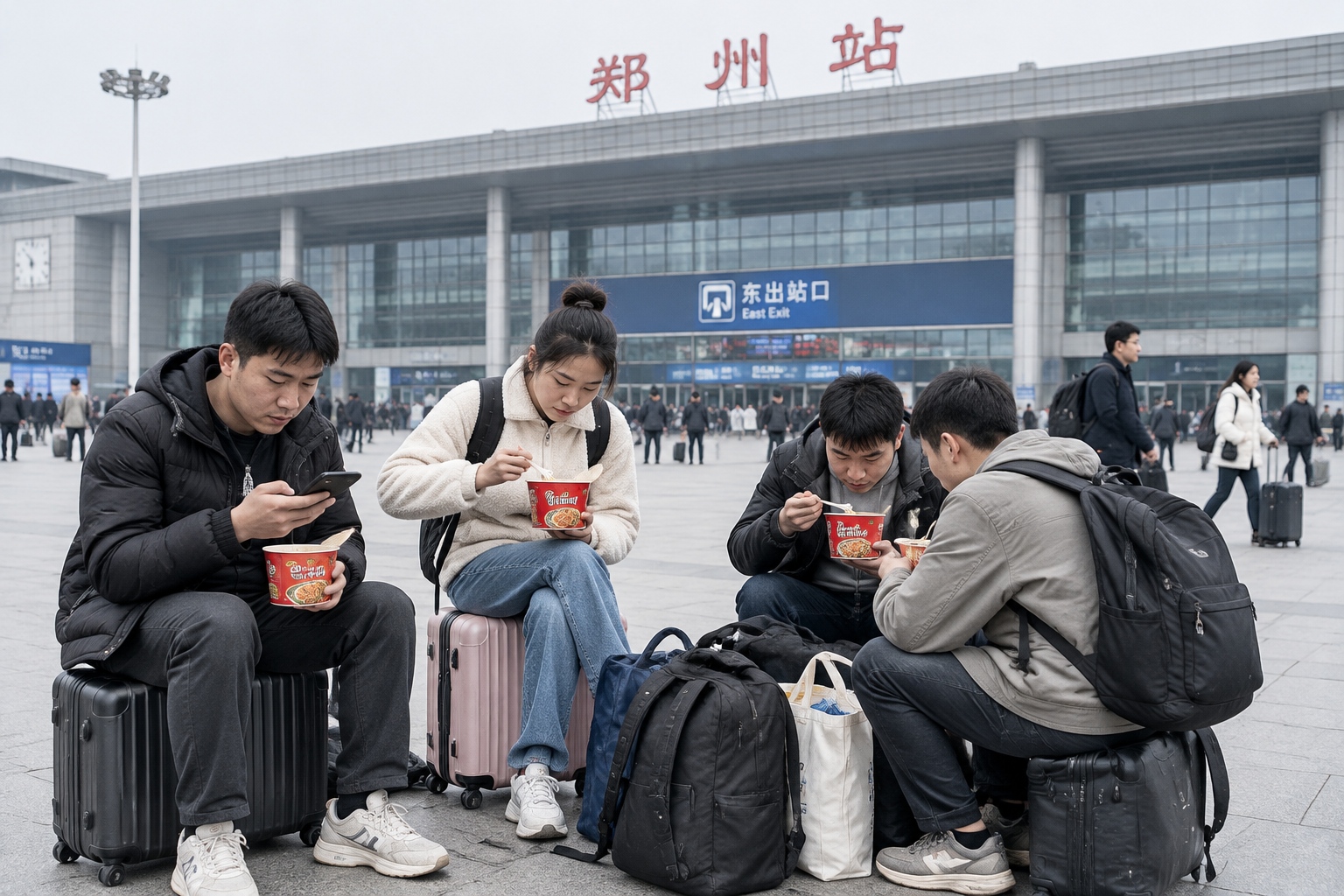
The food near the station reflects this transit life. Cheap, fast, and filling. A bowl of hulatang, a box of fried rice, a plastic cup of soy milk. You eat, you check your phone, you wait for the announcement that your train is boarding.
But the station area is changing. New commercial complexes have opened in the last five years. The old bus terminals have been replaced by high-speed rail connections. The city is trying to turn a pass-through point into a destination. Whether that works depends on whether people like what they see when they step outside.
From Breakfast to Midnight: How History Becomes Daily Life
What strikes a visitor most about Henan is not the monuments — though there are many, from the Shaolin Temple to the Longmen Grottoes — but the way history is folded into ordinary routines. The same streets that were once part of the Tang dynasty capital are now filled with people eating skewers and taking selfies. The same pepper that preserved meat for traveling merchants now flavors a four-yuan breakfast.
This is not nostalgia. It is adaptation. Henan’s cities are not museums. They are working places where millions of people eat, commute, study, and argue about whose hulatang is best.
The old town of Luoyang does not close at midnight. The breakfast stalls of Zhengzhou open before dawn. Between those two moments, a province of over 100 million people lives its life — thick with history, but always hungry.
Start the discussion at forum.chinacomes.com