

Introduction
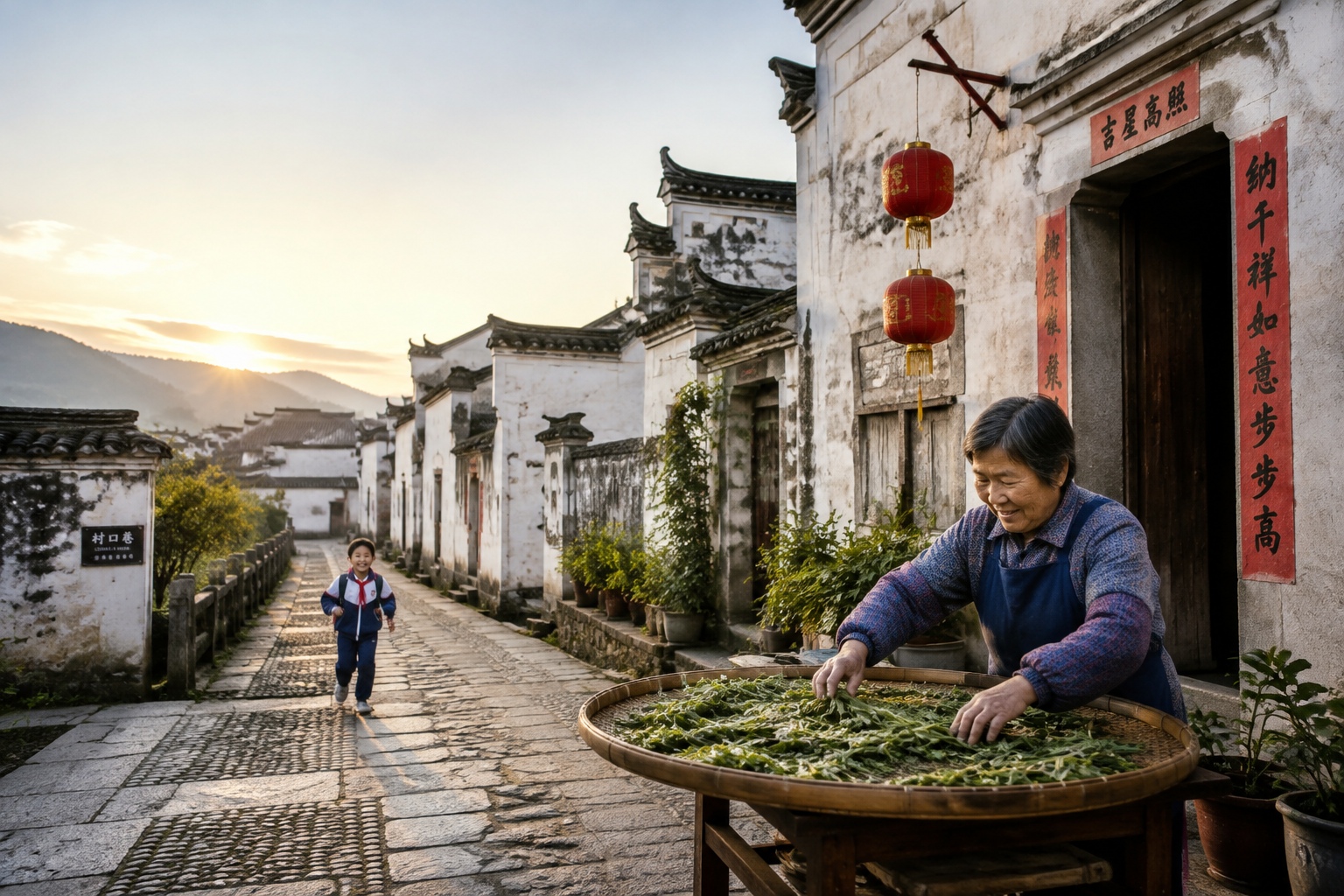
Most visitors arrive in Huizhou’s ancient villages — like Hongcun, Xidi, or Chengkan — with a camera and a mental checklist of “insta-worthy” shots: white-washed walls, horse-head roofs, narrow stone lanes. They expect a living museum, a perfectly preserved backdrop. But the first surprise comes when you walk past a souvenir shop and hear someone shouting: “Xiao Ming, time for dinner!” Suddenly, the village stops being a tourist site and becomes a neighborhood. This is not a stage set. People live here — real, messy, vibrant lives.
Morning Routine: The Village Wakes Up
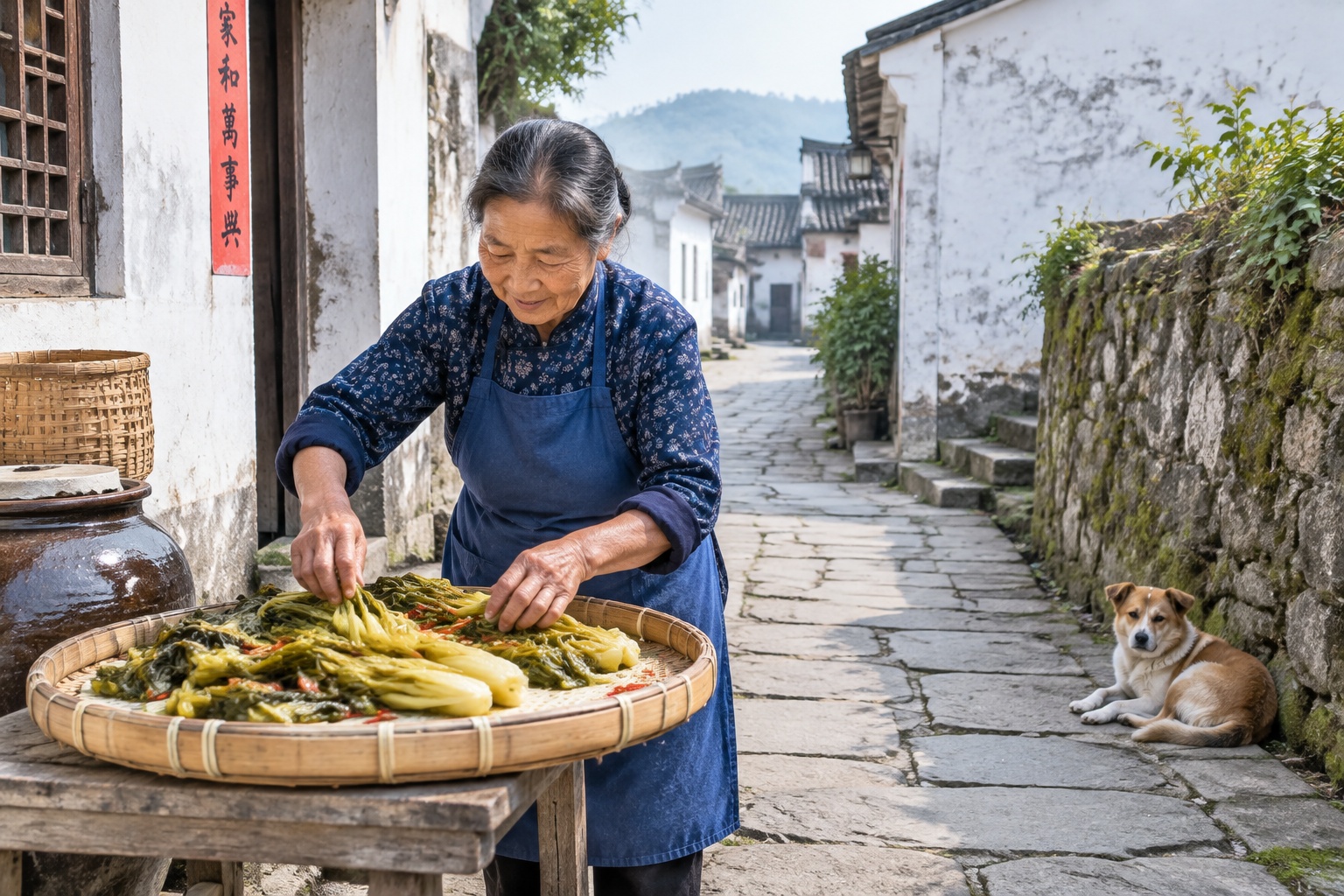
At 6:30 a.m., before the first tour bus arrives, the village belongs to its residents. An elderly woman in a blue apron spreads pickled mustard greens on a bamboo tray in the sun. A grandfather pedals a tricycle, carrying his grandson to the village school. The local grocery store — a tiny room stacked with instant noodles, soap, and fresh eggs — is already open, and the owner chats with a neighbor about the price of pork. These are not performances for tourists. They are the ordinary rhythms of a community that has been here for centuries.
In Xidi, a UNESCO World Heritage site, about 80% of the original residents still live in the old houses, according to the village committee. The alleys smell of cooking oil, not just incense. The sounds are children laughing, dogs barking, and the occasional clatter of a wok. This is what “living heritage” actually looks like.
Old Halls, New Functions — and Old Residents
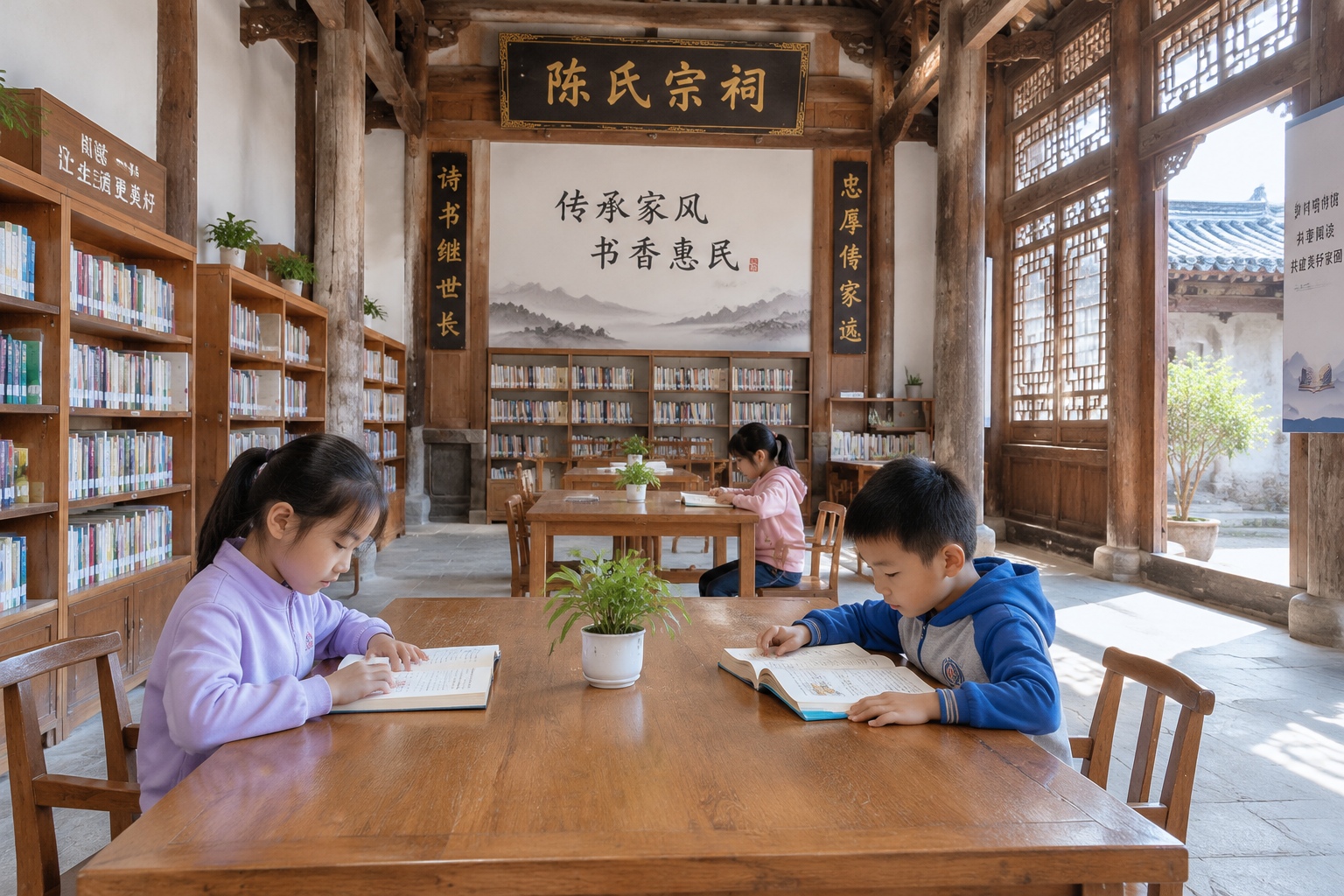
One of the most interesting changes in Huizhou’s ancient villages is how old buildings are being reused. In Chengkan, a 500-year-old ancestral hall has been turned into a community library. The massive wooden beams and carved windows remain, but now there are bookshelves, reading desks, and a children’s corner. Every afternoon, local kids come here to do homework under the watchful eyes of their ancestors’ portraits.
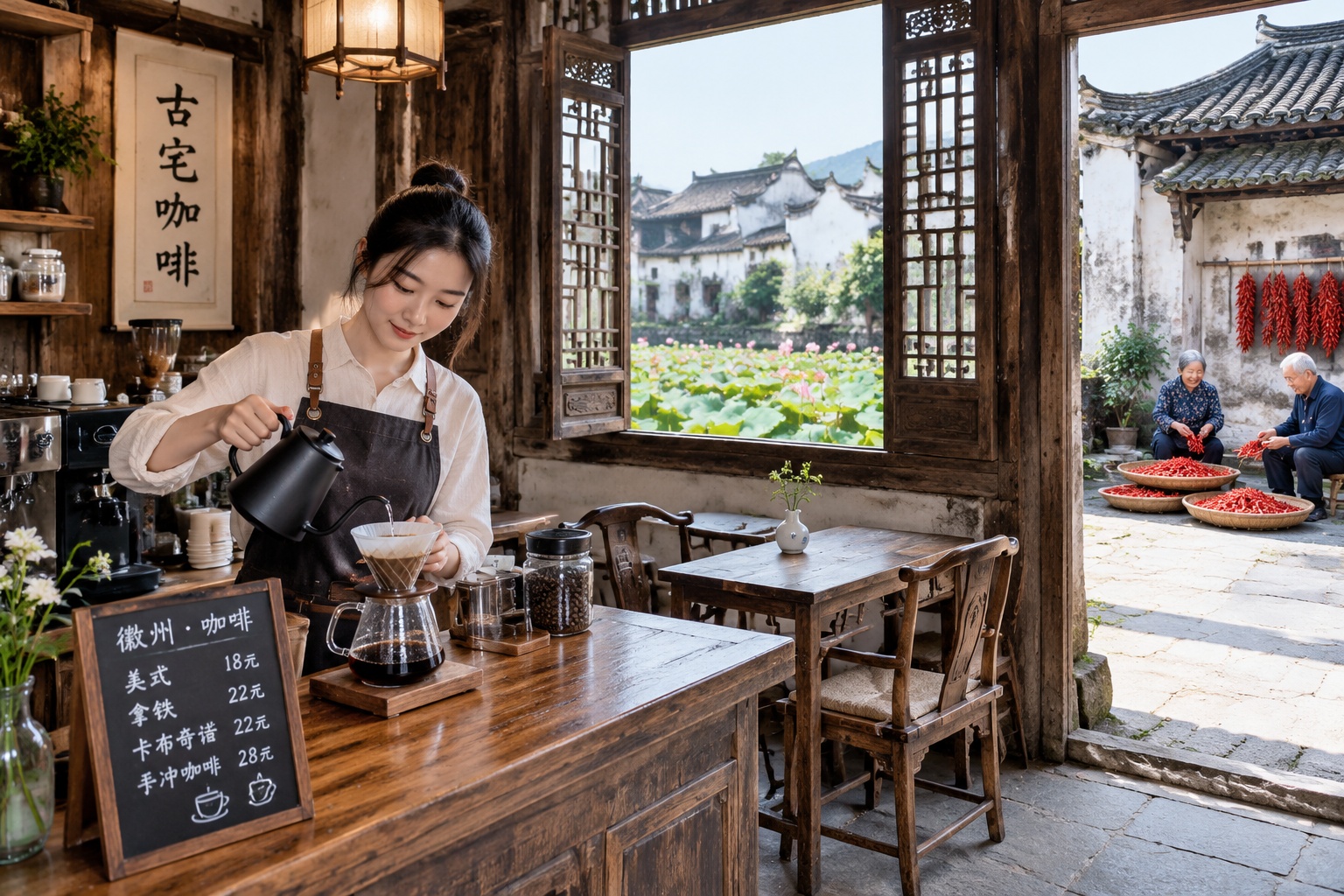
In Hongcun, a former merchant’s residence now houses a small coffee shop. The owner, a woman in her 30s who grew up in the village, serves lattes with a view of the lotus pond. “I wanted to stay, but I needed an income,” she explains. “The coffee shop lets me live here and share the place with visitors.” Meanwhile, the back rooms of the same building are still occupied by an elderly couple who have lived there for 60 years. They cook in a traditional kitchen, dry chili peppers on the rooftop, and wave to tourists passing by. The new and the old coexist under one roof, not as a marketing gimmick but as a practical compromise.
This mix creates a surprising texture. You can sip a cappuccino in a Ming dynasty hall while the owner’s grandmother hangs laundry in the courtyard. It’s not designed for Instagram — it’s just life.
Young People: Leaving, Returning, and Reinventing
Like many rural areas in China, Huizhou’s ancient villages have seen a steady outflow of young people to cities. But in recent years, a small but noticeable wave of return has begun. Some come back to run guesthouses (known as minsu), others to revive traditional crafts like inkstone carving or bamboo weaving.
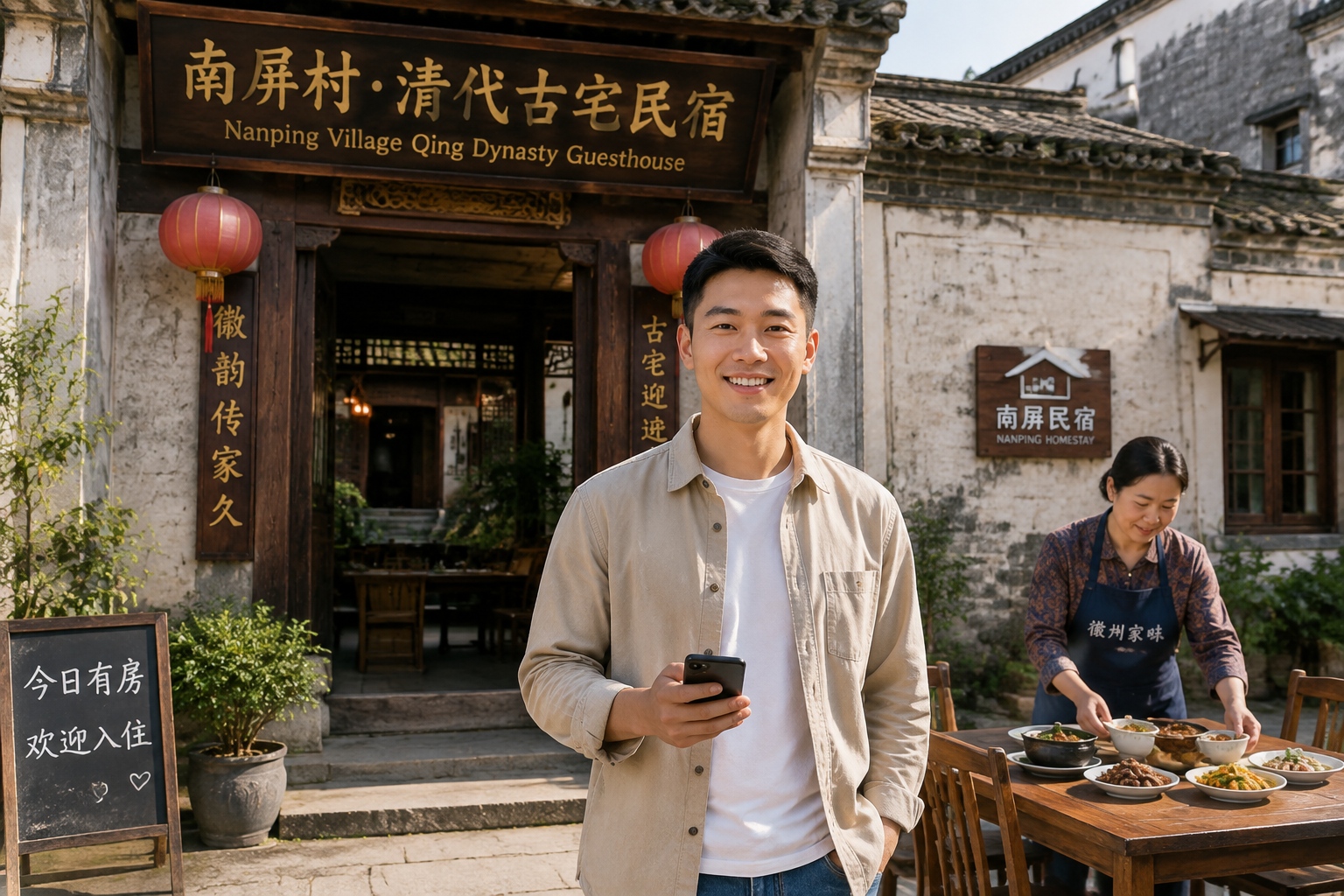
In Nanping village, a 28-year-old man named Zhang Wei returned after working in Shanghai for five years. He now manages a boutique hotel converted from a Qing-dynasty residence. “I used to think the village was boring,” he admits. “But when I saw tourists from all over the world appreciating it, I realized I had been blind to its value.” His hotel employs eight local villagers, including his aunt, who cooks breakfast for guests. The menu includes traditional Huizhou dishes — stinky tofu, bamboo shoots, and preserved ham — that she learned from her mother.
Not everyone stays. Many young people still leave for better jobs in cities. But those who return are creating new economic models that blend heritage with hospitality. They also use social media to promote their villages, posting videos of morning fog over the rooftops or the art of making walnut pastries. The result is a fragile but real ecosystem where tradition and tourism can support each other.
Balancing Protection and Everyday Life
Tourism is a double-edged sword. Without it, the villages would decay. With too much of it, they become hollow theme parks. Huizhou’s local authorities have experimented with several strategies to keep the balance.
In Hongcun, for example, daily visitor numbers are capped at 20,000 during peak season to prevent overcrowding. The village also operates a “community co-management” system: a portion of ticket revenue goes to a fund that subsidizes house repairs and public services for residents. Old houses are protected by strict regulations — you cannot change the facade or install modern windows — but interior renovations are allowed, so families can install bathrooms or air conditioning.
Perhaps the most important rule is that no resident can be forced to move out. Unlike some tourist sites where locals are relocated to make way for hotels, Huizhou’s villages insist that the people are part of the heritage. A guide in Chengkan told me: “We don’t want a dead village. We want a village that people still call home.”
This approach is not perfect. Some residents complain that restrictions make their lives inconvenient. But overall, the model has kept the villages alive without turning them into museums.
Conclusion: What ‘Living Community’ Really Means
To walk through a Huizhou ancient village is to see a place that refuses to be frozen in time. It is not a museum, not a film set, not a resort. It is a home — a place where weddings are held, babies are born, and old people sit on doorsteps watching the world go by.
What makes it remarkable is how ordinary it is. The villagers are not performing for tourists. They are living their lives, and tourists happen to be part of the scenery. This is what “living heritage” means in China: a quiet, stubborn continuity. The white walls are repainted every few years, but the daily routines — drying vegetables, gossiping with neighbors, walking children to school — have remained essentially unchanged for generations.
For the foreign visitor, the lesson is simple: look beyond the postcard. The real beauty of Huizhou’s ancient villages is not in the architecture alone. It is in the people who still call it home.
Start the discussion at forum.chinacomes.com