

7:10 a.m. in Lanzhou
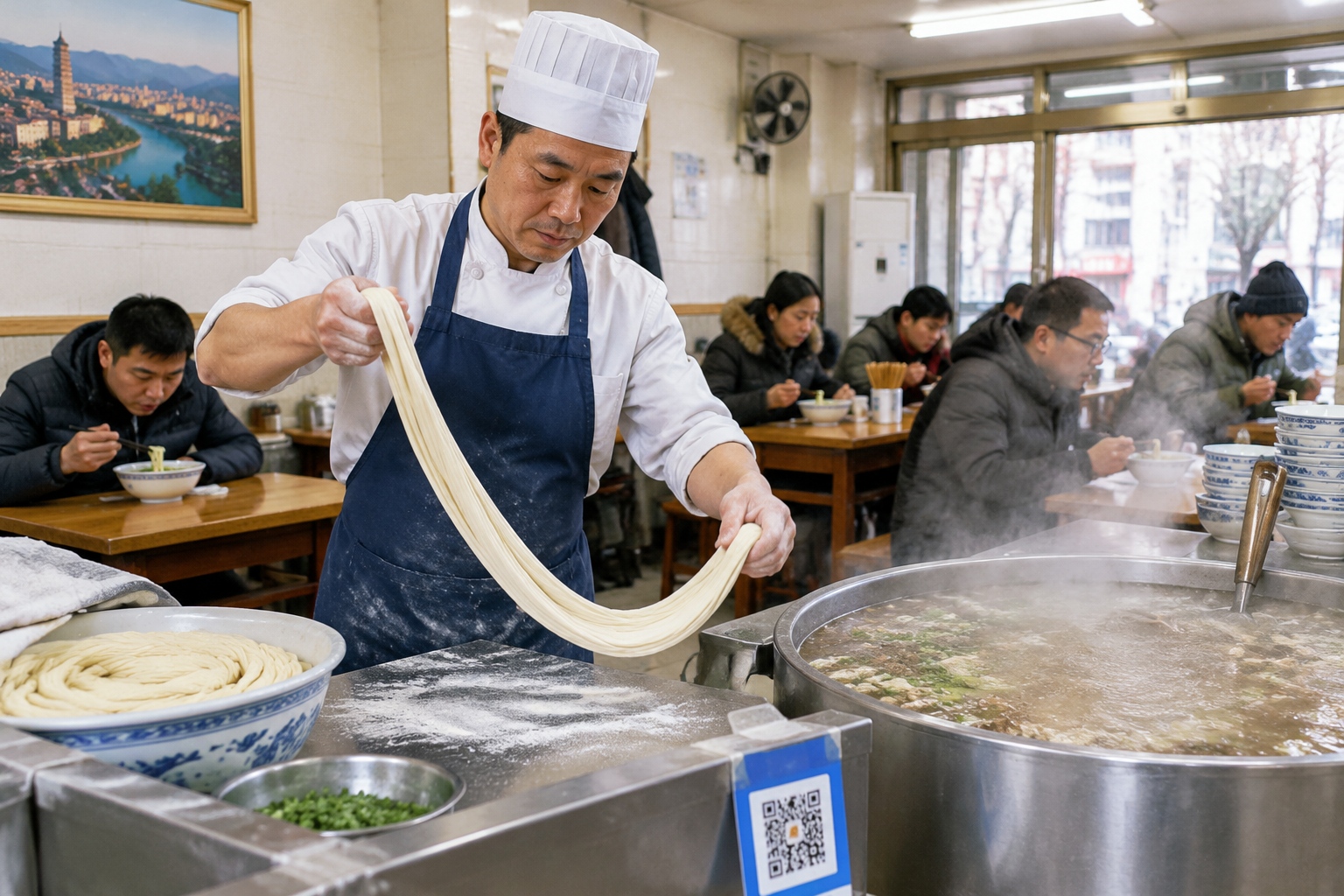
At 7:10 on a Tuesday morning, the windows of a beef noodle shop on a side street in Lanzhou are completely fogged up. Inside, a man in a delivery jacket leans over a bowl and asks for his noodles er xi—medium thickness. The woman at the counter calls back to the kitchen without looking up. Behind her, a cook slaps a piece of dough onto the counter, pulls it into long strands, and drops them into boiling water. The line moves fast. Nobody is taking photos. This is breakfast.
That scene is a better starting point than any list of famous dishes. The route from Lanzhou to Dunhuang runs roughly 800 kilometers west along the Hexi Corridor, and the food changes with the landscape: hand-pulled noodles in the city, short rolled noodles in small towns, fried noodle squares for lunch, lamb and flatbread in the oasis. What stays the same is the role of carbohydrates. They are cheap, filling, and reliable. They are how ordinary people arrange a day.
Why an 800-kilometer carb trail makes sense
The Hexi Corridor is a narrow strip of land in Gansu Province, squeezed between mountains and desert. Lanzhou sits at one end, Dunhuang at the other. In between are Wuwei, Zhangye, Jiuquan and Jiayuguan. Winters are cold and dry. Water comes from the Qilian Mountains and irrigation channels. Wheat, barley, potatoes and corn grow here, and noodles turn those crops into something you can eat quickly, at almost any hour.
For a traveler, this matters because the food is not a performance. A bowl of noodles is not a tasting menu or a viral challenge. It is a Tuesday lunch. Prices are low compared with most Western cities: a basic bowl of Lanzhou beef noodles often costs 8 to 12 yuan, roughly US$1.10 to US$1.70. In smaller towns, a filling meal can still land under 25 yuan. That is one reason the carbohydrate feast is not a special event. It is the economy of the everyday.
Lanzhou: breakfast as public life
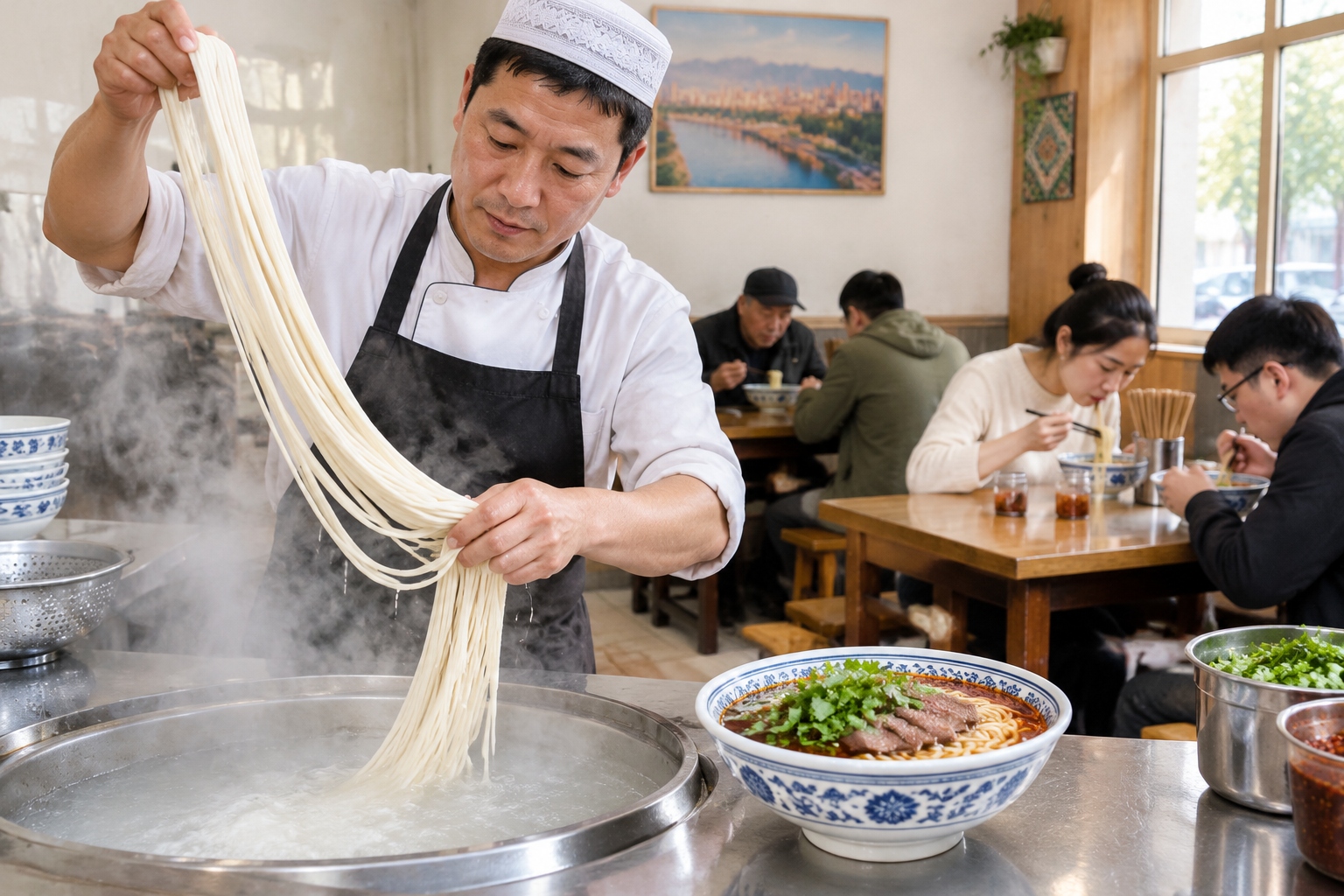
Lanzhou beef noodles are often called Lanzhou lamian abroad. In the city, people usually say niu rou mian or niu da—beef noodles, or the big beef bowl. The broth is clear and beefy, often halal, because many shops are run by Hui Muslim families. A bowl arrives with thin slices of beef, white radish, red chili oil, cilantro and garlic sprouts. The noodles are pulled to order.
The ordering is part of the ritual. 毛细 means very thin. 二细 is medium. 韭叶 is flat and wide, like a leek leaf. 大宽 is a broad belt. You can ask for less chili (shao la) or extra beef (jia rou). A tea egg or a small plate of pickled vegetables is a common add-on. Locals eat fast, often standing if the shop is crowded. Tourists often linger; regulars are already back on the street.
Payment is a small window into how daily life works. Many shops have a QR code taped to the counter. Office workers, students and taxi drivers pay with WeChat Pay or Alipay before the bowl is ready. The line is not just a queue. It is a five-minute public living room—people greet neighbors, check messages, and eat before the day starts.
Wuwei and Zhangye: smaller cities, bigger bowls
West of Lanzhou, the cities get smaller and the portions get serious. In Wuwei, a local specialty is san tao che, or three carriages: braised pork, noodles and tea. It sounds like a lot, because it is. The pork is chopped and rich, the noodles come in a savory broth, and the tea is refilled until you stop. It is a lunch for sharing, and it shows how a local dish can be a set rather than a single plate.
Zhangye is known for cuoyu mian, short noodles rolled by hand so they look like little fish. They are served with tomato and egg, or with a meat sauce, or in broth. Another local favorite is niu rou xiao fan, beef broth with tiny pieces of noodle, and chao pao, fried noodle pieces with vegetables and meat. In a morning market, a stall might serve a bowl for 10 to 15 yuan. The vendor knows the regulars. Someone asks for more vinegar. Someone else takes a plastic bag of steamed buns home.
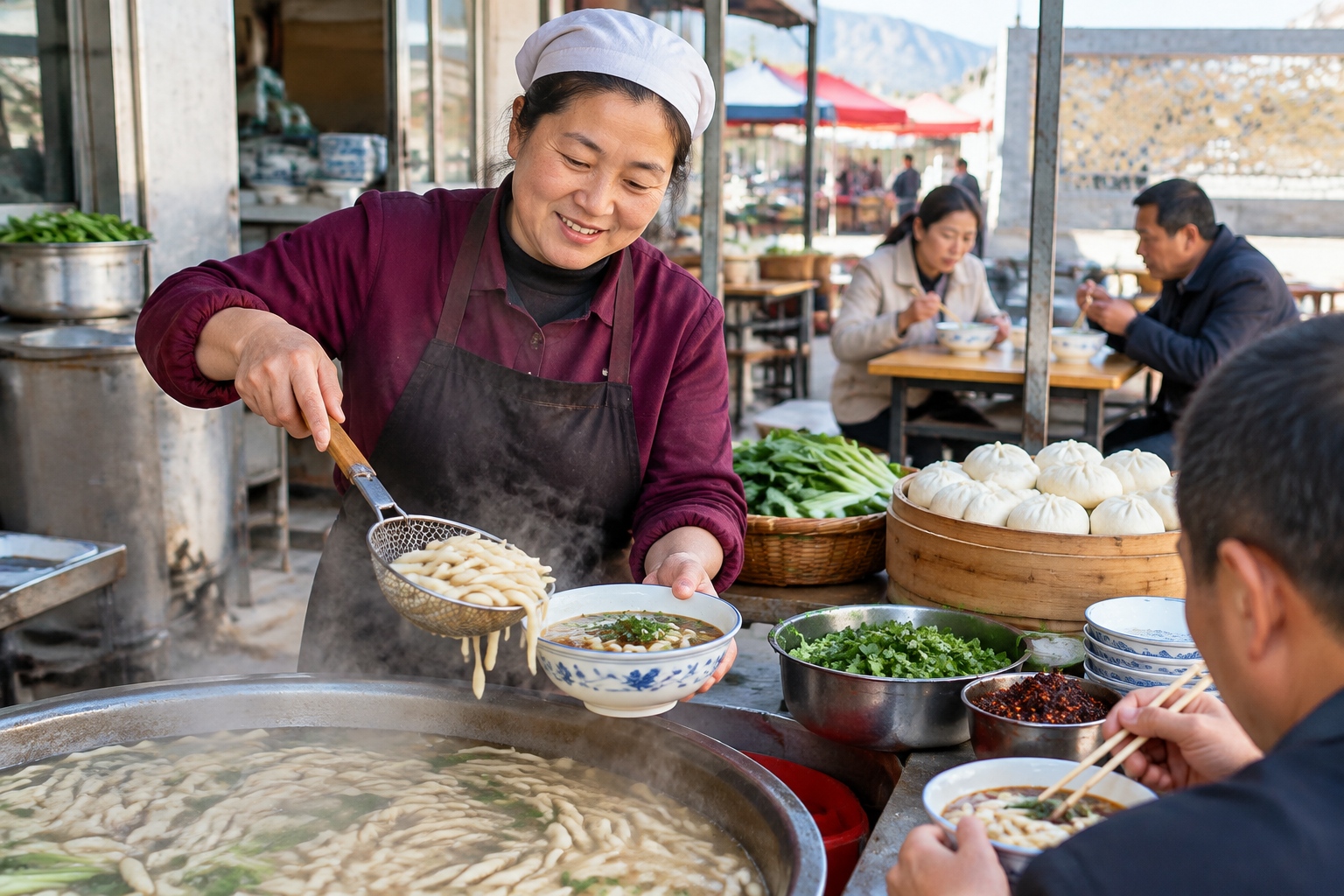
Agriculture is visible in the food. Zhangye sits near irrigated fields and seed-corn plots. Seasonal vegetables show up on family tables, but noodles remain the base. Tourism has added new cafes and restaurants, especially in Zhangye’s old town and near the Danxia landform. Locals still have their breakfast places. The two worlds overlap, but they do not replace each other.
Jiayuguan and Jiuquan: lunch for people who work with their hands
Jiayuguan is a steel city, and Jiuquan is a working city too. At lunch, the rhythm is different from breakfast. A steelworker in a dusty jacket walks into a small shop and orders chao mian pian—fried noodle squares—with lamb and peppers. A driver at the next table has la tiao zi, hand-pulled noodles with a tomato-and-meat topping, and a glass of san pao tai tea, a Gansu mix of tea, dates, goji berries and rock sugar.
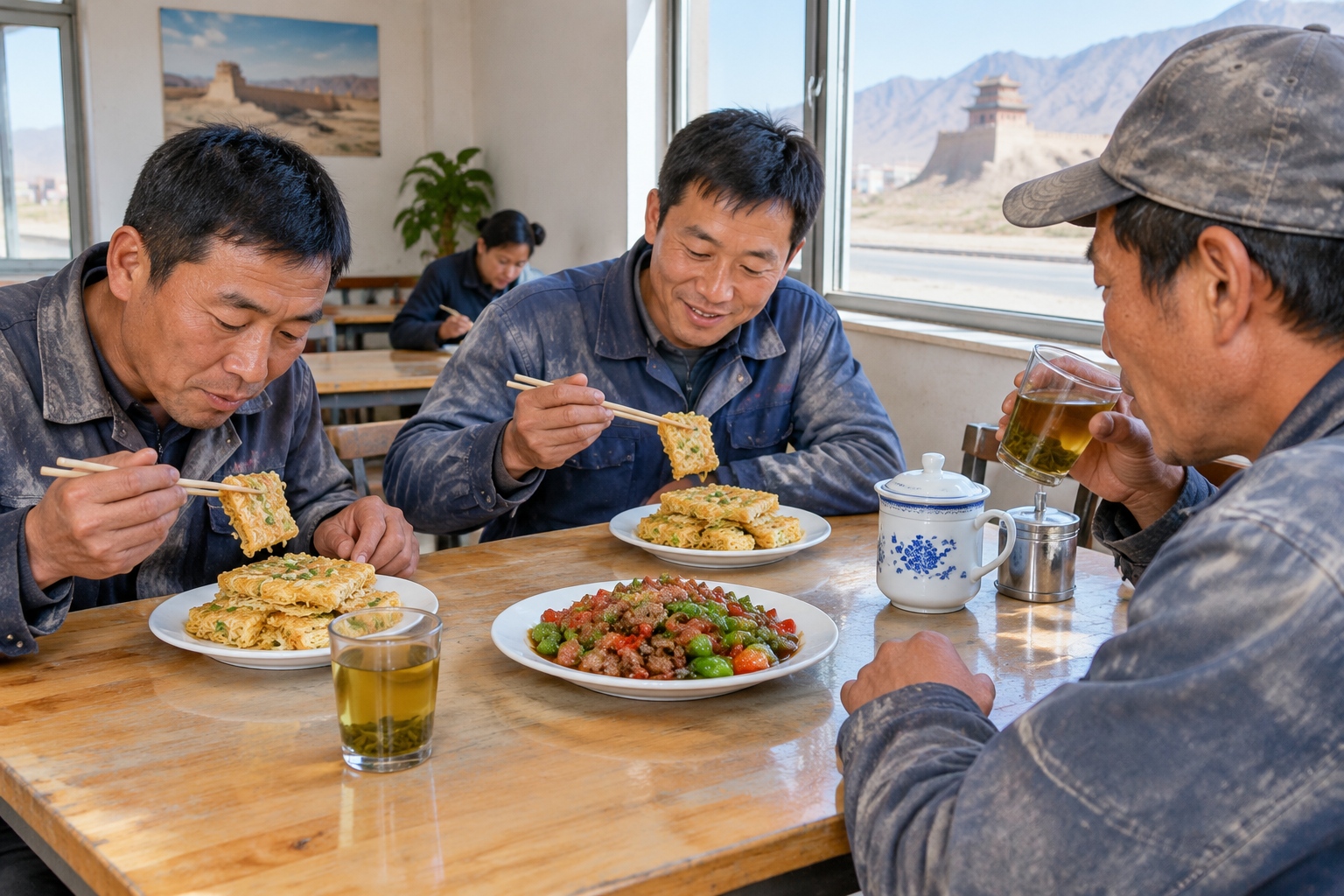
The lunch is built for a short break. It is also more mixed than visitors expect. A unit canteen serves cheap set meals. A delivery rider picks up plastic containers from the same kitchen. Next door, a chain milk-tea shop does steady business. Old noodle shops and new chains sit on the same block. The average lunch might cost 15 to 25 yuan. The point is not tradition versus modernity. It is a practical answer to hunger, time and price.
Dunhuang: two dinner tables in a tourist town
Dunhuang is where the carb trail meets the tourist economy. In summer, Shazhou Night Market is loud and bright. Visitors order lamb skewers, donkey-meat yellow noodles, lamb with flatbread (hu yang men bing), and apricot peel water. The market is fun, but it is not the whole picture. Local families often eat breakfast in quieter side streets: beef noodles, lamb soup with noodles, or steamed buns with tea.
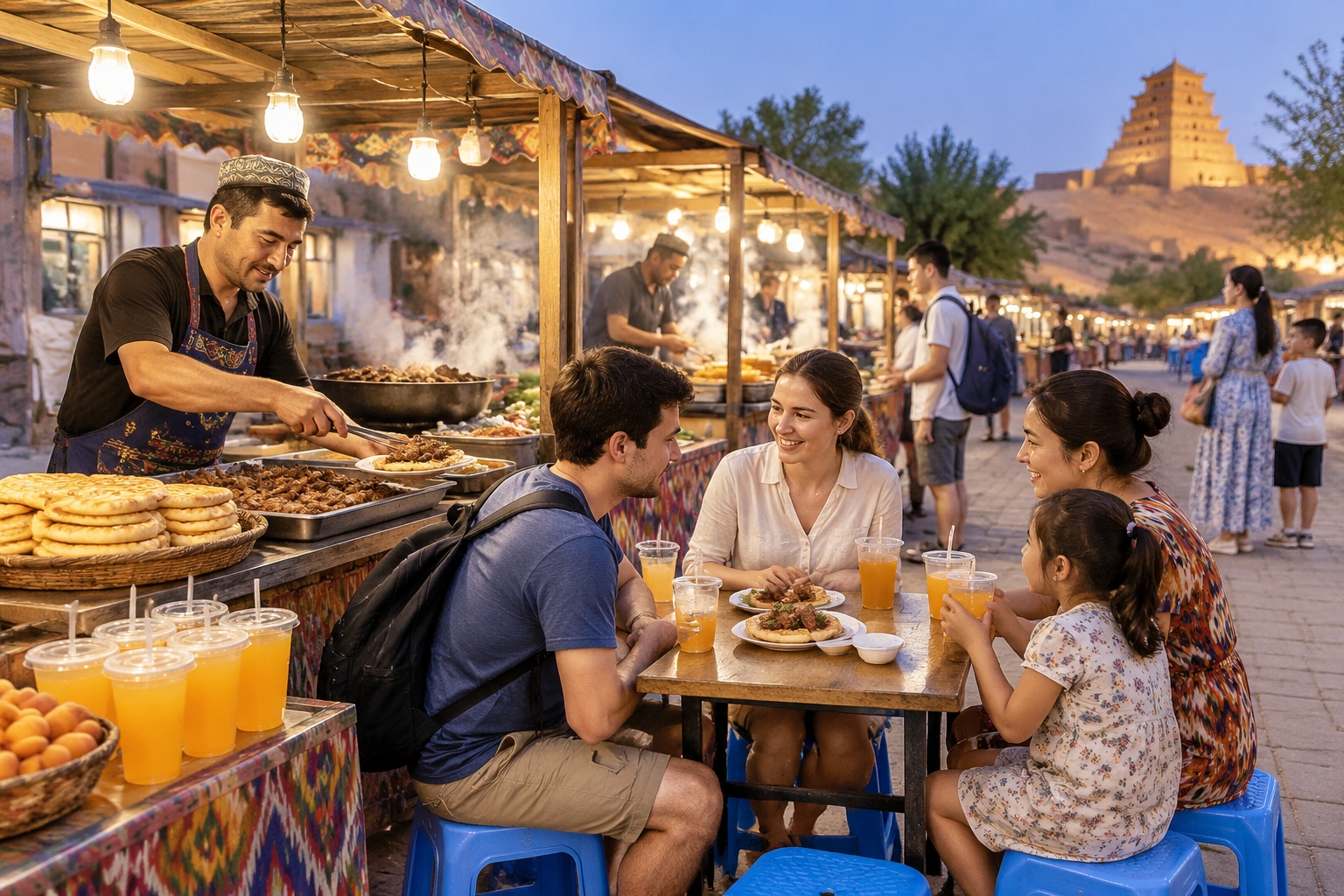
Seasonality shapes the food. From late spring to early autumn, guesthouses and restaurants hire extra staff. In winter, some shops close or shorten their hours. Young people who grew up in Dunhuang have returned to run small hotels, cafes and restaurants. They use the same tools as their peers in bigger cities: scan-to-order menus, group-buying deals on Meituan or Dianping, and cold-chain deliveries that bring dairy, fruit and frozen food into a small oasis town. Local ingredients still matter—wheat, lamb, apricots, grapes and dried fruit—but the business is no longer only face to face.
How to eat it without turning it into a checklist
Payment and ordering basics
Set up Alipay or WeChat Pay before you go if you can. Many small shops still take cash, but mobile payment is faster and sometimes expected. In noodle shops, point at the menu or use a translation app. Learn four words: er xi (medium), jiu ye (flat), shao la (less chili), jia rou (extra beef). A bowl is a full meal. Do not order three bowls like tapas. Add a side dish only if you are hungry.
Portion strategy and timing
Breakfast noodle shops are busiest from 7 to 9 a.m. and may slow down or close after lunch. In tourist areas, prices are higher and portions can be smaller. Walk one block off the main street and the price often drops. If you are comparing this to bread, pasta or fast food, the logic is similar: carbohydrates are affordable energy. But the setting is different. The bowl is not a performance. It is a daily habit.
At the end of the day
By 9 p.m. in a small town outside Dunhuang, the market is winding down. A vendor stacks plastic stools. A woman sweeps noodle flour toward the door. The last customer finishes a bowl of lamb soup and checks his phone. Over 800 kilometers, the shape of the carbohydrate changes—pulled, rolled, cut, fried, baked into flatbread. The reason stays plain. People use it to get through a day, and to make that day a little more comfortable.
Start the discussion at forum.chinacomes.com