
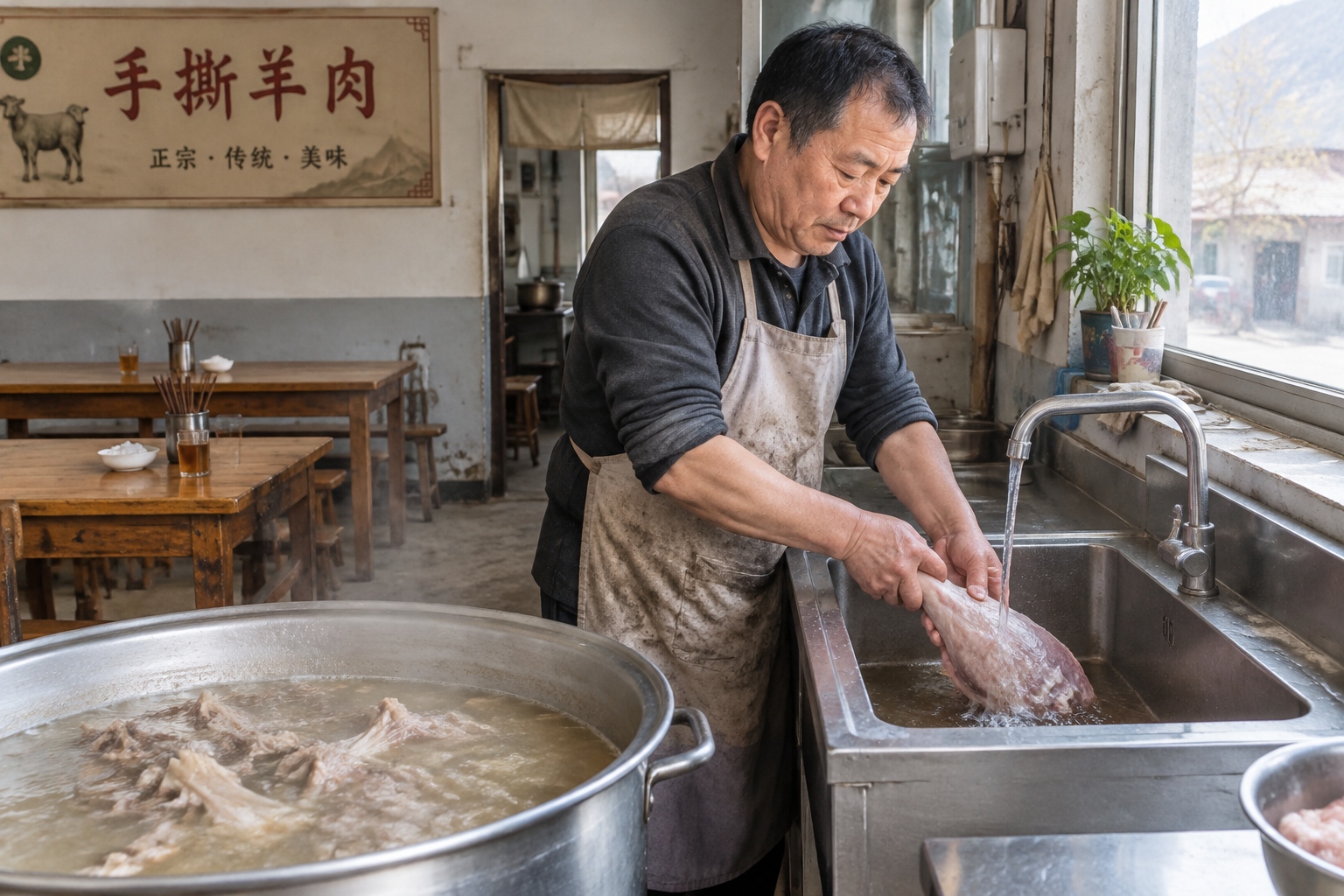

At 4:40 p.m., the pot is already on
The lunch rush is over on this narrow street in Linxia, Gansu, but Ma is still working. He stands at a stainless-steel sink behind his six-table restaurant, sleeves rolled up, washing a lamb leg under cold water. Beside him: a cleaver, coarse salt, ginger, and a small dish of Sichuan pepper. Steam rises from a deep pot. The room smells of boiled meat, wet stone, and tea.
Ma is 58. He has cooked hand-torn mutton—shou zhua yang rou—for most of his adult life. His apron is faded. His hands are cracked from hot water. “If I don’t stand here and watch the pot,” he says, “the taste changes.” This is not a legend. It is a small restaurant on an ordinary afternoon. That is why it is worth noticing.
What hand-torn mutton actually is
For readers outside China, the name can sound dramatic. The dish is simple: lamb or mutton, often on the bone, boiled in clear water, lightly seasoned, and eaten with the hands. In Gansu, especially around Linxia and Lanzhou, it is everyday food and guest food—on family tables, at weddings, and in street restaurants like Ma’s.
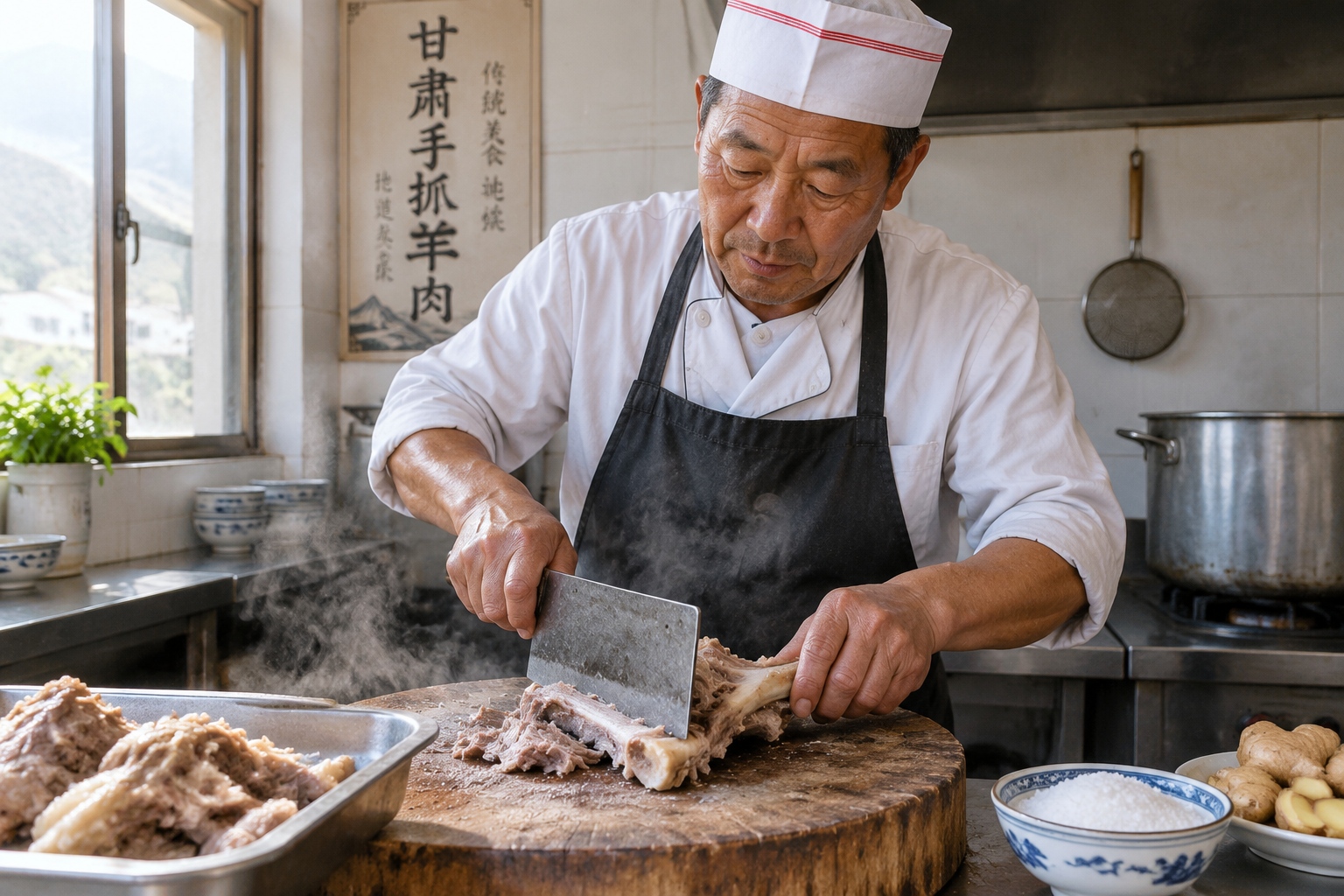
The cooking depends on restraint. Ma chooses sheep from nearby farms or markets, usually not too old, with a balance of lean meat and fat. He soaks the meat in cold water, then puts it in a pot with fresh water, ginger, a little salt, Sichuan pepper, maybe dried orange peel or a cardamom pod. He skims the foam. The fire goes from strong to low; the pot stays just below a hard boil.
“Good meat does not need much,” he says. “Salt is the last thing. If you add it too early, the meat tightens.”
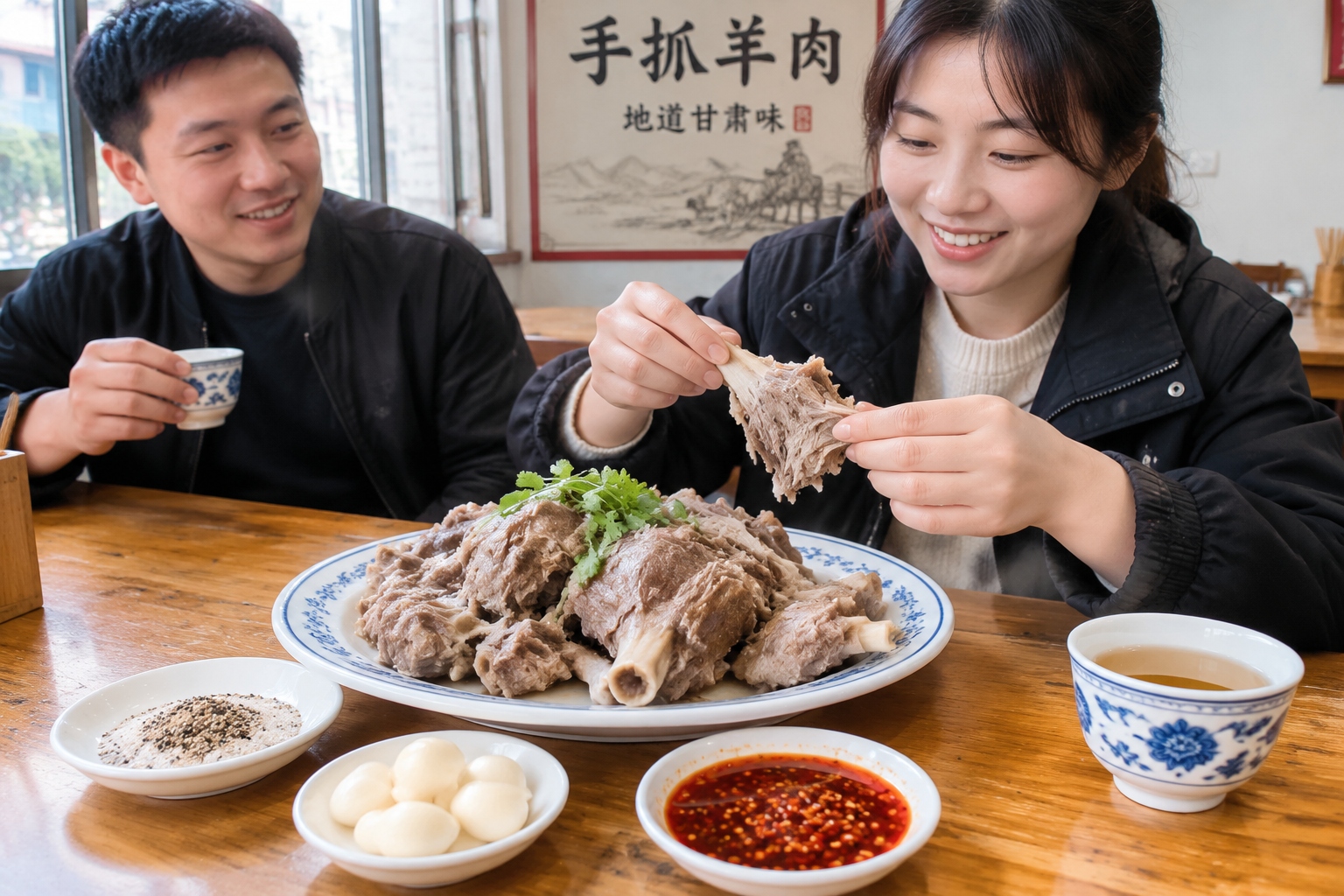
Details vary across Gansu. Some cooks serve raw garlic and chili oil; others put only salt and pepper on the table. Around Linxia, Hui and Dongxiang traditions are strong, and the meat is often cooked very clean, without soy sauce or heavy spice. In Lanzhou, restaurants may add tea, noodles, and side dishes. The constant is plainness: the meat should taste like meat, not sauce.
Eating is social. A plate arrives with chunks of rib, leg, or shoulder. People roll up their sleeves, take a piece, dip it in salt or chili, bite, and talk. There is hot tea, maybe clear broth, and a pile of bones at the table’s edge. It is not delicate food. It is food that makes a room feel full.
Thirty years, one pot at a time
Ma started as an apprentice in 1993, in his uncle’s shop nearby. He washed dishes, carried coal, and watched. For the first year he was not allowed to touch the meat. “I thought I knew how to cook,” he says, laughing. “I knew nothing.” He learned by repetition: how to judge a carcass by its fat, how to read the fire by sound, how to cut along the bone without tearing the meat.
In 1997 he rented this space. The street was unpaved. There were three other restaurants, a barber, and a bicycle repair shop. Rent was low. A family of four could eat its fill for around 40 yuan. “Now the same meal is closer to 200,” he says. “But everything changed—the rent, the meat, the gas, the workers.”
He remembers customers better than prices. A truck driver came every Thursday for eight years and ordered the same cut. A group of students pooled money for one plate. A couple met at a corner table and later brought their child. Some regulars disappeared when the old neighborhood was redeveloped. New ones came when the road was widened and buses ran closer.
The pandemic years were hard. For a while the dining room was empty. Ma cooked smaller batches, sold packed mutton through WeChat groups, and learned a delivery app with help from his nephew. “I still don’t like the phone,” he says. “But the phone keeps the door open.”
The arithmetic of a six-table restaurant
On a normal day Ma buys two sheep; on weekends, three. Each carcass gives roughly 20 to 25 kilograms of usable meat. He is at the market by 5 a.m., or takes delivery from a supplier he has known for years. He checks fat color, smell, and texture. “If I don’t like it, I send it back,” he says. “If I use it, I lose customers.”
The numbers are tight. One sheep costs more than 1,000 yuan. Add rent, gas, electricity, wages for his wife, one cook, one dishwasher, and a part-time delivery rider. A plate sells for 78 yuan per jin—about half a kilo—though prices vary by cut and neighborhood. A bad week can wipe out a good month. “People think a small restaurant is simple,” he says. “It is simple only if you don’t count.”
Payment has changed. A QR code is taped near the counter. Most customers pay by phone; cash comes from older neighbors or tourists using up bills. Delivery orders arrived with the code, but Ma is selective. Hand-torn mutton does not travel perfectly. He cuts the meat larger, packs broth separately, and refuses orders that are too far away. “Mutton is not fried rice,” he says. “It gets cold. It gets dry. If it arrives bad, the customer remembers my name, not the app.”
Who comes to the table
By 6 p.m., the room is filling. An old man in a gray jacket takes his usual seat by the window: half a jin, a bowl of tea, a small dish of garlic. He has come for 12 years and does not look at the menu. Two young women in sneakers order the small plate and photograph it for five minutes. A family arrives with a child and a grandmother; they order ribs, cucumber salad, and noodles. A couple with a suitcase sits near the door—tourists from Xi’an following a food list on their phone.
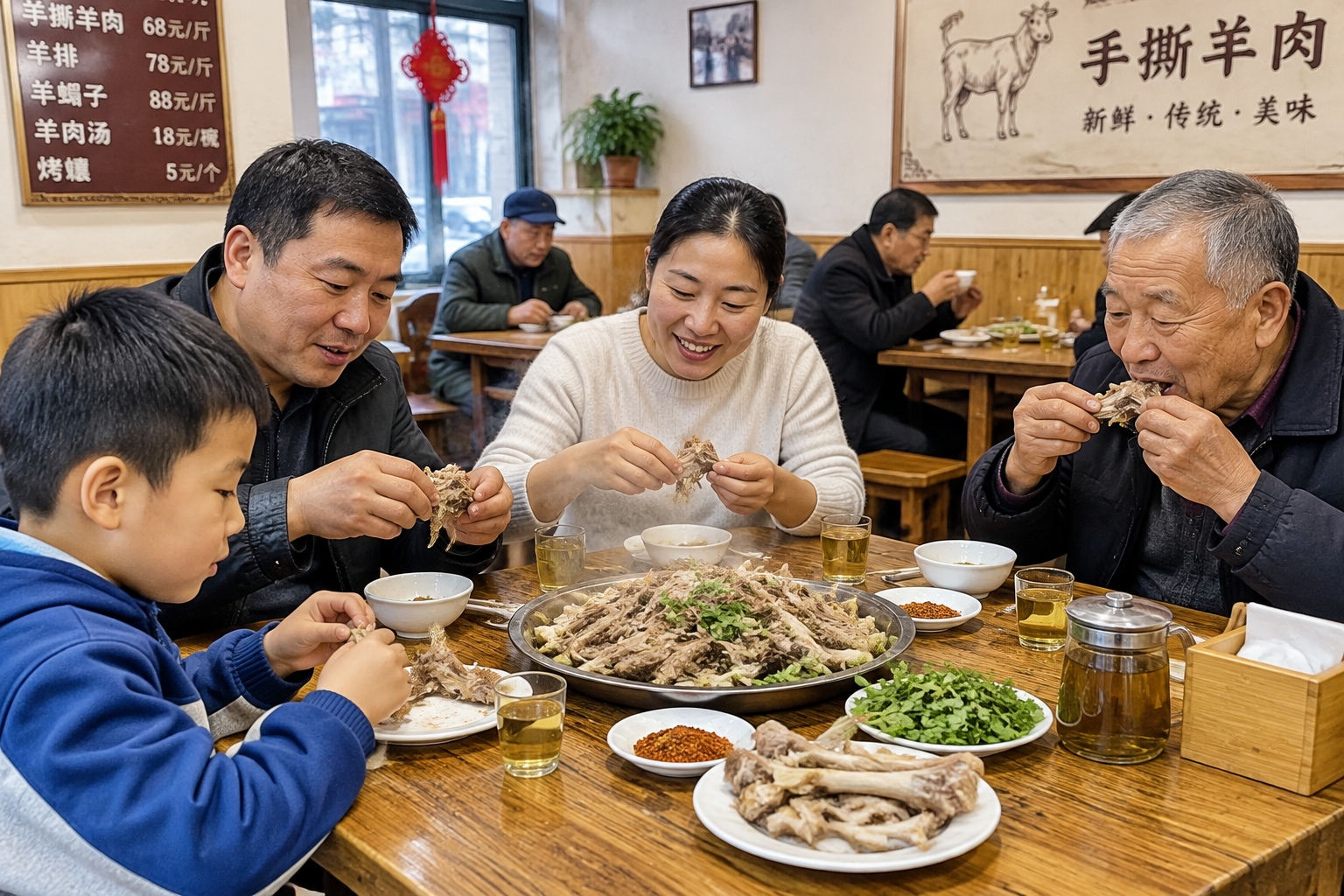
“The young ones eat less fat,” Ma says. “They ask for lean meat, less salt. The old ones want the fat and the bone. They say the bone is the best part.” He cuts to order. He sends extra broth for the child. He tells the tourists to use their hands, not the fork they asked for. “You can use a fork,” he says, smiling. “But your hands know what to do.”
The room is not quiet. People talk about school, work, a wedding, a hospital visit, the weather. The television is on, but no one watches. The food gives people a reason to sit together.
What has changed outside the pot
The biggest changes Ma notices are outside his kitchen. The market is better supplied. Cold-chain trucks bring meat from farther away, and highways make the trip shorter. He can get a consistent cut in a way he could not 20 years ago. But the same roads bring more tourists and higher rents. The street is cleaner and brighter. Some old neighbors have moved to new apartments. A noodle shop became a phone store, then a milk tea shop, then a phone store again.
Short videos changed the rhythm. A food blogger visited two years ago. For a month, young customers came with phones, asking if this was “the shop on Douyin.” Ma does not fully understand the algorithm. He knows a line at the door is good, and that a line can also make regulars turn away. “I cannot cook faster than the pot,” he says. “If people wait too long, they get angry. I understand.”
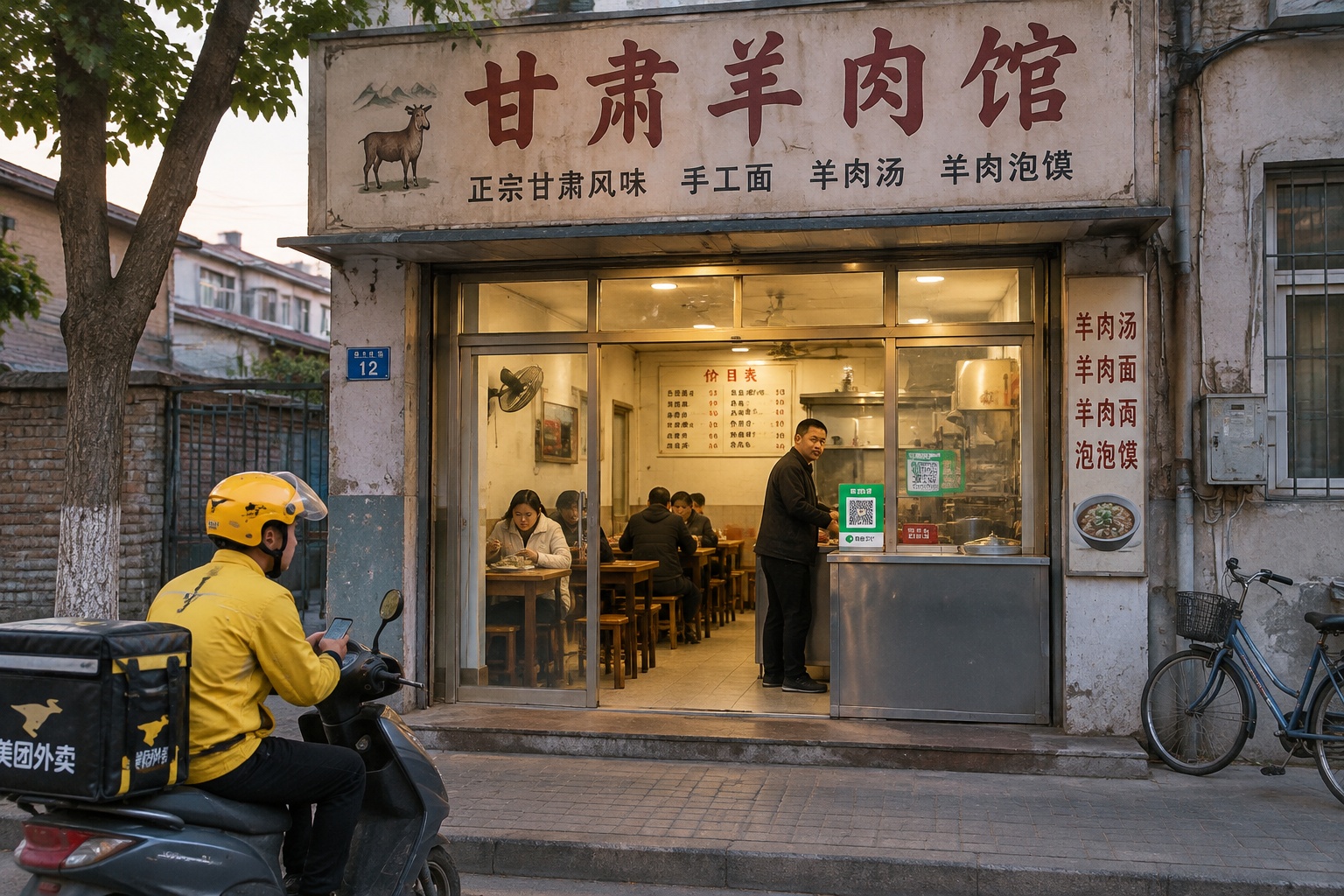
He has made small adjustments: less salt, leaner cuts some days, a bigger pot on weekends, a second QR code for another delivery app. But he refuses to change the core. No soy sauce. No heavy spice. No pressure cooker to hurry the meat. “Maybe I am stubborn,” he says. “But people come for the old taste. If I change it too much, why would they come?”
What thirty years actually means
By 9 p.m., the last table is paying. Ma wipes the counter, stacks bowls, and pours the remaining broth into a white bucket. His wife counts receipts on her phone. The cook scrubs the pot. Outside, the street is dark and cool. A delivery rider waits at the corner.
I ask Ma what he wants people to know. He thinks for a while. “Nothing special,” he says. “Open the door. Cook the meat well. Treat people well. If you cheat one day, they know. If you cheat too many days, the door closes.”
Thirty years is not a slogan on a wall. It is thousands of mornings at the market, thousands of pots of water, thousands of plates carried to tables. The city has changed around him. The pot has stayed on.
If you visit, don’t ask for the story first. Order a plate. Use your hands. Listen to the room. The story is already there, between the bones and the tea.
Start the discussion at forum.chinacomes.com