

A Table That Explains Shandong
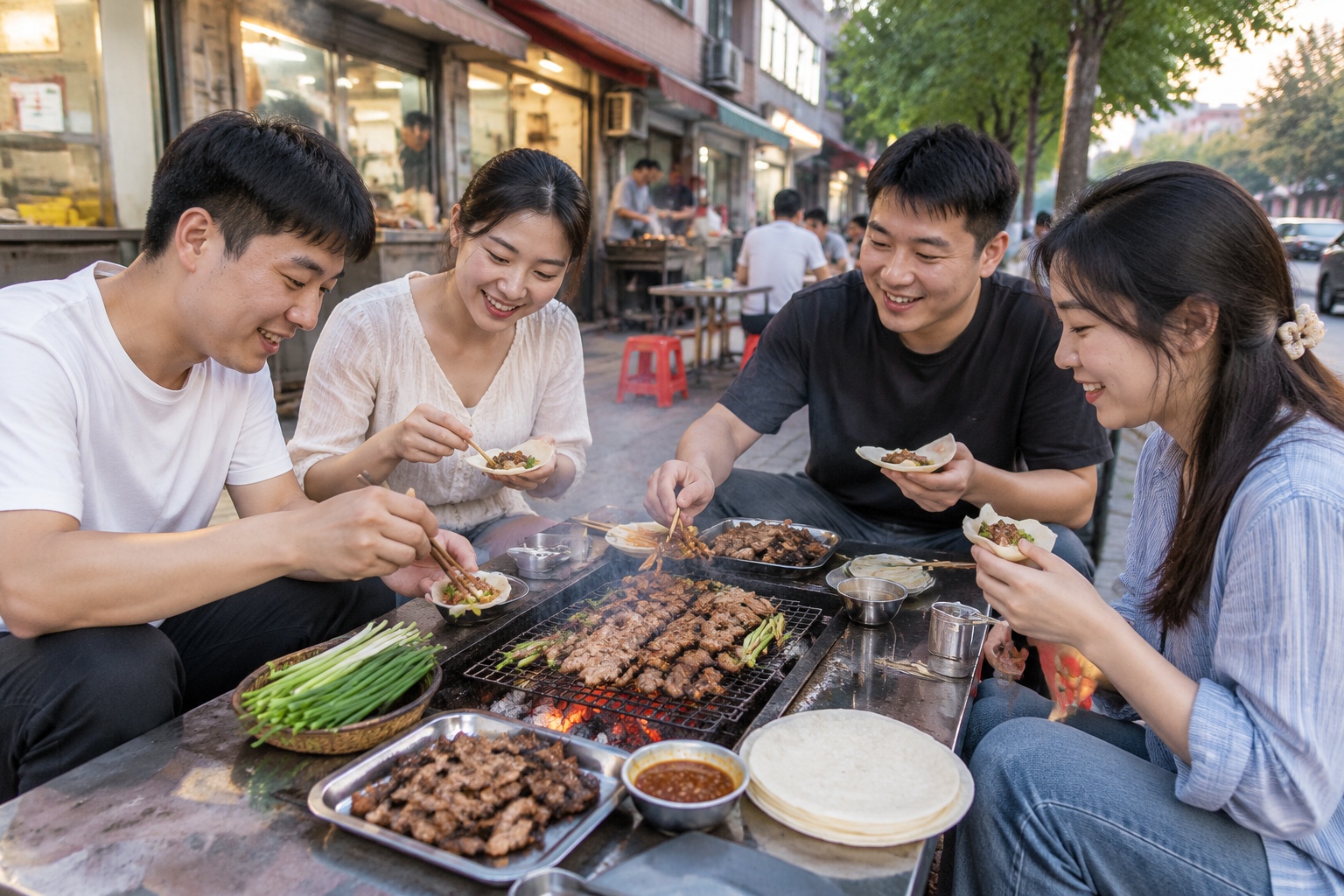
At 6:30 on a summer evening in Zibo, a woman in a blue apron sets a small charcoal stove into the hole in the middle of the table. She drops a handful of skewers onto the grill. Around her, four twenty-somethings are already arguing about whether the pancake should be folded once or twice. One takes a thin, almost translucent pancake, cups it in her palm, adds a piece of grilled pork, a scallion, and a smear of sweet sauce, then eats it in two bites. The table is loud, smoky, and entirely unremarkable to anyone who grew up in Shandong.
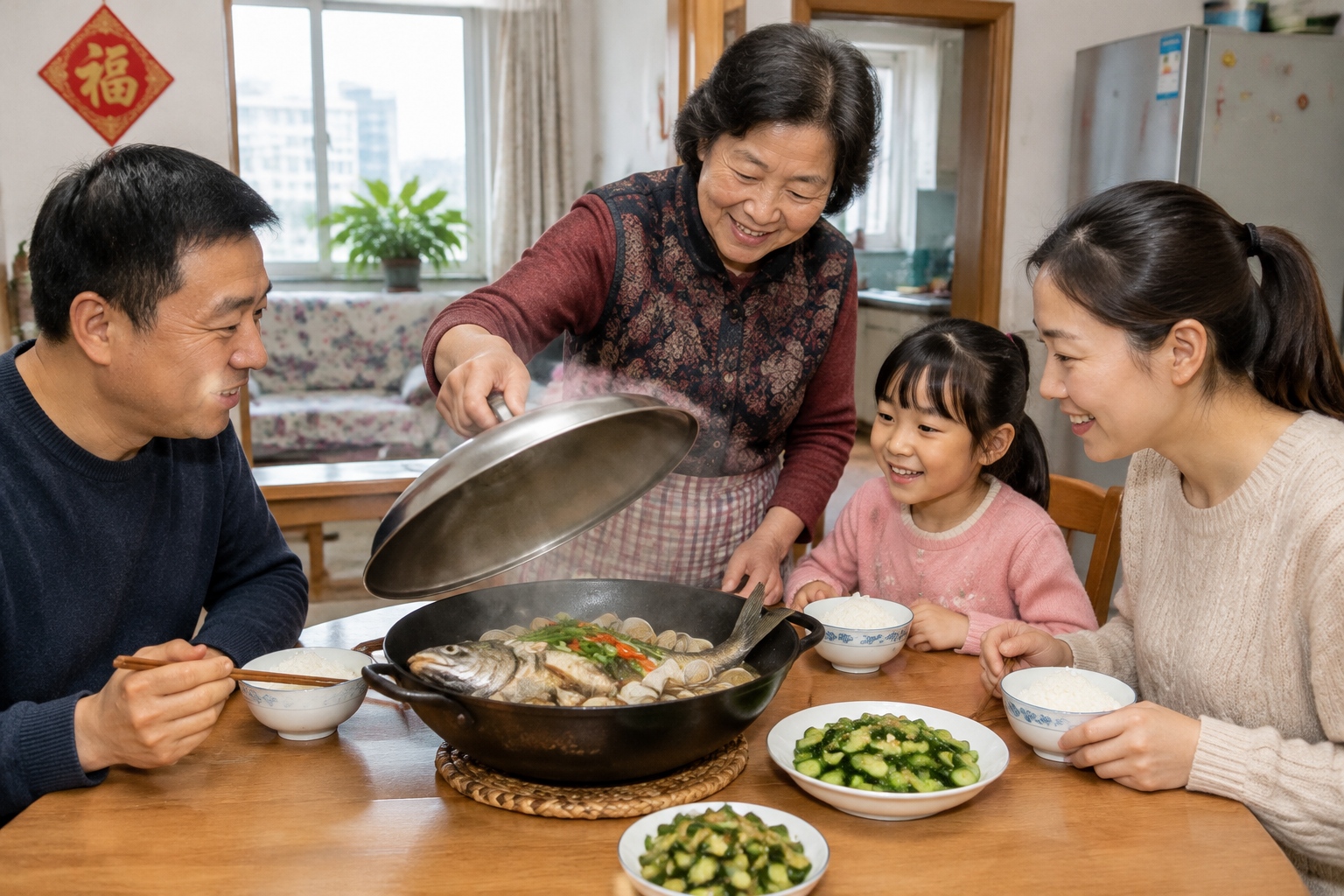
Three hundred kilometers east, in Yantai, another table is being set. A grandmother lifts the lid from a wok and steam covers the kitchen window. Inside are prawns, clams, and a whole flatfish, cooked with ginger and scallion. The family will eat it with rice, a plate of cucumber, and maybe a bowl of millet porridge. No one will photograph it for social media. It is Tuesday.
These two scenes are the reason I find Shandong food more revealing than any tourism slogan. Zibo barbecue and Yantai seafood are not just local specialties. They show how ordinary people eat, work, adapt, and connect with the outside world. They also explain a quiet shift in how China is seen: not through skyscrapers or policy documents, but through a plastic stool, a tray of clams, and a family table.
Zibo BBQ: The Meal You Finish Cooking Yourself
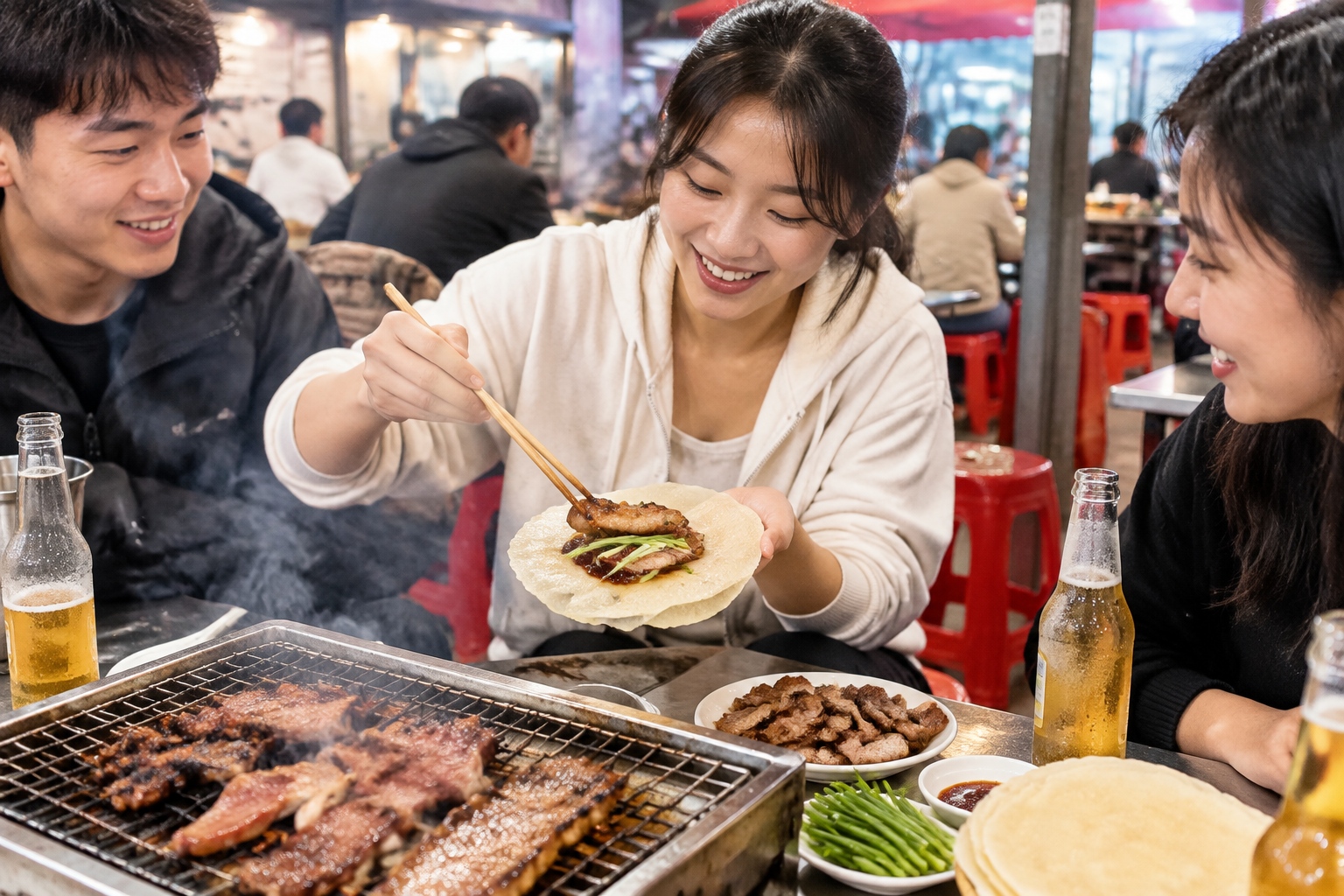
For many Western readers, barbecue means a pitmaster, a smoker, and hours of low heat. The meat arrives at the table already cooked, maybe with a bun, slaw, and a choice of sauce. Zibo barbecue works differently. The skewers come to the table partly cooked, and diners finish them over a small stove built into the table. The final dish is assembled by hand: a thin pancake, a scallion, a piece of meat, perhaps a little garlic or chili sauce. You roll it, fold it, and eat it. The table becomes the kitchen.
This is not a gimmick invented for visitors. It is a local eating habit with its own social logic. The small stove keeps the meat hot and gives everyone a job. Children learn to turn skewers; friends negotiate who gets the last lamb skewer; someone always burns a pancake and blames the stove. The meal is cheap, fast, and informal. In a country where restaurant meals can be elaborate banquets, Zibo barbecue is deliberately unceremonious.
In 2023, that local habit became a national story. Videos of students and young workers eating barbecue in Zibo spread across Chinese social media. Soon, special weekend trains from Jinan brought crowds. Local authorities added shuttle buses, temporary toilets, and volunteers at busy stations. The city did not invent the barbecue; it made it easier for strangers to arrive.
What Changed for a Small Stall
The impact on ordinary operators was mixed. Some stall owners extended their hours, hired relatives, and simplified their menus to move faster. Others put up QR codes for ordering, bought more plastic stools, and learned to manage queues. A few reopened empty storefronts nearby. For a short period, a street corner could feel like a small festival.
But a rush of visitors also exposed the limits of a place built for local life. Narrow streets filled with cars. Garbage collection struggled. Nearby residents lost parking spaces and sleep. Some owners raised prices; others kept them low and worked longer hours. The story was not only about success. It was about a city learning, in public, how to host its own sudden popularity.
Yantai Seafood: From Morning Market to Family Table
Yantai sits on the Jiaodong Peninsula, facing the Bohai Sea and the Yellow Sea. The city has a long fishing and port history, and its food culture is shaped by proximity: scallops, prawns, clams, oysters, sea cucumber, abalone, flatfish, and squid arrive fresh enough that cooks often do very little to them. Steaming, boiling, and light braising are common. Heavy sauce would be beside the point.
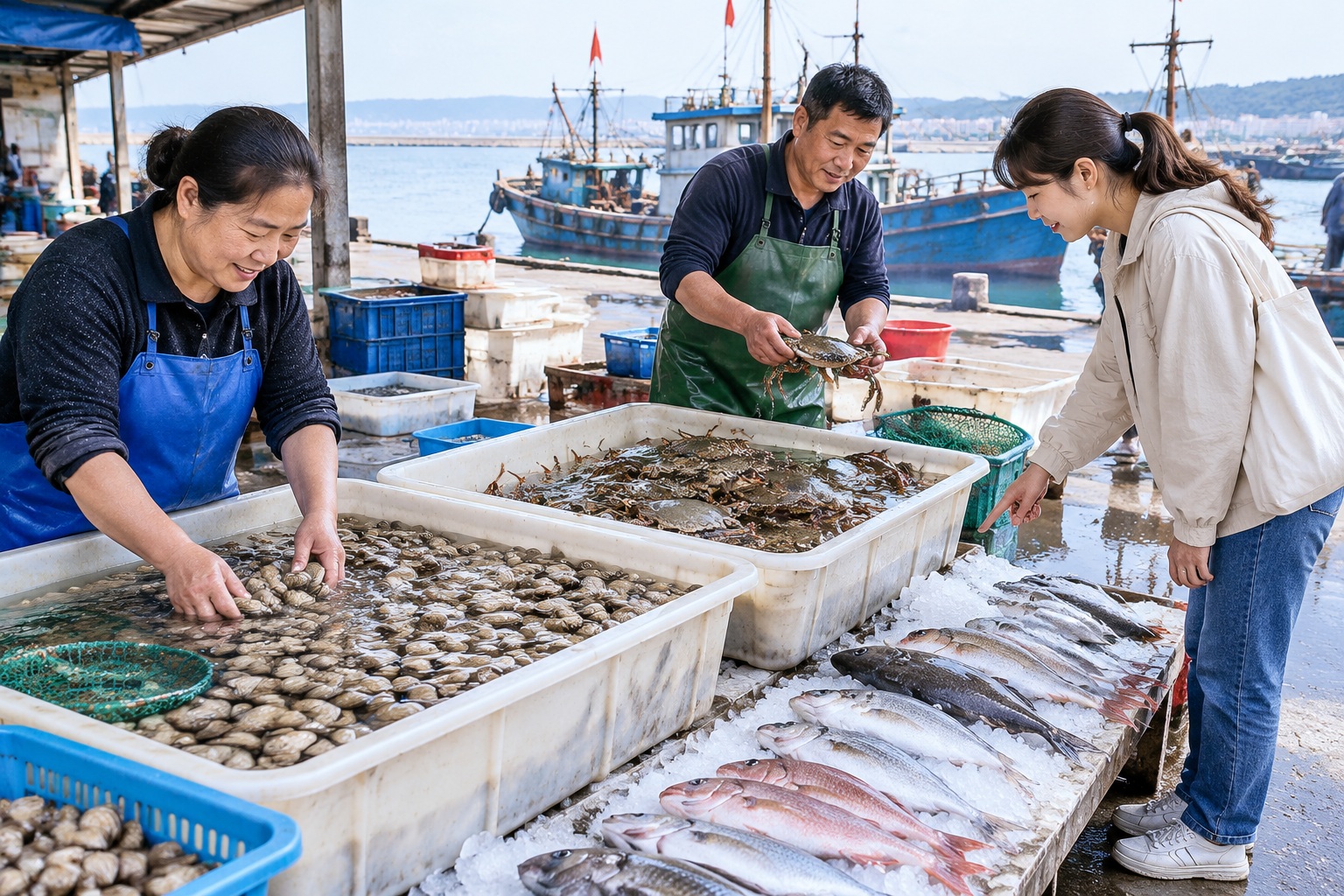
If you want to understand that relationship, visit a morning seafood market before 8 a.m. Vendors crouch beside shallow basins, scooping live clams into plastic bags. A customer picks up a crab, turns it over, and puts it back. Someone asks for a fish to be cleaned on the spot; the vendor scales it on a wooden board and hands it over in a black bag. The market is not designed for tourists. It is a working place, wet underfoot, with the smell of salt and ice.
For a visitor from a Western coastal city, the difference is not just the species. It is the expectation of freshness and the habit of buying live seafood. In many European or American seafood markets, fish is often displayed on ice, already filleted or headed. In Yantai, the live tank and the basin are part of the shop. The customer often has a strong opinion about which crab is meatier and whether the clams need to sit in salt water at home before cooking.
Cold Chain and the Long Road Inland
Yantai seafood does not stay in Yantai. Cold-chain logistics, express delivery, and e-commerce have changed what a small coastal city can sell. A vendor can pack scallops or sea cucumber with ice packs and send them to inland cities. Restaurants in Beijing, Shanghai, or Chengdu can list Shandong seafood on their menus. During holidays, visitors eat in Yantai and then order the same products online when they get home.
This has created new income for fishermen, processors, packers, and couriers. It has also created new pressure. Online reviews reward speed and appearance; a delayed delivery can ruin a small seller’s rating. The most successful operators are not always the best fishermen. They are the ones who can manage packaging, customer service, and a supply chain that begins at 4 a.m. at the harbor.
How Food Travels Beyond Shandong
The outside world usually meets Shandong food in fragments. A short video shows a hand rolling a pancake around a skewer. A travel vlogger films a seafood market and asks the price of an abalone. An overseas Chinese student in London finds a frozen pack of Shandong-style dumplings in a Chinese grocery and feels a sudden, specific homesickness. These are small moments, but they add up to a kind of cultural connection that does not require a government campaign.
Food tourism in China has become a major driver of domestic travel. Young people plan weekends around a single dish. They take high-speed trains, queue for an hour, film the first bite, and post it before they finish eating. This behavior can look strange to outsiders, but it is also familiar: the food pilgrimage exists in many countries. The difference is scale and speed. China’s high-speed rail, mobile payment, and short-video platforms compress the distance between a local stall and a national audience.
For overseas readers, the comparison with Chinese BBQ and Western BBQ is useful. Both are social meals, but the social rules differ. Western barbecue often centers on the cook’s skill and patience. Zibo barbecue distributes the work to the table. One is a performance of slow craft; the other is a shared, slightly chaotic activity. Neither is better. They simply answer different questions about how to spend an evening.
After the Crowds: Prices, Quality and the Hard Part
The Zibo story is often told as a viral success. The more interesting story is what happens after the cameras leave. Some barbecue streets are quieter now. Rent has risen in parts of the city, and some new shops have closed. Visitors who came for the trend may not return. Local operators are left with a simple question: how do you keep a business going when the national spotlight moves on?
Some answers are unglamorous. Keep the meat good. Keep the price honest. Train staff. Clean the toilets. Work with neighbors instead of fighting them over parking. City governments in China are increasingly judged on these details, not just on promotional campaigns. A food city cannot run on queues alone.
Yantai faces a different version of the same problem. Seafood is a premium product, and online sales can reward shortcuts. If a seller uses poor packaging or misleading photos, the whole local brand suffers. Fishermen and vendors know this. The most durable businesses tend to be the ones that treat a repeat customer in another province as seriously as a tourist at the market.
Why This Matters to a Foreign Reader
If you come from Europe or North America, you may not find the food itself shocking. Grilled meat, seafood, pancakes, and scallions are not exotic. What may feel different is the social arrangement around them: the table stove, the live seafood basin, the speed at which a local habit can become a national destination, and the way public services adapt when crowds arrive.
That is the real story of Shandong food. It is not a mythology of ancient recipes. It is a network of ordinary labor: the stall owner who starts preparing at noon, the fisherman who returns before dawn, the courier who packs ice around a box of scallops, the grandmother who lifts the lid and decides the fish is ready. These people are not performing Chinese culture for outsiders. They are making dinner.
And that, perhaps, is the best way to understand today’s China. Not as a monolith, not as a slogan, but as a country where millions of people are trying to make a living, feed their families, and occasionally welcome a stranger to the table. In Shandong, the invitation often comes with a pancake, a skewer, and a plate of clams.
Start the discussion at forum.chinacomes.com