

6:40 a.m., a bowl of noodles, and a question
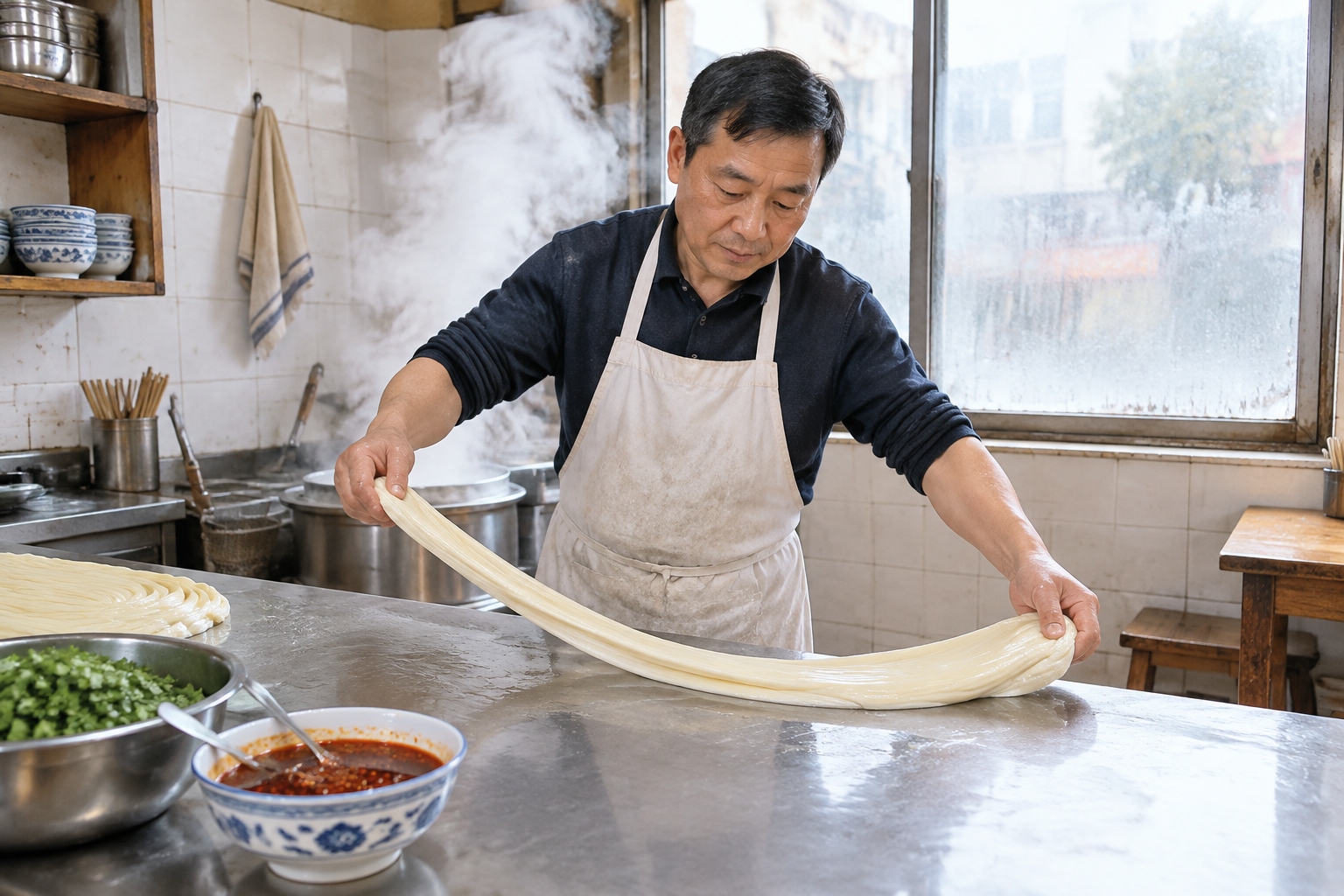
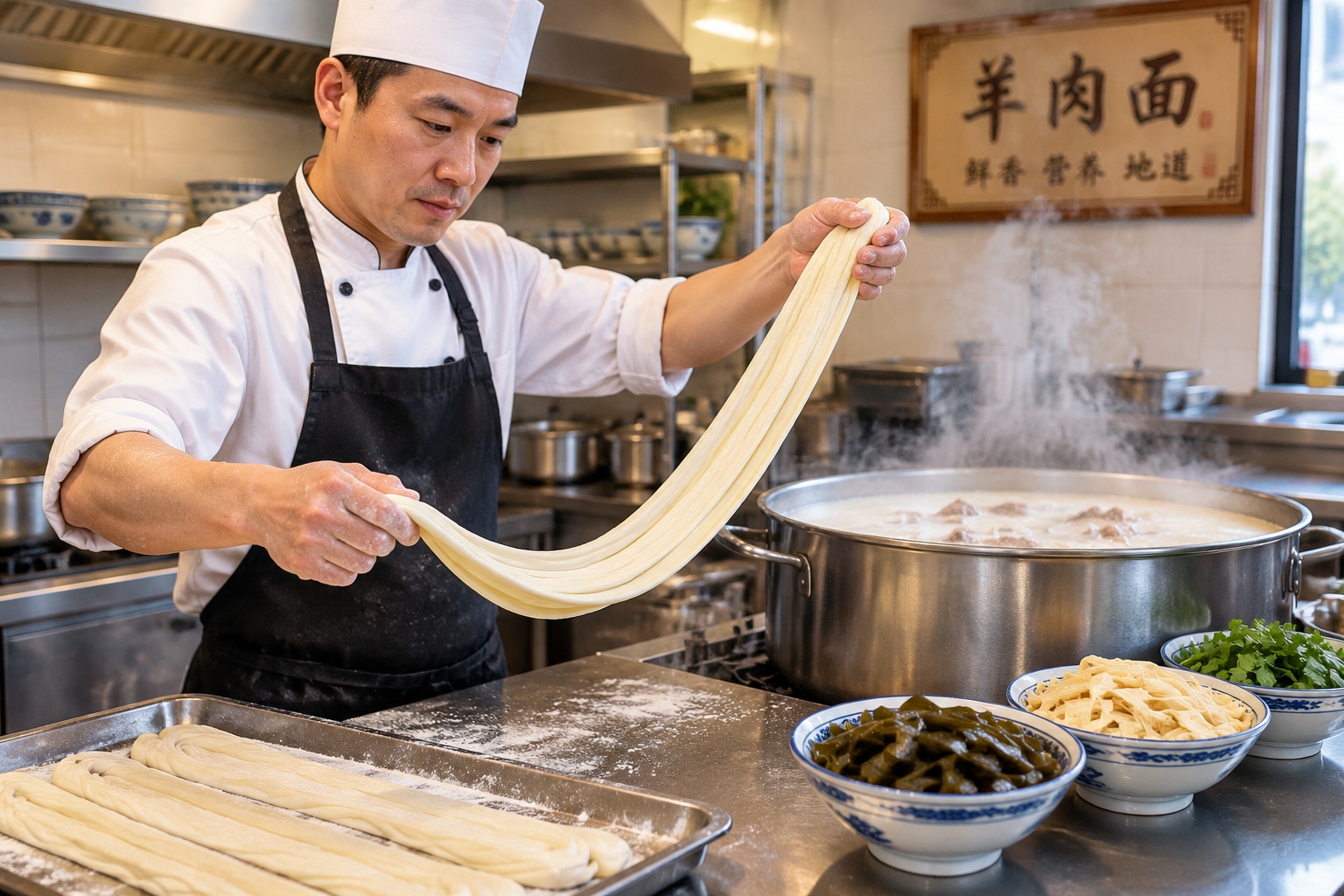
The shop sits on a side street in Zhengzhou’s old city, a few minutes’ walk from a bus depot. By half past six the windows are fogged. The cook stands behind a steel counter, takes a strip of oiled dough the length of a forearm, and pulls it apart in three quick moves. The strip slaps the counter, stretches, and drops into boiling broth.
What arrives at the table is huimian — Henan’s signature noodle: wide, thick ribbons of dough in a milky mutton broth, with strips of kelp, sheets of dried tofu, a little vermicelli, chopped cilantro and a spoon of chili oil. Eighteen yuan, about US$2.50. Around me: two office workers checking phones, a taxi driver eating fast, a nurse who has just come off a night shift and asks for extra broth.
People here eat this two or three times a week without thinking about it. But the question that stayed with me is simple: where did the wheat in this bowl come from?
The short answer is: almost certainly not far away. The longer answer involves a field, a combine harvester, a grain station, a mill and a kitchen — five stops that have become so efficient that most customers never notice them.
The field: winter wheat on the North China Plain
Eastern and southern Henan is flat, and the soil is a deep, silty loam that holds water well. That combination is why the province grows roughly a quarter of China’s wheat — close to 38 million tonnes in a good year, out of a national crop of around 140 million tonnes.
The wheat grown here is winter wheat, which has a rhythm unfamiliar to readers in, say, Australia or Canada. It is sown in October. The seedlings come up, then stop growing and sit through the winter, often under a thin layer of snow. They start again in March, and the harvest runs from late May to mid-June.
In a village outside Zhoukou, a farmer in his late fifties walks me along the edge of his land. He farms about 12 mu of his own — one mu is roughly one-fifteenth of a hectare — and rents more from neighbours who have gone to work in cities. He sows around 10 kilograms of seed per mu, spreads fertiliser in spring, and usually waters twice, in March and again around early May, using a hose and a pump rather than the big pivot irrigators you see in other countries.
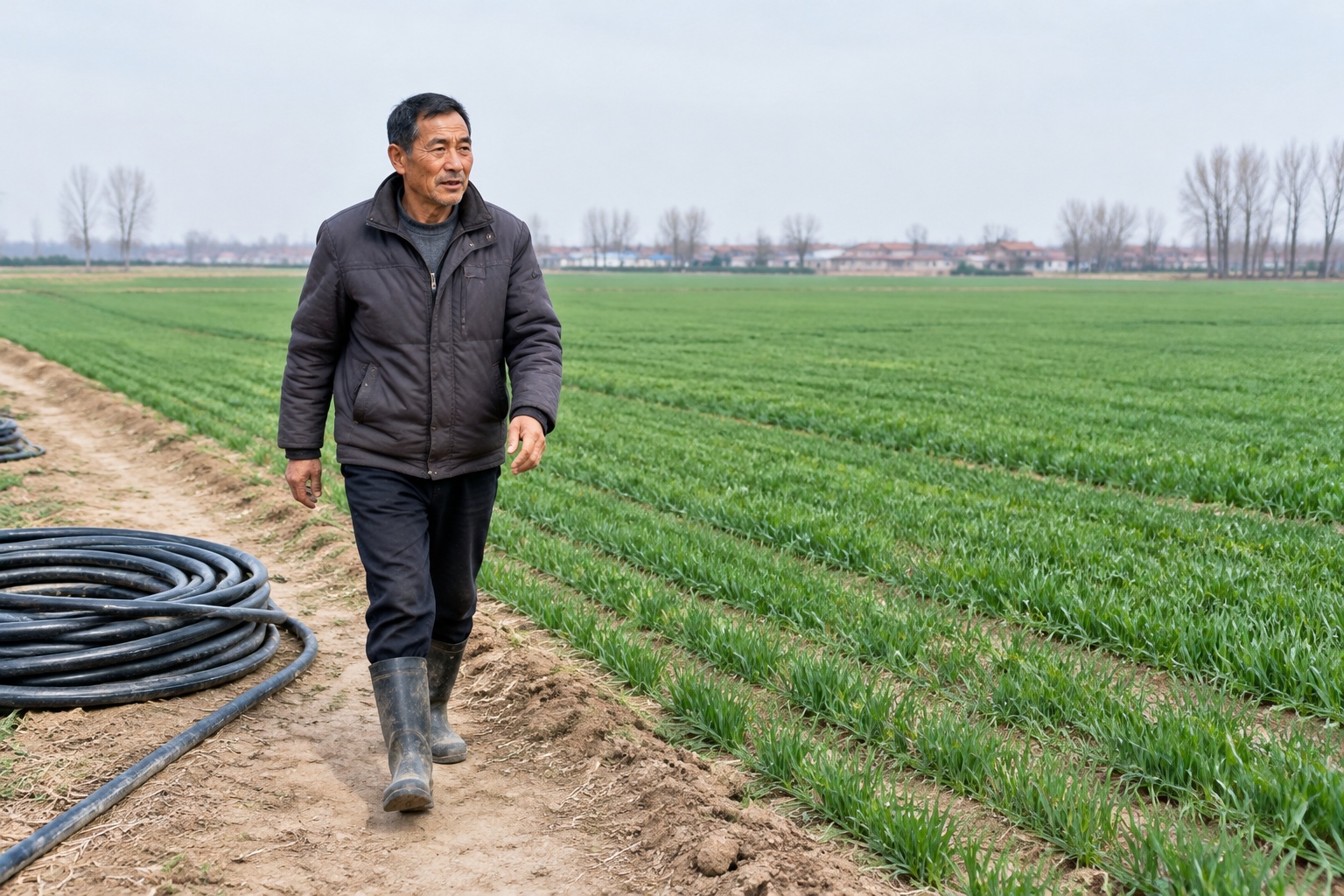
His calculation is unglamorous. In an average year his fields produce about 450 kilograms per mu. Seed, fertiliser, pesticide, water, fuel and the hire of a machine for sowing and harvest add up to something in the range of 500 to 600 yuan per mu. Wheat at roughly 2.4 yuan a kilogram brings in about 1,080 yuan. The gap is his income, plus a small government subsidy paid per mu. That is why so many households here have at least one member working in a city, and why village land quietly consolidates into the hands of those who stay.
Harvest week: 20 minutes per mu
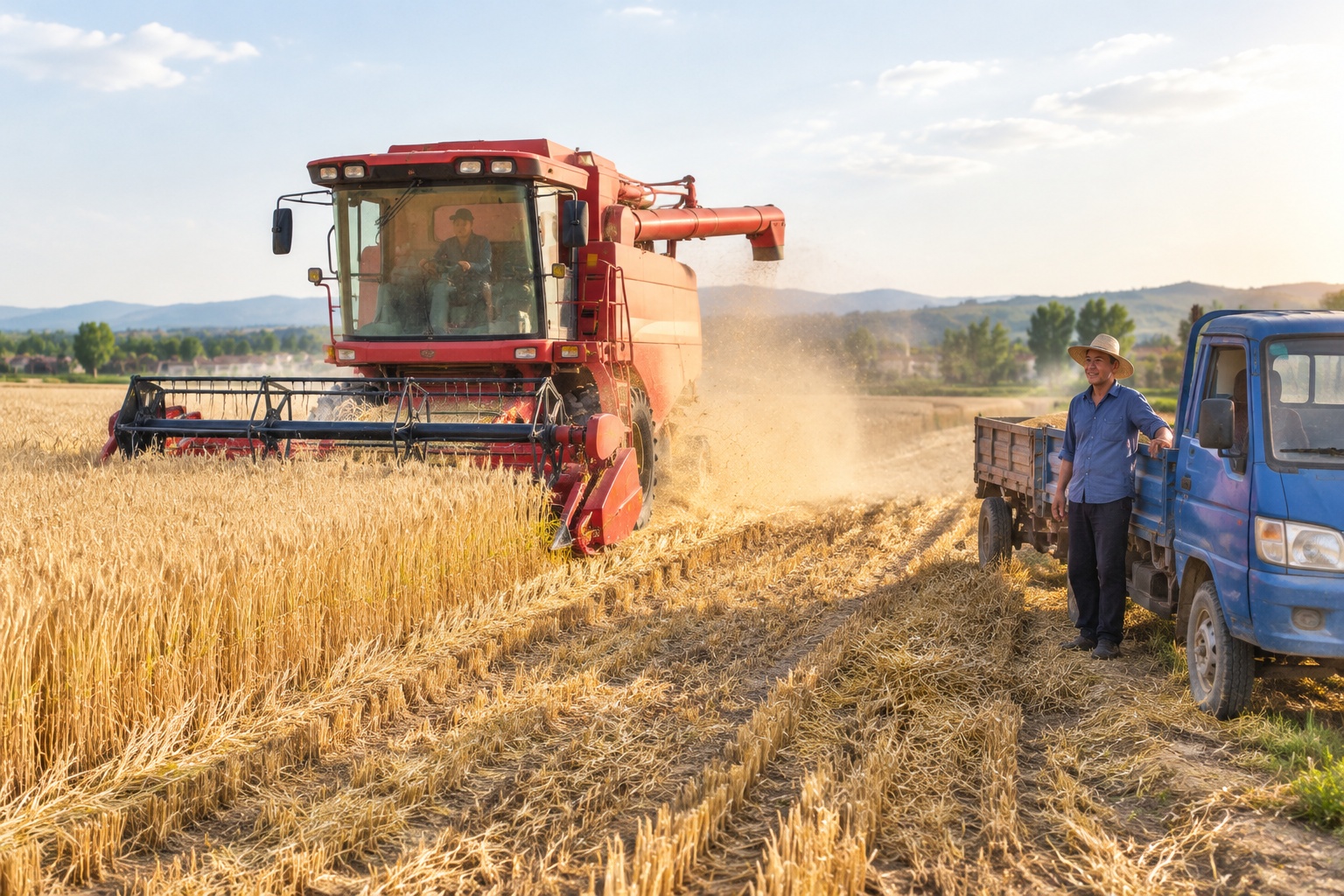
When the harvest starts, the plain changes character. Combine harvesters arrive in convoys — many of them owned by operators who follow the crop north from Hubei and Henan into Hebei and Shandong, a migration that runs for about a month each year.
A modern combine clears a mu in roughly twenty minutes. The farmer’s job has shrunk to standing at the edge of the field with a trailer, watching the grain pour out of the auger, and hoping the rain holds off. Wet grain at harvest is the oldest risk in farming here: if it rains in the last week before cutting, the kernels sprout or grow mouldy, and the price falls.
From the field, the grain goes to a purchase station on the edge of town — a concrete yard with a weighbridge, a moisture meter and a queue of small trucks. The station tests moisture and impurities, then quotes a price. There is a national floor price for wheat (about 1.19 yuan per jin, or roughly 2.4 yuan a kilogram, in the 2025 season) that keeps the market from collapsing in a bumper year, but farmers still sell above or below it depending on quality and the day’s supply.
This is the least visible part of the chain and, for the people in it, the tensest. A farmer’s whole year turns into one number on a slip of paper.
From grain truck to flour mill
From the station, grain is dried to a moisture level safe for storage — about 12.5% — and moved into silos. Some is held in state reserves, some goes straight to mills. In Henan, mills are rarely far away: the province is one of China’s largest flour-processing centres, with clusters in Xinxiang, Shangqiu and Zhoukou.
Inside a mill, wheat goes through a sequence that has not changed in principle for a century but has become enormously more precise. Cleaning removes stones, dust and foreign seeds. The grain is then tempered — sprayed with water and left to rest so the bran toughens and the endosperm softens. Roller mills crack it open, and sifters separate flour from bran. A typical milling rate is about 75%: one tonne of wheat yields roughly 750 kilograms of flour.
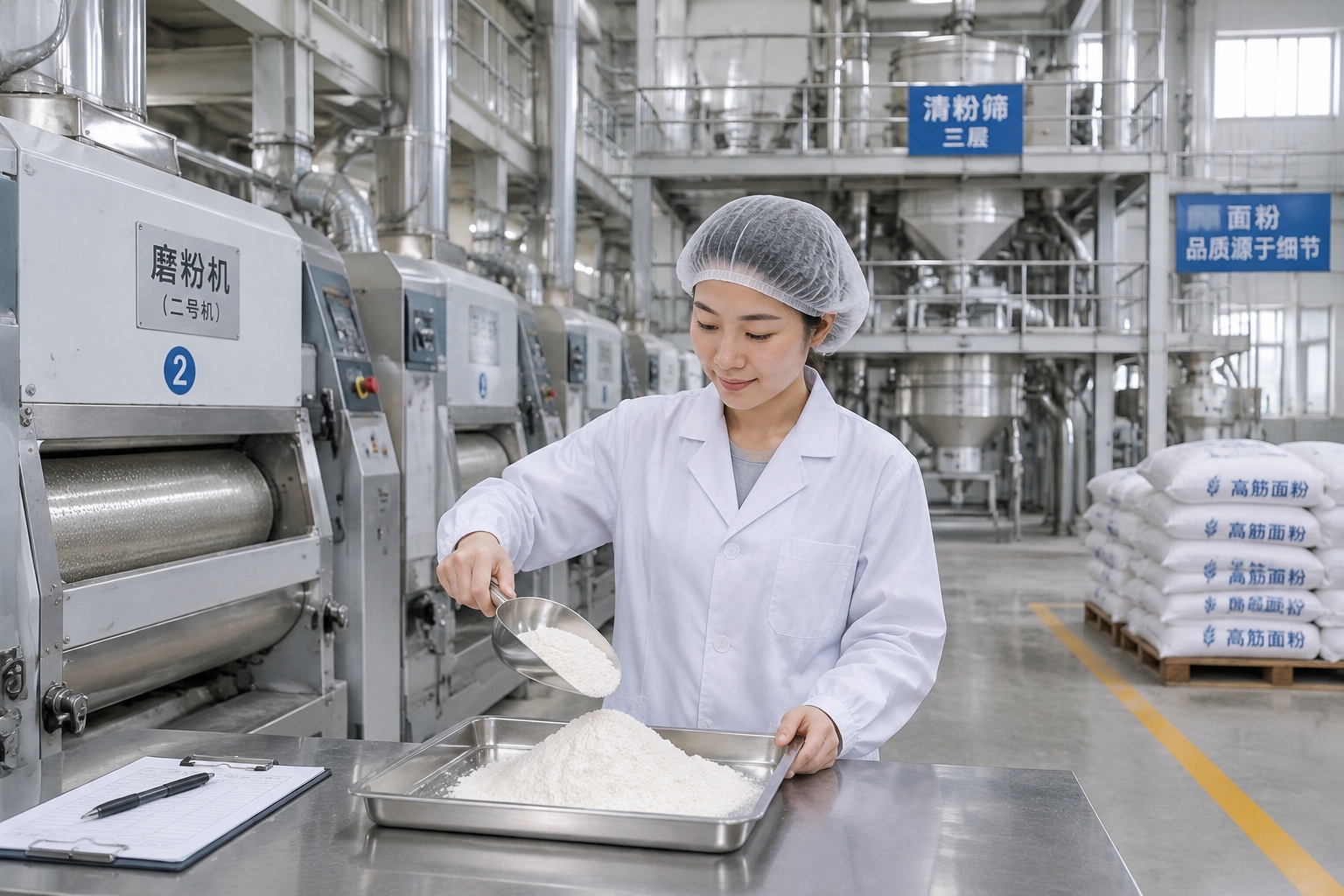
The part that matters most for a noodle shop is consistency. Flour for huimian needs decent protein — roughly 12% — so the dough can be stretched without tearing, but it also has to behave the same way every week. Mills blend wheat from different regions and different harvests to hit a fixed specification, and a quality technician will test each batch for moisture, protein and gluten behaviour before it is bagged. A restaurant owner buying a 25-kilogram sack does not want surprises.
The kitchen: 18 yuan, itemised
Back at the shop, the dough is mixed with water and salt — nothing else — and left to rest for at least half an hour, sometimes longer in winter. Resting lets the gluten relax, which is what makes the pulling possible. The cook brushes each portion with oil so the strips do not stick, then pulls them to order.
The broth is the other half of the work. Mutton bones and meat simmer for three to four hours, usually overnight, and are topped up through the day. The toppings are cheap and local: kelp, dried tofu, vermicelli, cilantro, chili oil, and a dish of pickled garlic on each table.
So where does the 18 yuan go? Take a rough breakdown for a mid-sized shop:
What a bowl actually costs
Flour for one bowl, about 100 grams, works out to roughly 0.4 yuan at wholesale flour prices. Mutton and bone for the broth: 4 to 5 yuan. Other toppings: about 1 yuan. Gas, electricity and water: under 1 yuan. That leaves rent and labour, and those dominate. A shop with four staff on a decent street might pay 10,000 to 15,000 yuan a month in rent and 25,000 to 30,000 yuan in wages — which is why volume matters more than margin. A busy shop sells 200 to 300 bowls between 11 a.m. and 2 p.m. and relies on that lunch rush to cover the day.
The wheat farmer’s share of that 18 yuan is a few cents. Almost all of the value is created after the grain leaves the field — in milling, logistics, cooking and rent. That is normal for food everywhere, and it explains why agricultural policy in China focuses as much on yields and processing as on prices at the farm gate.
How the flour gets to the counter
Most flour does not travel far. Mills sell to wholesale grain and oil markets on the edge of cities, where small shops and restaurants buy by the sack; to supermarket chains; and increasingly through e-commerce and community group-buying platforms, where households order 5-kilogram bags on a phone and pick them up from a nearby convenience store the next day.
The result is that a noodle shop in Zhengzhou can restock in the morning and be serving by lunch. Restaurants rarely hold more than a few days of flour, because storage space is expensive and delivery is reliable. This is one of the quieter changes of the past fifteen years: not a new technology, but a supply chain so steady that a cook can plan around it.
Back at the bowl
By one o’clock the lunch rush is thinning. The cook is still pulling dough, sleeves dusted with flour. A customer finishes, pushes the bowl away, pays with a phone, and leaves. The owner wipes the table with a cloth, stacks the bowls, and starts on the next order.
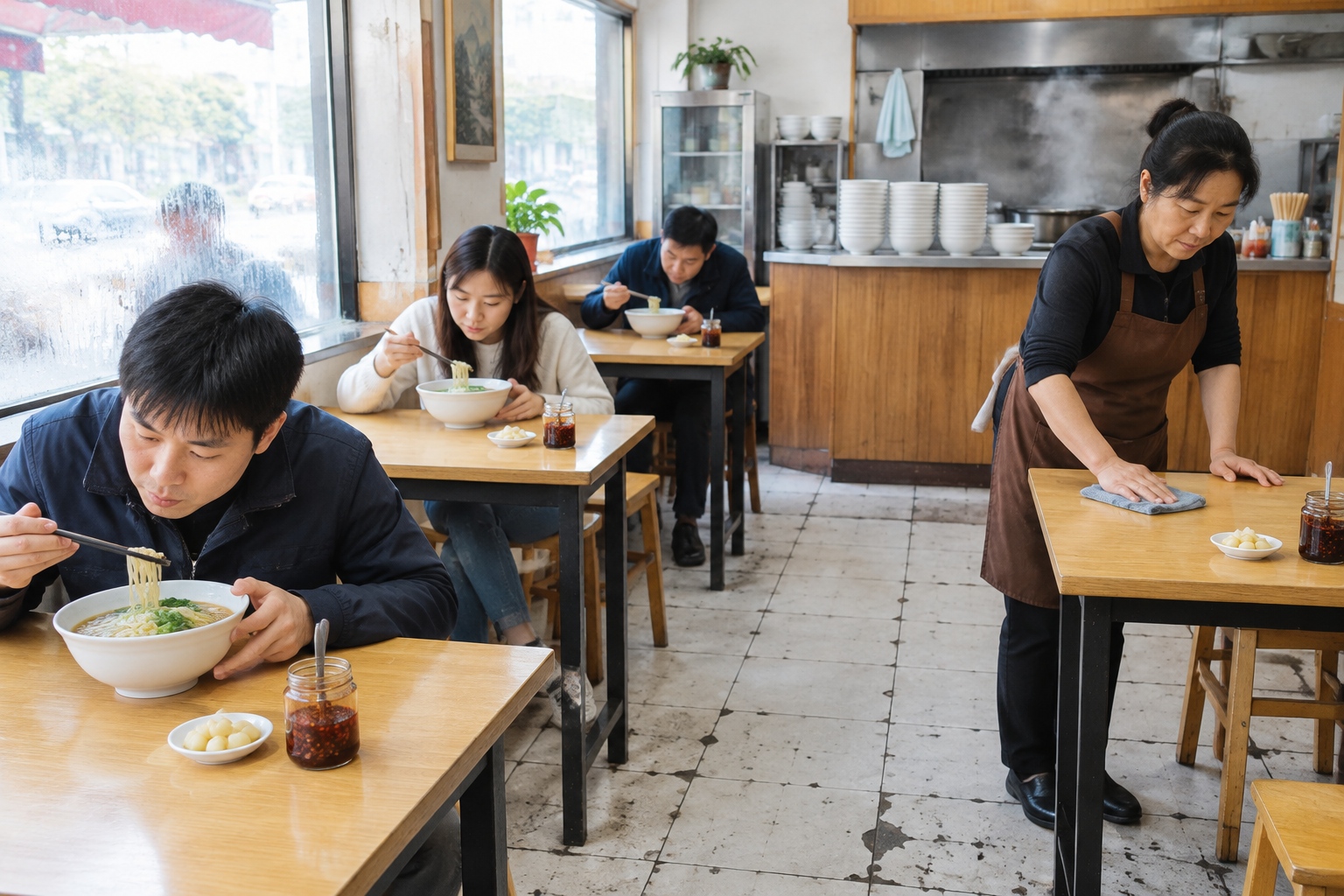
Nothing about this scene looks like a supply chain. But every bowl connects a field near Zhoukou, a combine operator who drives north for a month each spring, a grain station clerk with a moisture meter, a mill technician blending wheat to a specification, and a cook who has pulled the same dough ten thousand times.
The wheat system in Henan is not a miracle. It is a set of ordinary arrangements — irrigation, machinery, price floors, milling capacity, delivery — that have been made reliable enough that eighteen yuan buys a hot, filling lunch without anyone needing to think about the field behind it. That reliability is the story, and it is easier to see from the bottom of a bowl than from any statistic.
Start the discussion at forum.chinacomes.com