

8 p.m., and the street turns on
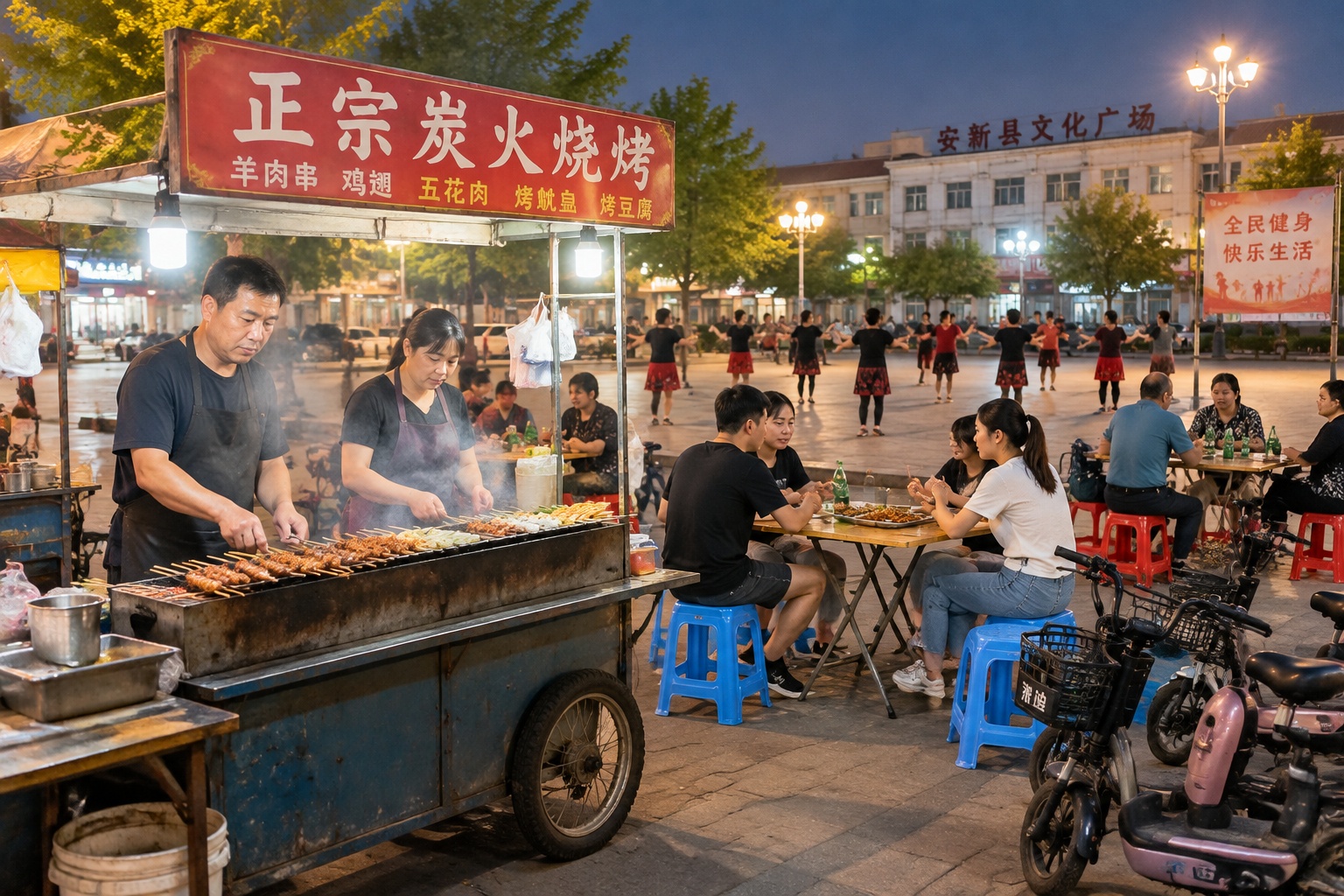
At eight in the evening in a county town in Hebei, the main street does not go quiet. It switches on. A grill lid clatters. Someone drags a plastic stool across the pavement. The first chorus of a square-dancing playlist arrives from the plaza half a block away, slightly clipped by a portable speaker. E-bikes park three deep outside a milk-tea shop, and a teenager in school uniform is already arguing with a friend about whose turn it is to pay.
If you are not from China, “county town” needs a quick translation. It is not a village, and it is not a city like Beijing or Shijiazhuang. It is the administrative and commercial center of a county — often a compact grid of streets with a few tens of thousands to a few hundred thousand people, where the noodle-shop owner knows your mother and the cheapest barbecue is the one with the most smoke.
Night economy, without the jargon
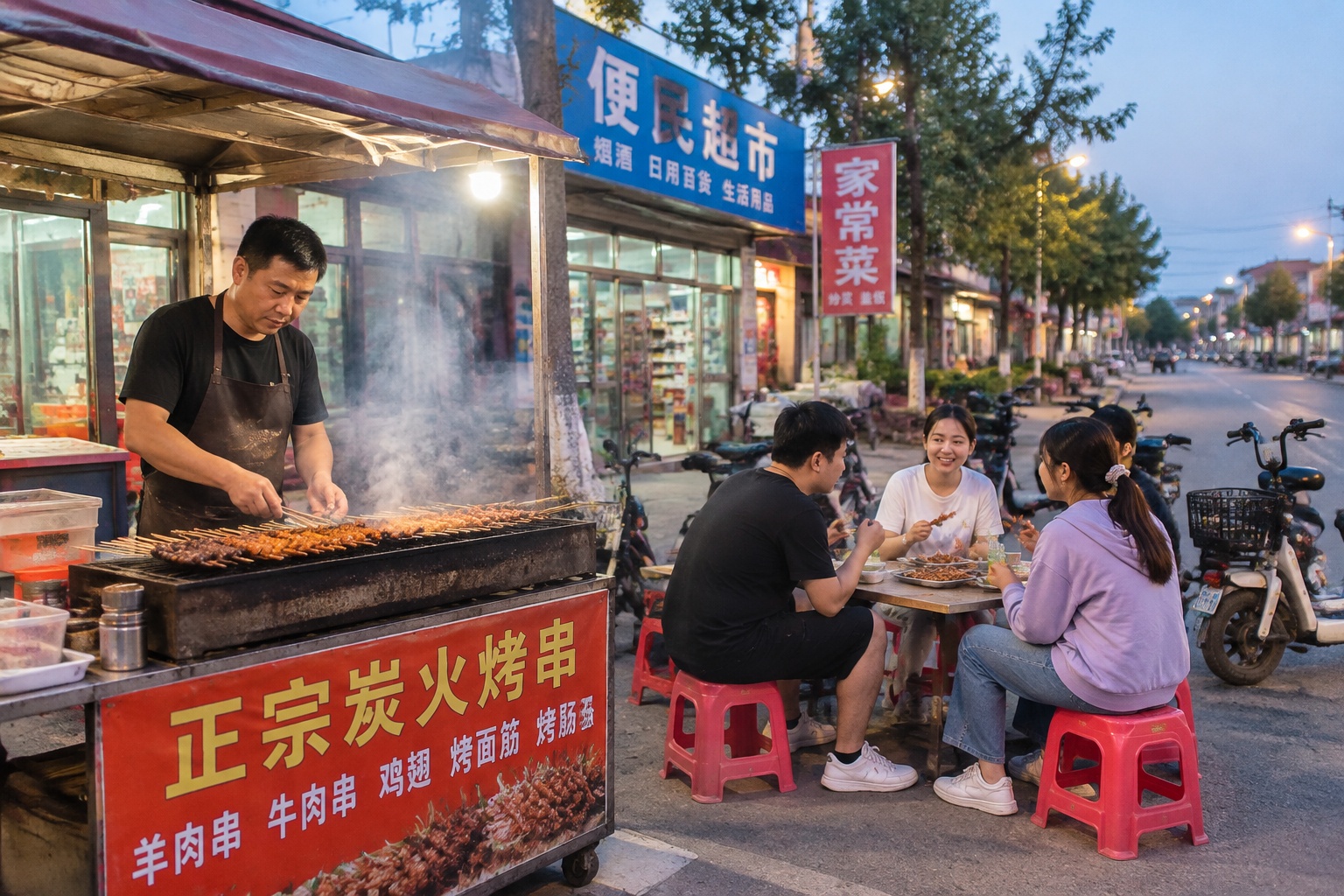
“Night economy” sounds like something from a planning document. On this street, it looks like a row of folding tables, a freezer of skewers, a woman ladling cold noodles into a bowl, and a man selling glow-in-the-dark plastic toys to children who have already been told no twice.
A typical seated dinner here costs 30 to 50 yuan per person. Skewers run about 2 yuan each for lamb, slightly less for vegetables. A bottle of local beer is 4 to 6 yuan. A large cup of lemon tea is 10 yuan. For the price of two cinema tickets in a big city, four people can eat, drink, and sit outside for two hours.
The street is not a themed commercial district. It is the actual center of town, and the night market has grown into the space between the bank, the pharmacy, and the grocery store. That is part of why it feels less like “entertainment” and more like the living room of the town.
The people who set up after work
Many vendors are not full-time street traders. They finish a day job, go home, eat quickly, and come out at six or seven. One young couple I watched near the intersection runs a grill cart starting around 6:30 p.m. The woman works at a pharmacy during the day; her husband drives a delivery van. They set up four folding tables and a string of small lights, and they are usually sold out of lamb skewers by 10:30.
Their math is simple. A good night moves 300 to 500 skewers, plus vegetables, beer, and soft drinks. After ingredients, gas, and the small nightly stall fee, they might clear 200 to 400 yuan on a weekday and more on a Friday. It is not a fortune, but in a town where rent is low and the commute is ten minutes, it adds up to a car payment or a child’s after-school classes.
The stall fee matters. In many Hebei county towns, the local administration designates a night-market zone and charges a modest nightly fee — sometimes a few yuan, sometimes a few dozen — to cover cleaning and waste collection. Vendors know the rules: no blocking the blind path, no spilling oil into the drain, no music louder than the neighbors can tolerate. The rules are not always loved, but they are understood.
The customers: two hours, forty yuan, no rush
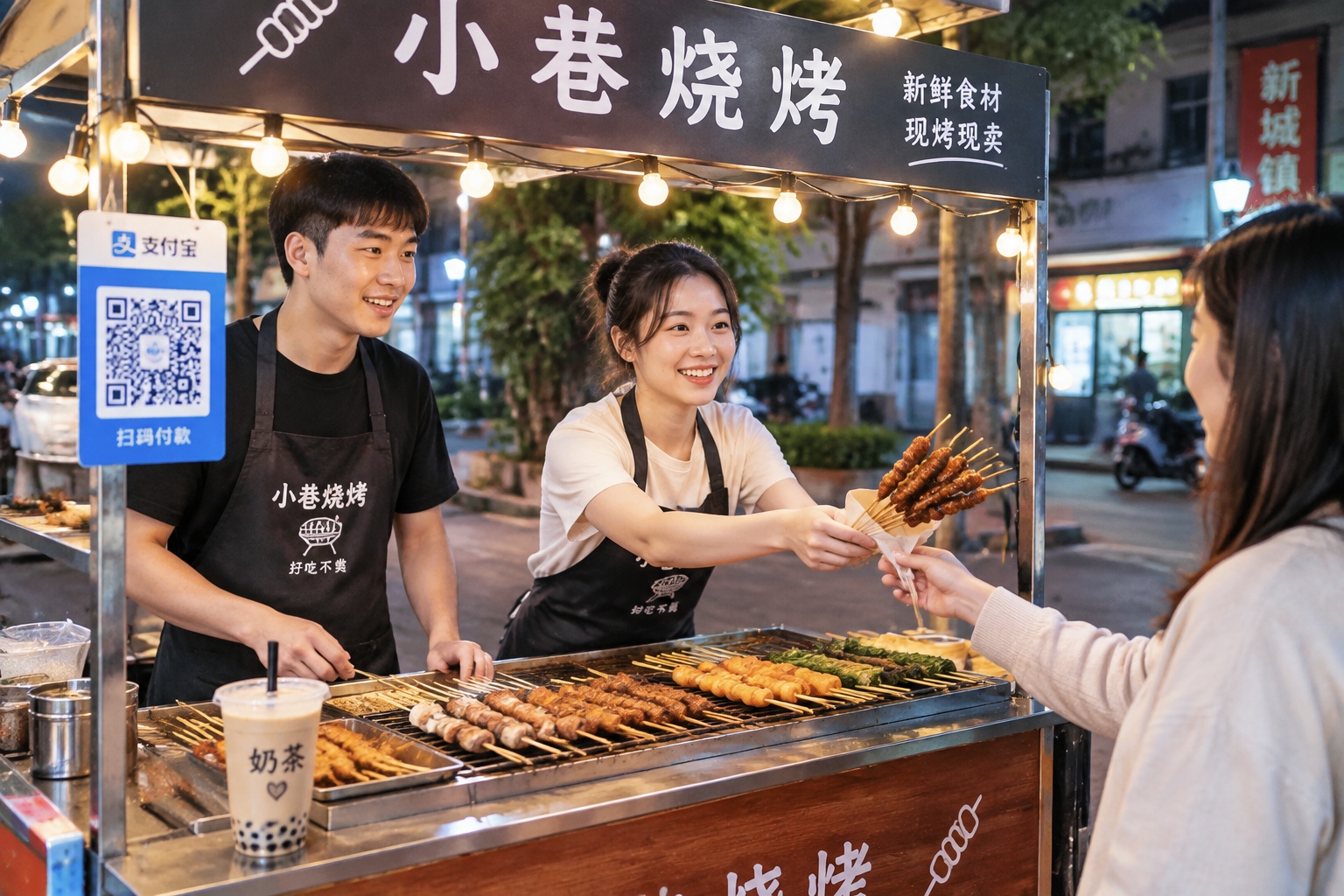
The people sitting down are mostly young. Some have just finished a shift at a factory or a hospital; others work in a phone shop, a kindergarten, a courier station, or a government service window. A few are back from bigger cities for the weekend or for good, and they meet friends here because there is nowhere else that stays open past nine.
What they order is less interesting than how long they stay. A group of four might share 60 skewers, two plates of grilled vegetables, a bowl of cold noodles, and four beers, and then sit for another hour doing nothing in particular. Phones come out. Someone shows a video. Someone complains about a boss. The pace is slow in a way that big-city restaurants rarely allow, because no one is turning the table.
This is the part an overseas reader might recognize. It is not so different from meeting friends for tacos or a late pizza after work. The setting is cheaper and more improvised, but the purpose is the same: a small, affordable release valve at the end of the day.

Who keeps the sidewalk usable
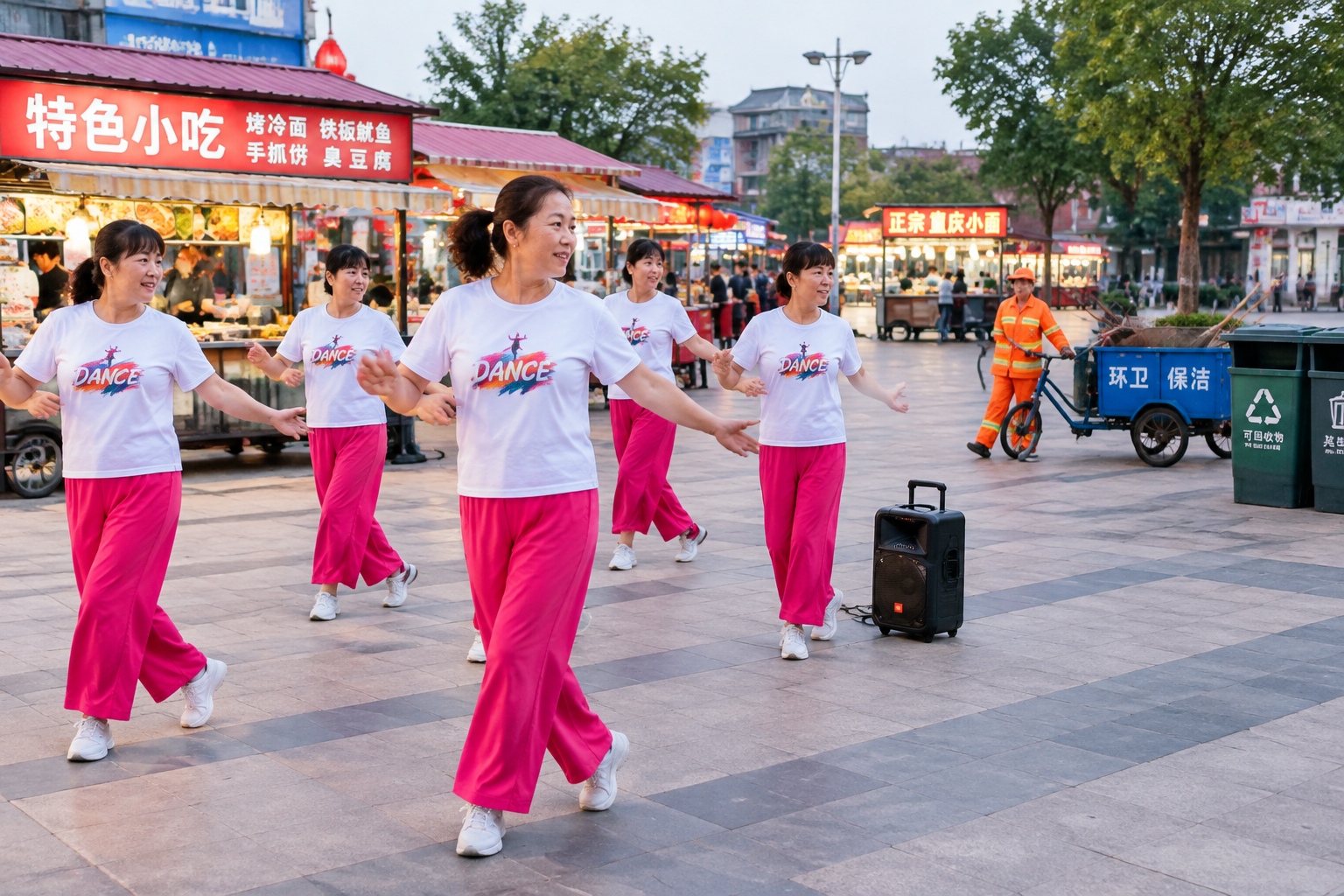
The street works because someone is managing the friction. Vendors are assigned spots, usually marked with paint or tape. Garbage bins are placed at the ends of the row, and a cleaner on a three-wheeled cart passes through every hour or so. Traffic is kept to one side, and the e-bikes are pushed into a designated parking area that is, in practice, more of a suggestion.
Square dancing gets its own quiet negotiation. The plaza at the corner fills up around 7 p.m. with women in matching T-shirts and a few husbands who stand at the edge holding water bottles. The music is loud enough to feel, not loud enough to drown out the skewer cart. By 9 p.m., the speaker is off and the plaza returns to being a place where teenagers skateboard badly.
None of this is perfect. On rainy nights, the street is half empty and the drains smell. On holidays, the crowd is thick enough that you cannot walk two meters without stepping sideways. But the ordinary weeknight version is remarkably functional: people eat, children run, someone sweeps, and the street is still a street in the morning.
Cheap, familiar, and quietly lively
County-town consumption has its own logic. Prices are low, and people are careful with money. A family of three might spend 80 yuan on barbecue, 15 yuan on a child’s trampoline session, and 10 yuan on ten rings at the hoop-toss stand. That is a full evening out, and it is within reach for a household earning 4,000 to 6,000 yuan a month.
The familiarity matters too. Vendors know their regulars. A woman selling roasted corn keeps a plastic bag of extra chili powder for a customer who likes it hot. A group of young men at the skewer cart are greeted by name and asked about a father’s health. In a town this size, the night market is not anonymous. That can feel cozy or nosy, depending on your mood, but it is unmistakably social.
The energy is real, but it is not the pumped-up, neon-lit version you see in promotional videos. It is quieter: a steady hum of conversation, the click of skewers on a grill, the occasional cheer from a hoop-toss game. It is the sound of people with modest budgets finding a way to enjoy themselves.
When the music stops
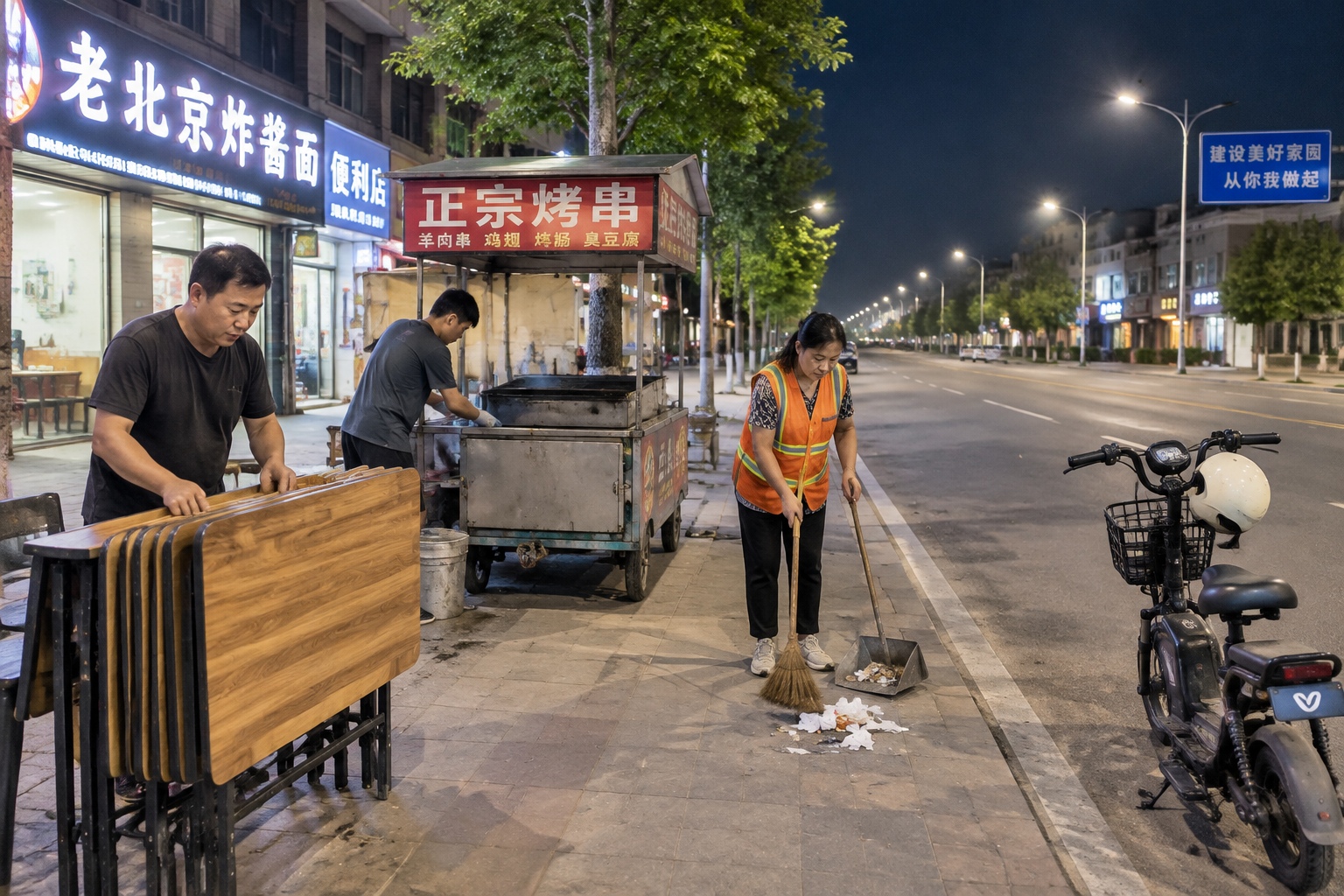
By 10:30, the first carts begin to close. The grill is scraped, the leftover skewers go into a cooler, and the folding tables are stacked against a wall. A young woman counts cash and checks her phone for a QR-code payment that did not go through. The square-dancing speaker is already in someone’s trunk. A cleaner sweeps the last of the paper napkins into a bin.
The street does not become romantic or cinematic. It becomes ordinary again: a wide road with a few streetlights, a closed pharmacy, a parked e-bike with a helmet hanging from the handlebar. The people who were sitting outside an hour ago are now walking home in twos and threes, still talking.
That is what a county-town night economy looks like from the inside. Not a policy achievement, not a tourist attraction, just a few hundred people finding a cheap, familiar place to be together after work. If you want to understand how small-city China actually lives, skip the scenic spots and find the street with the most smoke.
Start the discussion at forum.chinacomes.com