
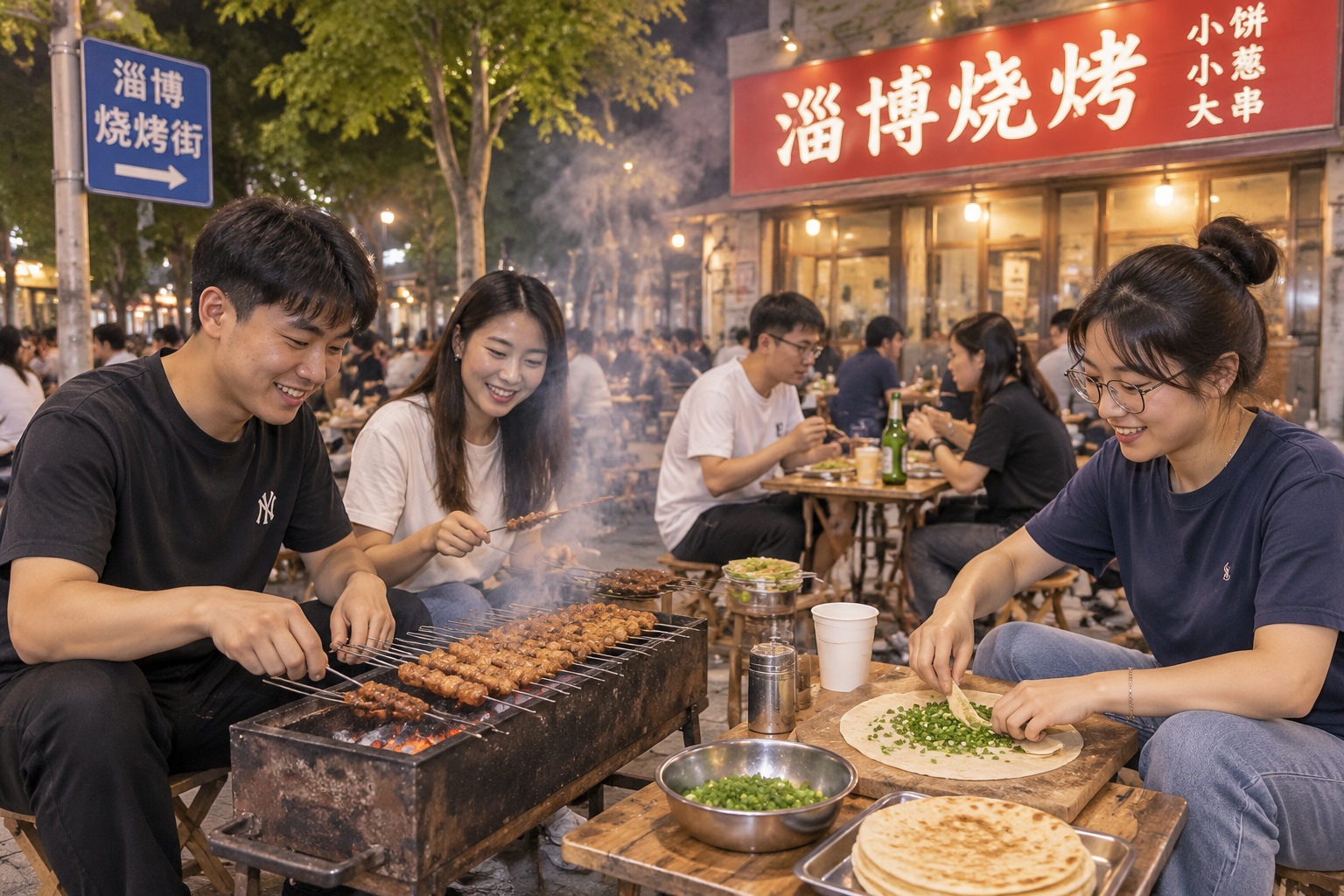

A Night at the Zibo Barbecue Stall
It’s 9 p.m. on a Saturday in Zibo, a city in Shandong province that most foreign tourists have never heard of. The air smells of cumin and charcoal. At a crowded outdoor stall, a young couple is hunched over a small, round grill. The woman places a thin, white flatbread on her palm, adds a piece of sizzling pork, a few strands of green onion, and a dab of chili paste. She rolls it up, takes a bite, and grins. “This is the best part,” she says, her mouth half full. “You build it yourself.”
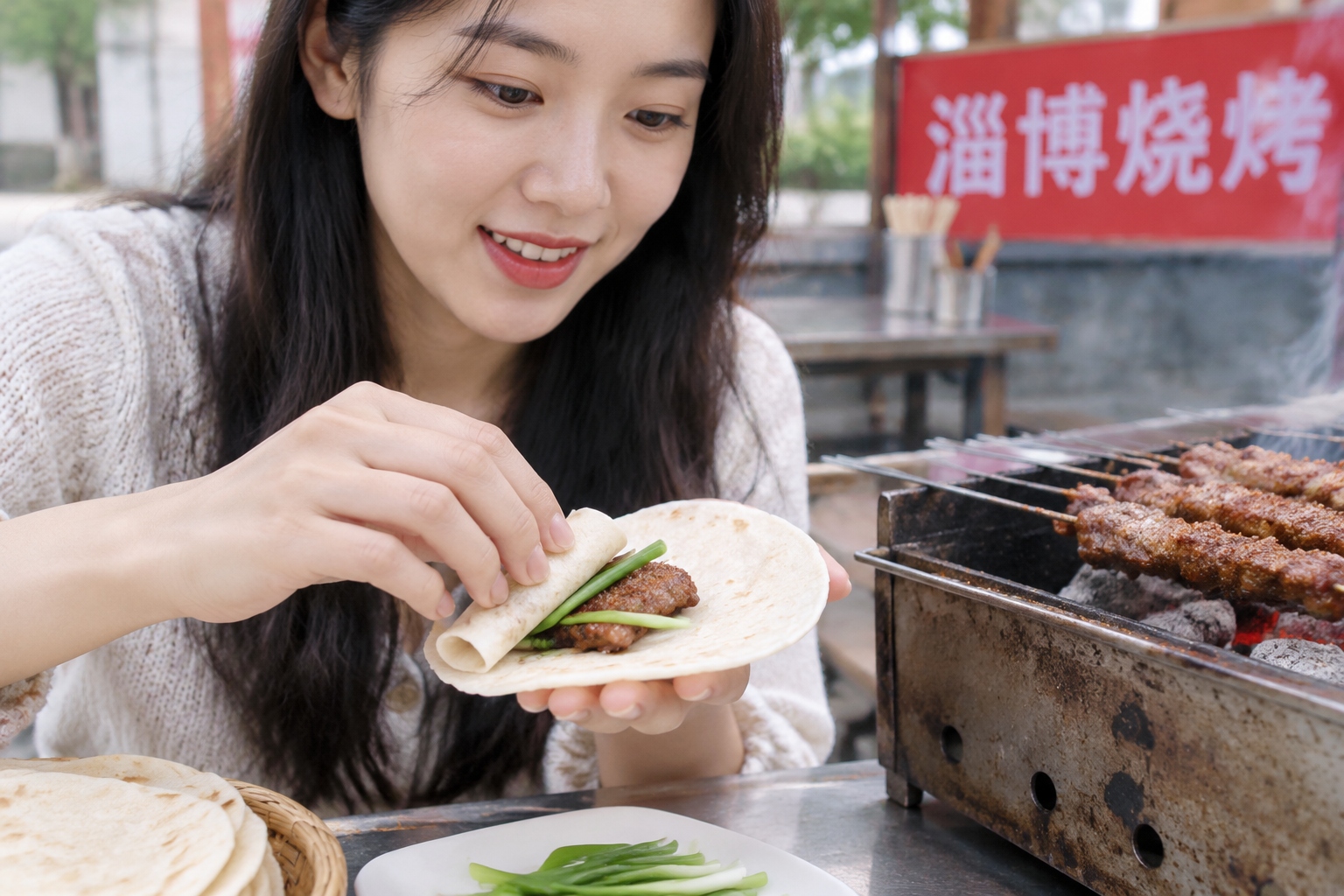
Around her, dozens of people are doing the same: queuing for raw skewers, grabbing handfuls of green onions from plastic baskets, and mixing their own dipping sauces from a row of labeled jars. The price list on the wall is refreshingly simple: skewers start at 1 yuan (about 14 cents), flatbreads at 2 yuan, and a beer is 5. There’s no table service, no fancy decor—just the din of conversation, the clink of skewers, and the occasional cheers from a nearby table.
For a small city that built its reputation on coal and chemicals, this scene might seem out of place. But in the spring of 2023, Zibo’s barbecue—specifically the “small flatbread rolled with green onion” (小饼卷葱)—became a national obsession, and then a global curiosity. How did a local DIY barbecue style turn a fading industrial town into a viral destination?
The DIY Appeal of Zibo Barbecue
Zibo is not a typical tourist city. It sits in the heart of Shandong, an industrial province known more for manufacturing than for nightlife. But its barbecue culture has been a local secret for decades. The setup is simple: a small charcoal grill at each table, raw skewers of meat and vegetables, and a stack of thin flatbreads. Diners cook the skewers themselves, then wrap the meat in a flatbread with green onion and sauce. It’s interactive, social, and cheap—a meal for two can easily cost under 50 yuan ($7).
“It’s like a DIY taco party,” says Li Wei, a 28-year-old engineer who grew up in Zibo. “You’re not just eating; you’re hanging out. The grilling takes time, so you talk.” That slow, participatory rhythm is central to the experience. Unlike the fast-paced conveyor-belt sushi or the solitary act of scrolling through a food delivery app, Zibo barbecue forces you to engage—with your food, and with the people around you.
The local government has long promoted the city’s barbecue, but it was never a big draw. Then came the students.
How a Viral Moment Started with College Students
In early 2023, China lifted its COVID-19 travel restrictions. Young people, cooped up for years, were eager to travel. A trend called “special forces travel” (特种兵式旅游) emerged: college students cramming multiple cities into a weekend, sleeping on trains, and spending as little as possible. Zibo, with its ultra-cheap barbecue, became a favorite stopover.
Videos began appearing on Douyin (China’s TikTok), Xiaohongshu (a lifestyle platform), and Weibo. They weren’t polished ads. They were shaky, phone-shot clips of students grilling skewers, laughing, and showing off their bills: “Twelve people, 300 yuan, and we’re stuffed!” The hashtag #ZiboBBQ racked up billions of views. The grassroots nature of the sharing—no celebrities, no official campaigns—made it feel authentic. “It was like a friend telling you about a hidden gem,” says Zhang Yuxin, a 22-year-old student from Beijing who visited in April. “I trusted it more than any advertisement.”

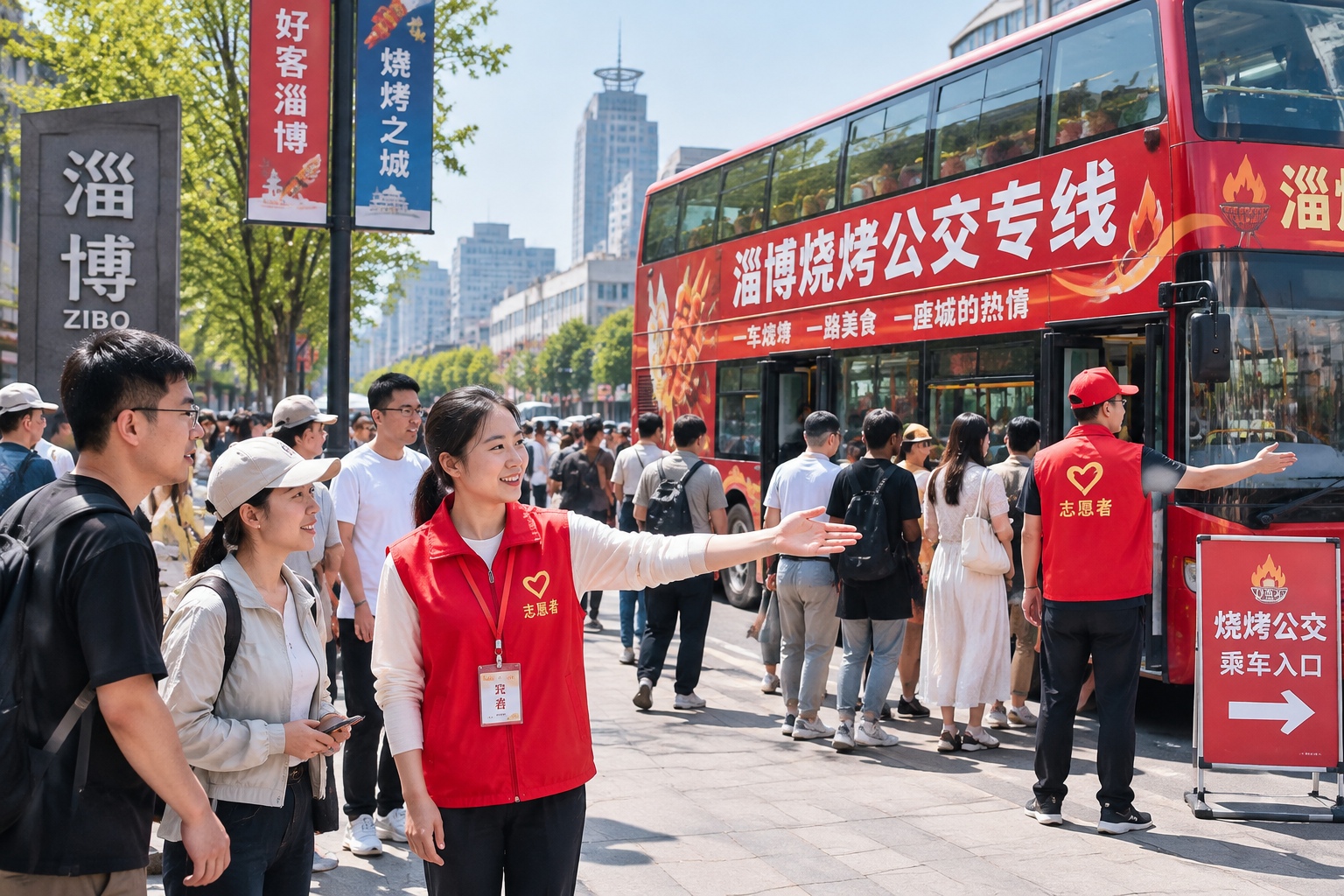
The local government didn’t sit idle. Within weeks, the city launched a “barbecue bus” line connecting the train station to popular stalls, distributed free maps, and set up a hotline for tourists. Volunteers in red vests appeared at major intersections, offering directions and water. The market regulator issued strict price guidelines, warning vendors against gouging. A barbecue association was formed to standardize quality and handle complaints.
The City That Learned to Host
For a city unaccustomed to tourists, the influx was overwhelming. At its peak, Zibo received over 200,000 visitors in a single weekend—more than its entire hotel capacity. Residents opened their homes to strangers. Taxi drivers offered free rides from the station. “I picked up a group of students from Henan,” recalls Wang Jian, a 45-year-old driver. “They had no idea where to go. I drove them to the best stall, waited, and took them back. They tried to pay me, but I said, ‘Welcome to Zibo.'”
The city’s response became a case study in local governance. Rather than banning street vendors or raising prices, officials chose to accommodate. They paved a temporary parking lot, added portable toilets, and even organized a barbecue festival. “The key was speed and sincerity,” says a local official who asked not to be named. “We knew we couldn’t control the internet, but we could control our service.”
The Economic Reality: Boom and Bust
The barbecue boom had tangible economic effects. Hotel occupancy in Zibo jumped from 30% to 90% during peak weekends. The local railway station reported a 40% increase in passengers. Young entrepreneurs seized the moment: some started delivery services for raw skewers, others live-streamed themselves grilling, and many opened pop-up stalls. “I made 10,000 yuan in one week just selling flatbreads,” says Liu Fang, a 24-year-old who quit her office job to join the craze.
But the boom also brought challenges. Long queues snaked around blocks, leading to complaints from residents about noise and litter. Some vendors, tempted by profit, raised prices or diluted quality, prompting the barbecue association to issue warnings. By late 2023, the hype had cooled. Visitor numbers dropped, and many temporary stalls closed. “It was a gold rush,” Liu says. “Now we’re back to normal, but the city is more famous, and that helps.”
The local government has tried to leverage the attention for long-term gains. It invested in tourism infrastructure, promoted other local attractions like the ancient Qi State capital, and streamlined business registration for food startups. “We don’t want to be a one-hit wonder,” says the official. “The barbecue was a spark, but we need a sustainable fire.”
Why the World Cared
Zibo’s story resonated beyond China for several reasons. First, it’s a food story that’s easy to understand: cheap, delicious, and fun. You don’t need to know Chinese politics to appreciate a DIY barbecue. Second, it’s a social media story: the virality was driven by ordinary people, not a government campaign. That made it feel genuine. Third, it’s a story about kindness—a city that welcomed strangers with open arms. In a world often divided by politics and economics, a plate of grilled meat and a smile can be a powerful antidote.
Foreign correspondents and travel bloggers picked up on it. The BBC ran a piece titled “Zibo: The Chinese city that became a barbecue hotspot.” The New York Times described it as “a pandemic-era escape.” On YouTube, vloggers racked up millions of views with titles like “I Went to China’s BBQ Capital.” For many overseas viewers, it was a rare glimpse of everyday Chinese life that wasn’t about politics or technology—just people having a good time.
After the Traffic: What Remains
Today, Zibo is quieter. The queues are shorter, and the novelty has worn off. But the city has changed. The barbecue bus still runs, albeit less frequently. The volunteers are gone, but the hotline remains. More importantly, the experience taught local officials a lesson about transparency and responsiveness. “We learned that you can’t fake hospitality,” says the official. “People can tell if you’re just after their money.”
For residents like Li Wei, the engineer, the legacy is more personal. “Before, when I told people I was from Zibo, they’d say, ‘Where?’ Now they say, ‘Oh, the barbecue place!’ It’s a small thing, but it makes you proud.”
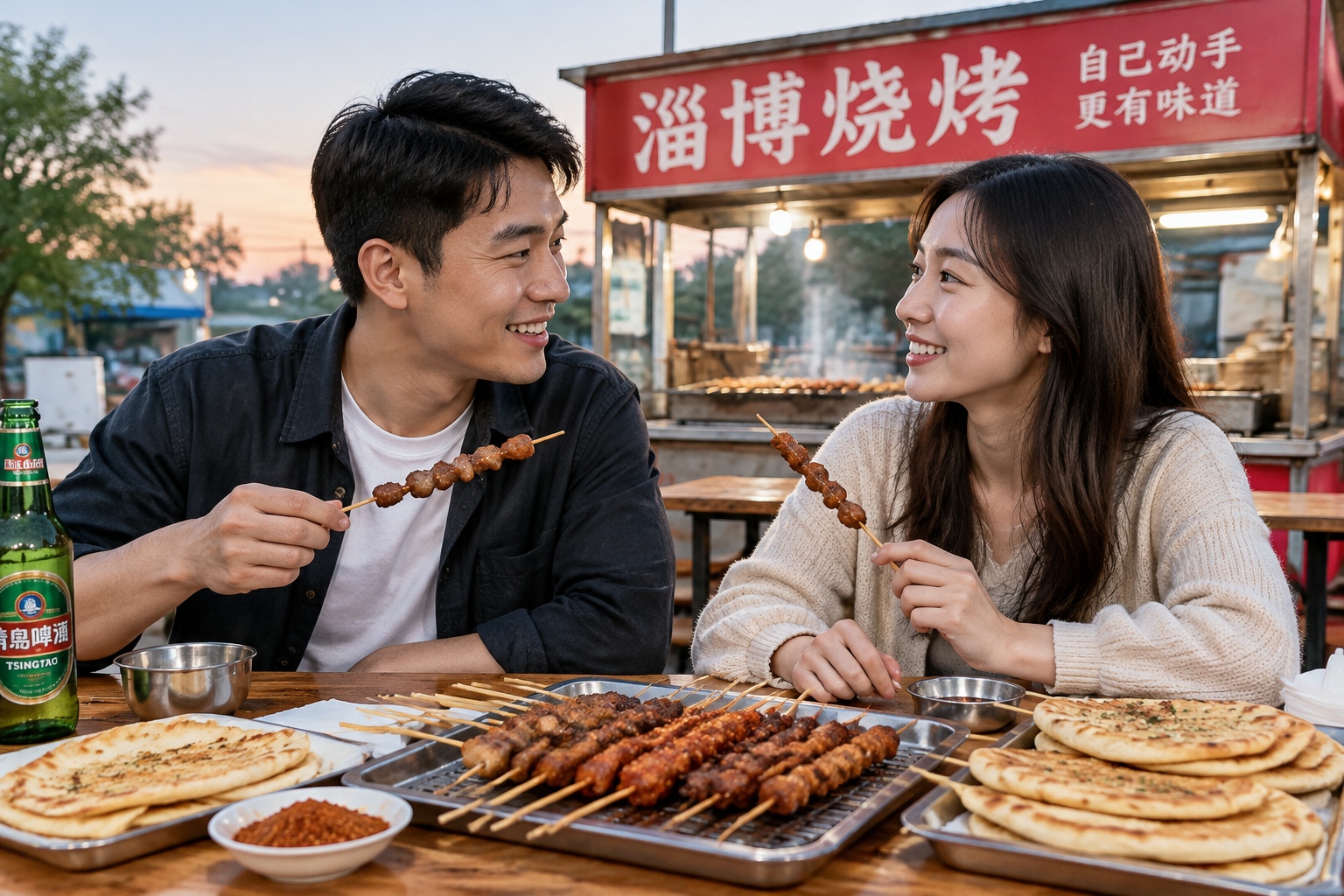
Back at the night market, the couple is finishing their meal. They’ve rolled a dozen flatbreads, laughed at their own clumsy attempts, and made friends with the table next to them. As they pay the bill—80 yuan for two—the woman says, “We came because of TikTok, but we’ll come back because it’s fun.” It’s a simple formula: good food, fair prices, and a city that tries. In a world of grand narratives, sometimes a small flatbread rolled with green onion says more than a thousand press releases.
Start the discussion at forum.chinacomes.com