

A morning queue that is not about kebabs
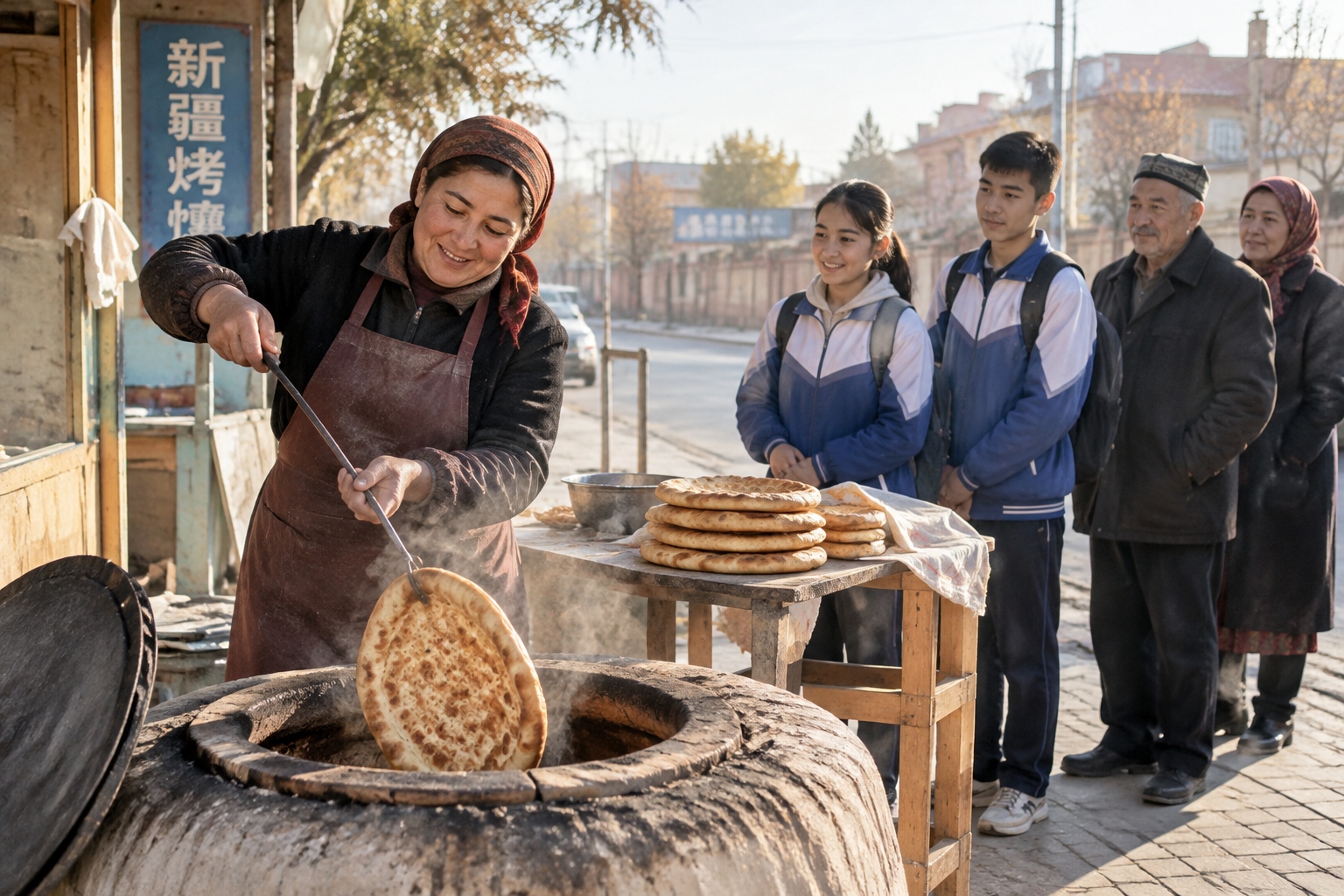
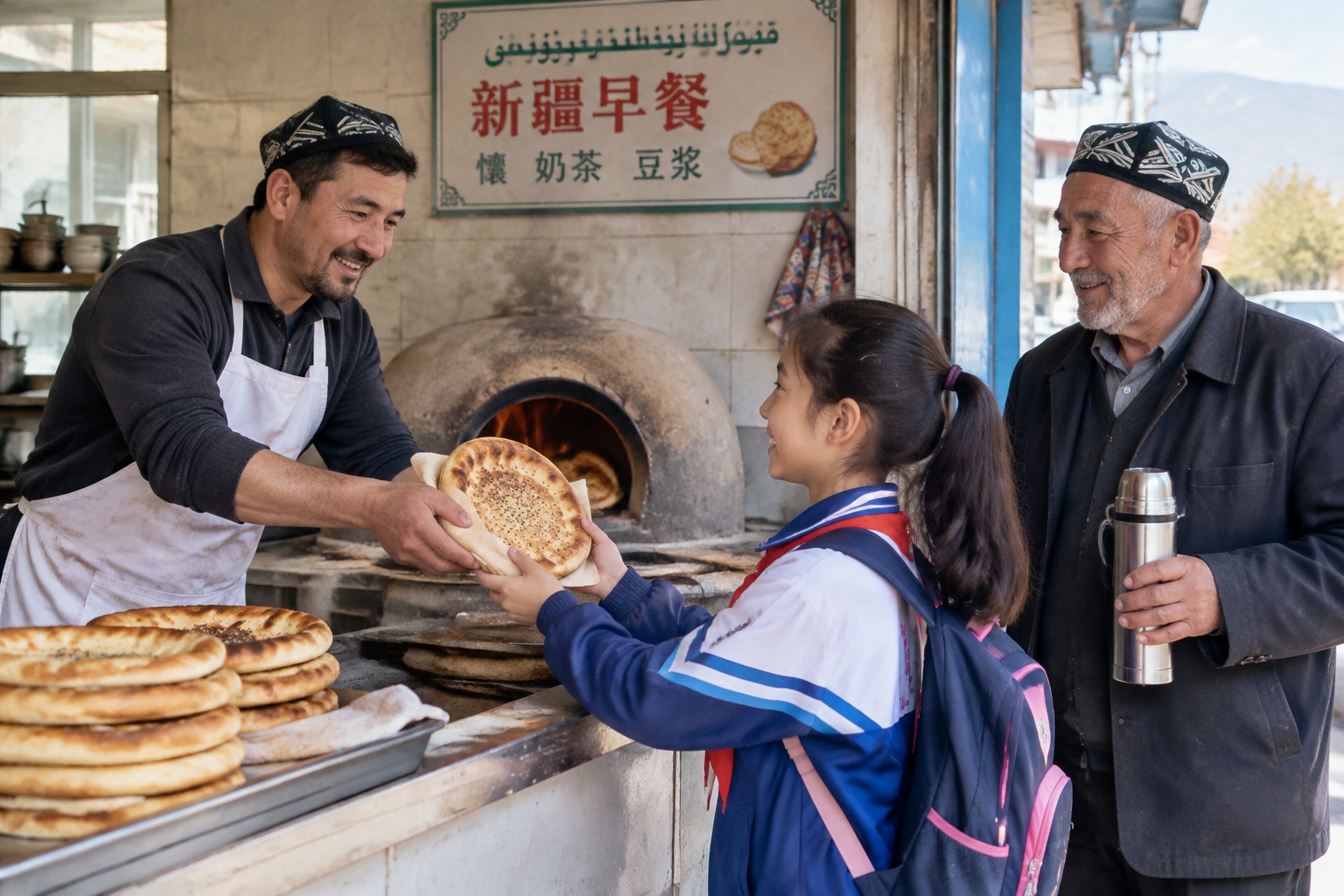
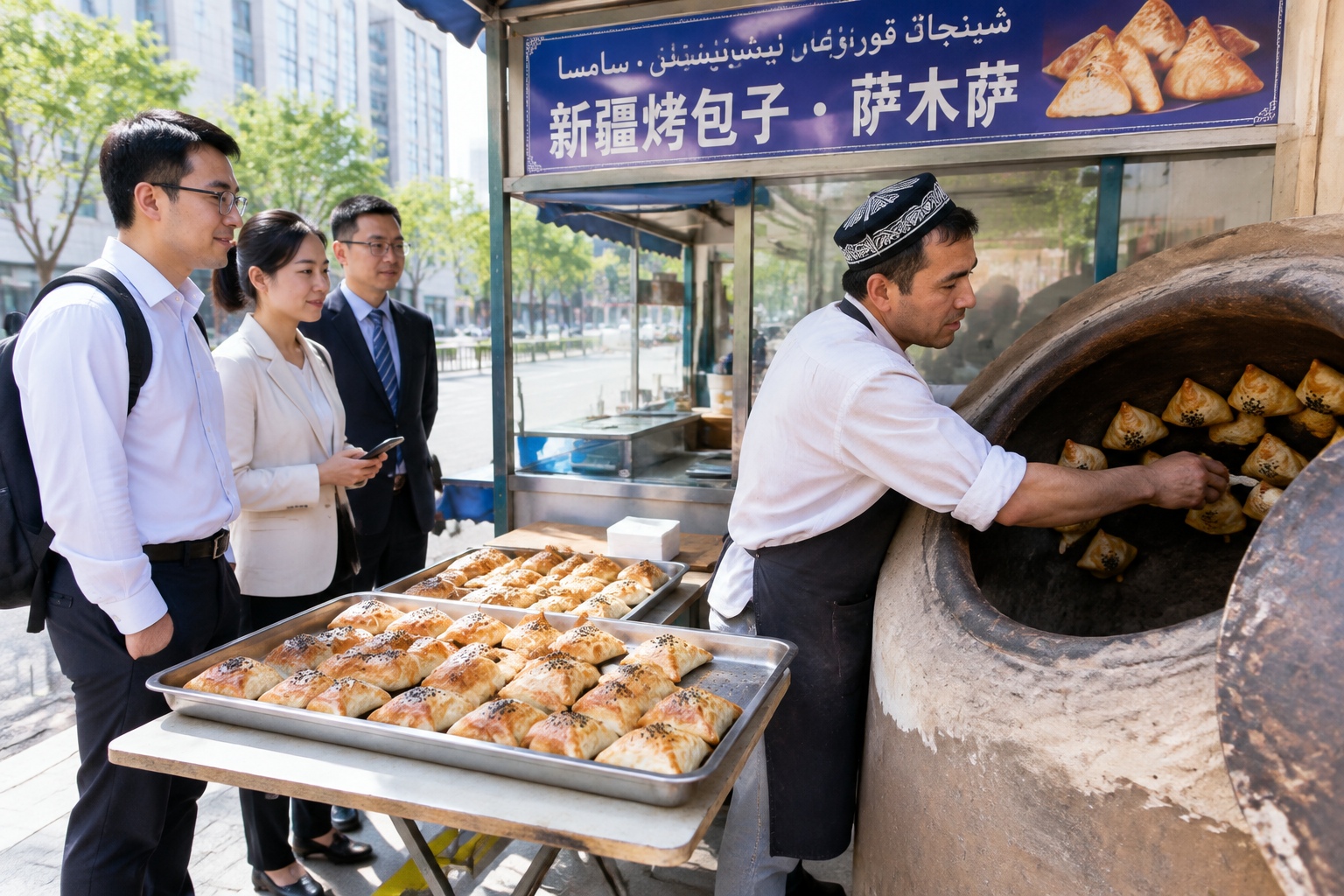
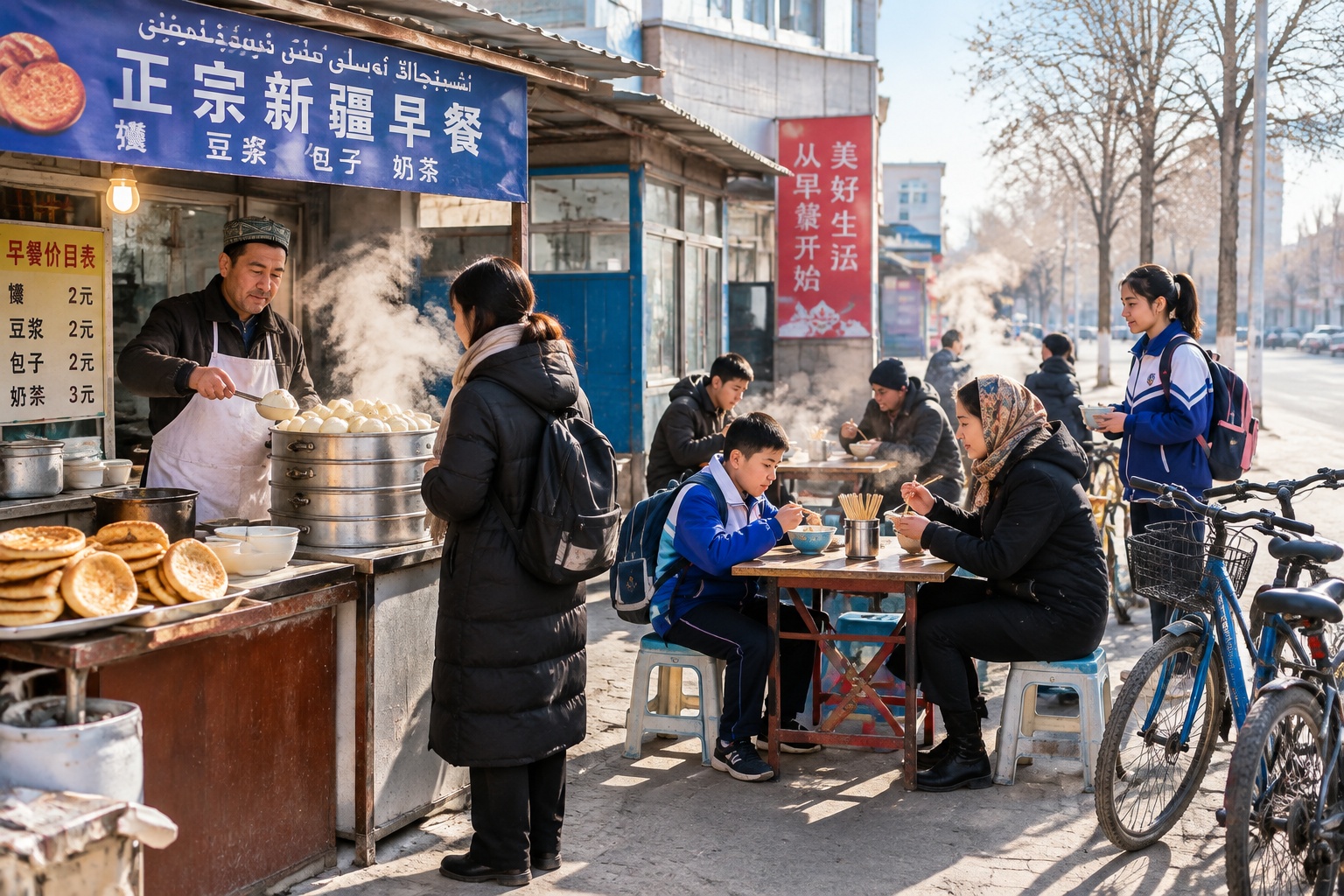
At 7:40 on a cold morning in a residential corner of Urumqi, the line is not for kebabs. It forms beside a round clay oven. A vendor lifts a flat bread out with a metal hook, knocks ash off, and hands it to a schoolgirl who tears a corner before she has even left the curb. Behind her, a retired man holds a thermos of milk tea; a delivery rider checks his phone; two office workers ask for four samsa and one yogurt. The smell is toasted wheat, lamb fat, black tea and hot milk. If your picture of Xinjiang food is a night-market kebab stall, this ordinary morning is a useful correction.
Kebabs exist, and they are good. But they belong more to evening, travel photos and social media. Xinjiang breakfast is a different rhythm: fast, warm, cheap, eaten standing up or at a small table, and built around bread, dairy, tea and meat. It also changes from city to city and street to street. Xinjiang is huge, and no single breakfast describes it.
What counts as a Xinjiang breakfast
For this piece, I am looking at ordinary city neighborhoods, market edges and small street shops, not festival banquets. The foods below are common enough that you can find them without a guide, though not every stall sells all ten. Prices are in Chinese yuan and vary by city and size: expect roughly 2 to 25 yuan per item, or about 30 cents to 3.50 US dollars. A filling breakfast usually costs 8 to 20 yuan.
The best way to read a breakfast stall is to watch the regulars. They know which bread is fresh, which soup is refilled, and whether the yogurt needs sugar. They order in short phrases, pay with a phone or a few coins, and eat quickly. Nobody minds a visitor who points and asks for one of that.
Ten things to look for before 10 a.m.
1. Hot naan with salty milk tea
Naan, often called nang here, is the backbone. A plain round loaf may cost 2 to 4 yuan; a larger one with patterns or sesame costs a little more. The key is that it comes straight from the oven, so the edge is crisp and the center still soft. People tear it with their hands, dip it in milk tea, or split it to hold a piece of meat. The tea is usually salted, not sweet, made with black tea and milk. For a first-timer, this pair is the safest and most revealing order: bread and tea, eaten slowly while the street wakes up.
2. Samsa, the baked meat pastry
Samsa are square or triangular pastries baked against the inside wall of a clay oven. The filling is usually lamb and onion, chopped fine and juicy. A good one costs 3 to 5 yuan. The vendor slaps them onto the hot wall, waits, and pulls them out when the edges brown. Eat it immediately. The first bite releases steam and fat; if you wait, the pastry softens. Office workers often take two in a paper bag and eat them walking.
3. Thin-skinned steamed buns
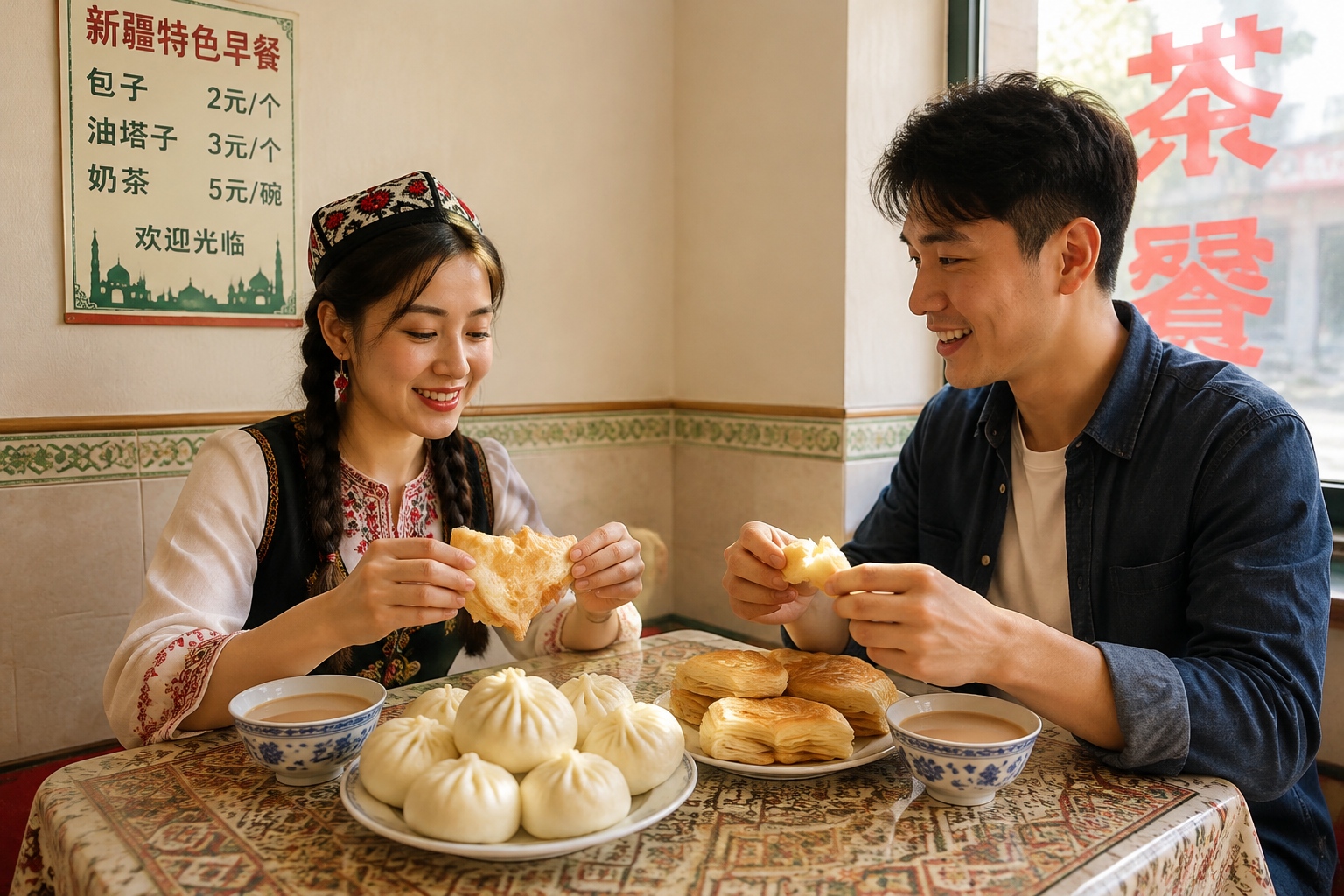
These are manti by another name: thin dough around meat and onion, steamed until the skin turns translucent. One bun may cost 2 to 4 yuan. They are juicier than samsa and need a spoon or a careful first bite. Locals often pair them with tea or a small bowl of yogurt. At a busy stall, you may see a plate of eight or ten disappear in minutes.
4. Youtazi, the layered oil pastry
Youtazi looks like a small coil or tower of dough. The layers are brushed with oil, which makes it rich and flaky. It costs around 2 to 3 yuan and is usually eaten with milk tea or soup. It is not a diet food. It is a cold-morning food: warm, dense, and easy to carry.
5. Baursak, the small fried dough squares
Baursak are golden squares of fried dough, often made at home and sold in bags at stalls. A bag may cost 5 to 10 yuan. They are lighter than they look, with a slight chew and a hint of sweetness. Families buy them for breakfast with tea; children pick them up one by one. At a stall, ask for a small bag if you are alone.
6. Handmade yogurt
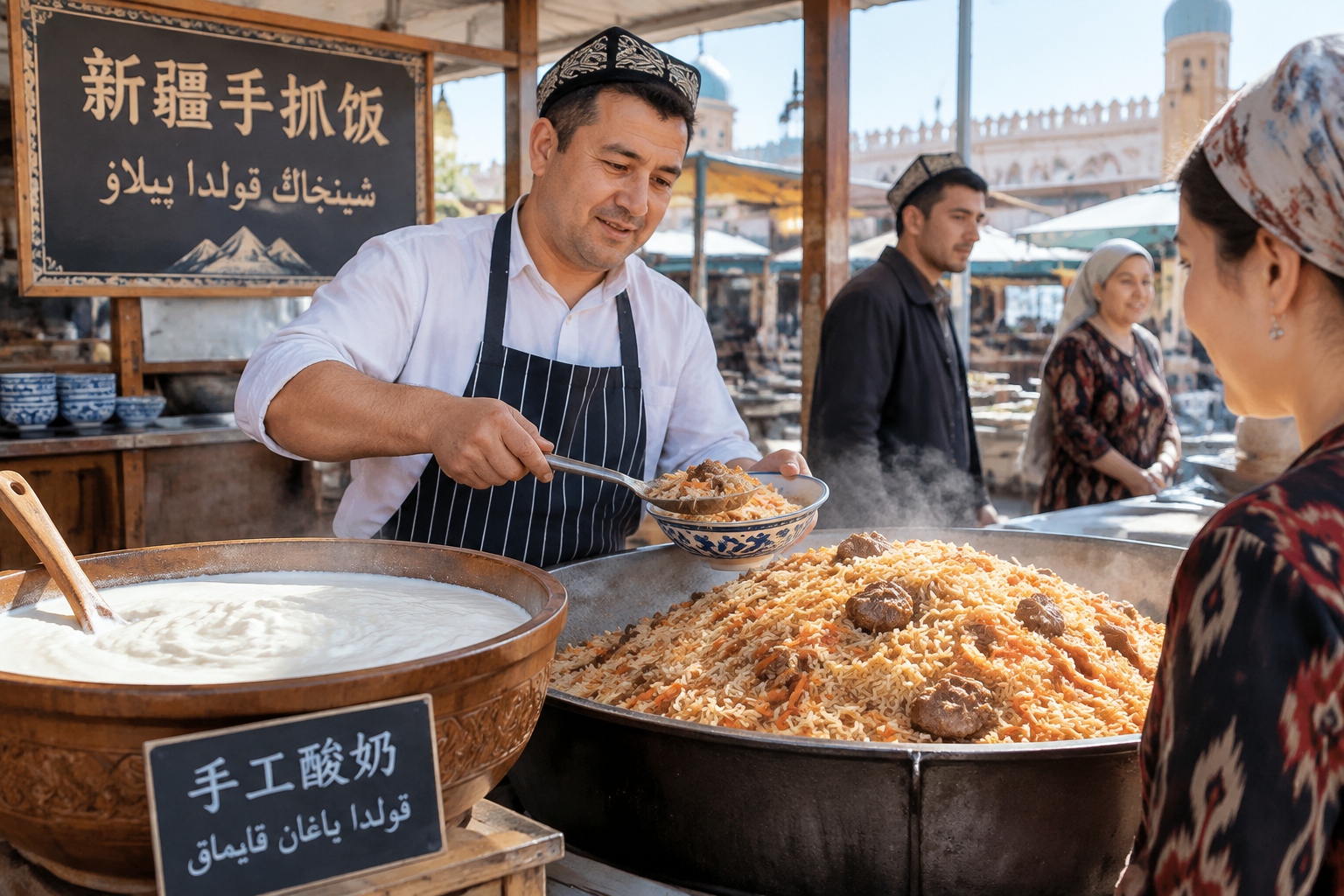
Yogurt is a morning food here, not only a dessert. A bowl of handmade yogurt may cost 5 to 8 yuan. It is tangy and thick, sometimes with a skin on top. Some stalls add sugar; others leave it plain. Try a spoonful first. If it is too sour, ask for sugar. In summer, a cool bowl of yogurt with bread is a practical breakfast before a hot day.
7. Polo, rice pilaf for a longer morning
Polo, or pilaf, is a serious breakfast for people who will not eat again until afternoon. A plate costs 15 to 25 yuan. You will see carrots cut into thin strips, lamb, and grains of rice that separate under the spoon. Some stalls serve it from a big pot; the server packs it down, then adds a piece of meat. It is heavier than bread and tea, so split a plate if you are a light eater.
8. Meatball soup
On a cold morning, a bowl of meatball soup is a small heater. It costs about 10 to 15 yuan. The broth is usually clear, with small meatballs, vegetables, and sometimes pieces of bread or noodles. People add vinegar or chili oil at the table. It is a good order for anyone who wants something warm but not too heavy.
9. Roasted eggs
Roasted eggs are a street detail rather than a main dish. A vendor sets eggs near the heat of an oven or in hot ash. They cost 2 to 3 yuan. You wait, peel the shell, and dip the egg in salt. The white turns slightly firm; the yolk is hot and dry. It is the kind of small food that makes a queue feel shorter.
10. The seasonal or neighborhood special
The tenth item is deliberately open. In one neighborhood it may be a steamed pumpkin dumpling; in another, a bowl of hot bean soup or a fried wheat snack sold only in winter. A community stall near a market may sell what the surrounding families ask for. This is the real lesson: Xinjiang breakfast is not one menu. It is a set of local habits. If you see a crowd around a table, look at what they are eating and point at that.
Who is eating, and what it costs
At one stall, a woman in her fifties works the oven while her daughter takes orders. A student in a navy school jacket buys a naan and a small tea for 6 yuan. A taxi driver orders samsa and soup, eats in seven minutes, and leaves. A retired couple shares a plate of polo and a bowl of yogurt. The whole street spends small amounts of money, but the morning moves because of these small transactions. A typical breakfast here is not a luxury. It is a daily habit, priced for people who need to get to work or school.
How to order without speaking much
Point at what you want, hold up fingers for the number, and say the number in Chinese if you can. Most stalls accept cash and mobile payment. If you are unsure, ask for one piece first. Eat bread and fried food while hot. For yogurt, taste before adding sugar. For soup and polo, check the portion size; a plate is often larger than a single traveler expects. And join the queue. The queue usually tells you which oven is working and which food is freshest.
The street at eight o’clock
By eight, the street has a rhythm. The oven is hot, the tea is poured, the schoolchildren have gone, and the office workers are taking their bags from the counter. A visitor might come looking for one famous dish and leave remembering something else: the crack of a fresh naan, the steam from a samsa, the sourness of yogurt on a cold morning. Xinjiang breakfast is not a single story. It is many ordinary mornings, side by side.
Start the discussion at forum.chinacomes.com