

A Morning Bowl in a Shanxi County Town
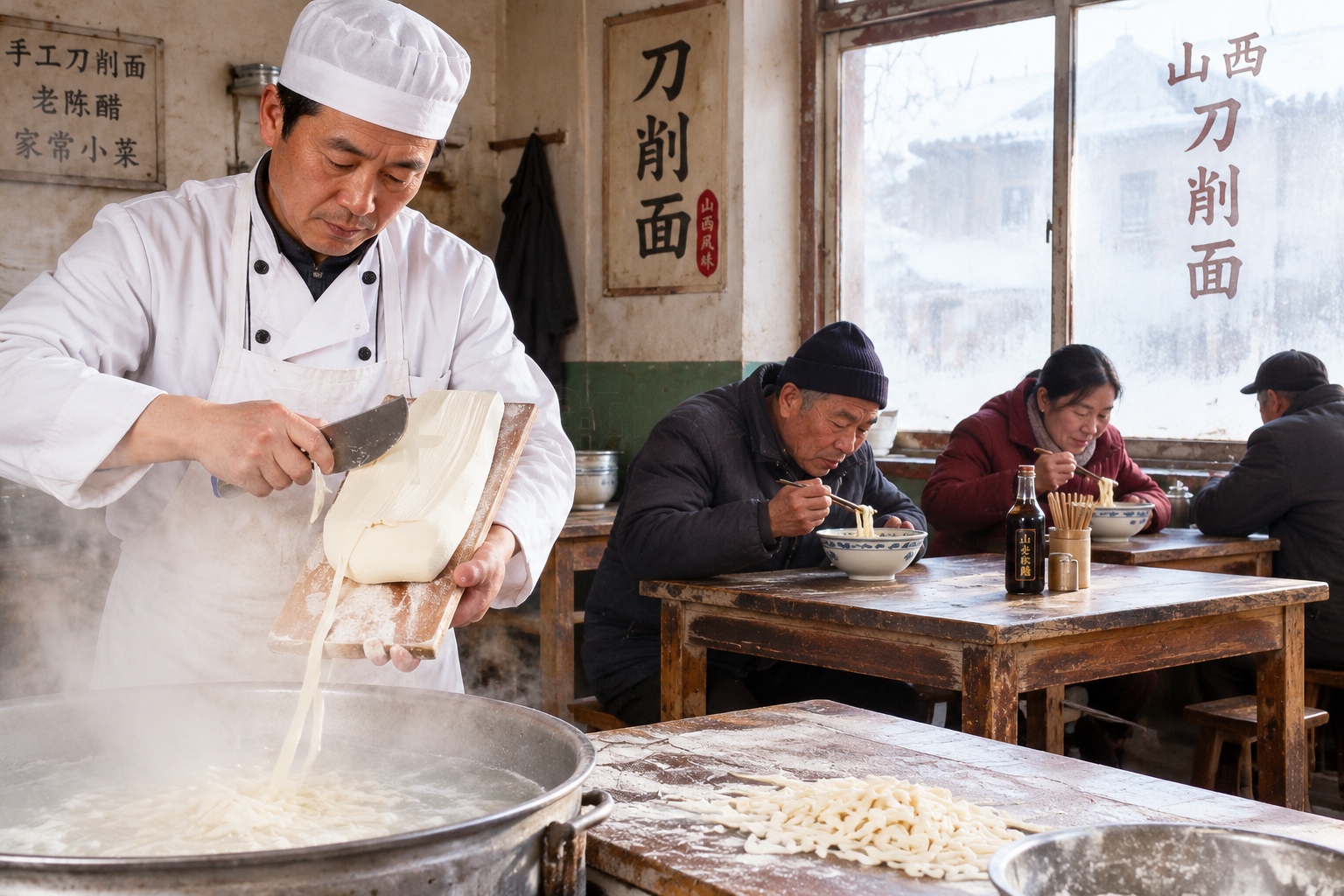
At 6:40 on a cold morning in a county town in central Shanxi, the first customers are already standing at the counter. A cook lifts a block of kneaded dough, shaves ribbons into a pot of boiling water, and lets steam fog the window. The bowl arrives in minutes: thick, chewy noodles, a spoon of tomato and egg sauce, a splash of dark aged vinegar. A laborer eats standing up. Two students share a plate of cold noodles. An older man adds vinegar before he even tastes the soup.
For them, this is not an exotic regional dish. It is breakfast.
What Shanxi Snacks Actually Are
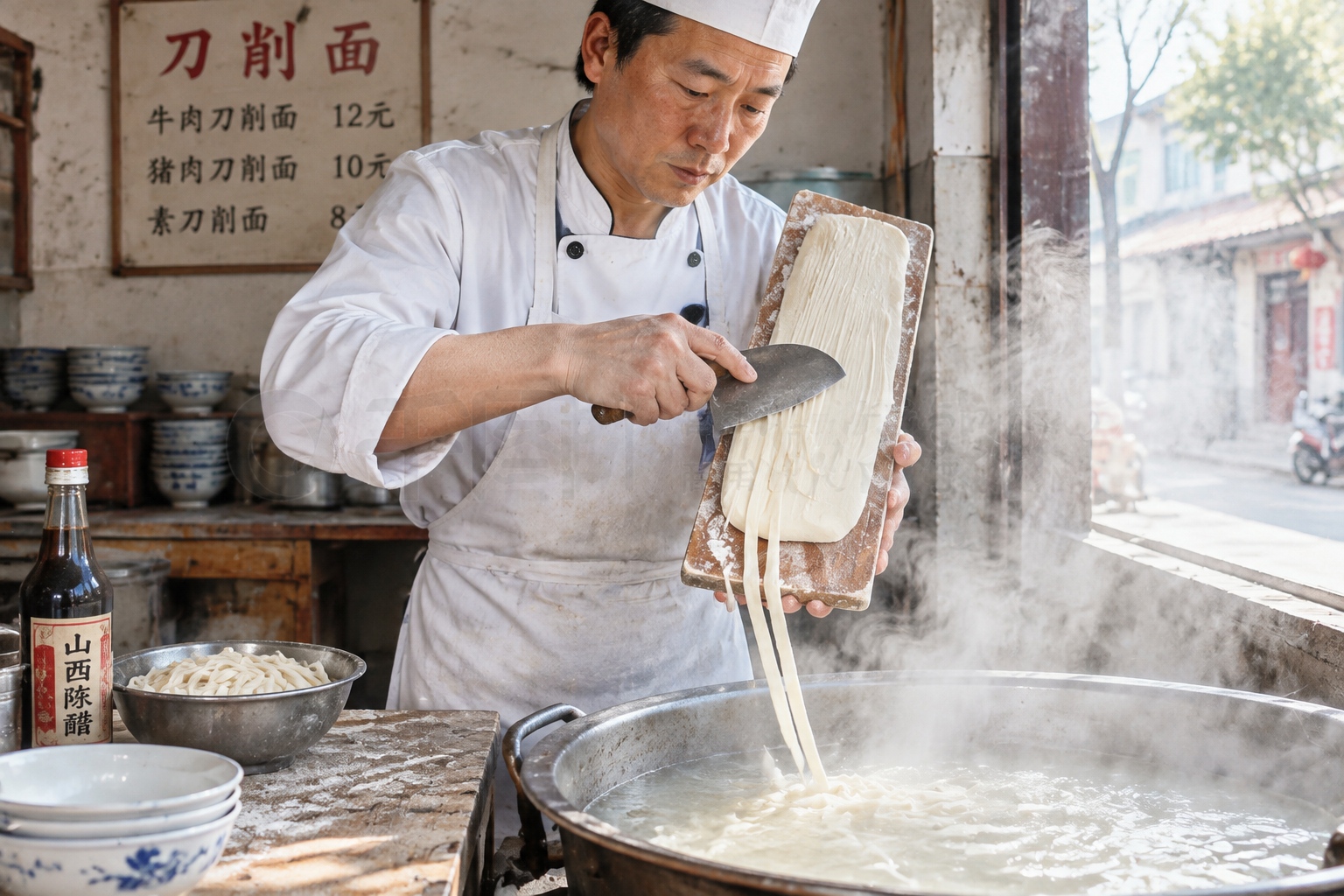
Shanxi sits on a dry plateau in northern China. Wheat, millet, oats, buckwheat, and corn grow better here than rice, so noodles and coarse grains shape the daily menu. Knife-cut noodles are the best-known example, but they are not the whole story. There are oat noodles rolled by hand, buckwheat noodles, millet porridge, steamed corn bread, and many home-style snacks that rarely appear on restaurant menus abroad.
Vinegar matters as much as noodles. Shanxi aged vinegar is dark, sharp, and slightly sweet. On a family table it sits next to the salt and chili oil. People add it to noodles, dumplings, and cold dishes. In a county kitchen, a jar of vinegar may be bought from a local workshop and refilled for years.
The difference for a visitor is simple. In many countries, noodles are one option on a menu. In Shanxi, noodles can be the whole meal. And the flavor is not built on heavy sauce. It comes from the grain, the texture, the vinegar, and a small amount of topping.
From Family Stove to Packaged Product
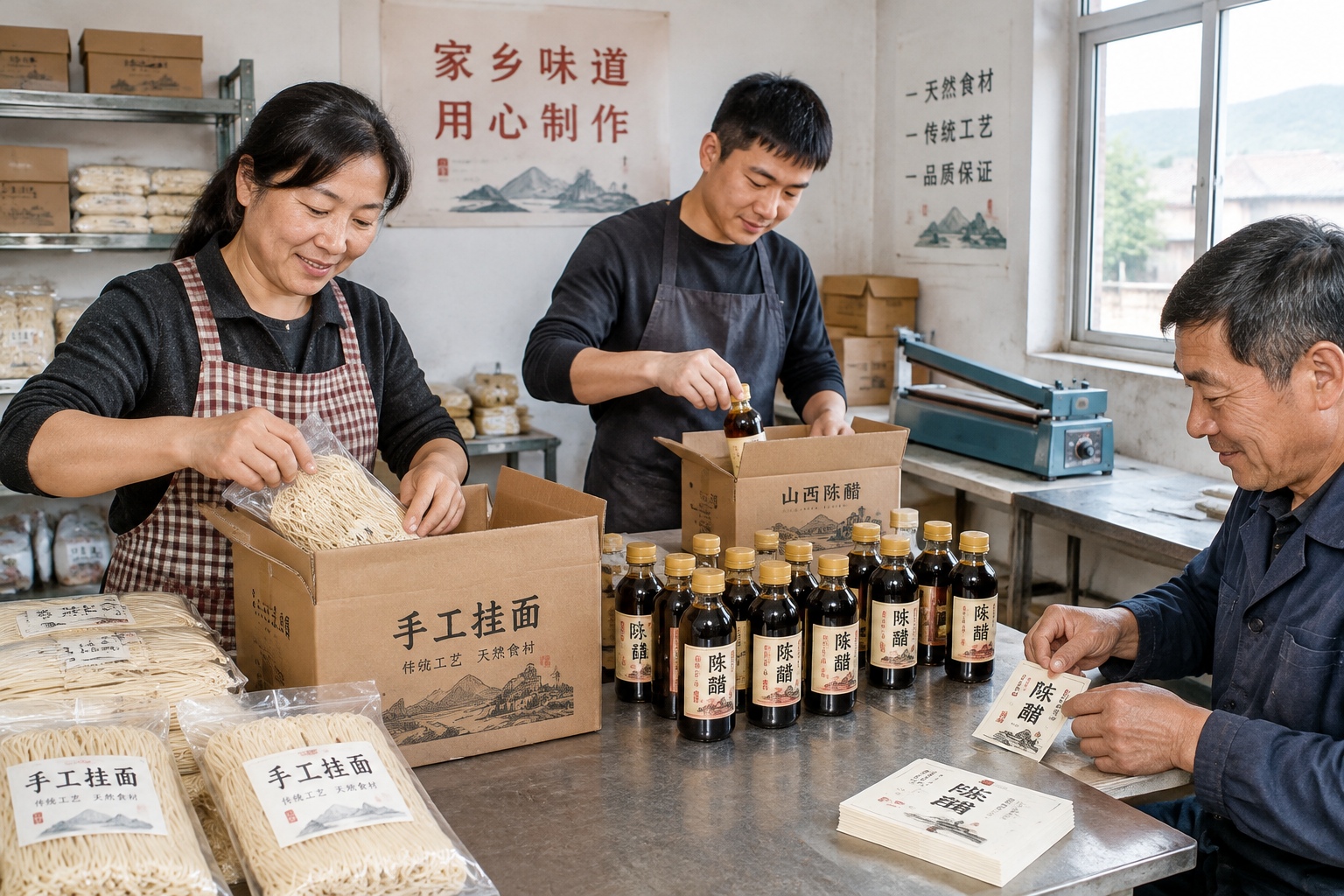
Until recently, most Shanxi snacks lived close to home. A family shop made them fresh, sold them to neighbors, and stopped when the pot was empty. That is changing. Small workshops now sell dried knife-cut noodles, sachets of tomato-egg sauce, vacuum-packed braised dishes, and small bottles of aged vinegar. Some family restaurants have turned a single recipe into a product with a label, a shelf life, and a shipping box.
The work is less romantic than it sounds. A recipe has to be written in grams. Dough has to survive drying. Sauce has to be sealed safely. A young worker designs the label, photographs the bowl, and answers messages on an online store. County e-commerce centers offer training and cheap shipping. Livestreams help, but they do not guarantee sales. Many small brands sell mostly to people who already know Shanxi food, including migrants from the province.
Who Carries Shanxi Food Overseas
The first exporters are rarely big companies. They are students, migrant families, restaurant owners, and small traders. A student from Taiyuan packs dried noodles and a bottle of vinegar in a suitcase. A family in Toronto opens a small noodle shop and puts knife-cut noodles next to dumplings. A trader in Sydney tests a pallet of packaged noodles with a Chinese grocery. A restaurant owner in London adds one Shanxi dish to an already crowded menu.
These paths are personal, and that shapes the product. A suitcase can carry gifts. A grocery shelf needs labels, barcodes, stable supply, and a price that works. A restaurant needs consistent noodles and a cook who can make them quickly. The same bowl of noodles becomes three different business problems: memory, retail, and kitchen speed.
What Overseas Diners Actually Say
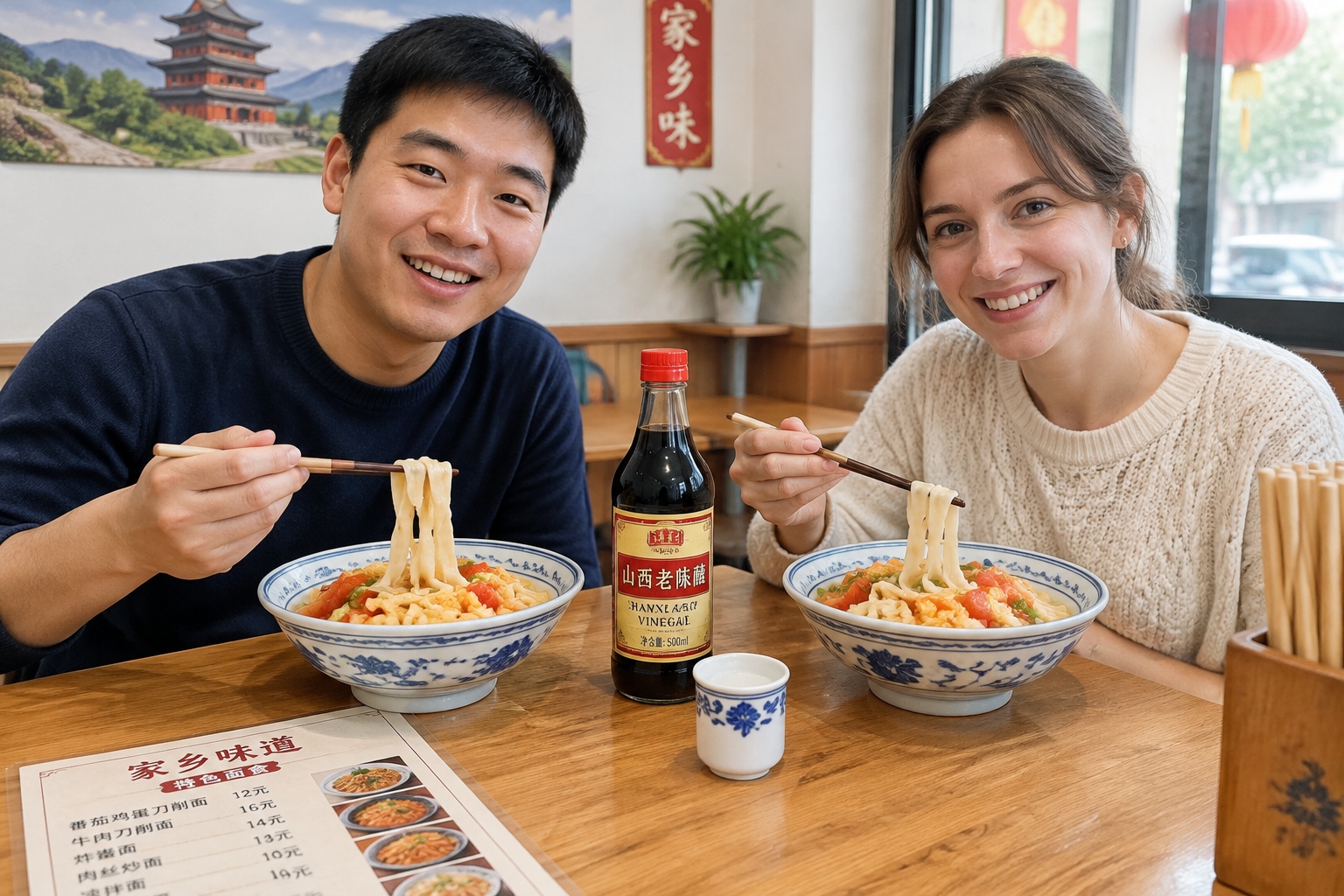
Reactions split in predictable ways. Chinese students and migrants often go straight for the vinegar. They say the smell reminds them of home. Non-Chinese customers are more curious about texture. Knife-cut noodles are thick and uneven, not soft like instant noodles. Some love the chew. Others find vinegar too strong and the topping too plain.
Restaurants adjust, but not always in the same direction. One shop keeps the vinegar on the table and lets customers decide. Another adds more vegetables and meat so the bowl looks like a full meal. A third uses a milder sauce for lunch customers and keeps a hotter, more sour version for regulars. Prices matter too. In an overseas city, a bowl may cost the same as a bowl of ramen or pho, so customers compare it with food they already know.
The Hard Parts: Certification, Shipping, and Taste
Exporting food is not a longer version of mailing a gift. Labels must meet destination rules. Ingredients, allergens, production dates, and storage instructions need to be clear. Vinegar is a liquid, so shipping is costly and leakage is a risk. Fresh noodles need cold chain. Dried noodles are easier, but they still face customs, warehouse fees, and retail margins. A small workshop often cannot handle this alone, so aggregators and importers become gatekeepers.
Culture adds another layer. The word snack sounds small and cheap, yet a good bowl of knife-cut noodles is a full meal. A menu that lists it as a side dish may confuse customers. A translation that calls it simply Chinese noodles may erase what makes it different. The food travels, but the explanation has to travel with it.
Back in the County: Orders Change Ordinary Choices
When an order leaves a county town, the effect is not only in the export column. Someone packs boxes. Someone drives to a logistics point. Someone takes photos for an online store. A middle-aged woman who once cooked only for her family may now work in a food workshop. Her son may help with customer service at night. A young person who planned to leave for a big city may stay a little longer because there is online sales work at home.
These jobs are not automatically secure. Orders can be seasonal. Margins are thin. A bad batch or a delayed shipment can hurt a small brand. But the change is visible. The county stove is no longer only a local stove. It is connected to a shelf in another country, even if that connection is still fragile.
A Bowl Travels Farther Than a Slogan
Globalization is often described in big numbers. For a Shanxi county, it looks smaller and more specific. It looks like a cook shaving dough into a pot at dawn. It looks like a worker sealing a packet of noodles. It looks like a student in Sydney opening a bottle of vinegar. It looks like a restaurant owner in London deciding whether to put the vinegar on the table or in the sauce.
The journey from a county stove to an overseas table is not a clean success story. It is a chain of ordinary people solving ordinary problems: shelf life, shipping cost, labels, taste, and memory. That is what makes the bowl interesting. It travels because someone wants to eat it, and because someone else figures out how to get it there.
Start the discussion at forum.chinacomes.com