

At 10:20 a.m., the Pot Is Already Working
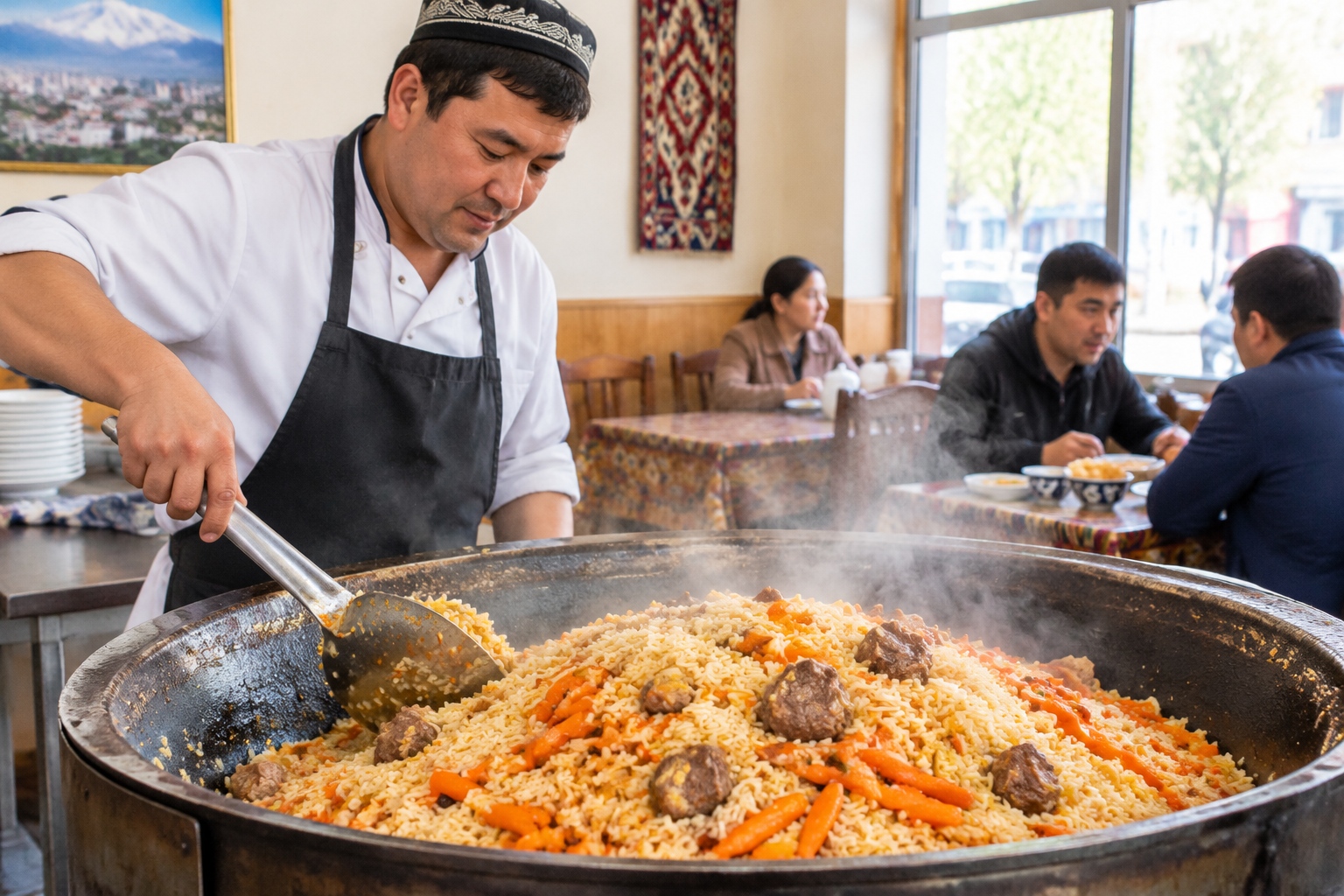
At 10:20 on a weekday morning, a pilaf restaurant near Urumqi’s Xidaqiao market is already warm. The front door is half open, and a delivery e-bike leans against the curb. In the kitchen, a cook lifts the lid of a qazan, the heavy cauldron used for pilaf. Steam fogs his glasses. He pushes lamb chunks with a long ladle; yellow carrots and onions shine in the oil. A basin of rice sits in water by the sink. Lunch is still two hours away. No one seems in a hurry.
This is polu, often called shouzhuafan in Chinese, or hand-grabbed rice in English. The name survives from an older way of eating, when diners took rice and meat from a shared plate with their fingers. Today most people use a spoon. What has not changed is the basic logic of the dish: rice, lamb, carrots, onions, oil, salt and time.
What Counts as Pilaf in Xinjiang
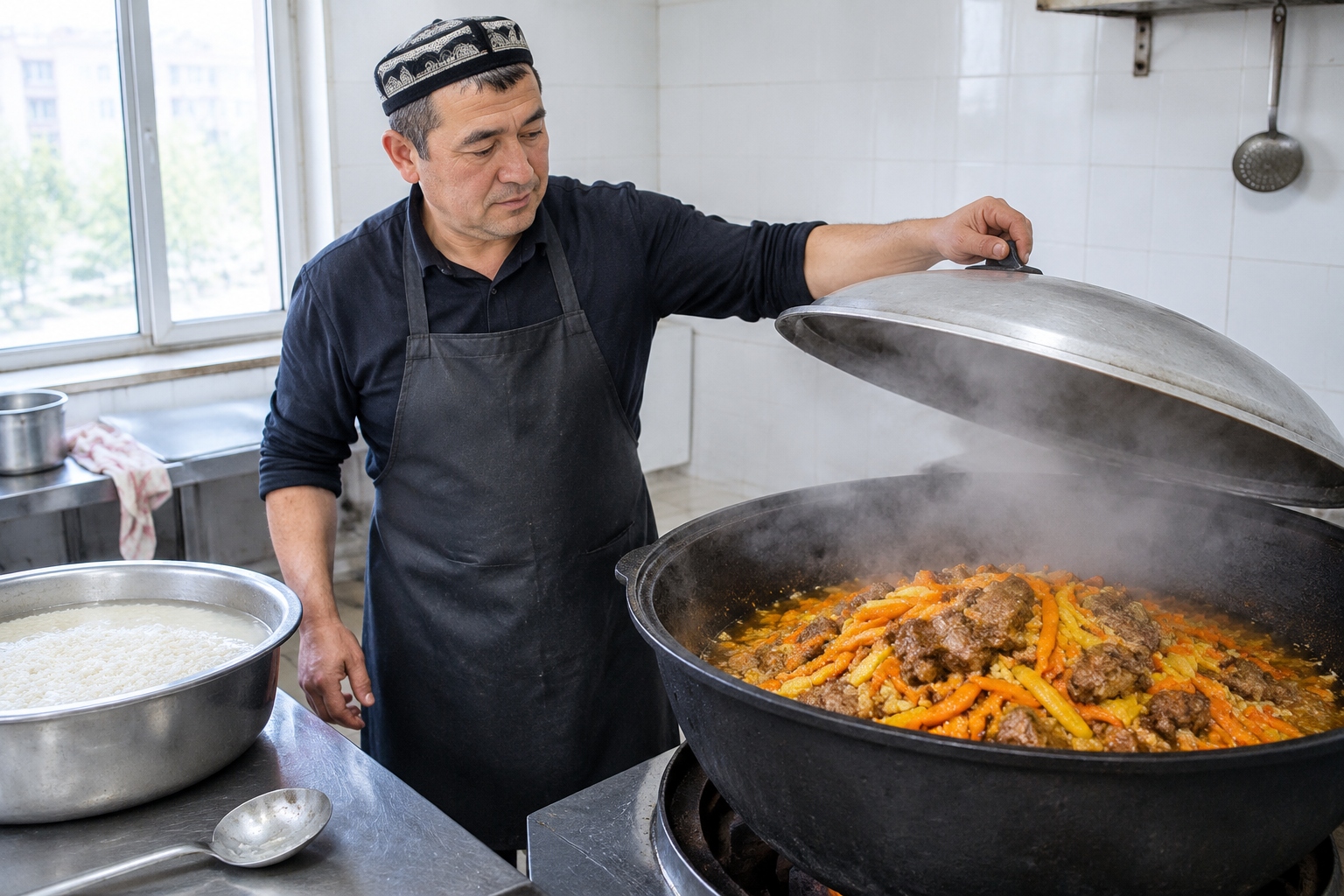
Xinjiang pilaf looks familiar to anyone who knows biryani or plov, but it is not identical. The Uyghur version is usually built in layers in a qazan. Bone-in lamb is browned first, then onions and carrots are softened in the fat, water is added, and soaked rice is spread on top. The rice steams over the meat rather than boiling in a separate pot. Cumin may appear, but it is not compulsory. Raisins or chickpeas turn up in some homes and restaurants; others keep it plain.
The dish is both everyday food and hospitality food. In a home it can be a quick weekday lunch made in a pressure cooker, or a large qazan cooked for a wedding, a memorial, a holiday or a room full of relatives. In restaurants it anchors the lunch menu, sold with tea, yogurt or pickles. Kashgar, Hotan, Yili and Urumqi all have their own habits. Uyghur, Kazakh, Hui and Han families cook it differently, and no one recipe stands for everyone.
That matters. Not every meal takes two hours. The waiting is real, but it belongs to particular settings: a restaurant preparing its daily batch, a family cooking for guests, a weekend when the qazan comes out and the pressure cooker stays in the cupboard.
Where the Two Hours Actually Go
Meat, carrots and onions
The first hour is mostly cutting and frying. Lamb is trimmed and cut into fist-sized pieces, some with bone. Carrots are cut into thick strips, not fine shreds; they need to hold their shape after a long steam. Onions are sliced. Oil goes into the qazan, and the meat is fried until its edges brown and the fat renders. Then come onions, then carrots, then salt. The cook stirs, presses, and watches the water that comes out of the vegetables. Too little liquid and the rice will scorch; too much and it will turn to porridge.
Rice, water, heat and rest
The rice is rinsed and soaked before it goes in. By the time it is spread over the meat and carrots, the qazan has a measured layer of broth. The cook adds rice, smooths it, and makes a few holes so steam can move. The lid goes on. Heat stays high until the liquid rises, then drops to a low murmur. The last twenty or thirty minutes are for resting. The rice finishes by steam, and the lamb becomes soft enough to pull apart with a spoon.
This is where speed changes the result. A pressure cooker can make a respectable pilaf in forty or fifty minutes. But the grains may clump, the carrots may collapse, and the meat may not have the same relaxed texture. In a qazan, the cook controls the layers. The rice is not simply cooked; it is allowed to settle. The two hours are not one long dramatic act. They are a series of small adjustments, most of them quiet.
Waiting Is Not Empty Time
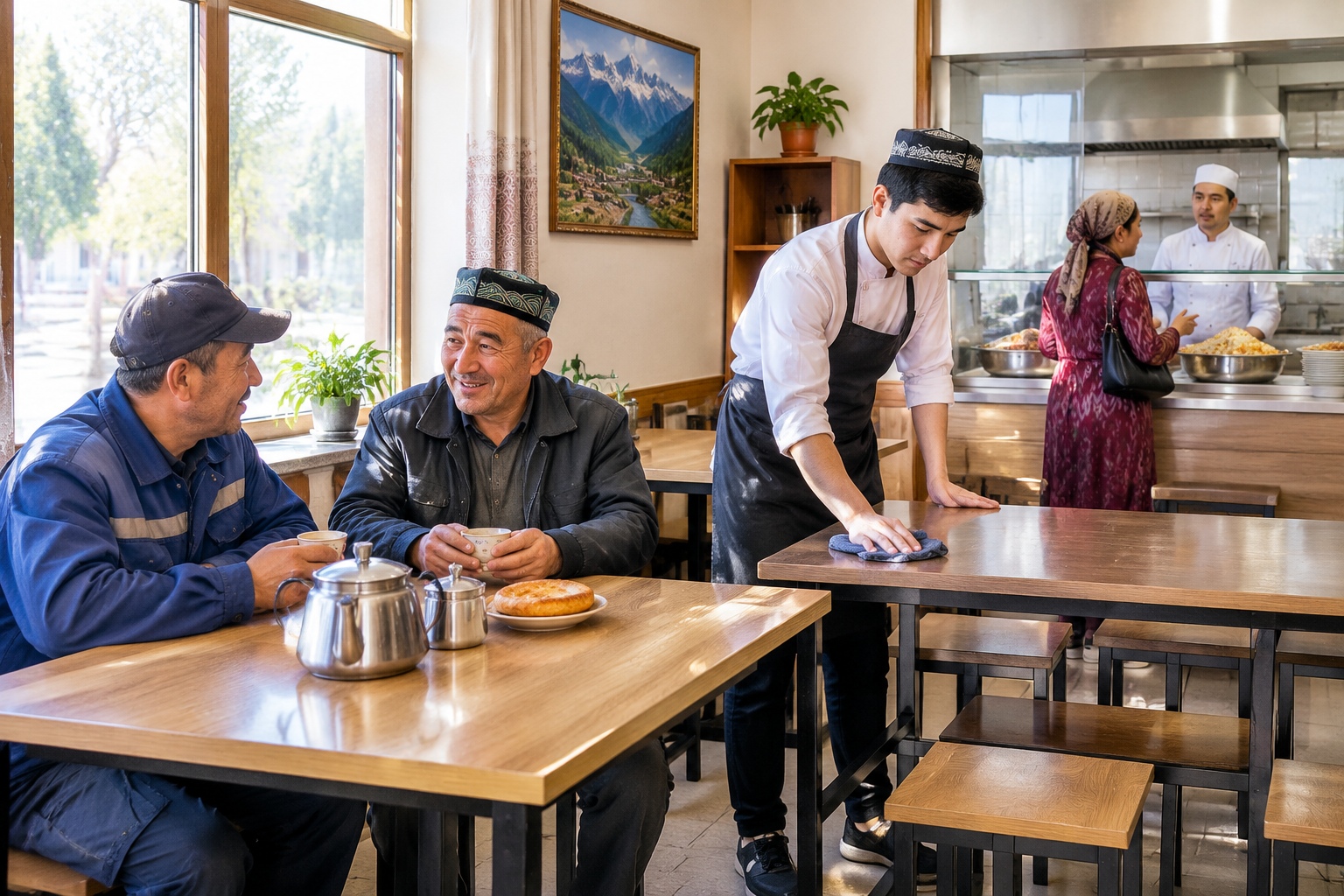
In the restaurant near Xidaqiao, the waiting period has its own social life. A young server wipes down tables and fills metal teapots. Two men in work jackets sit by the window with tea and a small plate of bread, checking their phones. A woman comes in to ask whether the pilaf will be ready by one; she has an appointment and wants to eat first. The cook says yes, then lifts the lid again. The steam has changed; the smell is deeper now, more meat than onion.
In a home kitchen, the same hours look different. Someone chops vegetables while a child does homework at the table. A neighbor drops by and is handed tea. The meat goes in later than planned because the rice was not soaked in time. The meal is not a restaurant performance; it is one task inside a day that also contains laundry, messages, a trip to the market and a bus to catch. When people say they wait for pilaf, they often mean the food is woven into other waiting: for relatives to arrive, for the afternoon to cool, for the workday to end.
Who Is Actually Waiting, and for What?
A restaurant has a different clock from a family. To serve pilaf at lunch, the kitchen starts at nine or ten in the morning. The cook may make one large batch, then a second smaller one for the evening. Delivery orders change the rhythm: rice and meat are packed into plastic containers, and the qazan is opened earlier than it would be for a dining room. Some shops use pressure cookers for the lunch rush; others keep the qazan because customers watch for it.
Families are just as varied. On a busy Wednesday, a young couple may use an electric pressure cooker and finish in under an hour. On a weekend, the same couple may invite parents and cousins, take out the large qazan, and start cooking at noon for a meal at two. Older relatives may prefer the old method; younger cooks may prefer a timer. Tourists often arrive with the expectation of a slow, authentic experience, but the people serving them are also running a business. Patience is not a personality trait belonging to an entire region. It is a choice made inside a schedule.
Slow Food in a Fast City
Urumqi is not a slow city. Buses run, phones buzz, delivery riders move through traffic, and office workers have lunch breaks like office workers anywhere. Supermarkets sell pre-cut carrots; frozen lamb is available; restaurants buy pre-portioned meat. A cook can now make pilaf with fewer hands and less floor space. These changes are not automatically a loss. They make it possible for a small shop to serve more customers and for a family to eat a familiar dish on a Tuesday night.
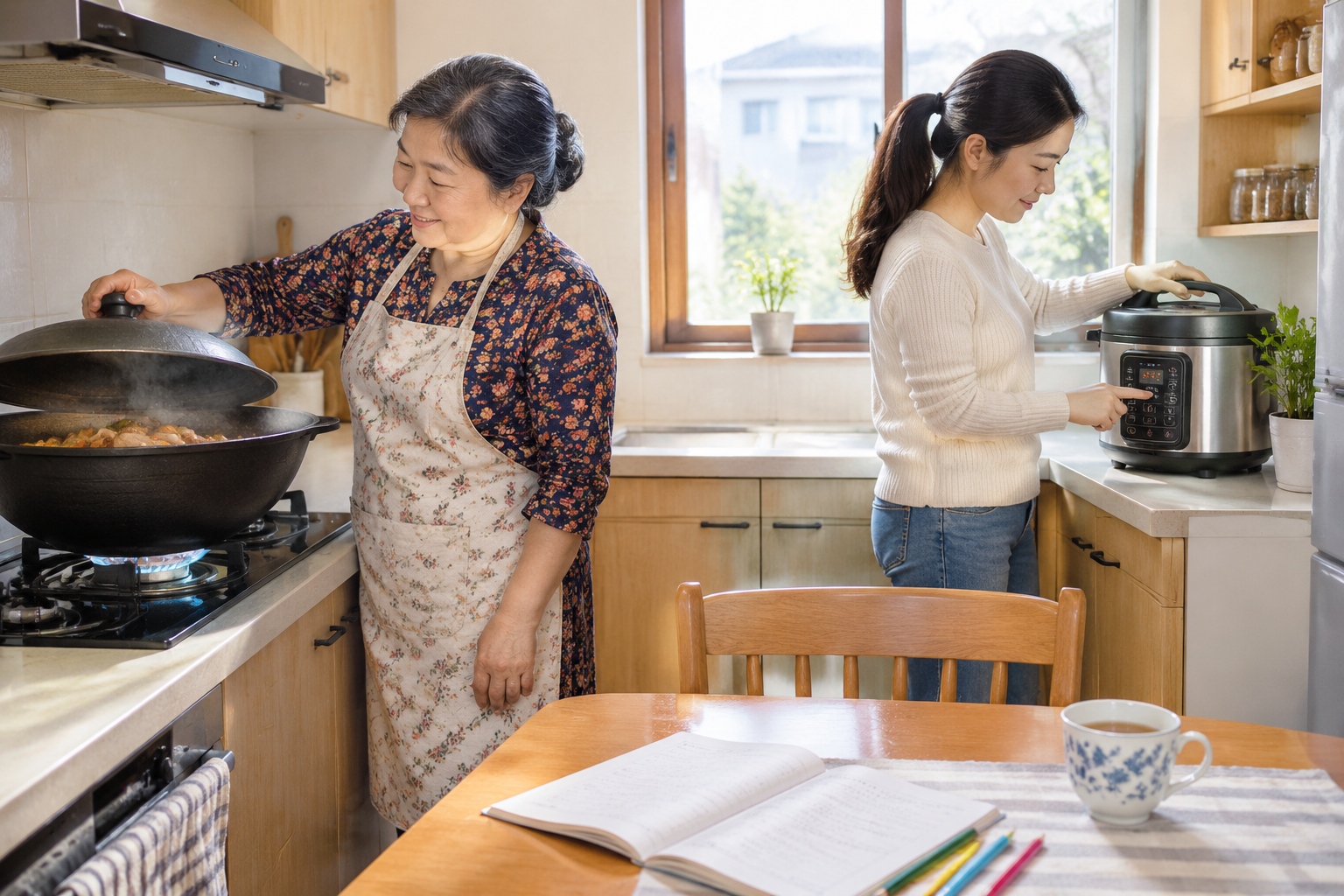
But something does change when the qazan disappears. The cook loses the ability to smell the broth at a glance, to hear the rice when the water drops, to lift the lid and decide. The diner loses the small ritual of waiting, which is also a way of talking. In a city where many meals are eaten from a delivery box, the qazan creates a different kind of time: not a luxury spa version of slowness, but a practical block of the day when meat, rice and people are in the same place.
The trade-off is visible in younger kitchens. A cook in his twenties may post a video of the qazan while also keeping a pressure cooker ready for orders. A mother may cook pilaf in a pressure cooker on weekdays and in a qazan when her parents visit. This is not hypocrisy. It is how a food tradition stays alive: by bending around work, school, rent and the price of lamb.
Back to the Pot
At 12:30, the restaurant near Xidaqiao begins to fill. The cook lifts the lid for the last time. Steam rises, and the rice is turned from the bottom with a wide spoon, mixing the orange carrots and dark lamb. The first plates go out with tea and a small dish of pickles. The two hours are not a slogan about patience. They are the sum of soaked rice, browned meat, a low fire and a room of people who planned their morning around lunch.
That is the philosophy of time in pilaf, if it needs a name. It is not that people in Xinjiang have more hours than anyone else. It is that some meals are built to hold those hours, and the waiting gives the day a shape. When the rice is right, no one talks about the two hours. They eat, pour more tea, and let the pot cool.
Start the discussion at forum.chinacomes.com