

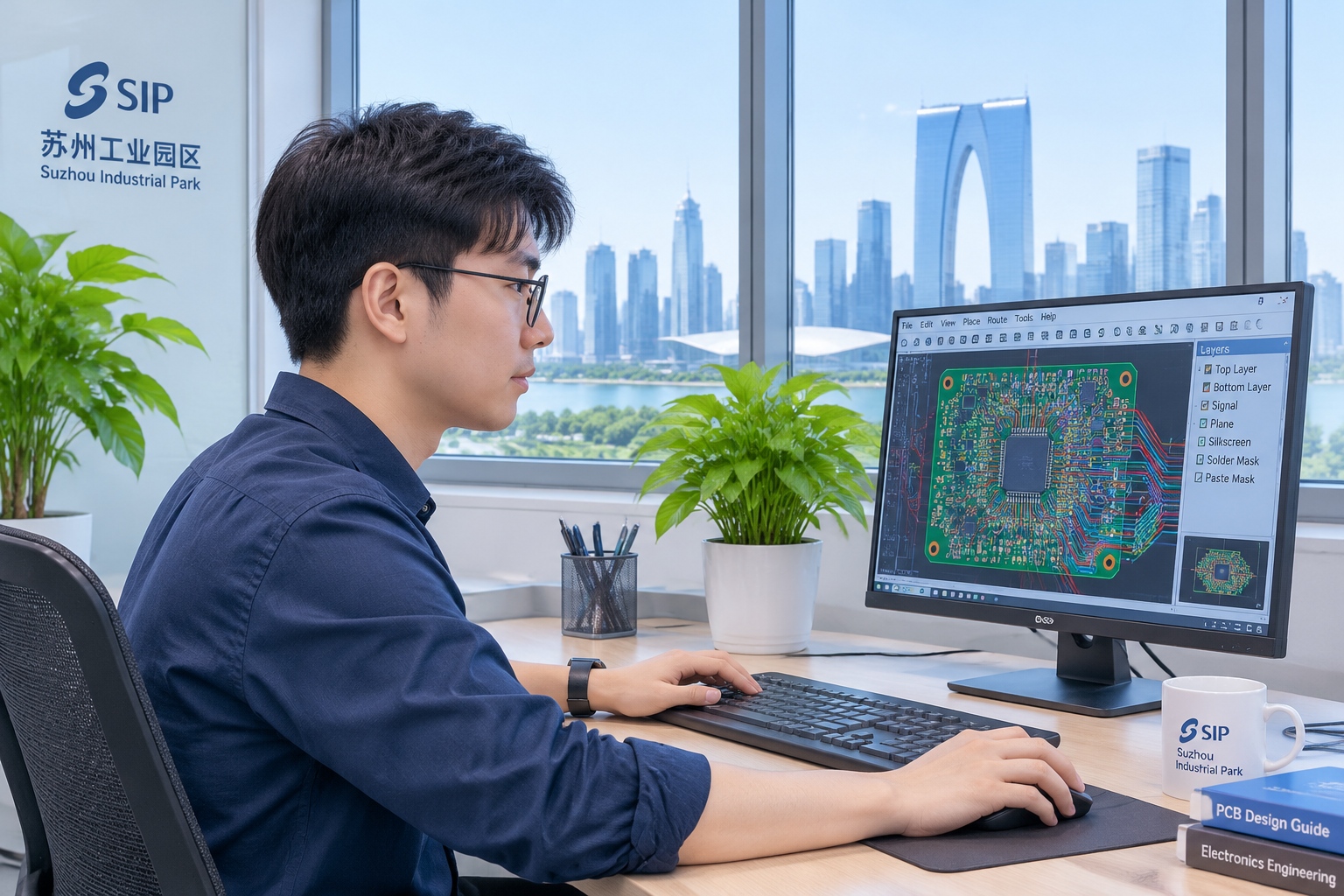
Morning in the Park
At 8:30 a.m., a chip designer in a glass office tower in Suzhou Industrial Park opens his laptop and checks overnight test data. On his screen, a new processor model is running simulations. Outside the window, towers and green spaces stretch into the distance. Thirty years ago, this was rice paddies.
The Rice Fields Before Dawn
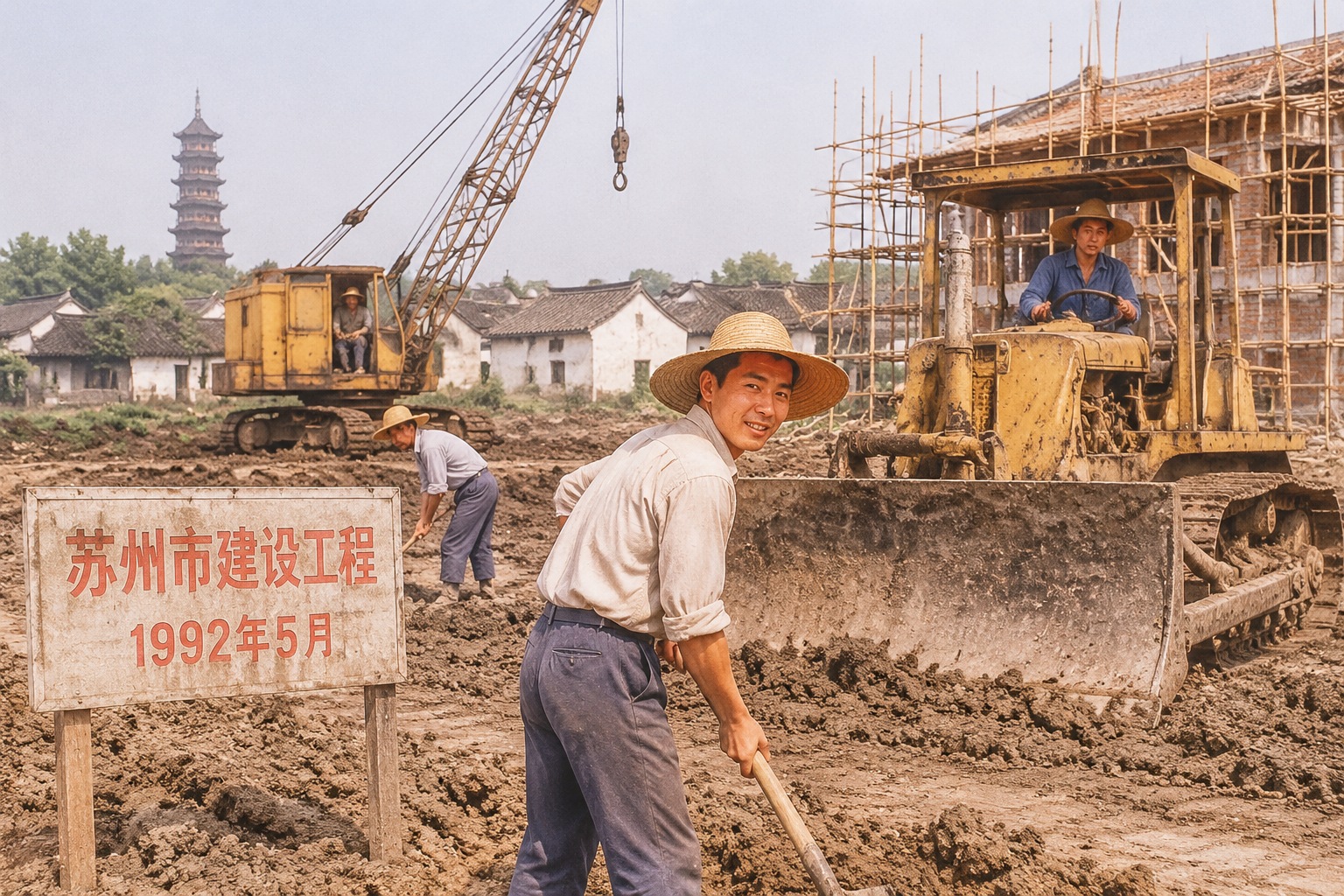
In the early 1990s, the land east of Suzhou’s old town was mostly farmland. The area was quiet, with small villages scattered among ponds and canals. Suzhou, known for centuries for its gardens and silk, had no industrial base to speak of.
Then, in 1994, something unusual happened. The Chinese government and Singapore’s government signed an agreement to develop a new industrial park together. It was one of the first major government-to-government cooperation projects of its kind. The goal was not just to build factories, but to create a model city that could show how modern urban planning, infrastructure, and economic management could combine.
Local residents still remember the early days. Zhang Weiming, now in his sixties, was a farmer in the village near Jinji Lake. “We used to grow rice and vegetables here,” he told me. “In 1994, surveyors came with maps and equipment. A year later, bulldozers arrived.” Zhang now lives in a modern apartment building a few minutes from the center of the park.
The Singapore Blueprint
What made Suzhou Industrial Park different was the level of detail in its planning. Singapore brought expertise in everything from land management to labor rules, from port logistics to government services. A team of planners drew up a master plan that divided the 80-square-kilometer area into zones for manufacturing, research, and living.
One of the most important innovations was the “pro-business” approach. Instead of requiring investors to navigate complex approvals, the park set up a one-stop service center. Licenses, tax registration, and utility connections could all be arranged in one building. That was rare in China at the time.
The park also invested heavily in basic infrastructure long before it was clear that businesses would come. Roads, power lines, water supply, and telecommunications were built to international standards. This was a deliberate bet: build the foundation first, and companies will follow.
From Factories to Innovation
In the early years, most of the investment went into manufacturing. Big global companies, including Samsung, Bosch, and Philips, set up plants. Workers migrated from other provinces to fill jobs. By the early 2000s, the park had become one of China’s largest electronics manufacturing bases.
But around 2006, the focus began to shift. Land prices were rising, and labor was getting more expensive. The park started to attract research and development centers, not just assembly lines. Universities and research institutes were brought in, including the University of Science and Technology of China’s Suzhou campus.
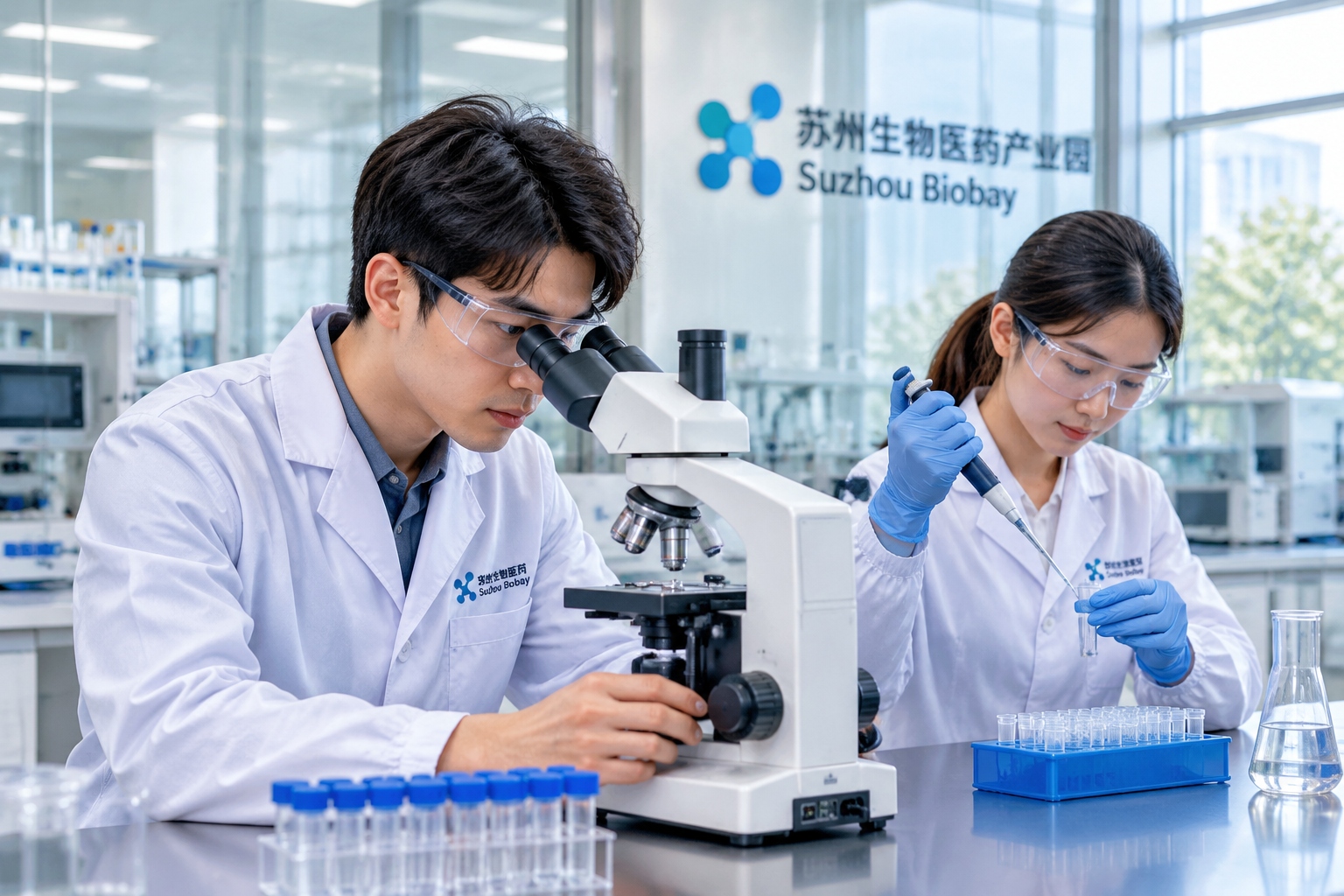
Today, the park is home to more than a thousand companies in fields like integrated circuits, artificial intelligence, and biopharmaceuticals. One of them is Suzhou Biobay, a cluster of around 600 life-science startups. Young scientists from Europe, the US, and other parts of China work here on new drugs and medical devices.
The numbers are impressive. In 2023, the park produced more than 360 billion yuan (about $50 billion) in gross domestic product, more than many small countries. But the real story is how it changed the mindset of a region.
Living Here: The Human Side
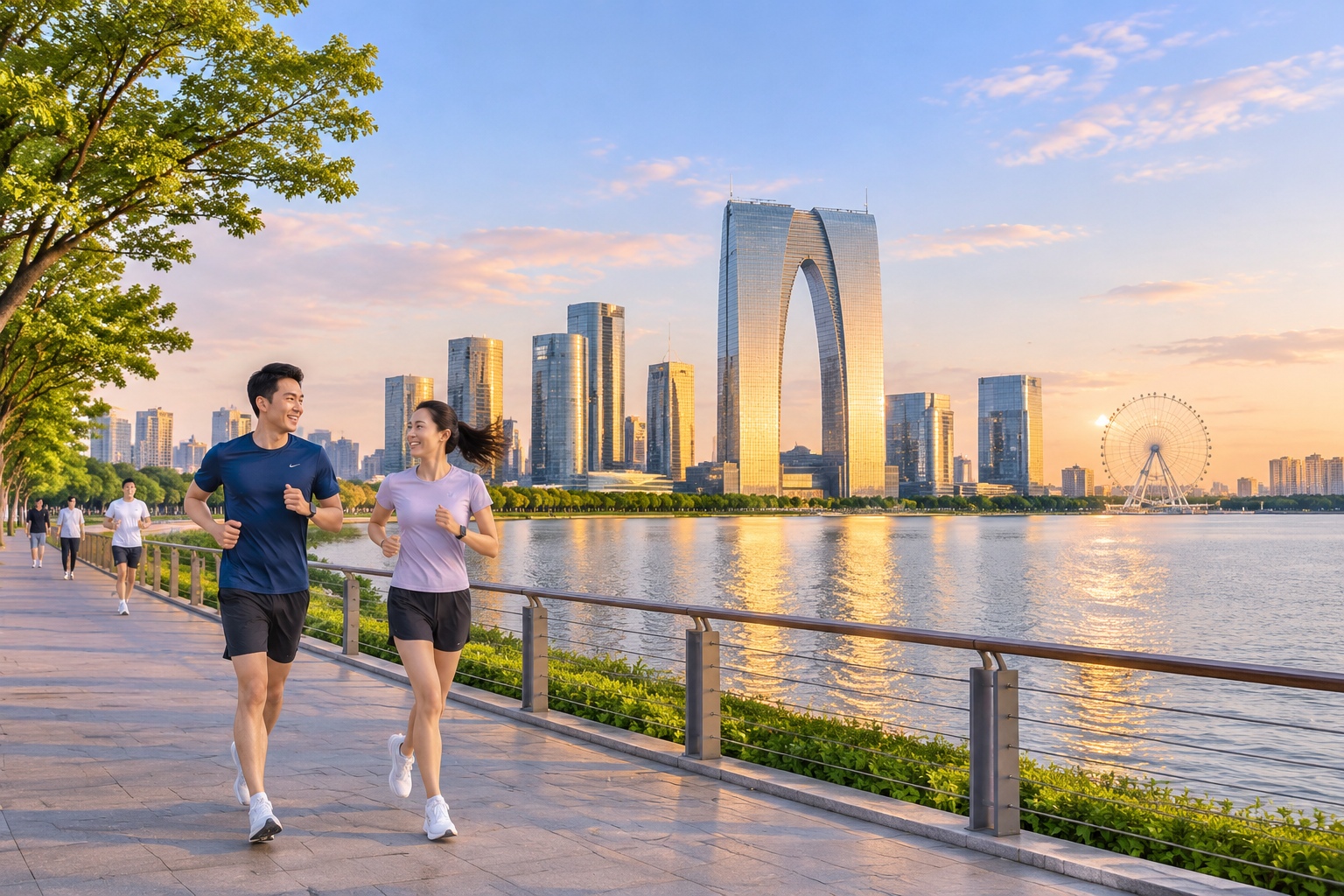
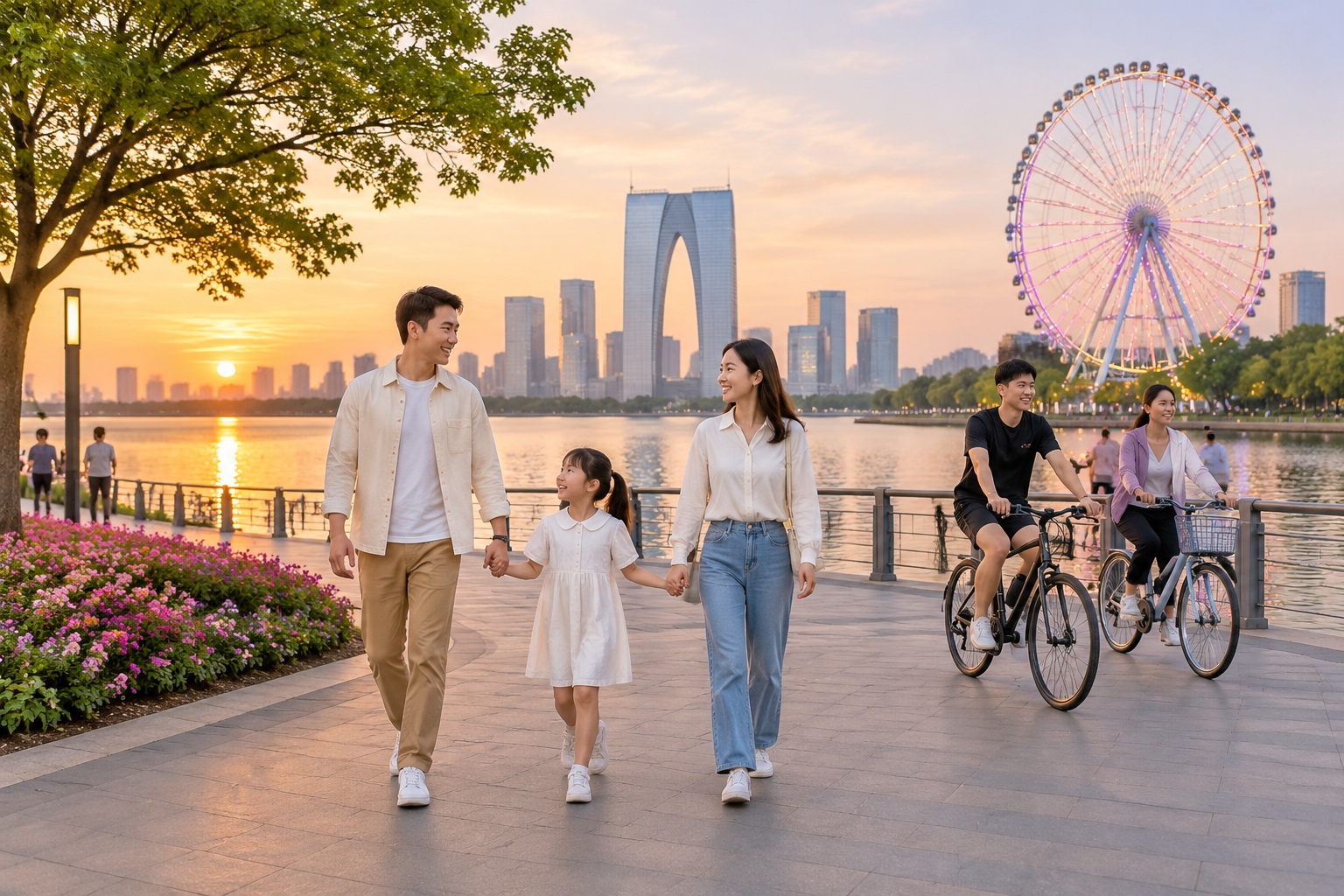
For local residents, the change is visible in their daily lives. The old farm dirt roads are now wide boulevards lined with trees. High-speed rail connects Suzhou to Shanghai in under half an hour. The Jinji Lake area has become a popular place for evening walks, with a Ferris wheel and music fountains.
The park also built schools, hospitals, and community centers. The first international school opened in 1996, and now there are several options for families of foreign workers. Chinese parents like the public schools, which are considered among the best in the province.
Housing has gone through a huge transformation. In the old days, farmers lived in simple brick houses. Today, they live in modern residential compounds with parks and parking garages. Some former farmers now work as property managers or start small businesses.
But not everything is perfect. The rapid growth has brought challenges like traffic congestion and rising housing prices. Young employees often work long hours, and competition for good jobs is intense. The park’s success has also made it more expensive for startups to rent office space than in smaller cities.
Beyond the Park: A Model for China
Suzhou Industrial Park’s success has inspired many other cities. The so-called “Suzhou model” has been copied in various forms across China, from the Tianjin Eco-City (another cooperation with Singapore) to technology parks in Changsha and Wuhan. But few have matched its scale or speed.
Why did it work here? Experts point to a few factors. The support of central and local governments provided unique policy flexibility. The partnership with Singapore brought technical expertise and international credibility. And Suzhou itself had a strong history of entrepreneurship and craftsmanship, going back to the Ming dynasty’s silk merchants.
Today, the park is also a window to China’s opening up. In recent years, it has become a pilot zone for new economic policies, including the free trade zone. It is testing new ideas in cross-border data flow and financial services, which could have implications far beyond Suzhou.
What the Future Holds
Walking along the lake at sunset, you see a mix of generations. Retirees practice tai chi. Young professionals jog past. International students take photos. The park is no longer a construction site or a factory zone; it is a complete city.
For the next generation, the challenge is to keep innovating when the ground rules are changing. Global trade tensions, rising costs, and demographic pressures all loom large. But if the past thirty years are any guide, the people of Suzhou will find a way.
As Zhang, the former farmer, put it: “I never imagined I would live in a place like this. Now I hope my granddaughter also finds her future here.”
Start the discussion at forum.chinacomes.com