

Morning on Machang Road
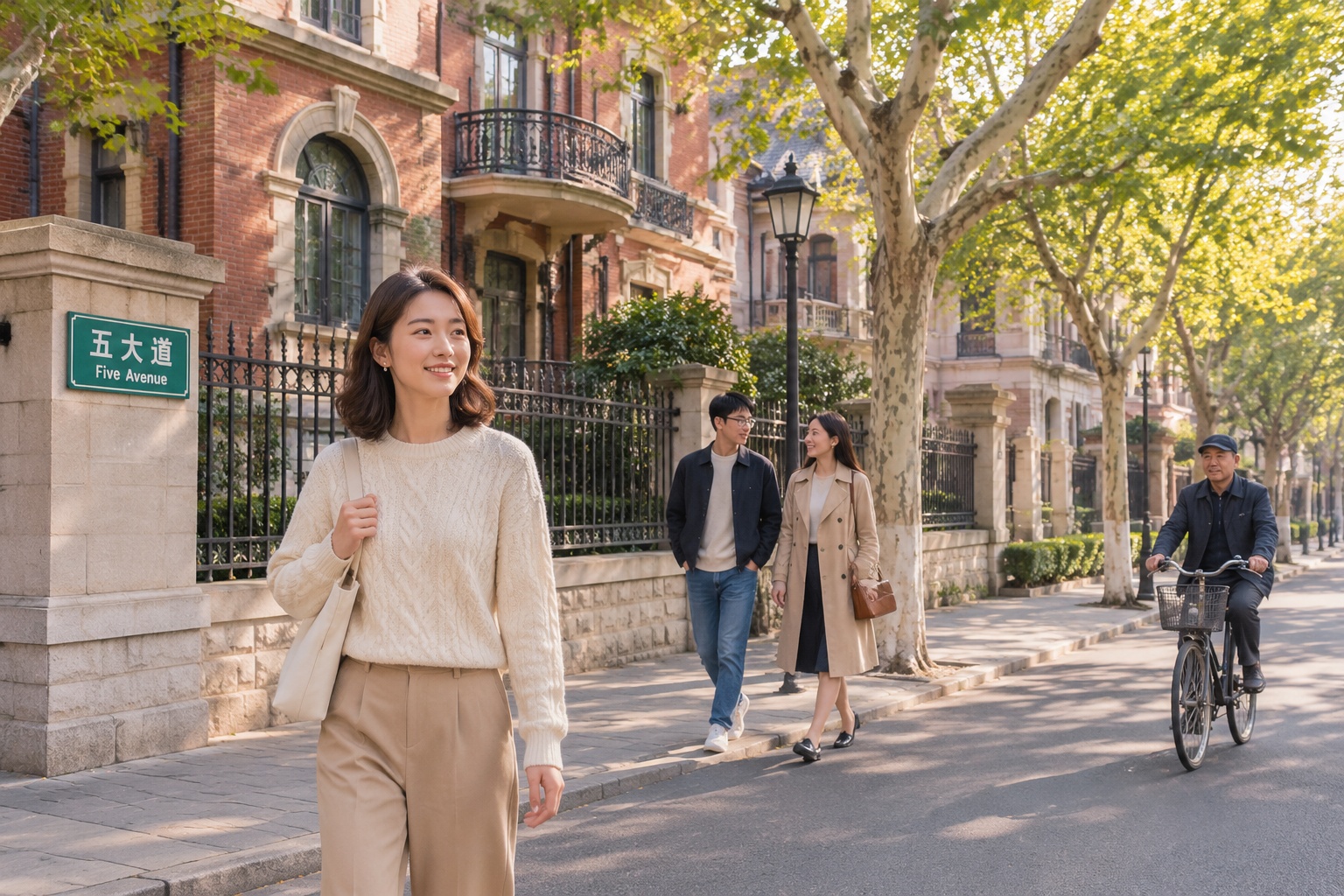
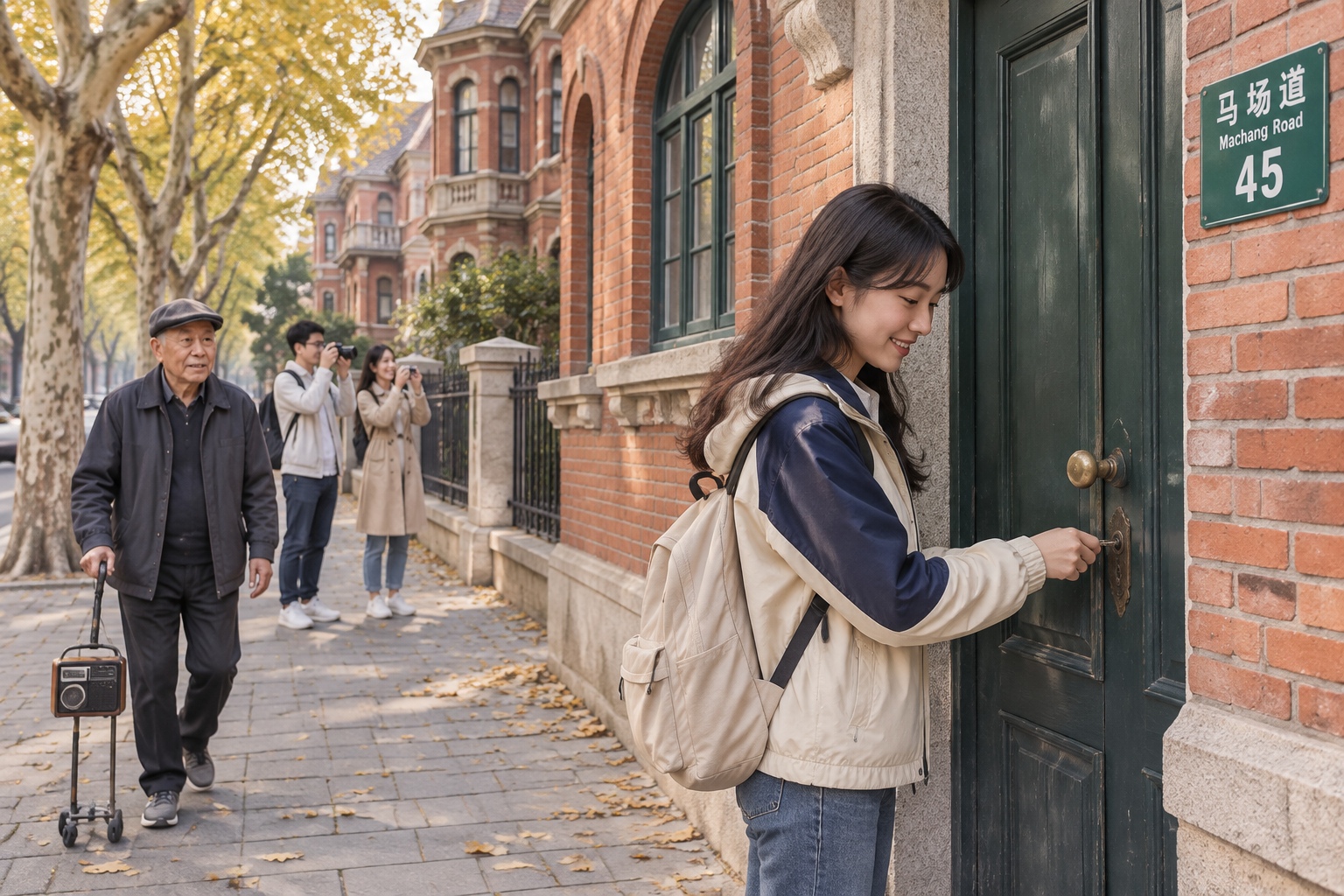
At 7:30 on a Tuesday, the sun is still low over Tianjin. On Machang Road, one of the main streets in the area known as Five Avenue, a young woman named Liu Yang walks briskly toward a three-story brick building. She unlocks a heavy wooden door painted dark green. The hinges groan briefly, the smell of old timber and fresh coffee mixes in the air. Liu Yang is the co-owner of a specialty coffee shop called “Old Terrace,” which occupies the ground floor of a building that was once part of a British concession club in the 1920s.
Outside, a retired man shuffles past with a radio playing Peking opera. Two foreign tourists stop to take a photo of the building’s ornate pilasters and wrought-iron balcony. A delivery tricycle dodges a Lexus SUV on the narrow street, which is lined with locust trees. This is Five Avenue, or Wudadao, a district of about 1.4 million square meters that contains more than 400 historic buildings, most built between 1900 and 1937.
Why Tianjin Has So Many “Small Western-Style Houses”
Chinese people often call these buildings yang lou—literally “Western-style towers.” For outsiders, the architecture may look odd at first: English Tudor chimneys, Italian renaissance columns, German half-timbered facades, and Japanese minimalist eaves sitting side by side on the same block. This diversity is not accidental.
After the Opium Wars, Tianjin became one of China’s first treaty ports. By the early 1900s, the city had nine foreign concessions, including British, French, German, Italian, and Russian. These concessions brought a construction boom. Foreign architects, Chinese engineers, and local craftsmen built homes, banks, clubs, and schools that adapted European styles to the local climate and materials. Wealthy Chinese officials and businessmen, including several former presidents and warlords, also built grand residences here, hiring Italian architects or combining Chinese motifs with Western layouts.
By 1949, when the Communist Party took power, most of these buildings were confiscated and turned into public housing, offices, or military facilities. The new owners often divided the large villas into small apartments, adding walls and kitchenettes. Years of inattention left many buildings shabby, dark, and cluttered with illegal additions. Locals still remember the chaotic 1960s and 1970s, when the courtyards were filled with temporary sheds and laundry lines.
From Neglect to New Purpose
In the 1990s, the municipal government began to notice the value of the district. The first wave of restoration focused on curbing demolition. A famous saying among local officials was: “Do not let the last century’s history become a pile of bricks.” In 2005, Five Avenue was listed as one of China’s first fifteen national historical and cultural districts. That status gave it strict protection rules, but it also made it harder to make changes. Owners of the buildings—most are still publicly owned or shared by multiple households—could repair but not sell or rebuild freely. Many buildings sat untouched for another decade.
Then came a second wave, driven by the creative economy. In 2013, the city government began a program of “micro-renewal” (weigengxin) in selected streets. The idea was not to freeze the buildings in time, but to adapt them to modern uses with the least possible damage to their heritage. The government repaired facades, roofs, and courtyards, while private developers and small entrepreneurs were invited to bid on the interiors and open them to the public.
Inside the Revival: What’s Actually Happening Today
Walk down Changde Road now, and you’ll see the results. A former military hospital has been converted into a boutique hotel with 32 rooms. Each room has the original wooden floors and coal-burning fireplace, but the bathrooms are spotless and modern. Next door, a group of architecture students have turned a former stable into a design studio. Blueprints of the building’s 1920s construction are pinned to the walls.
In the square at Minyuan Stadium, a former British sports ground, the arched stands have been filled with cafes, a cycling shop, and a children’s art school. On Sunday mornings, an open-air book market sets up under the same arches where fans once watched football over a century ago. The building is a protected monument, but the market’s vendors are young and mostly from Tianjin’s emerging creative class. They sell zines, vinyl records, and local photography alongside used history books.
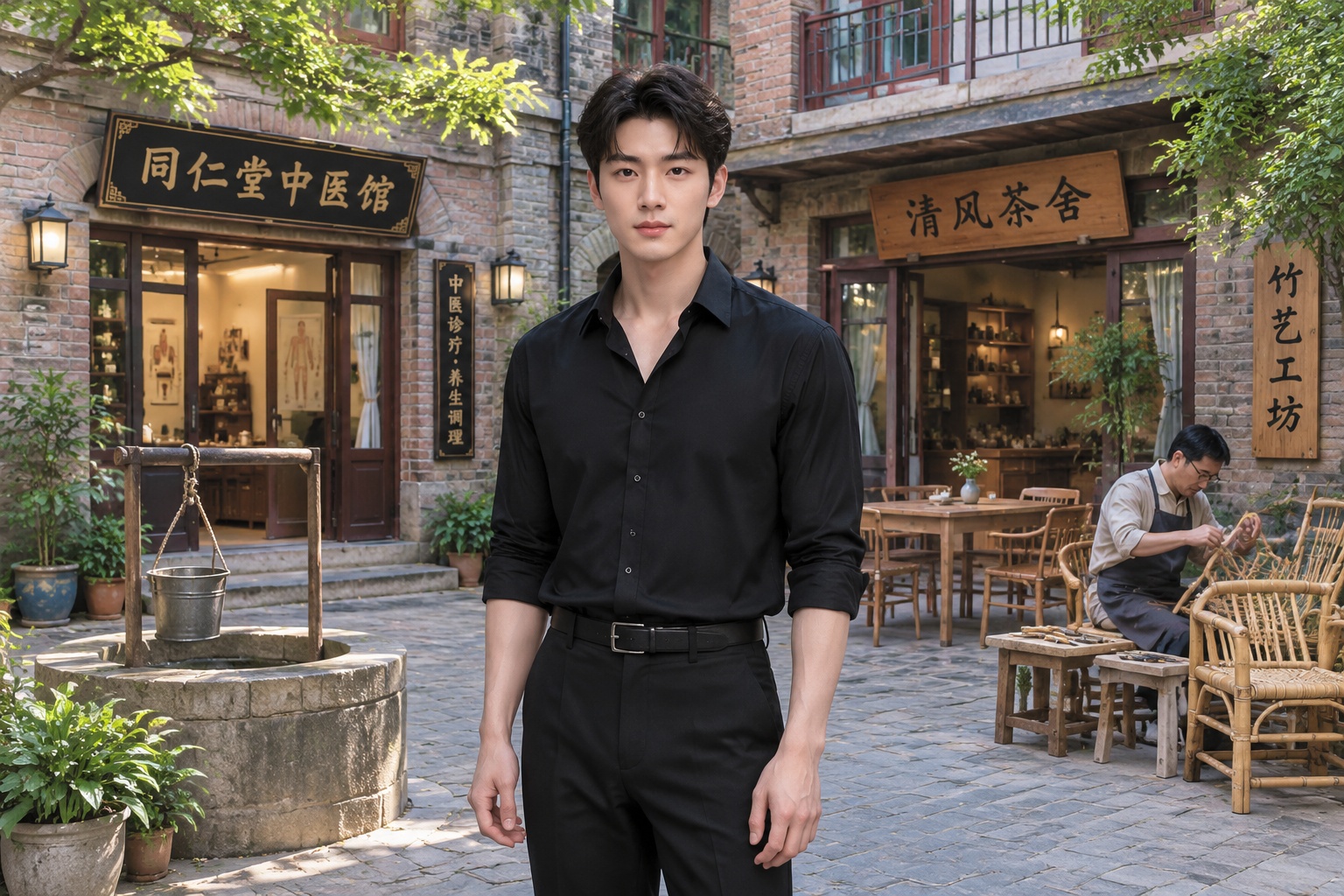
One of the most successful models is the “shared courtyard.” A courtyard inside a restored villa on Chengdu Road once belonged to a prominent banker. Now it houses a traditional Chinese medicine clinic, a tea room, and a small workshop where artisans repair bamboo furniture. The courtyard’s brick pathway is still uneven and worn, but it is carefully maintained. Visitors in white gym shoes hop over a puddle after a rain shower.
Liu Yang’s coffee shop is part of this movement. She chose the location because the shop has an original fireplace, a brass bell, and a balcony that overlooks the street. “The rent isn’t cheap, but the atmosphere is irreplaceable,” she says. “My customers are a mix of students, old-timers, and tourists. They come for the coffee, but they often stay to look at the ceiling molding.”
The Balancing Act: Preservation vs. Commerce
Revitalization is not without tension. Some conservators argue that too much commercial use erodes the historical significance. In 2021, the UNESCO Asia-Pacific Heritage Award praised the district for “meticulous restoration” but also warned about the risk of “over-commercialization.” The government has responded by keeping some buildings off limits to restaurants and souvenir shops, reserving them for cultural institutions and public services.
There are also practical problems. Many buildings are still privately occupied by extended families who have lived there for decades, sometimes in small, overcrowded rooms. Renovation often requires relocating these residents to new apartments, which takes time and money. “We want to preserve every brick, but we also want people to live comfortably,” says Zhang Min, a heritage official who has worked on Five Avenue for fifteen years. “It’s a slow process. Each building has its own residents, its own decay, its own story.”
And there is the question of authenticity. The restored buildings often look cleaner and more polished than they did in the 1970s, but purists point out that original paint, plaster, and plumbing are irreplaceable. To address this, a few buildings have been left “as found”—with faded walls and original nails—so visitors can see the texture of age.
What Visitors Experience Today
For a visitor, the area now feels less like a museum and more like a living slice of the city. Grab a map at the information center and you can follow a self-guided walking route that passes by the former homes of famous people, such as the last emperor’s brother and the playwright Cao Yu. But the more interesting stops might be the ones not on the map: a bicycle repair stand under an elm tree, a small vegetable market tucked behind a villa, a grandmother watering her potted flowers on a step that is two hundred years old.
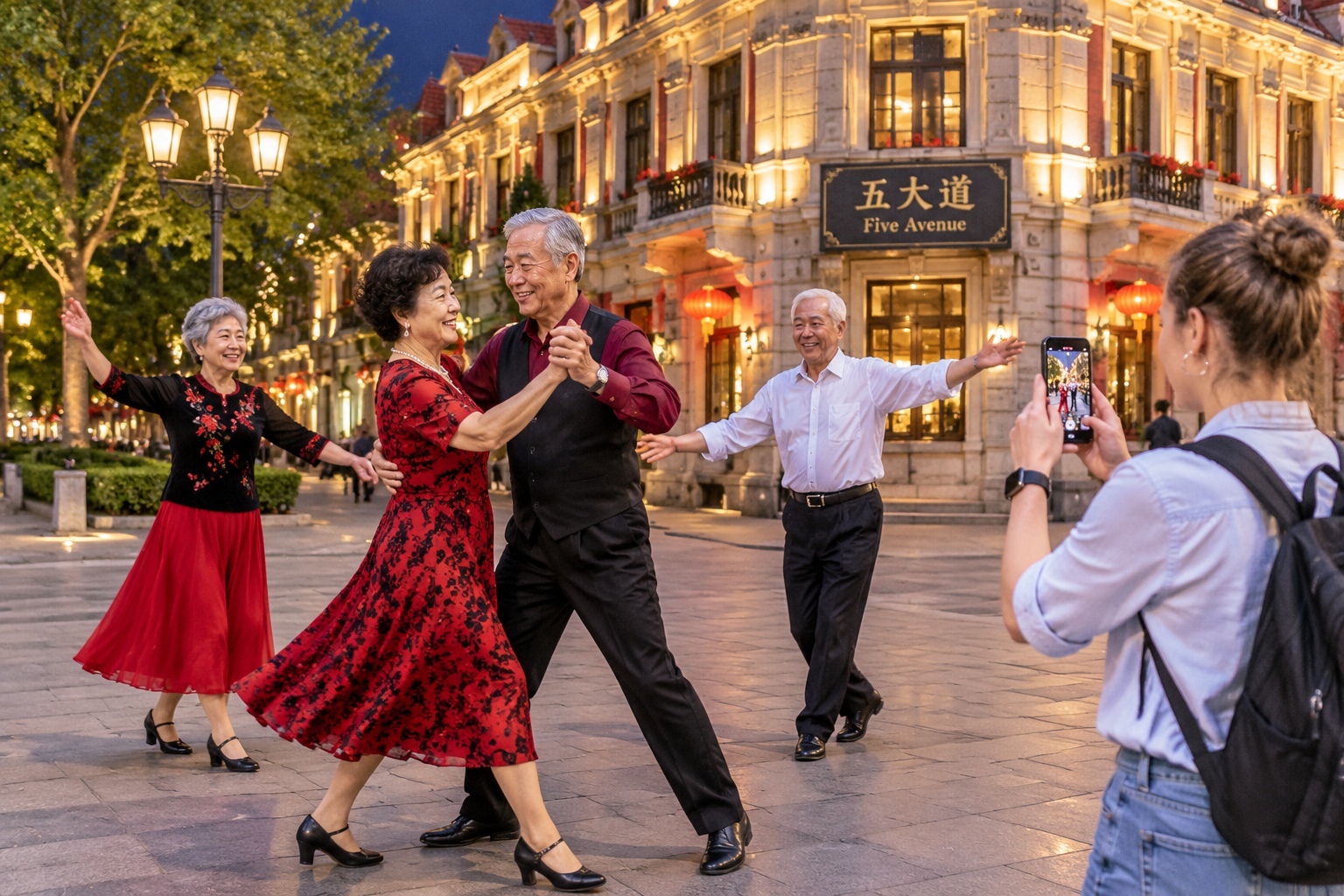
In the evening, the district changes again. Strings of lanterns light up the courtyards of the most popular restaurants. The sound of clinking glasses spills from a wine bar that has taken over a cellar. A group of seniors dances in a plaza, their movements a mix of tango and Chinese folk steps, while a foreigner films them on his phone.
A Lesson in Living with History
Tianjin’s Five Avenue is not a theme park. It is a place where the past and the present argue, compromise, and occasionally dance together. The small western-style houses have survived because they were adaptable. They became theaters, offices, and homes, then cafes and creative hubs. The key to their revival was not simply money or tourism, but a willingness to let the buildings remain useful.
As Liu Yang turns on the espresso machine, the first customers wander in. A retired professor orders a black coffee and sits by the window. He tells me that his father once worked as a servant in this building. “The floor he waxed is now the floor I sit on,” he says, tapping his foot. “But the building doesn’t mind. It just keeps standing.”
Outside, the sun has reached the top of the old chimneys. A group of schoolchildren in yellow hats lines up at the entrance of a restored villa, ready for a history lesson. The gate opens. They file in, their voices blending with the wind through the locust trees.
Start the discussion at forum.chinacomes.com