

A Smell That Divides the Table Before Dinner
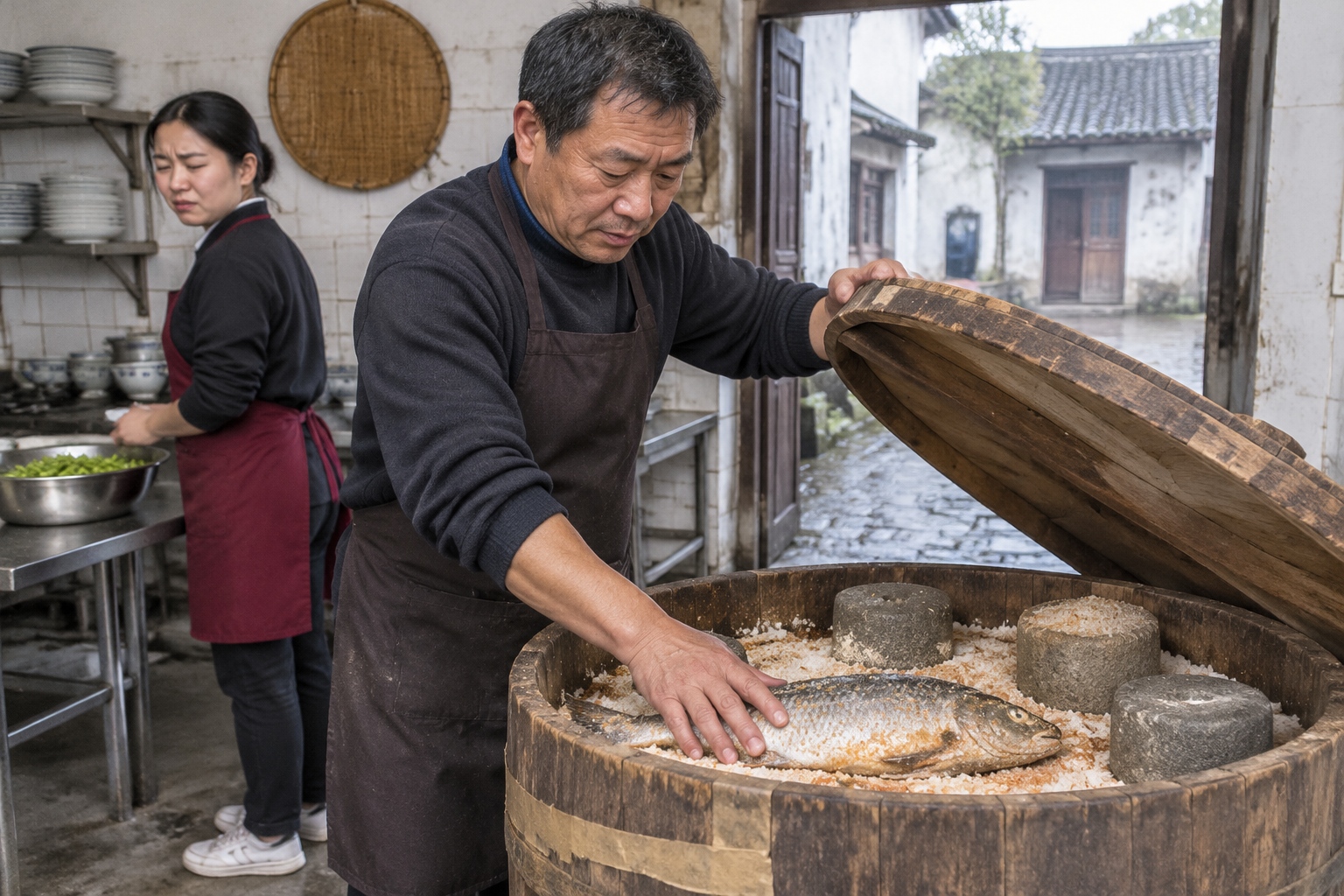
At 7:40 on a wet morning in Tunxi, the old commercial quarter at the foot of Huangshan, a cook lifts the lid from a wooden barrel in the back of a family restaurant. The smell comes out in a slow wave: salted fish, damp rice straw, a sharp edge of ammonia, something sour and warm. A server taking chairs off tables turns her face away. The cook does not. He leans closer, presses the fish with a finger, and nods. The flesh should be firm, he says, not soft. Then he writes the date on a strip of tape stuck to the barrel.
For a first-time visitor, this is the moment when stinky mandarin fish — chou guiyu in Chinese, sometimes translated as stinky mandarin fish even though the fish is a freshwater perch — stops being a menu joke. It is a fermented food with a long local life. In Huizhou, the historical region around Huangshan in Anhui Province, it appears at family meals, banquets and restaurant tables full of tourists. Locals often order it for guests the way hosts elsewhere might order a whole roast or a special seafood dish. The guest is expected to hesitate. The host is expected to smile and say: try a small piece with rice.
What “Stinky” Actually Means: Salt, Time and Temperature
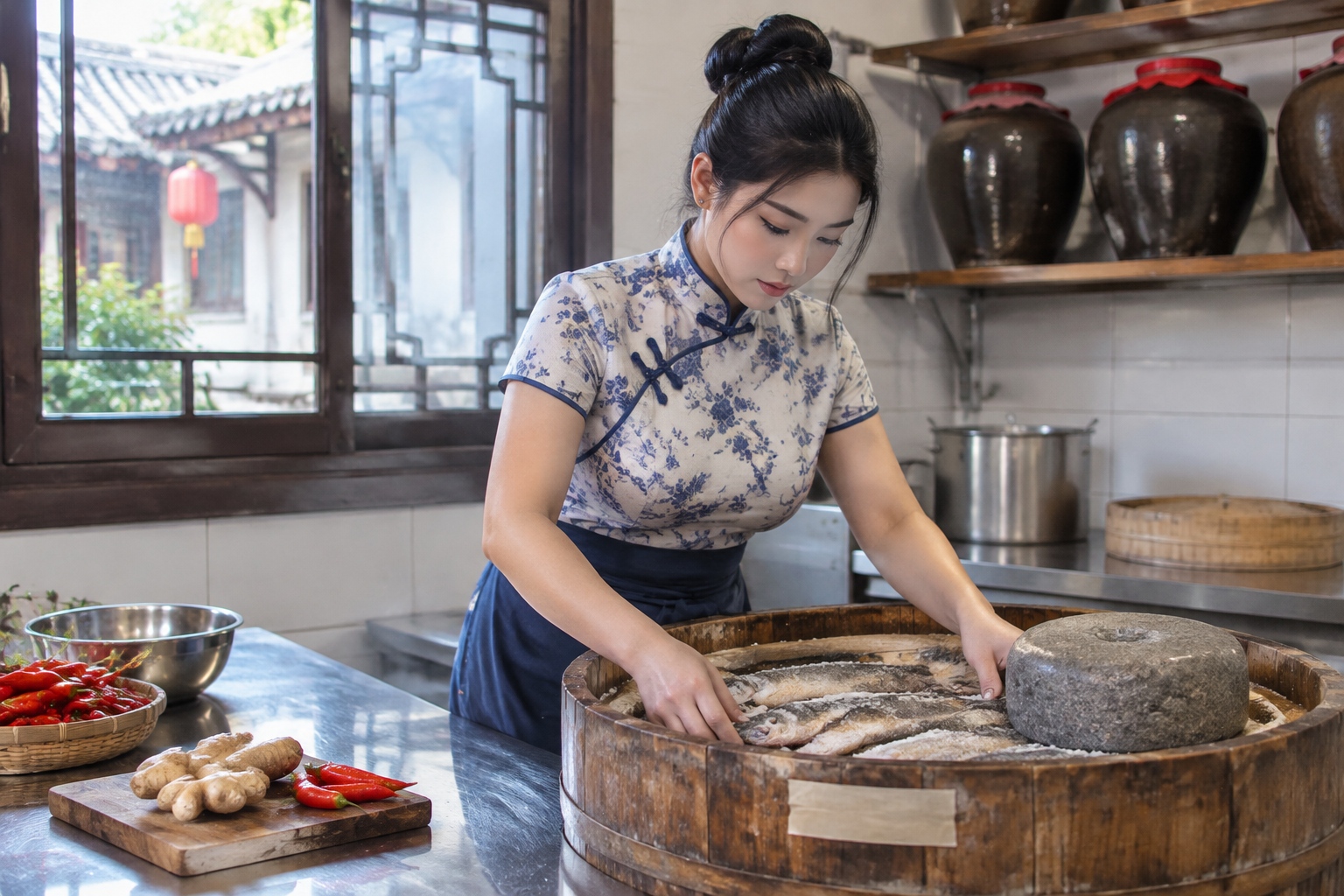
The fish itself is not a stunt. Mandarin fish has firm, sweet flesh and few small bones, which makes it good for braising. In the traditional Huizhou method, the fish is gutted, rubbed with salt, layered in a wooden barrel, weighted with a clean stone and left in a cool, airy place. The salt pulls water out of the flesh and slows the growth of unwanted bacteria. Over several days, depending on the season and the kitchen, enzymes and microbes break proteins into smaller compounds, including free amino acids that read to the tongue as umami. Other compounds create the smell.
That is the part outsiders miss: the smell and the taste are related but not the same. A well-made fish should not be rotten. It should have a clean, saline sourness, a firm texture and a deep savory finish. The cook’s finger test matters more than the clock. In winter, the barrel may need longer; in summer, the kitchen uses refrigeration or a shorter cure. Salt level, temperature and air movement are the real recipe. The old method was a preservation technique born before refrigerators, but it became a flavor people wanted for its own sake.
Modern kitchens have changed the edges of that process. Some restaurants still cure their own fish in barrels. Others buy vacuum-packed, cold-chain fish from licensed producers and finish the braise in-house. Chefs talk about salt percentages and days the way bakers talk about hydration and proofing. Inspectors care about different numbers: storage temperature, cleanliness, batch records. The old craft has not disappeared; it has been pulled into a system of standards that a tourist never sees.
The Barrel Behind the Family Table
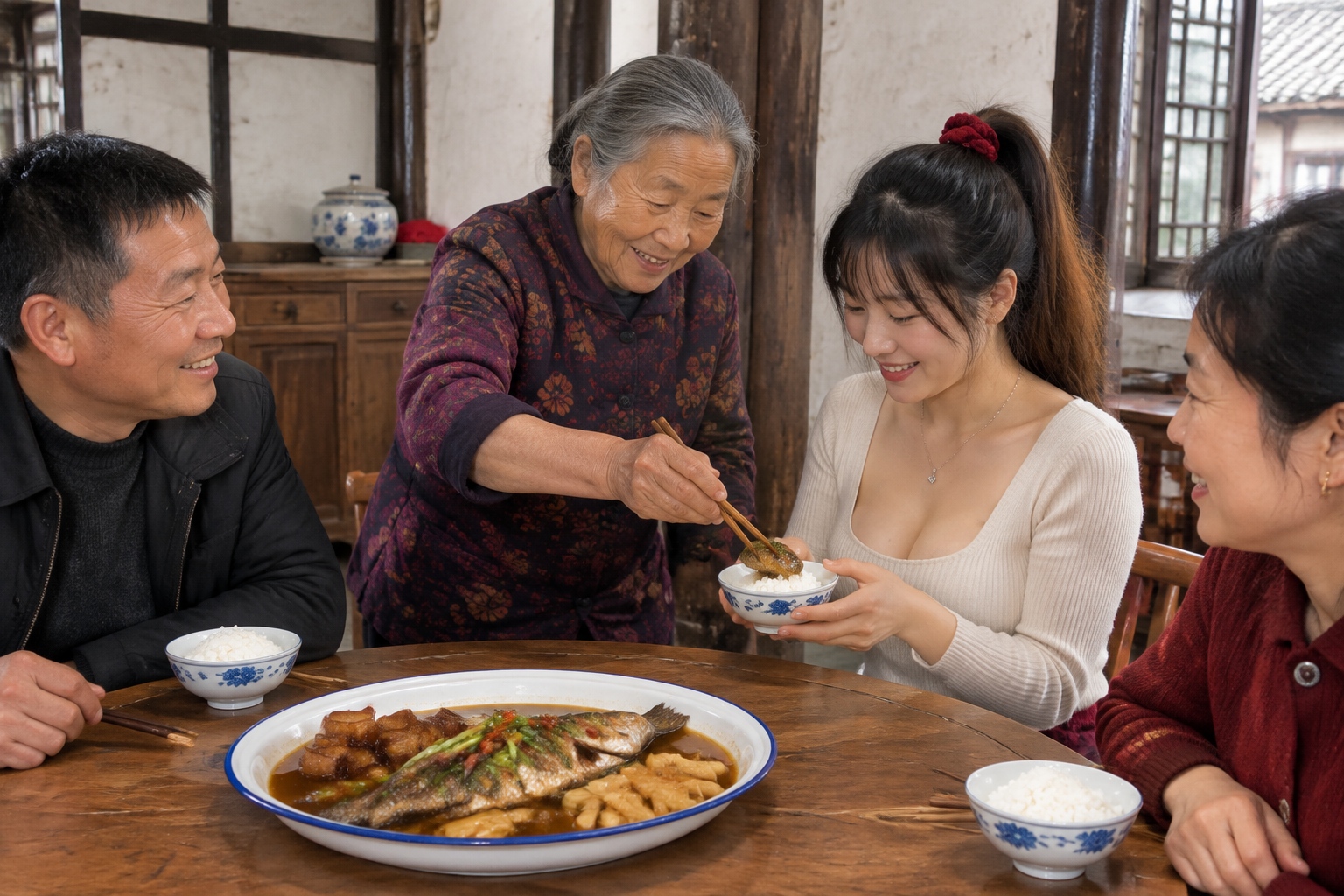
On a Sunday in a village outside Shexian, a family I visited set the fish in the center of a round table under a low wooden ceiling. The house was old, with white walls and dark beams, and the lunch was not fancy: stir-fried bamboo shoots, tofu skin, a plate of greens, rice in a black clay pot. The fish came last, in a wide enamel dish, braised with pork belly, bamboo shoots, ginger, garlic, dried chili and soy. The sauce was glossy and brown. The smell had softened in the heat, turning deeper and rounder.
A daughter who works in Shanghai had brought a friend from Guangzhou. He had heard about the dish online. He held his chopsticks over the dish for a second. The grandmother, without saying much, put a piece on top of his rice and pushed the bowl closer. He ate. Then he ate again. The table laughed, not because he had passed a test, but because the small drama was familiar. In Huizhou families, the dish often carries that role: it is a host’s proof of generosity, a conversation opener, a way to make a visitor part of the meal.
It is not an everyday dish. Good mandarin fish costs more than tofu or pork, and the curing takes attention. Many families now make it for holidays, weddings, the return of a family member or a table full of guests. Some younger people know the taste better than the process. They can recognize a good version in a restaurant, but they may not know how their grandmother judged the barrel. That knowledge is moving between home kitchens and professional kitchens, sometimes carefully, sometimes not.
Why Huangshan and the Xin’an River Made This Dish
Geography explains a lot. Huangshan is a mountain city, but it sits within the old Huizhou trading world, connected by the Xin’an River and its tributaries. Before roads and refrigeration, fresh fish was hard to move through the hills. Salting and fermenting made it last. Huizhou merchants travelled for business, and preserved fish travelled with them. Different families tell different origin stories — a merchant’s accident, a village’s cold spring, a barrel forgotten under a stone — and no single version settles the argument.
What is clear is that the local climate gave the process a particular rhythm. The mountain air is cool at night even in summer, and old Huizhou houses are drafty. A barrel could sit in a shaded room without turning foul too quickly. Today, most fish comes from aquaculture and arrives by truck, not boat. The old ferry points along the Xin’an River are now places for photographs. But the flavor map still matters: the dish is tied to Huangshan, to Huizhou cuisine and to the idea of a place where preservation became pleasure.

Walk through Tunxi Old Street in the morning and you can see the two worlds side by side. Vendors sell pickled vegetables, bamboo shoots and tea. A shop displays vacuum-packed stinky mandarin fish next to chili paste and rice wine. A few streets away, a hotel kitchen is preparing a version for a tour group, less salty than the village style, with a neater plate and a card explaining the fermentation. Anhui food culture is not frozen in a museum; it is being sold, adjusted and argued over.
From Village Kitchen to a Reservable Table
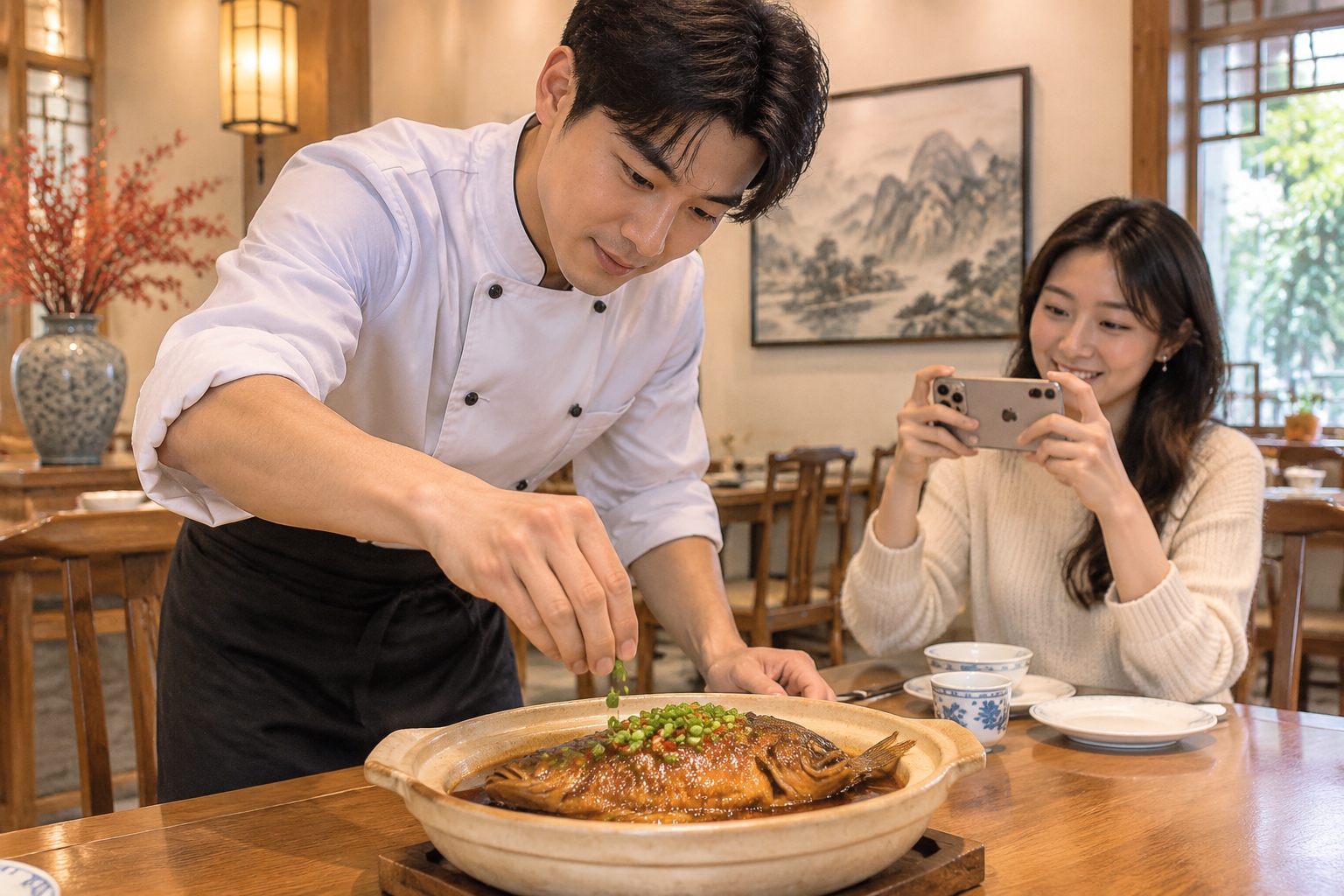
Tourism has changed the dish’s audience. Huangshan draws millions of visitors a year, and many want to eat something they cannot find at home. Stinky mandarin fish is perfect for the age of the phone camera: dramatic smell, strong visual, a story in one bite. Restaurant menus call it a signature Huizhou dish. Homestays offer cooking classes. Short videos show people covering their noses, then asking for more rice.
That attention brings money, but also pressure. A restaurant needs consistency. If the fish is too mild, tourists say it is not authentic; if it is too strong, they send it back. Some chefs lighten the salt, add more bamboo shoots and serve the fish in a shallow clay pot. Others refuse to compromise and keep the village intensity. Packaged versions have made the dish available far beyond Anhui, but a vacuum bag cannot reproduce the soft draught of an old house or the weight of a stone on a barrel.
The modern version also raises questions that home cooks never had to answer in public. How do you prove a fermented fish is safe? Who sets the salt level? What happens when a food safety inspector and a grandmother use different measures of done? The answers are not always elegant. Some small producers struggle with cold storage; some restaurants buy from bigger suppliers. The result is a wider gap between the cheapest and the best versions. Still, the dish has survived because it can adapt. It has moved from a preservation necessity to a local delicacy to a tourism icon, and it is still changing.
A Philosophy of Controlled Transformation
At the end of the lunch outside Shexian, the grandmother scraped the last of the sauce onto a bowl of rice. The fish was gone except for the head and a few bones. Someone opened a window. The room smelled of chili, soy and the faint sourness that had been there all along. The visitor from Guangzhou said he wanted to learn how to make it. The grandmother looked at him and asked whether he had a cool room and enough patience. Everyone laughed again.
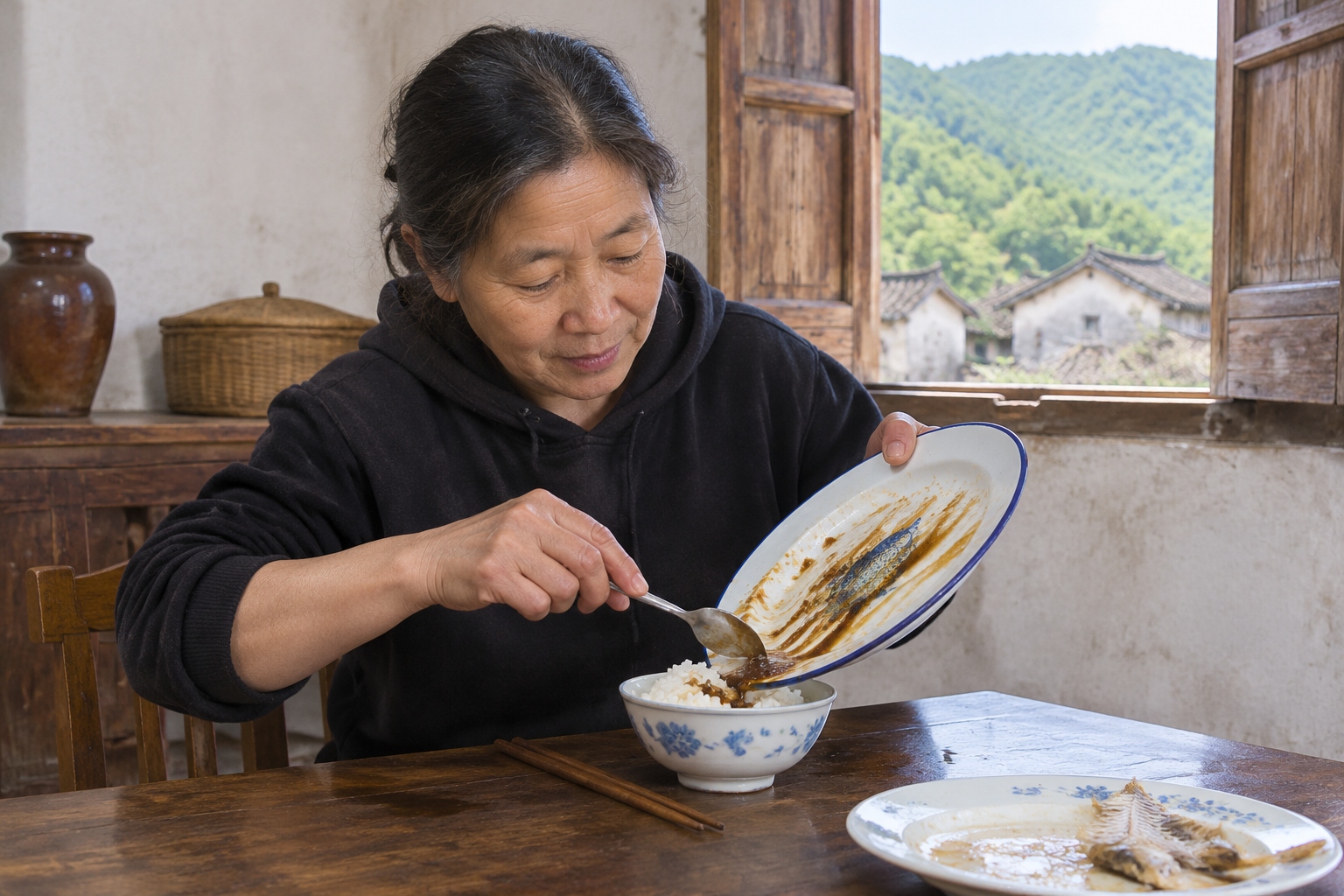
That is probably the most honest way to understand stinky mandarin fish. It is not a challenge food, not a national symbol and not a simple recipe. It is a local answer to a practical problem — how to keep fish in a humid hill country — that turned into a taste people miss when they leave. For a visitor, the first step is easy: take a small piece, put it on rice, and wait. The smell arrives before the flavor. The flavor, for many people, arrives after.