

A question that would have puzzled a Suzhou chef twenty years ago
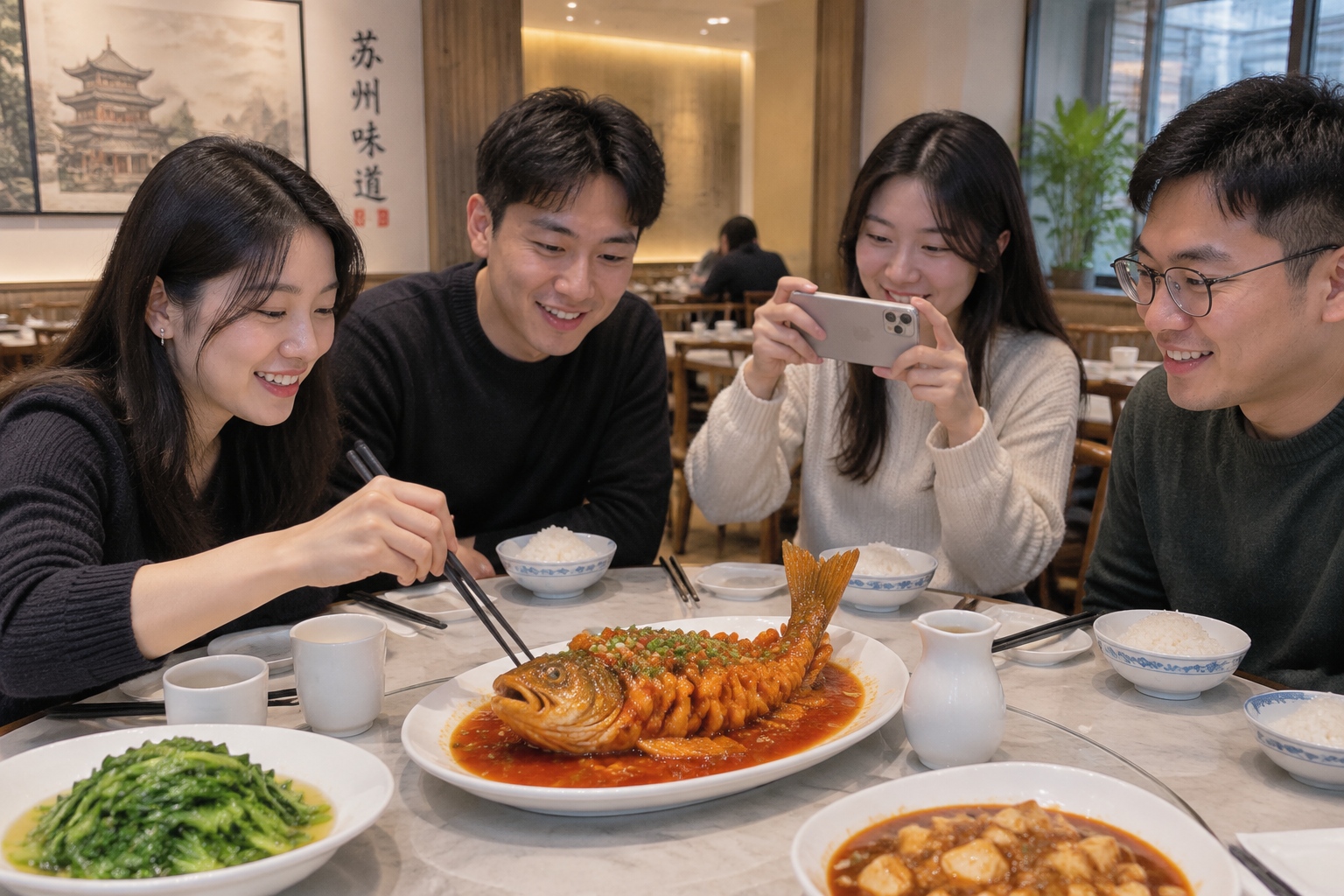
It is a Friday night in Suzhou, and four friends in their late twenties are sitting at a table on the third floor of a mall in the Industrial Park district. Warm lighting, a queue at the door, a menu with photos.
One of them points at a whole fish, scored, curled upward, glossy under a red-orange sauce. “Squirrel mandarin fish,” she says. “Can you do it with less sugar and less oil?”
The waiter does not blink. “We have a lighter version,” she says. “Less sugar, baked instead of deep-fried, sauce on the side. One hundred and ninety-eight.”
That short exchange is the whole story in miniature. A dish that once existed to impress is now being asked to justify itself to people who count sugar, watch their oil intake and still want to eat well on a Friday night.
What squirrel mandarin fish actually is
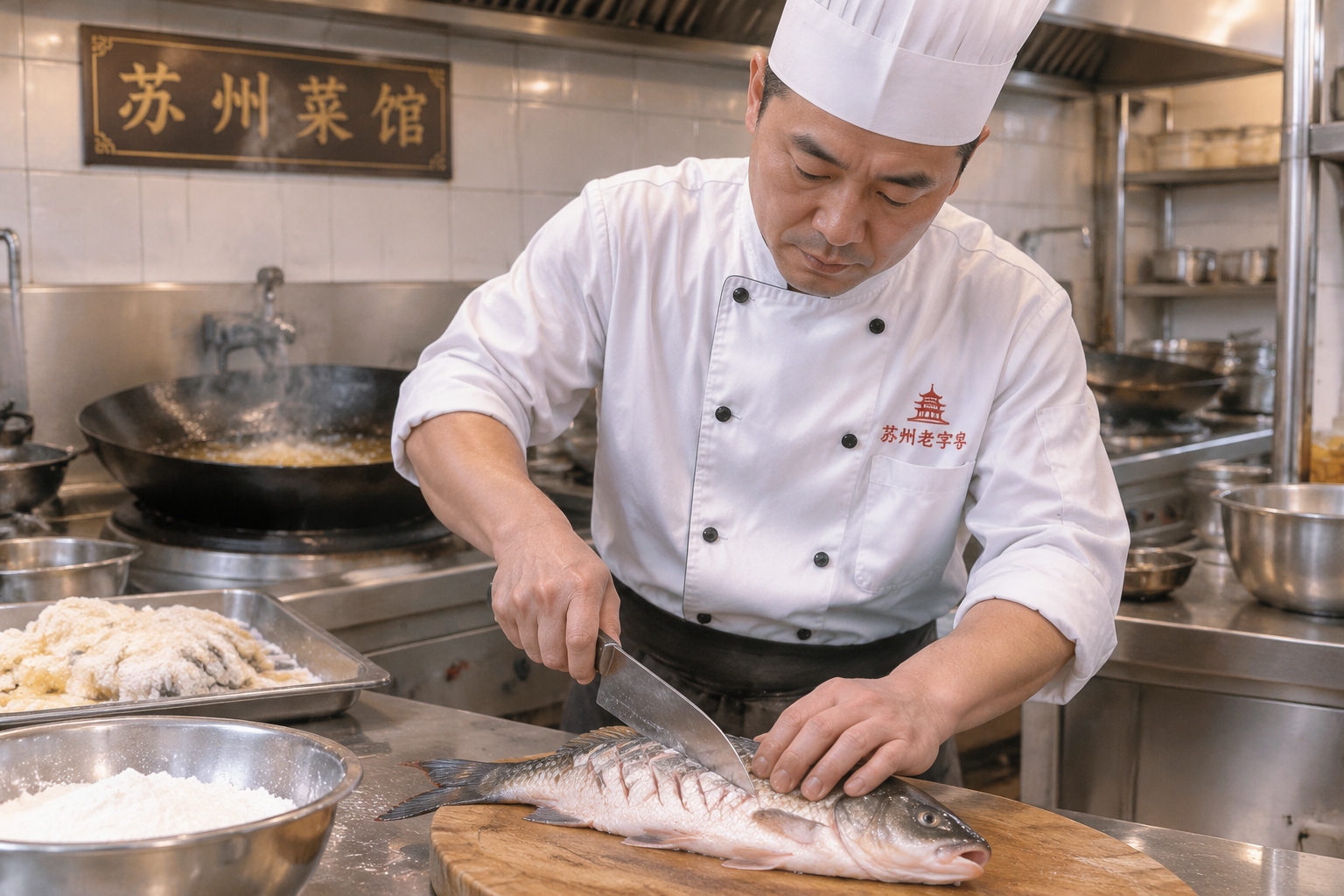
For readers who have never met this dish: it is the showpiece of Suzhou cooking, and it looks nothing like a squirrel. A whole mandarin fish is deboned through the belly, the flesh scored in a diamond crosshatch, then coated in a thin batter and lowered into hot oil. The scoring makes the flesh open like a pine cone and curl up at the tail — which is roughly where the squirrel comparison comes from. A sweet-sour sauce, usually tomato, vinegar and a lot of sugar, is poured over it at the table so it sizzles.
The dish is usually traced to Songhelou, a restaurant founded in Suzhou in the 1750s, and to a well-worn legend about an emperor on a southern tour. Treat the emperor part as folklore. The banquet part is real. For decades, squirrel mandarin fish has been the dish that appears at wedding tables, at family reunions during the Lunar New Year, and on the must-eat list of almost every domestic tour group passing through the city.
It is also, by design, a heavy dish. The crunch depends on hot oil and a starch coating. The shine depends on sugar and a cornstarch slurry. A whole fish at an old-brand restaurant often runs 250 to 300 yuan (about 35 to 42 US dollars) and is built to feed six to eight people at a round table, not two people at a small one.
What the “healthy version” changes — and what it keeps
Less sugar, but not no sugar
Traditional restaurant recipes for a whole fish commonly list 50 to 80 grams of sugar, and ketchup pushes it higher. The lighter versions I tried in Suzhou cut that to roughly a third. Kitchens swap ketchup for fresh tomatoes cooked down with rice vinegar, so the sauce tastes brighter and slightly sharper rather than flatly sweet.
Oil: baked, air-fried, or fried once instead of twice
The classic method fries the fish twice for maximum crunch. Many newer menus bake it, air-fry it, or fry it once at a higher temperature and finish it in the oven. The result is crisp for about five minutes instead of fifteen, which is why the sauce increasingly arrives in a small jug on the side.
Smaller fish, thinner coating, shared plates
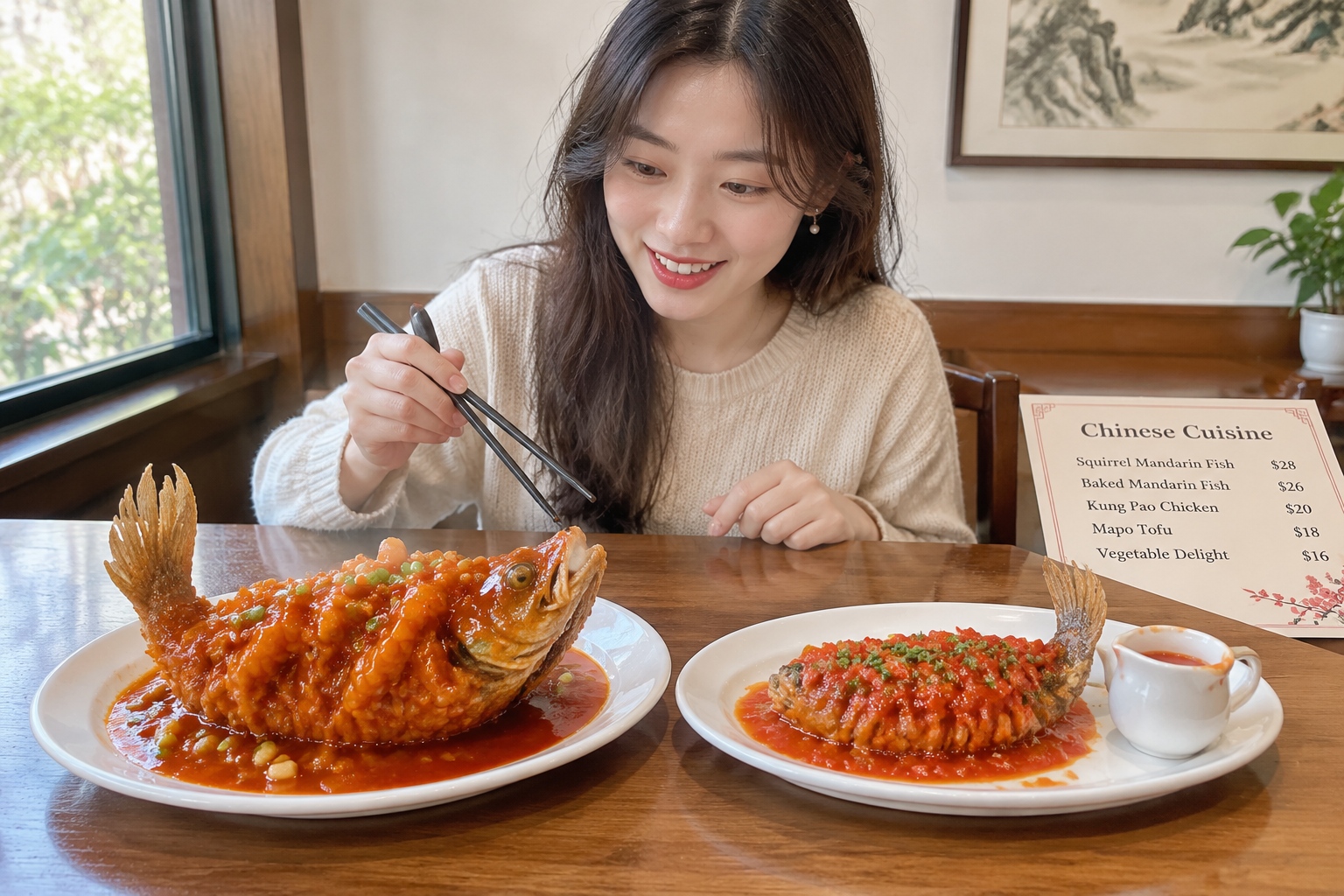
Portions have shrunk. Some restaurants use fillets instead of a whole fish. The cornstarch slurry is thinner, or replaced by a reduction. Prices drop with the portion: 198 yuan for the lighter plate versus 268 for the classic whole fish at the same table.
Why young Suzhou diners started asking
None of this happened because of a slogan. It happened because the people ordering changed.
China’s average household is now about 2.6 people, down from more than four in the 1980s. A whole fish built for eight is simply too much food for a table of two or three — and doggy bags, while normal now, still feel awkward at a business dinner.
Then there is the gym. Fitness apps, watches and office step-count rivalries have made “how much did I eat today” a routine question for urban professionals in their twenties and thirties. Delivery apps and restaurant review platforms list calorie estimates for many dishes, and a plate of battered, syrup-coated fish reads badly next to a bowl of grain salad.
But the most common reason I heard from diners was simpler and less scientific: they want to leave the table feeling fine. “I like the taste, I just don’t want to feel heavy afterwards,” a 29-year-old product manager told me. She orders the lighter version about once a month and the classic version at family gatherings, where her grandmother does the ordering.
How restaurants are responding
Old brands are careful. At Songhelou and similar establishments, the classic recipe stays on the menu, and staff will tell you, politely, that the whole point of the dish is its richness. Newer restaurants in the Industrial Park and around Pingjiang Road are less reverent. Some print two versions side by side. A few offer only the lighter one and call it “modern Suzhou”.
Chefs describe the same trade-off every time: baking keeps the shape but dulls the crunch; reducing sugar makes the sauce look less glossy; a smaller fish is harder to score and easier to overcook. The compromise most kitchens land on is keeping the technique and the look, cutting the sugar and oil, and letting the customer pour the sauce.
Cooking it at home, with shortcuts
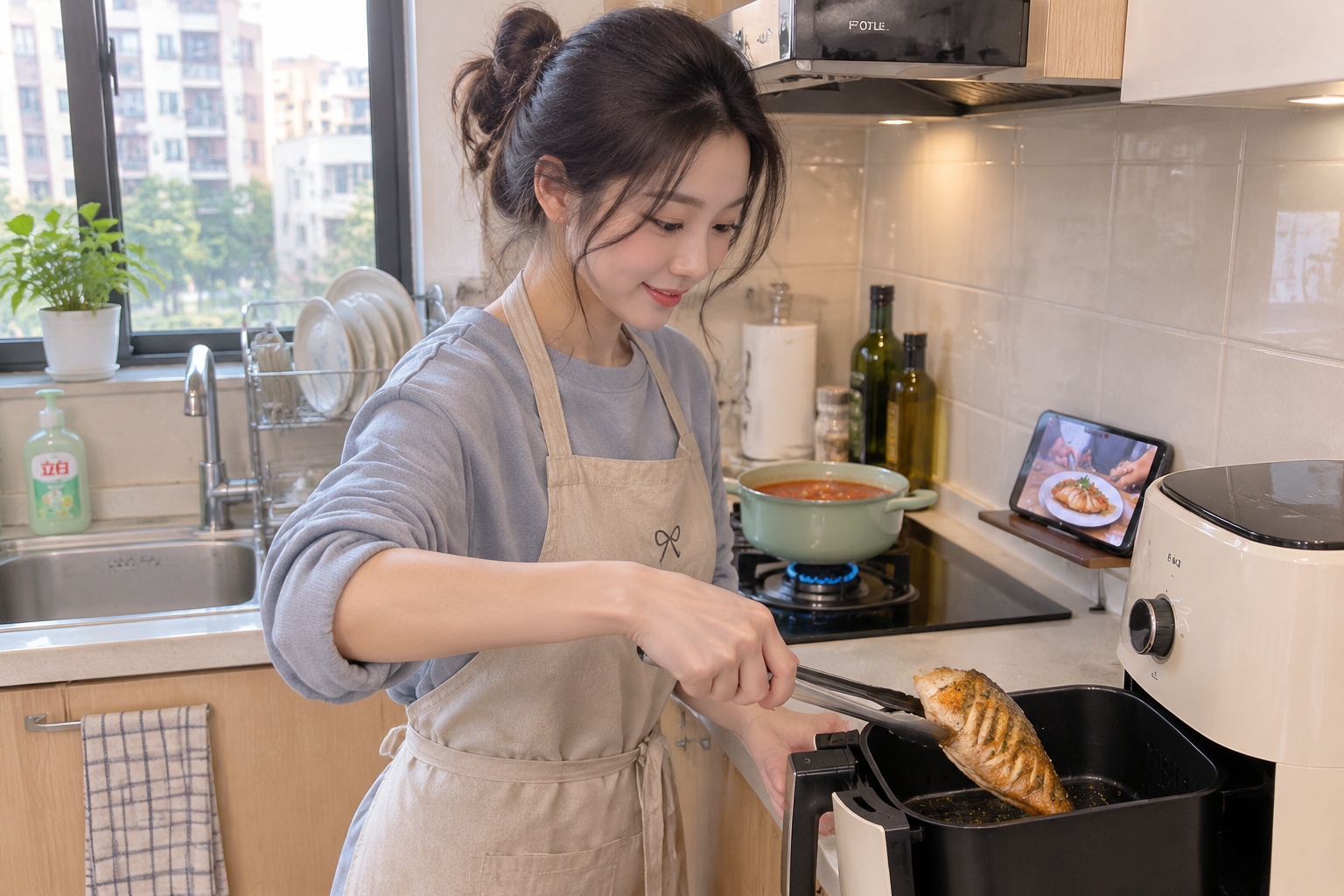
In home kitchens, the dish has been quietly rebuilt. Young cooks buy deboned mandarin fish or even tilapia fillets at the wet market or a supermarket delivery app, score them, brush on a little oil and put them in an air fryer at around 200°C for 12 to 15 minutes. The sauce is fresh tomato, vinegar, a spoon of sugar, a splash of soy.
It is not the same dish. It is close enough for a Tuesday. Parents and grandparents tend to be sceptical — “that’s not squirrel fish, that’s sweet-and-sour fish” — and they are not wrong. What the younger generation has kept is the shape and the ritual; what they have dropped is the deep-frying at home, which most small apartments are not built for anyway.
The argument: is it still the same dish?
Purists say no. If the fish is baked and the sauce is sharp, you have made something else and should call it something else. Fair enough.
The more interesting answer came from a chef in his forties who has cooked both versions for years. “The old dish was for a table of ten and a celebration,” he said. “This one is for a table of three on a Wednesday. They are not competing. They are two different dishes that happen to share a name.”
Whether young people stick with the lighter version long-term is still open. My guess, from a dozen conversations, is that it becomes the default for ordinary meals and the classic stays for the occasions that deserve it — which is roughly what happened to roast goose in Hong Kong and to the Sunday roast in Britain.
One ordinary dinner
Back at the mall table, the fish arrives in a shallow white dish, curled and glazed, sauce in a small ceramic jug. Someone takes a photo before anyone eats. The four of them finish it, along with a plate of greens, a tofu dish and two bowls of rice. The bill comes to about 320 yuan for four people.
Nobody at the table calls it health food. They call it dinner — a famous local dish that has been adjusted just enough to fit into an ordinary Friday. For anyone who has ever ordered a lighter version of a hometown classic and felt slightly guilty about it, this is a very recognisable moment. The dish is not disappearing. It is being renegotiated, one order at a time.