

A Carton of Yogurt in a Hangzhou Supermarket
Thursday evening, a neighbourhood supermarket in Hangzhou. A shelf about two metres wide holds yogurt, ready-to-drink milk tea, vacuum-packed beef jerky and small boxes of milk-curd snacks. On almost every package, somewhere, are the characters 内蒙古 — Inner Mongolia.
The woman shopping there has a basket on her arm and two kids at home. She is not thinking about grasslands. She is thinking about whether they will eat it. But that shelf is, for most of urban China, where nomadic culture actually arrives: not on a horse, in a fridge.
So here is a question worth asking. In a country where most people will never see a pasture, what does nomadic culture mean now — and what happens when it leaves the country?

First, Put Down the Postcard
The image outsiders carry is a yurt, a horse, and a man singing at the sky. Parts of that exist. But grassland work today runs on a phone screen as much as on a saddle.
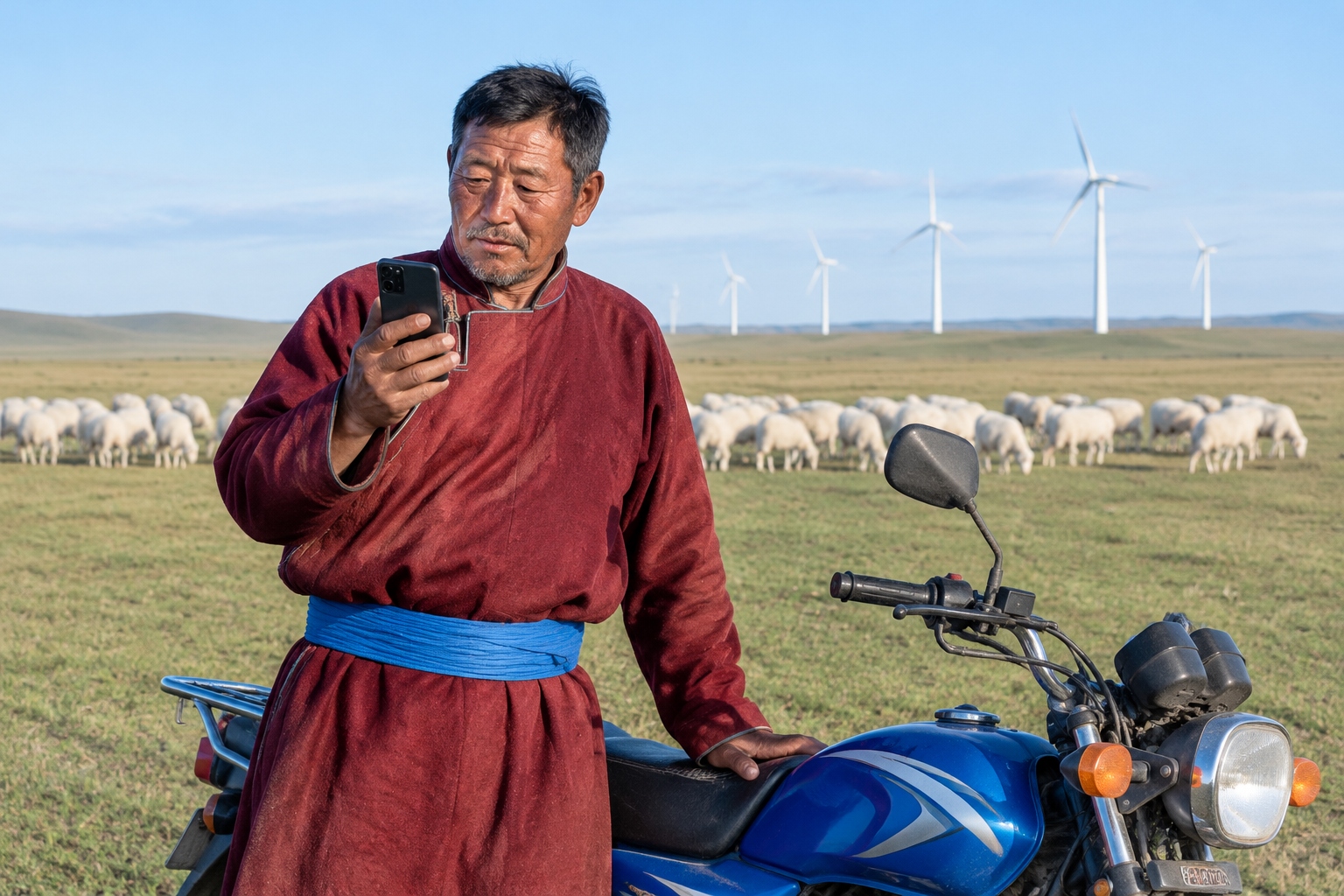
Take a herder in his early fifties in Xilingol, one of the regions that supplies dairy factories. Let’s call him Batu. At 6:40am he is not milking. He is in a WeChat group with the collection driver, checking whether the truck will reach his gate before the morning milk warms. His summer pasture runs on a solar panel and a small wind turbine. The same phone pays for diesel, checks lamb prices and books a vet.
His daughter, 24, films the autumn sheep drive and posts it. The comments fill up with people from Guangdong asking whether the sheep have names.
That detail changes the story. Batu is not performing tradition for anyone. He is a supplier, a logistics node and, increasingly, a content producer — three jobs that twenty years ago belonged to three different people in three different cities.
From the Family Pot to the Factory Line, and Partly Back
Milk curd was never a factory product. Families set milk aside, let it sour, drained it through cloth, pressed it into blocks and dried them on a rack. Every household’s version tasted slightly different, and nobody minded.
That does not scale. What scaled is a compromise. Cooperatives collect milk daily, test it, pasteurise, standardise fat and moisture, and press curd into moulds. The industrial version is milder and sweeter than what a grandmother makes — herders will tell you so, without much drama. What they get in exchange is a stable price and a product that survives a 2,000-kilometre truck ride.
Hohhot, the regional capital, is where the scale lives. Yili and Mengniu, China’s two largest dairy companies, are both headquartered there, which is why the city calls itself “China’s dairy capital.” Their hit products — Greek-style yogurt, ambient milk tea — turned a pastoral staple into something an office worker drinks at 3pm. At its peak, one Yili yogurt brand alone sold more than 20 billion yuan a year.
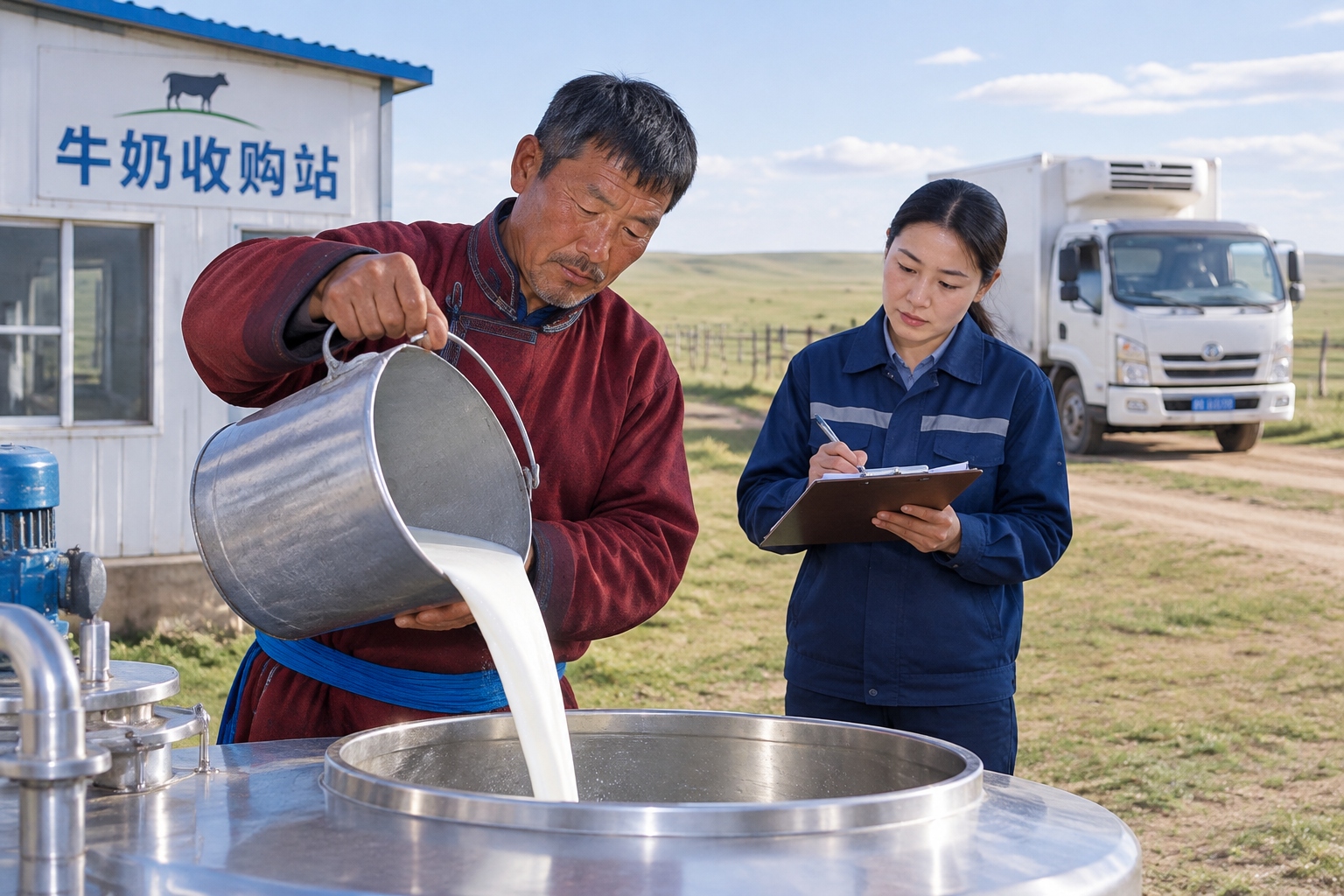
Underneath that, a smaller layer has grown. Boutique milk-curd labels sell on Taobao and Pinduoduo, some of them run by herders’ children who studied in Beijing and came home. They ship 20-yuan boxes of hand-cut curd with a photograph of one specific pasture on the label. It is not a huge business. It is a real one.
Cashmere: The Fibre That Used to Leave
For decades the cashmere pattern was simple. Inner Mongolia grew it, Europe sold it. China accounts for roughly 70% of the world’s raw cashmere supply, and Inner Mongolia is the biggest domestic source. The fibre left as a bale and came back as a sweater with an Italian name and a four-figure price tag.
That has shifted. Erdos, the group founded in 1979 in the city of the same name, is now one of the world’s largest cashmere processors, and its luxury line 1436 — named after the fibre’s thickness in microns — sells in Beijing, Tokyo and Paris. Smaller labels followed: designers in Hohhot cutting oversize sweaters and scarves for a domestic market that has become genuinely picky about hand feel.
What changed was not the goat. It was who tells the story. For years the pitch was “grassland, pure, ancient.” Now it is often just: this yarn, this weight, this stitch. Less romantic, easier to trust.
There is a catch, and herders know it. Cashmere comes from goats, and goats graze grass down to the root in a way sheep do not. More goats means more money and more pressure on pasture that is already dry. Some families now keep fewer goats and earn from dairy or hosting guests instead. That is not a slogan about sustainability. It is arithmetic done at the kitchen table in February.

The Morin Khuur, Filmed on a Phone
Mongolian music has a longer international reach than most people expect. Hanggai and Anda Union have toured Europe for years; Nine Treasures plays folk metal with khoomei throat singing to rooms in Berlin and Osaka.
The newer layer is smaller and stranger. A 24-year-old in Hohhot — call him Temu — plays morin khuur over a lo-fi beat, films himself with a phone on a tripod and posts at 11pm. He has around 300,000 followers. The comments arrive in Chinese, Mongolian, occasionally English.
Why that matters: for a long time, Mongolian music inside China was staged for visitors — the obligatory throat-singing number at a tourist dinner, three minutes, then applause and the bill. On a phone screen the format flips. Temu can play a folk melody and then a pop cover, and the audience stays. Nobody is asking him to be exotic. They are asking him to be good.

Homestays, Naadam, and the Question of the Stage
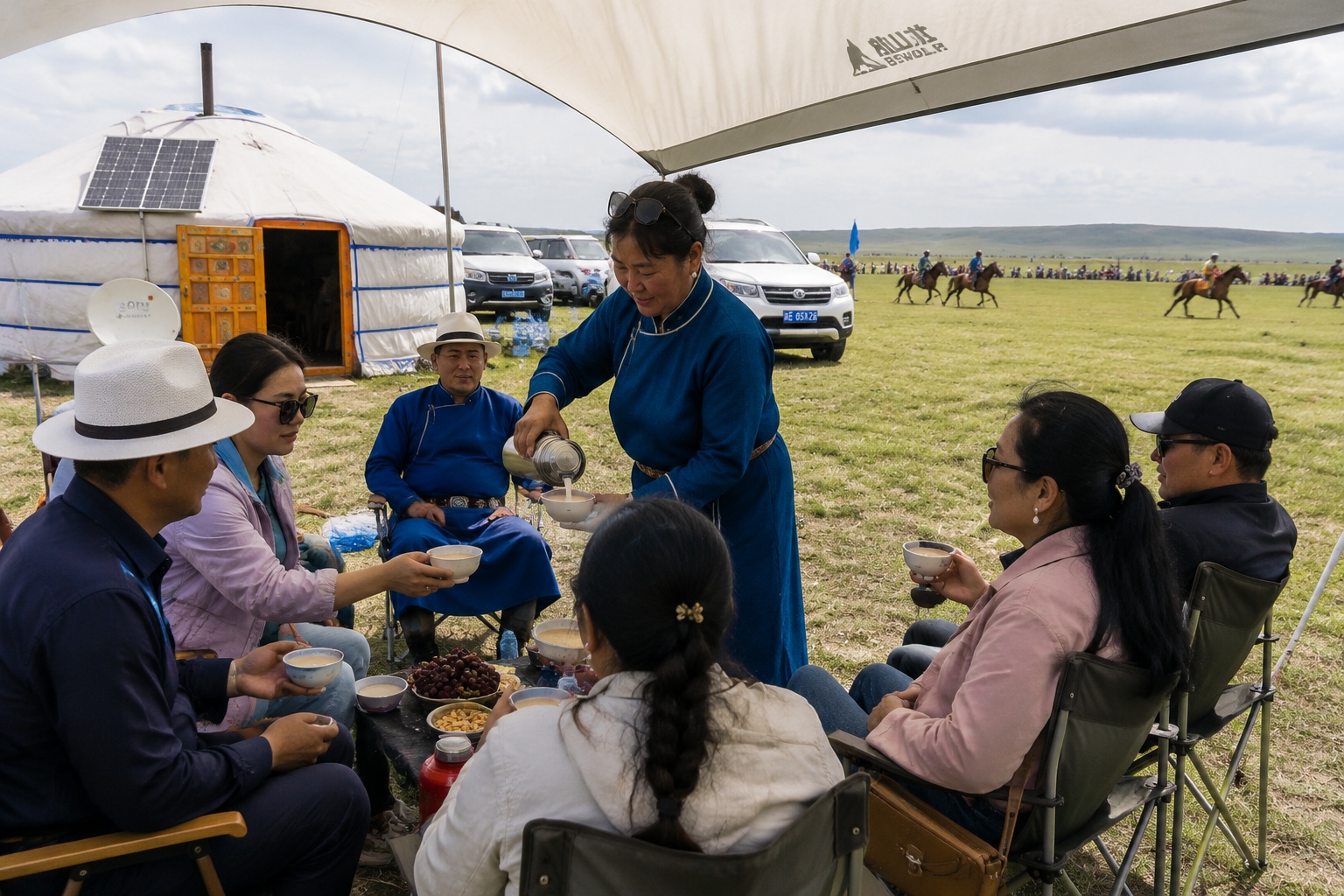
Tourism is where the tension shows most clearly. Hulunbuir and Xilingol fill up in July and August. A yurt with underfloor heating, wifi and a private bathroom runs 400 to 800 yuan a night. Some are run by herding families who moved into the brick house behind and rent out the yurt. Some are pure sets built by a company from Beijing.
Naadam, the summer festival of wrestling, horse racing and archery, is both a community event and a show. Locals go for the wrestling. Visitors photograph the horses. Both things are real, which is why the festival still means something.
The families worth asking about are the ones doing the maths at the kitchen table. Hosting guests for eight weekends a year can pay roughly what 100 extra sheep would, with less risk from weather and disease. The cost is that your home becomes a workplace for two months. Some people love it. Some quit after two seasons and go back to the herd full time.
Grass Isn’t Free
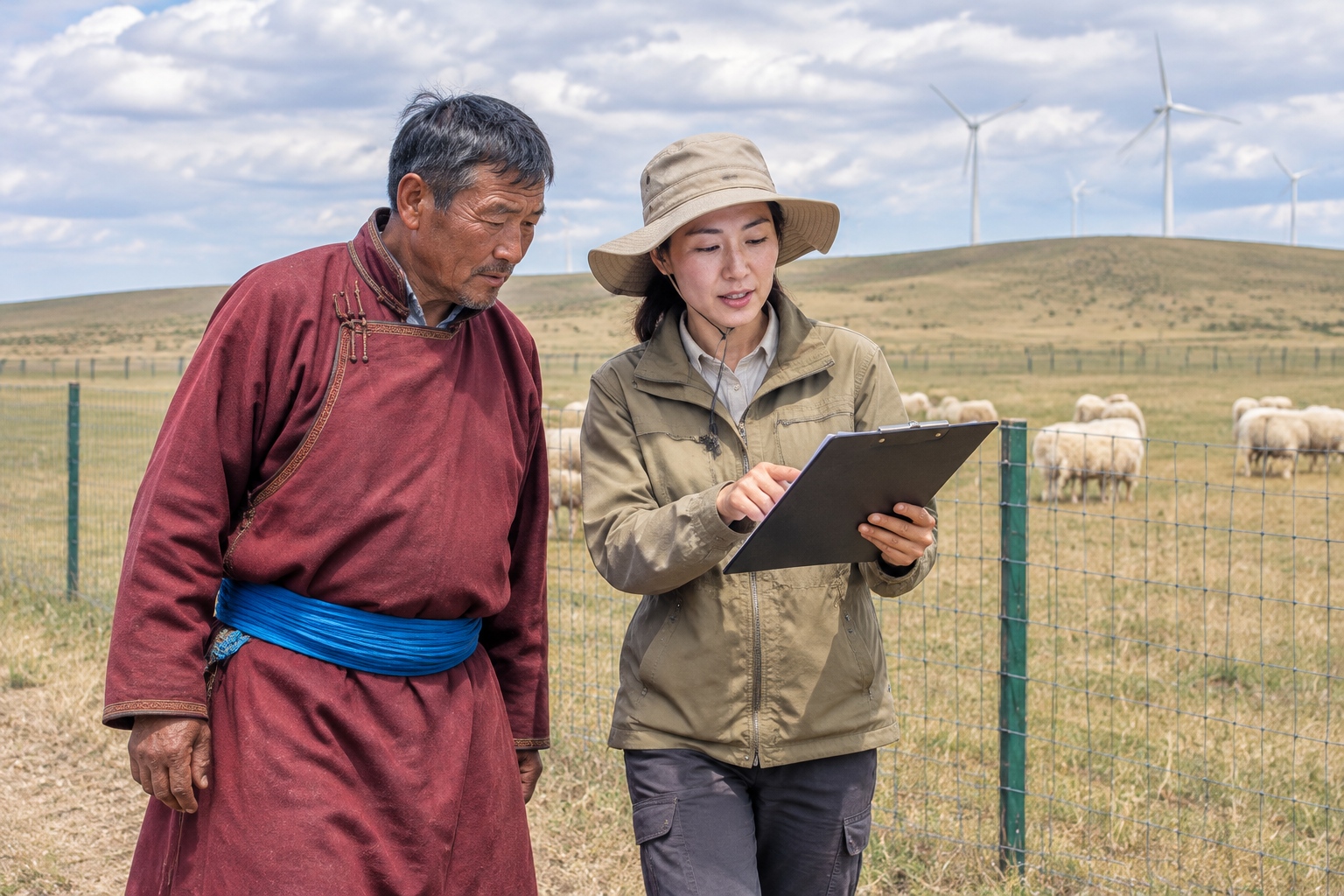
Since 2011, China has run a grassland protection subsidy scheme that pays herders to rest or rotate pasture — no grazing for a season in the worst-hit areas, planned rotation in better ones. The results are uneven. Some pastures have visibly recovered. In other places the ground is still bare in spring, and feed costs have climbed as herds were cut back.
Fences went up as part of the same policy. They slowed degradation in some places and cut across old migration routes in others. Herders will describe both effects in the same sentence, because both are true.
Then there is wind. Inner Mongolia now carries more installed wind and solar capacity than most countries on earth, and turbines stand on land where sheep graze. The footprint rent is modest but real: a few thousand yuan a year for a family, sometimes more for a tower. The same herder who worries about a dry June also checks whether the turbine company paid on time.
None of this fits on a poster. It is a working compromise, renegotiated season by season.
What Actually Travels Abroad
Cultural export is easy to announce and hard to do. A yurt motif can be copied onto a hotel lobby anywhere in a week. A reliable supply chain, a consistent hand feel and a story that survives translation are much harder.
Three things do travel. The first is quality you can judge without any background knowledge — a cashmere scarf is warm or it is not. The second is traceability: buyers abroad increasingly want to know which pasture, which herder, what the animal ate. Inner Mongolian brands can actually document that, if they bother. The third is sound. Khoomei and morin khuur need no subtitle.
What travels badly is the phrase “five thousand years of nomadic civilisation” used as a marketing line. Overseas shoppers bounce off it. What lands is something specific: a designer in Hohhot who spent three years getting one knit stitch right, or a collection truck that shows up at 6:40am.
Back to the Shelf
The yogurt carton does not say much. It has a logo and a grassland photograph that could be anywhere.
But behind it sits a chain of ordinary decisions: a herder checking his phone before dawn, a cooperative technician logging a test result, a designer arguing about yarn weight, a driver on a cold road, a musician filming himself at midnight because the light is better.
Culture does not leave a country through a slogan. It leaves through a product someone buys a second time, and a face they can picture while using it.