

Morning in a Hohhot Milk Tea House
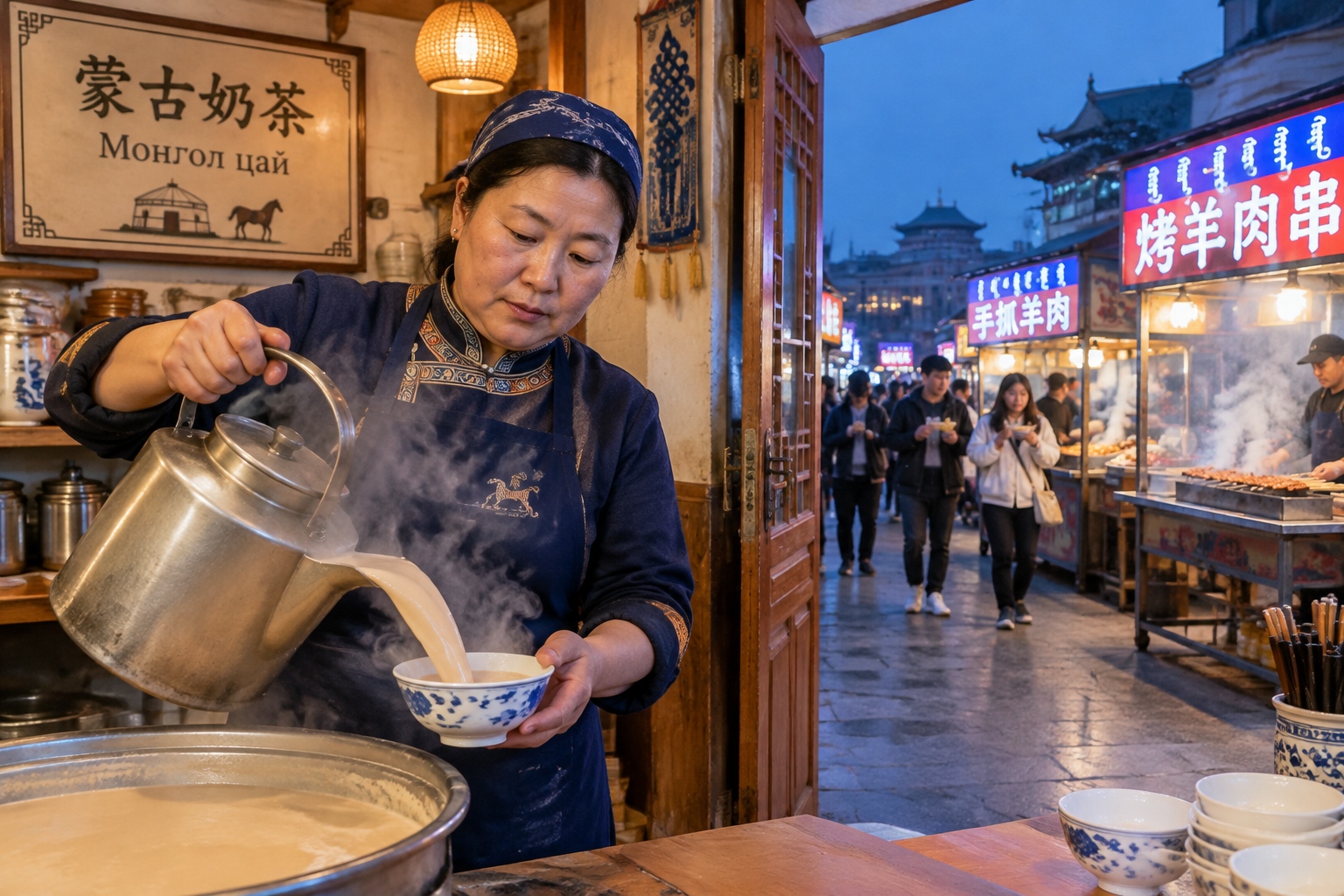
At 7:30 a.m., the air outside is still sharp with the northern cold. Inside Sulide Milk Tea House, on the ground floor of a residential building in the Saihan District, steam curls from a large steel pot. A woman in her fifties, wearing a dark blue apron, ladles hot, pale-brown tea into porcelain bowls. The smell is rich—boiled milk, roasted grain, a faint hint of salt.
This is suutei tsai, salty milk tea, the traditional morning drink of Mongolian herders. Here, in a city of over 3 million people, it is also breakfast for office workers, students, and taxi drivers. The tea is not sweet. It is slightly salty, milky, and warming. Alongside it come small plates: urum (clotted cream), tsagaan idee (white foods like dried curds), and shar budaa—roasted millet mixed with butter and sugar.
“My grandfather drank this before riding out to the pastures,” says Bao Yulan, the owner, now 52. “I drink it before checking my phone and opening the shop. Same tea, different life.”
From Herding Camp to City Counter
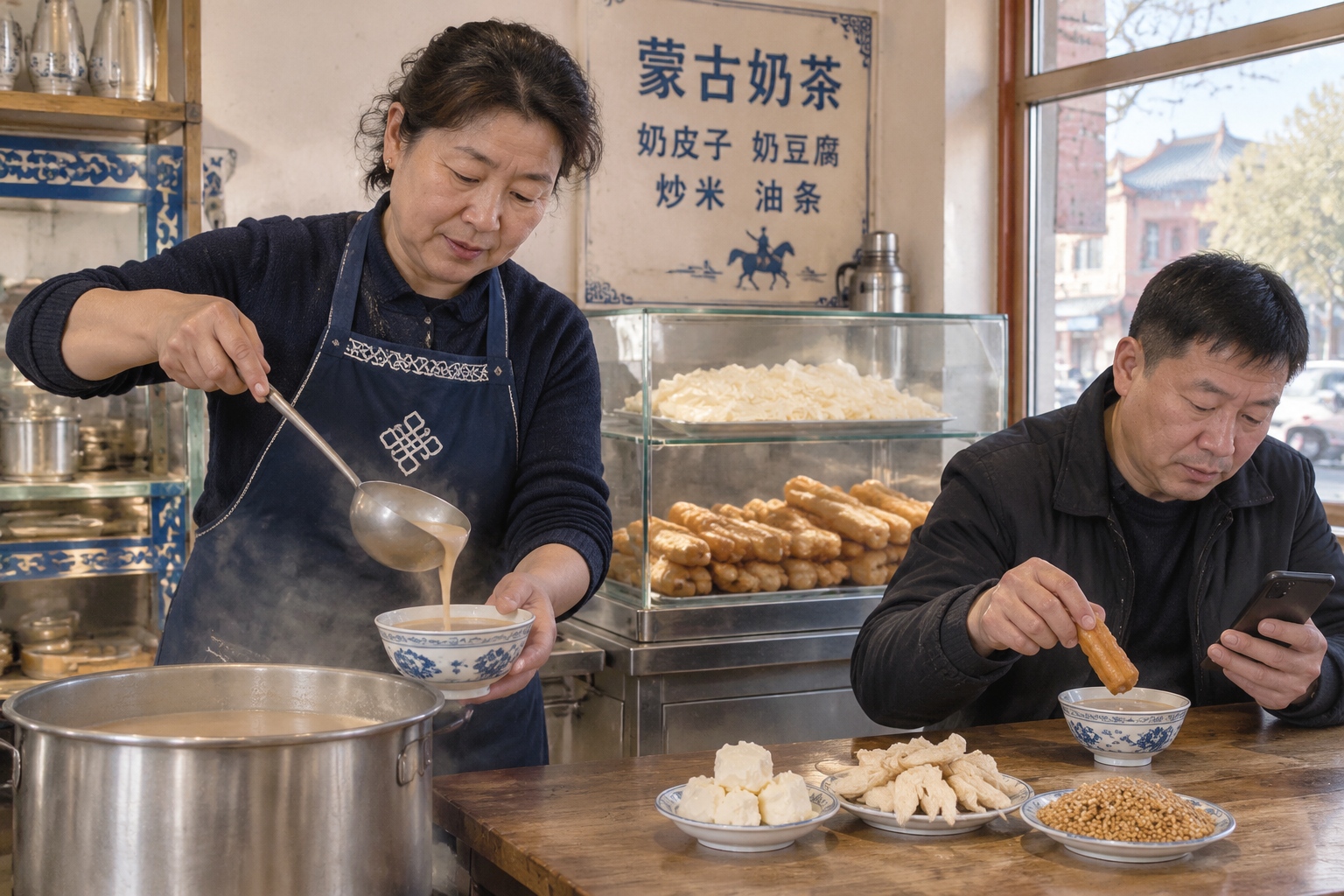
Bao opened Sulide eight years ago. Before that, she sold dairy products at a wet market. The shop is small—six tables, a glass counter with fresh milk skin and fried pastries, a refrigerator humming in the corner. Most customers come before 9 a.m. Some stay for ten minutes, standing while they eat. Others sit for an hour, reading news on their phones, dipping pieces of boortsog (fried dough) into their tea.
“Young people ask for less salt now,” Bao says. “They want it lighter. But they still want the milk skin. That hasn’t changed.”
Milk skin, or urum, is a thick layer of fat and protein that forms when whole milk is slowly heated. It is spread on bread or eaten with sugar. In the city, it comes in plastic containers, but the taste is the same—rich, slightly smoky, and dense.
For many Mongolians in Hohhot, this breakfast is not a novelty. It is a habit carried from the grassland into the apartment block. The tea house becomes a bridge between generations: grandparents and grandchildren sitting at the same table, one speaking Mongolian, the other answering in Mandarin, both reaching for the same bowl.
Night Market: Grassland Flavors After Dark
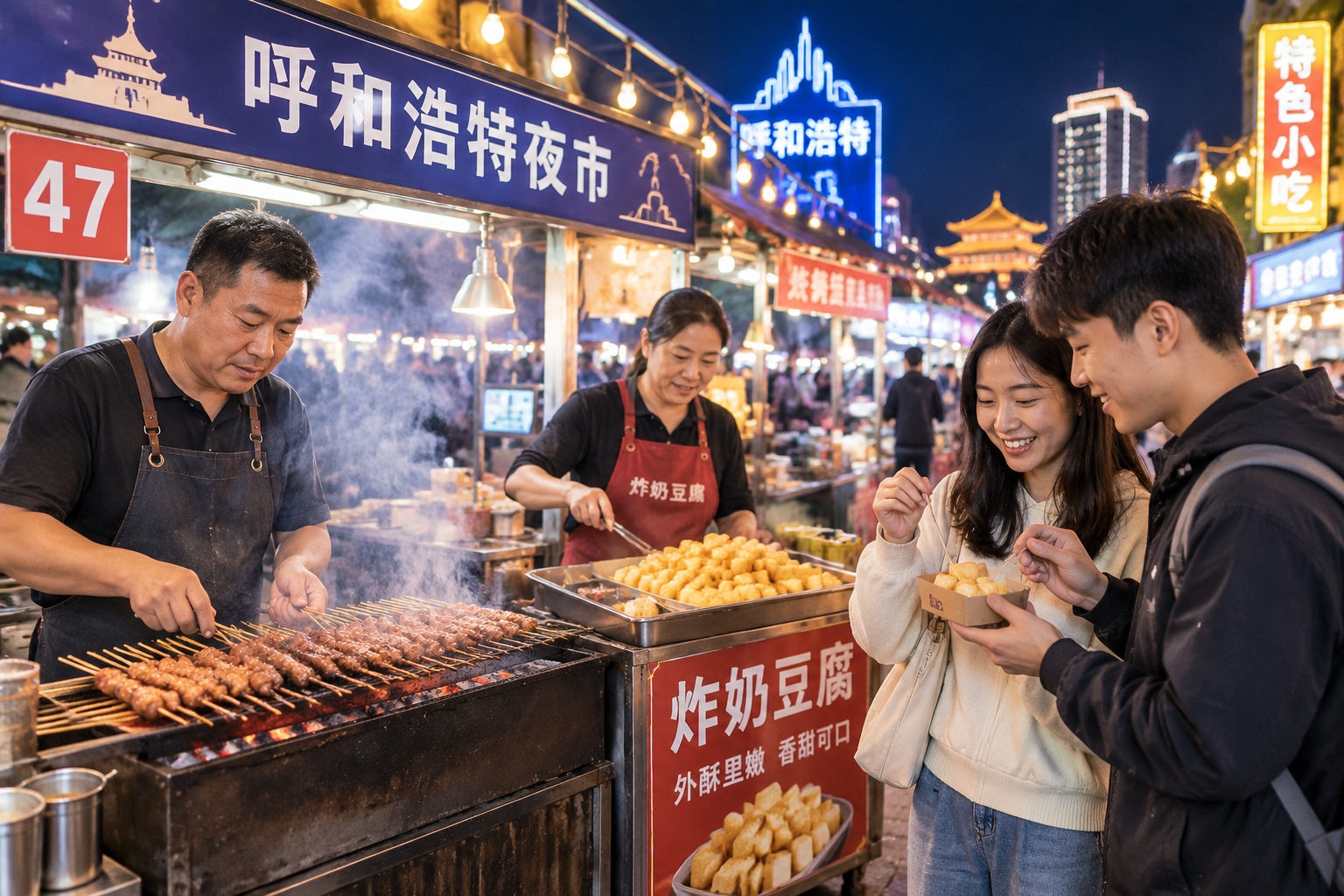
By 8 p.m., the night market on Zhongshan Road is loud and bright. Smoke rises from rows of skewers. Vendors call out prices. The temperature has dropped, but people move slowly, eating as they walk.
At stall number 47, a man named Han Wei is grilling lamb skewers over charcoal. He is Han Chinese, but he learned to cook from a Mongolian friend. His skewers are simple: lamb, cumin, chili powder, salt. No sauce. “The meat has to be fresh,” he says. “That’s the grassland way.”
Next to him, a woman sells nai doufu—milk tofu, a firm, slightly sour cheese made from leftover whey. It is cut into cubes, fried until golden, and served with a toothpick. Three yuan for a small box. Customers eat it while waiting for their skewers.
Further down the row, a young man pours airag—fermented mare’s milk, slightly fizzy and sour—into small paper cups. It is not for everyone. “Foreigners usually don’t like it,” he laughs. “But Mongolians ask for it by name.”
Airag is traditionally a summer drink, made when mares are milked. In the city, it is available year-round, shipped from farms outside Hohhot. The taste is sharp and refreshing, like a cross between yogurt and sparkling water.
A New Generation Keeps the Fire Burning
Han Wei is 34. He grew up in a village near Hohhot and moved to the city ten years ago. He worked in construction, then in a restaurant kitchen, before saving enough to rent his own stall. “I didn’t plan to sell lamb skewers,” he says. “But I missed the taste of home. So I learned.”
His stall opens at 6 p.m. and closes at 2 a.m. On weekends, he sells over 500 skewers. Most customers are young—couples, friends, delivery riders after their shifts. They order ten skewers each, share a bottle of soda, and talk about work, rent, and weekend plans.
For Han, the night market is not just business. It is a place where grassland food meets city schedules. “In the village, we ate lamb after a long day of work. Here, people eat it after a long day of work. Same feeling.”
Grassland Culture Between Buildings and Shops
Hohhot is not a prairie. It is a city with traffic lights, subway lines, and shopping malls. But grassland culture survives in small, daily ways. It is in the milk tea shop that opens at 7 a.m. It is in the night market stall that stays open until 2 a.m. It is in the language—Mongolian script on street signs, Mandarin in conversations.
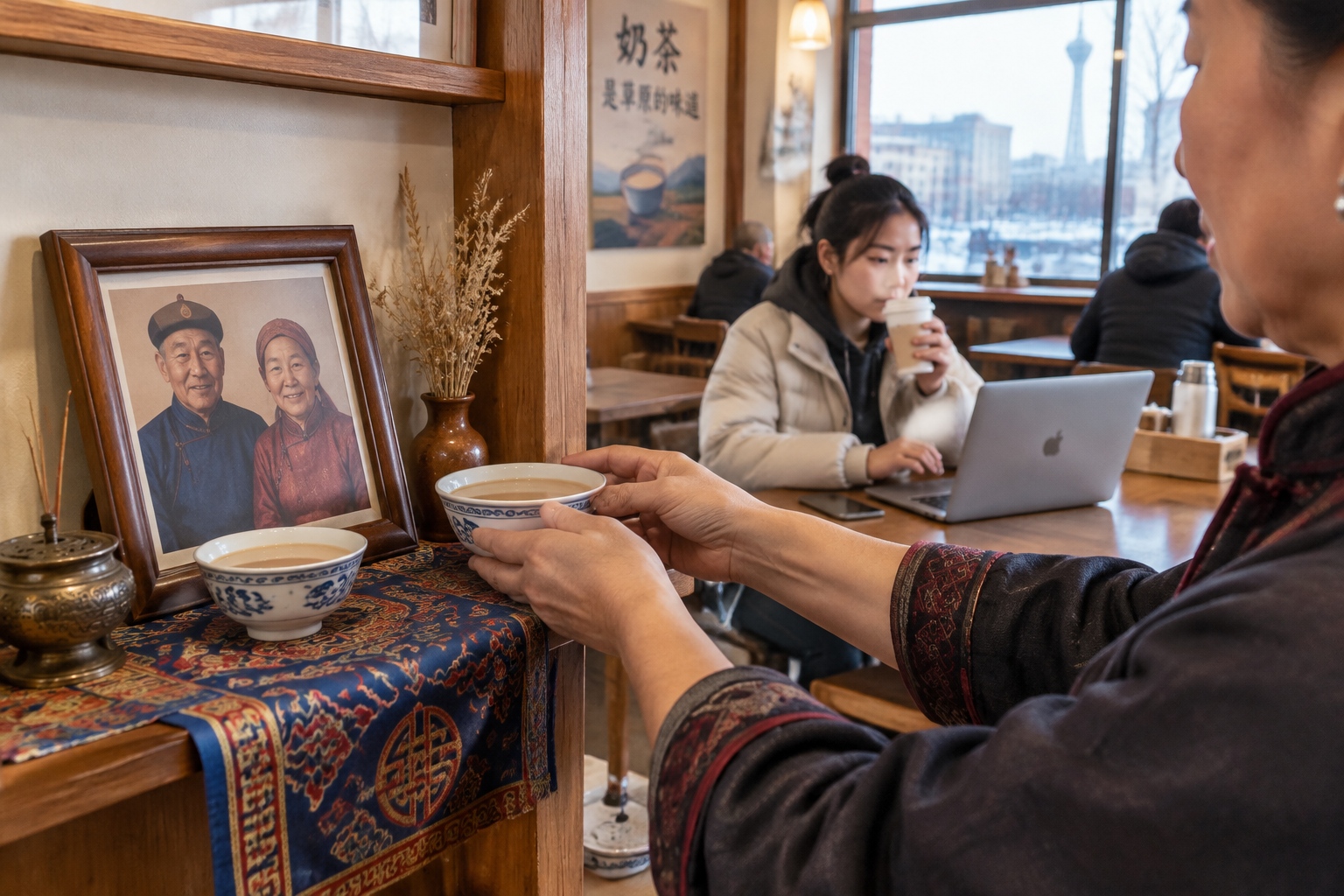
At Sulide Milk Tea House, Bao Yulan keeps a small altar with a photo of her parents and a bowl of milk tea. Every morning, she offers the first ladle to the altar before serving customers. “It’s a habit,” she says. “My mother did it. Her mother did it. I don’t know if my daughter will. But for now, I do.”
Her daughter, 24, works at a tech company downtown. She drinks milk tea on weekends but prefers coffee on weekdays. “I don’t mind,” Bao says. “The tea is here when she wants it.”
What Overseas Readers Can Feel
If you have ever moved from a small town to a big city, you know this feeling: you carry your habits with you. You find a restaurant that tastes like home. You cook a dish your grandmother made. In Hohhot, that habit is salty milk tea and lamb skewers. It is not a performance for tourists. It is lunch, dinner, a late-night snack.
The next time you hear about grassland culture, don’t imagine only horses and yurts. Imagine a woman ladling tea into a bowl before sunrise. Imagine a man grilling skewers under neon lights. That is how tradition stays alive—not frozen in a museum, but eaten, shared, and slightly changed, one morning and one night at a time.