


A Phone Screen Glows in the Crowded Subway
At 8:15 AM on a Tuesday, the Beijing subway line 10 is packed. Among the sleepy commuters, a young woman in a gray coat stands holding the overhead handle with one hand, her other hand scrolling through a novel on her phone. The title flashes on the screen: I Shall Be Immortal. She is deep in a chapter where the protagonist, a poor outer disciple, accidentally discovers a hidden cave and gains a thousand-year-old herb, instantly breaking through to the next cultivation level.
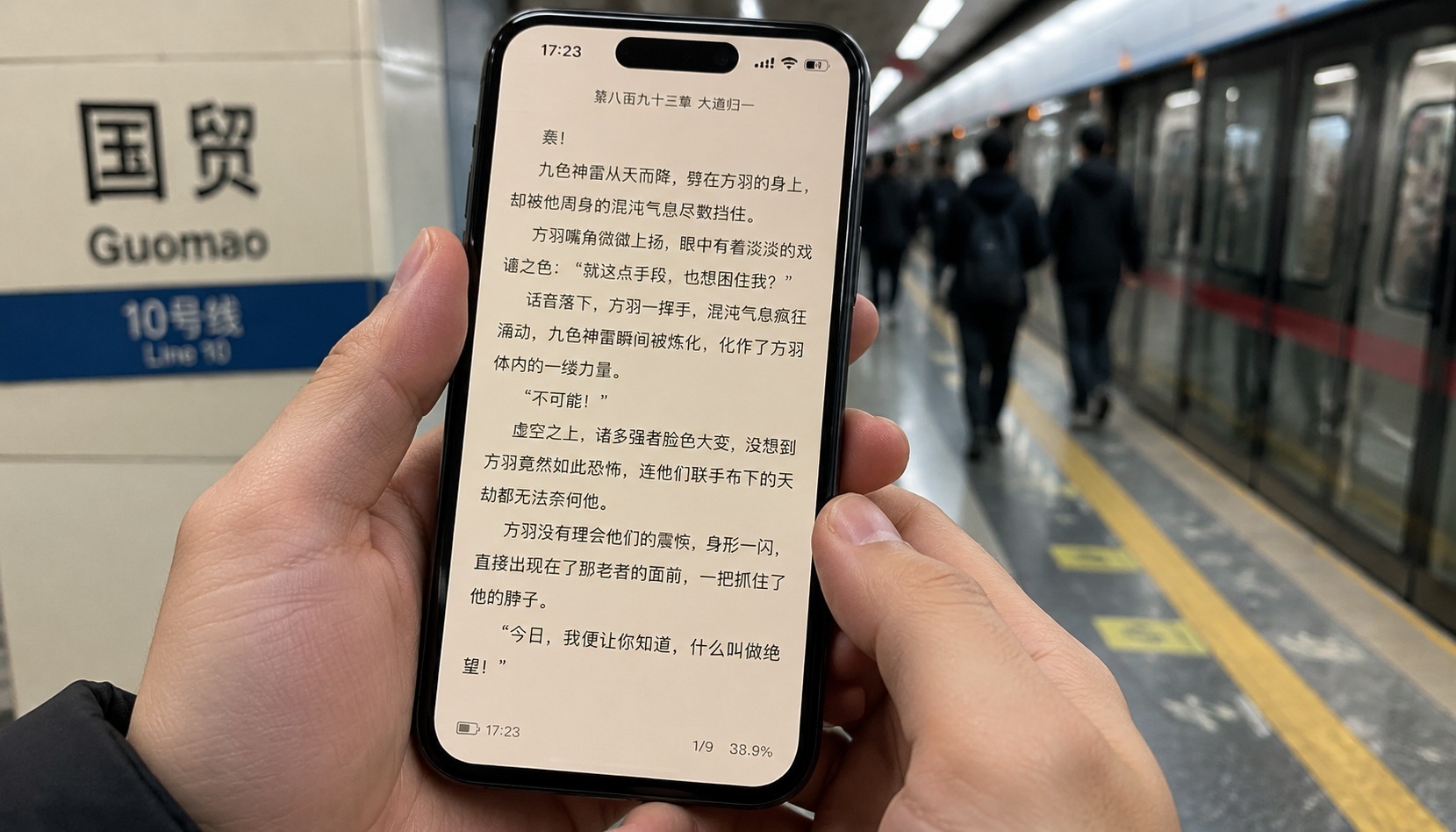
This scene repeats itself millions of times across China every day. On buses, in college dorms, during lunch breaks, and late into the night, young people are devouring a genre of fiction that Anglo-American readers might find bizarre: xiuxian (cultivation) novels, where characters seek immortality through meditation, alchemy, and combat—often called “ascending” or “flying up” (feisheng) to a higher realm. In 2023 alone, the top Chinese web novel platforms hosted over 500,000 cultivation titles, many with billions of views. Why this fever? Why do so many young Chinese find comfort in stories of climbing spiritual ladders?
Roots in Ancient Soil
First, understand that the appeal of cultivation fiction is not a sudden trend. Its roots lie deep in Chinese tradition. Daoist philosophy speaks of xian (immortals) who transcend the mortal world through self-cultivation. Ancient myths like Journey to the West (where a monkey learns immortality) and classic novels such as The Investiture of the Gods are packed with cultivation themes. For centuries, Chinese children have grown up hearing tales of magic swords, flying on clouds, and elixirs of life. Modern xiuxian novels simply repackage these ancient fantasies into binge-ready online serials.
But there is a twist. In traditional stories, immortals are often detached sages. In today’s cultivation novels, heroes are usually underdogs—orphans, failed disciples, or commoners—who rise not through noble birth but through sheer grit, luck, and clever scheming. This meritocratic fantasy resonates powerfully with a generation that feels the old promise of “hard work leads to success” is slipping away.
The Weight of Reality: Pressure and Anxiety
Let’s look at the real-world context. China’s young adults are facing intense competition. The gaokao (college entrance exam) system funnels millions into a hierarchy of universities, and even top graduates struggle to find good jobs. Housing prices in major cities are sky-high; a starter apartment in Beijing can cost 30 times a new graduate’s annual salary. The term neijuan (involution) has become a buzzword, describing the exhausting race where everyone works harder but gains little advantage. A 2023 survey by the Chinese Academy of Social Sciences found that over 65% of urban youth aged 18–35 report high levels of stress, with career uncertainty and financial pressure topping the list.
In this environment, cultivation novels offer a mental escape. The hero starts at rock bottom—just like many young readers feel—but through perseverance and a bit of luck, they break through bottlenecks, gain power, and ultimately achieve “ascension.” Every chapter delivers a small dopamine hit: a breakthrough, a treasure, a revenge on a bully. For a few minutes, the reader forgets the rent, the looming exam, the boss’s critique.
“Ascension” as a Metaphor for Social Mobility
The concept of feisheng (flying up) is central. In these stories, the protagonist isn’t just getting stronger; they are moving from one social stratum to a completely different one. The mundane world (fanren) is left behind; a celestial world awaits. This is a powerful metaphor for social mobility—something many young Chinese feel is increasingly elusive.
Take Chen, a 24-year-old engineer in Shenzhen. Every night before bed, he reads at least an hour of a cultivation serial. “Sometimes I imagine myself as the hero,” he says. “He starts as a nobody, but he rises step by step. In real life, I work overtime and still can’t afford a down payment. The novel makes me feel like there’s a path upward, even if it’s imaginary.”

Chen is not alone. On social media platforms like Douban and Weibo, discussion groups for cultivation novels have millions of members. Many share the sentiment that these stories provide “emotional comfort” (qinggan weijie) in a world where traditional paths to success feel blocked.
Parallels with Global Youth Fantasies
English-speaking readers might recognize a similar pattern: superhero comics, Hollywood rags-to-riches movies, and fantasy epics like Harry Potter or Star Wars all feature protagonists who discover hidden abilities and rise above humble origins. The difference is scale and immersion. Chinese cultivation novels are serialized online, often releasing thousands of chapters over years—creating a vast, addictive universe that readers can inhabit daily.
Yet the core desire is universal: to transcend, to become something greater, to escape the limitations of birth and circumstance. Whether it’s a wizard’s wand or a cultivator’s sword, the tool is a hook for hope.
Beyond Escapism: A Cultural Creation
Some critics dismiss cultivation novels as frivolous or addictive, but that misses the point. These stories are not just drugs for the stressed; they are a creative outlet where Chinese youth mix ancient tradition with modern anxieties and aspirations. The genre is evolving: new sub-genres feature female protagonists, critique corporate culture, or blend cultivation with technology. A novel called The Immortal CEO might show a heroine who uses management skills to run a sect.

In a way, the cultivation trend is a testament to resilience. Rather than sinking into despair, young Chinese are building imaginary worlds where effort still pays off, where justice prevails, and where there is always a higher level to reach. This is not just a story about fantasy; it’s a window into the emotional lives of hundreds of millions of people grappling with rapid change and a dream of flying up.
So next time you see a young Chinese person glued to their phone, they might not be scrolling social media. They might be cultivating—in their own way.