
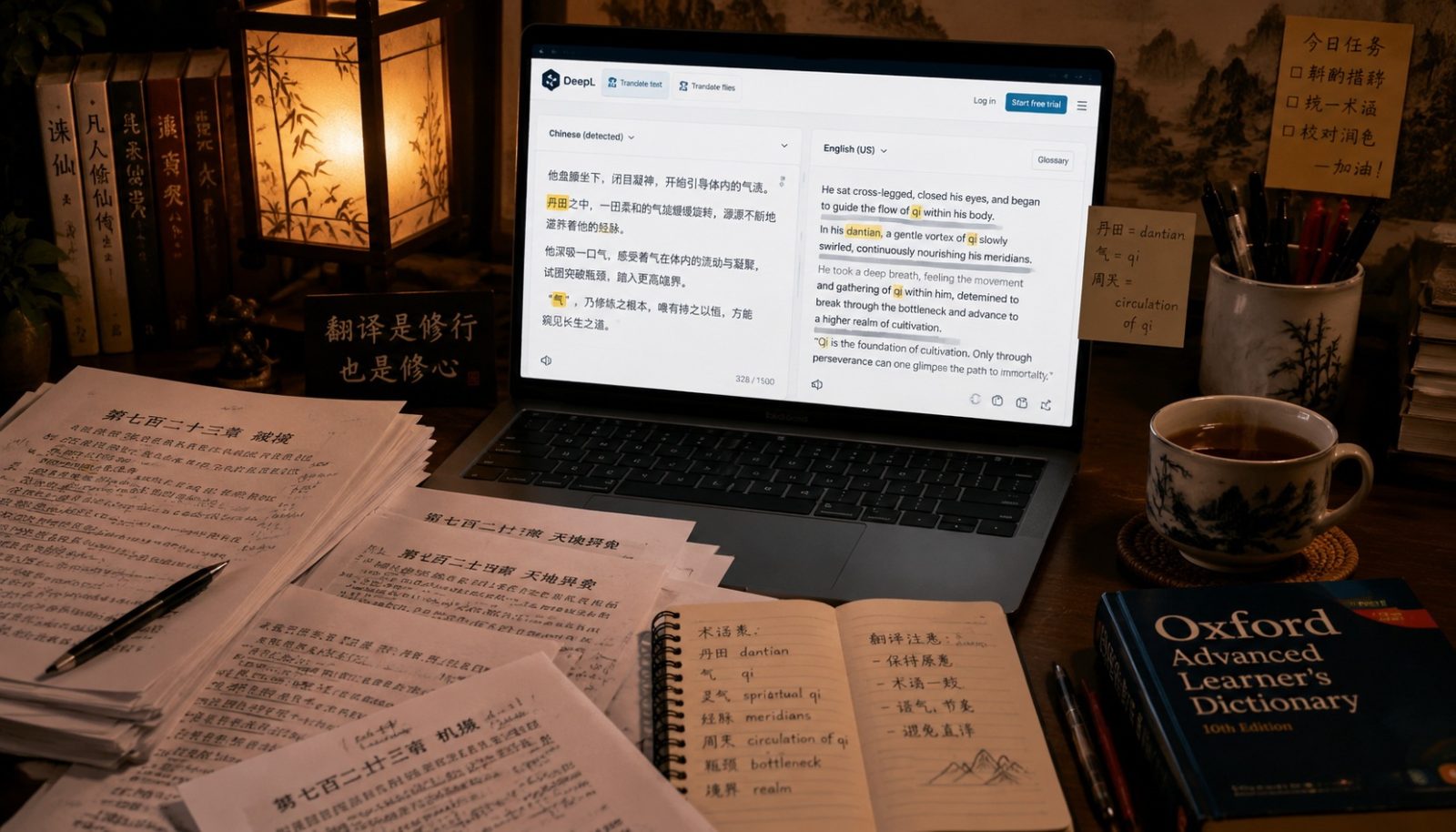

Introduction: The Cultivation Wave Hits Global Readers
Chinese web novels are taking the world by storm. From Coiling Dragon to A Will Eternal, millions of English-speaking readers now binge on stories about immortal cultivators, flying swords, and pill refinement. But behind the scenes, translators face a unique nightmare: how do you explain “dantian” to someone who has never heard of Chinese medicine? Or make “qi” sound cool, not like a typo for “quit”?
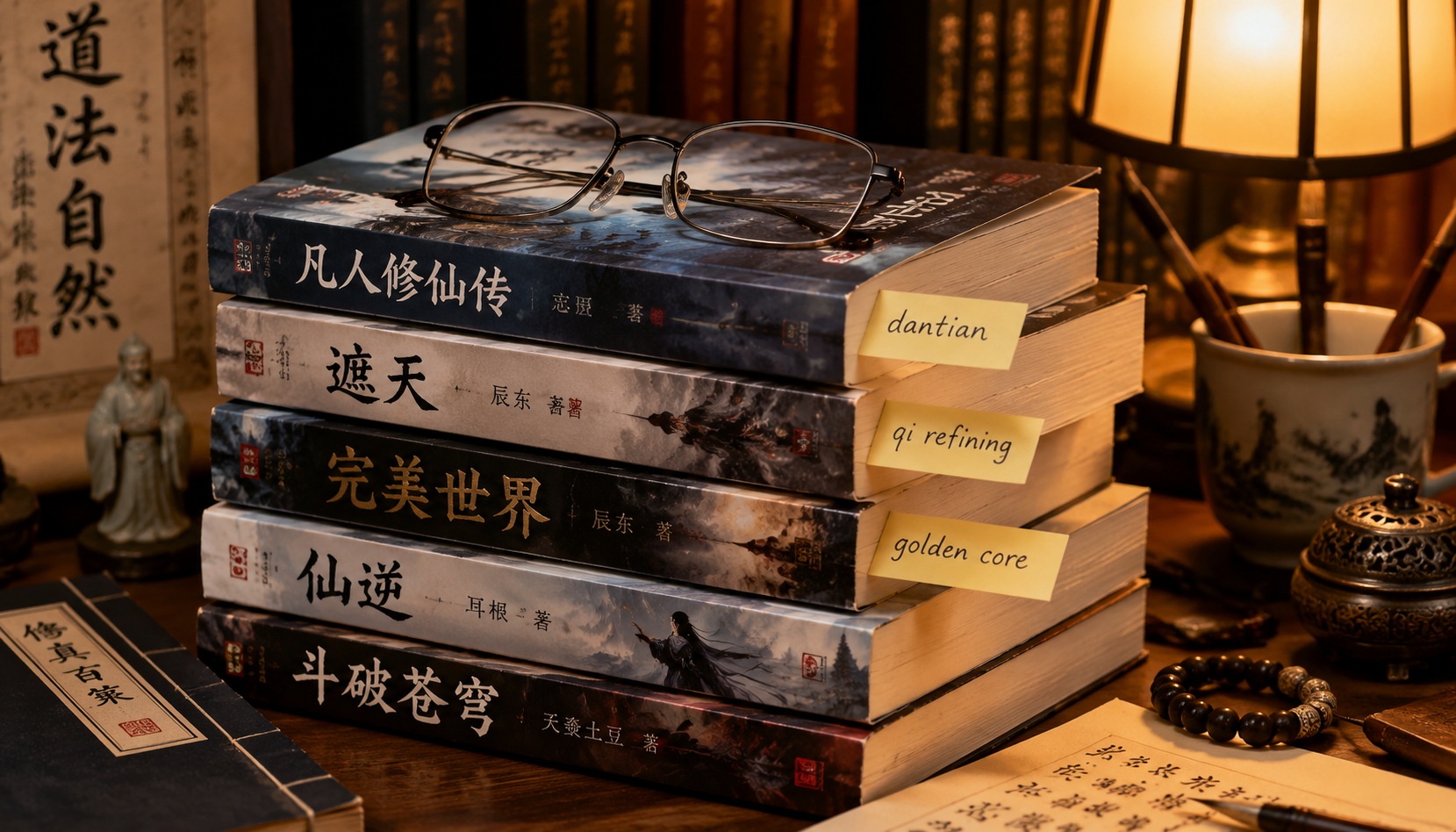
Why Cultivation Terms Are So Hard to Translate
The problem isn’t just vocabulary—it’s the entire cultural framework. English has no ready-made equivalent for concepts that mix Taoist philosophy, traditional medicine, and martial arts. Take “丹田” (dantian). A literal translation like “elixir field” sounds weird, while “energy center” feels New Age-y. Translators must decide: preserve the exotic flavor or make it instantly readable? And that’s just the start.
Case Studies: The Most Headache-Inducing Terms
Realms: 炼气 (Liàn Qì) vs. 筑基 (Zhù Jī)
The first major hurdle is the cultivation realm ladder. Early translations of Renegade Immortal used “Qi Refining” for 炼气 and “Foundation Establishment” for 筑基. But later popular versions on Wuxiaworld shifted to “Qi Condensation” and “Foundation Building.” Why the change? Because “Refining” sounds industrial, while “Condensation” suggests gathering something precious. No consensus exists—fans still argue in forums.
Techniques: 御剑术 (Yù Jiàn Shù)
“御剑术” (the art of controlling a flying sword) can be translated as “Sword Flight Art,” “Imperial Sword Technique,” or just “Flying Sword.” The official translation of the Heavenly Silkworm Potato novel series went with “Sword Control,” which is simple but loses the poetic “spirit” of the original. Some translators even coin new terms like “Aero-Sword Mastery” — with mixed results.
Artifacts: 灵石 (Líng Shí)
“灵石” (spirit stones) sounds straightforward: “spirit stones.” But does that conjure the right image? Western fantasy readers might think of mana crystals from RPGs. Some translators use “spirit jade” or “cultivation crystals” to add specificity. The challenge is consistency across thousands of chapters.
Balancing Loyalty and Readability: Domestication vs. Foreignization
This is the eternal tug-of-war. Domesticating translations make the text feel familiar: naming “筑基” as “Apprentice Realm” or “Core Forging.” Foreignizing keeps Chinese terms (with glossary explanations). Wuxiaworld, the biggest English platform for Chinese novels, leans toward foreignization because fans crave “authentic” Chinese flavor. But new readers often drop off when faced with pinyin terms like “huangji” (emperor). The trick? Use footnotes and context clues. For example: “He broke through to the Golden Core (jindan) stage, the pearl of immortality.”
Reader Feedback Shapes Translation Choices
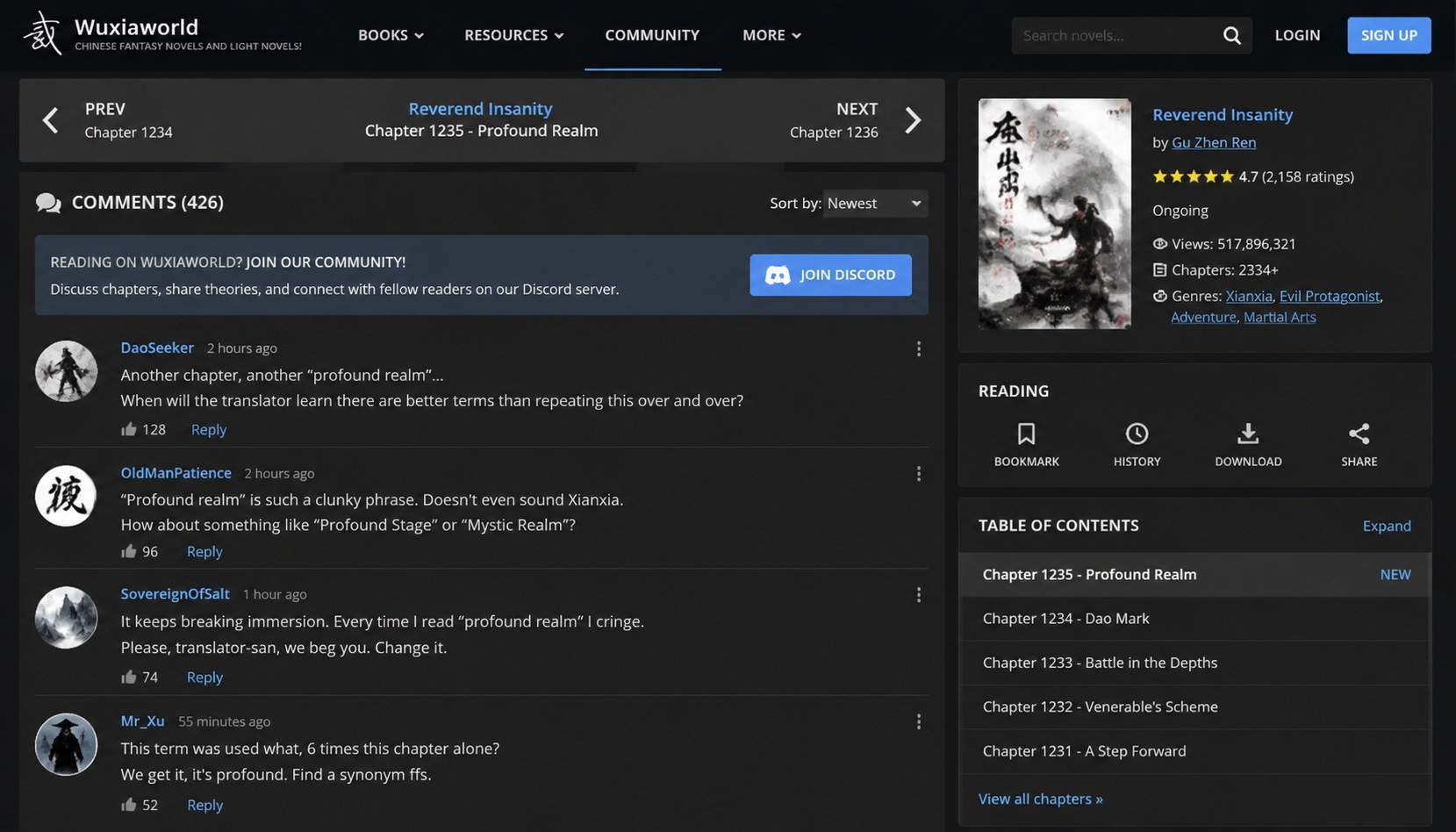
Translators aren’t alone—they live in the comment section. When Against the Gods used “Profound” for everything (profound art, profound beast, profound realm), readers mocked it as the “ProFound” joke. The team later diversified terms. Similarly, “soul pearl” vs. “spirit pearl” debates rage on Discord. The community’s preference for either literal or looser translations directly influences future chapters.
Future Directions: AI-Assisted Translation with a Human Touch
Machine translation (like GPT) can handle basic description, but cultivation terms remain a nightmare for AI. It often produces “aurora dantian” or “sleeping base.” However, smart post-editing pipelines combine AI speed with human cultural judgment. For example, a translator can set rules: always render “金丹” as “Golden Core,” and let AI draft the surrounding text. Human creativity still wins when coining poetic terms like “Celestial Ascension” for 飞升.
Conclusion: Translation Is a Cultural Bridge, Not Just a Dictionary
Translating cultivation novels isn’t about finding the perfect word—it’s about sharing a world. Every “dantian” or “qi” carries centuries of Daoist thought and martial arts lore. The best translations aren’t flawless; they invite readers to step into unfamiliar territory. So next time you see a footnote explaining “standing meditation,” raise a toast to the translator moonlighting as a cultural ambassador.
Start the discussion at forum.chinacomes.com