
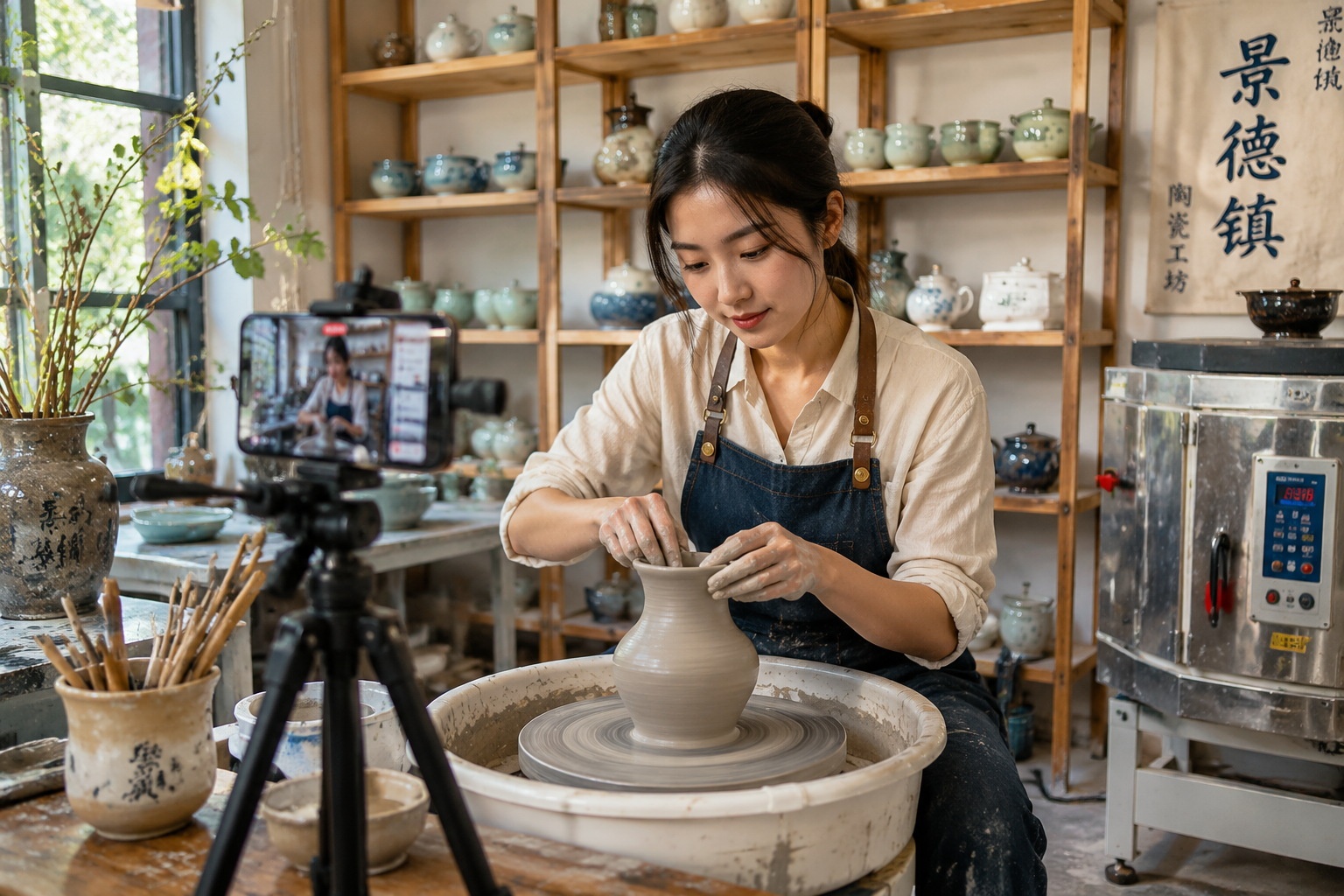

On a rainy Thursday night in Jingdezhen, I watch Zhang Wei throw a clay vase in front of a phone on a tripod. About 800 viewers are live on her Douyin stream, asking about glazes and firing temperature. Ten years ago, this city in Jiangxi province was simply the “Porcelain Capital,” famous for imperial kilns and traditional craftsmanship. Today, it’s becoming a place where ancient skill meets the latest digital selling tools.

That shift didn’t happen by accident. It came through a quiet e-commerce revolution.
The Old Porcelain Capital Still Has Its Hands in Clay
Jingdezhen has been making ceramics for over 1,700 years. Old neighborhoods are filled with family workshops, stacked bowls, and elderly craftsmen who judge clay by touch. For decades, most ceramics went to factories and wholesale markets. Independent potters had few options: rent a stall at a local market or try to sell to a few boutiques in big cities.
Then live streaming started to change things around 2015. Ceramics are fragile and hard to sell from static photos. But when viewers can watch a potter’s hands shape a lump of clay in real time, ask questions, and see the glaze texture, trust builds. “People worried about factory fakes online,” Zhang says. “Watching the actual person make it makes them comfortable.”
From Street Stalls to Livestreams: How Selling Changed
Young potters once set up weekend stalls at Lexian Market, near Jingdezhen Ceramic University. Some posted short videos of their work, and a viral clip could bring thousands of followers overnight. Then came the online stores.
Now, at night, Taoxichuan—a former ceramics factory turned creative district—is buzzing with live streamers holding up bowls and teapots to their phone cameras. Many are potters themselves. They explain their process, answer questions, and tell stories. Chen Ming, who runs a traditional blue-and-white porcelain studio, says nearly 70% of his yearly sales now come online.
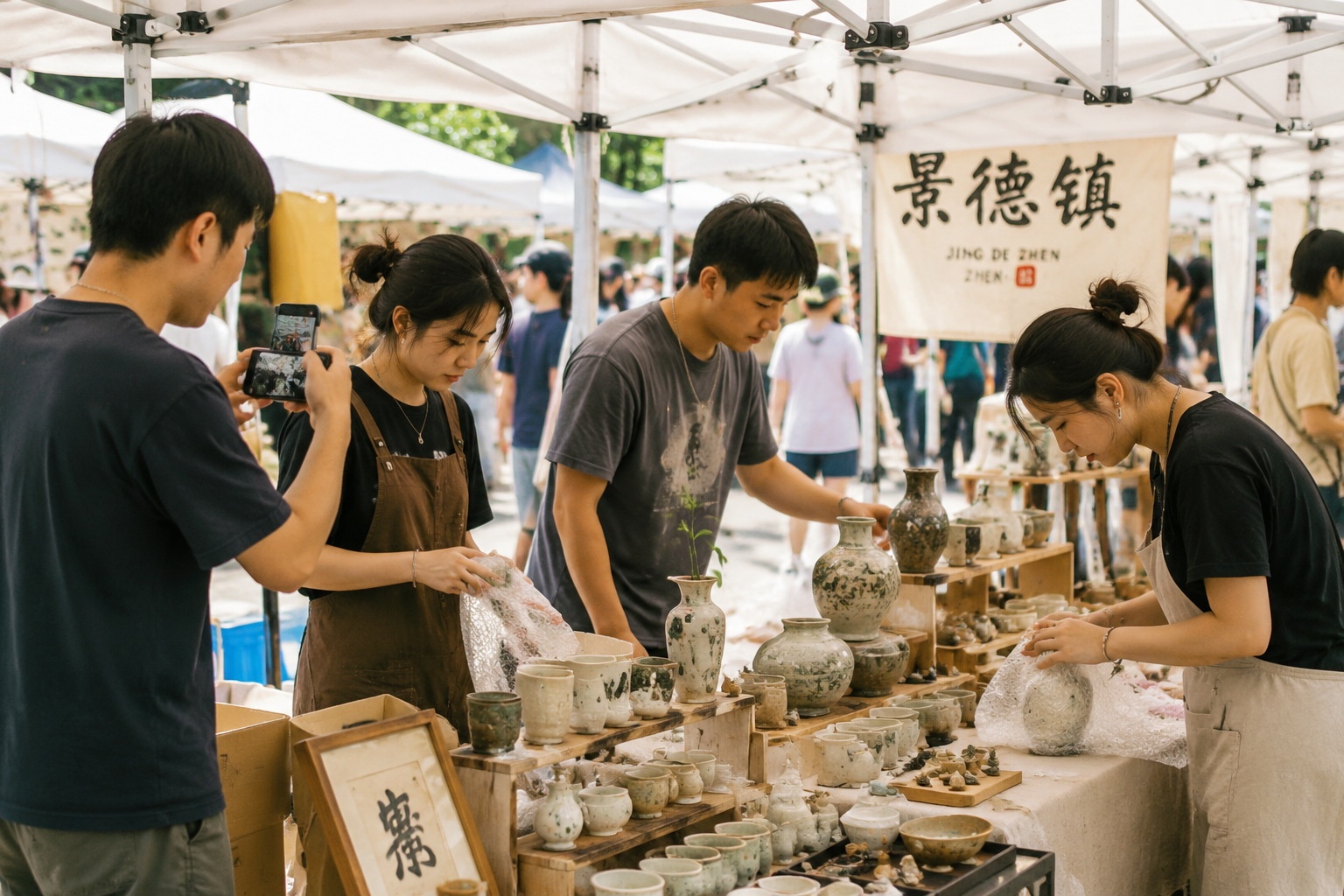
“The market moved online,” he says. “But the best sellers are the ones who can tell a story.”
Voices from the Kiln: Three People Shaping a New Jingdezhen
Behind the numbers are real people. Let me introduce three.
1. The Young Potter Who Found Her Audience Online
Zhang Wei, 29, graduated from Jingdezhen Ceramic University three years ago. She never planned to be a streamer, but her first live session showed that people loved seeing the process. Her online store sells small-batch tea cups and runs “blind box” events where buyers get a random piece from her latest firing.
2. The Returnee Who Built a Brand Around a Small Workshop
Li Hao, 35, spent eight years as an industrial designer in Shenzhen. In 2019, he came back to run a workshop with three young potters. He designs minimalist tableware for urban customers and shares short videos of his team on TikTok and Xiaohongshu. His matte black teapot sells out within minutes every month.
3. The Livestream Host Who Used to Sell Clothes
Wang Fang, 32, is not a potter. She used to sell clothes in Guangzhou, but now co-hosts pottery live streams. She works with four studios, handling sales strategy and audience engagement. “In a live room, you can feel what the customer wants,” she says. “If they ask about dishwasher safety, they want an everyday cup. I adjust the camera and show them how it looks on a kitchen counter.”
E-commerce has broken the old distribution chain. A potter in Jingdezhen can now reach a customer in Chengdu or Los Angeles directly, with no middleman.
The Supply Chain Gets a Digital Upgrade
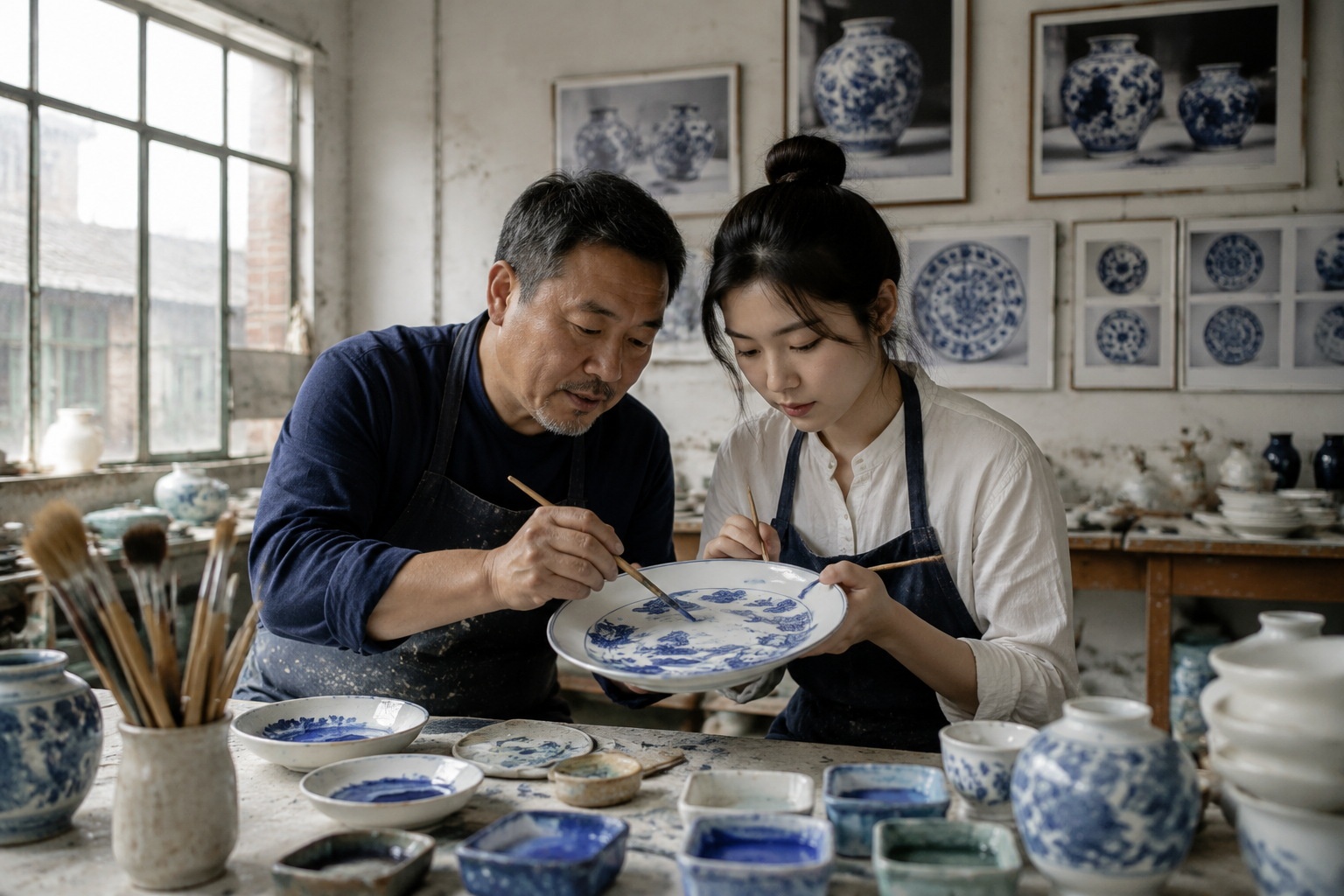
The digital shift goes beyond sales. Workshops now source rare glaze materials online and use 3D printing for molds, cutting prototyping time from weeks to days. Customization is growing too: you can order a teapot with your name on it, or plates with your family photo.
Logistics have improved dramatically. A decade ago, shipping a vase to Europe could cost more than the vase. Now, with global e-commerce logistics, a tea cup can reach Berlin in a week. In 2020, Jingdezhen launched a cross-border e-commerce pilot zone, simplifying direct exports for small businesses.
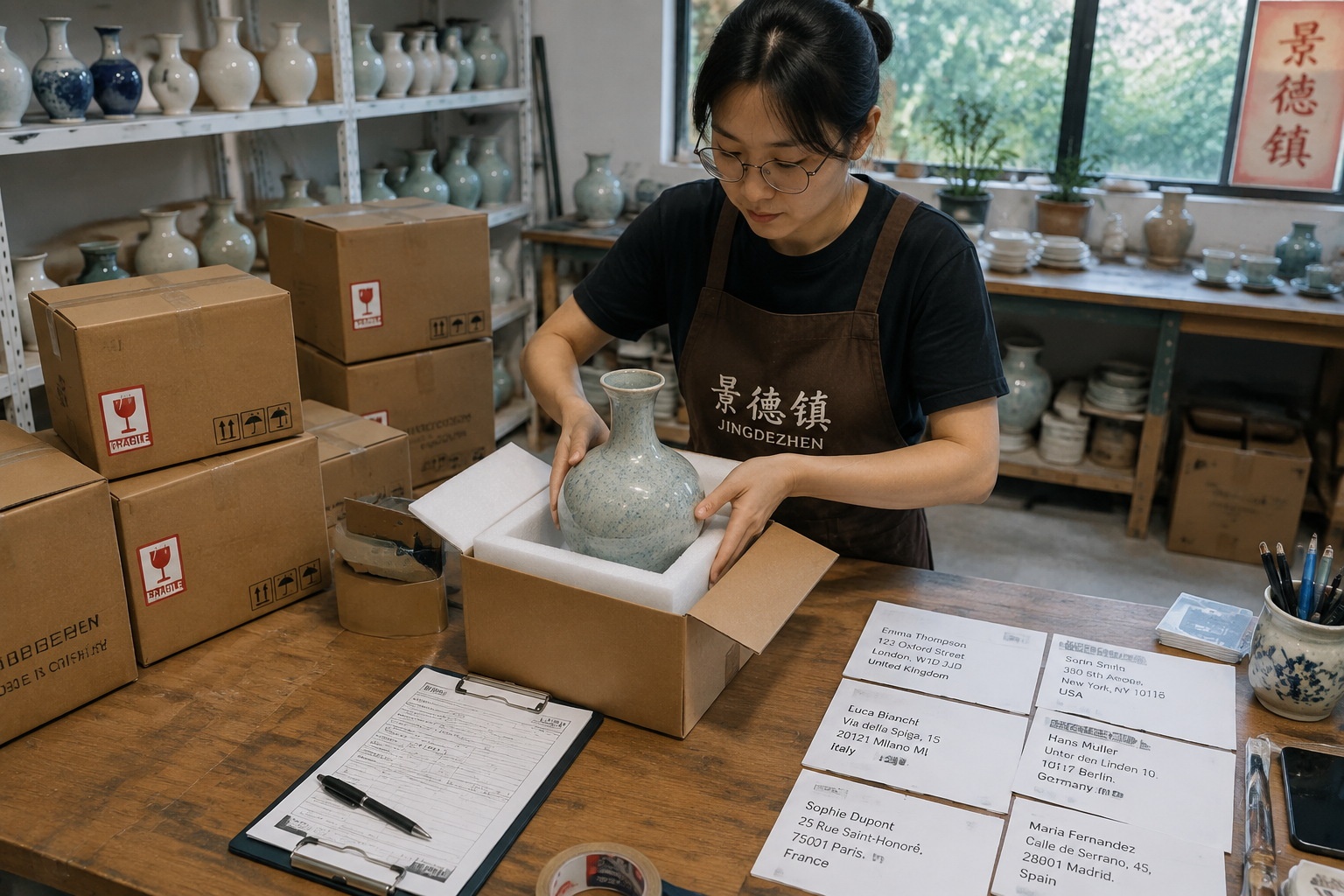
Government investment in e-commerce parks and logistics hubs has fueled the ecosystem.
Real Challenges: When Ancient Craft Meets the Algorithm
But not everything is smooth. Price wars are fierce. On Pinduoduo, you can find mass-produced “Jingdezhen” mugs for less than $1.50—often made in nearby towns. This forces genuine workshops to either cut costs or move upmarket.
Homogeneity is another problem. When a style goes viral, hundreds copy it. The “chai” wood-fired teacup trend is a good example: original rustic cups were quickly mimicked at half the price, hurting the makers who started it.
Older artisans also struggle with the algorithm. Many are masters of their craft but can’t present their work in a 15-second video. And some locals worry that the demand for constant content pushes designers toward gimmicks instead of deep glaze techniques. “The internet gives us a stage, but it also turns us into entertainers,” says Chen Ming. “I have to remind myself: first make good porcelain, then worry about views.”
A Future Still Being Fired
So can e-commerce revive the Porcelain Capital? It’s not a simple yes or no. E-commerce has brought vitality and young talent. Jingdezhen is now a magnet for creatives, with rents rising, which creates new pressure.
Taoxichuan has become an open-air museum where visitors can watch kiln firings and try pottery. Weekend markets are still full, but now they’re also live-streamed. Tourists who see a bowl on their phone might come to touch it in person.
The rise of a “ceramic lifestyle” culture is encouraging. Young Chinese, especially the post-90s generation, are drawn to slow living and handmade objects. For them, buying a teacup is a small ritual.
As I leave Zhang Wei’s studio, she reads me a message from a customer in London who bought a cobalt-blue cup: “She said it felt like owning a piece of a thousand-year-old story.” That’s the promise at the heart of this digital transformation.
Jingdezhen today isn’t a museum. It’s a living, messy place where ancient craft and modern commerce meet every day. The kilns have been burning for centuries. With e-commerce, they’re now broadcasting to the world.
Start the discussion at forum.chinacomes.com