
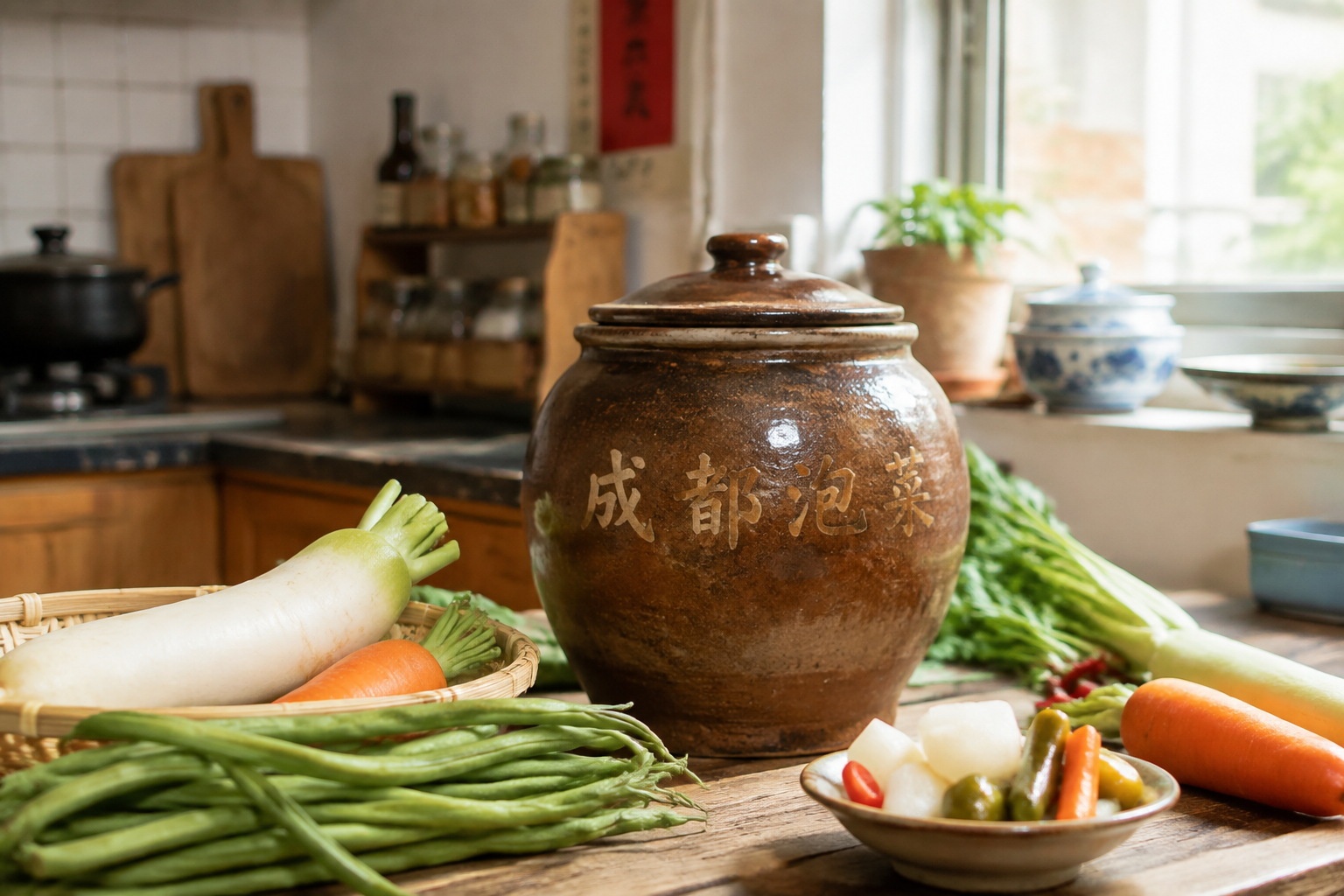

A Baker’s Secret Pantry
Early one morning in Chengdu, Li Wei, a 32-year-old baker, opens a clay jar in her kitchen. Instead of bread starter, she retrieves a handful of pale-green pickled long beans, a few slices of bright-red carrot, and some whole garlic cloves. The tangy, slightly salty aroma fills the room—no chili in sight. For Li Wei, this jar of paocai (literally “pickled vegetables”) is as essential as her oven. She serves it alongside congee for breakfast, chops it into stir-fries for lunch, and even uses the brine to add depth to braised pork belly.
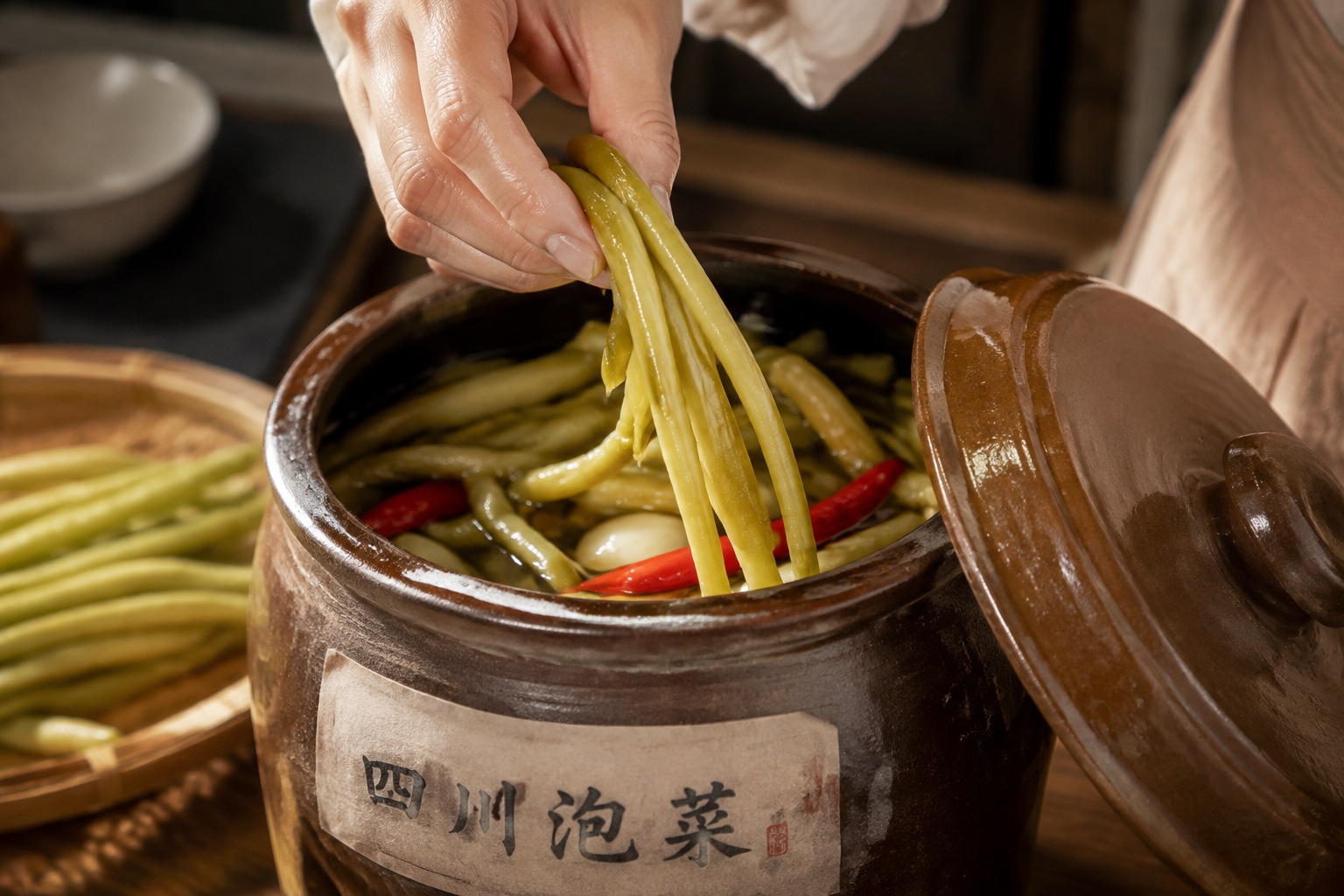
Many overseas food lovers assume Sichuan cooking is all about mala—the numbing-and-spicy sensation from Sichuan peppercorns and chilies. But walk into any home in the province, and you’ll find a pickle jar that often contains no chilies at all. Sichuan paocai is a universe of flavors: sour from natural lactic-acid fermentation, umami from time, and a subtle sweetness from vegetables like cabbage and radish. The heat, when present, is just one optional note.
A Living Brine: How Sichuan Pickles Differ from Kimchi or Sauerkraut
If you’re familiar with Korean kimchi or German sauerkraut, you’ll recognize the fermentation process, but Sichuan paocai has its own character. Unlike kimchi, which uses a paste of chili, garlic, ginger, and fish sauce, a classic Sichuan pickle brine is simpler: water, salt, a bit of sugar, and aromatics like star anise, cinnamon, and Sichuan peppercorns (the latter adds fragrance, not necessarily heat). Vegetables are immersed whole or in large chunks, and they ferment for just a few days or up to a month, depending on the season. The result is a crisp, refreshing pickle that cleanses the palate, rather than a heavy, spicy side dish.
In China, paocai is often categorized into two styles: yanshui cai (salt-water pickles) which are the everyday homemade version, and lao tan cai (old-brine pickles) where a mother brine is passed down for generations. Some families claim their brine is over 50 years old, carefully maintained with regular additions of fresh vegetables and salt. This living brine is a bit like a sourdough starter—a microbial heritage unique to each household.
The Social Life of a Pickle Jar
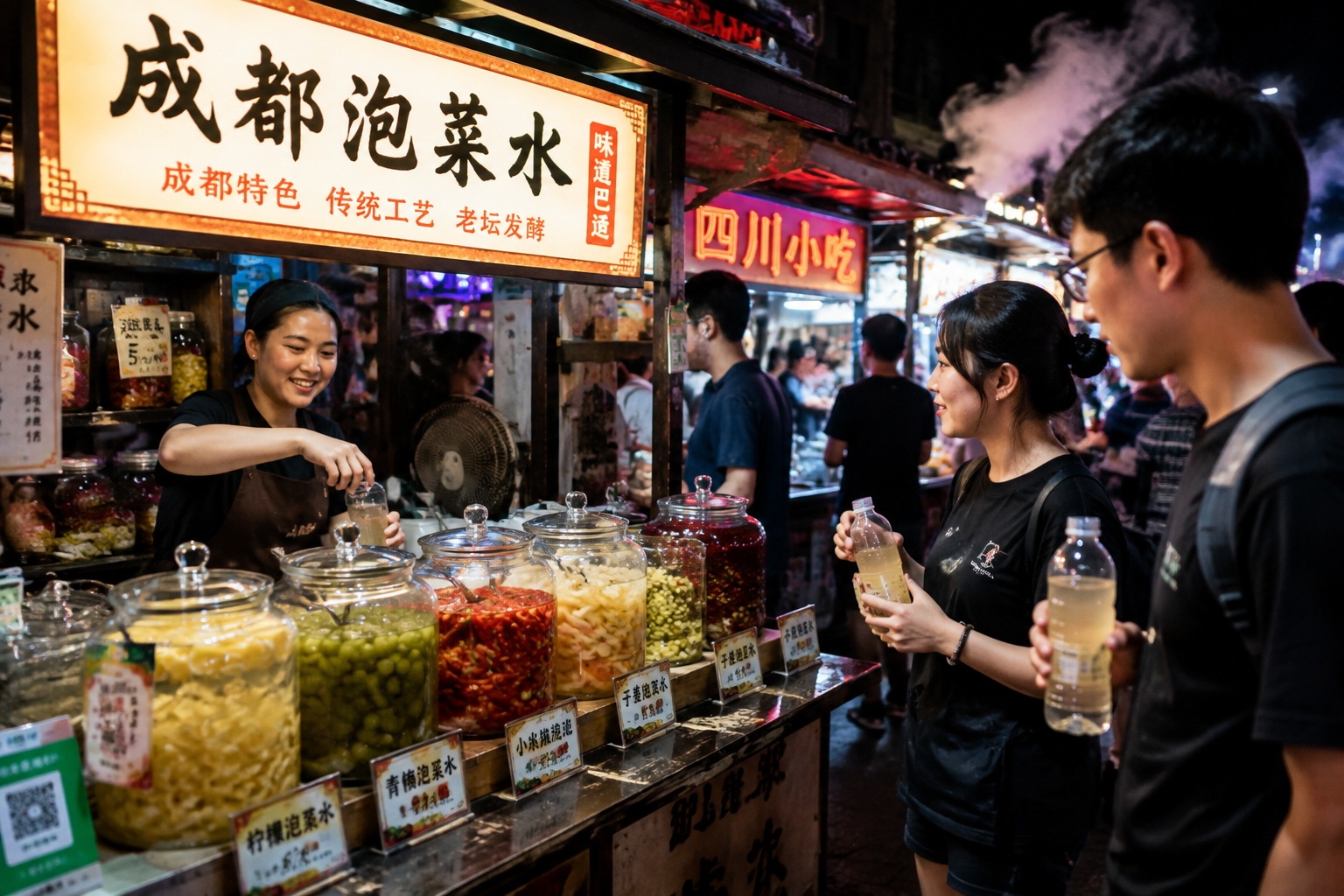
In Chengdu’s wet market, pickle brine is even sold by the liter. Customers bring their own bottles to buy “old brine” from vendors who specialize in it. Li Wei recalls her grandmother asking neighbors for a ladle of their brine to start a new jar—a small act of community exchange. “Each jar tells the story of the family that feeds it,” she says. “Some are more sour, some more salty, some have a hint of licorice from added herbs.”
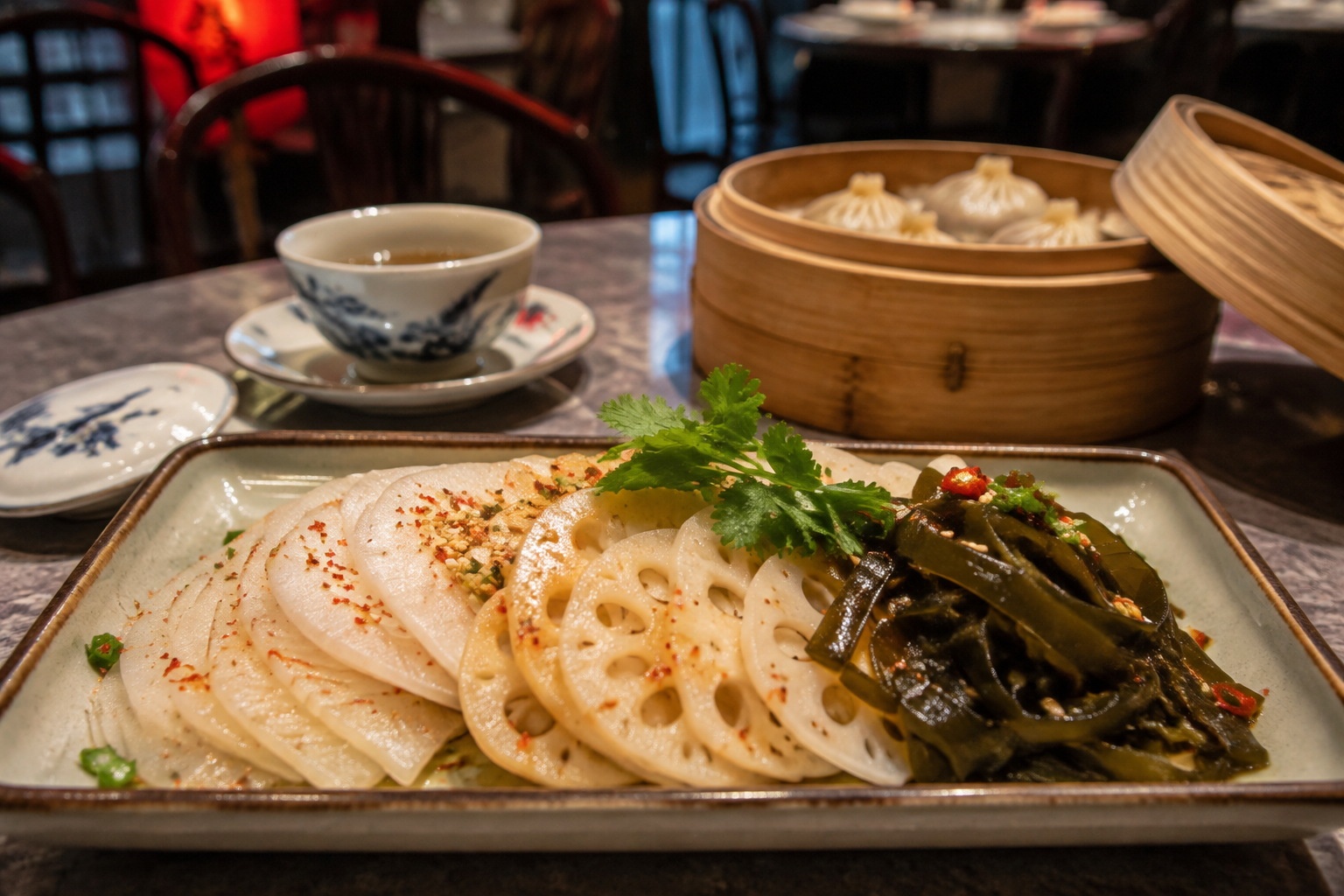
This tradition is now spreading beyond home kitchens. Upscale restaurants in Beijing and Shanghai serve “pickle platters” with thinly sliced radish, lotus root, and kelp, dressed with a touch of sesame oil and cilantro. In Chengdu, trendy cafés even offer pickle-flavored sparkling water—a playful take on the classic brine.
How to Eat Paocai Like a Local
- As a palate cleanser: Serve it between bites of spicy hotpot to refresh your taste buds.
- In soup: Toss a few pickled mustard greens into pork rib soup for a sour kick.
- Stir-fried: Quick-fry pickled long beans with minced pork and garlic—a classic Sichuan home dish.
- Cold dish: Slice pickled radish, drizzle with chili oil and vinegar, and serve as an appetizer.
A Bridge Between Cultures
For an American or European reader, the idea of a fermented vegetable jar that isn’t overwhelmingly spicy might be surprising. Sichuan paocai shares the ferment-forward philosophy of kimchi and sauerkraut, but its flavor profile is milder, more acidic, and incredibly versatile. It challenges the stereotype that all Chinese food is heavy-handed with chili. In fact, many Sichuan families cook with very little spice—they rely on salt, vinegar, and the natural tang of pickles to create depth.
Next time you’re in a Chinese grocery store, look for a jar of Sichuan paocai in the refrigerated section, or better yet, try making your own. All you need is a clean glass jar, salt, water, and some vegetables. It’s a low-stakes fermentation project that yields a crisp, refreshing condiment—and a taste of Sichuan beyond the burn.
Start the discussion at forum.chinacomes.com