
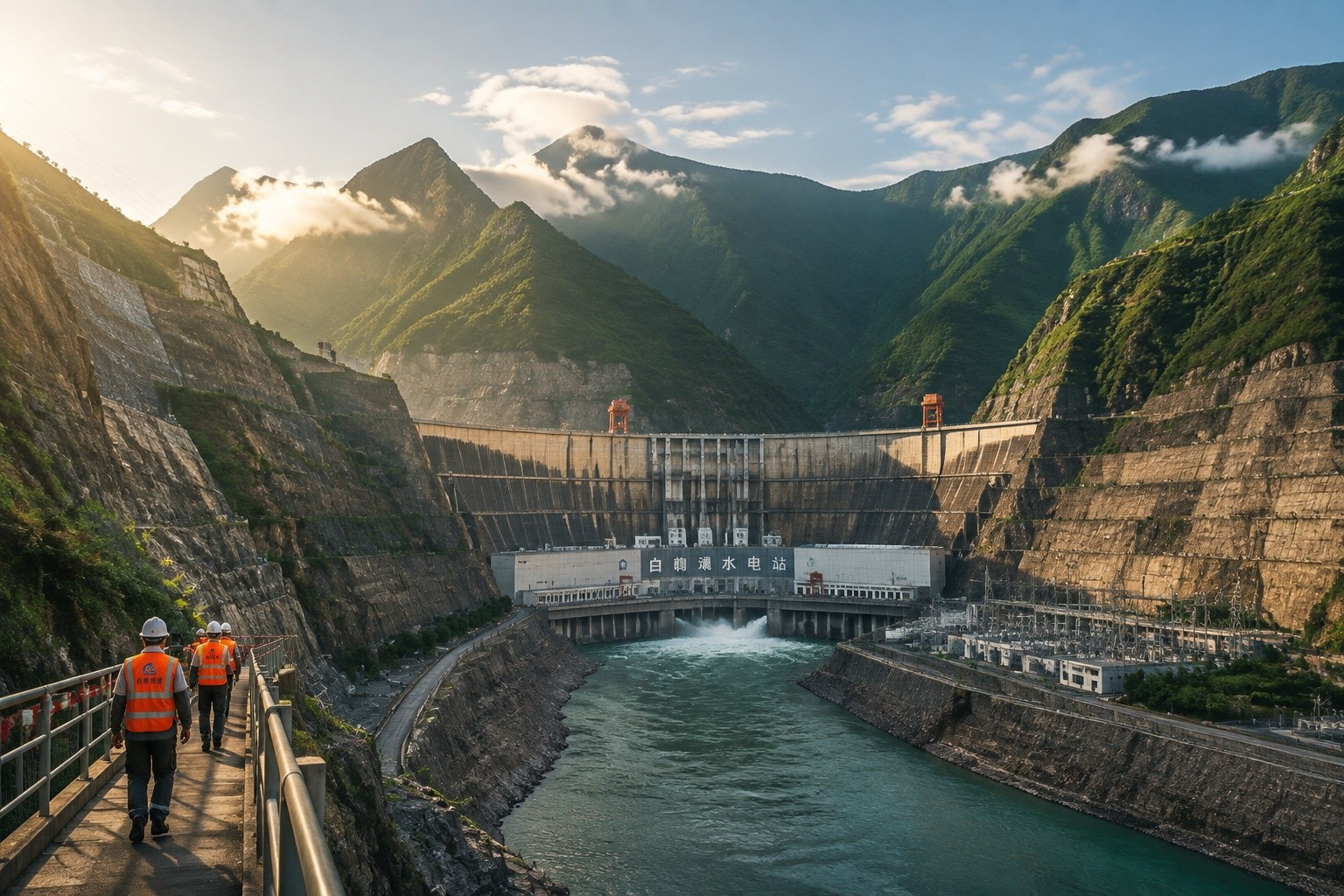

Standing Next to a Giant
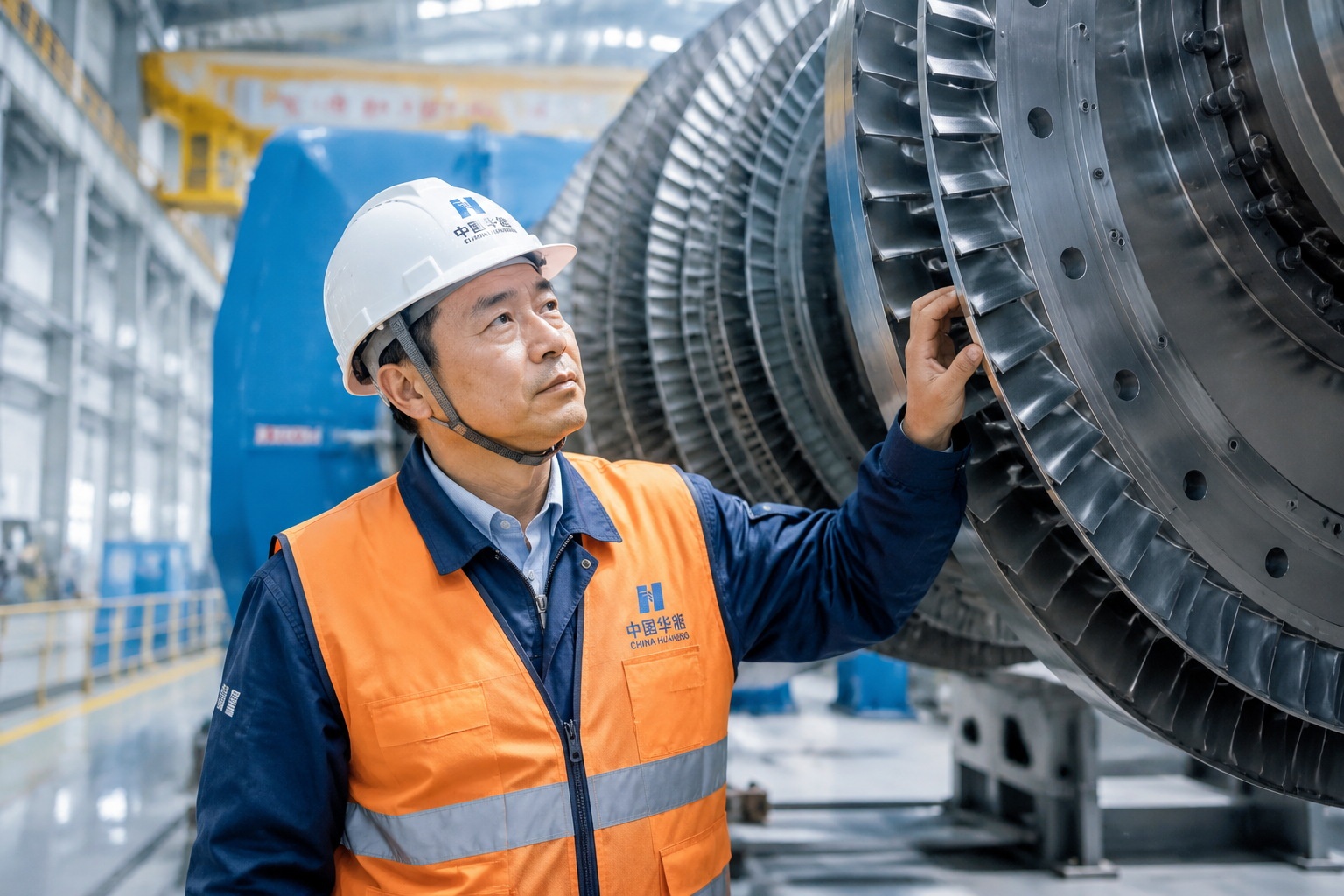
Chen Wei is an installation engineer with China Three Gorges Corporation. He has spent the last four years living at the Baihetan hydropower station, deep in a valley on the lower Jinsha River. When I met him, he was wearing a white helmet, an orange safety vest, and a dust-covered jacket. He pointed to a turbine rotor as tall as a three-story building. “That rotor weighs about 2,000 tons. It spins at 125 revolutions per minute and produces one million kilowatts. No one anywhere had built one like it before,” he said, with a matter-of-fact tone that couldn’t hide a hint of pride.
I had come to Baihetan to understand what it takes to design, build, and install the world’s largest hydroelectric generating units. But as I followed Chen through tunnels and shafts, I realized that the real story is not just about steel and electricity. It’s about the people who spend months and years in a remote corner of China, solving problems that don’t exist in textbooks.
What Is Baihetan Dam?
Baihetan is a massive arch dam built on the Jinsha River, which becomes the Yangtze after meeting the Min River at Yibin. The dam is 289 meters high, which is nearly as tall as the Eiffel Tower. It is the world’s second-largest hydropower station by installed capacity, with a total of 16 million kilowatts, second only to the Three Gorges. But its 16 turbine-generator units are the most powerful in the world: each one can produce 1 million kilowatts, which is about 40% more than the units at Three Gorges. That means the turbines have to handle extreme pressures, temperatures, and stresses.
The Tough Engineering Problems
To understand the challenge, you need to look at the numbers. The turbine runner—the part that spins when water flows through—has a diameter of about 8.6 meters. It is exposed to water pressure that would flatten a car. The runner is cast from a new type of stainless steel that resists cavitation, which occurs when water pressure changes rapidly and creates tiny bubbles that can erode metal.
“We tested dozens of alloys before choosing this one,” said Li Ming, another engineer who works in materials research. “The traditional materials couldn’t handle the fatigue.”
The rotor, which is the rotating part of the generator, is an even bigger challenge. It is made up of thousands of thin, high-strength silicon steel sheets stacked and compressed together. If any sheet is misaligned, the entire rotor could vibrate excessively and even tear itself apart. The installation team used laser-guided precision instruments to stack the sheets within a tolerance of 0.1 millimeter. That is the thickness of a sheet of paper.
Heat is another enemy. The generator produces enough heat to keep a small town warm. A special water-cooling system was designed to keep the copper windings below 100 degrees Celsius. “We had to develop airtight sealing and high-flow pumps that could handle the pressure,” Chen said.
A Village Boy with a Dream
Chen Wei grew up in a village in Sichuan province, about 300 kilometers from the dam. When he was eight years old, he saw a group of workers building a small dam on a nearby stream. “I was amazed that water could turn a wheel and create electricity,” he recalled. He studied engineering at Xihua University in Chengdu and joined the China Three Gorges Corporation after graduation in 2008. For the first ten years, he worked on smaller projects, gaining experience and waiting for the opportunity to work on something bigger.
In 2016, he was selected to be part of the Baihetan installation team. He packed his bags and moved to the construction site, where the nearest small town was a 30-minute drive away. “For the first year, we lived in prefabricated houses with no air conditioning. In summer, the heat inside was unbearable. But we got used to it,” he said.
The Night the Turbine Shook
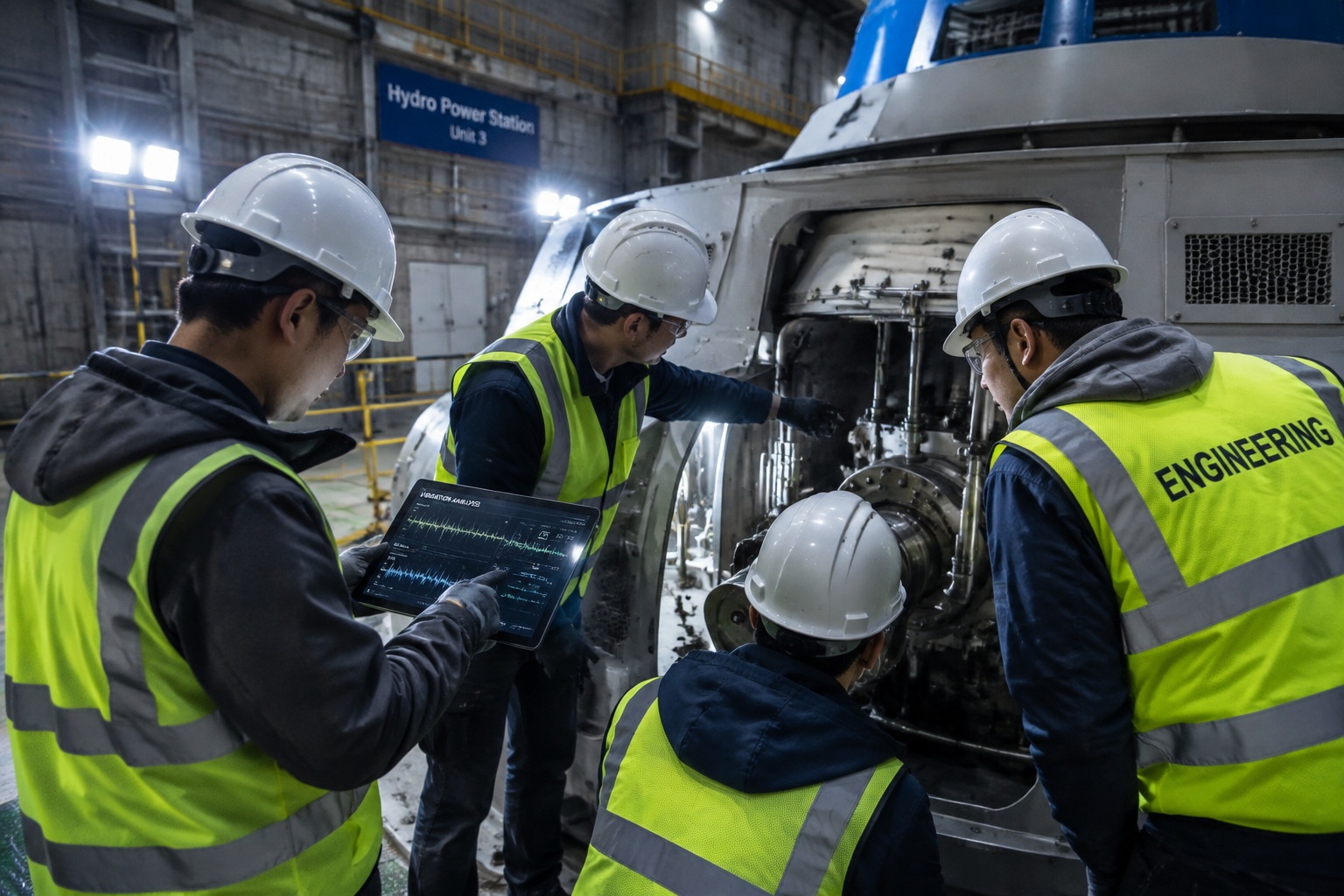
One of the tensest moments came during the first unit’s trial run. On the night of June 26, 2021, the team started the turbine for the first time after installation. As the speed increased, the operators noticed an unusual vibration pattern from the sensor readouts. “The amplitude was small but growing,” Chen said. “We decided to shut down and investigate.”
Engineers from the design institute, the manufacturer, and the installation team gathered in the control room. For two weeks, they analyzed data, ran simulations, and checked every part. Finally, they found that the vibration was caused by an interaction between the magnetic forces and the natural frequency of the supporting structure. After adding new support brackets and adjusting the balance weights, the problem was solved. “When we restarted and saw the vibration level drop to near zero, we literally screamed with joy,” Chen said.
More Than a Power Plant
Baihetan is not only about clean electricity. Its reservoir has a storage capacity of 20.6 billion cubic meters, which helps prevent flooding downstream in cities like Yichang and Wuhan. The dam also provides a boost to the local economy. Before construction, the surrounding area was one of the poorest parts of Sichuan. The project brought roads, schools, and hospitals. Many local people work as technicians, drivers, and support staff. “We also invested in the resettlement of about 110,000 people who lived in the reservoir area,” Chen said. “They got new houses, land, and compensation.”
Environmental protection was also part of the project. Fish ladders and artificial spawning grounds were built to help migratory fish species. The operators claim that the river’s water quality has actually improved because the reservoir traps sediment.
The Human Side
Living far from home takes a toll. Chen’s wife and two children live in Chengdu, a three-hour drive away. He visits them only once a month. “My younger son sometimes doesn’t recognize me on video calls,” he said, laughing but with a hint of sadness. “I missed years of their growing up. But I hope they’ll be proud of what I did.”
He also talks about the friendships. “When you work with the same people under pressure for years, you become like brothers. We trust each other completely.”
Looking Ahead
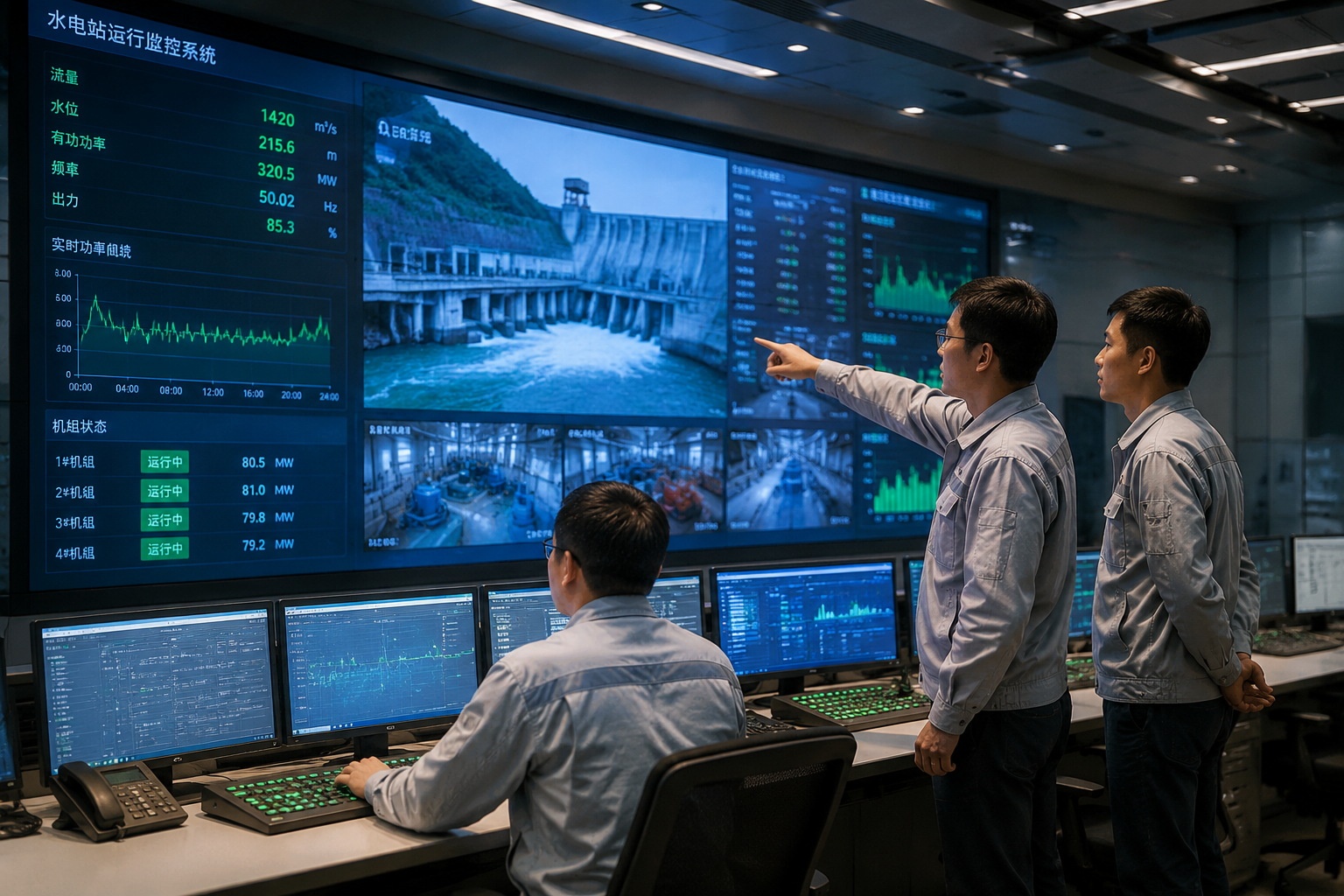
Today, all 16 units of Baihetan are in operation, providing electricity to the east of China. The engineers are now monitoring the machines, performing routine maintenance, and using digital twins to predict any problems. Chen says that he and his colleagues are already thinking about the next generation of turbines. “Maybe one day we’ll build a two-million-kilowatt unit. Who knows?”
As we walked out of the massive turbine hall, I looked back at the rows of white canopies. Chen was still wearing his safety helmet, his face tanned by the strong mountain sun. “You know, when I stand on top of the dam and see the river far below, I think about all the people who helped make this possible. We started as individuals, but we became something bigger together.”
Conclusion
Baihetan is a triumph of engineering, but it is also a human story. The numbers—2,000 tons, 1 million kilowatts, 289 meters—are impressive, but they represent the sweat, late nights, and dedication of a generation of Chinese engineers. Chen Wei is one of them. His story reminds us that behind every great infrastructure project, there are ordinary people doing extraordinary things.
Start the discussion at forum.chinacomes.com