
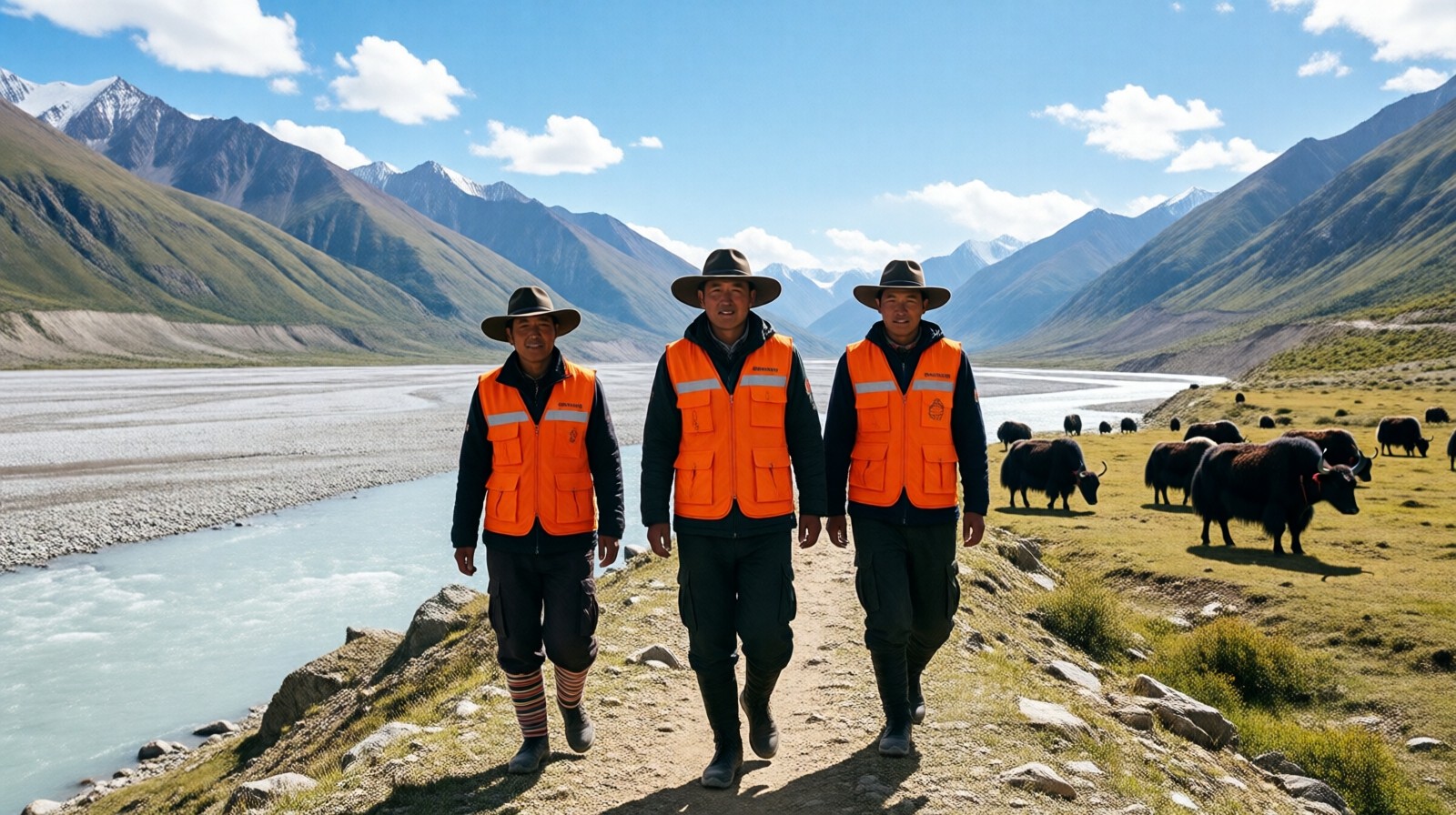

Morning on the Roof of the World
The alarm goes off at 5:30. Tsering Dorje pulls on his thermal jacket, heavy boots, and fluorescent orange vest. Outside, the temperature sits at minus 10 degrees Celsius, even in June. He kick-starts his motorcycle — a sturdy 150cc model that handles the bumpy grassland tracks — and heads out before the sun rises over the Tanggula Mountains.
Tsering is 46 years old, with creases around his eyes from years of squinting into the wind. He used to be a herder, grazing yaks and sheep on the high plateau of Qinghai Province, in west China. Today he is one of thousands of “eco-guardians” — former herders hired by the government to protect a vast, fragile region known as the Sanjiangyuan, or “Source of Three Rivers”.
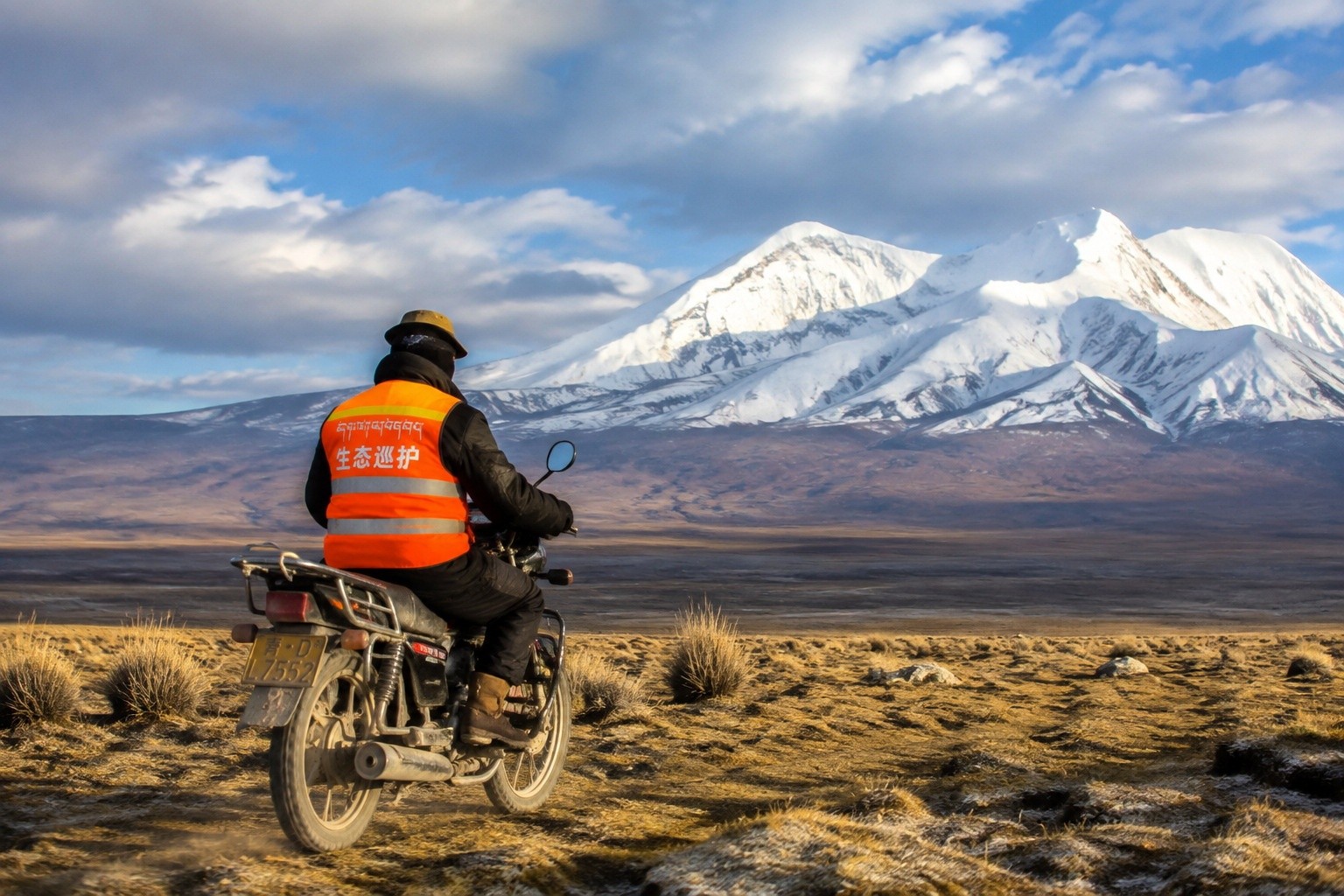
Who are the eco-guardians?
Sanjiangyuan is the headwater region of three of Asia’s most important rivers: the Yangtze, the Yellow, and the Mekong — which China calls the Lancang. Over the years, overgrazing, mining, and climate change had taken a toll on the grasslands and wetlands. In 2016, the Chinese government established the Sanjiangyuan National Park, the first of its kind in the country. To manage the park while supporting local livelihoods, it created tens of thousands of jobs for local herders as “ecological conservation rangers” — eco-guardians, as they’re often called.
Tsering is one of them. “I used to worry about my animals and how much grass they’d have,” he told me when we met at a patrol station. “Now I worry about the grassland itself, and the animals that live here.” He laughs at the irony. “It’s a different kind of worry.”
A day in the field
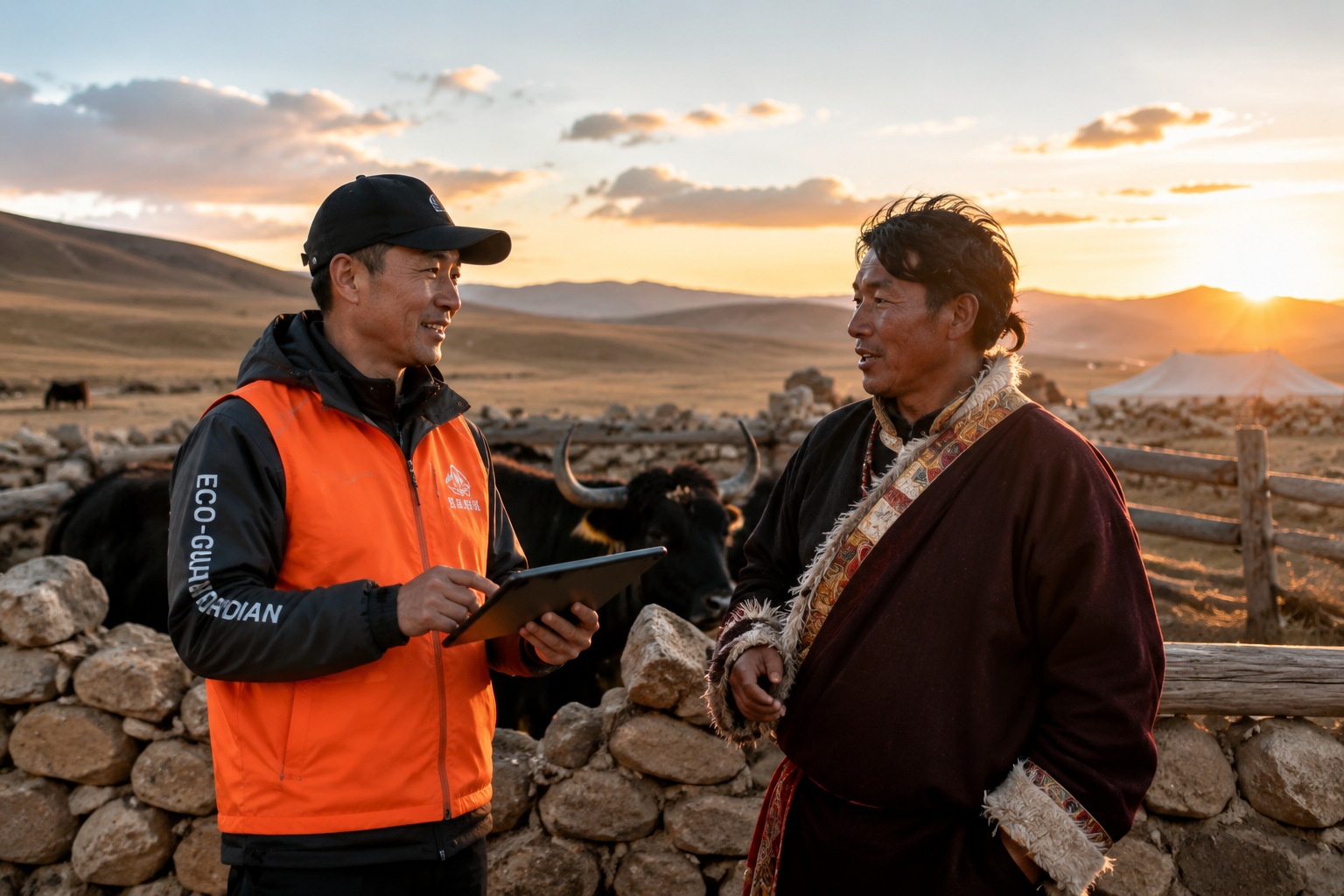
His typical patrol covers about 20 kilometers of grassland and hills. He looks for signs of illegal mining, snare traps, and injured wildlife. He picks up trash left by tourists. And he records everything he sees in a simple logbook — or sometimes on his smartphone using an app the park service created.
“Last week, I saw a snow leopard near the ridge. That’s a good sign,” he says, his voice quiet with pride. Snow leopards are rare and shy; their presence indicates a healthy ecosystem.
But the job isn’t just about watching wildlife. It’s also about talking to people. When a herder complains that wolves killed a yak, Tsering helps them file a claim for compensation. When a tourist tries to drive off-road, he politely asks them to stay on designated tracks. “I’m not a policeman,” he says. “I’m a neighbor who knows the land.”
What changed for local herders?
For many families, the shift from herding to conservation was a big adjustment. The government restricts grazing in the core zone of the national park, and herders have been encouraged to reduce their livestock numbers. In exchange, they get a monthly salary for their work as rangers. Tsering’s salary is about 1,800 yuan (roughly 250 US dollars) per month — modest by city standards, but stable income in a region where cash is often scarce.
His wife runs a small guesthouse for tourists who come to see the plateau’s stark beauty. “In the past, we only had yaks. Now we have a home with solar panels and a Wi-Fi router,” he says, grinning. But he admits it took a while to get used to the new role. “At first, I felt like a guard watching over the land. Then I realized the land is watching over me too.”
The tricky balance: conservation vs. livelihoods
Balancing environmental protection with local economic needs isn’t easy. The national park brings visitors, which creates revenue — but too many visitors can damage the fragile ecosystem. Tsering explains the park’s visitor limits: “We want people to see this place, but we don’t want it loved to death.”
There are other tensions. Wild animals often wander into grazing areas, and wolves and bears sometimes kill livestock. While the government has a compensation program, the process can be slow. “A herder can lose a yak worth 5,000 yuan, and the compensation might take months,” says Tsering. “That’s hard for a family.”
To address this, the park has introduced community-based management. Herders themselves are involved in counting wildlife and setting patrol routes. This gives them a sense of ownership. Tsering suggests, “We also need better insurance schemes. The environment is healthy, but that doesn’t mean people should be left behind.”
Looking ahead
Tsering’s son, 23-year-old Norbu, is studying ecotourism at a college in Xining, the provincial capital. He plans to return and work as a Tibetan-English tour guide, showing visitors the culture and wildlife of his homeland. “My generation is different,” Norbu says. “We see the plateau as a treasure, not just as pasture. But we also want a good life.”
The challenge, Tsering says, is to make conservation economically viable for the next generation. “If a young person can earn a decent living protecting this land, they will do it. If not, they’ll go to the cities. Then who will guard the mountains?”
For now, he keeps riding his motorcycle across the grasslands, checking for signs and taking notes. The sun is low in the sky, painting the snow-capped peaks pink and orange. As we say goodbye, he waves and says, “Come back in a few years. The grass will be greener, and I’ll still be here.”
Start the discussion at forum.chinacomes.com