
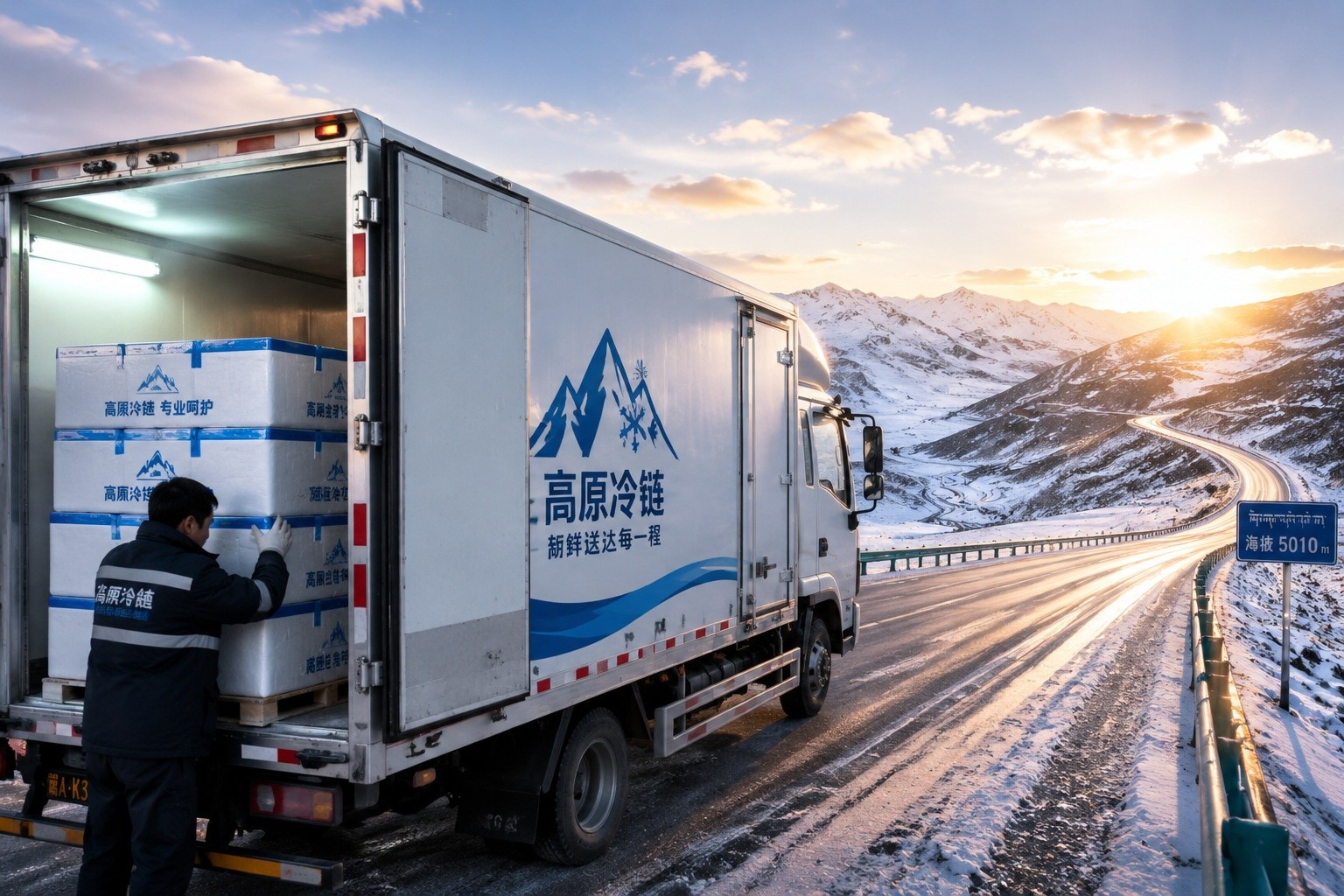

Morning in Nagqu, Tibet
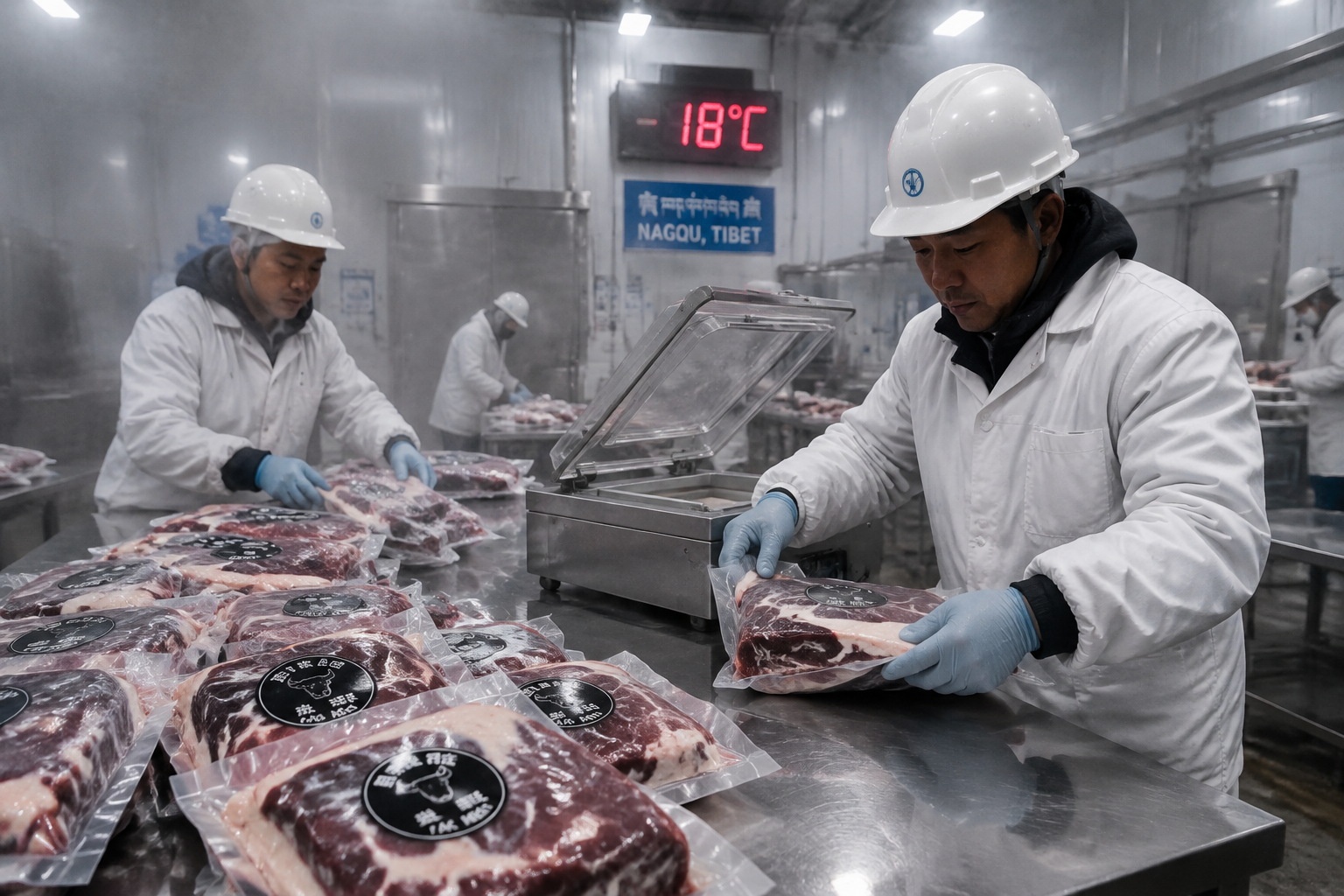
The thermometer outside reads minus 15 degrees Celsius, but the work inside the slaughterhouse in Nagqu, Tibet, is already hot. At 6 a.m., the high-altitude city is still dark, yet the floor is busy with the rhythm of boots on concrete. Workers in white coats and hard hats lift freshly cut pieces of yak meat from a stainless steel table, pack them into vacuum bags, and slide them into a cold room where the temperature hovers just above zero.
Tashi, a 43-year-old plant manager, holds a clipboard and watches as his team works. “Today we have 1,200 kilograms going to Shanghai,” he says, speaking over the hum of a refrigerator unit. “Three years ago, we could have only sent frozen meat that took a week by road. Now it’s fresh, and it arrives in three days.”
Why Shanghai Wants Yak Meat
Yak meat has always been a staple on the Tibetan plateau, prized for its high protein content and lean texture. Yet for a long time, it rarely left the region. Poor roads, a lack of cold-chain facilities, and fragmented supply chains meant that fresh yak meat was essentially a local product. The only way to ship it to eastern China was frozen, and even then, quality often suffered.
In Shanghai, however, a new generation of consumers is looking for foods with a story. They are young, urban, and willing to pay for organic, low-impact, and high-altitude products. Yak meat fits that bill perfectly. It comes from remote pastures, is naturally raised, and is increasingly seen as a healthy alternative to beef. Retailers like Hema Fresh and top-end supermarkets have begun to stock it, creating the pull for a proper cold chain.
Building a Cold Chain at 4,500 Meters
The journey begins hours before the truck arrives. At 8 a.m., the meat is moved to a blast freezer, where the temperature drops to minus 35 degrees Celsius. This step quickly freezes the surface, locking in moisture and keeping the meat tender. After that, the vacuum-packed portions are stored in a cold room at minus 18 degrees Celsius.
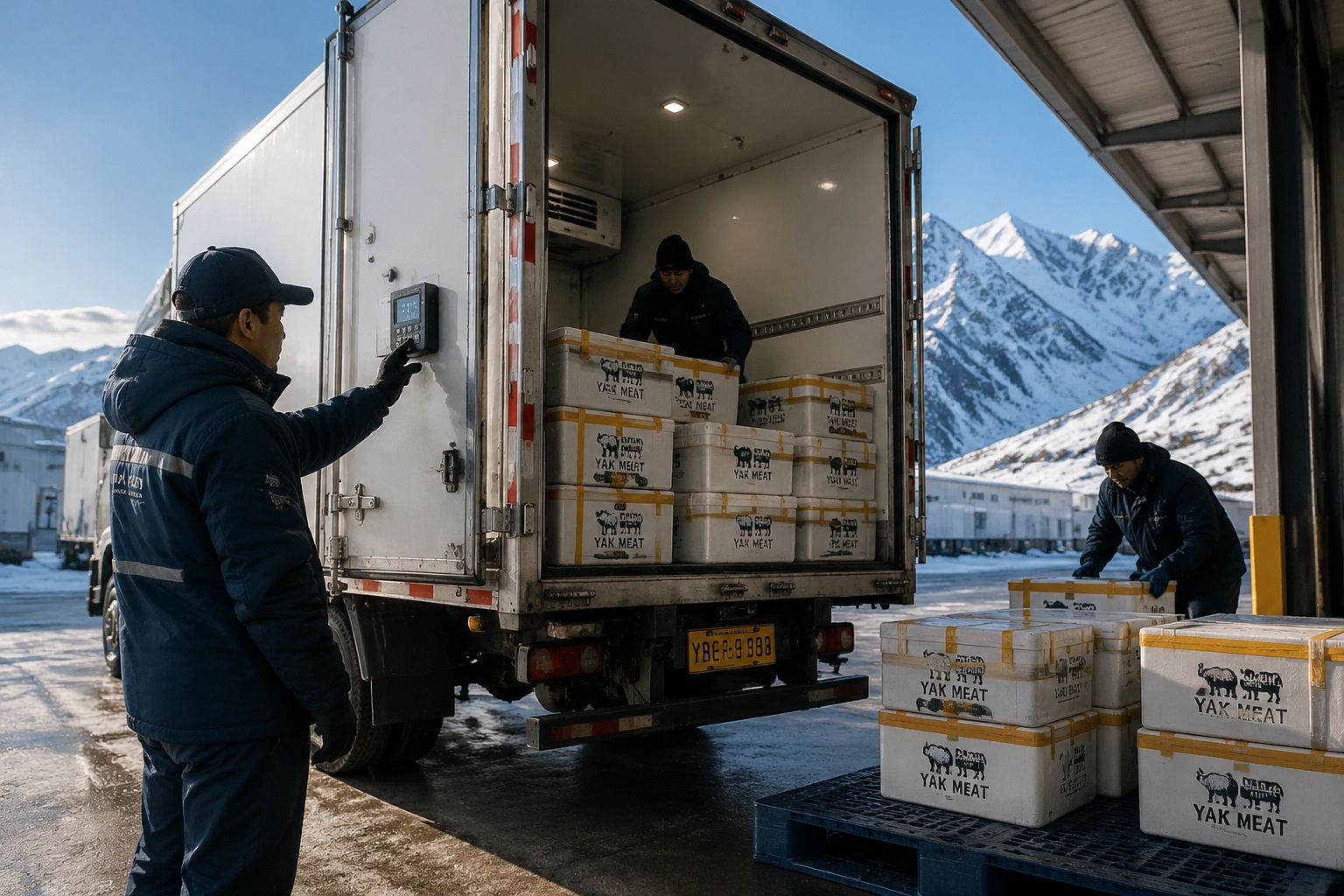
At 10 a.m., a refrigerated truck backs up to the loading dock. The crew carefully stacks the insulated cargo boxes, each fitted with a temperature logger. The truck’s cooling system maintains a constant minus 18 degrees Celsius, and sensors inside the cargo area send data to a control center in Lhasa every five minutes.
Tsering, the driver, checks the monitoring tablet before closing the doors. “The hardest part is the mountain pass,” he says. “The road is good now, but you have to keep an eye on the temperature. If it goes above minus 15, an alarm goes off. But we haven’t had a problem this year.”
The truck heads to the Nagqu freight station, where the cold-chain containers are loaded onto a train bound for Chengdu. There, they are either transferred to another truck or put on a plane for the final leg to Shanghai.
Digital Traceability: From QR Code to Fork
Every package of yak meat now carries a QR code. When a consumer scans it, they see the name of the slaughterhouse, the date of slaughter, the exact temperature history, and the route the meat took to reach the store. This level of traceability is not just a marketing gimmick. It is essential to reassure consumers in a market where food safety is a major concern.
The same digital network coordinates the entire shipment. Farmers, cooperatives, logistics companies, and retailers share data on a single platform. This reduces waste and ensures that every box is accounted for, from the plateau to the city.
The Big Players and the Local Pioneers
The expansion of cold-chain services into Tibet is a partnership between national giants and local entrepreneurs. Companies like SF Express and JD Logistics have built out their cold-chain capabilities, offering regular routes from Lhasa to major cities. At the same time, local operators like Tibet Tally Logistics have invested in specialized vehicles and trained drivers who understand the tricky geography.
The impact on rural Tibet is visible. Many herders are members of cooperatives that now negotiate directly with buyers. One cooperative in Baingoin County, Nagqu, sends around 15 tonnes of yak meat to eastern China every year. The cooperative’s leader said member households have seen their incomes rise by about 20 percent since they began selling directly to cities like Shanghai.
Arriving in Shanghai
After approximately three days, the containers arrive at a distribution center in Shanghai’s Qingpu District. Workers unload the boxes into a refrigerated warehouse, where they are sorted and dispatched to supermarkets and restaurants.
At a Hema Fresh store in the city center, the yak meat is displayed in a temperature-controlled counter. The packaging is clean and modern, with a transparent window showing the deep red of the meat. A young woman named Chen Lin picks up a packet. She scans the QR code on the back. “It says it was slaughtered 60 hours ago, on the plateau,” she says, surprised. “That’s fresh.”

The Road Ahead
The journey from a Tibetan slaughterhouse to a Shanghai dinner table is a small miracle of logistics. It is made possible by a combination of new roads, railway connections, cold-chain technology, and digital platforms. For the herders of Tibet, it means a more reliable income. For logistics companies, it is a test of adaptability in one of the most extreme environments on Earth. And for urban consumers in China, it opens a door to a taste of a remote and beautiful region.
There are still challenges: icy roads, high energy costs, and the need for reliable electricity in remote areas. But as more years pass, the route only becomes more efficient, and more Tibetan products find their way across the country. The next time you see a piece of yak meat in a Shanghai supermarket, you may not think about the 3,000 kilometers behind it, but they’re all there, in every bite.
Start the discussion at forum.chinacomes.com