

A Morning in a Yunnan Café
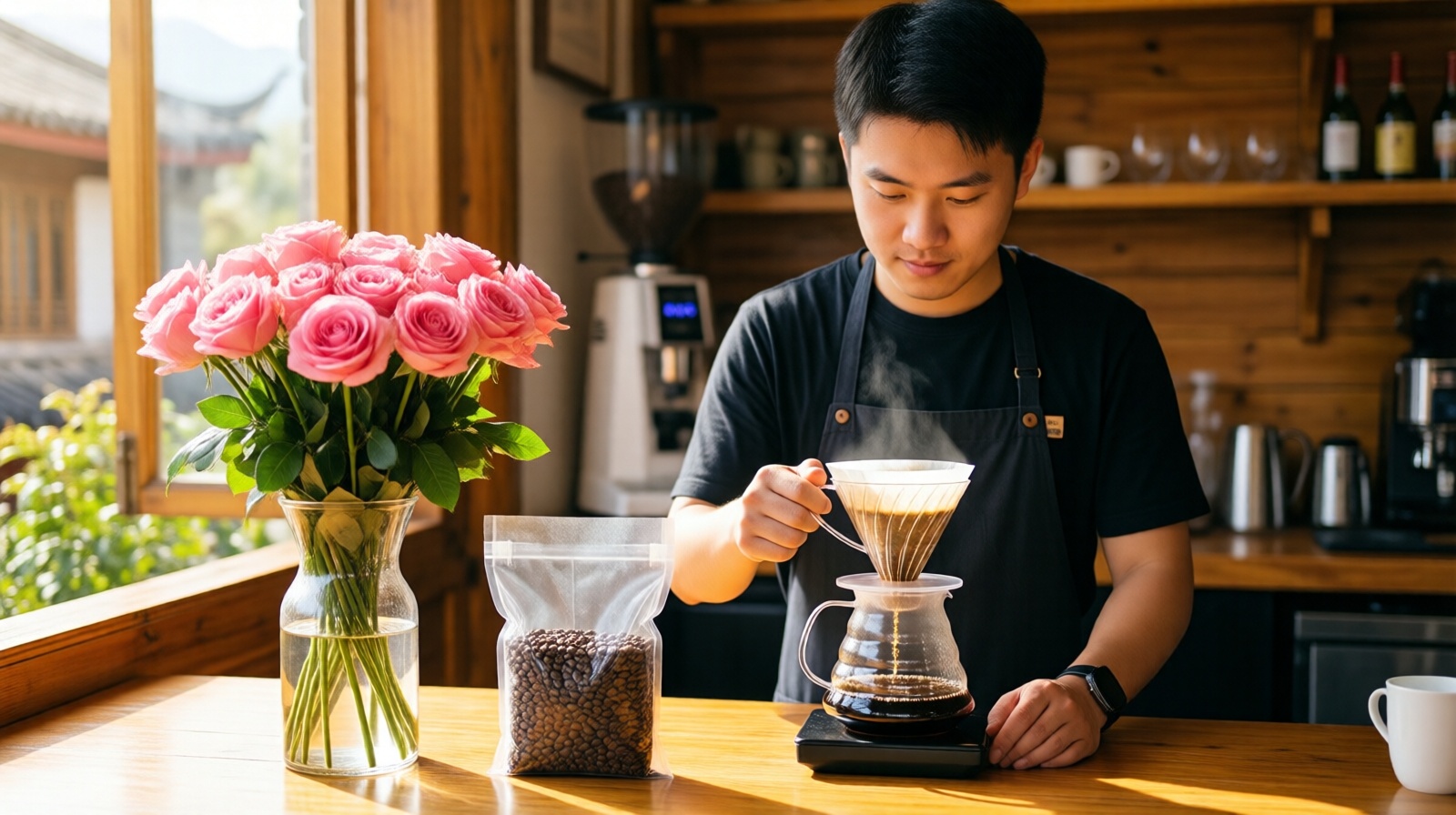
The first thing that hits you is the contrast. On the counter of a small café on the edge of Kunming, a glass vase holds a cluster of fresh pink roses. Next to it, a paper bag full of raw green coffee beans leaks a faint, grassy aroma. The owner, Lin Tao, 28, pours hot water over a cone-shaped dripper while explaining why both things belong together.
“I grew up on a coffee farm in Baoshan,” Lin says, without looking up from the brew. “My grandmother also grew jasmine in the garden. I never imagined either one could become a career. Now they’re the most exciting industries in our province.”
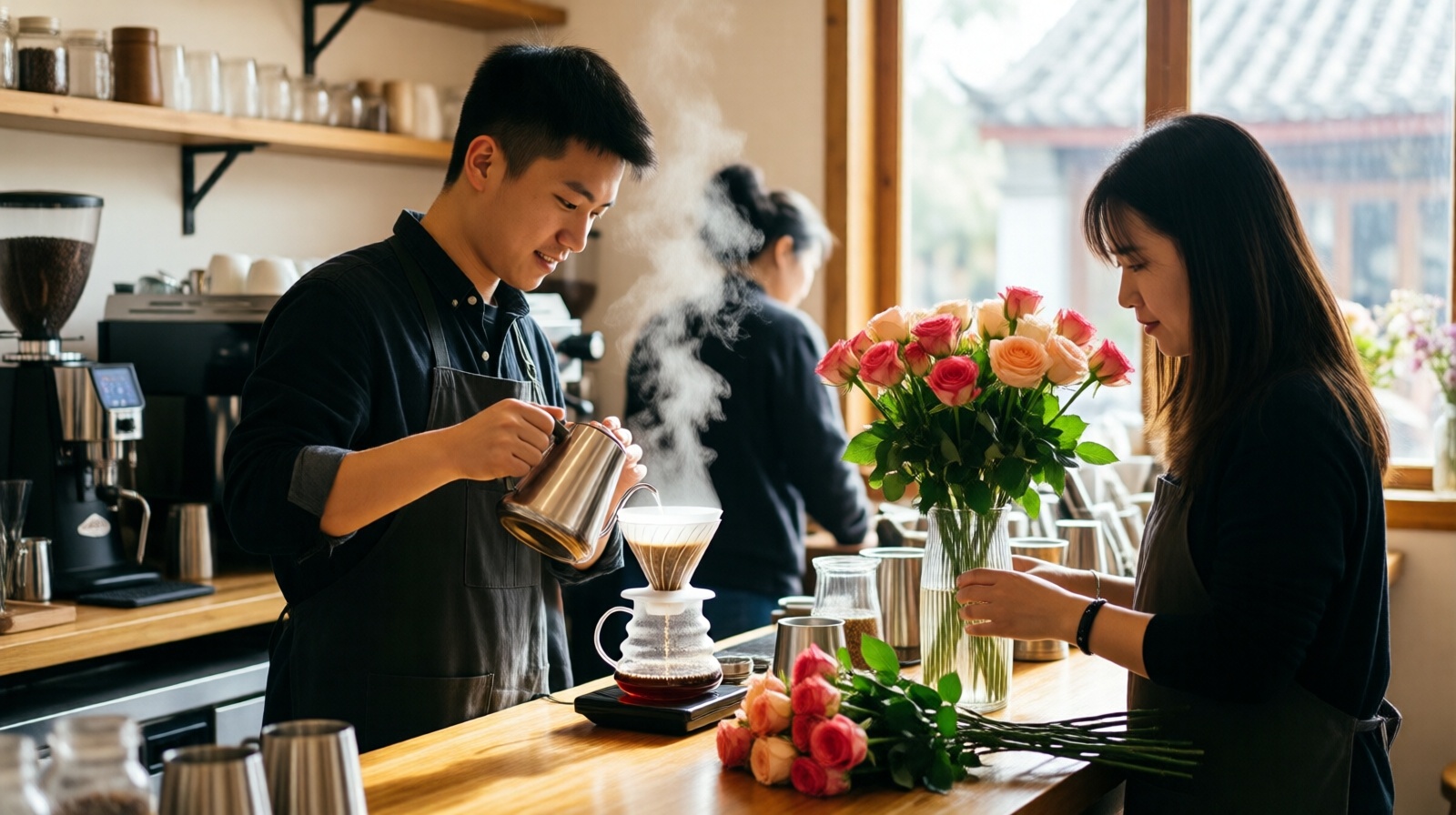
Lin is part of a wave of young Chinese returning to Yunnan with new ideas. They are turning two traditional agricultural products—coffee and flowers—into something far bigger than raw materials. And their stories reveal how a new generation is reshaping the countryside.
Why Yunnan? The Perfect Natural Home
To understand why coffee and flowers have become such a big deal here, you need to know a few numbers. Yunnan produces nearly all of China’s coffee beans—roughly 98% of the national total. The province also supplies about 70% of the fresh-cut flowers sold across China. That’s not a coincidence.
The high elevation, mild temperatures, and strong sunlight create ideal conditions for both crops. Coffee grows best between 800 and 1,500 meters above sea level, and Yunnan’s mountains are covered with just such terrains. Flowers prefer cooler, drier weather, which you find in places like Dali, Kunming, and the areas around Dianchi Lake.
For decades, Yunnan shipped its coffee and flowers to other provinces or overseas as raw ingredients. But now, a younger generation is increasing the value at the source—by roasting beans, designing bouquets, building brands, and telling stories.
The Coffee Side: From Mountain to Micro-Lot
Chen Jie, 30, is a former software engineer from Shanghai. In 2021, he moved back to his hometown in Pu’er, a region famous for tea but increasingly known for coffee. He founded “Mountain Shot,” a micro-roastery that buys beans directly from local smallholders.
“My family thought I was crazy,” Chen recalls, laughing. “They said, ‘People move to Shanghai for a better life, not the other way around.’ But I had noticed something: Yunnan coffee was being sold to big brands for very little money, while the same beans served in specialty shops abroad cost three or four times as much.”
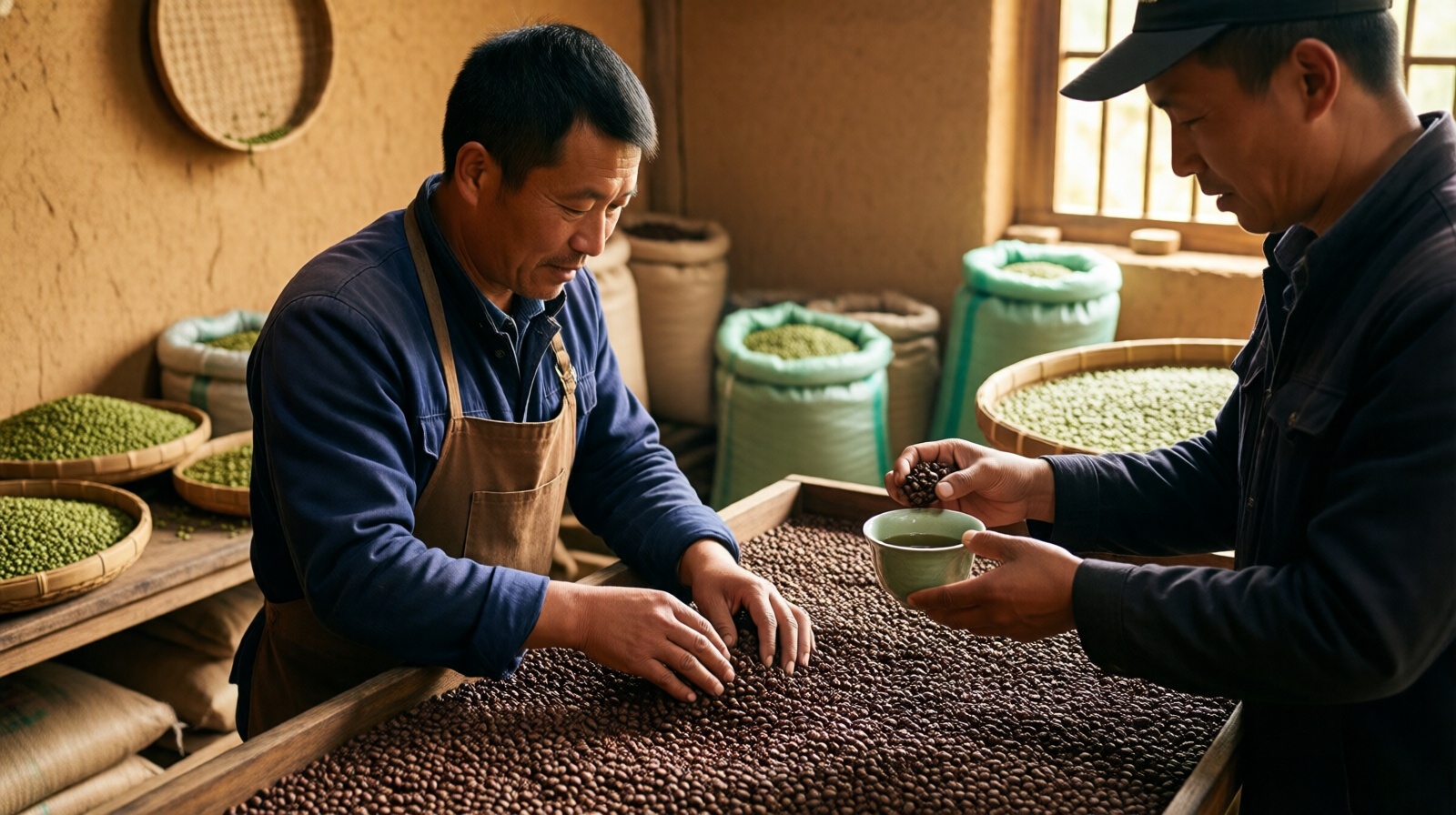
Chen started by visiting dozens of farms, cupping hundreds of samples, and building relationships with farmers who had never heard of “specialty grade.” He convinced some of them to let their coffee ferment longer or dry it on raised beds instead of on the ground. The result is a distinctly chocolatey, nutty cup that now sells in cafés across China.
“The turning point came when a Shanghai roaster ordered 500 kilos directly from our farm,” he says. “That was the first time I saw a farmer receive a bonus for quality. It changes how people think about their work.”
Chen’s story is not rare anymore. In the past three years, dozens of similar micro-roasteries and coffee studios have opened in Kunming, Dali, and Lijiang. Many are run by young people who left office jobs in big cities, and they are redefining what Yunnan coffee can be.
The Flower Side: More Than Just Valentines
If coffee is about taste, flowers are about emotion. But for young entrepreneur Yu Xin, they are also about algorithms.
Yu, 27, spent two years working in e-commerce in Shenzhen before returning to Kunming, the heart of China’s flower trade. She noticed that most flowers were sold in bulk for weddings or holidays, but few people bought flowers for themselves on an ordinary Tuesday.
“I wanted to make flowers a daily luxury, not a rare gift,” Yu says. So she founded “Bloom Box,” a flower subscription service that delivers a small, thoughtfully designed bouquet to customers’ homes or offices every week.
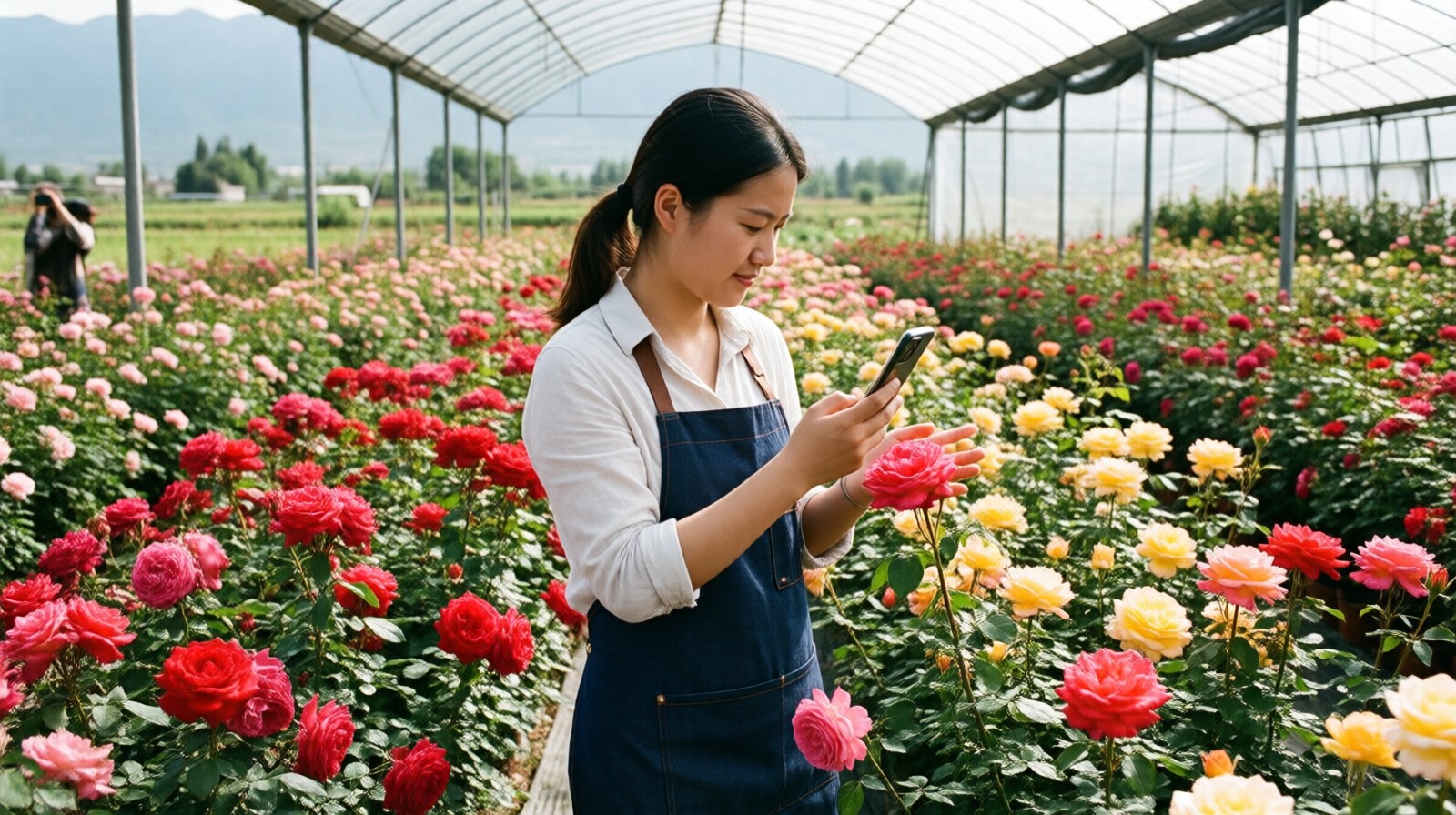
She works directly with flower farmers in Jinning, a district near Kunming known for roses and lilies. By ordering in advance and using express logistics, she can get flowers from farm to doorstep in under 24 hours, even for customers in Beijing or Shanghai.
“The hardest part was convincing farmers that small, mixed bouquets are profitable,” Yu explains. “They used to sell only single-variety batches by the kilo. Now we teach them to grow a ‘rainbow’ plot with different colors and sizes, which increases their income per square meter.”
Her company now serves 30,000 subscribers a month, and she has helped around forty local greenhouses adopt sustainable growing practices, like using fewer pesticides and recycling waste stems.
Where Coffee Meets Flowers: A New Kind of Shop
Walking through the old town of Dali, you might spot a small storefront with a hand-painted sign that reads “Café & Flower Studio.” It belongs to a couple in their late twenties, Luo Fei and Su Yu. They serve pour-over coffee made from Yunnan beans, and in the back room, Su offers weekly flower-arranging workshops.
“We call it the ‘one-ha, one-flower’ model,” Luo says, using the local phrase that originally meant “one coffee, one flower” but now stands for a lifestyle. “People come for coffee, stay for flowers, and often leave with both.”
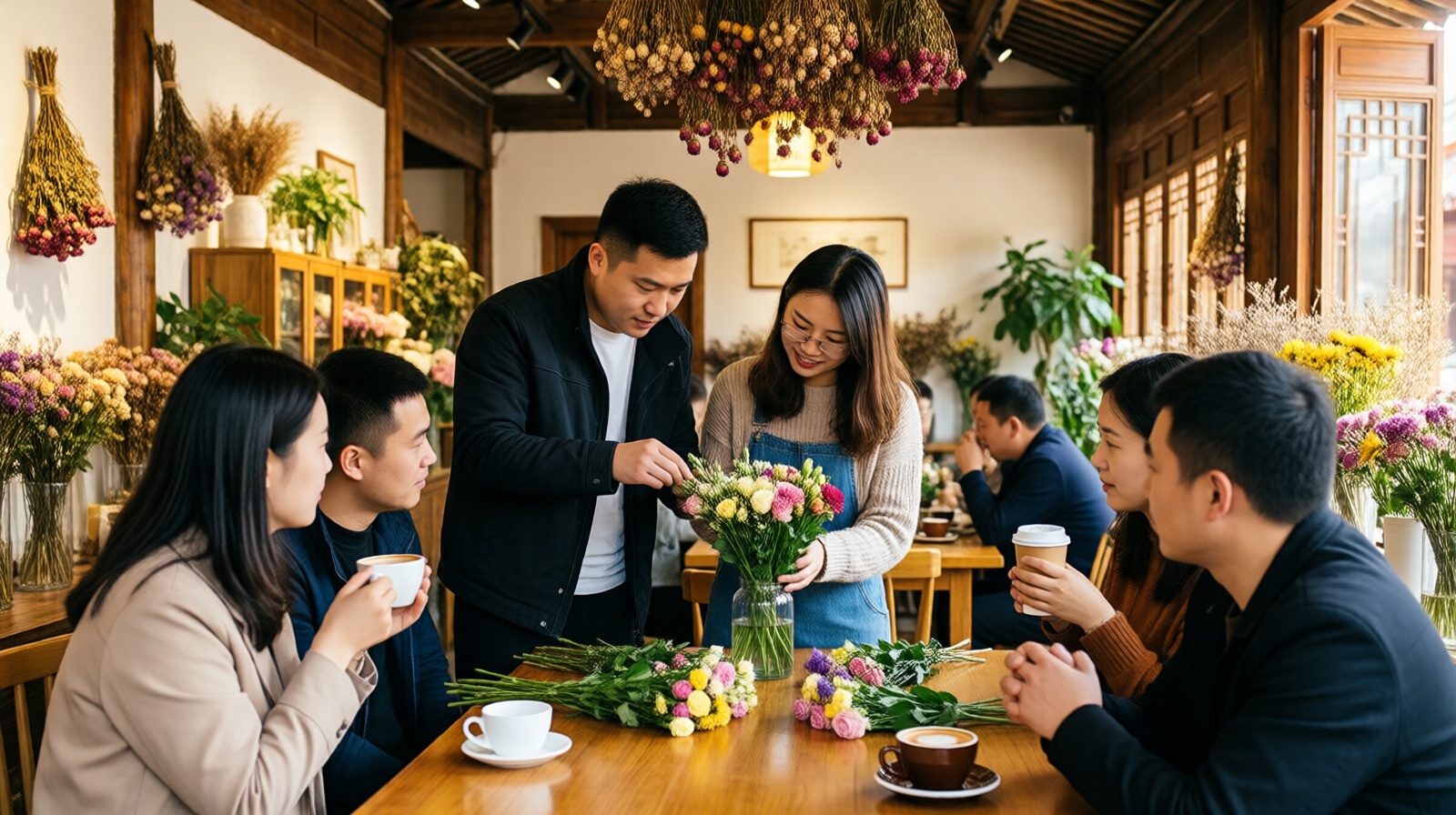
Luo explains that the combination is not just decorative. The aroma of flowers enhances the coffee-tasting experience, and the calm, hands-on act of arranging stems gives customers a reason to slow down. On weekends, the studio is packed with travelers and locals learning to build a simple centerpiece while sipping a cappuccino.
This kind of hybrid venture is becoming a template for young entrepreneurs in Yunnan’s tourist towns. It creates a steady income from both goods and experiences, and it helps spread a more nuanced image of the province: not just an exotic backdrop, but a place of creativity and craft.
What’s Hard About Starting an Agri-Tech Business Here?
None of these entrepreneurs pretend it has been easy. Logistics remain the biggest challenge for flower delivery, especially to remote cities. Coffee farmers are sometimes reluctant to change traditional methods, and consumer perception can be stubborn.
“Many Chinese customers still assume that imported coffee is better, simply because it’s imported,” Chen Jie admits. “We have to spend a lot of time doing tastings and sharing our farm stories. But once people try a really fresh single-origin Yunnan bean, they’re often surprised by how good it is.”
Yu Xin also feels the pressure of low online profit margins. “Flowers are perishable and heavy. If we make a mistake in forecasting, we lose money. But the ecosystem around us is improving—we now have better cold-chain logistics, and more young people are choosing to work in rural areas instead of moving away.”
What This Means for China’s Next Generation
The “one coffee, one flower” movement is more than just a business trend. It reflects a broader shift: young, educated Chinese are increasingly willing to build careers in smaller towns and rural areas, bringing technology, branding, and a global mindset with them.
They are not abandoning the countryside; they are redefining it. In Yunnan, they see opportunity where others saw raw materials. They are proving that agriculture can be a platform for design, community, and innovation.
Back at Lin Tao’s café, the pour-over is finally ready. He hands me a small cup with a floral aroma and a smooth body, sweet like fruit. I ask him what his grandmother would think of this place, the coffee and flowers standing side by side.
“She would probably laugh,” he says. “But I think she’d be proud. This café is my way of telling the world where I’m from, and where I want to go.”
Start the discussion at forum.chinacomes.com