
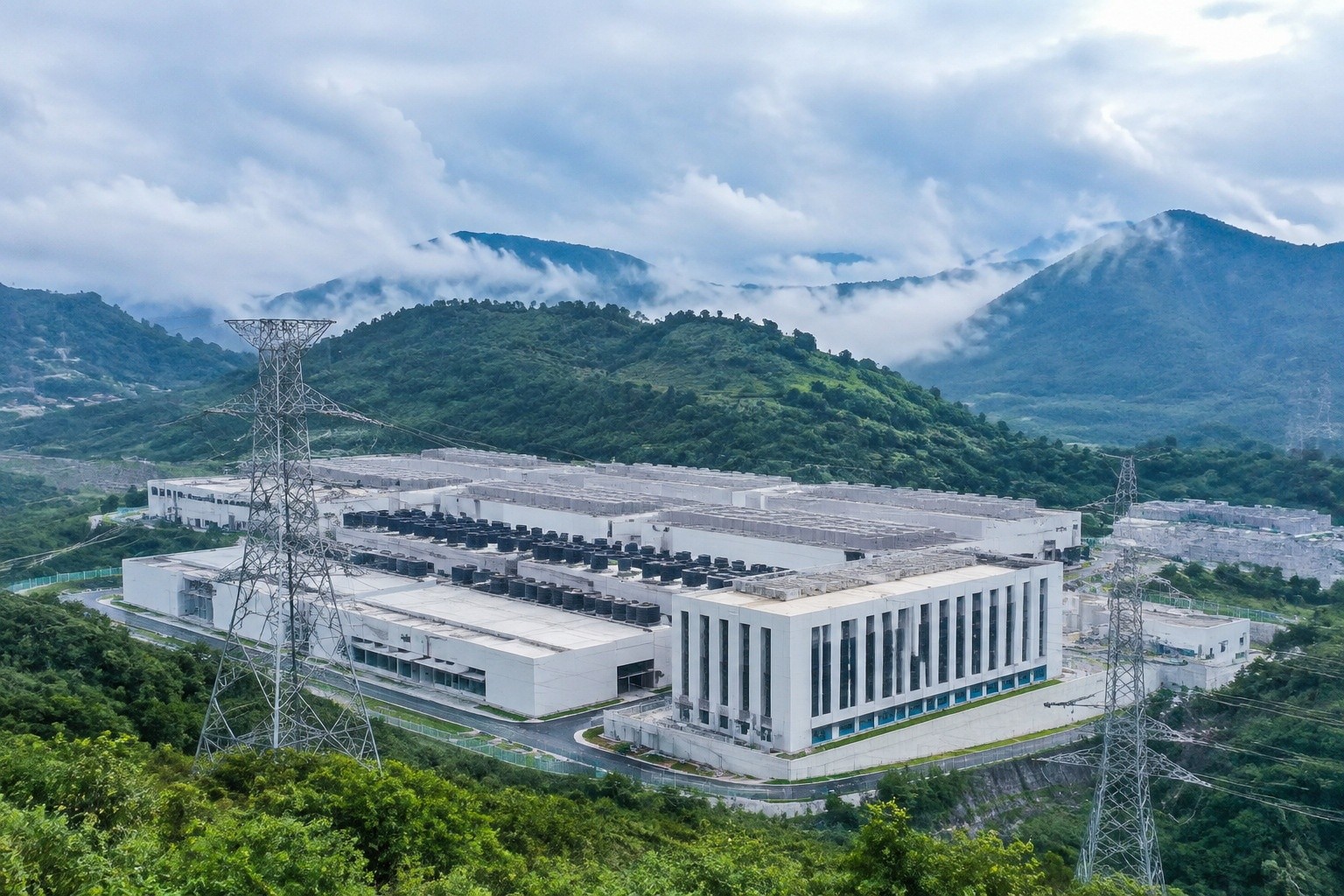

I remember the first time I drove through Guizhou. The highway cut through green mountains, and fog hung low over the valleys. At 1,200 meters above sea level, the air was cool even in July. On the outskirts of Guiyang, the provincial capital, a huge building appeared behind a security gate: rows of grey walls, white steel, and the hum of heavy machinery. It looked like a factory, but there were no chimneys. Just heat exchangers and the low growl of thousands of fans. This, I was told, is where Apple keeps a copy of your iCloud photos and messages, if you are one of the hundreds of millions of iPhone users in China.
Actually, Apple didn’t build this building by itself. It belongs to a Chinese company called Cloud Rising, but the servers inside are dedicated to Apple’s iCloud services. Since 2018, all iCloud data from mainland China has been stored here. For years, people have asked why a global tech giant would choose such a remote, landlocked province. The answer is not one big secret. It’s a combination of climate, energy, policy, and a bit of luck.

Why Apple Needs a Data Center in China at All
You can’t understand the location without first understanding the law. In 2017, China passed the Cybersecurity Law. It says that “important data” generated and collected within China should be stored within China. For cloud services like iCloud, that means user photos, contacts, and backups must live on servers inside Chinese borders. This is not unique to Apple — Google, Microsoft, Amazon, and others have all had to adapt. But Apple built its entire business around tight privacy stories, so it felt the shift most visibly.
For Apple users outside China, iCloud data is stored in the United States or other regions. For users in mainland China, the data goes to a server in Guizhou. If you buy an iPhone in Shanghai, your data will likely be stored in a building at the southern end of the Guiyang metropolitan area. To the user, the experience is the same. But under the surface, it’s a completely different pipeline.
The Four Forces That Pulled Apple Into Guizhou
1. The Climate Does Half the Work
Data centers run hot — literally. Server racks generate enormous amounts of heat. In most places, you need industrial-scale air conditioning, which consumes huge amounts of electricity. Guizhou’s average annual temperature is around 15°C, with summer highs seldom exceeding 30°C. Because it sits on a plateau at about 1,100 to 2,000 meters above sea level, the air is thinner and drier than in China’s humid river valleys. In data-center language, this is “free cooling” — you can use the outside air to keep servers cool for most of the year.
Engineers calculate that this can cut cooling electricity use by 30 to 50 percent. For a data center that might consume as much electricity as a small town, that’s a massive saving. It also helps that Guizhou is far from the coast, so typhoons and salt air are not an issue. The land is hilly, which actually helps: you can build on solid rock, away from flood plains.
2. Cheap, Clean Hydropower
Electricity is the lifeblood of a data center. The servers need power 24/7. In China, the national grid relies heavily on coal, but Guizhou has a particularly clean electricity mix. The province is crisscrossed by rivers, especially the Wujiang River system, and dozens of hydroelectric plants generate power. According to provincial data, hydro accounts for almost half of Guizhou’s installed power capacity. This means cheap electricity and a greener reputation. Apple advertises that all its data centers run on 100% renewable energy, and in Guizhou, it can point to actual hydro units that feed the regional grid.
Cheap power isn’t just about the environment — it’s business. Electricity can account for more than half of a data center’s total operating cost. A difference of just a few cents per kilowatt-hour can decide where a multi-billion-dollar company builds its next cloud hub.
3. The Government Wants It Badly
Anyone who has looked at China’s tech map knows that the eastern coast grabs most of the attention. Beijing, Shanghai, Shenzhen, Hangzhou — those are the places for innovation. Guizhou is one of China’s poorest provinces. The local government was desperate for a new industry. In 2014, Guizhou’s leaders made a bold bet: to become the national big-data hub, long before most provinces took the idea seriously.
This bet came with concrete help: cheaper land, tax exemptions, easier construction permits, and direct invitations to tech companies. In 2016, Apple’s CEO Tim Cook met with China’s leaders in Beijing, and by 2017 the deal with Cloud Rising was signed. The provincial government publicly celebrated the Apple data center as a “crown jewel” of its big-data strategy. It even provided a dedicated high-voltage electricity line and built a new expressway exit leading directly to the data-center campus.
For Apple, this kind of support shortens the timeline from “zero to live” by years, and it lowers political risk. When the government is behind you, everything from customs clearance to employee housing becomes easier.
4. A Cluster Effect: Guizhou as China’s Data Valley
Apple chose Guizhou at the right moment. By 2017, the province already had substantial data infrastructure: China Mobile had built a 100,000-square-meter data center nearby, and Huawei had a huge cloud cluster. Guizhou now hosts more than 250 data centers, including state-backed, financial-sector, and internet companies. Fiber-optic cables have been laid across the mountains, connecting Guiyang to major eastern cities with low latency.
In technology, locating near other data centers matters. You get more robust network peering, specialist maintenance teams, and access to spare parts. There is also a critical-mass effect: when a place is known for tech, it attracts more skilled workers. Guiyang’s universities have created special big-data programs, and younger talent in the region now sees data-center work as a reliable career path.
And there’s one more subtle point: Guizhou is geologically stable. It’s not near a major fault line, and major earthquakes here are rare. For data security, calm earth is just as important as cool air.
What Does the Apple–Cloud Rising Deal Actually Look Like?
For legal reasons, Apple cannot operate a data center for Chinese user data directly. So it became a joint effort. In early 2018, Apple transferred the China iCloud service to Cloud Rising, a state-owned company based in Guiyang. Apple says it still controls the encryption keys and technology. Cloud Rising handles the physical servers, legal compliance, and customer support. The arrangement is often described as “authorized by Apple,” but the data now sits under Chinese law.
Some privacy advocates have pointed out that this means Chinese authorities can legally request user data. Apple insists that any request is subject to judicial review and that they reject unreasonable demands. But the shift has made the whole system more complicated — and less transparent for privacy-conscious users overseas.
For an ordinary user, the change was almost invisible. Your phone still shows “iCloud” with the Apple logo. But when you log in, you might notice a different data-management agreement. The “me.com” or “icloud.com” email is still available, but your backup is no longer in the US. If you travel outside China, your data eventually syncs back home when you return.

Does It Actually Matter to Your Life?
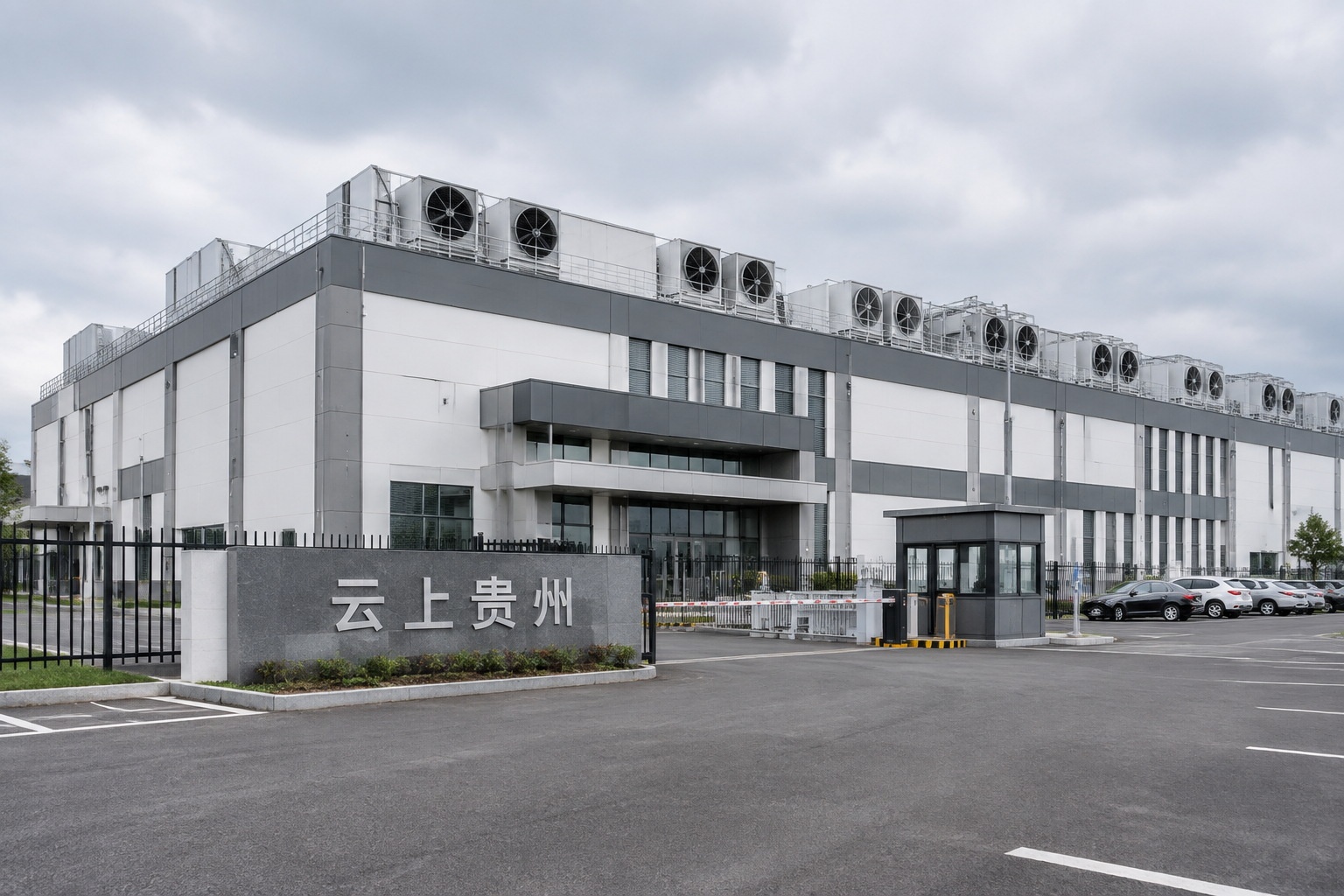
I asked an Apple user in Beijing how she felt about this. “I didn’t even know,” she said. She had noticed a notification saying that iCloud is operated by “云上贵州” but she didn’t click through. That’s the reality: most people don’t care where their data lives until something goes wrong. If you are an overseas reader, there’s no direct impact, only a glimpse into how tech globalization actually works. Your data is physical; it lives in buildings, on continents, inside the legal borders of a nation.
Guizhou, in turn, has embraced the change. Local residents I met don’t talk about data sovereignty. They talk about jobs. The data-center parks employ thousands of technicians, security staff, and maintenance crews. Hotels, restaurants, and housing have grown around them. In a province that used to rely on coal mining and tobacco, the digital economy is a rare source of optimism.
What the World Can Learn From Guizhou
Apple’s decision was not a fluke. It’s a textbook example of how a global company navigates local laws, environmental realities, and regional politics. In Europe, data centers often go to Scandinavia for cold weather and hydropower. In China, Guizhou plays that role. It’s a reminder that cloud computing is always a tug of war between physics, politics, and economics.
If you ever want to see the future, visit a place like Guiyang. Not the tourist spots, but the industrial outskirts. There, among the mountains, you’ll find rows of concrete buildings with thousands of blinking lights. It’s the modern equivalent of a coal mine or a grain silo — but the raw material is information, and the weather is doing a lot of the heavy lifting.
So the next time your iPhone asks you to back up to iCloud, think about the mountain breeze and the river that keeps that backup alive. In a world full of virtual clouds, it’s refreshing to know that it all still comes down to dirt, water, and air.
Start the discussion at forum.chinacomes.com