

Introduction
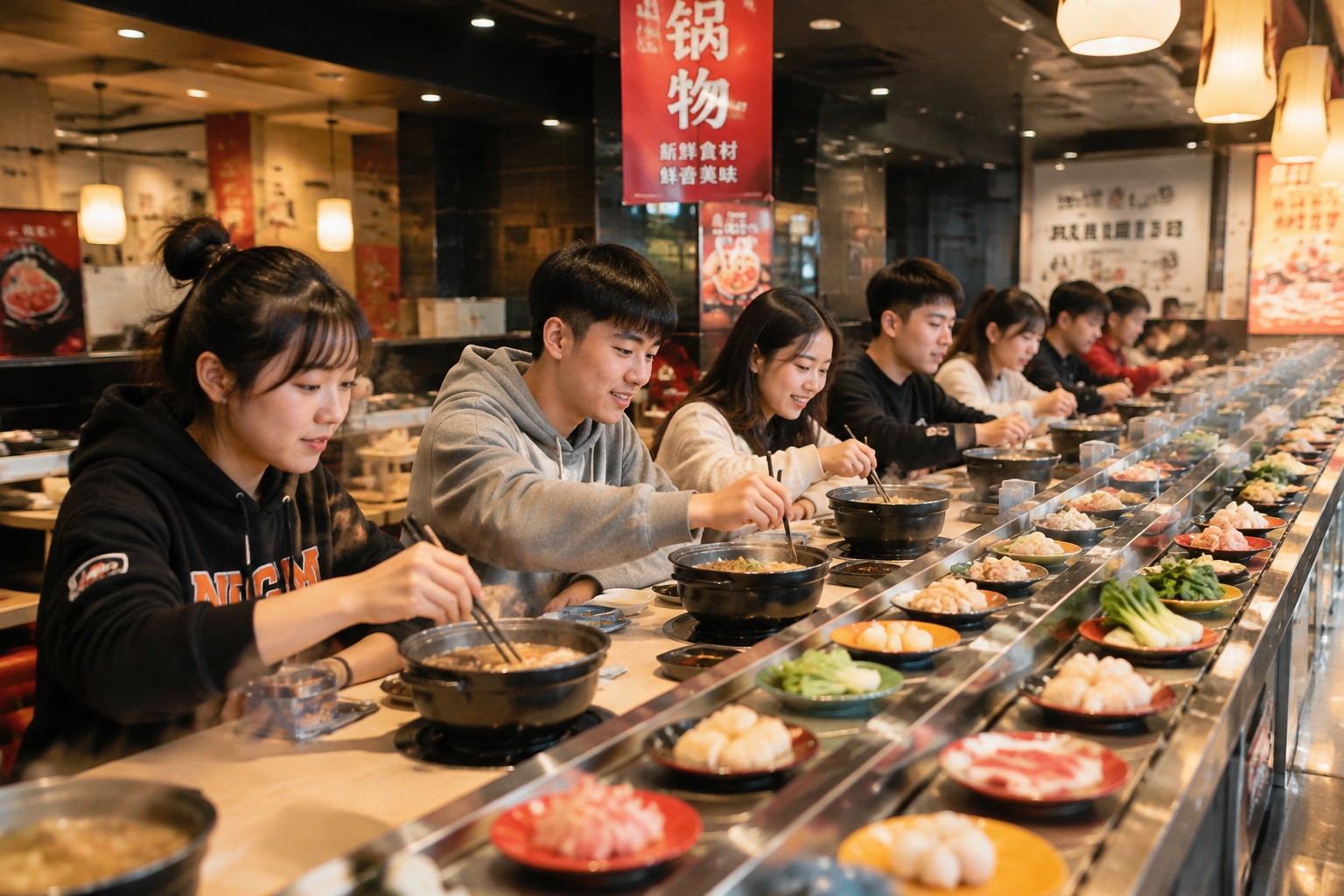
On a Tuesday evening in a bustling Beijing food court, 26-year-old Liu Yang slides onto a stool at a circular counter. In front of her, a conveyor belt slowly moves an endless stream of small plates—sliced beef, quail eggs, lotus root, enoki mushrooms. She picks what she wants, drops it into her personal pot of bubbling broth, and scrolls through her phone between bites. Around her, a dozen other diners are doing exactly the same. No one is waiting for company. No one feels out of place. This is the new face of dining out in urban China.
What Is Conveyor-Belt Hot Pot?
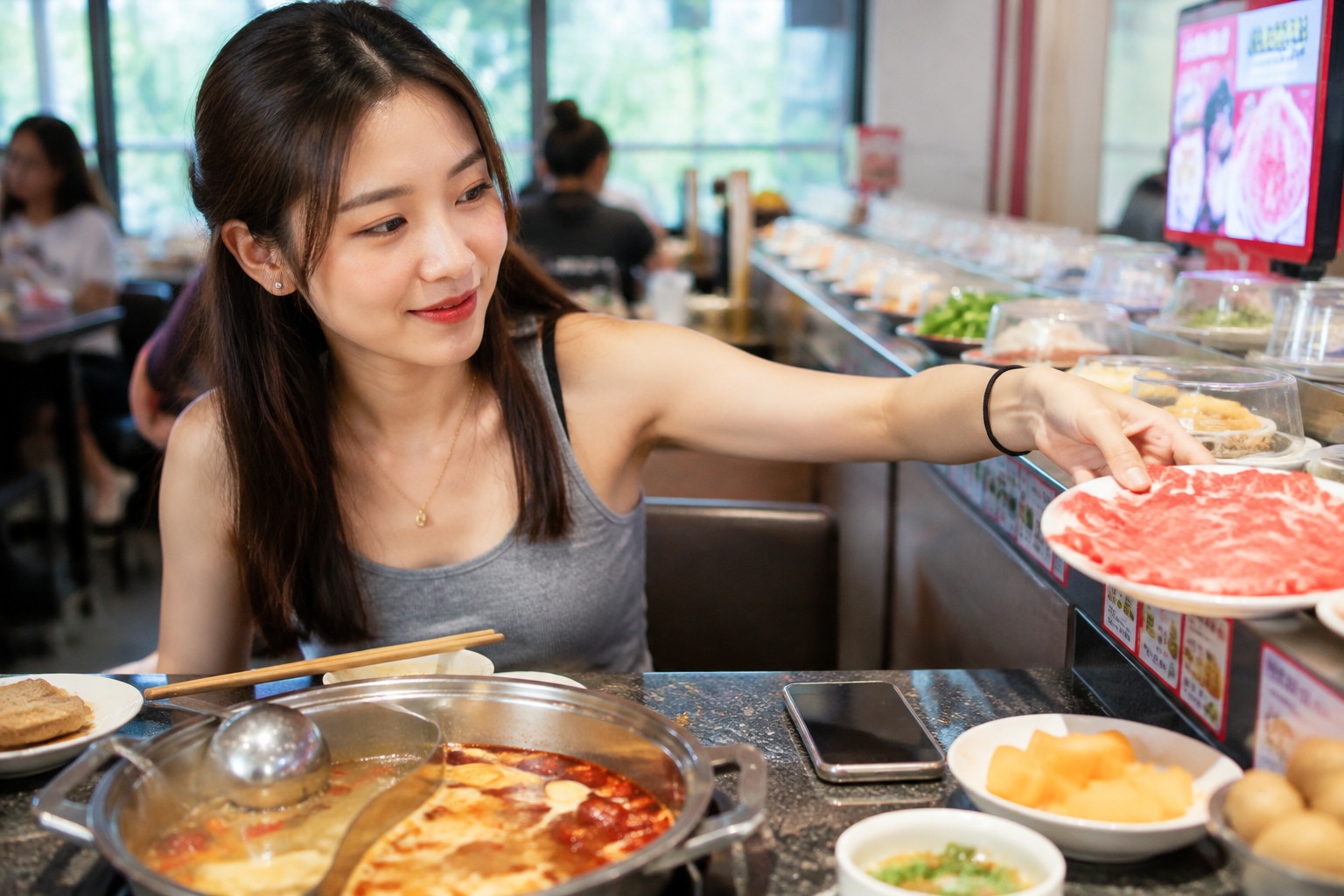
Hot pot is a beloved Chinese tradition, typically shared with friends or family around a large communal pot. But in recent years, a new format has taken the country by storm: the single-person hot pot restaurant, often featuring a conveyor belt. You sit at a counter, each person has their own small pot, and a belt carries dishes past your seat. You grab what you like, and pay by the number of plates at the end—usually color-coded by price. It’s fast, affordable, and perfectly sized for one.
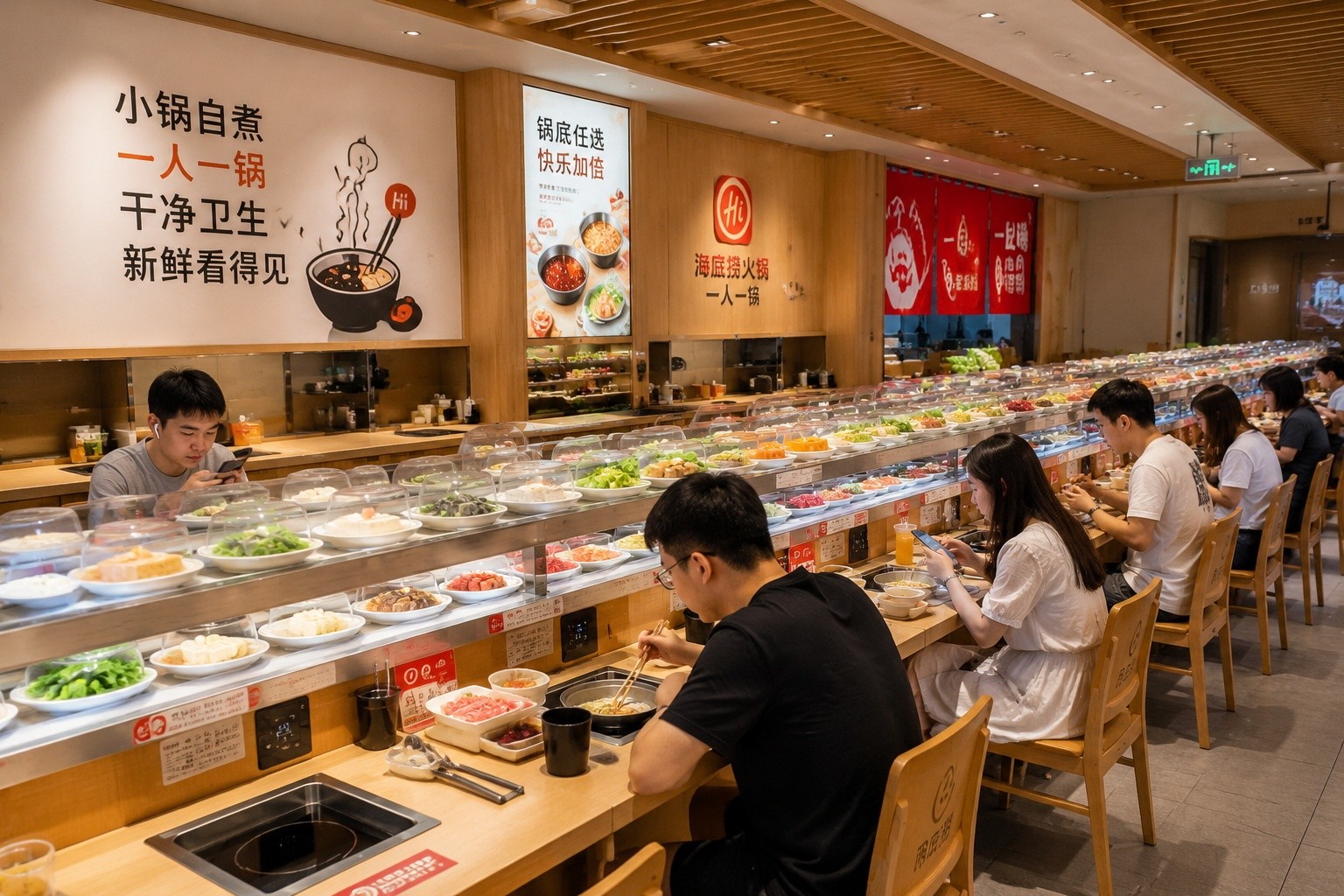
These restaurants are not just a novelty; they’ve become a booming business. Chains like Haidilao’s ‘U Food’ and local brands are expanding across the country, especially in cities like Shanghai, Chengdu, and Shenzhen. The model taps into a deep shift in Chinese social life.
The Rise of Solo Living—and Solo Dining
In China, the number of single adults is staggering. According to government data, there are over 240 million single people in the country, and the average age of first marriage is rising. Urbanization has uprooted many young people from their hometowns, leaving them in cities where they may not have a built-in social circle. Eating alone, once a source of awkwardness, is becoming a routine fact of life.
But unlike in the West, where eating alone can still feel like a statement or a sad cliché, Chinese young people are embracing it with a sense of empowerment. They call it ‘yī rén shí’ (一人食), or ‘one-person food.’ It’s a lifestyle choice, often documented on social media platforms like Xiaohongshu (RED) and Douyin. The hashtag #一人食 has billions of views, featuring videos of young people enjoying stylish meals by themselves, complete with aesthetic plating and a cozy vibe.
Why Hot Pot? The Perfect Solo Meal
Hot pot might seem like an odd candidate for solo dining—it’s traditionally a communal, boisterous affair. But the conveyor-belt model solves several problems. First, it’s affordable: a plate can cost as little as 3 yuan (about 40 cents), and you can eat a filling meal for 30-50 yuan ($4-7). Second, it’s flexible: you can control portions, try many different ingredients, and eat at your own pace. Third, it’s low-pressure: no need to negotiate with friends or worry about the bill splitting.
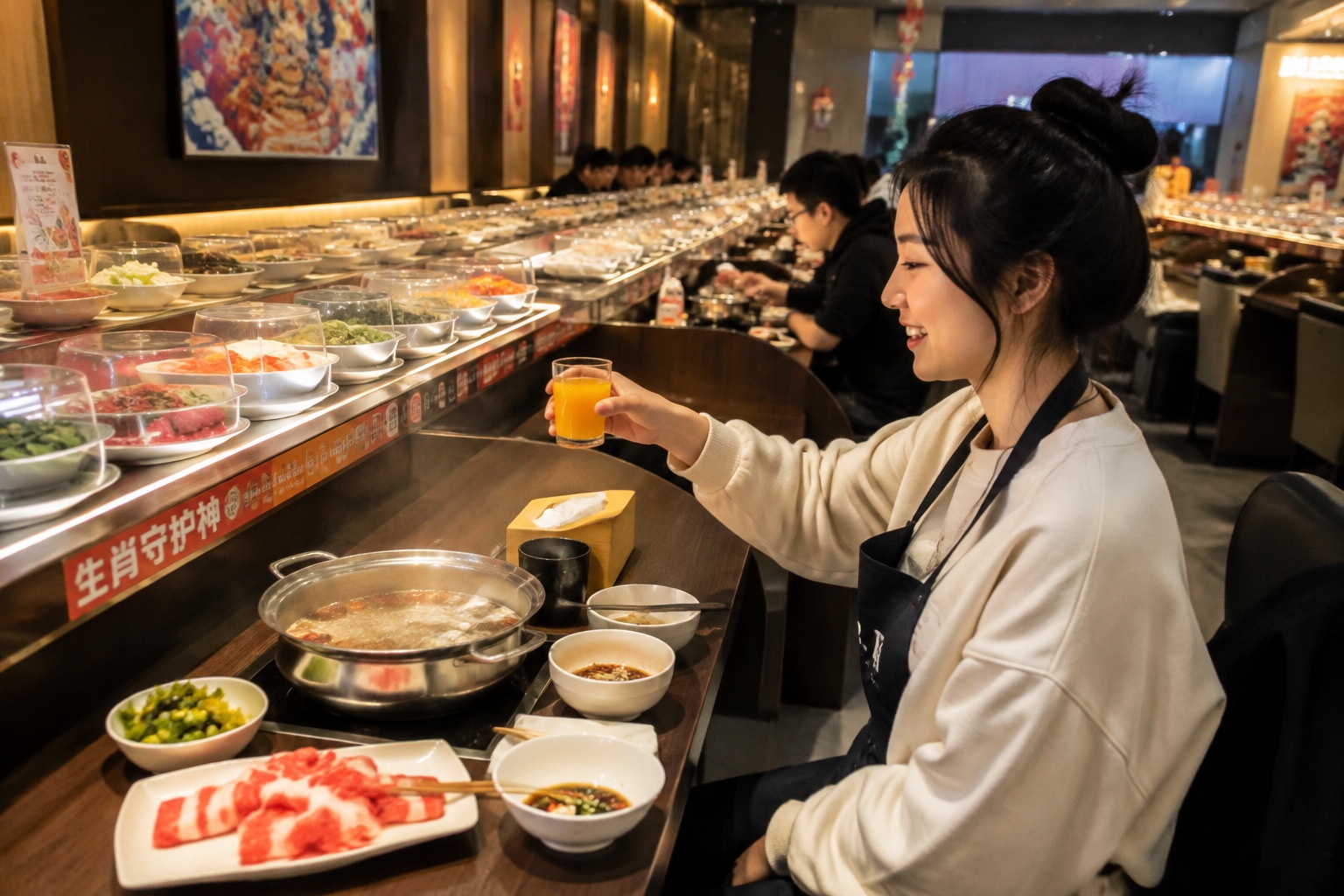
Also, the conveyor belt adds a playful, almost gamified element. You watch the plates go by, make quick decisions, and feel a little thrill every time you grab one. It’s like dining at a sushi-go-round, but hot pot style. The counter seating means you’re in a shared space, surrounded by other solo diners, creating a sense of ‘being alone together’—a vibe that feels less isolating than sitting at a table by yourself.
Breaking the Stigma of Eating Alone
In many Western cultures, dining alone can be socially awkward. You might get a pitying look from the host, or feel the pressure to bring a book or pretend to be busy. In China, the stigma is fading fast, thanks partly to the sheer number of people doing it. A 2023 survey found that over 60% of Chinese consumers eat alone at least once a week, and young people are driving the trend. Restaurants are adapting, not just with hot pot, but with ramen stations, barbecue counters, and even solo-friendly cubicles.
What’s fascinating is that solo dining here isn’t anti-social. In fact, it often becomes social. Diners at a conveyor-belt hot pot may chat with the person next to them, share a dipping sauce tip, or post a photo of their colorful plates to their social feed. The restaurant becomes a temporary community, united by the shared ritual of hot pot.
Technology and Convenience
China’s digital ecosystem amplifies the solo dining experience. Many hot pot restaurants integrate QR-code ordering and mobile payment, so you never need to talk to a server unless you want to. Some even have robotics to deliver side dishes. The whole process is seamless and ‘smart,’ aligning with the tech-savvy lifestyle of young urbanites.
Also, delivery apps like Meituan and Ele.me have normalized eating alone at home. But for those who crave the ambiance and the hot, bubbling pot, the conveyor-belt restaurant offers a middle ground—public yet private, communal yet individual.
Conclusion
In the West, solo dining is often seen as brave or lonely. In China, it’s just another option—and increasingly, the preferred one. Conveyor-belt hot pot has taken the loneliness out of eating alone by making it fun, affordable, and socially acceptable. It’s a testament to how a traditional cuisine can evolve to fit modern lifestyles, without losing its soul. So the next time you see a row of people happily slurping noodles in a tiny shop, know that they’re not just eating; they’re participating in a quiet social revolution that says: my company is enough.
Start the discussion at forum.chinacomes.com