
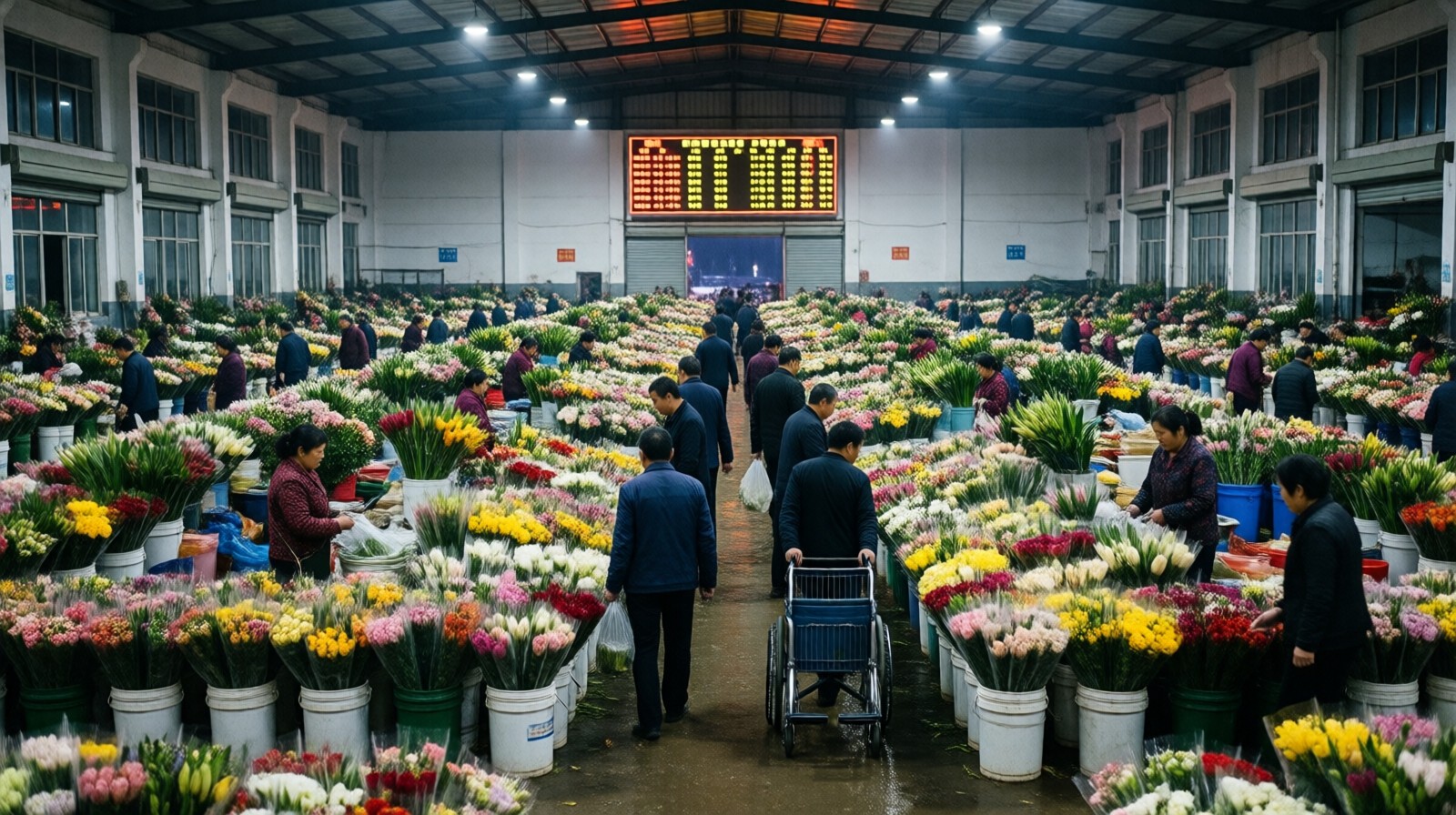

The Scene at 3 a.m.
It is 2:45 a.m. when a battered pickup truck rolls into the parking lot outside Kunming’s Dounan flower market in southwest China. Chen Hong, a 38-year-old flower grower from the nearby village, jumps out and pulls back a canvas tarp. His truck is filled with bundles of red roses, tightly wrapped and still cool from the night air. He and two workers haul them into a sprawling hall that glows under white fluorescent lights.
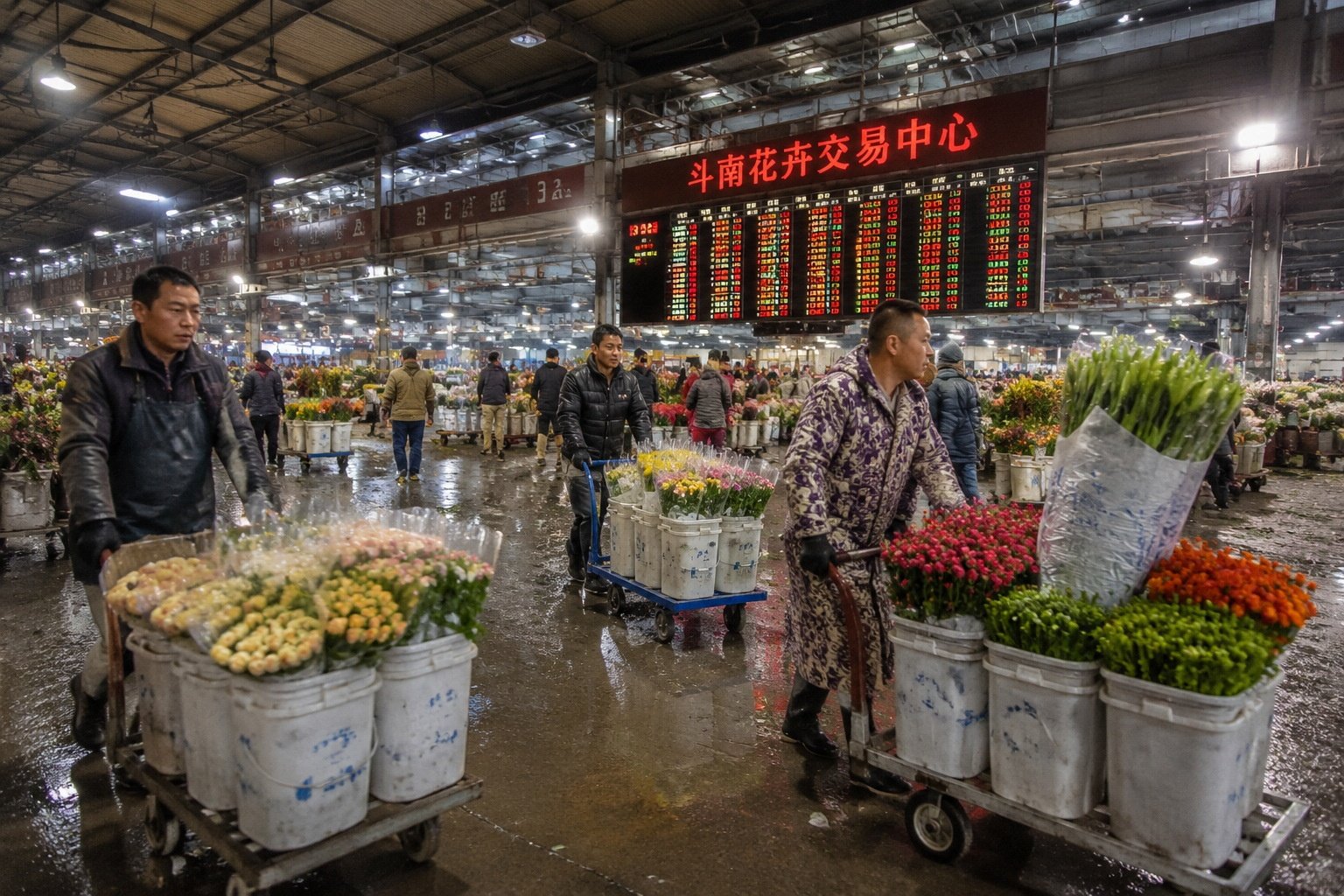
The hall is already crowded. Handcarts squeak, vendors shout prices, and the air is a mix of damp soil and sweet blossom. Workers stack cardboard boxes, rip open plastic bags, and set buckets of flowers in rows. On a giant LED board, prices flicker and fall in fast cycles. This is the daily rhythm of Dounan, the largest fresh-cut flower trading hub in Asia.
Every day, about 20 to 30 million stems of flowers are bought and sold here before sunrise. The market supplies cities across China and, increasingly, parts of Southeast Asia and the Middle East. In 2023, the market’s flower transactions totaled more than 9 billion yuan—about 1.3 billion US dollars.
Why Kunming? The Climate Advantage
Kunming didn’t become a flower capital by accident. The city sits at an altitude of roughly 1,900 meters, near the Tropic of Cancer. Its mild, spring-like climate year-round means flowers grow at a steady pace, and greenhouses are rarely needed. Yunnan province, where Kunming is located, produces about 70 percent of all fresh-cut flowers in China, and the vast majority are traded at Dounan.
There are other advantages. Kunming’s relatively cheap land and labor make it competitive, while the city’s airport, with direct flights to many domestic and international destinations, allows flowers to travel quickly. For fragile stems, time is money—a rose can lose several hours of vase life for every day it sits in a warehouse.
Beyond the domestic market, Yunnan’s flowers are now exported to countries such as Vietnam, Singapore, Thailand, and even the Netherlands. Thousands of flowers that start the day in Kunming soil end up on display at a supermarket in Bangkok or a wedding in Jakarta.
Inside the Auction Hall: Five Seconds to Bid
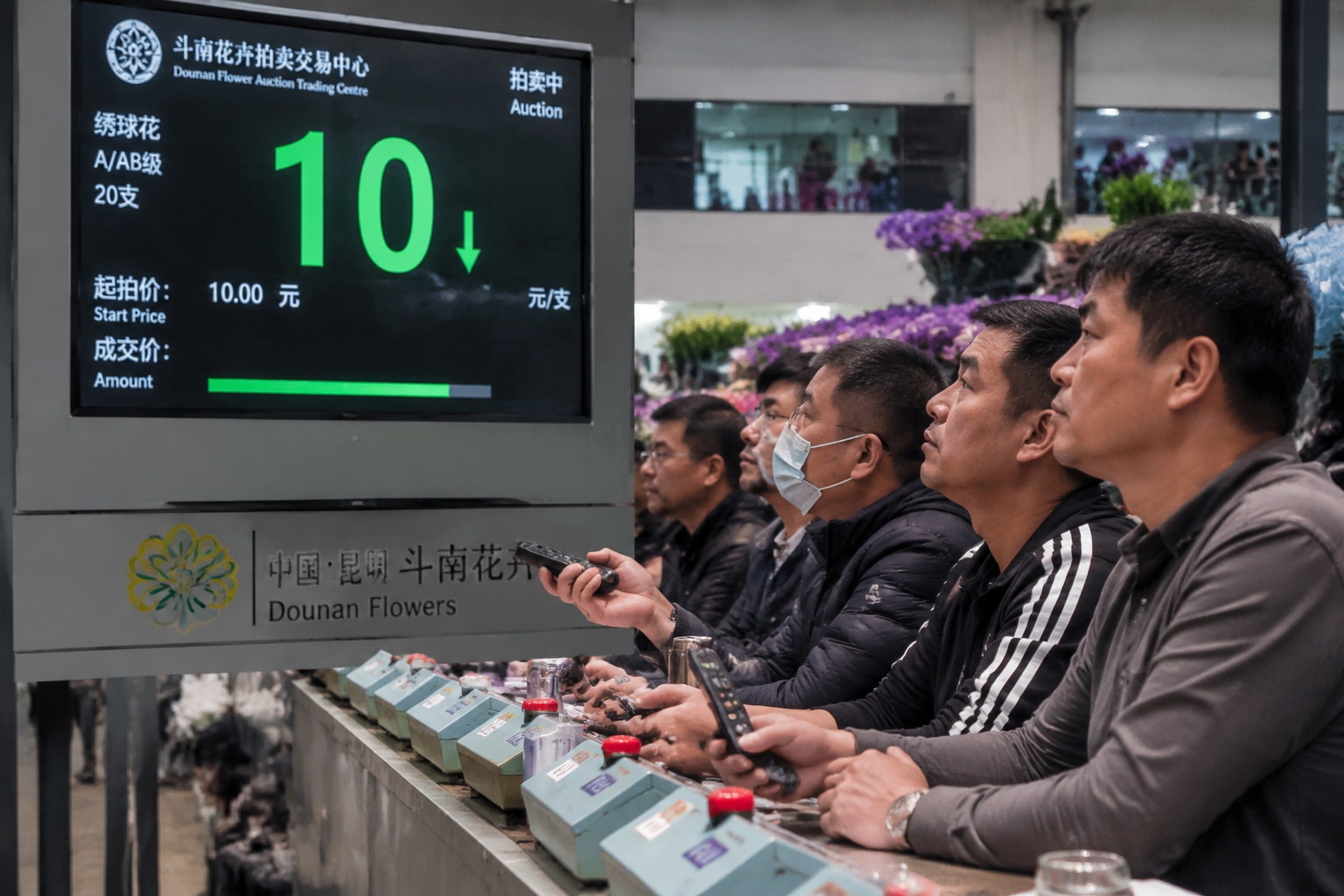
The core of Dounan is its auction hall, which resembles a giant classroom with rows of seats facing a wall of screens. Buyers—many in their 30s and 40s—sit hunched, holding small remote controls. The auction clock runs backward, starting high and dropping in price each second. When the price reaches a buyer’s threshold, he or she presses a button. The screen freezes, and the winning bid appears. The whole sale takes an average of three to five seconds.
It is an efficient system. On a typical morning, the auctioneers handle around 800 to 1,000 transactions an hour, according to market officials. Roses are the biggest category, followed by lilies and carnations. The price of a single stem can range from 0.1 yuan to more than 10 yuan, depending on variety, length, and freshness.
One buyer, who runs a chain of florist shops in Chengdu, says he has been coming to Dounan since 2008. “You have to be quick and precise,” he explains. “If you hesitate, someone else takes the lot.” He says his average purchase is about 20,000 stems per trip.
The Wholesale Chaos Outside
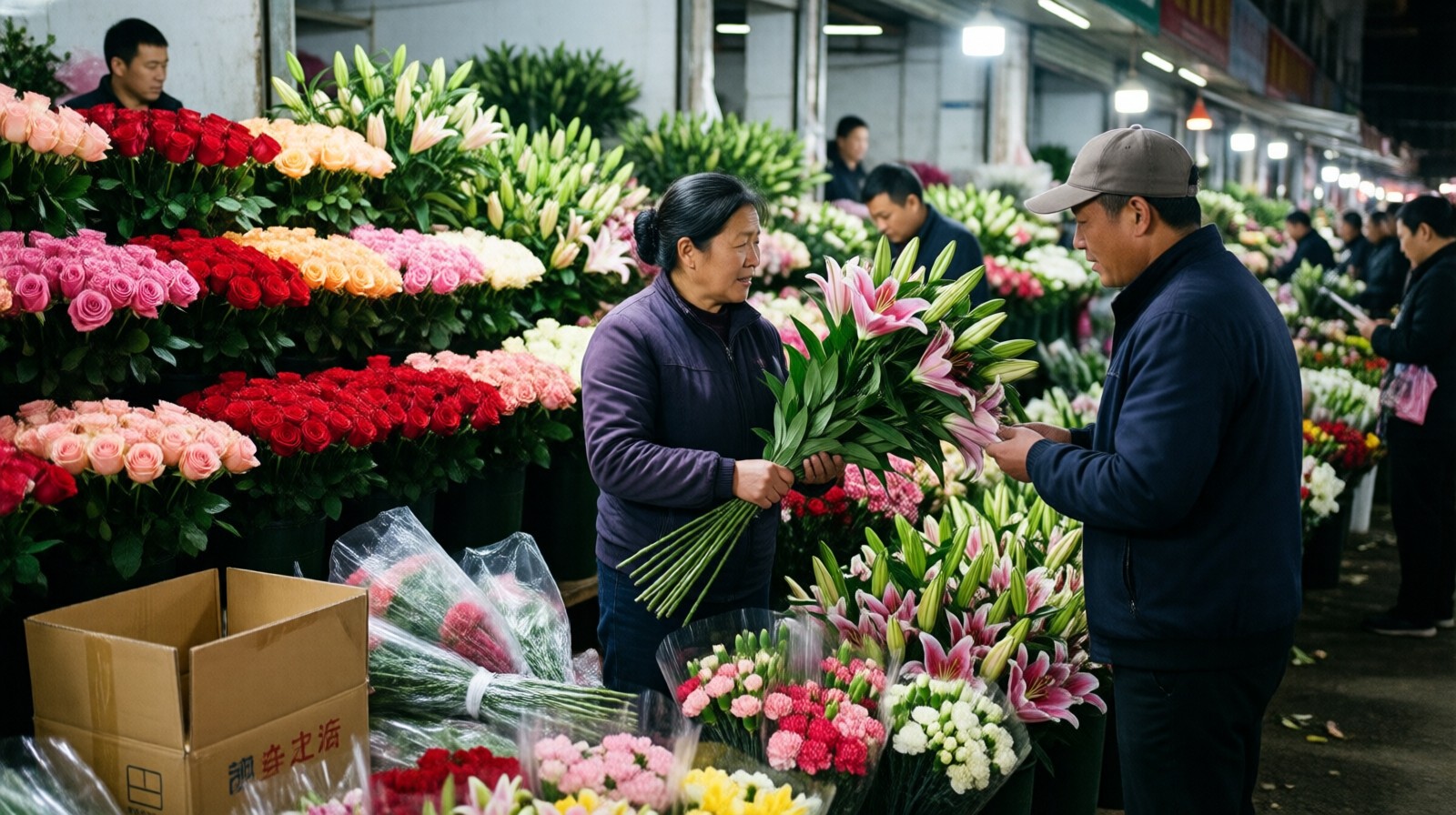
The auction hall is for high-volume buyers, but most traders operate in the sprawling wholesale section that surrounds it. Here, hundreds of stalls overflow with flowers. Sellers wrap bunches in plastic, shout prices, and negotiate with buyers who come from all over China. Some carry heavy bundles on their shoulders. Others use trolleys stacked two meters high. The floor is wet from melted ice and crushed petals.
Wholesale trade is direct, loud, and fast. A woman haggles over a crate of white lilies. Two porters load a van with bundles of chrysanthemums. In a corner, a young man using a tablet checks a live price list and orders dozens of boxes of pink carnations to send to his shop in Shanghai. The transaction is done in minutes.
The New Way: Selling Through Livestreams
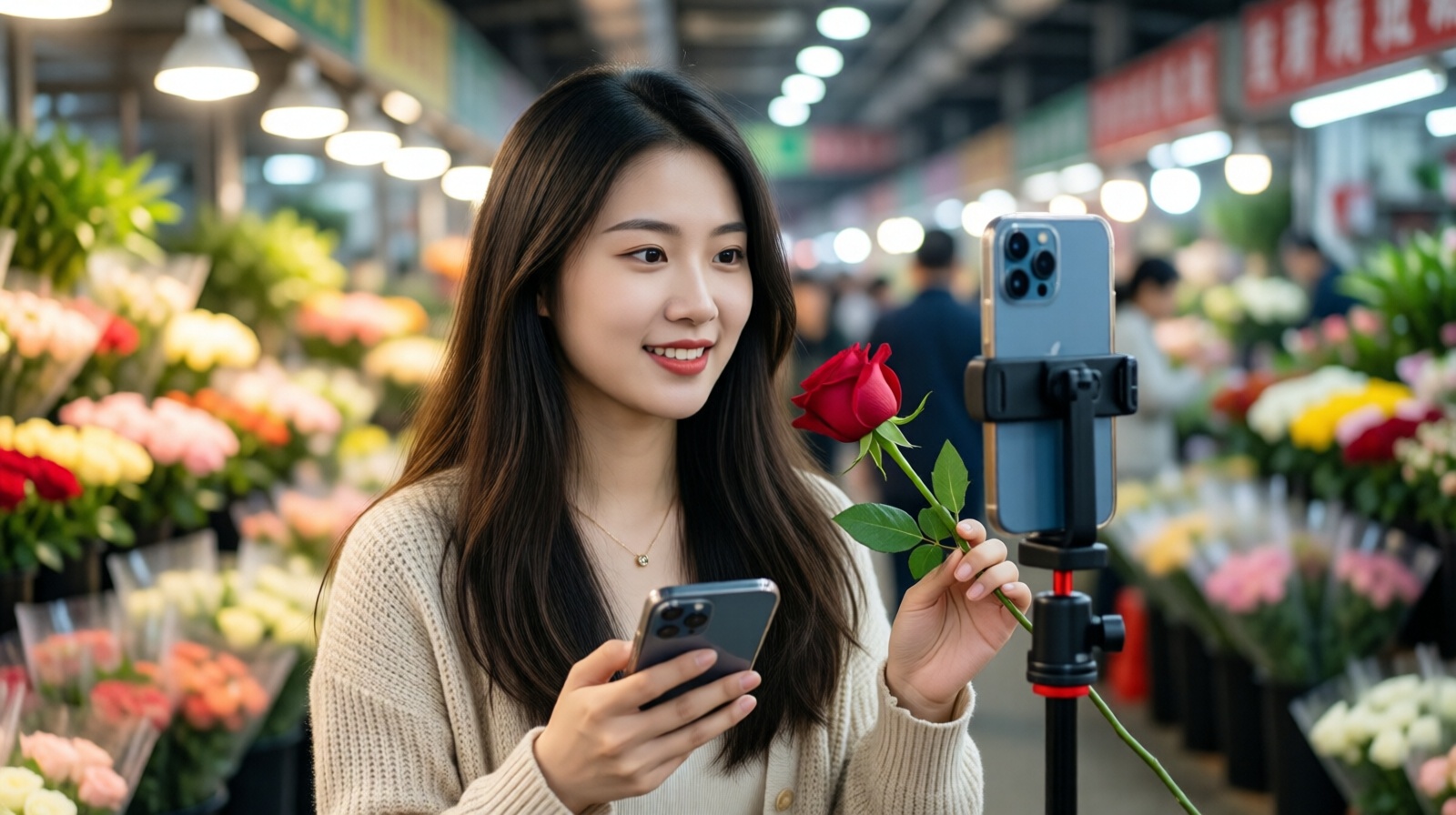
In the past decade, the flower trade has moved beyond the physical market. Amid the stalls, dozens of young sellers crouch over tripods, phones in hand. They are live-streaming. A woman picks up a rose, holds it to the camera, and praises its color. Viewers can ask questions in real time. One man walks through the market with a phone mounted on a stick, acting as a personal shopper for online customers.
“My daughter sits at home and does the selling on her phone,” says a grower in her 50s who has sold flowers at Dounan for over 20 years. “We ship directly from the farm.” During peak seasons, livestream accounts can sell thousands of orders in a single evening. China’s express delivery infrastructure—with refrigerated trucks, cold storage, and overnight services—makes this business model possible. A bouquet bought on a phone at 8 p.m. can arrive at a doorstep in Beijing the next afternoon.
This shift has attracted younger people to the flower industry. In a nearby warehouse, a group of college graduates pack orders for an online flower shop. One of them, 24-year-old Li Na, says, “We can reach customers directly and build a brand. It feels more stable than selling at the market.” She checks her phone: 300 new orders in the last hour.
The Realities Behind the Blooms
The flower trade is not as pretty as the product. Farmers like Chen Hong often wake up at 1 a.m. to cut flowers before dawn, then rush to market while the blooms are still tight. “There are good days and bad days,” he says, squatting next to his truck. “If the price is low, we lose money on labor.” He estimates his family earns around 60,000 yuan (about 8,500 US dollars) a year, depending on market swings.
Waste is another issue. Some flowers don’t sell and are discarded. In the wholesale area, a worker sweeps a pile of wilted stems into a bin. But even that waste finds a use: many flowers are composted and sold as fertilizer to the same farms they came from.
The market is also affected by broader economic trends. Rising fuel costs cut into profits, and extreme weather—like the heavy snowstorm in early 2024—can disrupt both flower supply and transport. Traders say they often live on thin margins.
When the Market Sleeps
By 9 a.m., the hustle is over. The auction hall is empty, the vendors have packed up, and the parking lot is quiet. The flowers have been loaded onto trucks and planes, heading to florists in Shanghai, Beijing, Singapore, and Dubai. In a few hours, a rose that was traded at dawn will sit in a vase in a hotel lobby or a small apartment.
Dounan is not just a market; it is a daily testament to how millions of flowers, and the people behind them, shape a routine that most city dwellers never see. For anyone paying attention, it reveals something important about modern China: the mixture of labor, technology, and commerce that makes even the most delicate things travel thousands of miles.
Start the discussion at forum.chinacomes.com