

A Fiber Like No Other
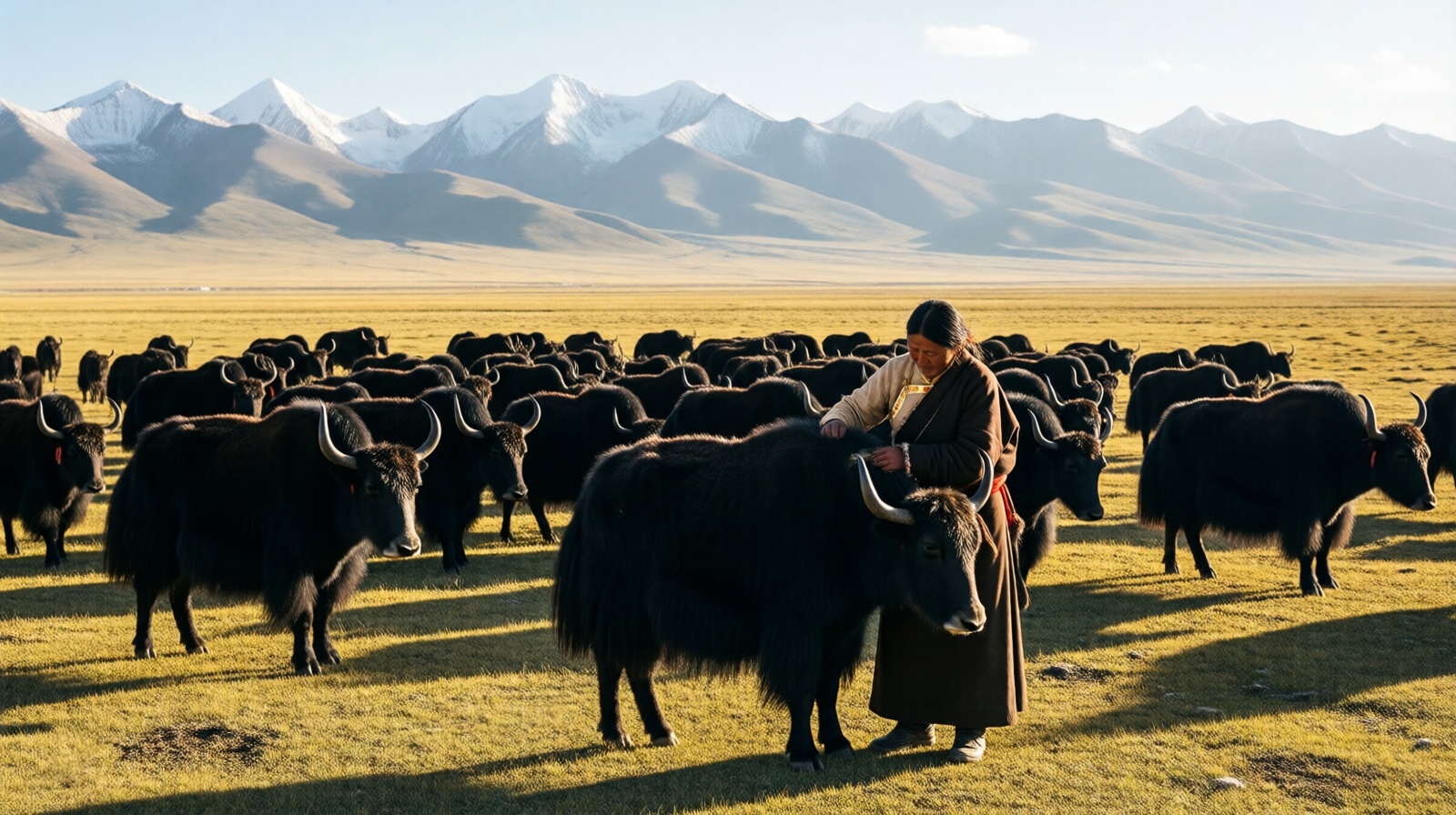
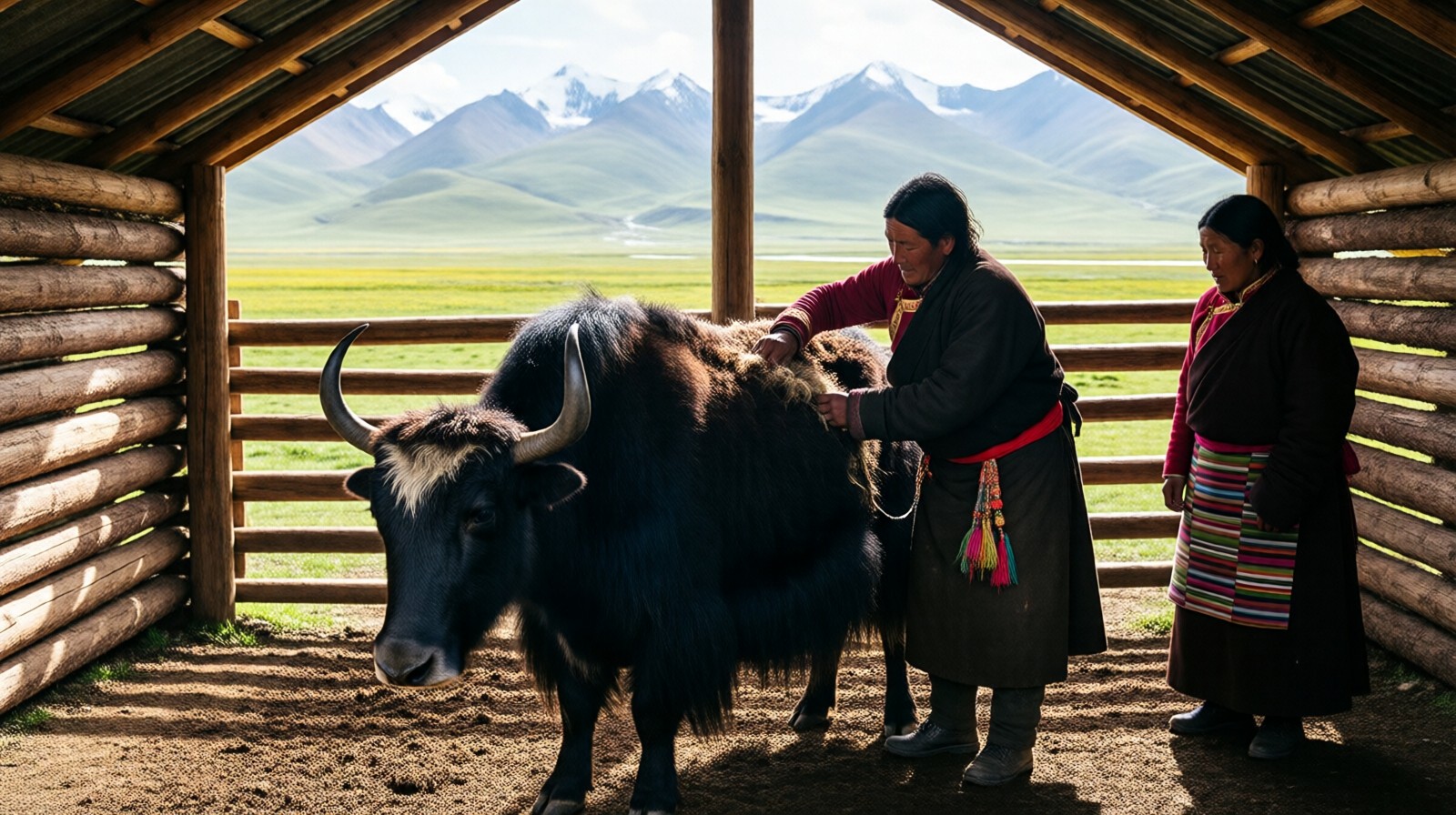
At 4,000 meters above sea level, oxygen is thin, and the sun is fierce. Yet every April, on the grasslands of the Qinghai-Tibet Plateau, a different kind of harvest begins. Herders like Tashi and his family spend days combing their yaks with wide-toothed iron combs, pulling out the soft, downy undercoat that the animals shed naturally for spring. It takes a full hour to groom a single yak, and the whole family can gather less than two kilograms of raw wool in a day.
This is the origin of yak wool — or more precisely, yak down, known locally as khullu. Compared to cashmere, which comes from goats, yak down is warmer, harsher, and rarer. A typical yak produces only about 100 grams of usable down per year, while a cashmere goat can produce 300–500 grams. And because more than 90% of the world’s 16 million yaks live on the Tibetan Plateau and surrounding highlands, the entire industry operates at elevations between 3,000 and 5,000 meters. There is no other textile supply chain on Earth that works so high.
For generations, this fiber was used only for utilitarian items: tents, ropes, saddle blankets. The coarse outer hair was simply discarded, and the fine down was often wasted or mixed with the coarse hair. But over the last two decades, a small group of designers, entrepreneurs, and herders have begun to turn this humble material into luxury goods that compete with the finest cashmere and baby alpaca.
From Tent Rope to Luxury Scarf
The transformation began with a simple observation: yak down, if carefully sorted and processed, could be as fine as 18–20 microns — close to high-end cashmere. That opened the door to weaving and knitting, not just felting.
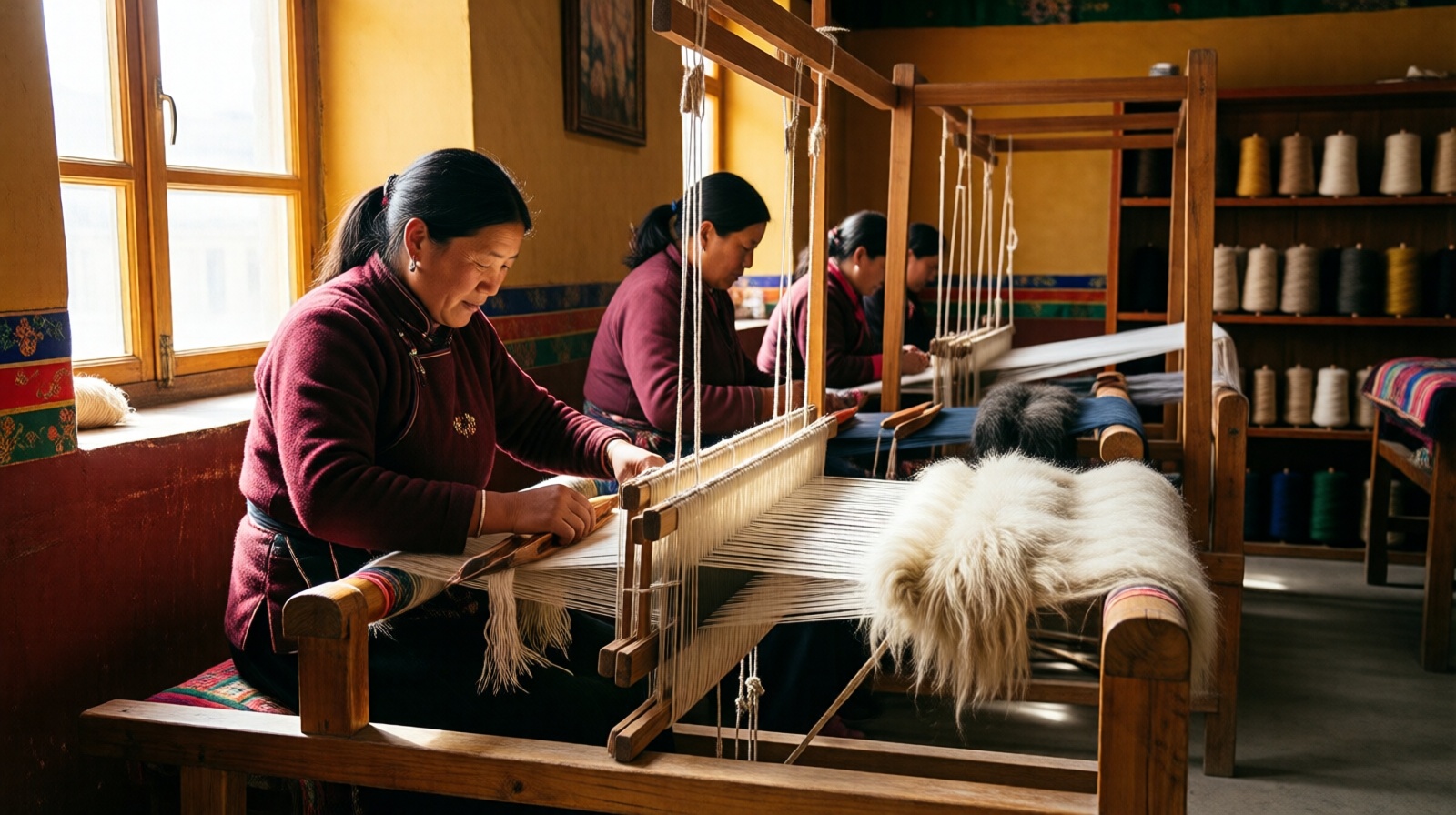
One of the pioneers is Norlha, a social enterprise founded in 2007 in Ritoma, a remote Tibetan village in Gansu Province at 3,200 meters. It was the brainchild of American-Chinese entrepreneur Kim Yeshi and her daughter Dechen Yeshi. They built a small workshop that uses traditional hand looms and natural dyes, but operates with modern quality control. Today, Norlha employs more than 130 local herders and their family members, most of them women. Its scarves and blankets sell for between $300 and $1,000 apiece, and the workshop has produced commissioned pieces for Hermès and other luxury houses.
Another major player is SHOKAY, founded in 2006. SHOKAY’s model is more decentralized: it works with dozens of herder cooperatives in Qinghai and Tibet, providing training and a guaranteed purchase price. After processing, SHOKAY sells finished knitwear under its own brand and also supplies yarn to other designers. Its products range from $80 hats to $300 sweaters, making yak wool more accessible to a broader audience.
These brands have shown that yak wool is not a niche oddity but a terrain with real commercial potential. Global demand for sustainable, traceable animal fibers is growing, and the “high-altitude” story adds an irresistible halo.
The Long Road of Transformation
Turning rough hair into a silky scarf is a multi-step puzzle. After the down is collected, it must be sorted by color — natural shades of brown, gray, and white each have different values. Then comes the dehairing process, where coarse guard hairs are removed. This used to be done by hand for weeks; now, proper mills use carding machines, but many workshops still rely on skilled pickers to ensure purity.
Scouring is equally delicate: yak wool is rich in natural grease, which must be removed with mild detergents and warm water, without shrinking or hardening the fiber. At Norlha, workers monitor the temperature by hand because the water in Ritoma is hard and the altitude affects boiling points. After scouring, the wool is spun into fine yarns, often blended with silk or Merino wool to add strength and elasticity.
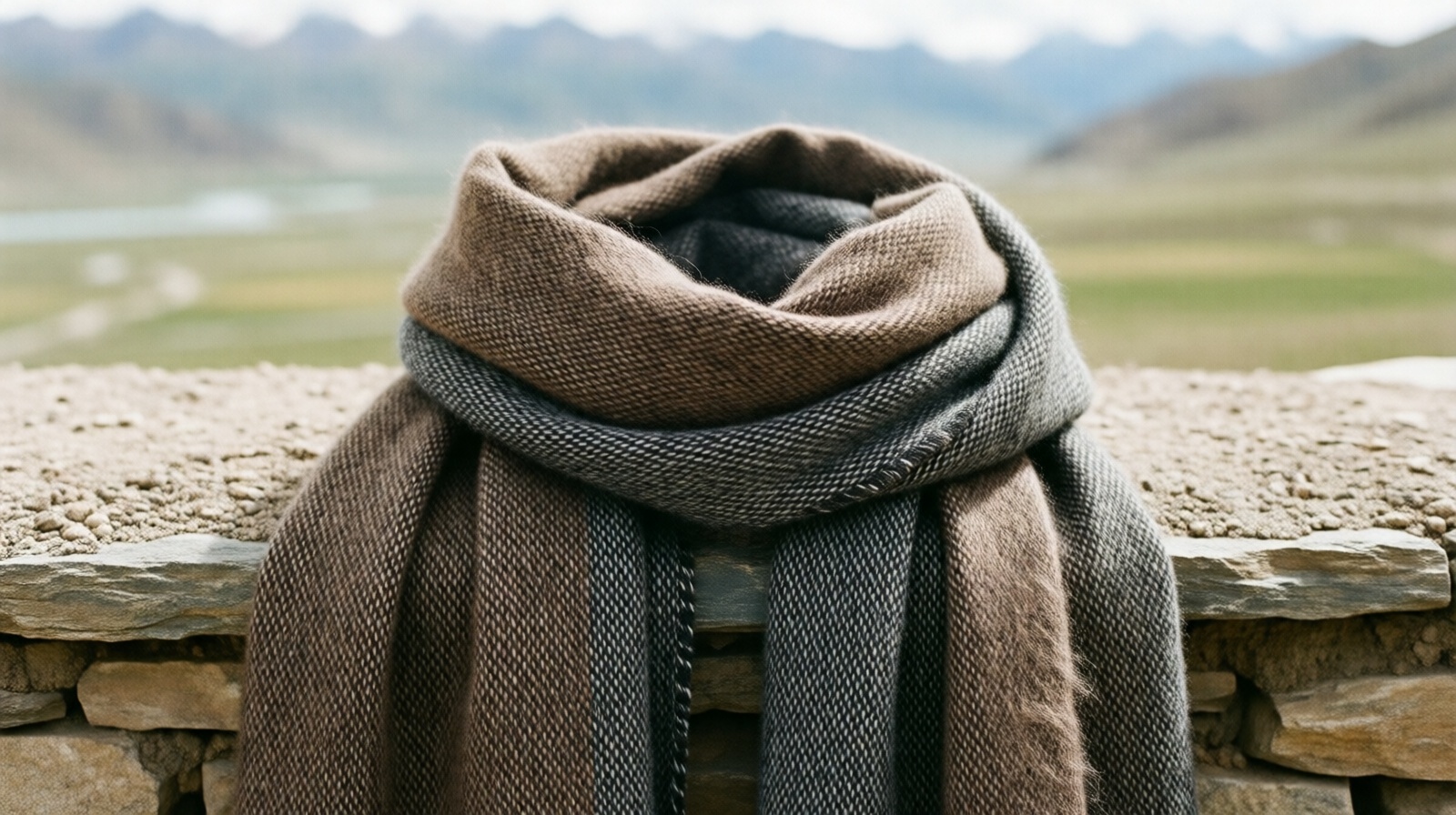
But what truly creates value is the finishing. Instead of chemical softeners, Norlha uses a traditional technique called milling — the fabric is hand-rubbed with wooden rollers until the surface becomes supple and slightly felted. This gives the textile a unique, peach-like texture that cannot be replicated on an industrial line. The process takes a full day for a single scarf, which is why the products carry such a price tag.
Design matters too. Some workshops have invited designers from Paris and Tokyo to create patterns that blend Tibetan motifs with global aesthetics. Others have revived ancient weaving techniques that had almost disappeared, giving local weavers a sense of pride and purpose.
Challenges Above the Clouds
Despite the success stories, the industry faces serious obstacles. The first is cost. Collecting 100 grams of down requires handling a 400-kilogram yak, and the labor is intense. For a herder, selling raw down earns maybe $5–$10 per kilogram after sorting — but after processing, that same kilogram can become a scarf worth $500. The gap is where the middlemen and processors make their profit, and most herders receive only a small fraction of the final retail value.
Second, the supply of down is limited. Because yaks are not milked or sheared like goats, the down must be collected during the natural molting season. If herders shear too aggressively, the animal suffers. Sustainable collection requires time and care, and it is not easy to scale.
Third, competition is fierce. Cashmere is cheaper and well-established, and new bio-fibers like Tencel or recycled polyester are often promoted as more modern. Yak wool brands must continuously prove that their luxury is worth the money.
Finally, climate change is altering the landscape. Grassland degradation in parts of Tibet and Qinghai reduces pasture capacity, forcing herders to reduce livestock numbers. That means less yak down in the future, and higher prices.
A Quiet Revolution for Herders
Perhaps the most profound impact is social. In the Tibetan villages where these workshops operate, women often have few employment opportunities beyond household chores and tending animals. Norlha’s workforce is 80% female, and many of these women have become the primary breadwinners. They earn monthly salaries of 2,500 to 4,000 yuan (about $350–$550), which is significant for a rural region. They also receive health insurance, paid maternity leave, and annual bonuses.
For Lhamo, a 29-year-old mother of two at Norlha, the job changed her life. “Before, I depended on my husband’s income from selling yaks. Now I have my own money, and I can pay for my children’s education,” she says. She has also learned new skills, such as pattern drafting and dyeing with plant-based colors.
The workshops have also created a reason for young people to stay. In Ritoma, fewer teenagers are leaving for big cities. Some, like Tsering, 24, returned after earning a degree in business administration to work in Norlha’s marketing department. “My grandmother taught me to weave when I was 15. I thought it was a dead-end skill. Now it’s a global brand,” he says.
What’s Next
The future of yak wool lies in authentic sustainability. Today, several cooperatives are experimenting with RFID tags and blockchain records that allow customers to trace a scarf back to the exact herder who combed the yak. This kind of transparency commands a premium, especially among young consumers in Europe and North America.
Digital selling is another frontier. When the pandemic killed tourism and export fairs, workshops quickly leapt onto live-streaming e-commerce. In one 2021 live session from a Tibetan studio, Norlha sold over 200 scarves in 40 minutes — more than a typical month’s revenue from the old wholesale model. WeChat mini-programs and content-driven social media now drive a growing share of sales.
Governments, too, are paying attention. Some provincial programs now provide subsidies for wool processing equipment, and vocational schools in Gannan and Qinghai have started textile training classes tailored to yak wool.
But at heart, the upgrade is an act of imagination. It says that a material once considered too rough for clothing can become a symbol of craftsmanship and culture. For the herders who tend yaks across the roof of the world, it is a quiet but powerful way to be seen — and to hold the world’s attention, one strand at a time.
Start the discussion at forum.chinacomes.com