

Morning in Shanghai, Harvest in Tibet
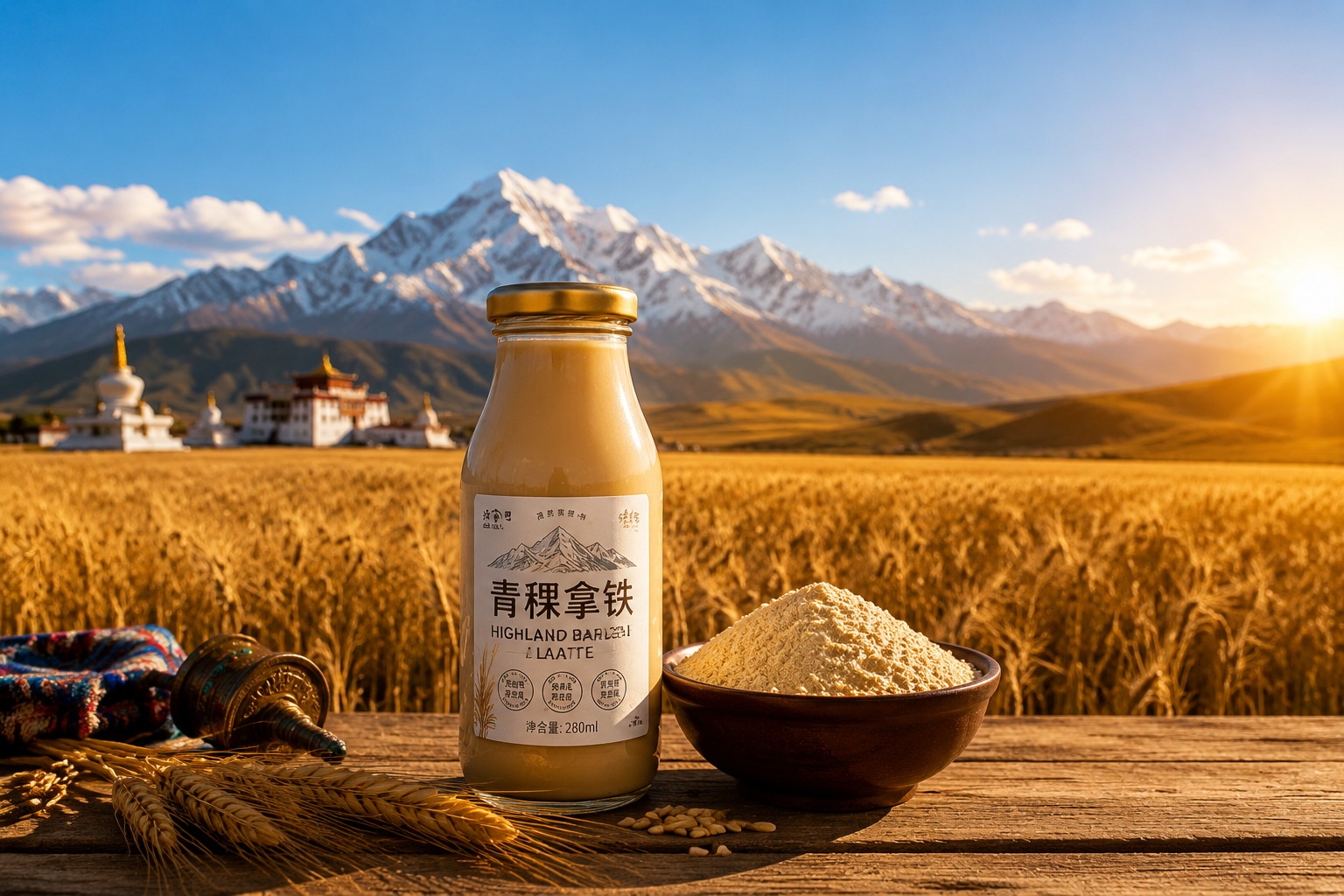
On a Tuesday morning in Shanghai, a young office worker grabs a cold bottle of “highland barley latte” from the convenience store shelf. The drink is creamy, slightly nutty, and entirely new to her. She doesn’t know much about the grain inside, only that it sounds healthy. Three thousand kilometers away, in the fields outside Lhasa, farmers are harvesting the same plant—a hardy cereal that has fed Tibetans for centuries.
Meet highland barley, or qingke in Chinese. It’s an ancient form of hull-less barley, grown at altitudes where most crops refuse to grow. For centuries, it was the base of tsampa, the roasted barley flour that Tibetan nomads mix with butter tea. But in the past few years, qingke has quietly moved beyond the plateau. It appears as cereal flakes in Beijing apartments, as a “super grain” in some Chinese fitness circles, and as an experimental ingredient in urban bakeries. This is the story of how a rural staple is being reinvented as a modern health food—and whether it can follow the path of quinoa.
A Grain Born on the Roof of the World
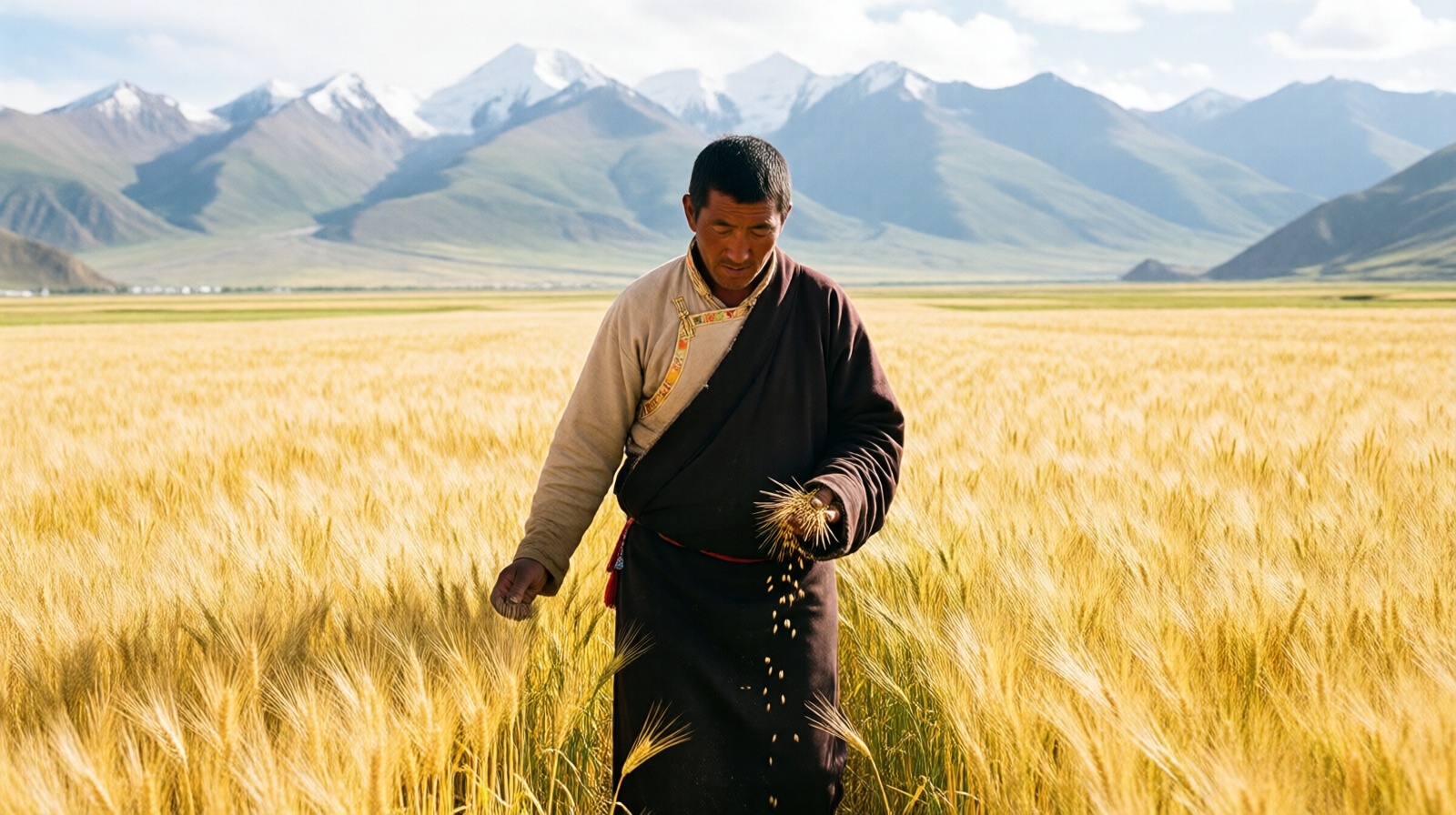
Highland barley is not the barley you know from beer or bread. Botanically, it’s a variety of naked barley (Hordeum vulgare var. nudum) that yields grains that easily shed their husks. It thrives in the thin air and intense sunlight of the Qinghai-Tibetan Plateau, where temperatures can swing from scorching to freezing in a single day. For Tibetans, barley is not just a crop—it’s a cultural foundation. Tsampa is eaten at every meal, offered in rituals, and even used as a greeting gesture.
Because it grows at 3,000 to 4,500 meters above sea level, highland barley was largely unknown beyond the region. It was considered a local food, not a commodity. That began to change when Chinese agricultural researchers and food companies started looking for new healthy grains for a fast-aging, diabetes-prone population.
Why Highland Barley is a Superfood in Training
Quinoa got famous for its complete protein. Highland barley’s claim to fame is different: fiber, and more specifically, beta-glucan. This soluble fiber, also found in oats, has been shown in clinical studies to reduce cholesterol and moderate blood sugar. Several studies on highland barley found beta-glucan levels ranging from 3 to 8 percent—significantly higher than regular barley and comparable to or exceeding oats. It also has more total dietary fiber than most whole grains, plus minerals like magnesium, iron, and zinc.
Its glycemic index is low, which makes it appealing to people with type 2 diabetes—a condition that affects more than 10% of Chinese adults. That’s a big reason why the Chinese government has been promoting highland barley in public nutrition campaigns and why food companies see an opportunity.
The grain also has a subtle flavor that works in both sweet and savory dishes. In Lhasa, some local eateries now serve tsampa-based granola, while pastry shops in Chengdu sell cookies made with qingke flour. It’s not just a health food; it’s becoming a culinary curiosity.
Modernizing the Ancient: Science, Policy, and New Products
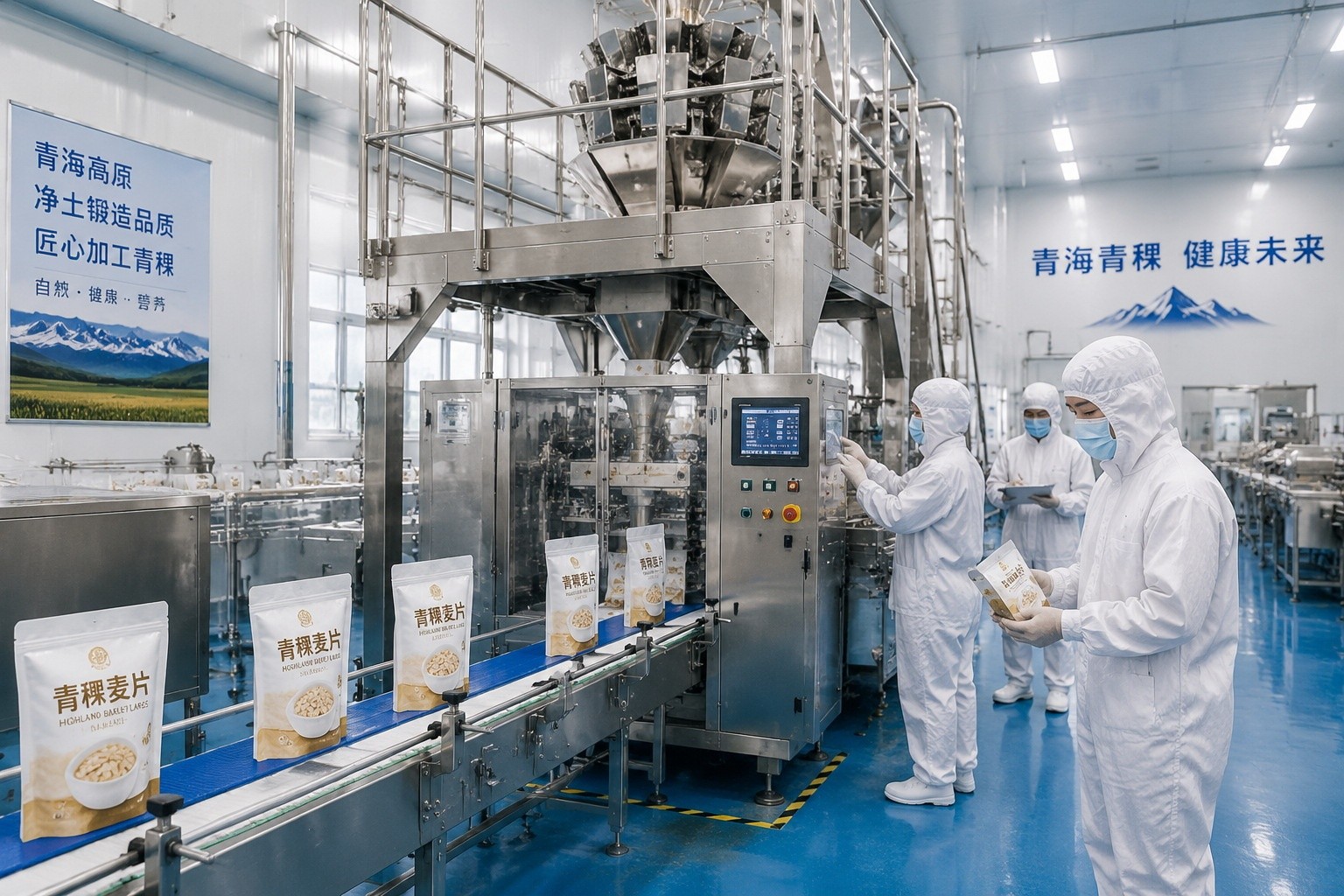
The most visible change is in processing. For centuries, people ate barley as flour. Now, factories are turning it into intact grains that cook like rice, into flakes, puffed snacks, flour for noodles, and even ready-to-drink coffee-style beverages. In Lhasa, a food processing company uses technology like micronization to make the grain faster to cook while preserving nutrition. You can now buy “qingke rice” in supermarkets—pearled barley that looks, cooks, and tastes like rice but with more fiber.
New agricultural breeds are also part of the story. Scientists at the Tibetan Academy of Agricultural and Animal Husbandry Sciences have been selecting varieties with higher beta-glucan content, better yields, and shorter stalks—easier for machines to harvest. One improved line, Zangqing 17, is now widely planted in the region. According to Chinese trade data, the country’s highland barley output has grown steadily after decades of expansion, now exceeding 2 million tons per year.
Policy has played a big role. The Chinese government designated highland barley as a “regional characteristic industry” in its poverty-alleviation and rural-vitalization programs. That means subsidies for processors, training for farmers, and easier access to loans. In less than a decade, dozens of small qingke-processing factories have opened across Qinghai and Tibet, producing everything from noodles to energy bars.
How Chinese Consumers Are Meeting Highland Barley
For urban residents, highland barley is slowly entering everyday life. Walk into a well-stocked Sams Club or a specialty food store in Shanghai, and you’ll see bags of “Tibetan highland barley” rice, priced like a premium grain. On e-commerce platforms like JD.com, sales of qingke-based foods have grown by double digits year after year. Some fitness influencers mention it as a low-GI alternative to white rice. The government’s dietary guidelines have also listed whole grains as a recommended component, and highland barley often appears as a highlighted example.
The taste is a source of curiosity. Some people describe it as chewy, with a mild nutty flavor. It works well in congee and rice mixes. For young people, the novelty matters: posting a picture of a “barley bowl” on Xiaohongshu (the Chinese version of Instagram) signals a healthy lifestyle. In the city of Xining, there is a small chain of teahouses that sells highland barley tea, a warm drink that feels both rustic and modern.
Farmers are feeling the shift, too. In some villages, barley now generates income not just as food but as a raw ingredient for cosmetics and health supplements—though that market is still small. One cooperative leader in Qinghai told a news reporter that the price of high-quality barley has doubled in five years. A farmer named Wang Duo, growing barley near Xigatse, says his family now earns more from one hectare of barley than their parents earned from three.

Lessons from Quinoa: Could Highland Barley Go Global?
It’s hard to talk about ancient grains becoming superfoods without mentioning quinoa. In the 2010s, quinoa went from a staple of Andean farmers to a darling of health-conscious eaters in America and Europe. The United Nations even declared 2013 the International Year of Quinoa. Prices soared, and production boomed across the Andes. The grain’s success was partly a story of clever marketing: “ancient Inca supergrain” sounded irresistible.
Highland barley has some of the same raw ingredients: a romantic alpine origin story, distinctive taste, and proven nutrition. But there are big differences. Quinoa got early adoption by Western organic-food movements. Highland barley is still largely a domestic product in China, with little global awareness. Export volumes are tiny, and most of the supply is consumed internally. It also contains gluten, which may exclude it from gluten-free markets—though it’s lower in gluten than wheat.
Still, several factors could help it travel. Chinese food companies are increasingly looking outward, and the Belt and Road network has strengthened ties with countries like Nepal and Pakistan, where similar barley varieties exist. The global demand for alternative grains that reduce blood sugar is rising. The grain’s high beta-glucan content could appeal to oat lovers looking for something new. And there is a growing trend among Western foodies to seek out “heritage grains” with a story.
But there are hurdles. Production is still limited by plateau geography and a short growing season. The price per ton is higher than conventional oats or barley. And there is no “Andean farmer” narrative easily translated into a China-led story. For qingke to become a worldwide superfood, Chinese exporters and food companies will need to invest heavily in branding and quality control—much like what Peru and Bolivia did for quinoa.
What’s Next for This Ancient Grain?
Could highland barley become the next quinoa? The honest answer is: maybe, but it will take a lot of work. Domestically, it’s already succeeding. The convenience-store latte you saw in the opening scene is a real product sold by a Chinese beverage chain. The domestic market alone can support the growth of highland barley. International success will depend on whether the current wave of “healthy grain” hype moves beyond Asia.
One morning, you might open a packet of granola and see “highland barley” on the label. It will taste like a piece of history—but one that was carefully modernized for today’s needs. Until then, you can taste it in the tea houses of Xining, in the bakeries of Chengdu, and in the bottles of a Shanghai convenience store. The ancient grain has already begun its journey.
Start the discussion at forum.chinacomes.com