

A Morning at the Control Room
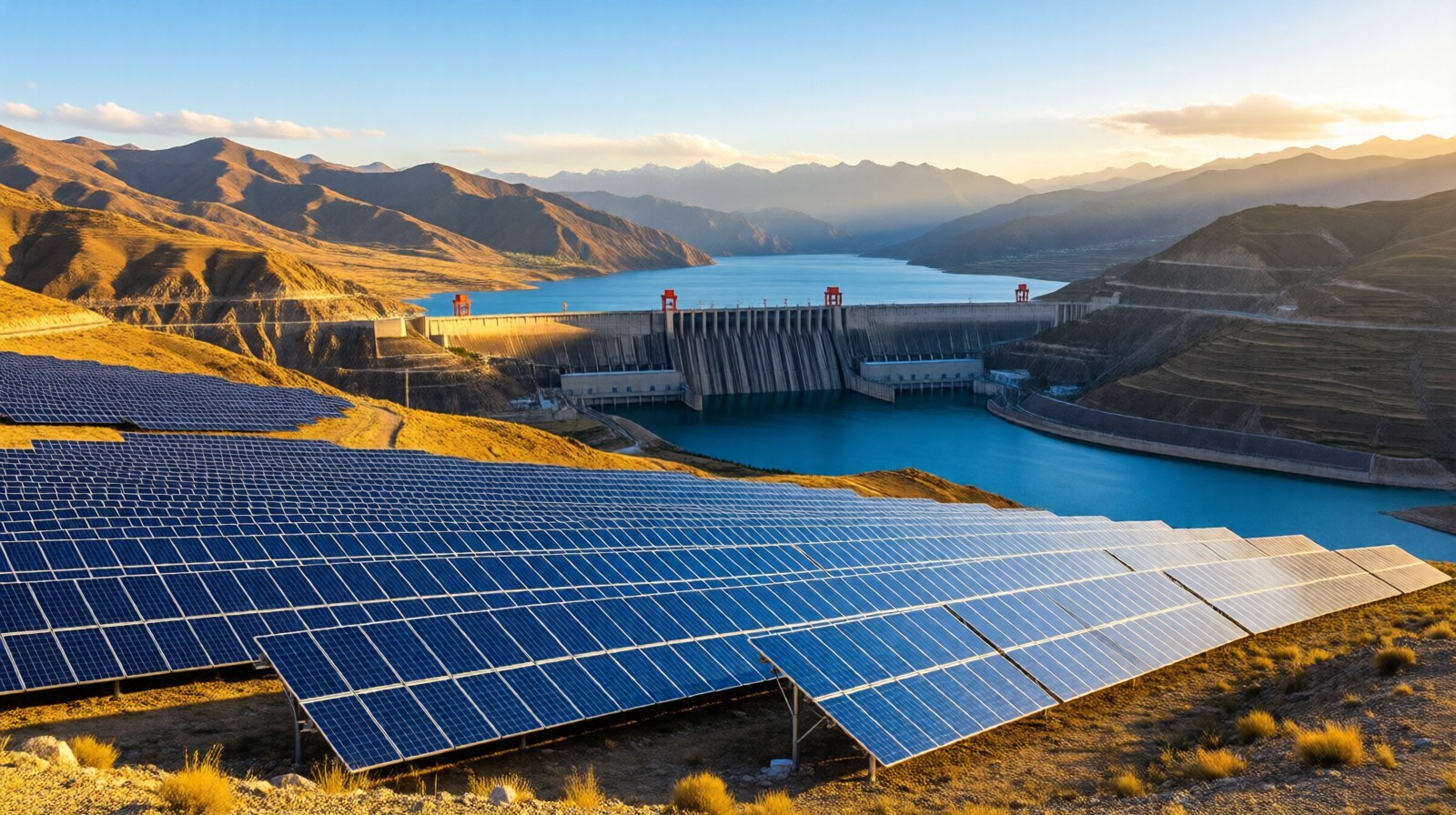
At 8:30 in the morning, Ma Jun, a 42-year-old electrical engineer, is already sitting in front of a row of screens in the Longyangxia hydropower plant’s control room. On one screen, a curve shows solar power surging with the rising sun. On another screen, a second curve dips, as the hydropower turbines automatically reduce their output. This is not a simulation. It is the daily dance of the world’s largest water-solar hybrid plant, sitting on the edge of the Tibetan Plateau.
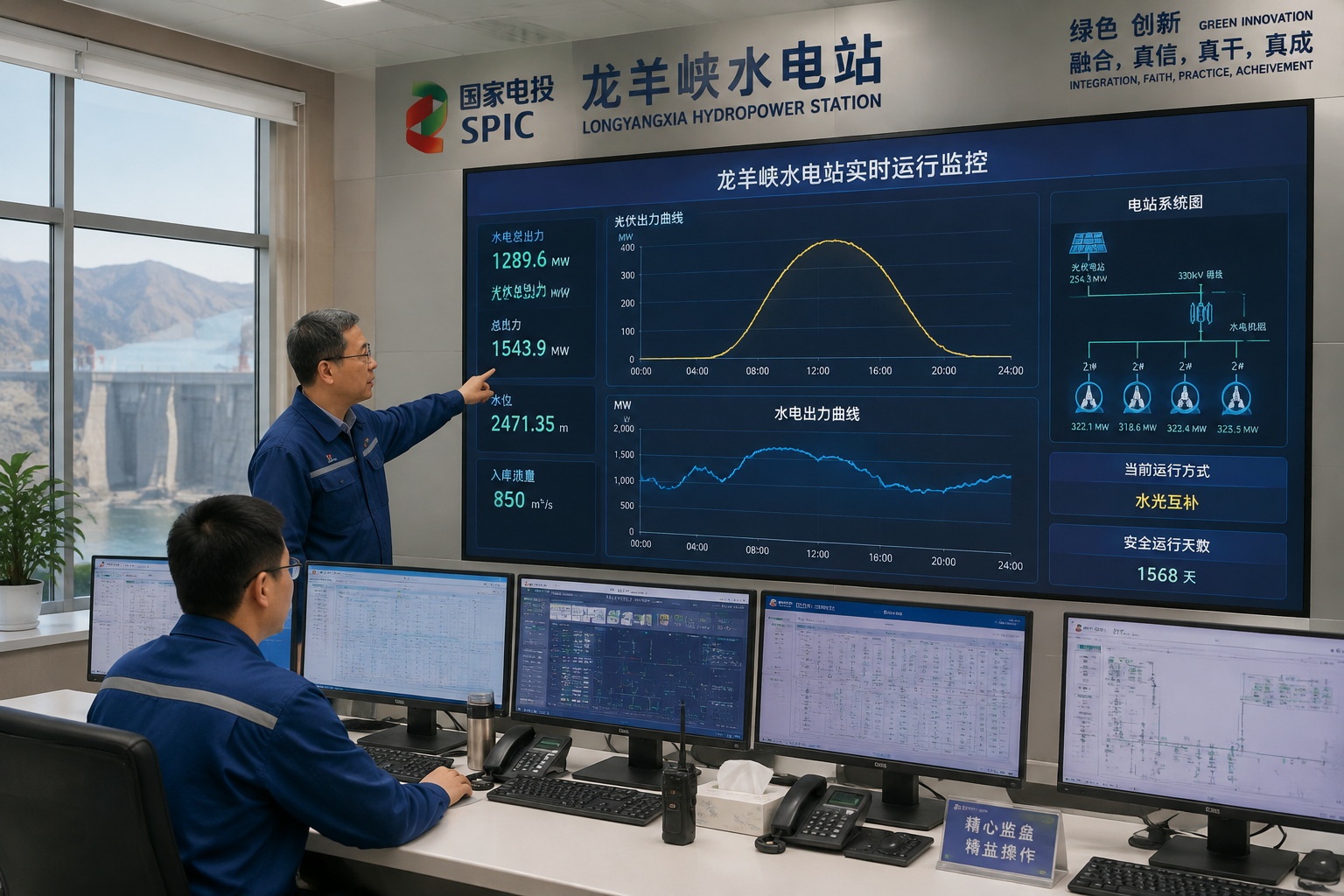
Ma Jun has worked at the station for more than a decade. “People used to say solar power was unreliable,” he says. “Here, we make it behave like a steady stream of electricity.” His job is to watch the numbers and let the software do the heavy lifting. On this morning, clouds are rolling in from the hills, and the photovoltaic array dozens of kilometers away suddenly reduces its output by 30 percent. Within seconds, the hydropower turbines open their gates a little wider, compensating for the dip. The combined output, the line on the central screen, barely moves.
What Is a Water-Solar Hybrid?
In simple terms, a water-solar hybrid combines a solar photovoltaic (PV) farm with a hydroelectric dam. The PV farm absorbs sunlight and generates electricity during the day. But solar power is inherently variable: clouds, dust, and the setting sun all cause sudden drops. That variability creates headaches for grid operators, who must balance supply and demand in real time.
By pairing the solar farm with the reservoir-based Longyangxia hydropower station, the system allows the dam to act as a giant battery. When solar output rises, hydro turbines slow down and save water. When solar output falls, turbines spin faster and release water to maintain a constant power flow. The result is a combined, “stable” electricity supply that can be fed into the national grid just like a conventional power plant.
Why the Qinghai Plateau
Longyangxia sits in the northeastern part of the Tibetan Plateau, in Qinghai Province. The altitude here exceeds 2,800 meters, and sunshine is abundant—roughly 1,700 to 1,800 hours per year. The land is mostly barren, wind-swept grassland and gravel, meaning that large-scale solar development doesn’t eat into farmland.
The photovoltaic station, built by the State Power Investment Corporation (SPIC), now stretches across more than 40 square kilometers. Its installed capacity is 850 megawatts—enough to power hundreds of thousands of homes. But the real innovation lies less in the panels themselves and more in the software that coordinates them with the dam.
The Smart Dispatch System
Behind the scenes, a smart dispatching system calculates weather forecasts, solar irradiance, and water flow data to predict how much solar power will be available at any given moment. These predictions are updated every minute. The control center then adjusts the hydroelectric generators accordingly, in real time. Sometimes the process is fully automatic, without human intervention.
The system effectively turns the entire 850-megawatt solar farm into a “virtual” stable generator. Since the 320-megawatt first phase went online in 2013, the project has avoided significant curtailment—wasting energy when there is too much supply and too little demand—and has achieved a utilization rate far higher than most standalone PV plants in China. According to SPIC, the first phase has delivered more than 1.7 billion kilowatt-hours of clean electricity by 2020, saving roughly 1.2 million tonnes of standard coal.
Turning Desert Green
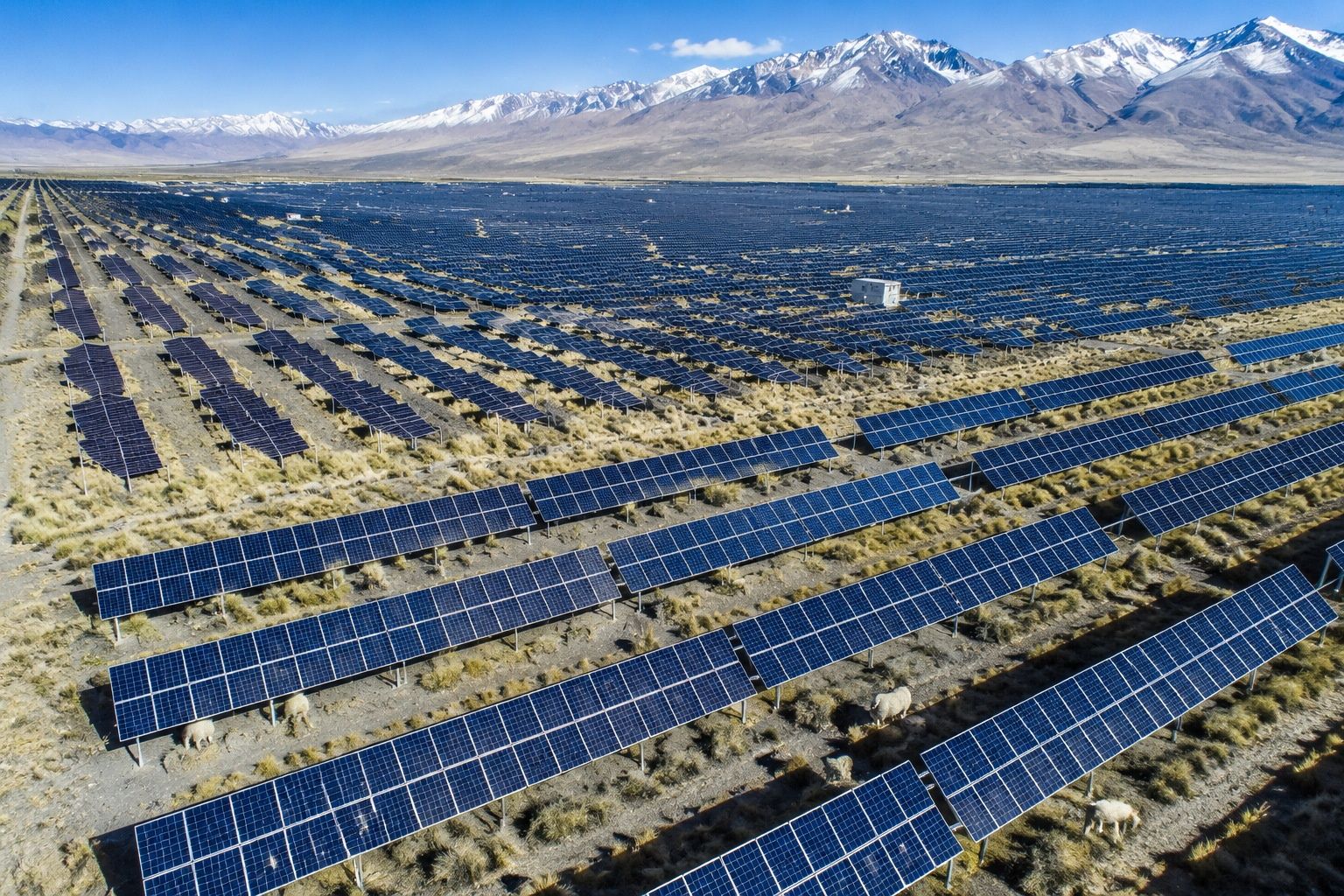
Before construction began, the solar farm area was largely degraded grassland, used for light grazing. Bulldozers leveled the sandy ground, and rows of solar panels were installed with gaps between them. Seven years later, a thick layer of grass has grown under the panels. The photovoltaic panels break the wind and reduce evaporation, creating a microclimate that helps vegetation survive the harsh plateau conditions.
This green transformation also helps the local economy. The plant has hired workers from nearby villages to clean panels and manage the vegetation. And each year, a local herder brings his sheep to graze inside the fenced area—a practice that reduces the fire risk of dry grass and saves the company from expensive mechanical mowing.
Sheep and Solar: A New Rural Pattern
“I never imagined sheep would be part of a power plant,” says a herder named Tudeng, who tends around 400 sheep on the solar field. “But the grass is better than on the open land, because the panels protect it from the wind and the hot sun.” Tudeng’s flock is not a tourist attraction; it is part of a careful co-management plan. The sheep eat the weeds, naturally controlling vegetation height.
The “photovoltaic + herding” experiment has been called a win-win for renewable energy and rural livelihoods. It also challenges the stereotype that solar farms destroy natural habitats. Here, the opposite is happening.
What This Means for China’s Energy Transition
China is adding more wind and solar capacity than the rest of the world combined. But integrating these variable energy sources into the grid remains one of the biggest challenges. The Longyangxia water-solar hybrid is a working example of how flexibility can be found in existing infrastructure—without relying on new coal or large-scale battery storage.
The model is not perfect. It only works where a large reservoir is close to a solar array. It depends on advanced forecasting and a strong transmission network. And a severe drought in the region could limit hydro backup. Yet the basic idea—combine variable renewables with a flexible water source—is already spreading to other river basins in China, including the Yalong River and the Lancang River.
Evening Return
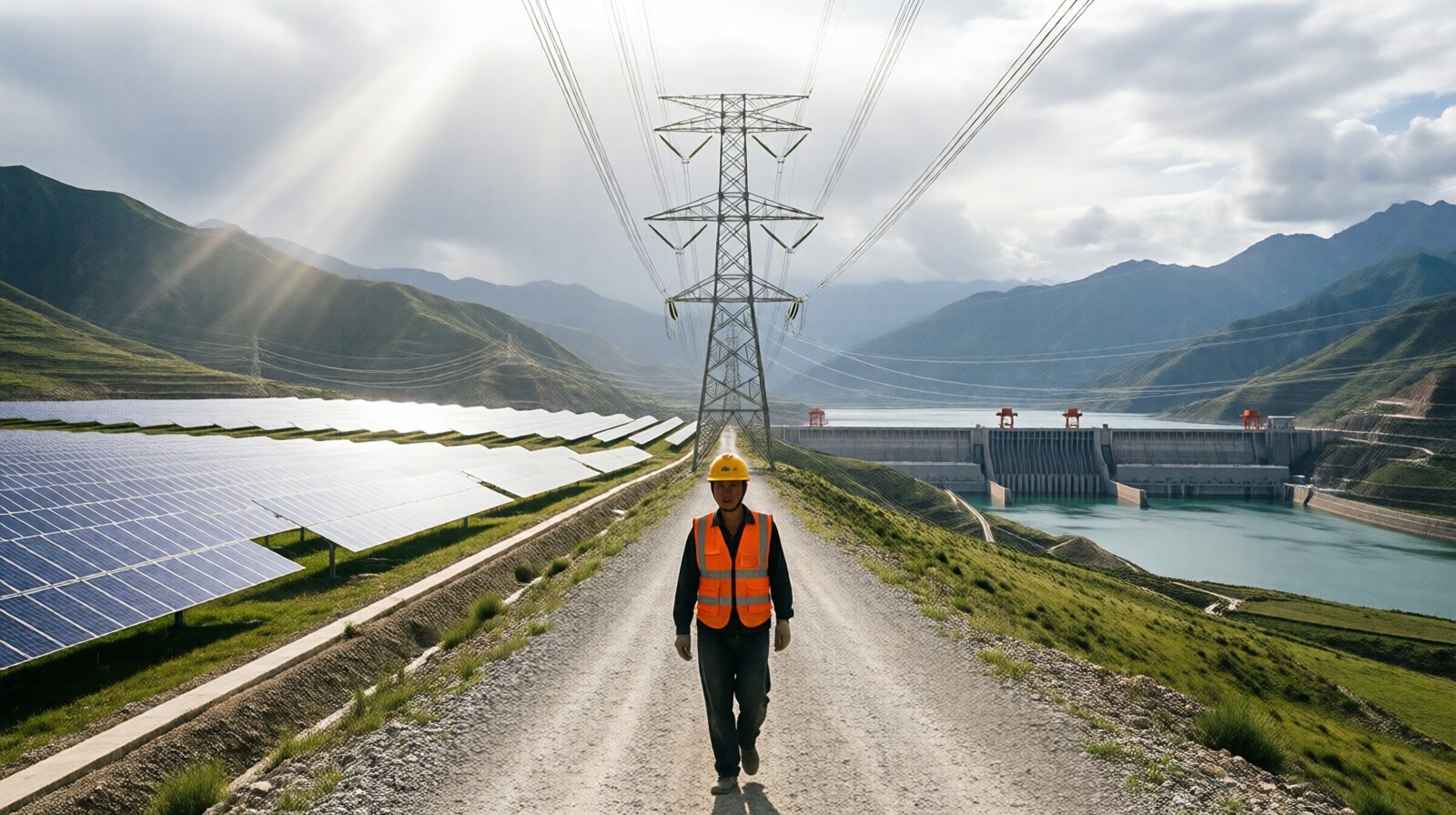
By late afternoon, the clouds have dispersed. The sun reappears over the horizon, and the photovoltaic output rises again. The hydro turbines gracefully slow down, saving water for the night. Ma Jun steps outside for a moment, looking down at the dam and the valley beyond. “This place is not just about electricity,” he says. “It’s about teaching us how to run the whole country’s grid in a different way.”
Start the discussion at forum.chinacomes.com