
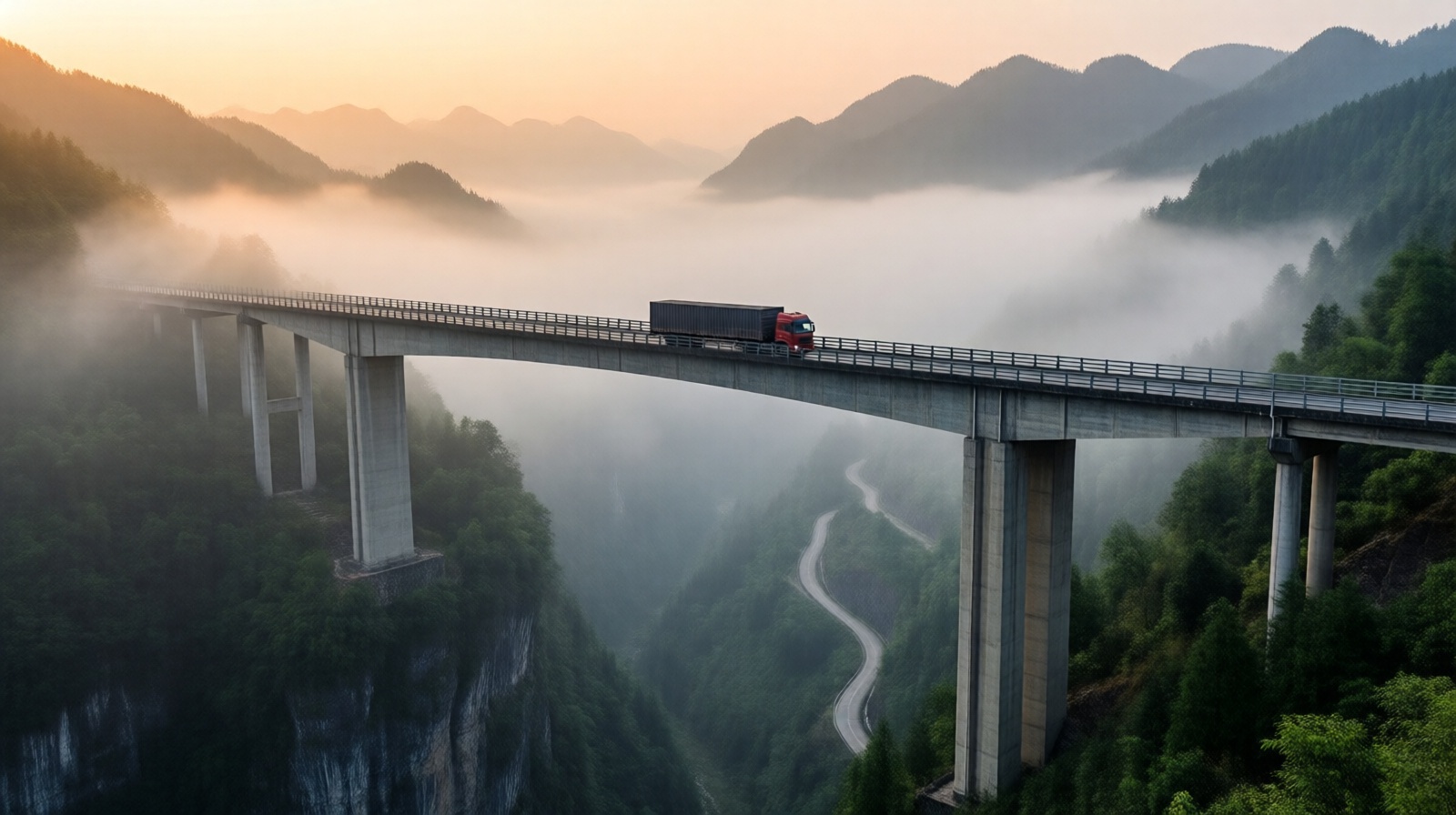

Dawn on the Beipan River Bridge
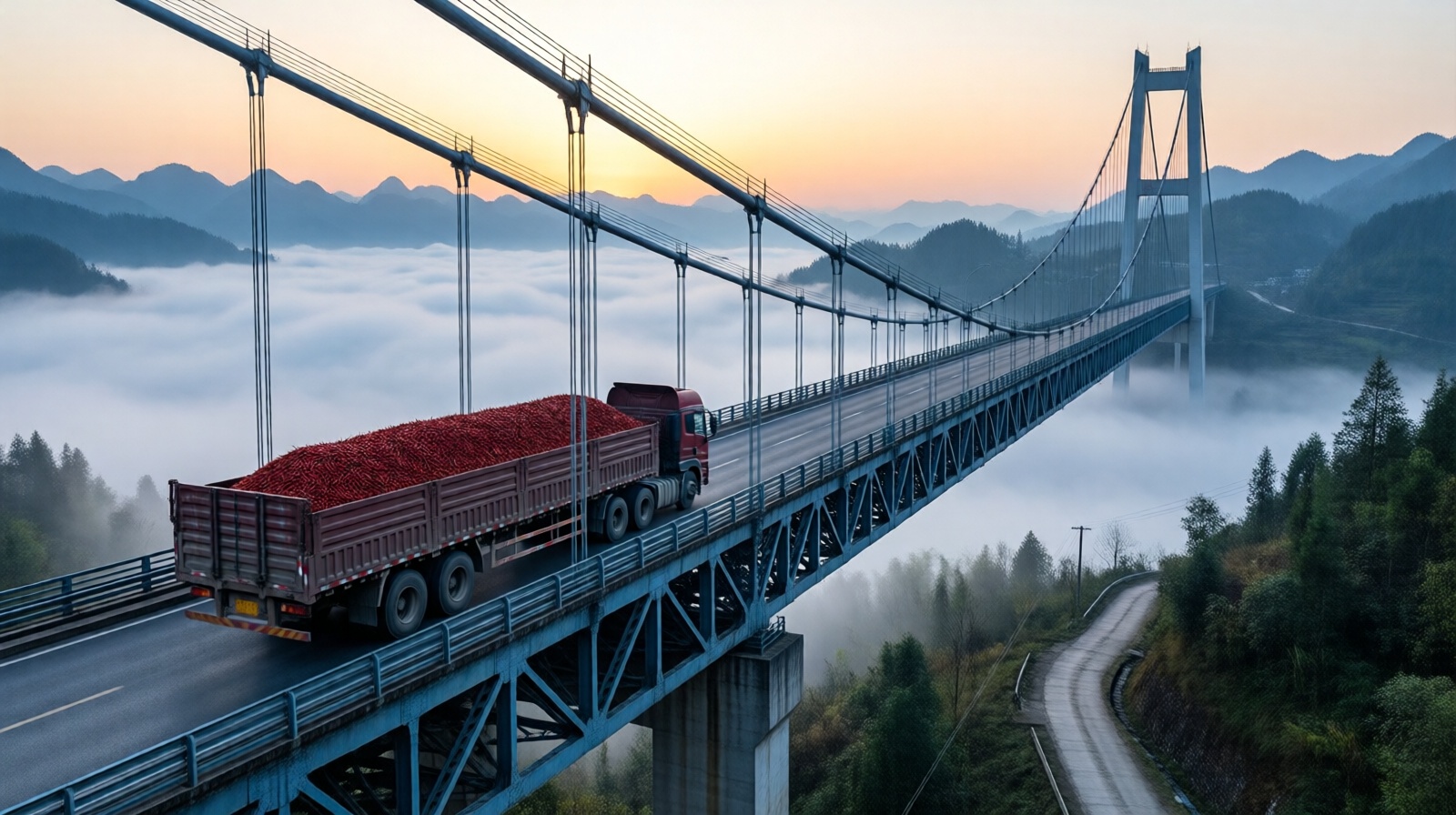
The fog is still thick at 6 a.m. when I step out of the car onto the Beipan River Bridge. Below, nearly 600 metres of vertical air separate the deck from the river, and the old mountain road that once linked these villages looks like a thread lost in the folds of the gorge. A truck carrying fresh chilli peppers rolls past, its tyres humming on the concrete. For the people of Guizhou, this sound is still new.
A Province Built on Mountains
Guizhou, tucked in the southwest of China, is the country’s only province without a plain. Over 92 percent of its land is mountain or hill. The old saying “No three feet of flat land, no three days without sun” captured the hardship of daily life. Before the 1990s, many villages could only be reached by footpaths that took hours to climb. A distance of 10 kilometres as the crow flies might mean a whole day of walking.
The government began a massive infrastructure push in the late 1990s, carving motorways into the limestone cliffs. The results are staggering. Today, Guizhou has more than 30,000 bridges, including many of the world’s highest. The Beipan River Bridge, standing 565 metres above the river, was the world’s highest bridge from 2016 to 2019. The Pingtang Bridge, with its 332-metre-tall concrete towers, is now a tourist attraction in its own right.
A Farmer’s Route to Market
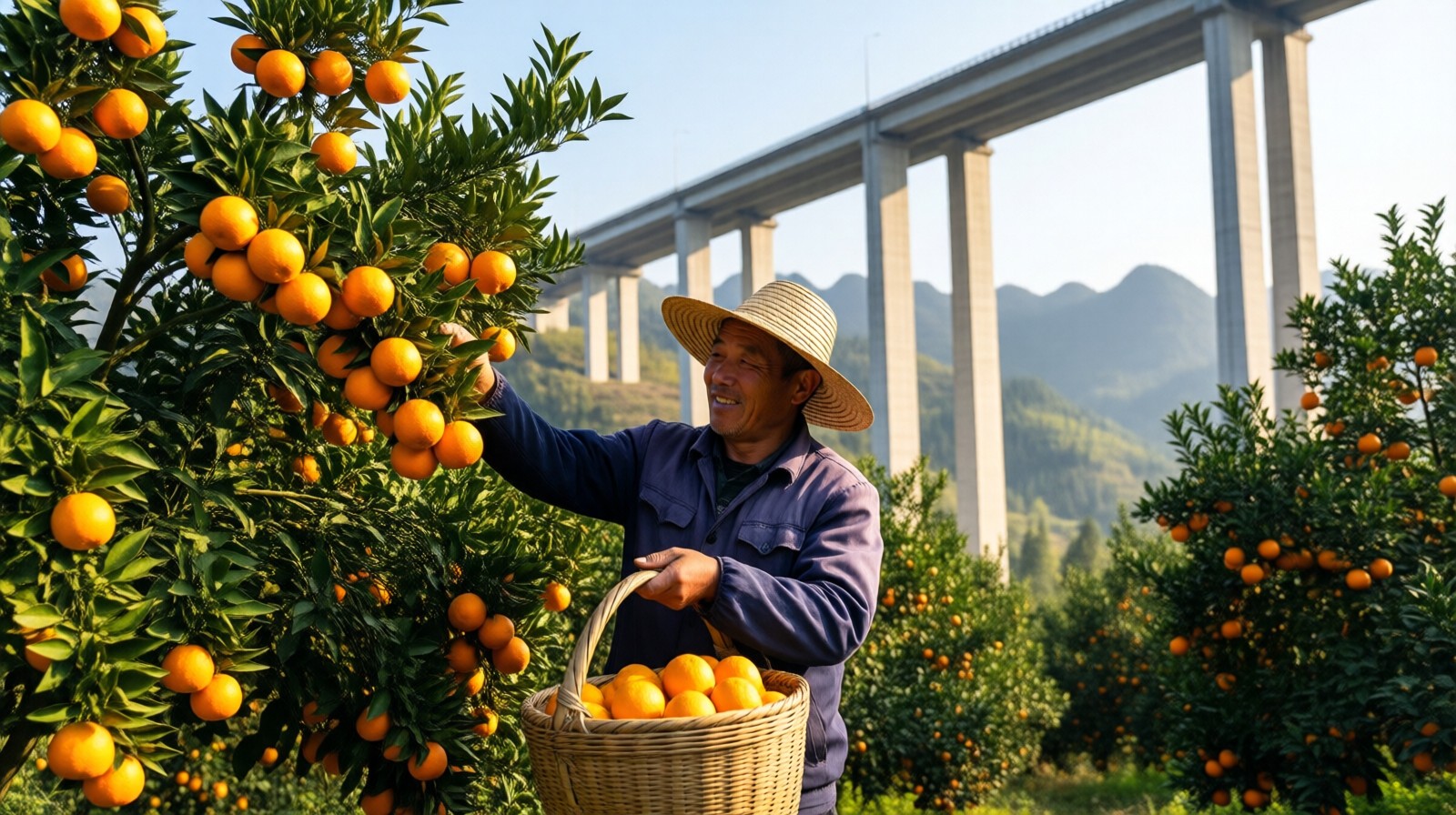
In Pingtang county, I met Luo Wanqing, a 58-year-old orange grower. He remembers the time before the Pingtang Bridge opened in 2019. “To sell oranges, I had to load bags onto a motorcycle, ride to the town, then transfer to a bus – three hours just to reach the county city,” he said, pointing at the bridge now visible from his orchard. “Now a truck comes straight here. They take the oranges in the morning and they’re in Shanghai by night.”
Luo’s income has doubled. He is not an exception. In villages along the bridge corridors, farmers are switching from subsistence crops to higher-value fruit, tea, and herbs. Traffic has also brought tourism. The “Sky Bridge” observation deck near Pingtang now draws crowds on weekends, and local families have converted homes into guesthouses. A young woman who used to work in Shenzhen returned to run a coffee shop by the viewpoint. “The bridge made my village a place people want to visit,” she said.
From Detours to Expressways: How Bridges Help Business
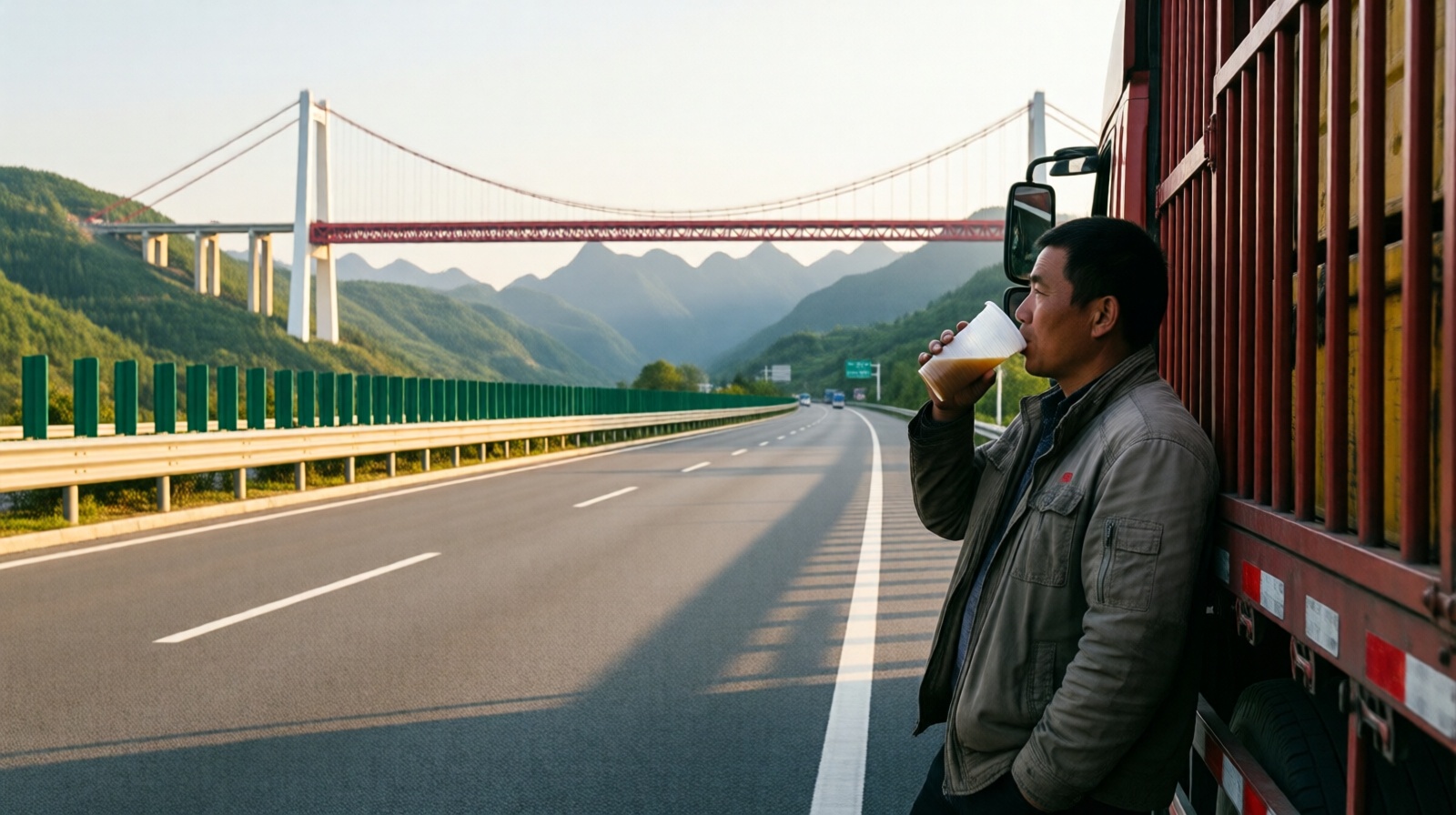
The economic impact goes beyond agriculture. Zunyi, known for liquor and machinery, sits in the mountains. Components made in small factories outside the city used to take six hours to reach Guiyang, the provincial capital. Now, on the new bridge-linked expressway, the trip is under three hours. Freight companies say fuel costs have fallen by a third because trucks no longer crawl up passes and brake down hairpin bends. Driver Wang Gang, who has hauled goods across Guizhou for two decades, told me: “I used to white-knuckle through fog, hoping no landslide blocked the road. Now I just press the accelerator on a wide, straight bridge. I feel like I’m driving on flat ground.”
The numbers back him up. Guizhou’s GDP has grown at an average of nearly 10 percent a year since 2010, one of the fastest rates in China, and transport infrastructure is widely credited as a key driver. E-commerce platforms now deliver to remote villages in two days, a feat unthinkable a decade ago. Some villages have even branded themselves as “bridge villages” for tourism, hosting photography competitions on the car parks below the spans.
The Price of Crossing a Gorge
Such giant engineering does not come easy. Each bridge can cost several billion yuan, and maintenance is constant. The region faces landslides, karst caves, and extreme weather. Building on a 200-metre-deep karst foundation required techniques never used before. There are also human costs. Some communities were relocated as reservoirs and roads reshaped the land, and older residents sometimes speak of being cut off from their ancestral homes, even as they acknowledge the benefits.
Yet in the villages I visited, most conversations ended with a sense of hope. A teacher on a school bus crossing the Beipan River Bridge said her students now reach the county middle school in one hour instead of a two-hour hike. A nurse told me emergency ambulances can now reach remote hamlets in minutes, rather than hours.
A Bridge Is More Than Concrete
Standing on the bridge at sunset, the fog had lifted, and I could see the winding old road far below, now used mostly by hikers. The new road is not just shorter; it changes what people imagine is possible. For the young, it means they can leave and come back. For the old, it means hospitals are close. For the farmers, it means a fair price for their fruit.
Guizhou is still a poor province by Chinese standards, but the gap is narrowing. The bridges have become symbols of a stubborn, creative effort to connect the disconnected. They are not just engineering marvels; they are the answer to a question every mountain community asks: how do we get to what’s on the other side?
Start the discussion at forum.chinacomes.com