

Introduction: A Border Town Awakens
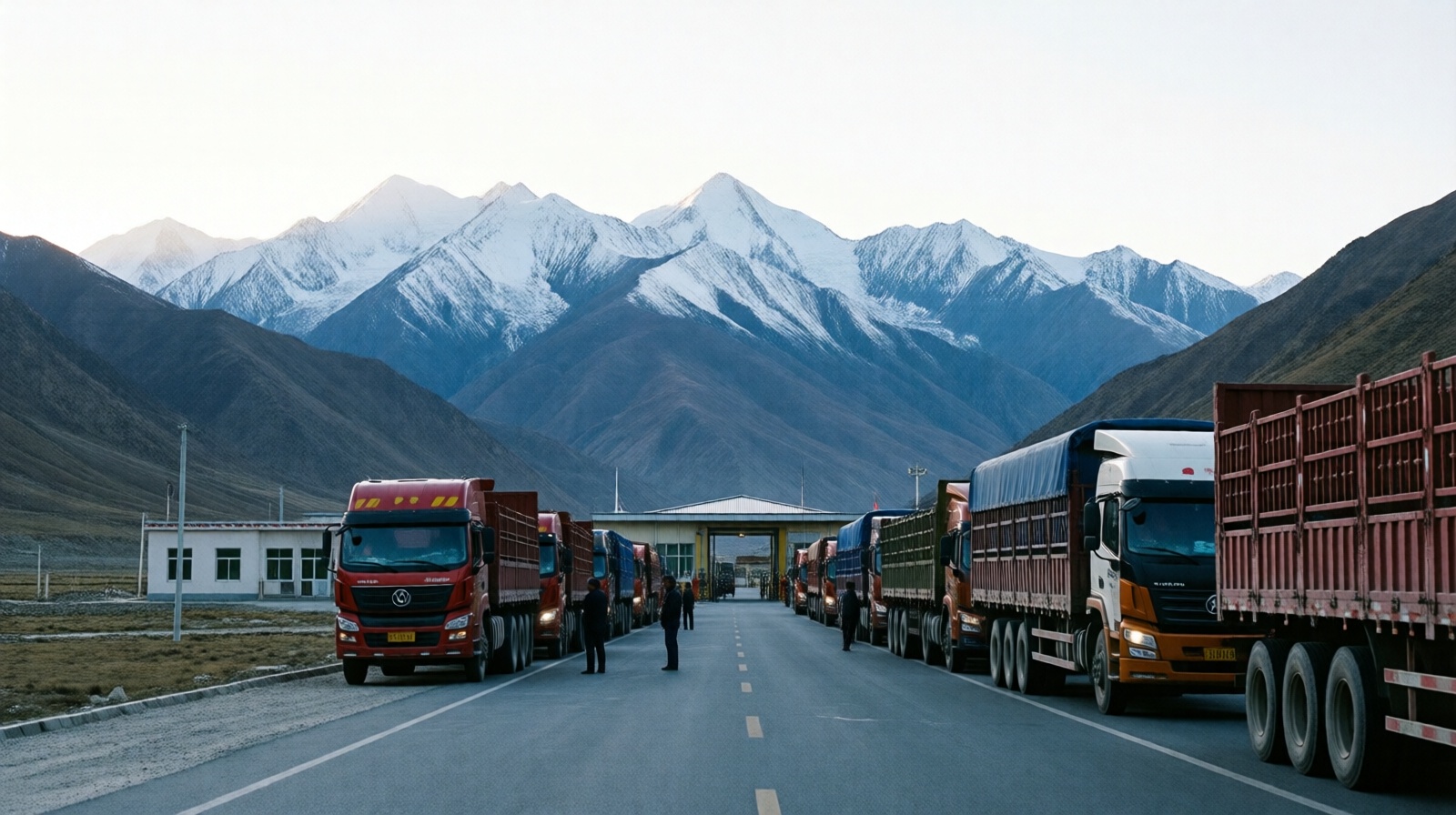
In the early morning mist at Gyirong Port, a line of Chinese trucks and Nepali freight vehicles waits patiently on opposite sides of the customs gate. Drivers sip hot tea beside their cabins, chatting about road conditions and cargo loads. At first glance, it looks like any small border station — but this one sits at 2,800 meters above sea level, in a narrow valley of the Himalayas.
For most outsiders, Tibet’s economy still evokes images of high plateaus, monasteries, and nomads. Yet today, a quieter revolution is underway along its southern border. Gyirong, a county in China’s Tibet Autonomous Region, has grown into the country’s most active land port for trade with Nepal. This is the story of how a single mountain pass is reshaping the economy of southern Tibet.
A Unique Geographic Gateway
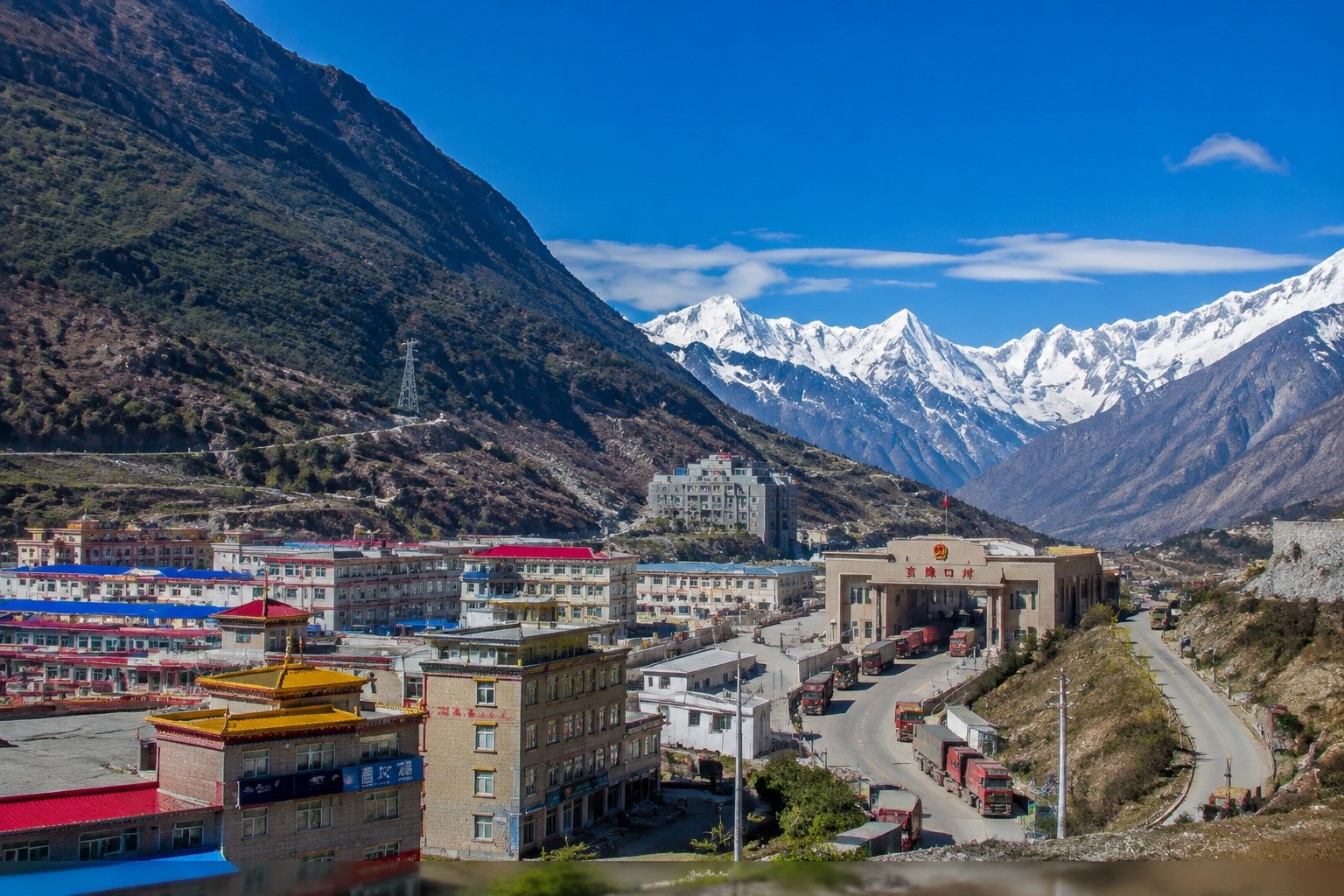
Gyirong’s significance starts with geography. Unlike the higher passes further west, the valley floor here drops to a relatively moderate altitude, offering a year-round drivable route — though still challenging in winter. It lies near the ancient trade routes that once connected Lhasa with Kathmandu, long before modern borders were drawn. For centuries, salt, wool, and tea moved between the Tibetan plateau and the South Asian plains.
When the 2015 earthquake in Nepal severely damaged the nearby town of Zhangmu, an older port on the border, Gyirong suddenly found itself in the spotlight. China shifted much of its overland trade with Nepal through Gyirong, investing in new customs facilities, road upgrades, and a larger bonded area. Today, the port is a key node in the China-Nepal trans-Himalayan corridor, carrying the vast majority of bilateral cargo by road.
From Trucks to Shop Shelves: The Rhythm of Trade
What does trade through Gyirong actually look like? Everyday goods, mostly. On a typical day, trucks carry Chinese-made clothing, electronics, cement, and food supplies southward across the border, while returning with Nepali cowhide, handicrafts, tea, and large sacks of ginger and cardamom. This is not luxury trade; it is the practical exchange of goods that makes life work on both sides.
Statistics from the customs department show that bilateral trade via Gyirong has grown steadily, with annual turnover reaching billions of yuan in recent years. The port now operates under a 24-hour clearance schedule during peak season. For many small traders in Gyirong town, the border is not an abstract policy idea — it’s the reason their grocery store stays open, their guesthouse is booked, and their brother has a job driving a forklift in the logistics depot.
A Small Town’s Economic Life
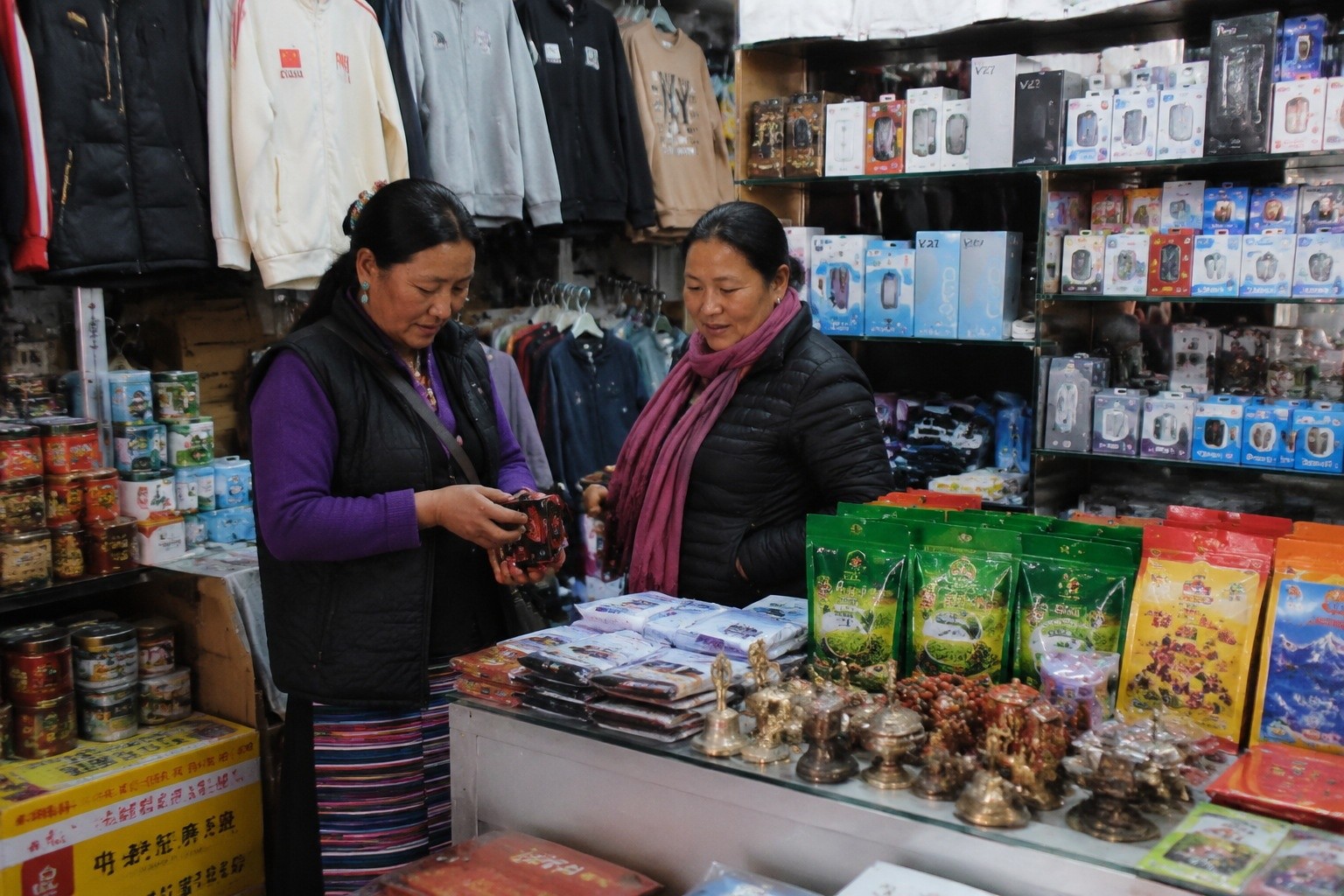
Gyirong town itself reflects the change. Ten years ago, it was a quiet settlement of perhaps a few thousand people, mostly involved in agriculture and animal husbandry. Today, walking its main street feels different: hotels with Chinese and Nepali signs, warehouses painted with customs numbers, restaurants serving momos and thukpa, and money exchange shops advertising both currencies. The influx of truck drivers, border traders, customs brokers, and port workers has created a service economy that did not exist before.
Locals have adapted in creative ways. Some farm families turn spare rooms into simple hostels. Young people learn basic Nepali phrases to communicate with regular visitors. A growing number of women run small trading companies that export Tibetan wool carpets and local herbs to Nepal. Economists use the term “border effect” to describe how cross-border flows can boost incomes in remote regions. In Gyirong, the effect is visible in the construction of newer houses, the increased number of motorbikes, and the shelves stocked with both Chinese and Nepali-brand products.
If you come from, say, the United States or Europe, you might compare Gyirong to small border towns like El Paso or Chiasso. But the scale is different — this is still a community of a few thousand people, and every truck arrival matters. The border is not a distant bureaucratic line; it is the town’s main employer and its connection to the wider world.
Challenges Written in the Mountains
To be fair, the story is not without obstacles. The same mountains that make Gyirong a scenic natural gateway also make trade unpredictable. Landslides, heavy snow, and earthquakes occasionally close the road for days. Trucks must navigate hairpin bends that feel unnerving even for seasoned drivers. During the winter months, trade volume drops as roads freeze.
Infrastructure is improving, but gaps remain. Customs staff often work in provisional buildings while the next phase of the port expansion is completed. The Nepali side of the road, in particular, requires maintenance and upgrading. Currency exchange, insurance, and banking services are still limited compared with larger Chinese trade hubs. For local entrepreneurs, these constraints mean that sometimes a promising deal falls apart simply because a truck cannot get through on time.
There are also social costs. The influx of workers and transient visitors has put pressure on housing prices and public services in this small town. Some residents worry that the traditional lifestyle — reliant on farming and seasonal movement — is disappearing as more young people opt for the easier money of logistics work. These tensions are familiar to border communities everywhere, and Gyirong is no exception.
What’s Next: A Corridor to South Asia?
Looking forward, Gyirong’s role is poised to expand further. Chinese and Nepali officials have discussed upgrading a cross-border railway that would eventually connect Lhasa with Kathmandu, and Gyirong is expected to be a critical link in that route. Even without the railway, the existing road corridor has room to grow. New facilities, including a bonded logistics center, aim to streamline customs clearance and attract larger-scale investments.
For the surrounding region of southern Tibet, the port offers a practical way to develop a remote economy. Unlike the highly visible infrastructure projects like airports or high-speed rail, a land port works quietly — yet its impact spreads through supply chains, labor markets, and family budgets. It also creates opportunities for cross-cultural exchange, as Nepali traders bring their language, food, and business customs into the valley.
Of course, the future depends on peaceful and stable bilateral relations. Trade is never just about goods; it is a barometer of trust between countries. As long as that trust holds, Gyirong has the potential to become a true southern gateway for Tibet — not just a point on a map, but a place where the idea of “connectedness” becomes a daily reality.
Conclusion
Gyirong Port is not a dramatic story of overnight transformation. Instead, it is a steady accumulation of small exchanges: one truck, one transaction, one handshake at a time. For the residents of southern Tibet, the border trade means something concrete: a job after the harvest, a guesthouse room filled with travellers, a wider market for local goods. It is a reminder that even in the world’s highest mountains, economies are built on human connections — and those connections now cross the border more easily than ever before.
Start the discussion at forum.chinacomes.com