
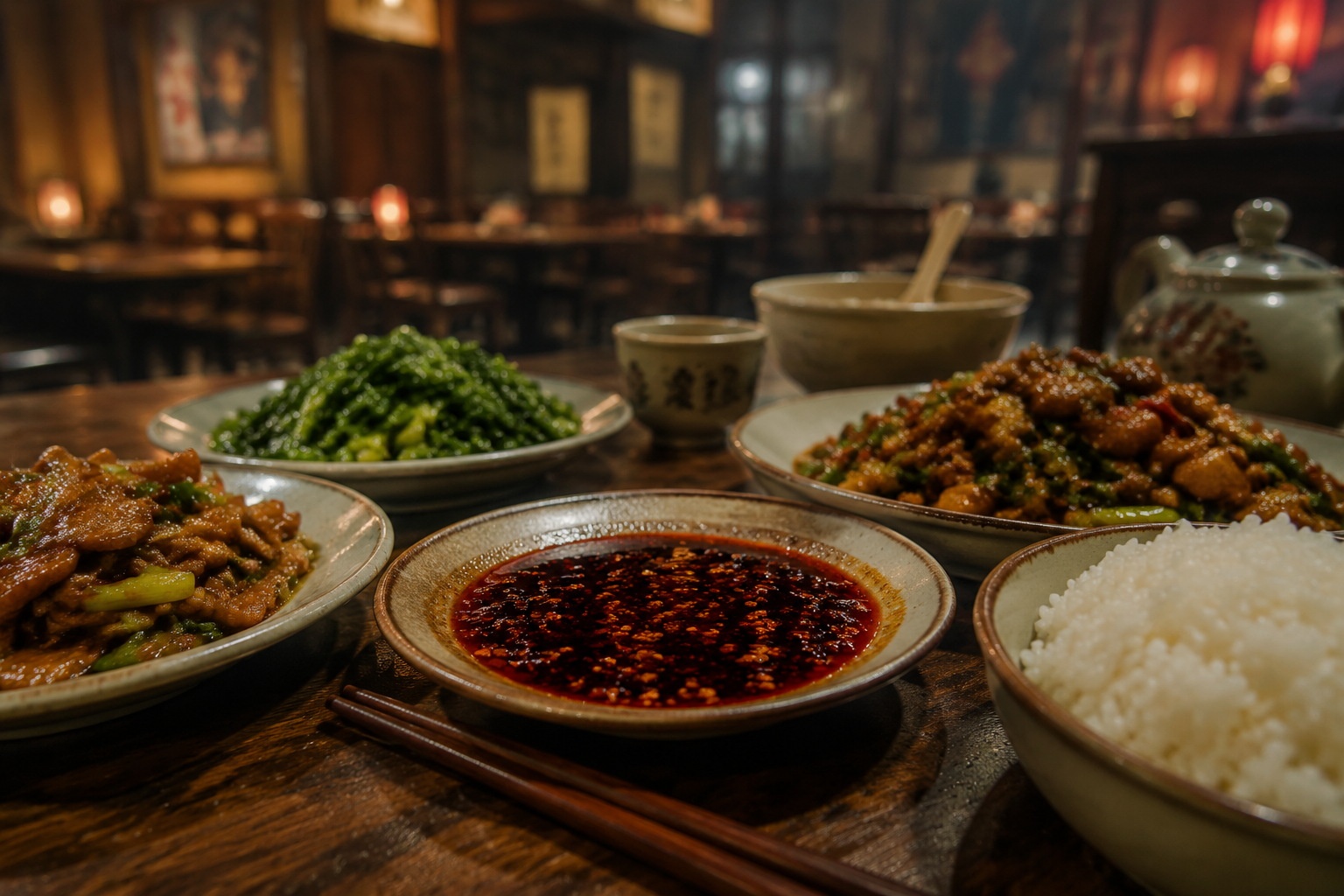

The first time my friend Zhao Yu brought a homemade jar of chili oil from Guizhou to our shared office in Shanghai, we treated it like smuggled gold. It sat on the communal desk like a tiny, dark-red grenade. Within a week, it had flipped three colleagues who previously swore they “couldn’t handle spice.” By the second week, we were rationing it with a spoon. That’s when I realized this wasn’t just a condiment. It was a diplomatic weapon.
Guizhou, a mountainous province in southwestern China, is often overlooked. It’s not a place that springs to mind when you think of Chinese food dynasties. But when it comes to chili, this quiet corner of China has been steadily rewriting the country’s culinary rules — one small plate of fiery, fermented, surprisingly complex pepper at a time.
Why Guizhou Chili Deserves Its Own Fan Club
Let’s get one thing straight: all Chinese chili is not created equal. Sichuan specializes in numbing heat, layering chili with Sichuan peppercorns to create that famous ma-la sensation. Hunan goes straight for the throat with pure, unapologetic spiciness. Guizhou, though? It’s different. It’s more of a flavor architect. The region’s chilies are known for their fruity, smoky depth, often paired with fermentation to create a tangy suan la (sour spicy) profile that doesn’t just burn — it lingers, evolves, and dances.
The province grows several legendary varieties: Huaxi chili, prized for its mellow heat and floral finish; Zunyi’s small red devil peppers, which are fierce and intensely aromatic; and the tender, fruit-scented mountain peppers that locals use fresh. But Guizhou’s magic is in the craft. Locals don’t just sprinkle chili powder on things. They stir-fry fresh peppers with garlic and black beans, soak them in rice water for a sour punch, stone-grind them into glossy oils, and ferment them in massive ceramic urns that are passed down like heirlooms. The result is a deeply layered heat — smoky, funky, honeyed, with a slow burn that feels like a final boss.
The province’s most famous wayfarer is Laoganma, the legendary “chili crisp” that now occupies supermarket shelves from London to L.A. But that’s just the tip of the chili ice cream. Beyond Laogenma, Guizhou has a whole universe of chili products: fermented chili paste for stir-fries, sour soup base for hotpot, oil chilies with peanuts, and an aromatic ground spice blend that street vendors use like a secret handshake.
A Brief History of Chili Migrating to China
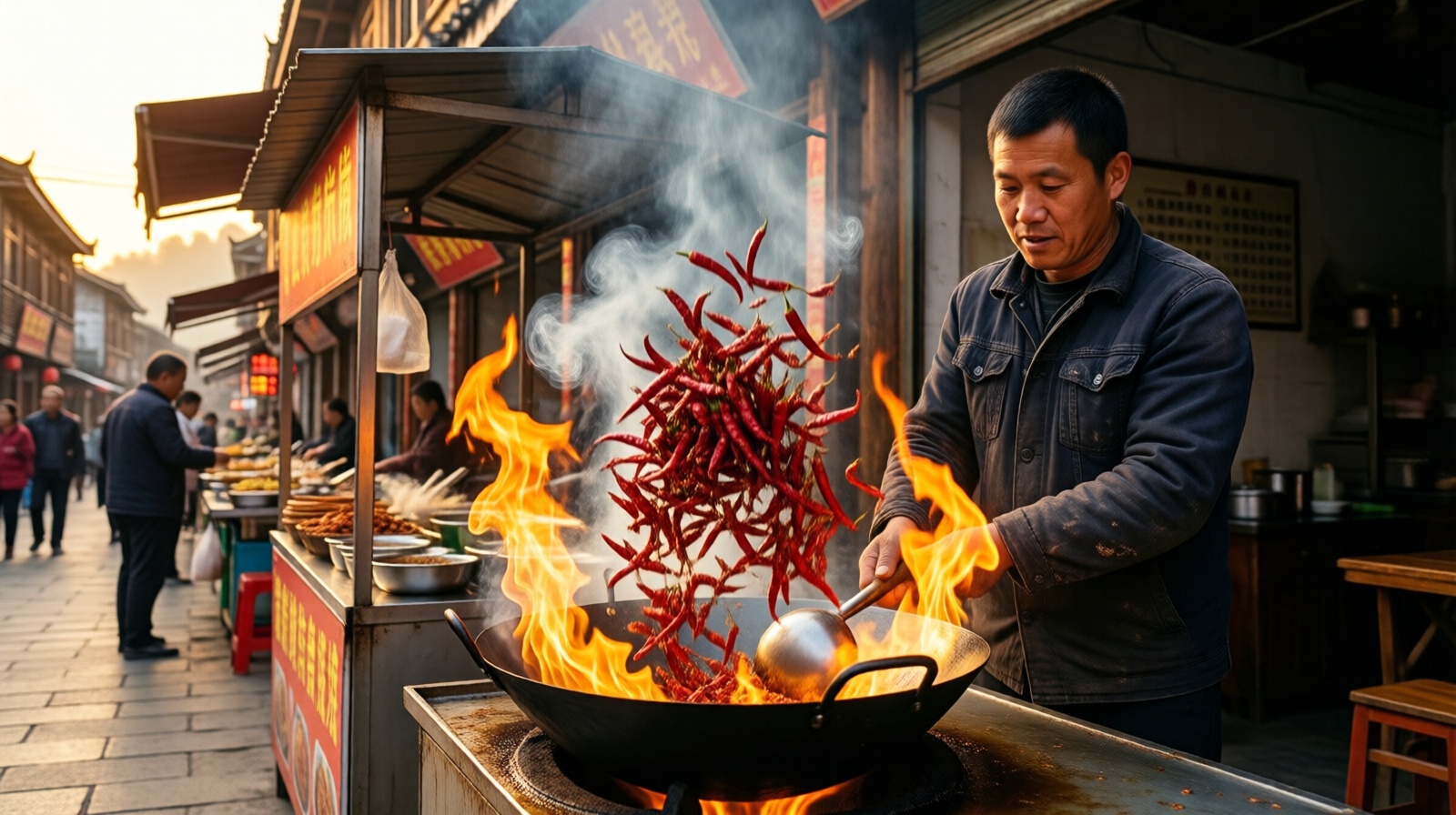
It’s easy to assume Chinese food has always been spicy, but today’s national love affair with chili is relatively young. The chili pepper is a New World import. It arrived in China during the late 16th century, crossing the Pacific with Spanish and Portuguese traders from the Americas. At first, Chinese people didn’t even eat it. They planted it as a colorful ornamental garden flower.
But in the rugged, salt-poor provinces of southwestern China, necessity hacked a different path. Salt was expensive and, in remote areas like Guizhou, often scarce. In a place that was also humid and hard to preserve food, chilies became a workaround. They helped make bland food palatable and could be dried, pickled, or fermented to keep through long, damp winters. In other words, the poor invented spicy food.
Historians believe Guizhou was one of the first Chinese regions to fully adopt chili in daily cooking, well before Sichuan or Hunan gained their reputations. But for centuries, the province’s chili stayed a regional secret, produced by small farmers in isolated mountain villages, consumed mostly by locals.
From Local Secret to National Craze
So how did a humble mountain pepper conquer a nation? Two words: migration and the internet.
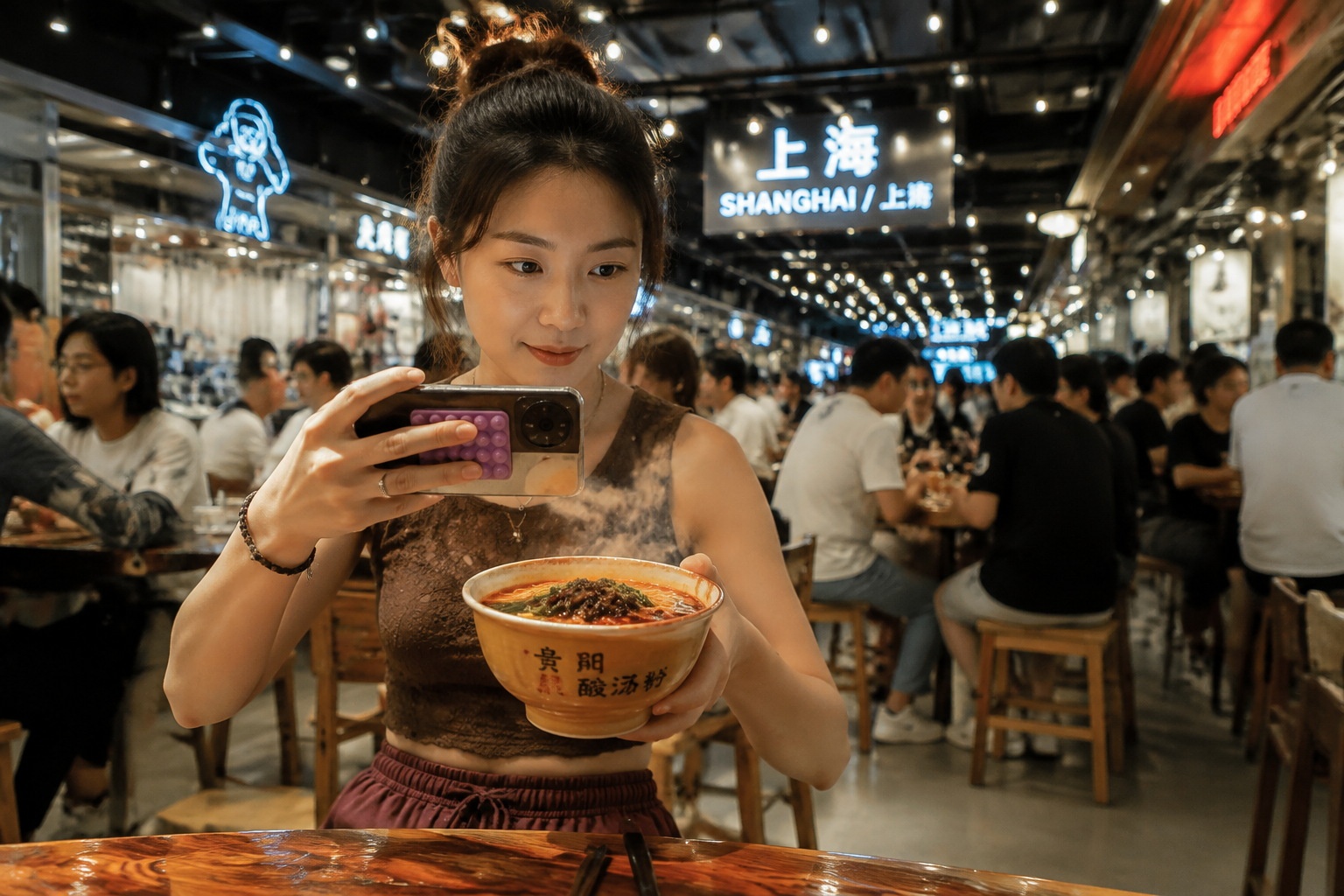
Since the 1980s, tens of thousands of Guizhou people have moved to Chinese megacities to work, study, and start new lives. They arrived with their taste buds. You can see it in cities everywhere: the Guizhou restaurants that pop up, then never close. Right now, a sour soup fish joint opened on my street in Shanghai two years ago. I still can’t get a table. There’s something about that chili-laced broth — tart, wildly aromatic, and endorphin-releasing — that makes you want to return.
But migration only seeded the craze. It was e-commerce that turned it into a national phenomenon. Platforms like Taobao and JD.com collapsed the distance between Guizhou’s farms and China’s urban kitchens. Need fresh Zunyi peppers? They’ll be at your Shanghai apartment in under 24 hours. Crave fermented chilli paste? One click and it’s in your cart. On Xiaohongshu, China’s lifestyle-and-Etsy app, searching “Guizhou chili” pulls hundreds of thousands of posts from young foodies posting their first bite of sour-spicy noodles or documenting their attempts to recreate a Guizhou street food dish in their tiny rented kitchen.
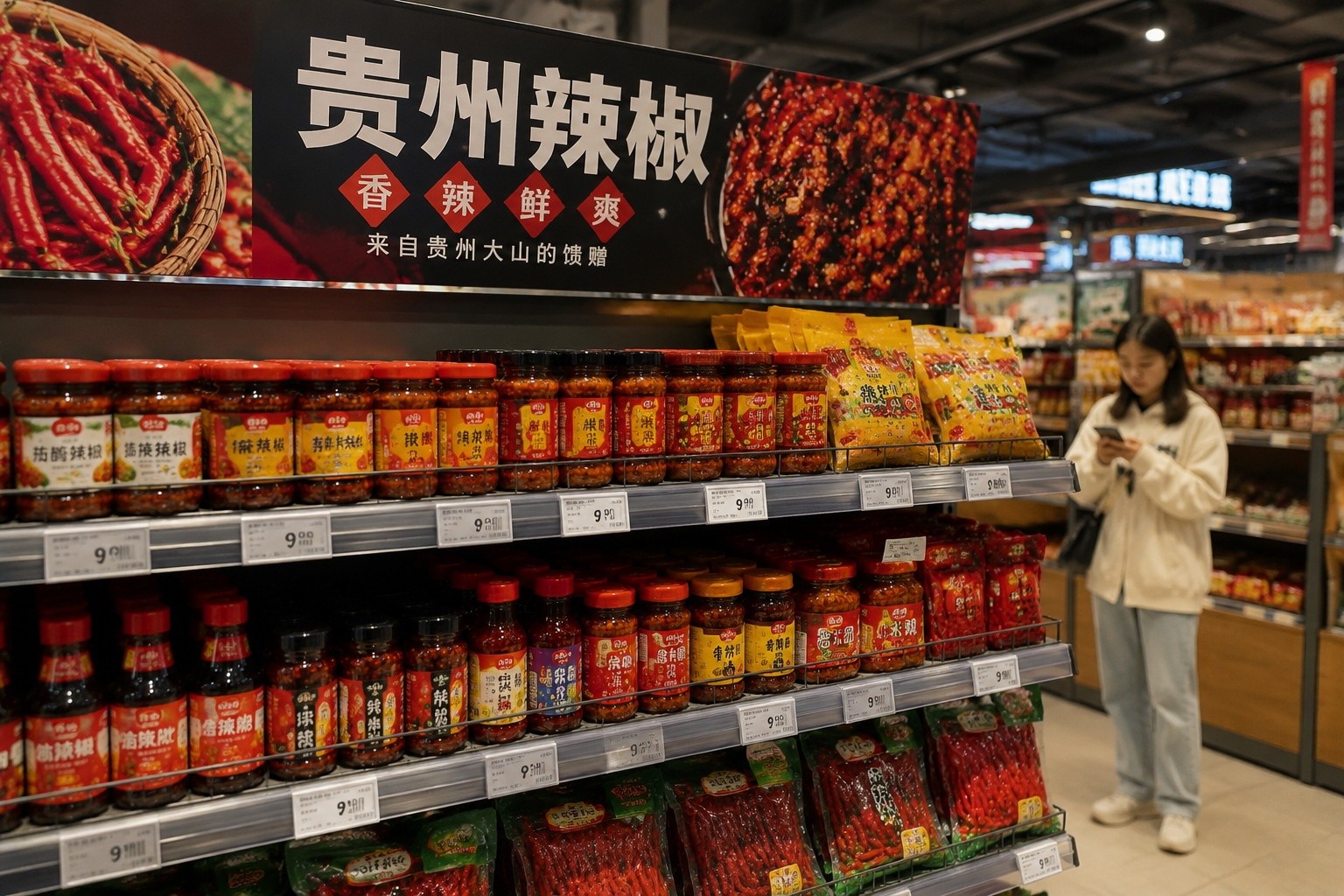
The result: supermarkets used to have a chili section that was basically Sichuan and Hunan all the way. Now there’s a dedicated row for Guizhou products, from paste in jars to fresh greens packed in insulated bags.
What Chili Says About China’s Changing Tastes
This isn’t just about peppers. The rise of Guizhou chili is a window into how Chinese society has been reimagining itself through food.
In the 1980s, most Chinese people grew up with only regional flavors. Someone from Shanghai considered Sichuan snacks a challenge. Spicy food, especially the sour, funky kind, was dismissed as provincial and poor. But as the country urbanized and educated, the young generation started craving novelty and a bit of drama on the palate. Chili went from being a poverty marker to a thrill-seeking, social-media-friendly badge of cool.
Today, a 2021 survey estimated that nearly 60% of China’s population regularly consumes spicy food. Look around: Beijing’s trendy cafes now offer chili-crisp pastries. Bubble tea shops sell a “spicy lemon” drink for the adventurous. On Chinese social media, “How many chilies can you handle?” is basically a personality test. And for young people, eating spicy food together has become a kind of bonding ritual—a shared rite of passage that often ends with everyone in tears but also in laughter.
But beyond flavor, the Guizhou chili boom is also an economic story. For many rural communities in Guizhou, growing chili has become a route out of poverty. The provincial government has invested in modern agricultural infrastructure, cold-chain logistics, and geographical indication certifications to protect local varieties. In some villages, chili income now accounts for over half of household earnings.
However, that story isn’t simple. Smallholder farmers still wrestle with volatile wholesale prices, and the pepper supply chain is labor-intensive and vulnerable to climate changes. As demand accelerates, there are concerns about soil health and the loss of traditional farming knowledge. The very thing that made Guizhou chili special—its artisanal, fermented quality—could be diluted if it’s scaled up too fast.
The Future of a Tiny Pepper
So what’s next for Guizhou chili? The world is catching on. Brands like Laoganma have global distribution, and new lifestyle-forward brands are giving this ancient flavor a modern makeover. In Shanghai and Beijing, fusion chefs are using Guizhou’s sour-spicy profile in pasta, tacos, and even chocolate desserts. A Guizhou-style “chili-crust fried chicken” is a cult favorite in Chengdu. And for the truly bold, you can buy chili-flavored ice cream in Guizhou’s capital, Guiyang. It sounds like a novelty, but locals will tell you it’s not—sweetness and spice have been a match in Guizhou street food for centuries.
Then there’s “spicy tourism.” Foodies are traveling to Guizhou to eat at the source. They walk through chili drying fields, learn to hand-grind chili oil, and taste that mountain sour-soup fish in its original, un-appropriated form. The province is building entire tourism districts around chili culture, hoping to turn its signature crop into a destination-level attraction.
The tiny pepper that once helped Guizhou survive poverty and salt shortages has turned into the region’s most valuable ambassador. And as China’s dining tables keep diversifying, it seems this fiery little character is only getting more popular.
Conclusion
Back in our office, the homemade jar of chili oil was gone in two weeks. Zhao Yu’s mother, upon hearing about our hoarding, mailed us another one, with a note scribbled in an old-school handwriting: “Don’t finish it all in one week.” We did anyway. But as I looked at the now-empty jar, I thought about the journey that tiny pepper had taken: from a mountain farm in Guizhou to a communal desk in Shanghai, from a poor man’s salt substitute to a national treasure. That small dish of chili is more than just heat. It’s a history lesson, a gesture of friendship, and a slice of China’s ever-shifting soul.
Start the discussion at forum.chinacomes.com