

Night on the Mountain
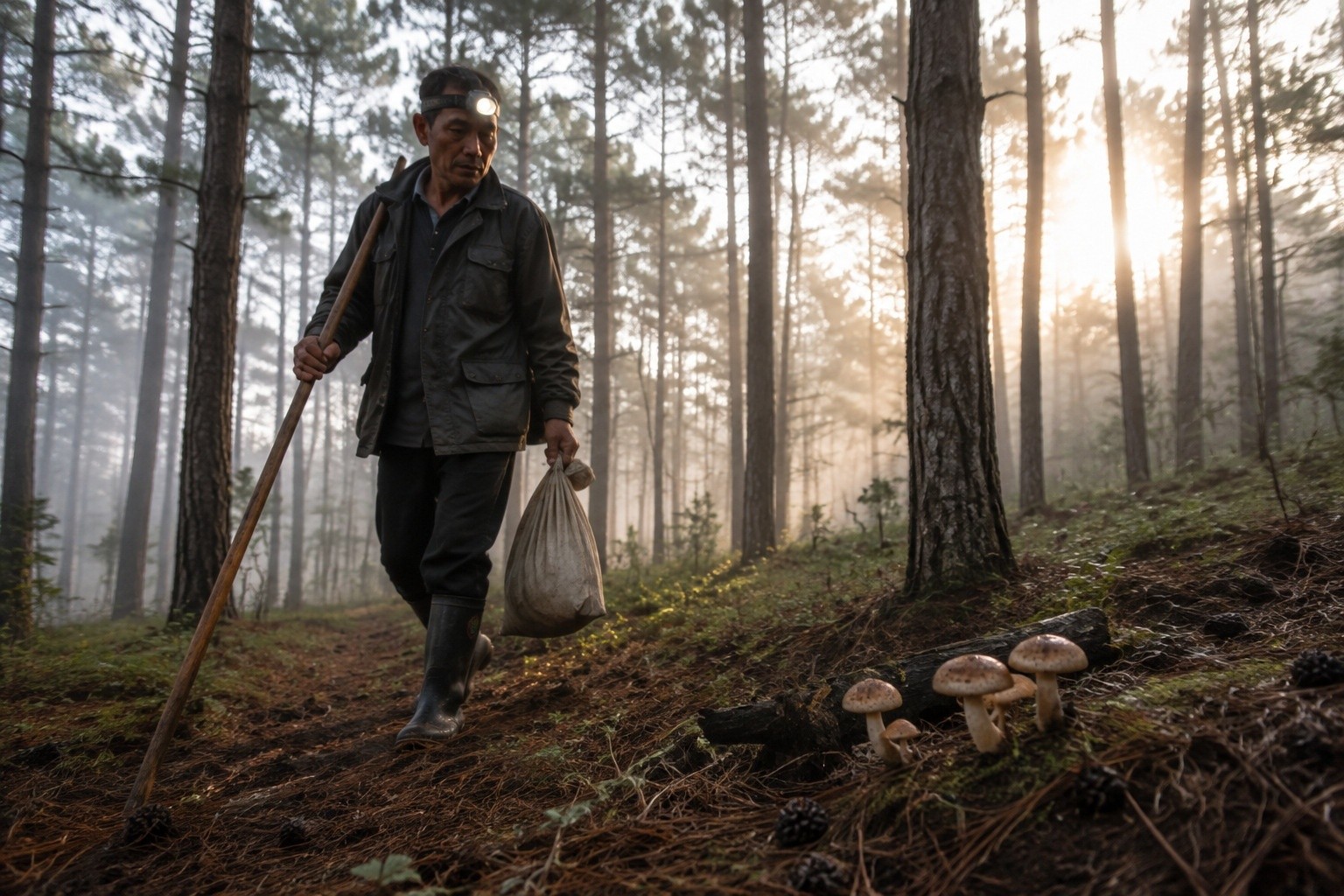
At 4 a.m., Dai Wencai straps on a pair of rubber boots and checks the headlamp strapped to his forehead. He is 58 years old, and for the next six hours he’ll climb through pine and oak forests at 3,000 meters above sea level, looking for a mushroom that might not even be there. But if he finds it, a single kilogram could be worth more than he earns in a month.
This is the world of the matsutake hunter—a seasonal, high-stakes treasure hunt in the mountains of southern Yunnan province, where the wild mushroom known in Chinese as songrong (松茸) can fetch up to 10,000 yuan (about $1,400) per kilogram, sometimes more, depending on grade and timing.
What Makes Matsutake So Special?
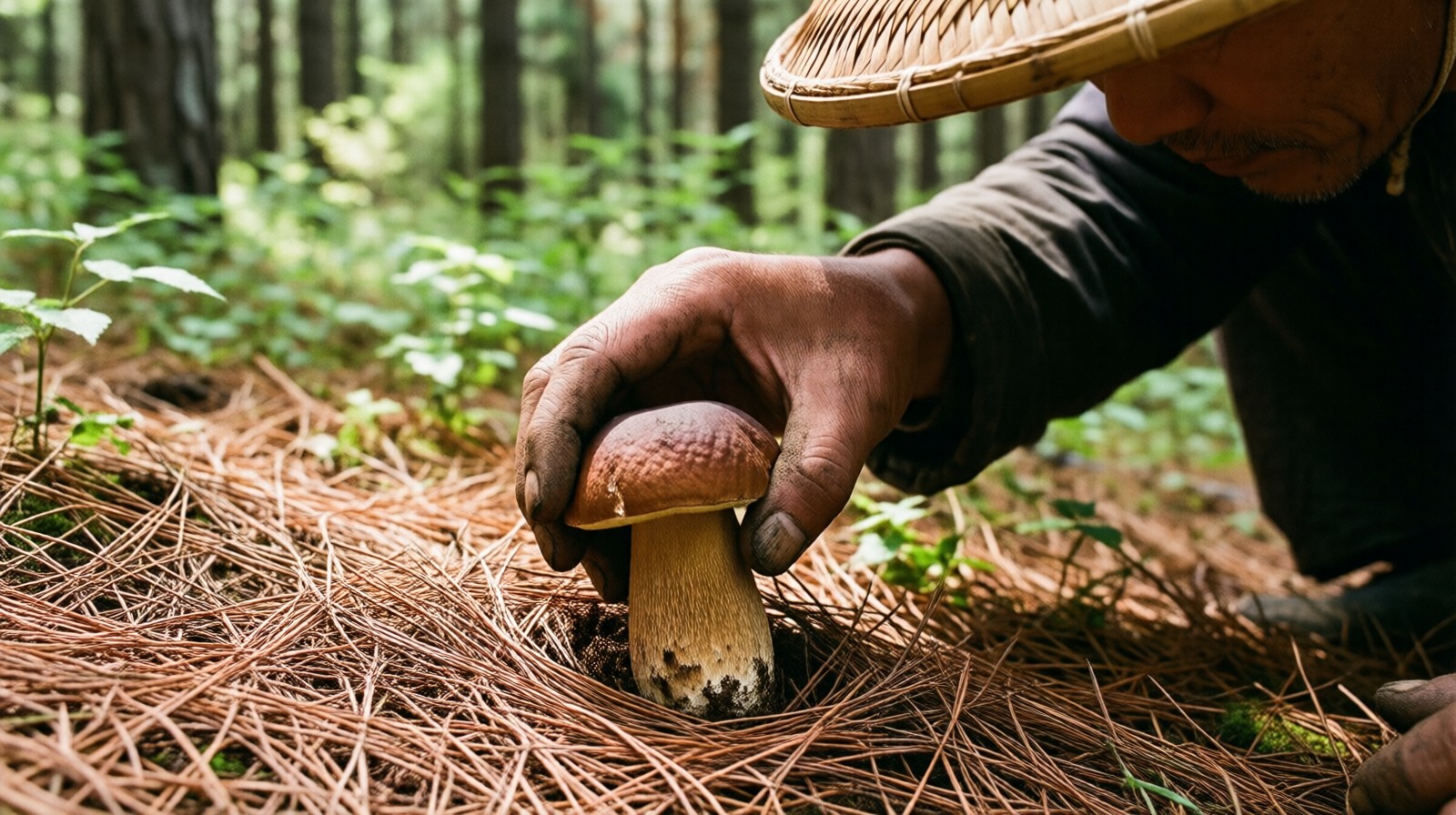
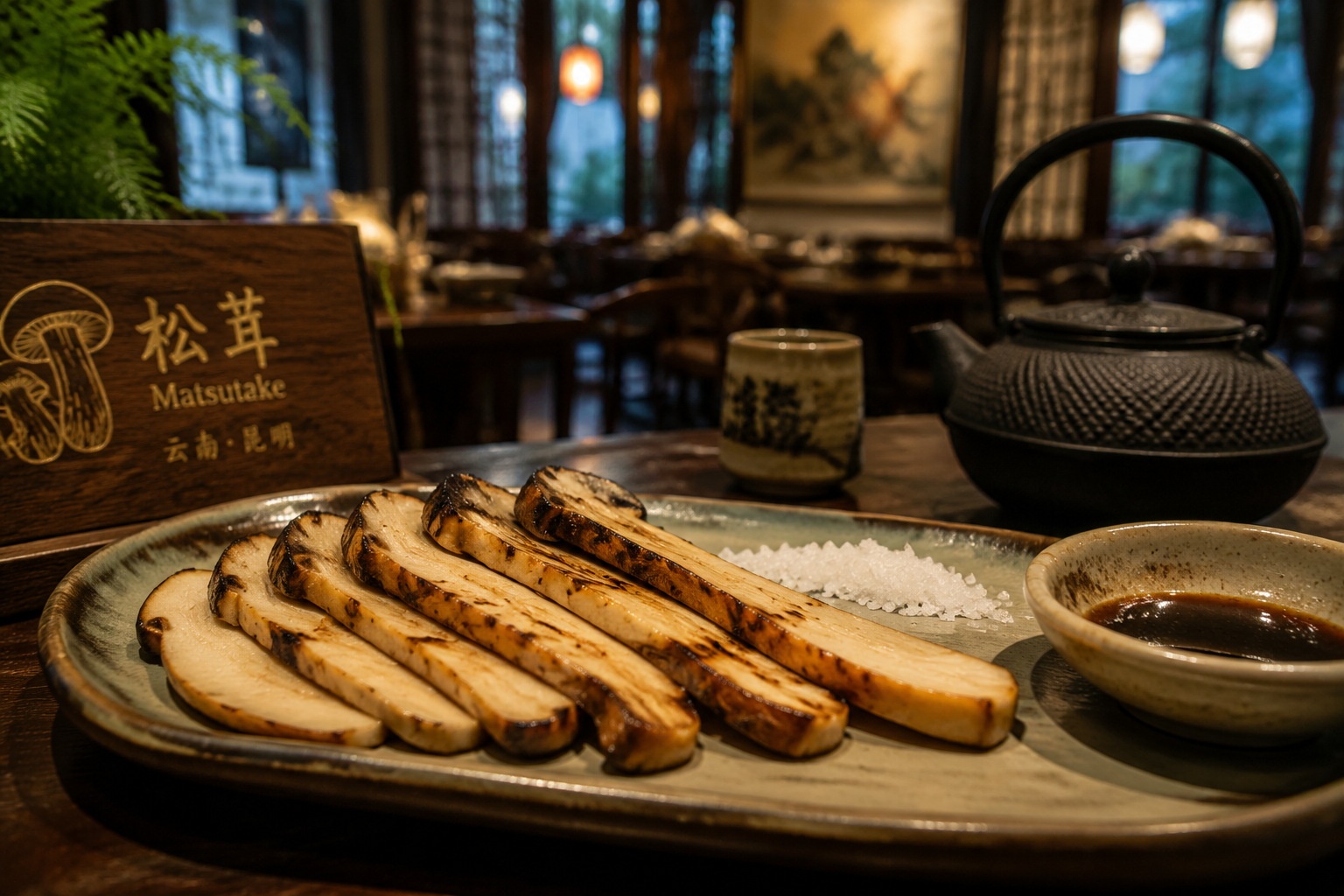
The reason is partly cultural, partly culinary. In Japan, matsutake is a symbol of autumn, a delicacy prized for its complex, spicy aroma. It is often served as a whole grilled mushroom or in a clear soup, meant to be appreciated with quiet reverence.
But Japan’s own supply has shrunk drastically over the past century, due to urbanization and a pest that killed many red pine trees. Today, Yunnan has become one of the world’s largest suppliers of wild matsutake, exporting hundreds of tons each year, most of it to Japan.
The mushroom cannot be cultivated. It grows in symbiosis with specific tree roots, in undisturbed forests with just the right soil, moisture, and altitude. That is why it is so rare and why the price is so high.
The Hunt
The hunters are mostly farmers from the villages below. They go out at night or before dawn to reach the forests in time. It is not just a walk in the park. The terrain is steep, the forest thick, and bears and wild boar roam.
“You have to know where to look,” says Dai, who has been picking matsutake for 20 years. “Pine trees are good, but not all pine trees. The soil has to be right. The mushroom talks to you if you are patient.”
He carries a bamboo stick to probe the leaf litter, and a cloth bag to protect the prize. His phone—a cheap Android model—is tucked in a plastic bag to keep out the rain. He uses it to check weather forecasts and, later, to compare prices with buyers through a WeChat group.
The Market: Money Changes Hands
By mid-morning, hunters descend to roadside collection points. Buyers inspect each mushroom, weighing, checking shape, size, and maturation. The prices vary wildly: a perfect bud-like specimen with the cap still closed might be worth three times a broken one. A single grade-1 matsutake, about 10 centimeters long and 50 grams in weight, can sell for 500 yuan or more.
In the village of Shangri-La, known in Chinese as Xianggelila, a famous auction floor opens every season. Dealers from across China and Japan gather there to bid for the best lots. The scene is intense: phone calls, raised voices, and piles of fresh mushrooms laid out like gems.
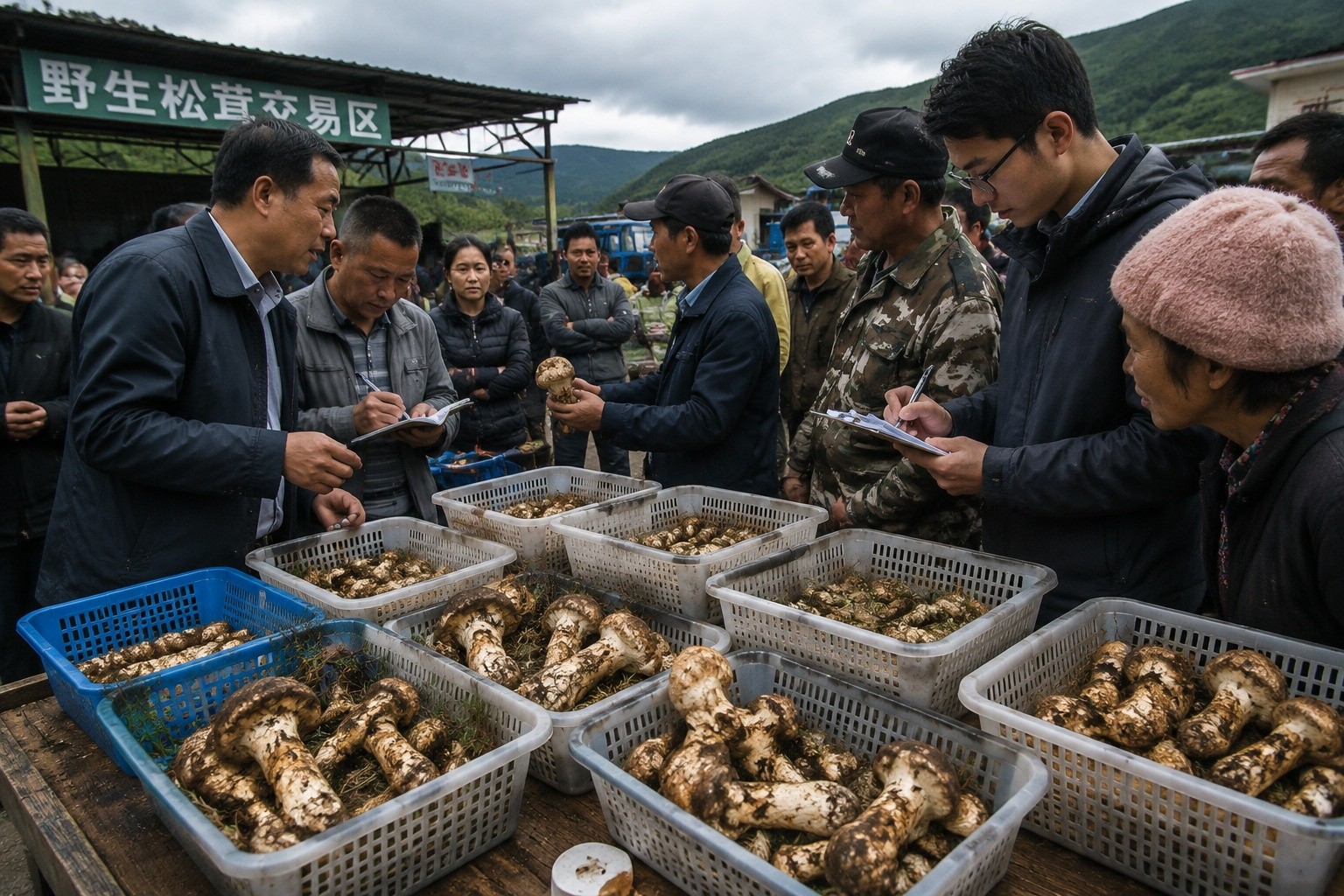
“It’s a gamble,” says Zhang Li, a buyer from Chengdu. “If I buy at a high price and the mushrooms don’t arrive in good condition, I lose money. But if I can get them to Japan in time, the profit is good.”
From Forest to Tokyo in 24 Hours
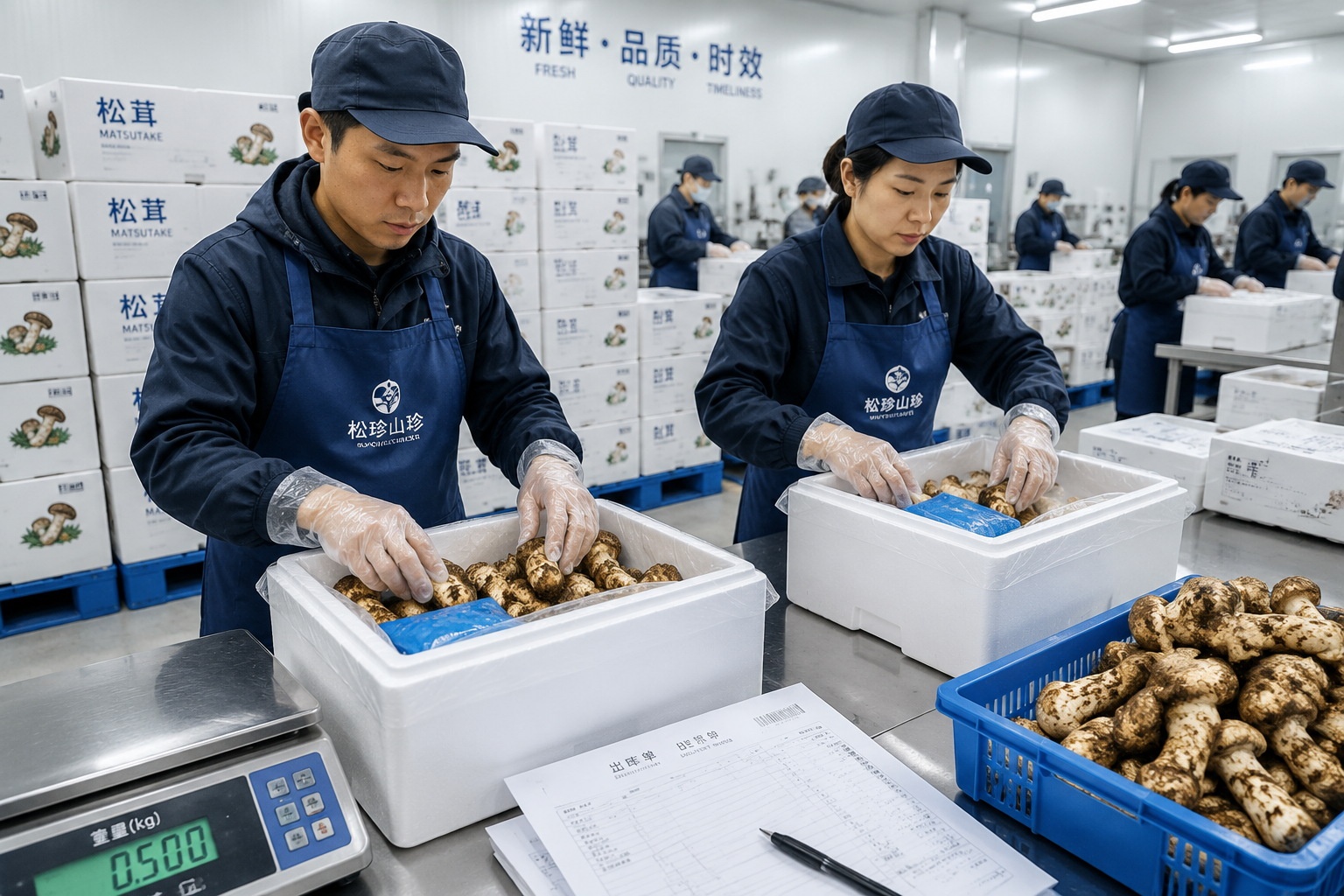
Within hours of the auction, the mushrooms are packed in foam boxes with ice packs and rushed to airports in Lijiang or Kunming. From there, they are flown to Chengdu, Shanghai, or Beijing, then onward to Tokyo or Osaka. In some cases, a mushroom picked in the morning in Yunnan can be on a Japanese dinner table that evening.
That speed is made possible by a logistics network that links even remote mountain villages to global markets—something that would have been unthinkable just 20 years ago. Farmers now use mobile payments to receive money instantly; middlemen use e-commerce platforms to reach buyers all over the world.
A Risky Living
For the hunters, the income is substantial by local standards. A good day can bring in 500 yuan; a week sometimes matches a month’s wages for a factory worker. But it is not reliable. Between June and September, the season can be cut short by rain, drought, or overharvesting. “Some years you make a lot; some years you lose your boots,” says one hunter.
The rising demand has also led to a “gold rush” mentality. Some hunters pick too early, taking tiny mushrooms that haven’t matured, which damages the mycelium. In recent years, local governments have introduced rules: a minimum size, a ban on certain harvesting methods. Some villages have set up communal woods and rotation schemes. But enforcement is patchy, and the mountains are vast.
The Taste of Status
So what does it actually taste like? The aroma is the real allure—pine-like, earthy, with a hint of cinnamon and a sharp, spicy note that cannot be forced or farmed. The flavor, when grilled or simmered in a clear soup, is delicate but intense. Chefs say it pairs with nothing else; it is a soloist.
At a simple restaurant in Kunming, the capital of Yunnan, a dish of sliced matsutake in a hotpot costs 300 yuan. The diners there are mostly business people entertaining clients. For them, ordering matsutake is like ordering lobster in Boston—a performance of status.
The Future of the Hunt
In the mountains, the rush for the mushroom is also a race against time and climate change. As temperatures rise, the habitats are shifting higher up, and some years the harvest drops dramatically. Yet the trade continues, a strange union of ancient forest knowledge and modern e-commerce.
The hunters come down with their precious cargo, check their phones, and transfer the day’s earnings via mobile payment to a savings account. Many have never eaten matsutake themselves. “It’s too expensive,” says Dai. “But I’m happy to know someone in Tokyo will enjoy it.”
That may be the most human part of this story: a mountain farmer in Yunnan and a businessman in Tokyo, connected by a mushroom neither of them sees in the same way, but both understand as something precious.
Start the discussion at forum.chinacomes.com