

Introduction: A Surprising Encounter
Standing in a fruit market in downtown Shanghai, I noticed a display of imported apples from France and New Zealand. Each one was individually wrapped in pink paper, priced at around 20 yuan (about $3) each. A few meters away, a farmer’s stall sold Tianshui apples from Gansu for just 5 yuan per jin (500 grams). I bought both and tasted them side by side. The Tianshui apple was unmistakably sweeter—crisp, juicy, with a honey-like aroma. The imported apple was good, but its sweetness felt muted, almost tart in comparison. Intrigued, I decided to visit Tianshui to understand what makes these apples so sweet.
Why Tianshui Apples Taste Different
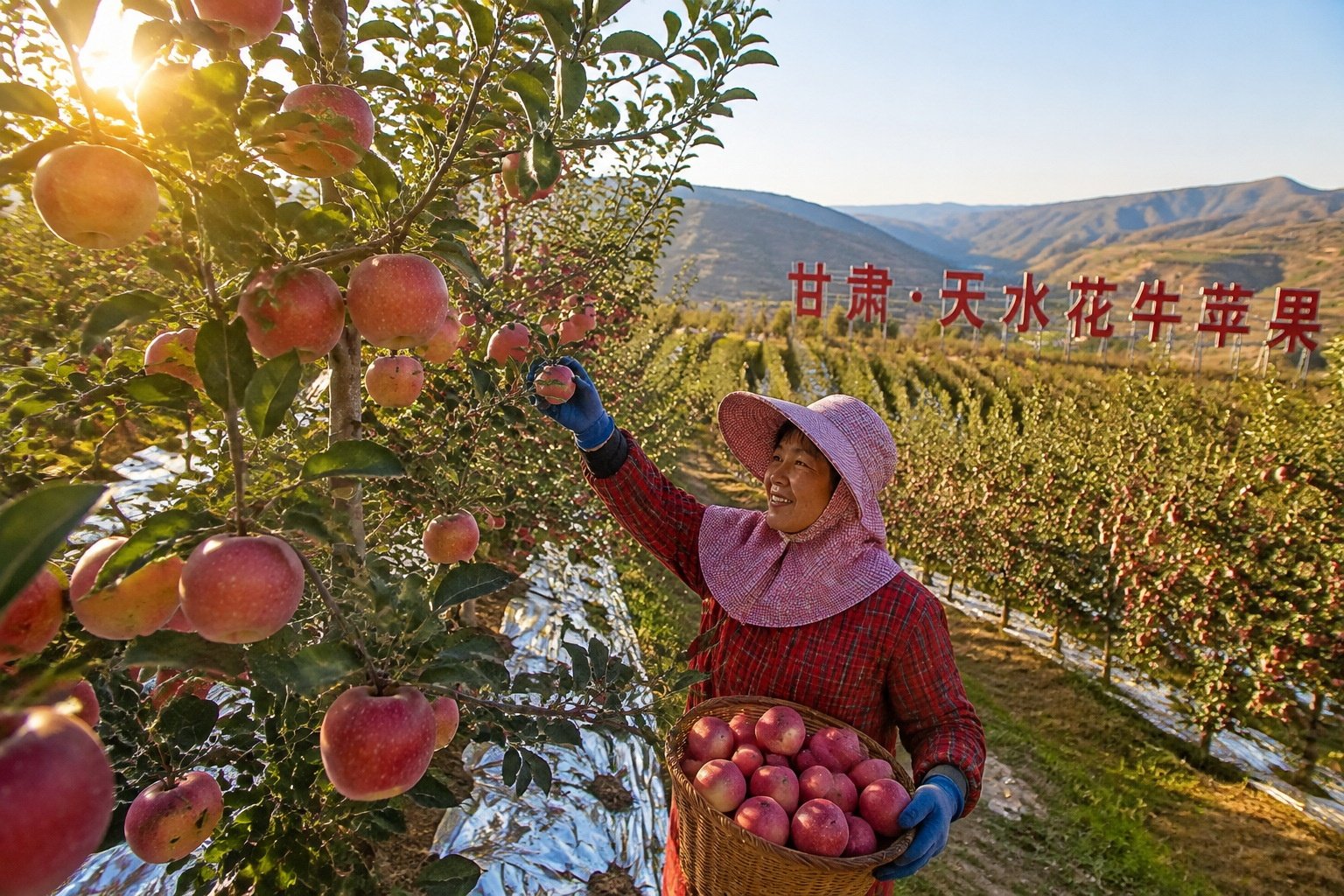
Tianshui is located in the southeastern part of Gansu Province, often described as a transitional zone where the temperate monsoon climate meets the dry plateau. Apple orchards cover the mountainside, reaching altitudes of 1,200 to 1,800 meters. Here, the sunlight is intense, and the temperature difference between day and night can be as high as 15 degrees Celsius. In the daytime, leaves produce sugars through photosynthesis; at night, the cooler air slows down the apple’s respiration, so those sugars are preserved instead of being burned off. This is the first secret: nature’s own caramelization process.
The most common variety here is called Huaniu, a member of the Red Delicious family. It was first introduced from the United States in the 1950s, but over decades of local cultivation, it has developed its own character. Unlike the uniform Red Delicious you might find in a supermarket, Tianshui Huaniu apples have a deeper red color and a distinctly floral fragrance. They also tend to be denser and crunchier, which makes them feel fresher. Many visitors ask why Chinese apples look less glossy and are often smaller. The reason is that many local farmers avoid using growth-promoting hormones and wax, which are common in industrial apple farming. The result is an apple with a rough, natural skin and a more concentrated flavor.
A Farmer’s Patience
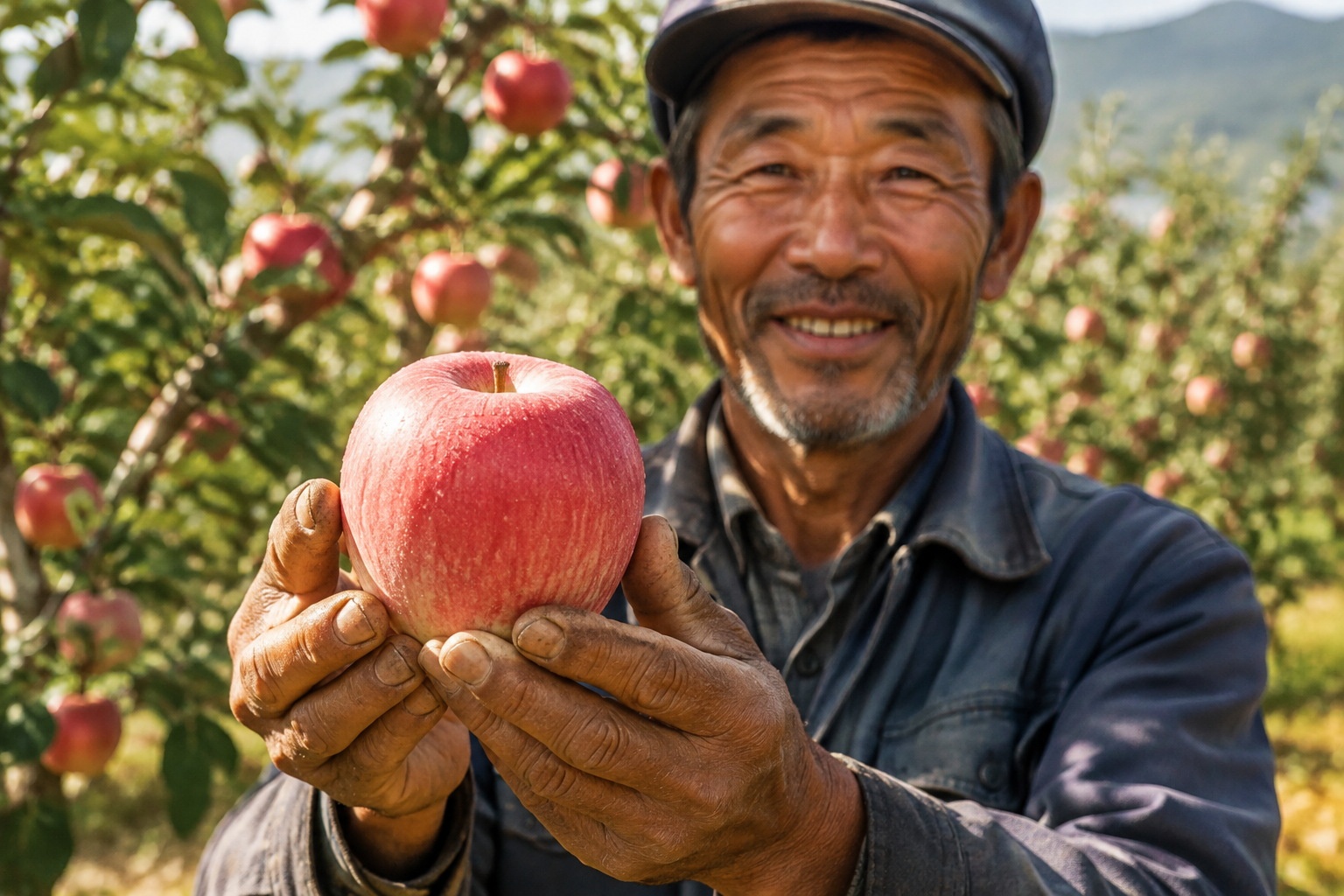
In an old orchard near the Wei River valley, I met 58-year-old Liu Jianguo. He has been growing apples for over thirty years. He handed me a small, unassuming apple from a low branch. “Taste this,” he said. The skin was rough, but when I bit into it, the juice burst out, intensely sweet and aromatic. “This one came from a tree that’s more than 20 years old,” he said proudly.
Liu says the key to sweetness is patience. “Every apple must stay on the tree for at least 130 days after bloom. We don’t pick early. We use poultry manure and compost, never chemical fertilizers, and we don’t wax the fruit. The wax is for show, not for taste.” Imported apples, he argues, are often harvested early so they can survive the long sea journey. “They can’t taste like this.”
What Consumers Say in the Market
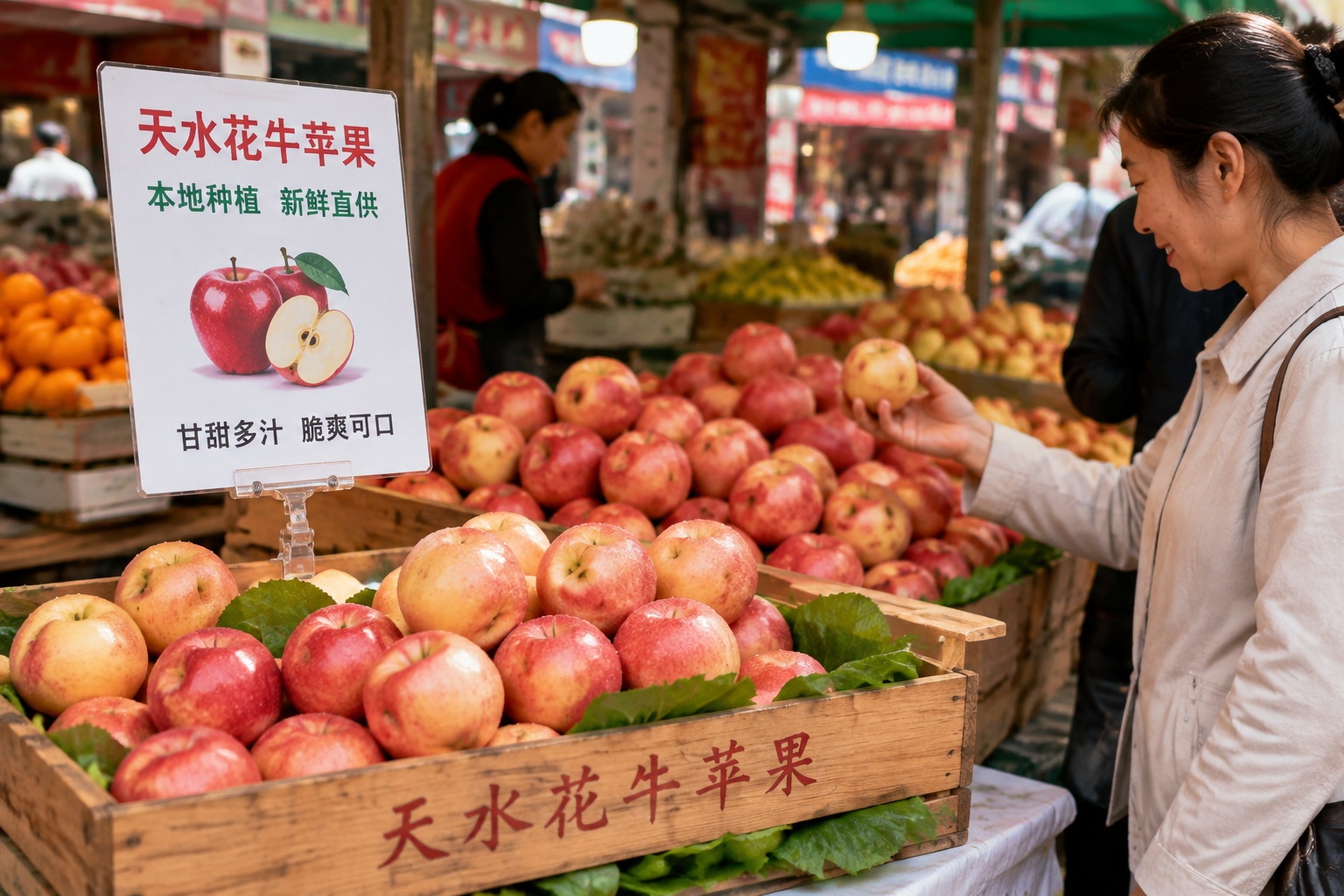
In Tianshui’s morning market, I watched a woman skillfully selecting apples. She told me: “I’ve been buying these apples for thirty years. They’re the only ones my family eats. The imported ones are just for giving as gifts because they look nice. But for eating, these are the ones.” Nearby, a young shopkeeper added that local apples are also popular on e-commerce platforms. Last year, he shipped boxes to Shanghai, Shenzhen, and even overseas to Malaysia. “People who taste them once usually come back for more.”
The local price is one third of an imported apple, which makes it an easy everyday purchase. But it’s not just about cost. For people in Tianshui, the apple is a matter of identity and pride. The city’s apples have held an official geographical indication since 2017, meaning the name “Tianshui Huaniu” is protected.
Imported vs. Local: The Logistics Factor
Why are imported apples less sweet? The answer lies in supply chains. Imported apples travel by sea for weeks—sometimes up to two months. To avoid rotting, they are picked at a stage when starches have not yet fully converted to sugar, and stored in controlled-atmosphere facilities. During cold storage, the fruit continues to mature but never reaches the same sugar content as a tree-ripened apple. Eventually, they are coated with a food-grade wax to prevent moisture loss, which adds a strange coating on the skin.
Local Chinese apples, on the other hand, have a much shorter supply chain. In Tianshui, many farmers sell directly to wholesalers or through live-streaming e-commerce. Apples can leave the orchard and reach a consumer’s home in three to four days. This means the apples can be picked at full ripeness, and they don’t need any post-harvest chemical treatment. This difference is not unique to China, but it is starkly visible in a country of this scale.
Sweetness and Culture
Chinese consumers often prioritize sweetness when buying fruit. A common compliment for a good apple is “sweet like honey.” In Western countries, many apple lovers prefer a balance of sweetness and acidity, which is why varieties like Granny Smith are popular. This cultural preference has influenced the market: Chinese farmers are incentivized to grow varieties that are as sweet as possible, often sacrificing shelf life for taste. In that sense, the Tianshui apple is a product of both geography and consumer taste.
Last month, I brought a bag of Tianshui apples back to Shanghai. My friends, who usually buy imported apples, were astonished by the flavor. They quickly asked where they could buy more. This small surprise is, in a way, a window into the changing reality of Chinese agriculture—where smallholders can leverage technology and local conditions to compete with global giants.
Conclusion
Tianshui apples are more than just a fruit. They are a reminder that sweetness is not an accident. It comes from patient farmers, a favorable climate, and a supply chain that values taste. If you ever visit China, ignore the shiny imported apples for a moment. Take a chance on a humble, slightly lopsided Tianshui apple—you might find it is the sweetest one you have ever tasted.
Start the discussion at forum.chinacomes.com