

Introduction: The First Dip
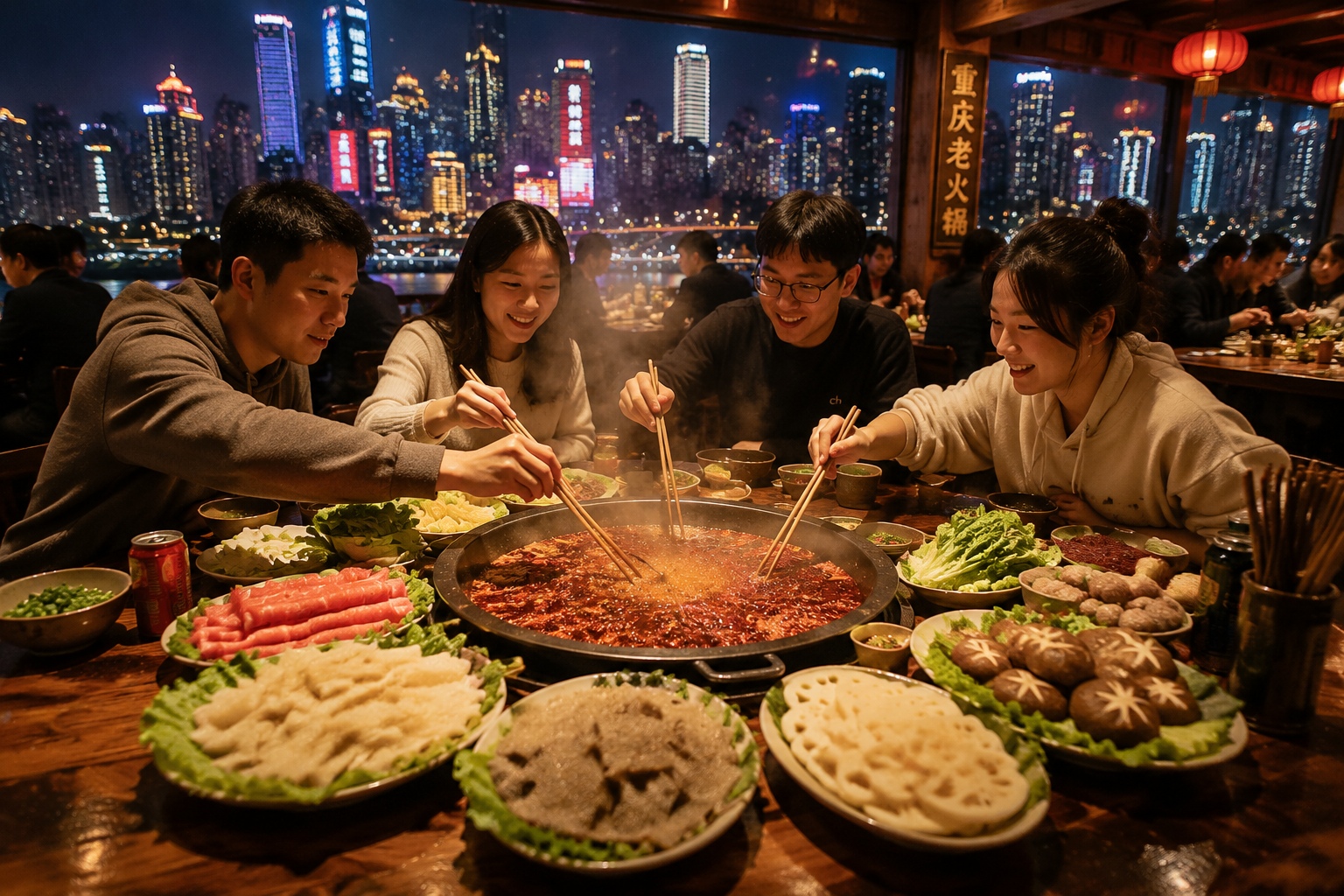
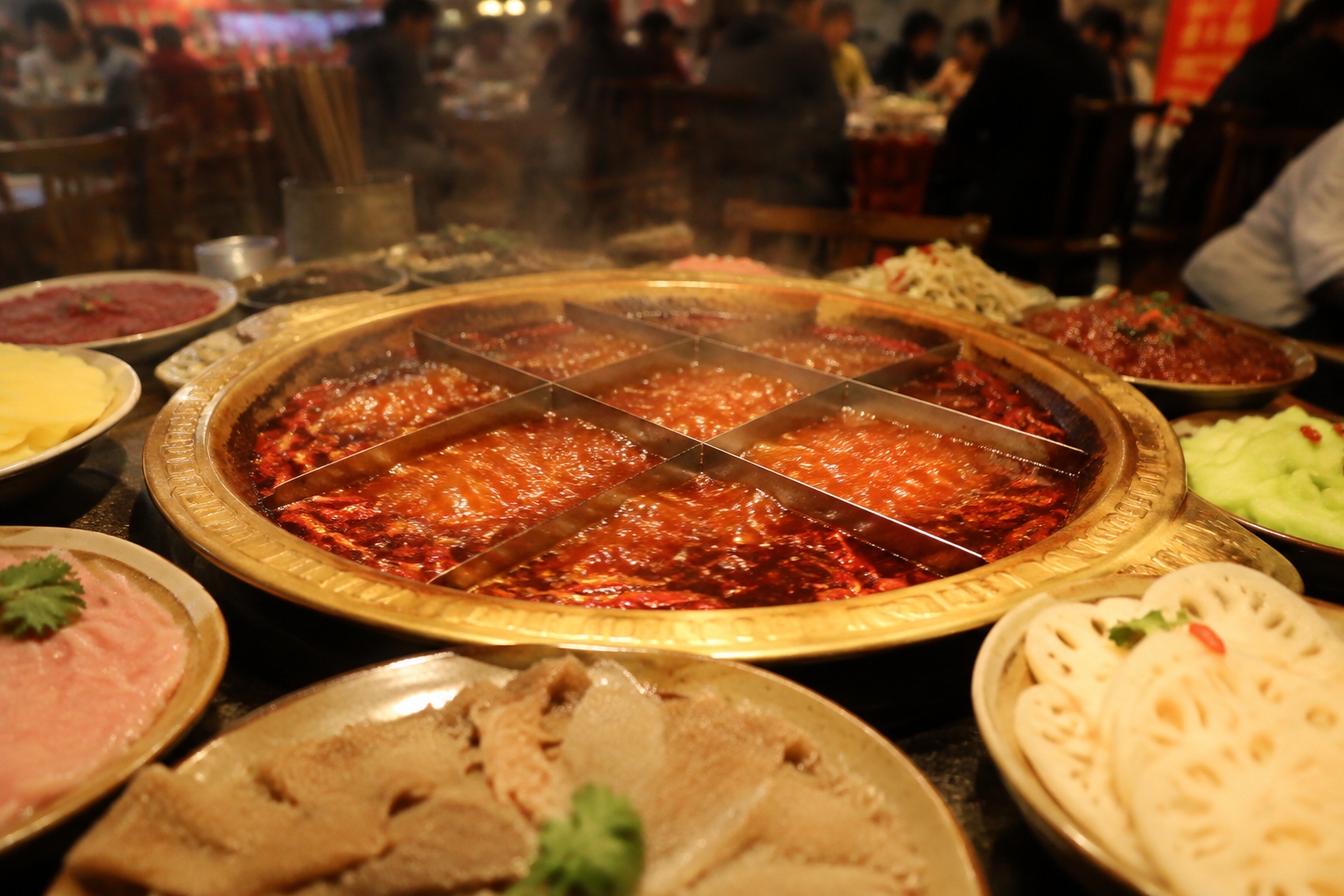
It’s a humid Friday evening in Chongqing, and the streets are packed with people looking for dinner. Inside a restaurant called “Lu’s Old Hotpot,” a 32-year-old local named Wang Lin is hosting two American colleagues. She has ordered the classic “nine-grid” pot, a round copper bowl divided into nine sections, each with a different level of spiciness. Her guests are both excited and nervous. One has never seen duck intestines or beef tripe; the other once tried a mild hotpot in New York but never the Sichuan pepper-laden version.
“This is the real Chongqing style,” Wang says, dipping a lotus root into her sesame-oil bowl. “You don’t eat from your own plate. We all share one pot. It’s a way of getting close.” For any first-time visitor from a Western dining culture, this is a small shock. Instead of a quiet meal with individual portions, you join a noisy, interactive performance. The broth is so hot that it beats and blisters; the ingredients cook in seconds; and the tongue-numbing “ma” of Sichuan pepper follows each bite. For about 80 yuan a person, it is also remarkably good value. This is a good way to understand modern China: a cuisine that went from a street snack to an engineered industry without losing its social soul.
The Docker’s Stew: Where It All Began
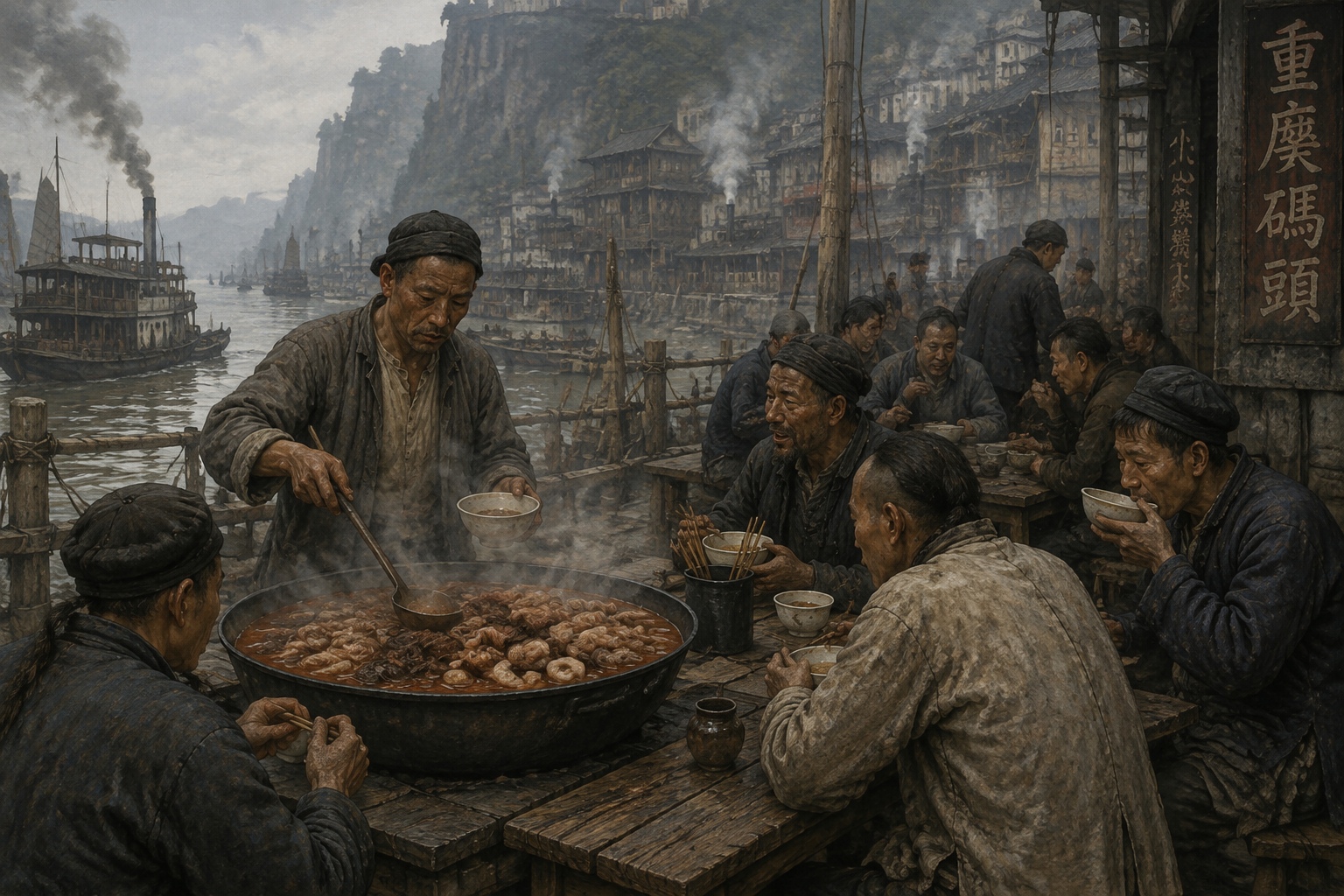
The story begins with the Yangtze River and the poor dockworkers who loaded and unloaded ships in Chongqing in the late 19th century. The city’s foggy, damp climate is hard on outdoor work. Workers needed cheap food that could be eaten while standing, and they found it in the animal parts that others didn’t want: liver, stomach, intestines, and veins. A boiling broth was perfect for cooking these tough cuts.
Legend has it that a couple named Ma and Chen built a wooden frame over a stove on the docks, divided into sections, and used a spicy broth with beef fat to boil offal. Dockworkers would gather around, dip their own chopsticks into the common pot, and eat enough to last through the next shift. The shared pot was not just practical; it was also a small act of community in a harsh world.
This story is often compared to how Naples gave us pizza, or how poor Scottish workers discovered that intestine stuffed with oats was an old recipe for haggis. But there is a key difference: pizza and pasta eventually became individual portions, served on separate plates. Hotpot remained communal. You still share the same broth, the same pot, and the same spoon. That culture of sharing is why hotpot is so closely connected to Chinese ideas of family and friendship.
From Street Stall to City Brand
For decades, hotpot stayed a street food, served on wooden tables and plastic stools. In the 1980s, economic reforms brought a wave of dining out. Restaurants like Chongqing’s Little Swan and De Zhuang cleaned up the image, added modern interiors, and offered professional service. They proved hotpot could be more than a roadside snack. Soon, these brands opened branches in other cities, and by the 2000s they were going abroad. Today, you can find a Chongqing-style hotpot restaurant in Singapore, London, or Los Angeles.
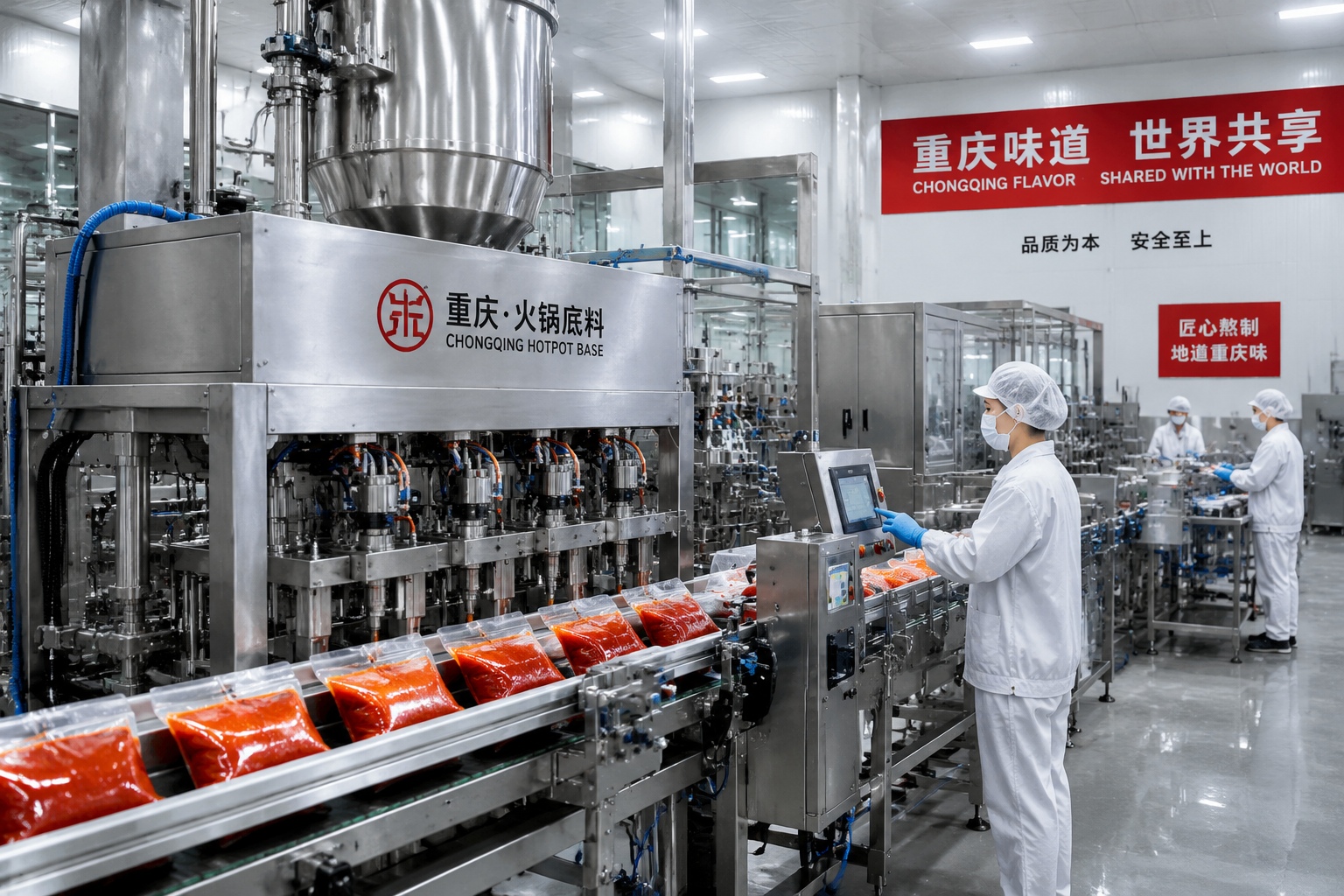
At the same time, the hotpot base itself was industrialised. Instead of each restaurant preserving its own secret spice mix, factories began to produce a consistent base. This base is a thick paste made from beef fat, dried chilli, Sichuan pepper, fermented bean paste, and dozens of spices. In the late 1990s, entrepreneurs figured out how to make a stable, packaged version, sealed in bags that can be stored for months. The impact is similar to what industrial pasta-making did for Italy: a local art became a global commodity. Today, a Chongqing hotpot restaurant in another country can import the same base and reproduce the same taste with almost no training.
The Supply Chain on Boil
The scale of the hotpot economy is visible in its supply chains. Farms in Chongqing and surrounding provinces supply thousands of tonnes of chillies, peppercorns, vegetables, and meat. Cattle suppliers provide beef tripe, intestines, and cow blood. Cold-chain trucks move these ingredients through the city at night so restaurants can have fresh food by noon. Digital platforms add another layer: customers order from their phones, pay with Alipay, and can even have a complete hotpot set delivered home. Self-heating hotpot—a single-use box with a heating element sealed inside—has become a fast-growing product for train travellers and office workers. One industry report found that sales of self-heating hotpot increased by more than 200% in the year after 2020.
It is estimated that the city has more than 30,000 hotpot restaurants, and the wider industry—restaurants, logistics, agriculture, food delivery, and tourism—generates over 100 billion yuan (about $14 billion) annually. Packaged hotpot base alone is a 10-billion-yuan market. That makes hotpot one of China’s most successful examples of a local food turned into a major economic pillar.
Beyond the Pot: Tourism, Social Media, and a New Generation
Hotpot has become central to Chongqing’s image. Many restaurants sit on terraces overlooking the Yangtze and Jialing rivers. At night, the red broth glows under string lights, while the skyline shines in the distance. Chongqing now markets itself as the ‘hotpot paradise’ and holds an annual festival. The city even built a Hotpot Museum, where visitors can walk through recreations of the old docks and taste different broths.
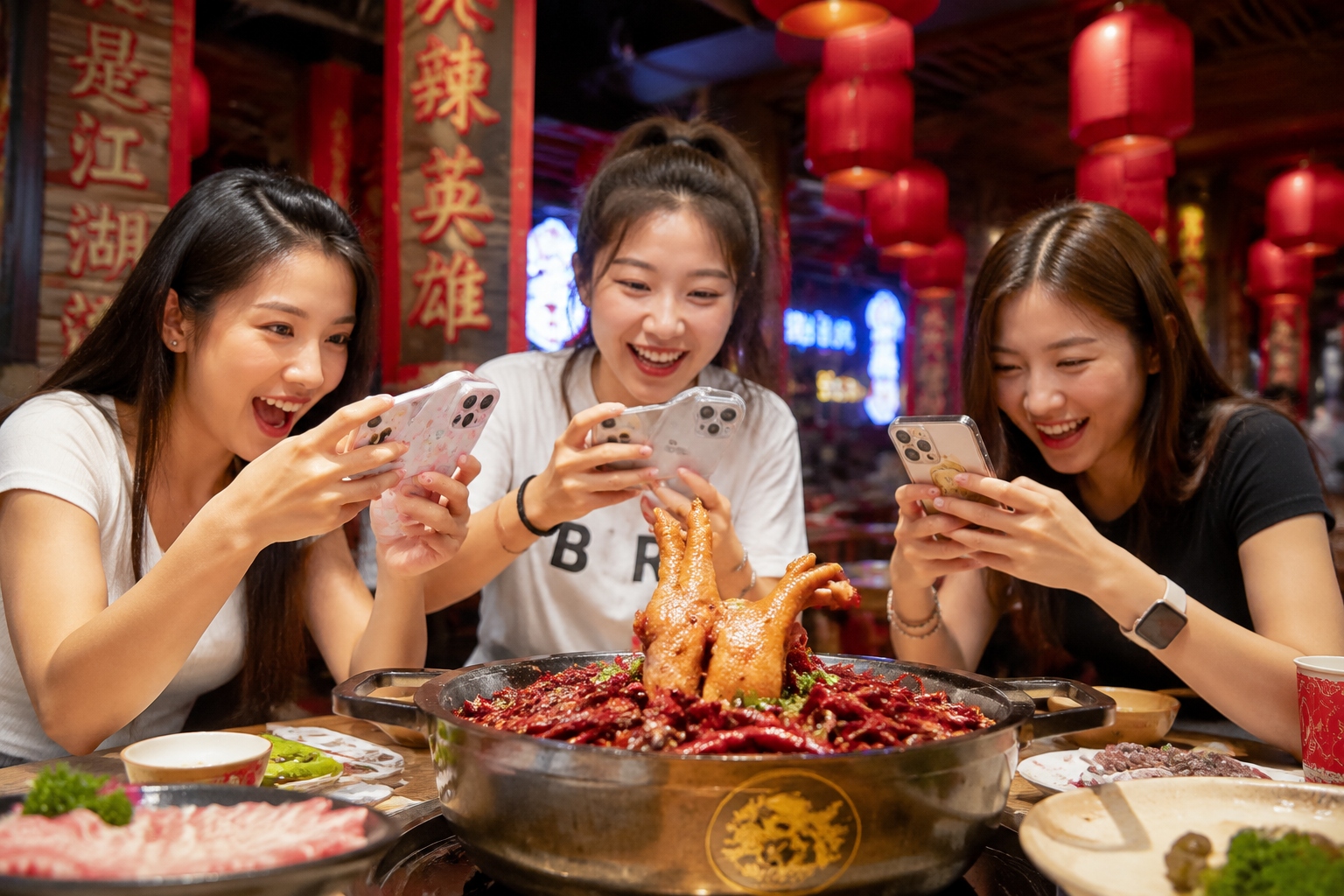
Young consumers have taken hotpot to a new level. They use it as a reason to gather, to celebrate, or to recover from a bad day. Many restaurants now feature dramatic presentations, such as a pot that arrives with a whole chicken claw perched on the edge, or a lava of dried chillies arranged in a circle. The latest trend is ‘one-person hotpot’, which serves the same spicy broth in a small container for solo diners. On social media, hotpot is a constant star. Videos of people sweating through their tears, or unboxing a self-heating hotpot on a high-speed train, draw millions of views. This online word-of-mouth attracts more tourists and turns a local into a national obsession.
Under the Red Oil: Challenges and Risks
The hotpot economy faces serious risks. The most sensitive issue is food safety. Some restaurants have been accused of reusing ‘old oil’ to save money. This not only tastes bad but can be harmful. A few high-profile scandals have damaged the whole sector. The government now requires stricter licensing, and many restaurants have installed ‘oil disposal’ systems that record how much waste oil they produce and who collects it. Some even display the record to customers to rebuild trust.
Another problem is extreme density. In Chongqing, you can find two hotpot shops on the same street. Because the basic recipe is similar, small shops must compete on price or gimmicks, and many close within months. To survive, owners try to create a signature dish, such as goose intestines or a special dipping sauce, but the failure rate remains high.
Finally, there is the health question. The classic hotpot is heavy in oil and spice, and Chinese consumers are becoming more health-aware. Some want ‘light’ versions like mushroom or tomato broths. Doctors have warned that the combination of high fat, salt, and spice is not ideal for everyone. For an industry built on intense flavour, adapting to healthier trends is a delicate balancing act. It is, however, the same path the Italian pizza industry followed when it introduced whole-grain crusts and vegan cheese. If Chongqing hotpot can find a similar balance, it may keep growing.
Conclusion: A Boiling Economy with a Human Touch
When you step back, the story of Chongqing hotpot echoes the path of Italian pasta: a poor man’s meal that became a global product through standardisation and marketing. But pasta is a silent food; hotpot is a participatory meal. You cook the food yourself, you share the sauce, you argue about timing. It creates a bond.
That is why the hotpot economy is not just about money. It is about culture, identity, and everyday life in a fast-changing country. For a traveller, the first taste is a lesson in Chinese social life. For a business person, it is an example of how a local food can scale up without losing its soul. As long as people want to share a meal, the hotpot will keep boiling.
Start the discussion at forum.chinacomes.com