
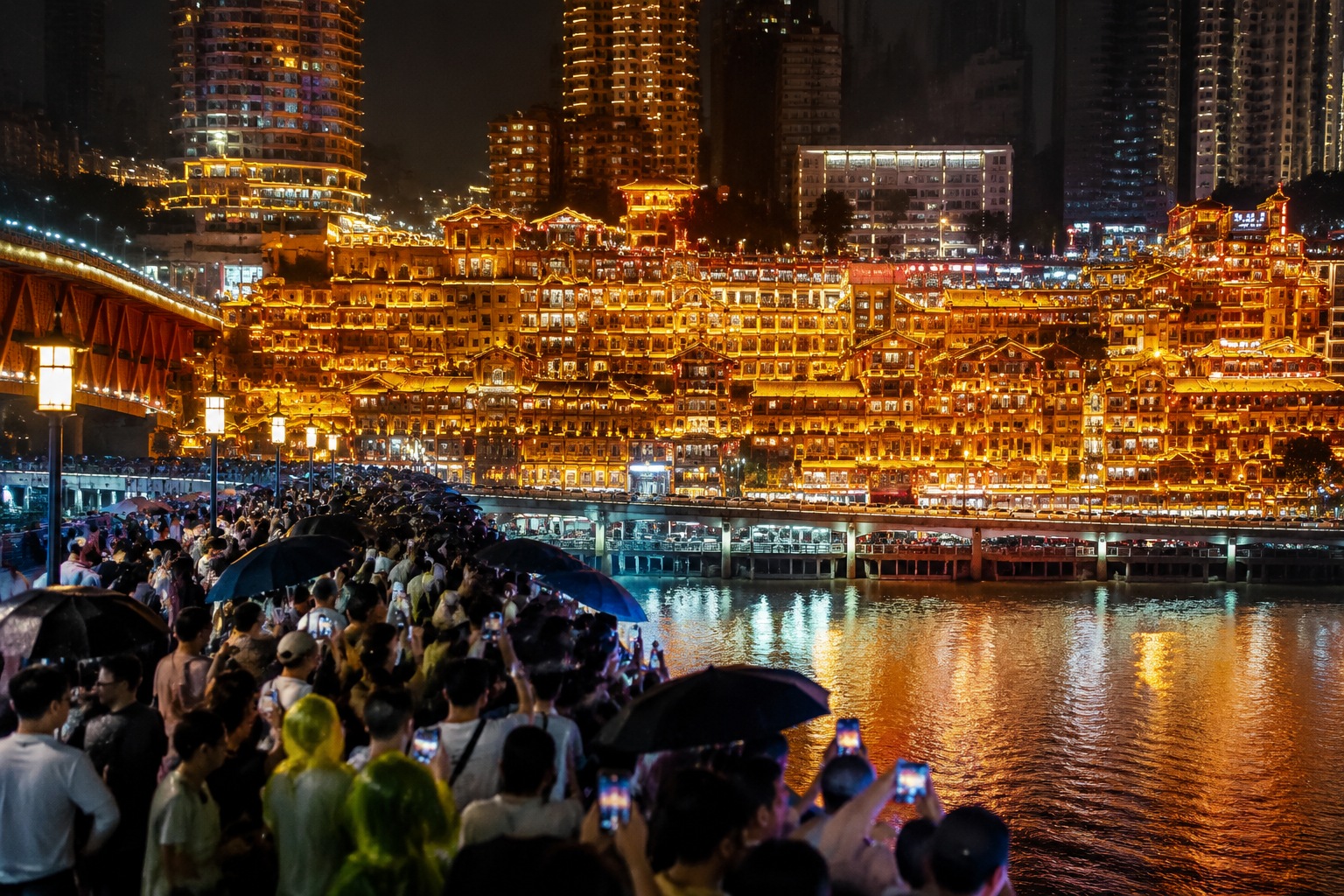

It starts with a photo. A cluster of wooden stilted houses clinging to a steep cliff, glowing amber against the dark river, with a pagoda-like roof that could be straight out of a Studio Ghibli film. That is Hongyadong, a commercial complex in Chongqing, a megacity in southwest China built on mountains and rivers. In recent years, it has become one of the most photographed spots in the country — a must-see for any visitor. But its fame is not just about looks. It is the result of a clever combination of city design, social media, and a deep human desire for wonder.
The Secret Behind the Viral Landmark
Visual Spectacle: A Real-Life Miyazaki Set
Hongyadong sits on the cliff at the confluence of the Jialing and Yangtze rivers. At night, the entire complex lights up, creating a layered, three-dimensional scene that looks like a glowing labyrinth. This “night economy” is no accident. Chongqing has invested heavily in lighting and urban design to make the city’s natural topography shine after dark. For many visitors, the first glimpse of Hongyadong from across the river is genuinely breathtaking — and it is designed to be.
The effect is amplified by the city’s geography. Chongqing is one of the most vertical cities in the world, with streets that climb, bridges that stack, and buildings that rise from cliffs. This makes every viewpoint, every alley, every stairway a potential photo opportunity. In a place like this, even a simple streetlight becomes a prop, and the landscape itself is the main attraction.

How Short Video Turned a City into a Content Goldmine
The real engine of Hongyadong’s fame is short-video platforms like Douyin (the Chinese version of TikTok). Users share clips of the lantern-lit streets, the nearby river cruises, and the famous photos taken from the rooftop bar across the street. One video can spark a wave of imitation, and soon millions of people are planning a trip.
Chongqing’s verticality also helps: because the city is so hilly, ordinary scenes look spectacular — trains passing through buildings, escalators climbing 100 meters, bridges stacked on top of each other. These moments are perfect for a 15-second clip. It is a virtuous cycle: more videos bring more visitors, more visitors make more videos.
The Psychology of “Check-in” Culture
For many young Chinese tourists, visiting Hongyadong is not just about seeing something pretty. It is about participating in a shared social experience — taking the same photo as their friends, proving they were there, and adding their own twist. This “check-in” (打卡, dǎkǎ) culture has become a defining ritual of modern Chinese travel.
But it goes deeper: it is also a way to express identity and belonging in a rapidly changing society. Posting a photo from Hongyadong signals that you are in tune with the moment, that you value aesthetic experience, and that you are part of a community that shares these adventures. The check-in becomes a badge of cultural literacy, and the landmark itself becomes a canvas for a collective story.
Beyond Hongyadong: The Second Curve
From One Spot to a Citywide Stage
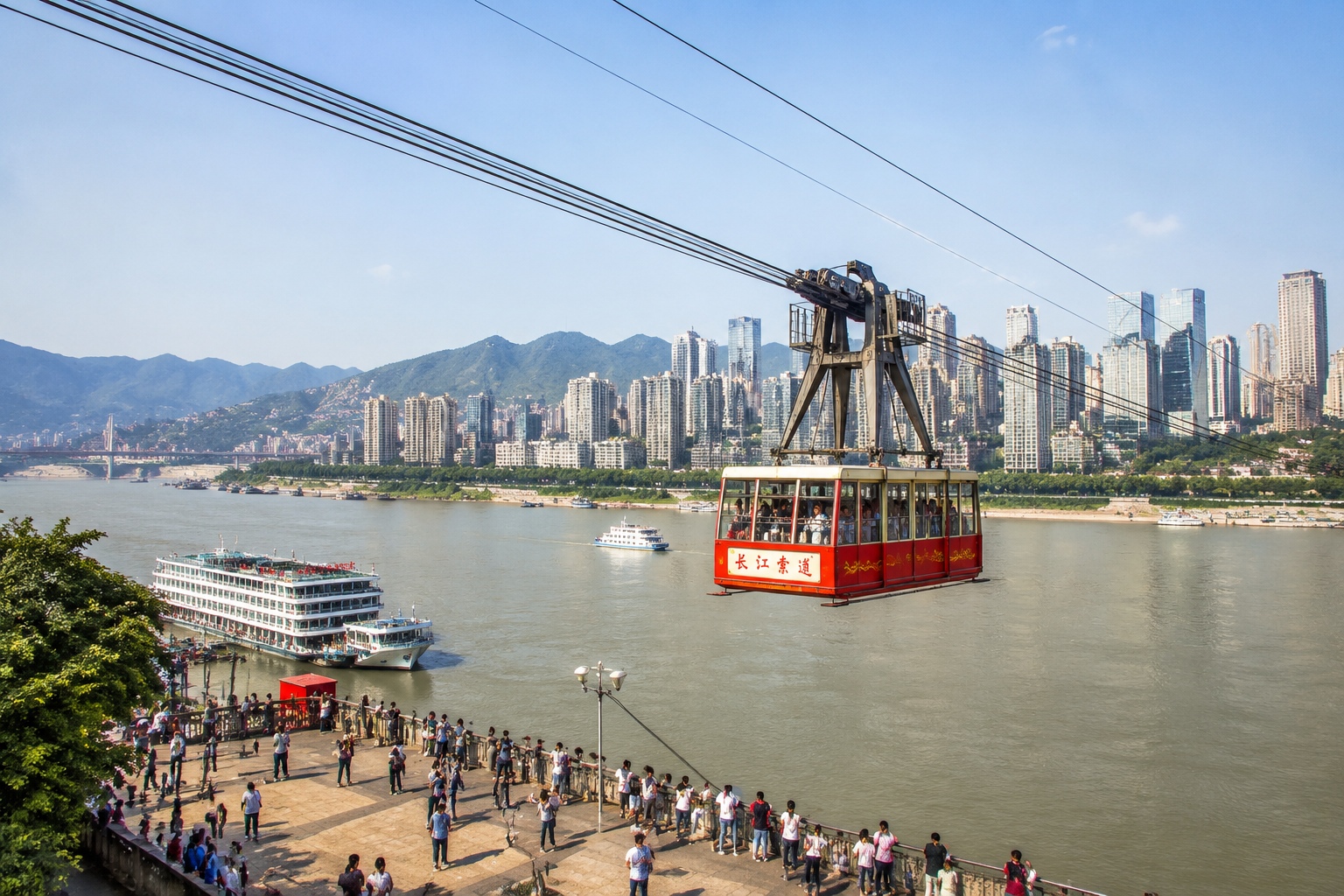
Hongyadong is just the beginning. Chongqing’s tourism officials and residents know that relying on a single landmark is risky. So the city has been busy creating a broader network of attractions. Nearby, the centuries-old Ciqikou (Porcelain Port) ancient town offers a more traditional experience, with narrow alleys, teahouses, and food stalls. The Shancheng Pedestrian Trail, a set of walkways that climb over hills, lets visitors explore the city’s residential areas and experience its verticality on foot. And the Yangtze River Cableway, a gondola that has shuttled commuters for decades, is now a popular tourist ride that offers a bird’s-eye view of the two rivers meeting.
From Sightseeing to Immersion
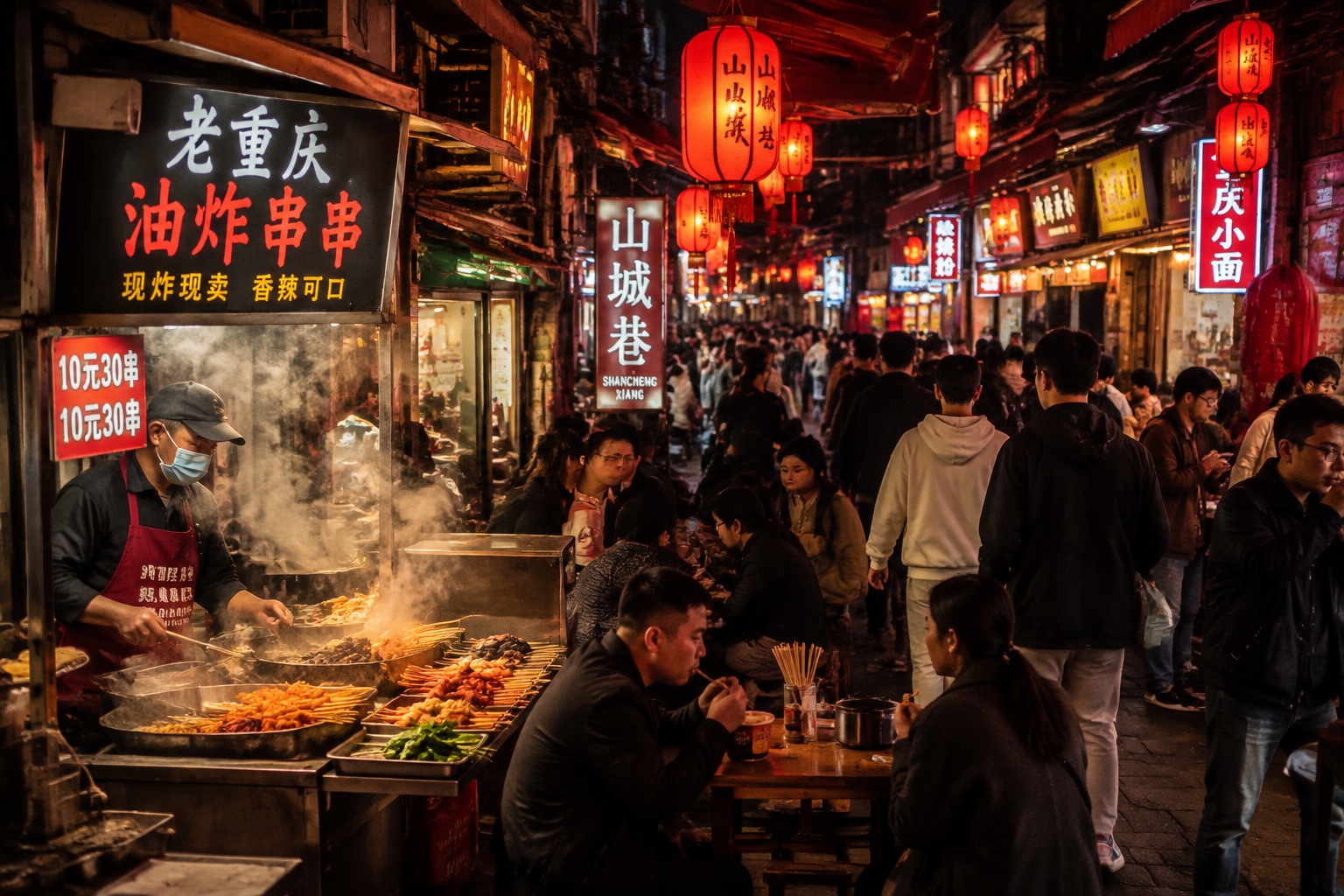
More importantly, the focus is shifting from “seeing” to “experiencing.” Tourists now wander into local neighborhoods, watch old men playing mahjong in a teahouse, or eat hotpot in a cramped eatery where the owner remembers your face. This kind of immersive travel — where you taste the city’s daily life, not just its landmarks — is growing. In fact, many visitors say that their favorite part of Chongqing was not Hongyadong itself, but the random alley they discovered on the way there. The city is learning to promote these hidden corners, not just the postcard views.
From Traffic to Loyalty: The Night Economy and City Renewal
To keep visitors longer, Chongqing is investing in what experts call the “night economy.” That means more evening cultural events, late-night food markets, and performance spaces. For example, a former industrial area near the river has been transformed into an art district, with old factory buildings now housing galleries, bars, and concert halls. These spaces give visitors a reason to stay past sunset, and locals a reason to reclaim their own city. The goal is not just to attract a one-time stampede, but to build a sustainable tourism ecosystem that benefits everyone.
What Locals Say: Life with the Crowds
A Mixed Blessing
Ask a Chongqing resident what they think of the tourism boom, and you will get a mixed answer. On one hand, they are proud that their home is now recognized worldwide. They also benefit economically: taxi drivers have more fares, shop owners sell more souvenirs, and even the grandmother who runs a small flower stall near the metro exit sees more customers. But there are costs. The center can get crowded, and some residents complain that rents are rising, and that the old city is becoming a theme park. “I used to walk through the old town in peace,” a friend told me. “Now it’s like a concert every night.”
The Everyday Winners
Still, for many ordinary people, the tourism boom has been a quiet windfall. A street-food vendor who used to survive on a few hundred yuan a day now earns three times that during holiday weeks. A driver who used to wait for hours for a fare now shuttles passengers between viewpoints without a break. A retired nurse now leads small walking tours through her old neighborhood, sharing stories that you will not find in any guidebook. These are the faces of the “red economy” — and they are often the most genuine ambassadors of the city.
Balancing Visitors and Livability
City management has also had to adapt. On busy holidays, authorities introduce crowd control measures, such as one-way pedestrian flows and timed entry at Hongyadong. There are more public restrooms, more cleaners, and more security staff. Digital tools help: a mobile app shows real-time visitor numbers and suggests alternative routes. It is a delicate balancing act, and not everything is perfect. But the fact that the city is trying — and learning — is itself a sign of maturity.
Is the Formula Transferable?
Hard to Copy, but Lessons to Learn
Many Chinese cities are eager to replicate Chongqing’s success. But the “secret” is not just a pretty facade. It is about digging into what makes a city unique, whether it is the landscape, the food, or the culture — and then presenting it in a way that resonates with people now. It also means investing in infrastructure and public services so that visitors feel welcome and safe. And it means accepting that viral fame can fade, so you have to keep evolving.
Telling a Better Story to the World
For international visitors, Chongqing offers a different China from the postcard images of Beijing or Shanghai. It shows a country that is urban, chaotic, vertical, and full of surprises. This kind of narratives helps the world see not just a “China to look at,” but a China that can be understood — through its streets, its smells, its sounds, and its people.
Conclusion: The Tide Will Recede, the Smoke Will Stay
Chongqing’s tourism boom may not last forever. Trends change, and the next viral spot is always around the corner. But what stays is the city’s true character — the steep streets, the spicy hotpot, the friendly banter of locals, the smoke rising from a neighborhood barbecue as night falls. That is not something that can be created by a marketing campaign; it is the raw material from which every successful “net red city” is made. And as long as that remains, Chongqing will always have a story to tell — to its own residents, and to the world.
Start the discussion at forum.chinacomes.com