


When Dating Lives in Your Phone
If there’s one thing that surprises most newcomers to China, it’s not the skyscrapers or the bullet trains — it’s how much of daily life runs through a phone. You order breakfast, call a cab, pay for groceries, and yes, find a date, all from the glowing rectangle in your pocket. Dating apps are not a niche pastime here; they’re one of the most common ways young people connect, and two names dominate the scene: Tantan and Momo.
Before we dive into the swipe buttons and unspoken etiquette, a quick reality check: these are not “Tinder clones.” They belong to a distinctly Chinese digital culture, with its own rituals, hacks, and occasional disasters. Let’s walk through how they actually work — and how to read the room when you’re swiping on a screen.
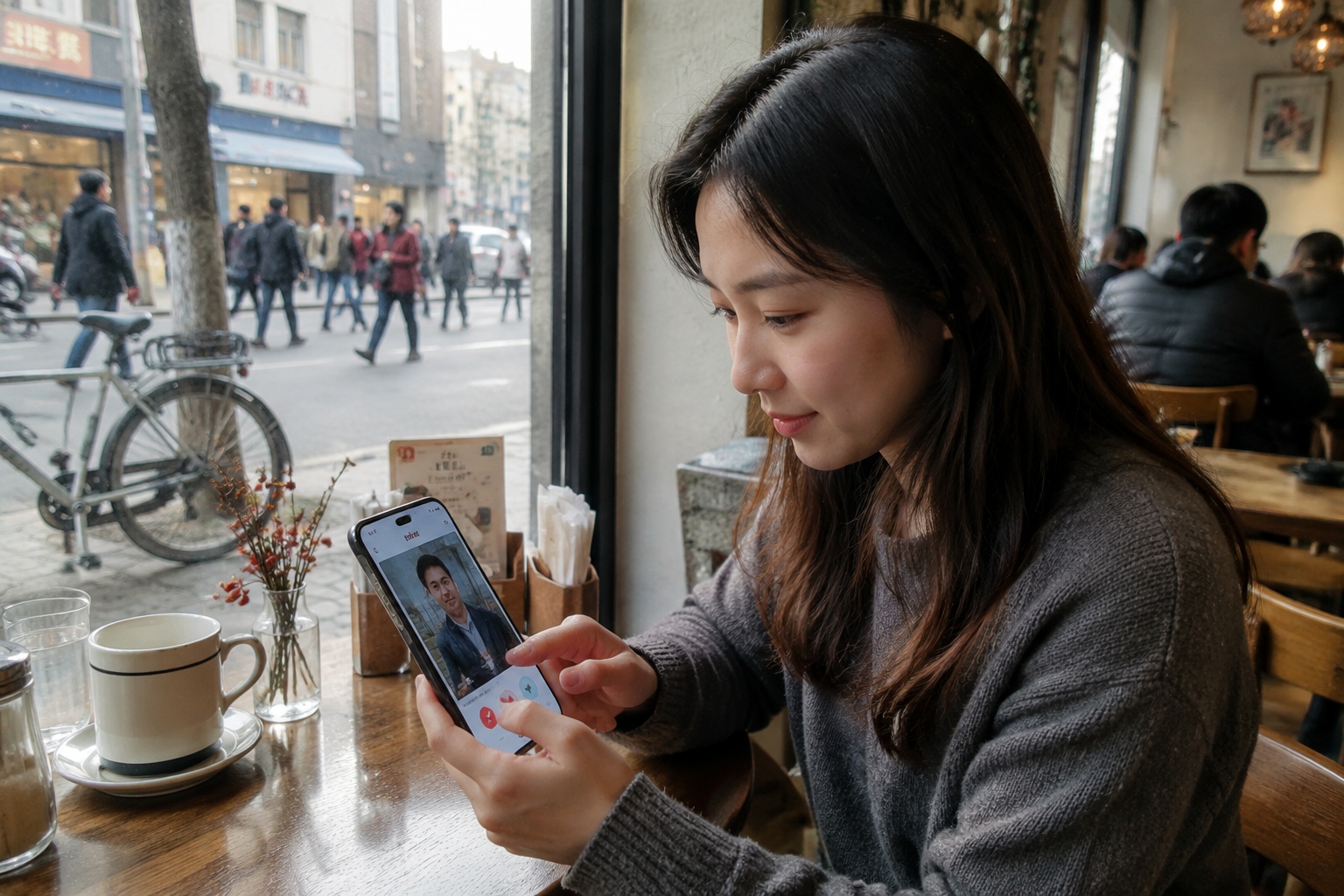
Tantan vs Momo: Two Different Ways to Meet
Both apps let you meet strangers and were built to solve the same problem: how do you find someone interesting when you’re surrounded by millions of people? But they approach the problem differently.
Tantan: The Swipe Game
Think of Tantan as China’s Tinder with local flavor. You see a profile photo, swipe right to like, left to pass. If someone likes you back, you match and start chatting. It’s appearance-first, obviously, and it wears that fact proudly. There are daily “super likes” to get noticed, and a limited number of right swipes unless you pay for a VIP membership. That’s standard, but the vibe is lighter. Tantan feels designed for casual swiping, and many users use it to pass time as much as to find romance.
Momo: From “Nearby” to More
Momo is older, launched in 2011, and took a different path: it focuses on location. Instead of an endless card deck, you see a list of people nearby, sorted by distance. In its early days, Momo was basically a “who’s around me right now” radar. Over time it grew into a much larger social network, with interest groups, live streaming, and even location-based games. The dating part still exists, but it shares the stage with networking and entertainment. Some long-time users say they actually joined for a hobby group, not a date.
How Young People Actually Use Them
The Opening Line Dilemma
Ask any Chinese friend about their dating app experience and you’ll get a mixture of laughs and sighs. The opening message is a big deal. “Hi” alone is considered low-effort, and a surprising number of matches start with jokes about the weather, a food confession, or something from the other person’s profile. One popular icebreaker is the “volcano question”: if you could travel anywhere right now, where would you go? It’s light, opens a story, and doesn’t put anyone on the spot.
From Swipe to Sidewalk: The Dating Flow
A typical successful flow goes like this: you match in the evening, chat briefly, and move to WeChat within a day or two. Why WeChat? Because it’s where Chinese people actually live — with moments, memes, and chat histories. If you stay on the app too long, people suspect you’re either a fake account or not serious. Once the conversation moves to WeChat, a coffee, a dinner, or a walk in the city park often follows. The first meeting is deliberately low-key, usually in a public, safe place. A late-night invitation from a stranger is a red flag, no matter how cute the photos are.
Three Users, Three Realities
Chen, 26, a designer in Shanghai, says she uses Tantan casually but always meets new people in the evening after work. “The awkward part is when the chat is fun but the face-to-face is meh. You still have to finish your coffee,” she jokes. “One guy talked about his ex for twenty minutes. I learned more about her than about him.”
Li, 22, a graduate student in Hangzhou, mostly uses Momo for group activities rather than dating. “There are hiking groups, language exchange groups. Dating happens, but it’s not why I joined. I like that I can show up to an event alone and leave with five new contacts.”
A young retail worker in a smaller city, who asked not to be named, says dating apps are one of the only ways to meet people outside his high school circle. “In a small town, everyone knows everyone. Online feels safer and less gossip-prone. You can see who’s okay with long-distance, and you can be honest about your life without the whole street hearing about it.”

Unwritten Rules of the Swipe World
Photo Filters: Real Life Doesn’t Have a Beauty Mode
The biggest shock for many is the gap between profile photo and real-life person. Chinese beauty filters are incredibly good. They can slim your jaw, enlarge your eyes, smooth your skin, and even change the shape of your nose. The result? A photo that looks nothing like you. People call it 照骗 (photo trick), and when it happens, it’s called “见光死” — dying on exposure. The moment you meet offline, the illusion dies. This is common enough that both men and women have learned to ask for “untouched” photos or even a quick video call before agreeing to meet. It sounds blunt, but it saves everyone an awkward coffee.
What Are You Actually Looking For?
On Tantan and Momo, many profiles say “交友” (make friends) instead of “dating.” That’s a soft way of leaving the door open without being too explicit. Matching doesn’t mean you have a date; it means you’re open to conversation. Reading the clues — emoji usage, reply speed, willingness to switch to WeChat — is part of the game. Some users don’t mind casual flirting, while others are dead serious about wanting a spouse. Spend five minutes reading profiles and you’ll spot the difference.
Money and Gifts: The Subtle Math
In Chinese dating culture, money can show up earlier than you expect. People sometimes send digital red packets (微信红包) to say thanks for a date or to make someone smile. But this is a gray zone. On dating apps, unsolicited money talk is often a red flag. There are scammers who play a gentle game for weeks and then ask for a “loan.” There are also panhandling profiles that lead with “buy me a cup of coffee” as a joke — but it’s not always a joke. Both sides are cautious. The general rule: don’t send money to someone you’ve never met in person, and don’t accept large gifts from a near-stranger.
Safety and Privacy: Play It Safe
Beyond romance, there are fake accounts, malicious links, and occasionally aggressive people. Most platforms have reporting and blocking, and real-name registration is required across the industry. That reduces some shady activity but doesn’t make anyone invincible. So the advice is street-smart rather than paranoid: video chat before going out, tell a friend where you’re heading, pick a busy café, and keep your last name and apartment number to yourself for the first meeting.
Bigger Forces Behind the Apps
Urban Migration and Loneliness
Why are dating apps so popular in China? One reason is migration. Millions of young people move to cities where they don’t have an existing social circle. Workdays are long, weekends are short, and neighborhoods are transient. Apps fill the gap between “I’m new here” and “I know a few people.” They also let people skip the nerves of approaching strangers in public, which feels pushier in a culture that values social caution.
Pressure to Settle Down
Another reason is the marriage pressure that quietly follows Chinese kids into adulthood. Parents often start asking about grandchildren by the late twenties, especially in smaller cities. That worry pushes people onto apps with a more serious mindset. You’ll see profiles with prompts like “Marriage in two years? Only serious inquiries please.” This can make the atmosphere feel heavier than a typical Western hookup app, but it also means some people genuinely looking for a partner.
Under the Watchful Eye
Both apps also operate under strict Chinese internet rules. Real-name registration is mandatory, and platforms scan content for anything that breaks the rules. This means less anonymity than Western dating apps, which cuts both ways: it’s harder to be a complete troll, but also harder to be a carefree anonymous flirt. The platforms police themselves vigorously because the cost of losing a license is unthinkable. So the wild, lawless vibe you might expect from “dating apps” in some places just doesn’t exist.
Same Phones, Same Need for Connection
For all the filters, strategies, and unwritten rules, what’s underneath is not so different from dating anywhere else. People want to feel seen, to laugh with someone, to find a human who makes a strange city feel less lonely. Tantan and Momo are simply the local vehicles for that. If you’re visiting or moving to China, don’t be afraid to open one. Just be honest, bring your street smarts, and remember that the person on the other side is also just trying to find what most people want: a real connection, one swipe at a time.
Start the discussion at forum.chinacomes.com