

It Starts With a Mouthful of Numbing Fire
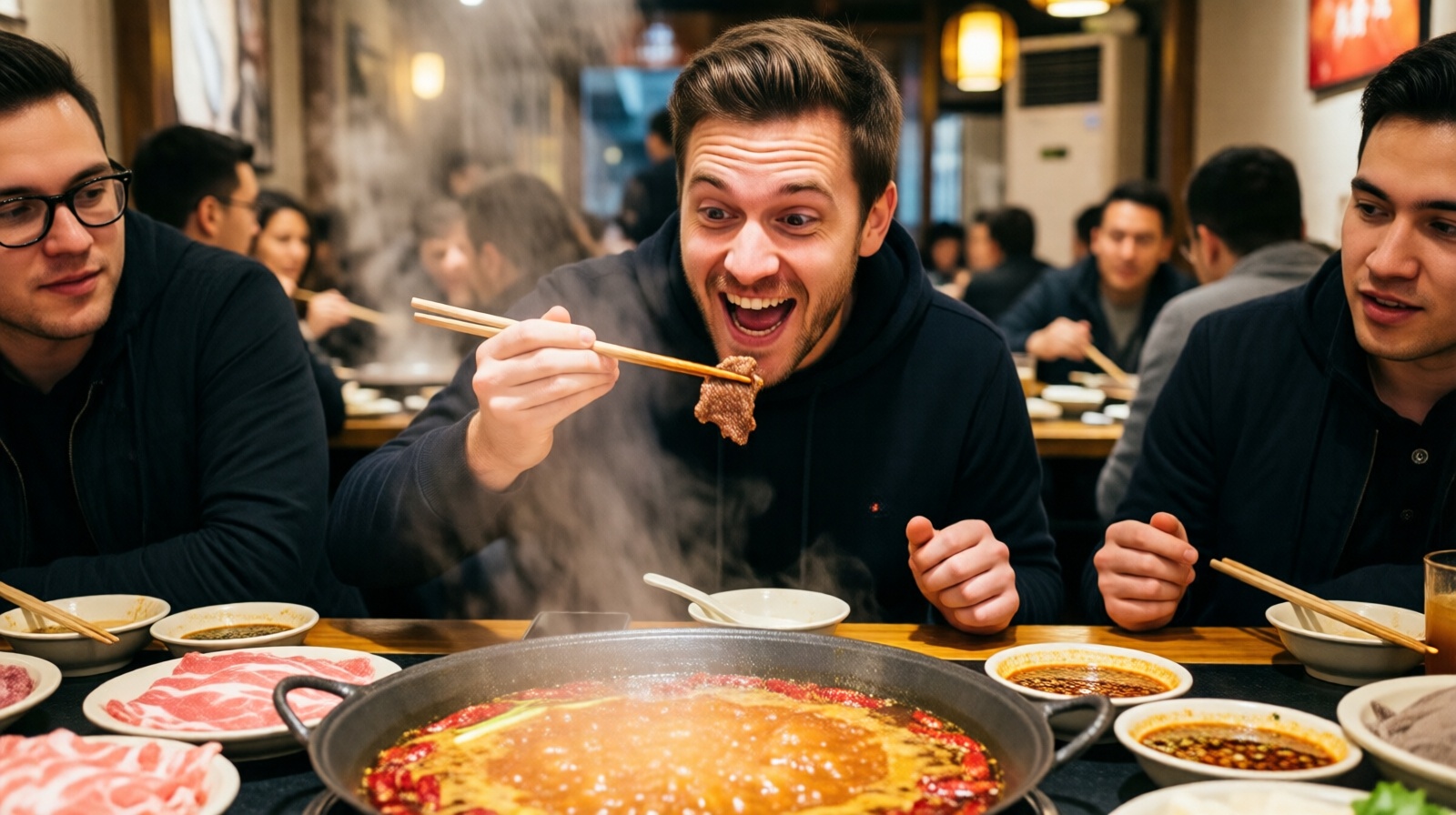
On a damp Tuesday night in London’s Soho, a small hotpot restaurant is buzzing. At one table, a British man named Tom is attempting his first Sichuan hotpot. He picks up a slice of beef with chopsticks, swirls it in the sesame oil dip, and takes a bite. His eyes widen. He reaches for water, then takes another slice. “It’s like my tongue went to the gym,” he says, laughing. “It hurts, but I can’t stop.”
That contradictory pull explains a lot about Sichuan hotpot’s rise from a regional Chinese favourite to a global dining phenomenon. It’s not just a meal. It’s a social ritual, a chemistry experiment, and a badge of culinary courage all at once.
A Social Ritual Born on the River
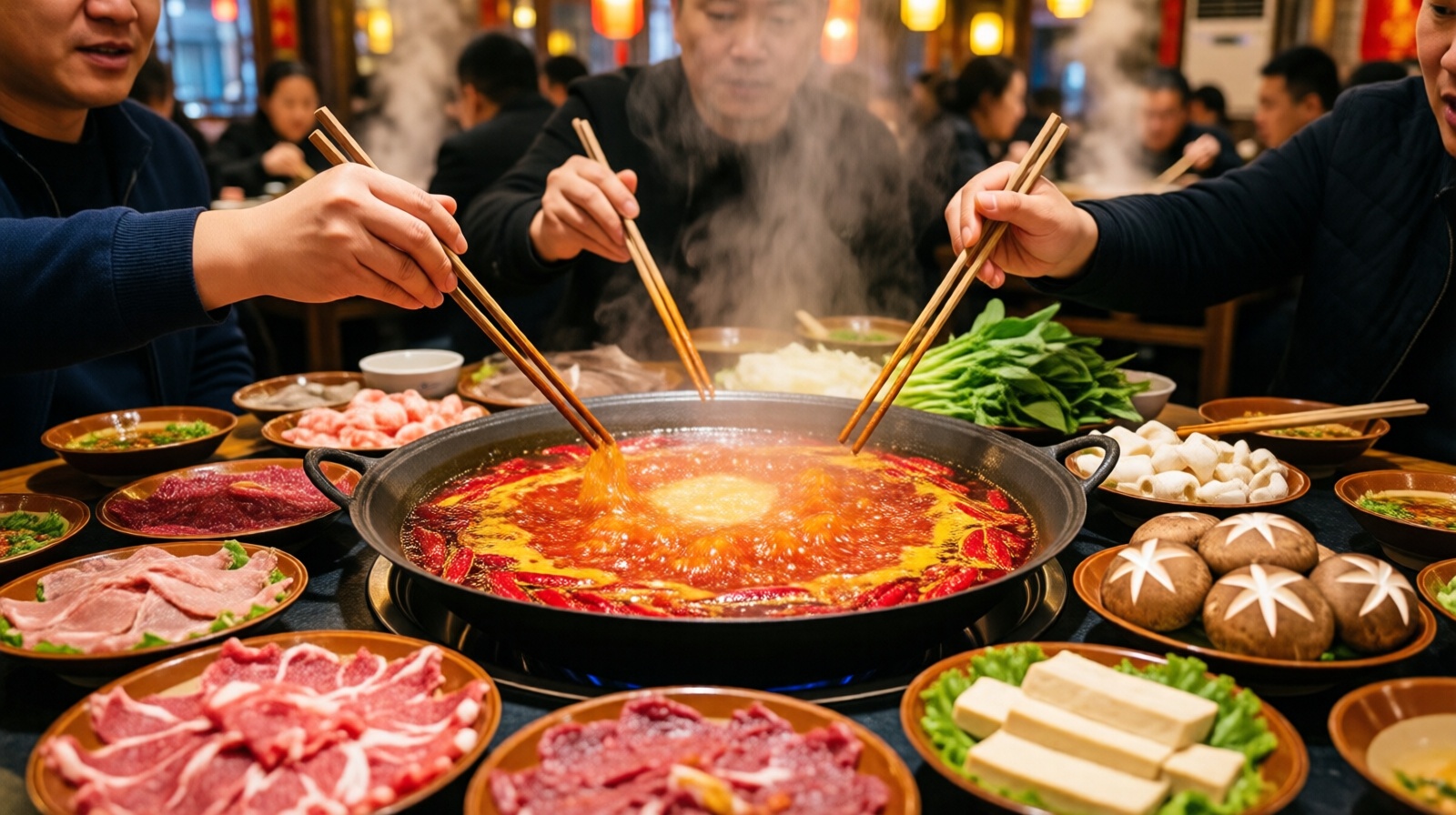
Hotpot has been around in China for centuries, but what we know as Sichuan hotpot is relatively modern. It began as a worker’s meal on the banks of the Yangtze, where labourers gathered around a shared pot of boiling broth, cooking cheap offcuts and vegetables over a fire. The broth was seasoned generously with chilies and Sichuan peppercorns, partly to mask the taste of less fancy cuts, partly to warm the body in the humid river city.
That communal spirit has never disappeared. In Chongqing, the city that claims hotpot as its own, the meal is still an excuse to gather. Friends sit around a table with a central pot of bubbling red oil, moving raw ingredients into the broth in an unhurried dance. It’s a slow, messy, loud dinner. In many ways, it’s the Chinese cousin of a fondue party, but with more fire.
For Western diners, this is the first surprise: hotpot is not a bowl of soup delivered to your table. It’s a DIY experience. You order raw meat, vegetables, tofu, and mushrooms, and then cook them yourself at the table. It combines the interactive fun of a Korean BBQ with the healthiness of a broth-based meal. And it forces you to slow down, to talk, to wait, to share.
If you’re new to the game, the first thing you’ll notice is the dipping sauce. Each person builds their own bowl from a condiment bar: sesame oil, minced garlic, chopped spring onions, coriander, and vinegar. Some add a spoonful of the spicy broth. The oil dip looks greasy, but it’s actually the secret weapon—it cools the food, resets your palate, and protects the throat from the chilli burn. Without it, the heat is overwhelming. With it, you can eat for hours.
Why the Heat Is So Addictive
The signature of Sichuan hotpot is the “málà” taste — a combination of spicy and numbing. The spice comes from chilies, which contain capsaicin, the compound that triggers pain receptors on your tongue. The numbing comes from Sichuan peppercorns, which are not actually peppers but the dried husks of a citrus fruit. They contain a compound called hydroxy-alpha-sanshool, which produces a tingling, vibrating sensation on the lips and gums.
Science explains why that pain feels strangely good. When capsaicin hits your mouth, your brain releases endorphins, the body’s natural painkillers. The result is a mild euphoria—often described as a “runner’s high.” So when Tom says he can’t stop eating, he’s not exaggerating. The crunch of a Sichuan peppercorn sets off a tiny electric buzz in your mouth, and you want another one.
There’s also a cultural aspect. In the West, spiciness has long been associated with caution. Many traditional European cuisines rely more on subtle herbs than on heat. Hot sauce was once a niche item. But over the past two decades, mainstream food culture in the UK, the US, and Australia has shifted toward heat. From Nashville hot chicken to Indian vindaloo, more diners are seeking the thrill. Sichuan hotpot fits neatly into this trend: it offers a generous, theatrical amount of spice, but it also allows you to control your own portion.
From Chengdu to Manhattan
Sichuan hotpot started crossing borders in the 1990s, carried by Chinese immigrants to Japan, Southeast Asia, and North America. For a long time, it remained a hidden gem for adventurous eaters. Then something changed: a growing Chinese middle class, a rising wave of Chinese students abroad, and simply the power of social media. Video clips of boiling red pots and twirling chopsticks made hotpot look like an event.
Today, you can find Sichuan hotpot in dozens of countries, from London to Sydney to New York. One of the most visible examples is Haidilao, the Chinese hotpot chain known for its free nail salons and noodle-pulling dancers. Haidilao opened its first overseas branch in 2012 in Singapore. Now it has branches in the United States, the UK, Japan, Canada, Australia, and many other countries. More than a hundred overseas locations operate under the brand, each adapted to local tastes.
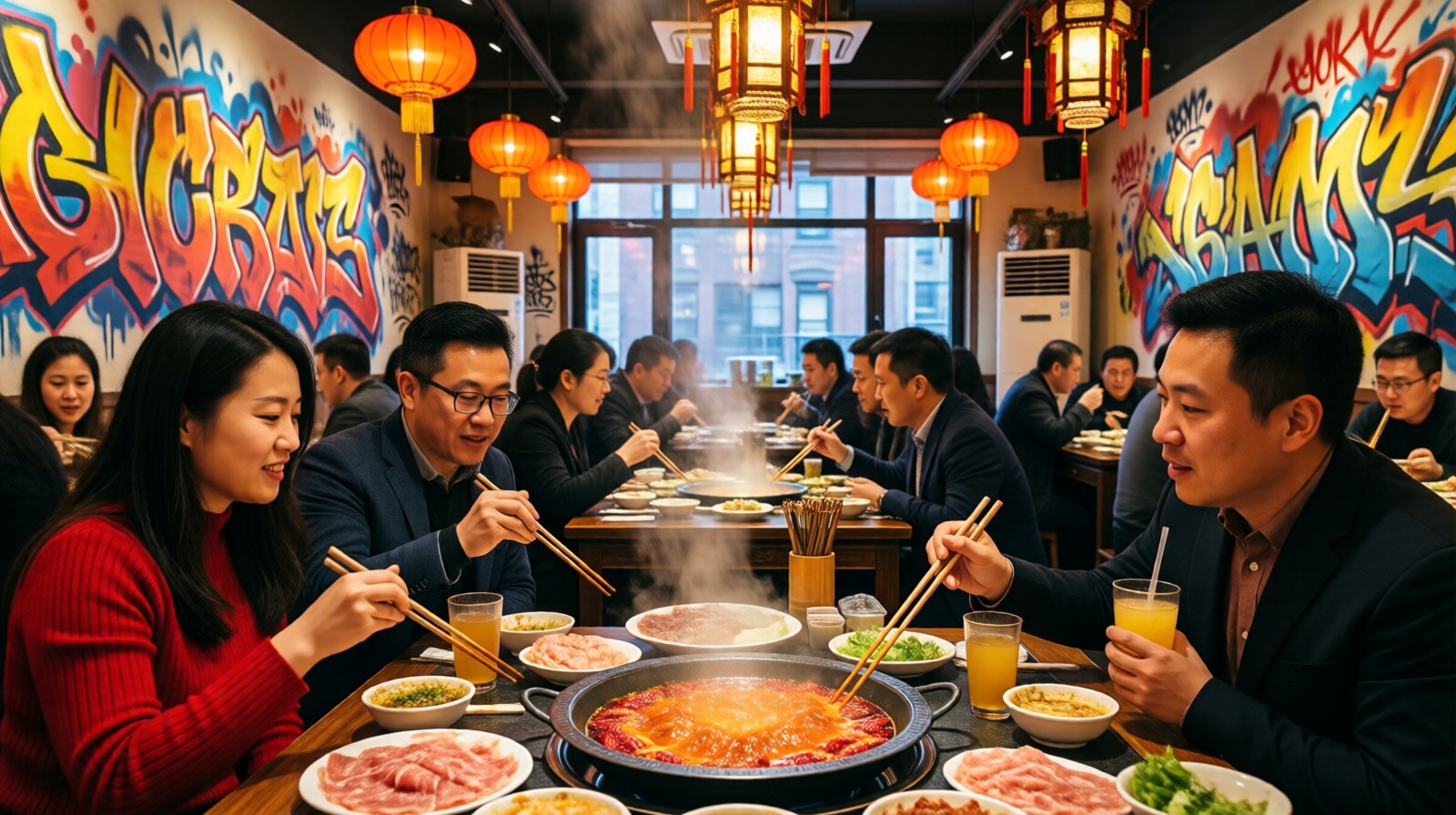
In Manhattan’s East Village, a hotpot restaurant called “Lao Jie” has become a weekend hotspot. On a typical Friday night, about half the tables are occupied by non-Chinese couples and friends. The menu offers three levels of spice: mild, medium, and “Sichuan authentic.” Most first-timers choose mild and work their way up. Owner Lin Wei says, “The biggest mistake is to order the authentic level on your first try. People end up crying and thinking all Sichuan food is torture. We want them to learn the joy of má là step by step.”
How Different Palates Respond
Not every culture takes to the burn at the same speed. If you’re from Southeast Asia, with a long history of chilies and fermented spices, Sichuan hotpot is an easier leap. Bangkok, Singapore, and Kuala Lumpur have embraced it quickly. Japanese palates, traditionally delicate, were slower to warm up, but hotpot has a Japanese cousin (shabu-shabu) that makes the concept feel familiar. European appetites vary widely. British and Australian diners, already fans of Indian curries, tend to enjoy the social aspect and the heat. French and Italian food lovers sometimes struggle, because their dining traditions emphasize slower, layered flavours over aggressive seasoning.
This is not a matter of superiority. It’s a matter of different starting points. A Thai diner grew up eating tom yum, a Spanish diner knows the heat of pimentón, a German diner may never have met a spicy dish until they tried Thai. The success of Sichuan hotpot in a given country often depends on how many similar spicy experiences people have had. And once they cross the threshold, the same endorphin rush kicks in. That’s why expats in China often become furious defenders of “authentic” hotpot. They’ve been converted.
Age matters too. In the West, younger consumers grew up with spicy international foods as part of their daily routine. A 25-year-old in Berlin might order a burger with jalapeños and a side of wasabi peas without blinking. For them, Sichuan hotpot is just another platform for a thrill-seeking lunch. Their parents, who associate spice with indigestion, are harder to convert. This generational gap mirrors what’s happening in China itself, where young professionals now treat a bowl of numbingly spicy food as a way to bond with friends, not to prove how tough they are.
What the Rise of Hotpot Says About China Today
Back home in China, hotpot is also changing. The traditional pot, a split yin-yang with half red, half white, is still the standard. But now you see single-person hotpot restaurants in office districts, where workers eat alone while watching videos on their phones. The rise of delivery apps has brought hotpot into living rooms: order a cold pack of broth, raw ingredients, and a portable stove, and you can have a full hotpot dinner at home in 40 minutes.
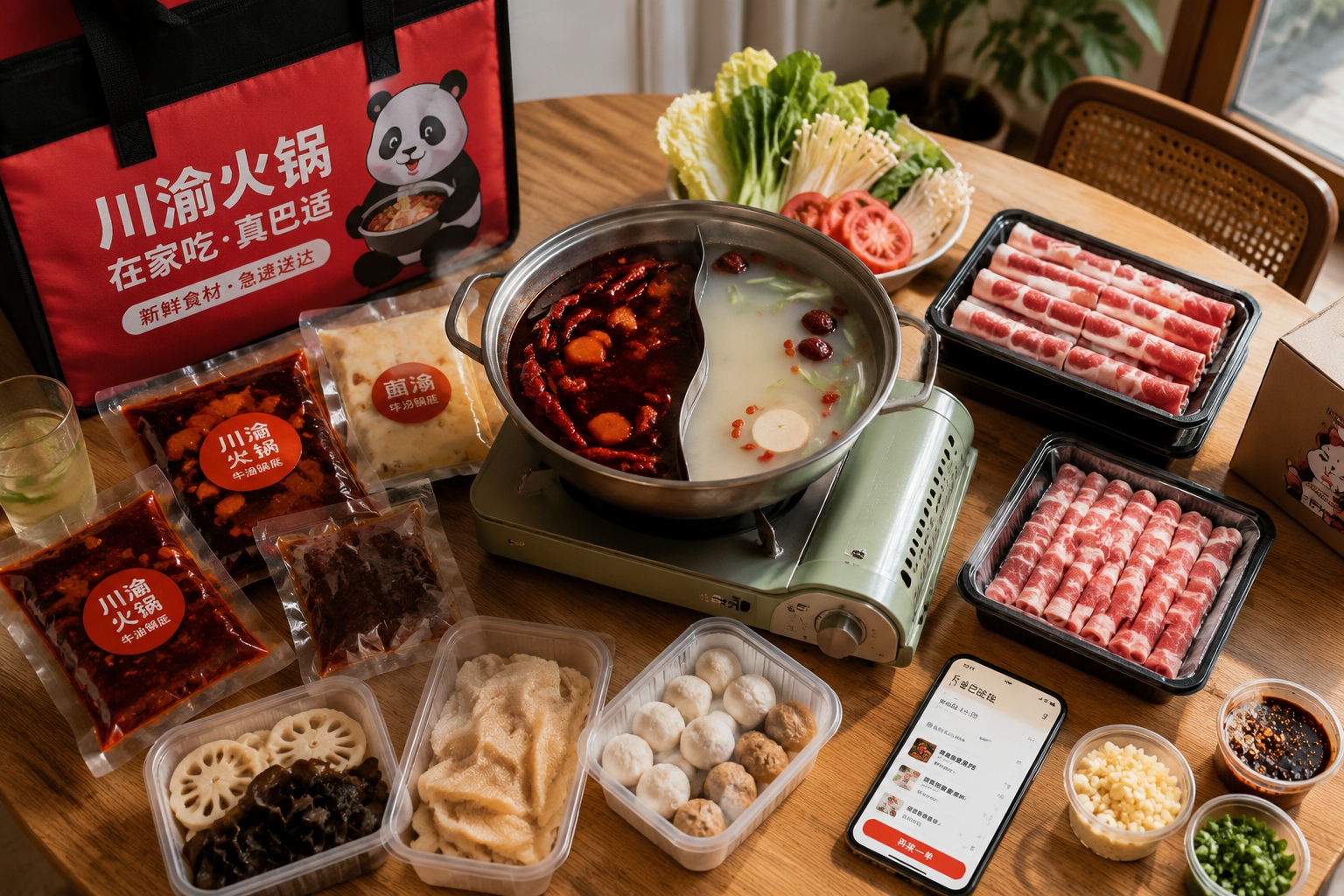
This might seem like a shift away from the communal table, but many young Chinese say the essence remains the same. “Hotpot is less about the food and more about the moment,” says Wang Jia, a 29-year-old from Chengdu who now lives in Shanghai. “The soup is just an excuse to sit together and be a little chaotic. Even when I make it alone, I put the pot in the middle of the table, like I’m waiting for someone to join.”
Hospitals and health experts often warn about the high oil and salt in traditional hotpot, and there’s now a growing trend of “healthy hotpot” with soup bases like mushroom or tomato. But for most people, hotpot is an occasional indulgence, not an everyday meal. It’s not about nutrition. It’s about feeling alive—your face sweating, your lips buzzing, you and your friends shouting over the steam.
A Taste That Travels With You
The global conquest of Sichuan hotpot is not a victory of pure spiciness. It’s a victory of an idea: that a meal can be an experience. In a world where restaurant dining often feels rushed and transactional, hotpot forces you to sit, to wait, to cook, to touch your food, and to talk with the people across the table.
The next time you see a steaming pot of red oil, don’t be afraid. Start with the mild level. Add a piece of meat, let it spin in the broth, dip it into sesame oil and garlic, and take a bite. Feel the burn, then the tingle, then the glow. That’s the taste of a culture that values togetherness—and isn’t afraid to take risks.
Start the discussion at forum.chinacomes.com