

A Morning in a Guangzhou Apartment Kitchen
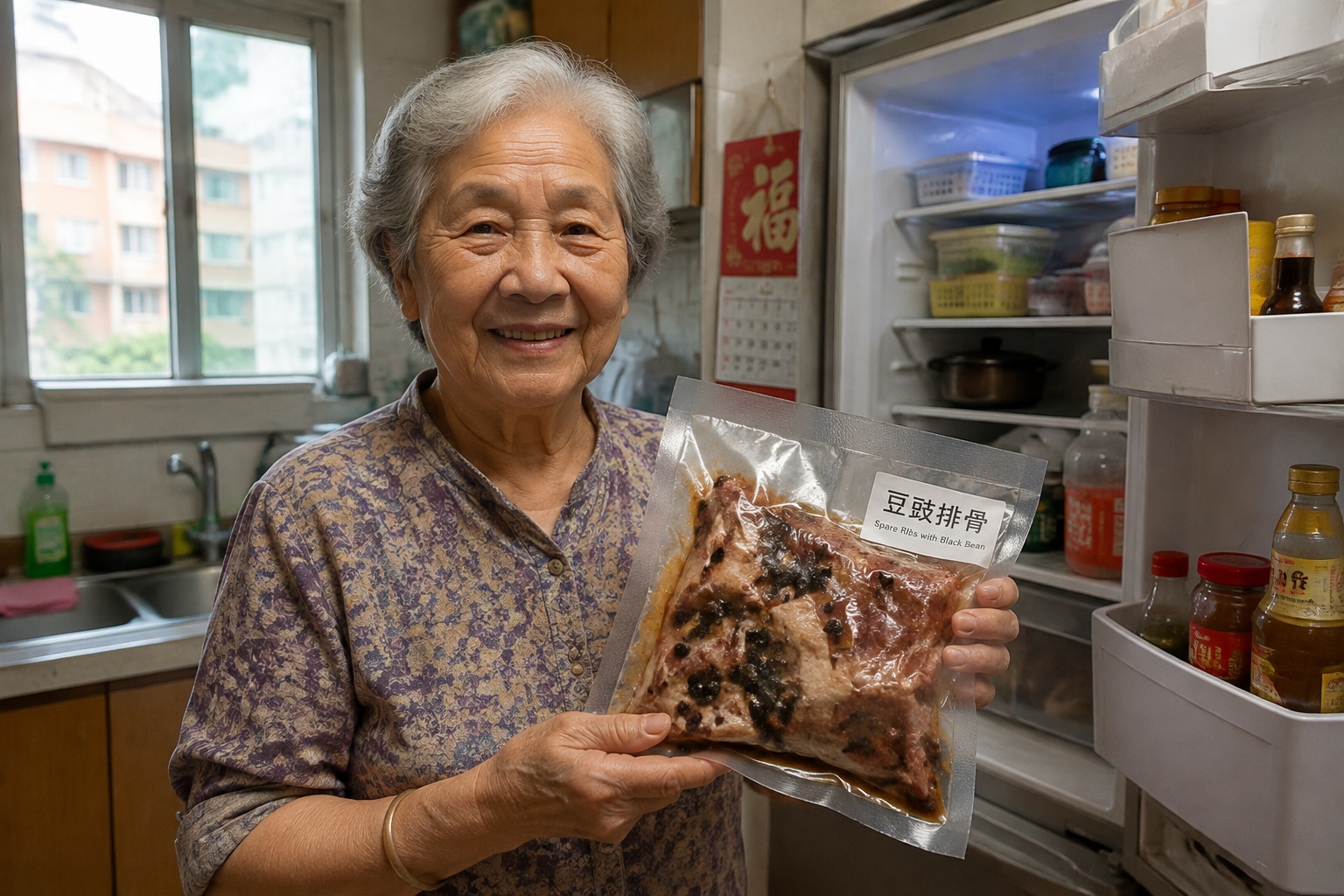
It was 7:30 a.m. when I stopped by Auntie Chen’s home in an older residential quarter of Guangzhou. She opened her refrigerator, pulled out a stack of clear vacuum bags with labels from a local braised-meat shop, and slid one into a steaming basket on the stove. “That’s spare ribs with fermented black beans,” she said. “Ten minutes and it’s ready for breakfast.” By the time I had poured tea, the kitchen smelled as if a barbecue had been running all night.
These are not TV dinners or dry ration packs. They are what Chinese consumers now call yuzhicai — pre-prepared dishes. And in Guangdong, the birthplace of Cantonese cuisine, they have grown into something larger than a convenience: they are becoming an identity delivery system.
What Is “Pre-Made” Cantonese Food, Really?
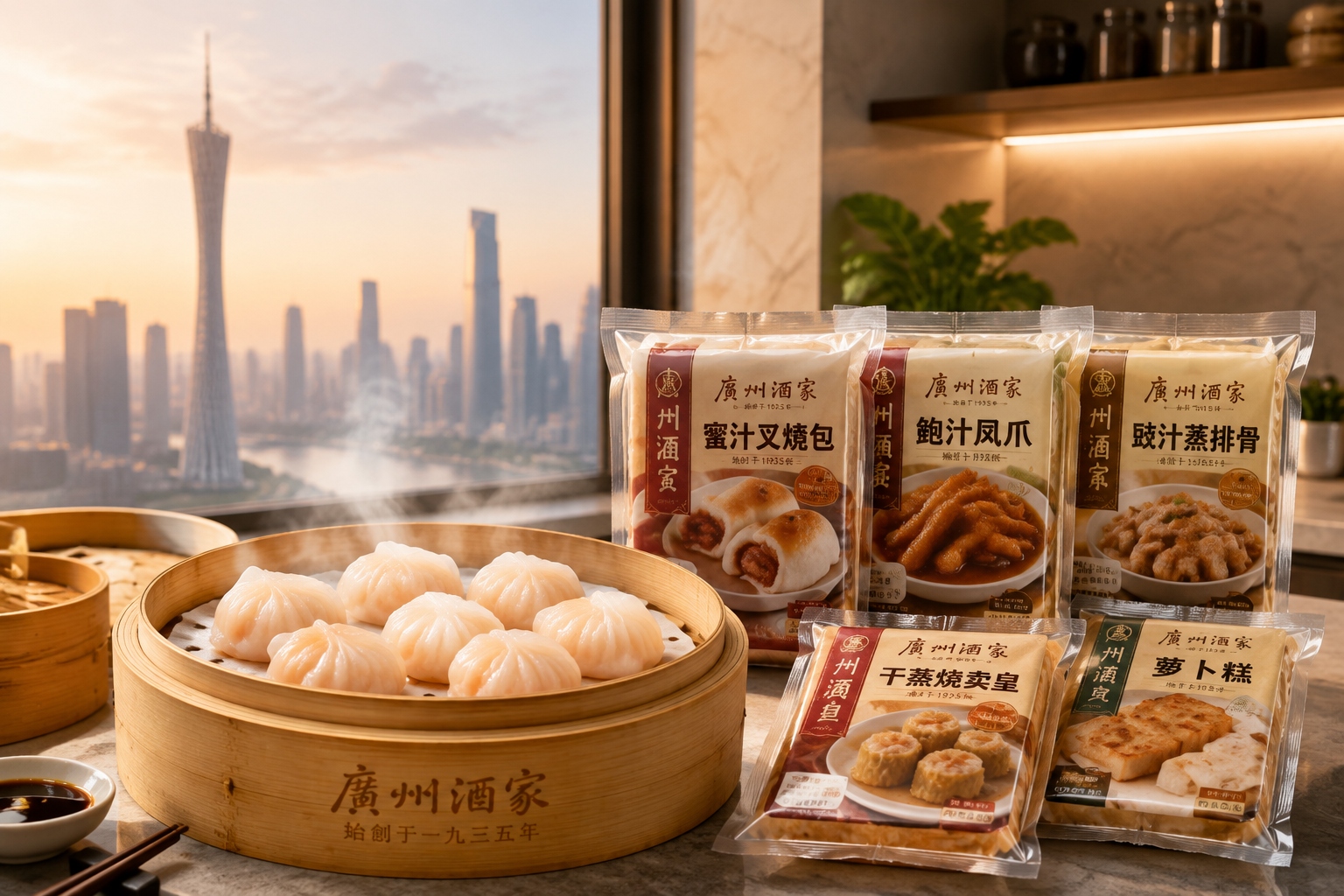
In China, “pre-made dishes” covers four broad categories: ready-to-eat (think marinated duck parts or hoisin-glazed pork), ready-to-heat (dim sum and soups that just need steam), ready-to-cook (raw meat with seasoning packets), and ready-to-prepare (cut vegetables and sauces). In the Cantonese heartland, the star players are frozen shrimp dumplings, chicken feet in black-bean sauce, roast goose slices, pork buns, clay-pot rice kits, and even luxury peng cai (“basin feast”) for Lunar New Year.
Western shoppers are used to a different kind of convenience: a complete frozen lasagna or a microwave bowl of mac and cheese. Cantonese pre-made food is usually a component — you steam the dumplings, stir-fry the beef with the included sauce, or simmer the soup base all day. That difference matters, because it makes you feel like a cook even at 9 p.m. after a twelve-hour shift.
Why the Boom Hits Now
It’s not only laziness that’s driving this phenomenon. A few structural forces have collided: young city dwellers who grew up tasting their grandmothers’ stews but now live in apartments without a gas wok; a cold-chain logistics network that can move frozen dumplings from Foshan to Beijing overnight; and the pandemic, which made home cooking a new ritual. According to industry data, China’s pre-made food market passed ¥400 billion in 2022 and is projected to grow by double digits for years.
Guangdong is in the center of this wave. The province released one of the first local policies for pre-made food and built dozens of “pre-made dish industrial parks” where farms, processing plants, and academy labs sit together. This is why you’ll see huge banners in rural towns advertising “the world’s soy-sauce-braised-trotter capital” next to rice fields.
Does It Stand Up to a Teahouse Master?
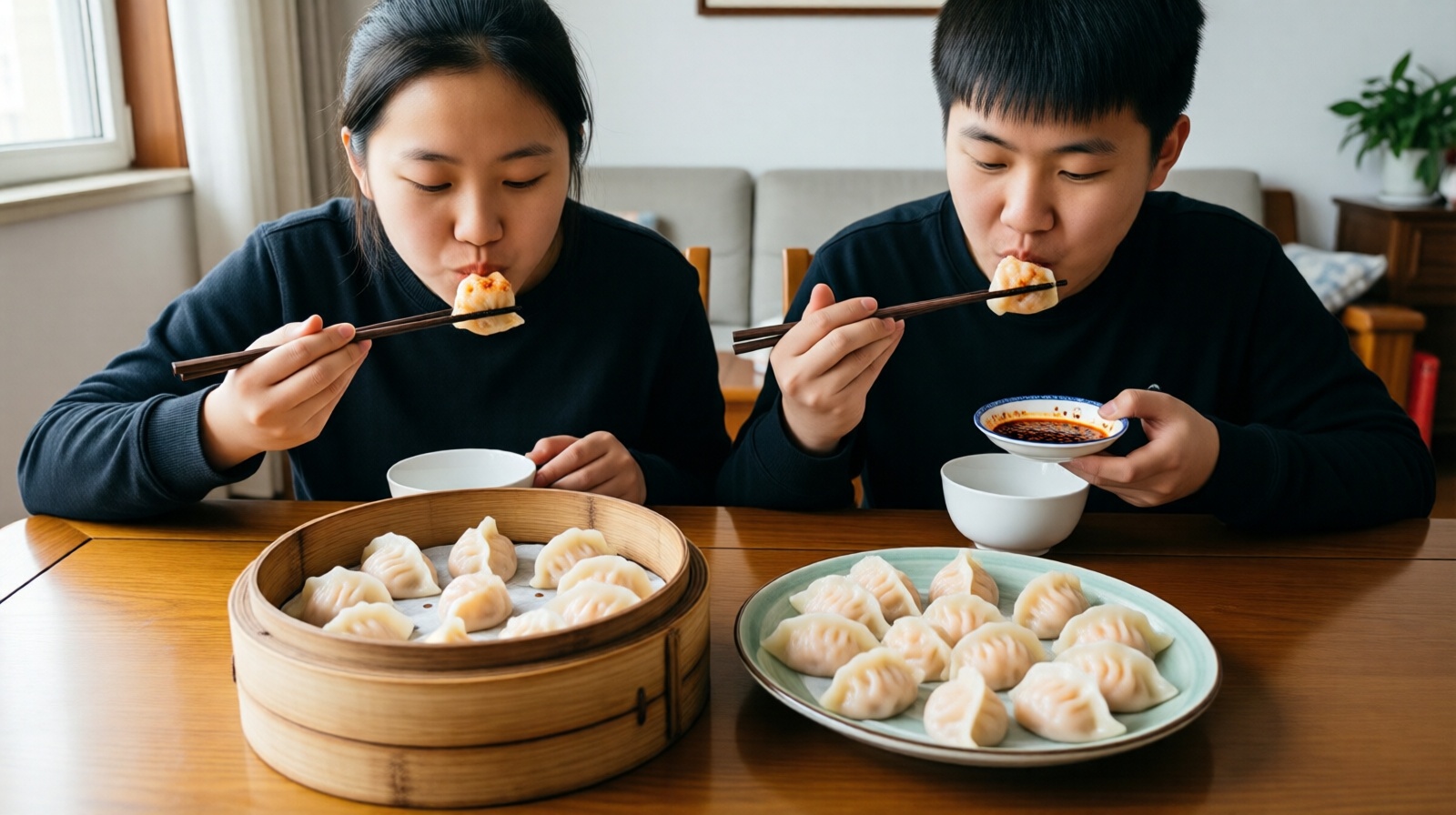
I ran a small blind tasting with two Guangzhou friends. We steamed a bag of frozen shrimp dumplings from a well-known brand and compared them with dumplings from a local restaurant down the street. The frozen version had a slightly thicker wrapper, but the filling was juicy, springy, and tasted surprisingly fresh. My friends could tell which was which, but both admitted that with a little chili oil, they’d happily serve either to guests.
Some dishes translate better than others. Char siu bao (barbecue pork buns) and lo mai gai (sticky rice with chicken) survive freezing beautifully. But a wok-fired beef chow fun becomes soggy and loses its smoky “wok breath” — the hallmark of true Cantonese stir-fry. Manufacturers are honest about limits. They invest heavily in rapid-freezing technology, which prevents large ice crystals from tearing the fillings, and in seasoning that is calibrated to be one notch aggressive, because frozen taste buds dull.
Different Cultures, Same Comfort
In the West, a pre-made meal is often a compromise: the sad desk lunch, the college-night frozen pizza. In Guangdong, it can be an object of pride. Why? Because Cantonese food culture emphasizes freshness and skill. For decades, chefs were the only ones who could produce a perfect cheung fun or a clear, long-simmered broth. Today, technology allows home cooks to approximate that skill, and the label doesn’t say “instant”; it says “chef-style, home-steamed.”
This explains the difference in how people talk about it: a British consumer buys a ready meal to save time; a Cantonese consumer buys a pre-made dish to save time and to keep a family ritual alive. The product’s packaging often shows chefs, teapots, and pictures of busy city workers. It’s advertising a lifestyle, not just a meal.
A Global Business Hiding in Plain Sight
If you’ve eaten dim sum in Sydney, Los Angeles, or London, there’s a good chance the shrimp dumplings on your trolley were made on the Pearl River Delta. Guangdong is China’s biggest exporter of pre-made food, shipping out more than ¥10 billion worth annually to countries from the United States to Singapore, according to customs figures reported by local media. Brands like Guangzhou Restaurant Group (Liufu) sell frozen dim sum in dozens of countries, while smaller factories supply overseas Chinese grocers.
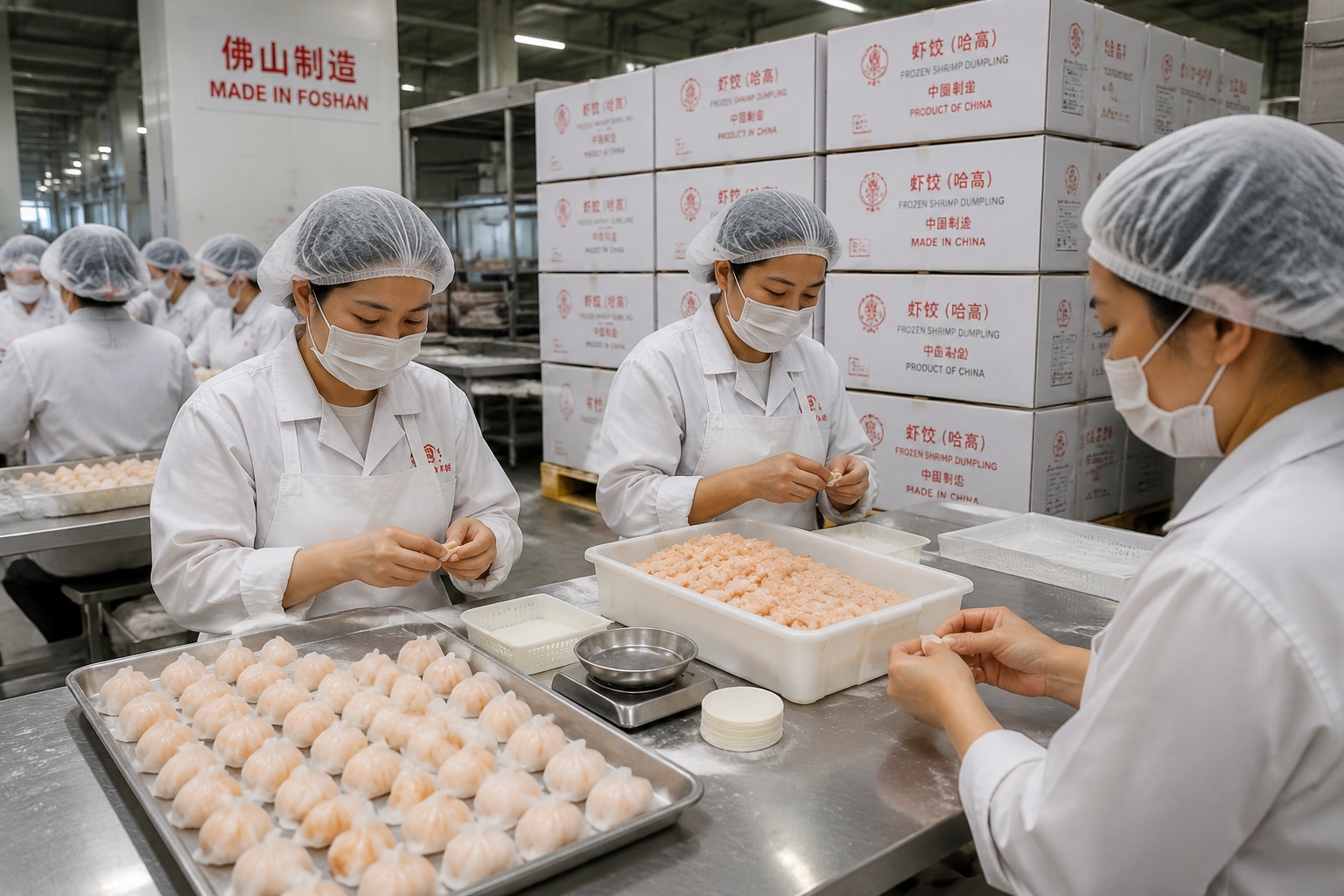
I visited a dim sum plant in Foshan where workers still hand-pleat shrimp dumplings for ten seconds per piece, then flash-freeze them at minus 40°C. “You can’t automate the folding,” the manager said, “but you can automate the cold chain that brings it to your table.” From there, the boxes travel to refrigerated containers, then across the Pacific Ocean to supermarkets where the average American might mistake them for generic frozen appetizers.
The Pushback: What Can’t Be Containerized
Not everyone is cheering. In Guangdong’s teahouses, older customers often frown when they see a restaurant serving dim sum that came out of a bag rather than a bamboo basket. A viral Chinese meme mocks “liaoli bao” (cooking bags) as the enemy of real food. People worry about additives, high sodium, and the loss of the morning experience of watching a cart roll through.
This backlash is healthy. It has pushed regulators to create stricter quality standards and forced manufacturers to advertise “no artificial preservatives” and “farm-to-factory traceability.” Some restaurants now proudly display “no pre-made dishes here” signs. The conflict between artisanal purity and scalable convenience isn’t unique to China — think of Italy versus frozen pizza — but in Guangdong it feels particularly sharp because the stakes are cultural, not just commercial.
So, Should You Try It? How to Start
If you’re reading this from outside China, you can start your own Cantonese pre-made night without boarding a plane. Well-known brands such as Guangzhou Restaurant Liufu, Tao Tao Ju, and even some Western grocery chains now stock frozen dim sum. Look for the packets that say “steam directly” — that’s a clue. Skip the microwave; a $15 bamboo steamer over a pot of boiling water will give you a close-to-restaurant texture.
Pair your dumplings with a bag of Cantonese soup or a vacuum-packed braised pork belly. Invite a few friends, pour some jasmine tea, and explain that this is what Guangdong’s food industry has been preparing for the world. You don’t have to tell them it only took 12 minutes. The taste will do the talking.
Start the discussion at forum.chinacomes.com