

Introduction
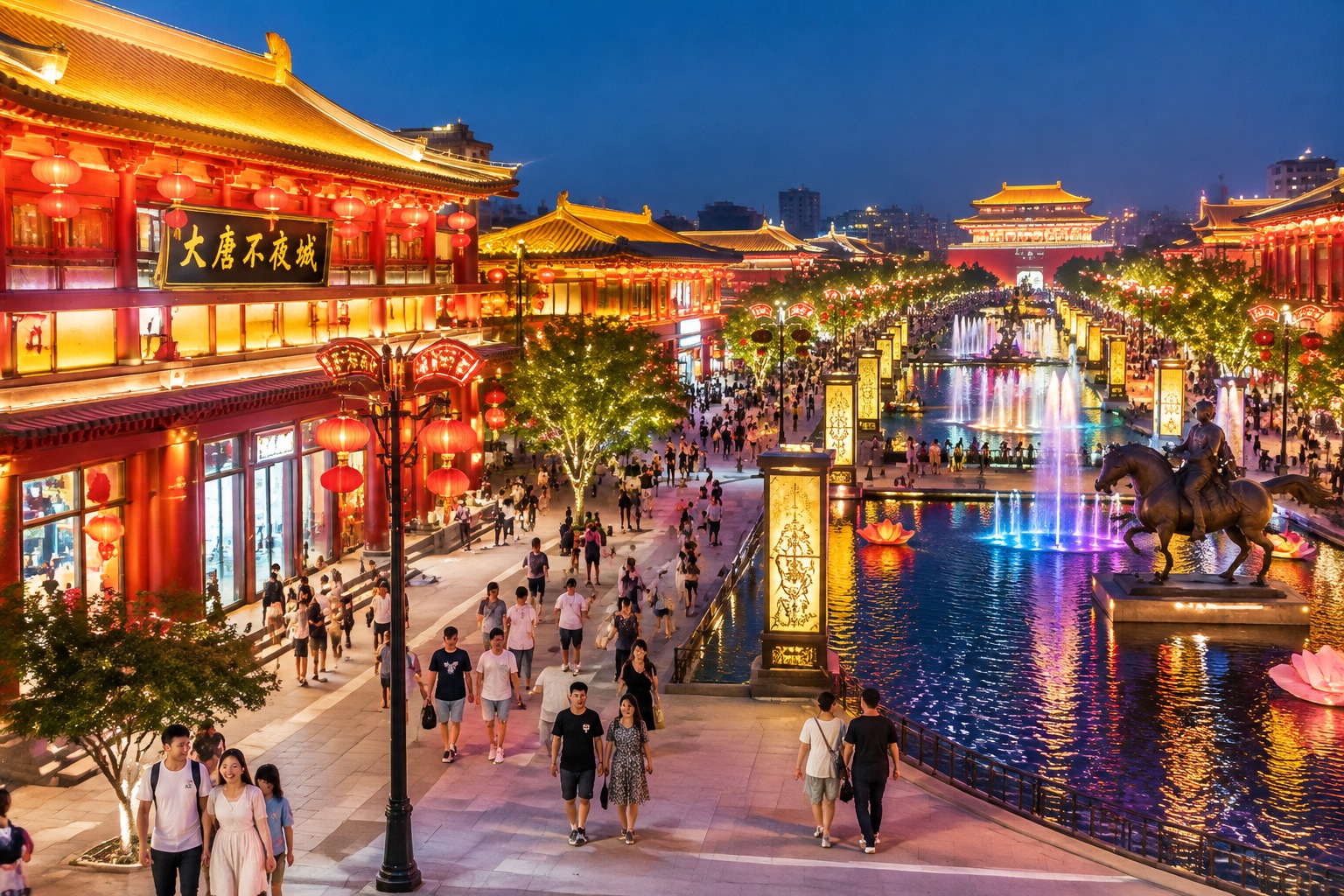
It’s 8 p.m. on a Saturday in Xi’an. The summer heat is finally giving way to a cool breeze. In the Grand Tang Dynasty Mall, the lights come alive, turning the street into a scene from a thousand years ago.
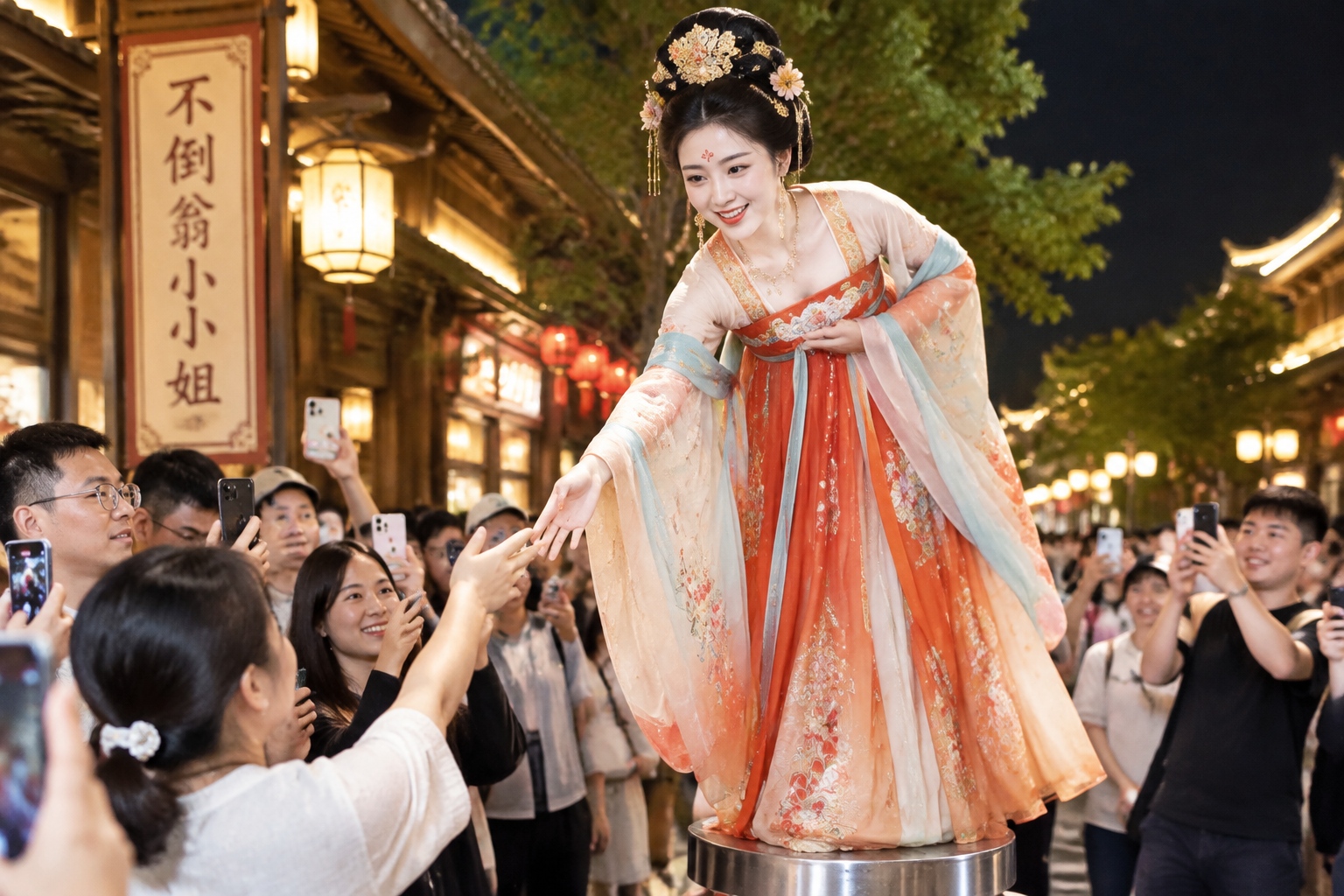
Thousands of visitors move slowly along the pedestrian avenue. Some are dressed in flowing hanfu, the traditional clothing of the Tang dynasty. Others hold steaming bowls of local snacks. A crowd has gathered around a performer on a giant mechanical “unfair”—a woman in a gorgeous Tang-era gown, balancing and bowing as if she’s floating above the ground. People raise their phones to capture the moment.
This is Xi’an’s famous “Grand Tang Dynasty Mall,” often called “Da Tang Bu Ye Cheng.” It’s not a shopping mall in the usual sense—it’s a 2.1-kilometer open-air street designed to revive the glory of the Tang Empire, and it has become the heartbeat of the city’s night economy.
What Is the “Night Economy”?
In China, the “night economy” refers to all the commercial activity that happens after 6 p.m.—restaurants, bars, theaters, coffee shops, concerts, and even night museums. For a city like Xi’an, known for its Terracotta Warriors and ancient city walls, the night economy is a way to keep visitors around longer and encourage locals to go out and spend.
The Grand Tang Dynasty Mall opened in 2018, but it wasn’t an instant hit. At first, it was a beautiful but quiet street. Then the city took a bold step: it added performances, interactive lighting, and a range of food and retail options. The inflection point came with a short video of the “Unfair Lady” performance, shared millions of times on social media. Overnight, the street became a must-see.
How Nightlife Brings the Tang Dynasty to Life
Walk down the street at night, and you don’t just see old-style architecture—you step into a stage. Every few hundred meters, there’s a performance: Tang dynasty dancers, lantern shows, and even “royal” processions. The buildings themselves are designed with Changan (the old name for Xi’an) in mind, with glazed roofs and ancient Chinese motifs.
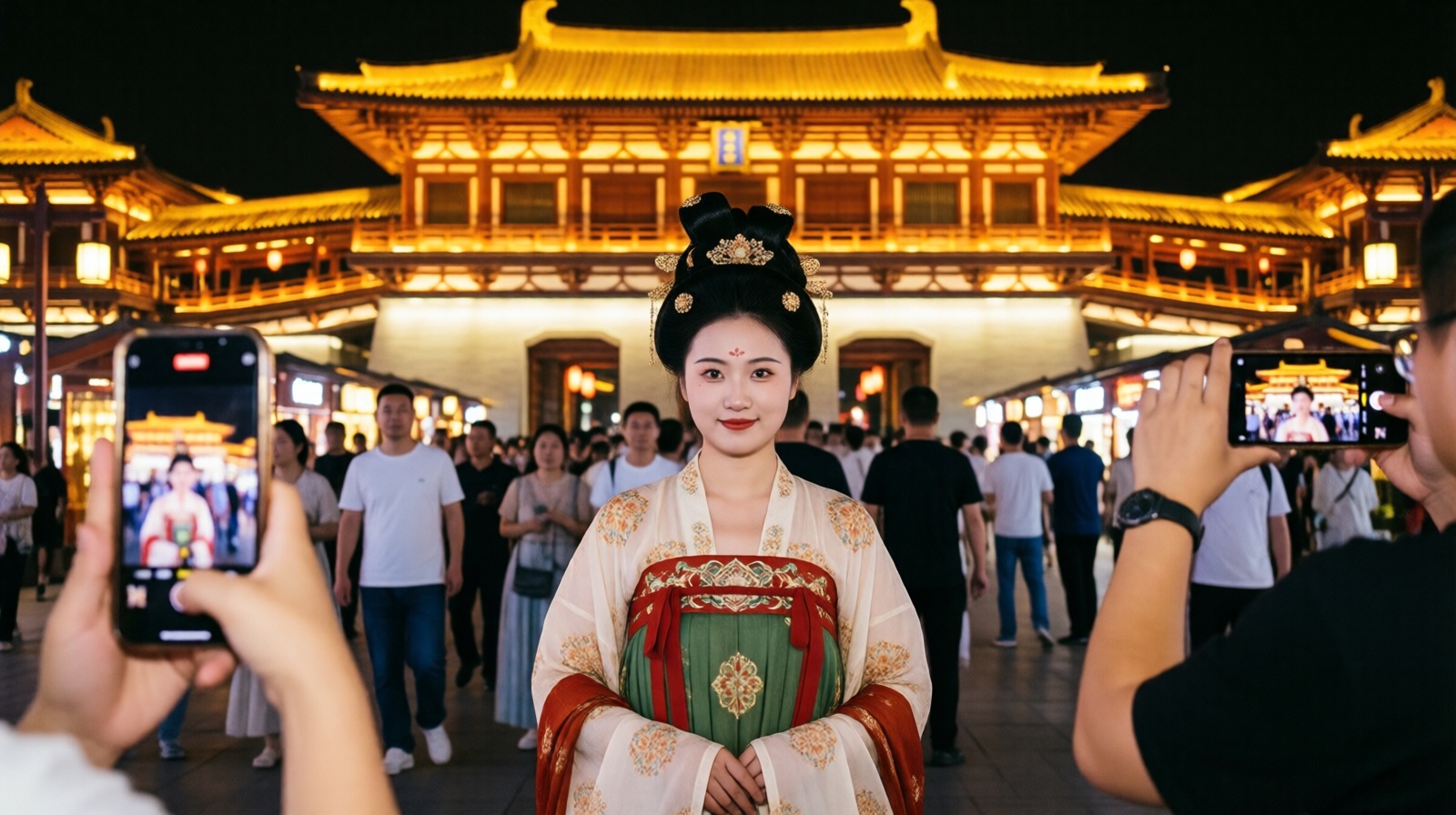
The street is built to be immersive. Visitors can rent hanfu from dozens of shops, then have their hair and makeup done in Tang style. For a few hours, they’re part of the scene. “It’s like walking into the poem ‘The River by Night in Spring’ by Zhang Ruoxu,” one young visitor told me. “Except there’s also bubble tea.”
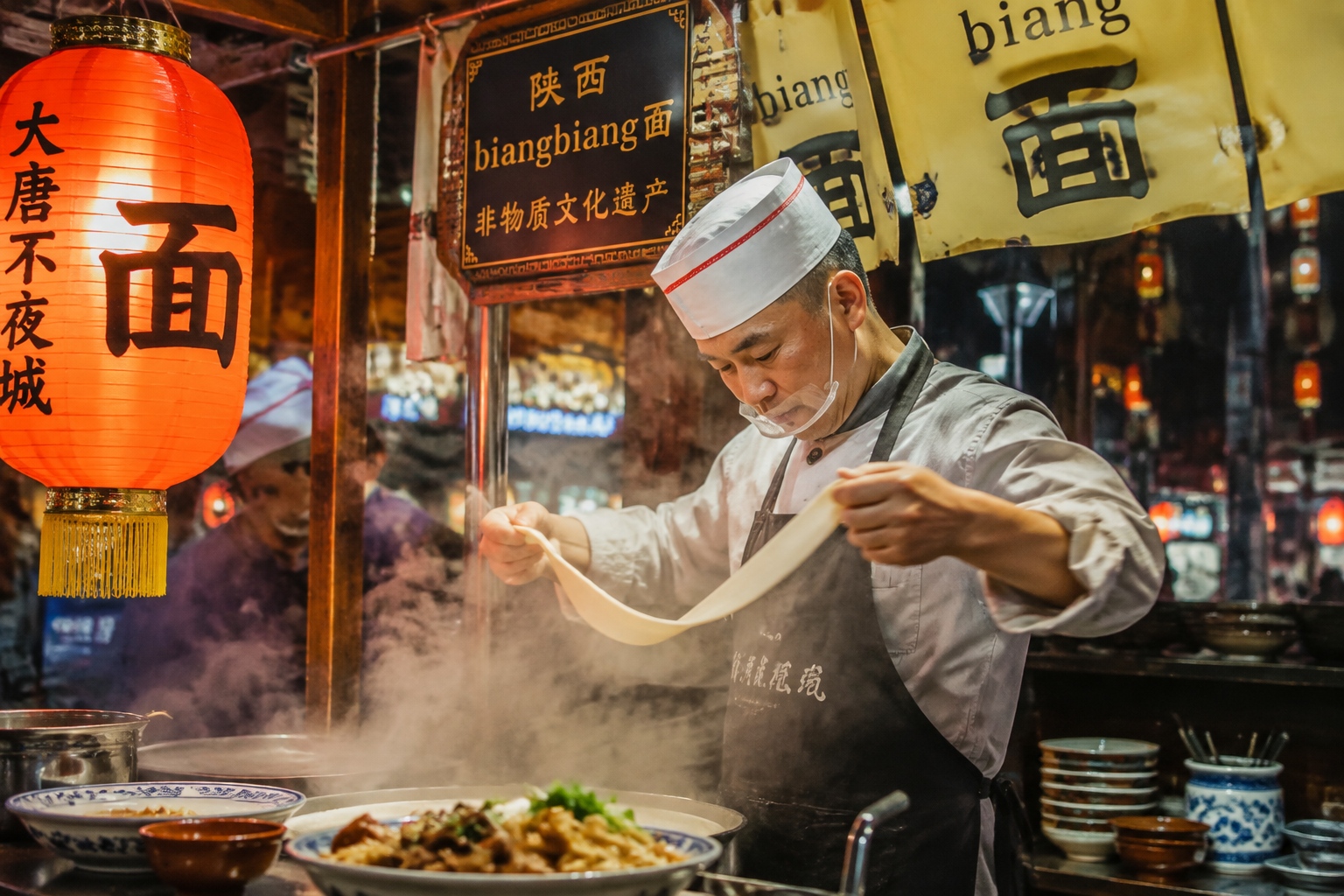
Food is the other big draw. You can find local specialties like biangbiang noodles—with one character so complex it has its own folk song—dozens of kinds of lamb skewers, and the classic “roujiamo” (sometimes called the Chinese hamburger). Food stalls stay open past midnight, and some report selling out by 10 p.m.
The People Behind the Lights
The night economy isn’t just about the atmosphere. It provides real jobs and opportunities. Performers here are often young students or actors who work several nights a week. Many of the hanfu rental shops are run by 20-something entrepreneurs. The “Unfair Lady” who became an internet sensation has said in interviews that her job is physically demanding but rewarding—she brings joy to thousands of visitors every evening.
There are also dozens of small craftsmen selling handmade jewelry, calligraphy, and traditional toys. For many of them, the street is the main source of income.
Does the Night Economy Actually Work?
According to local tourism data, the Grand Tang Dynasty Mall attracts tens of millions of visitors a year. On peak nights, the street can host more than 100,000 people. The shops along the 2.1-kilometre stretch have reported a sharp rise in revenue since the performances were added. The surrounding Qujiang district has also seen new hotels, theaters, and art galleries open, all benefiting from the evening crowds.
But the impact goes beyond the street itself. Taxis and ride-hailing drivers say weekend nights are their busiest time. Public bus services extended their hours, and subway lines now run later on weekends. The night economy has stretched Xi’an’s whole city rhythm, pushing activity past midnight.
Balancing Heritage and Modern Needs
Of course, the success hasn’t come without challenges. On busy holiday nights, the crowds can be overwhelming—so dense that you sometimes have to shuffle along with the flow. Local residents have complained about noise and litter. The city responds by deploying extra cleanup crews and limiting crowd numbers during major holidays.
There’s also a debate about authenticity. Some critics argue that the street is a “Disneyfied” version of history, too commercial to be truly educational. But others, including many Xi’an locals, see it as a gateway: it makes the Tang dynasty tangible for ordinary people, especially young people who might otherwise only encounter history in textbooks.
More Than a Tourist Attraction
What impresses me most about the Grand Tang Dynasty Mall isn’t the number of visitors or the sales figures—it’s how natural it feels. On a weeknight, you’ll see older couples strolling, families with kids chasing bubbles, and groups of friends taking photos. The street has become a public living room for the city.
For an ancient capital that used to go quiet after sunset, that’s a big change. The night economy has given Xi’an a new identity: not just a place to visit history, but a place to live it.
As I leave the street, the “Unfair Lady” is bowing one last time. The crowd applauds, and then slowly dissolves into the night. In the distance, the Ming City Wall is lit up in warm gold—a silent reminder that this city has always found new ways to tell its old stories.
Start the discussion at forum.chinacomes.com