

Introduction: A City Wakes Up to a Bowl of Sesame
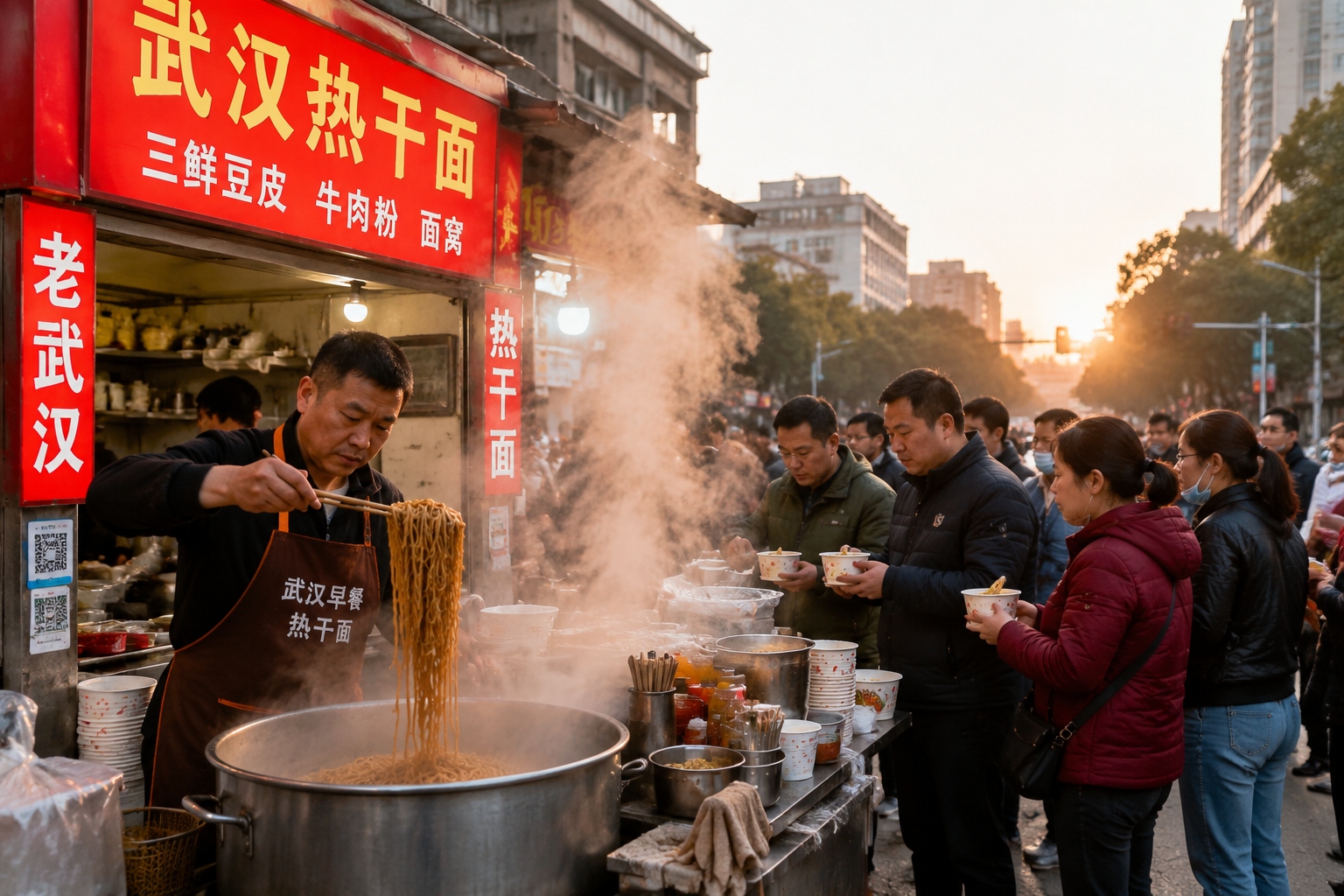
If you’ve never been to Wuhan, the first thing to know is that this city doesn’t ease you into the morning. At 6 a.m., while much of the world is still negotiating with the snooze button, Wuhan’s streets are already billowing with steam from metal woks. The smell of toasted sesame paste and chili oil cuts through the damp air. People are queueing — not for the latest coffee or avocado toast, but for a bowl of something that costs about a dollar and takes less than five minutes to eat. That something is re gan mian — hot dry noodles — and it isn’t just a breakfast. It’s an economics lesson, a cultural handshake, and a love letter to a city that never learned to slow down.
A Brief History of a Very Practical Noodle
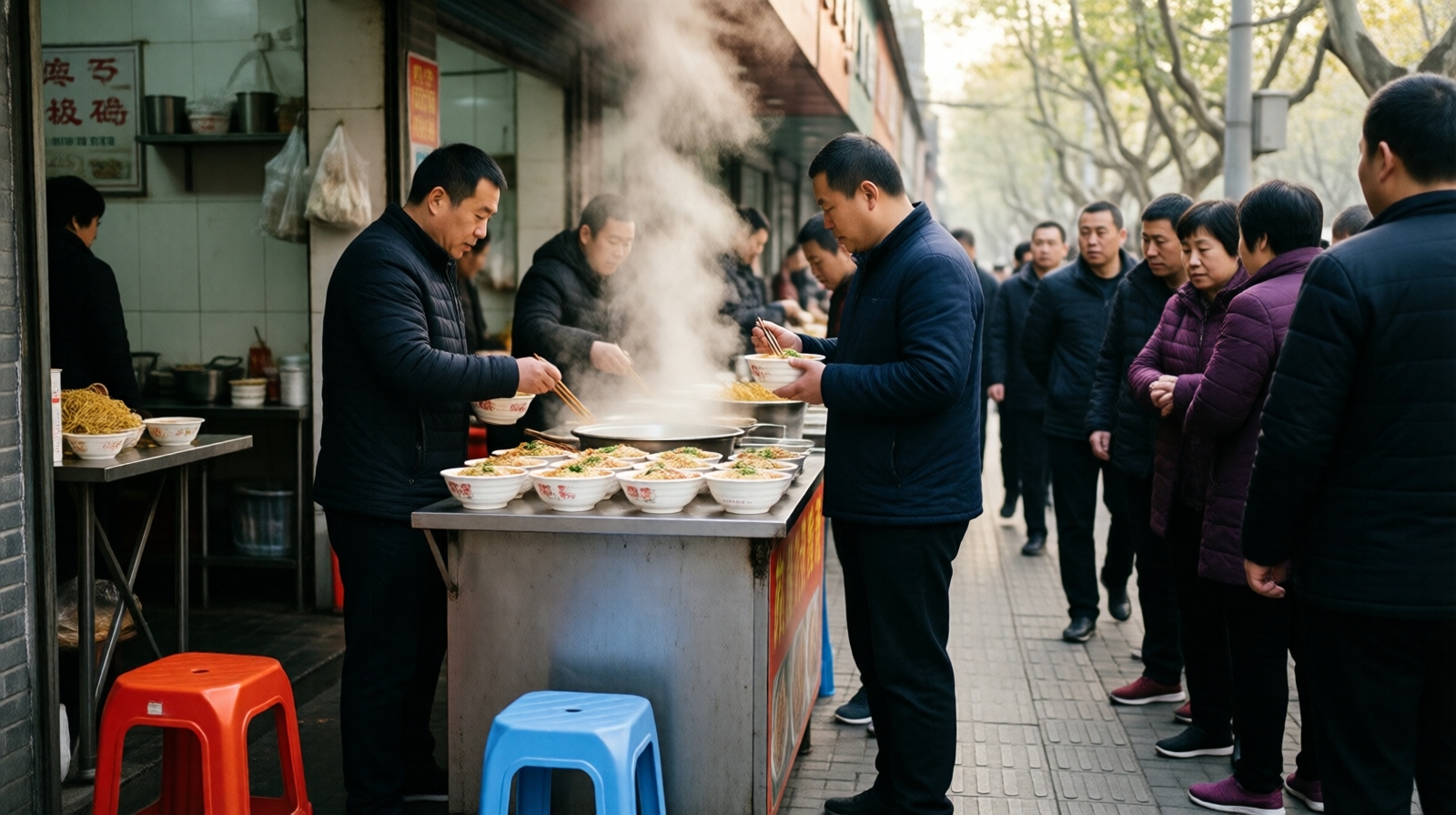
Wuhan was built at the crossroads of the Yangtze and Han rivers, a massive inland port where stevedores and rickshaw pullers needed cheap, dense calories before the sun got too hot. Hot dry noodles emerged in the 1920s, courtesy of a local vendor who allegedly knocked sesame oil into his noodles and turned an accident into a city icon. The noodles are boiled, shocked in cold water, and coated in oil ahead of time; when ordered, they’re briefly re-boiled, tossed with sesame paste, soy sauce, pickled vegetables, and a splash of chili oil. There’s no broth to slow you down, no soup to sip — just a sticky, nutty, spicy tangle of carbs that can be eaten standing, walking, or perched on a tiny red stool.
Why did this stick in Wuhan? Because the city’s identity was built on hustle. Port workers ate on the move. Hot dry noodles fit the schedule and the budget: cheap, filling, and ready in about two minutes.
The Ledger of a Bowl of Noodles
Now let’s talk money. In 2025, a standard bowl of hot dry noodles sells for 6–8 yuan (about USD 0.85–1.10). That’s remarkably cheap, but multiply it by 500 bowls a day, and you have a micro-economy that keeps millions of families fed.
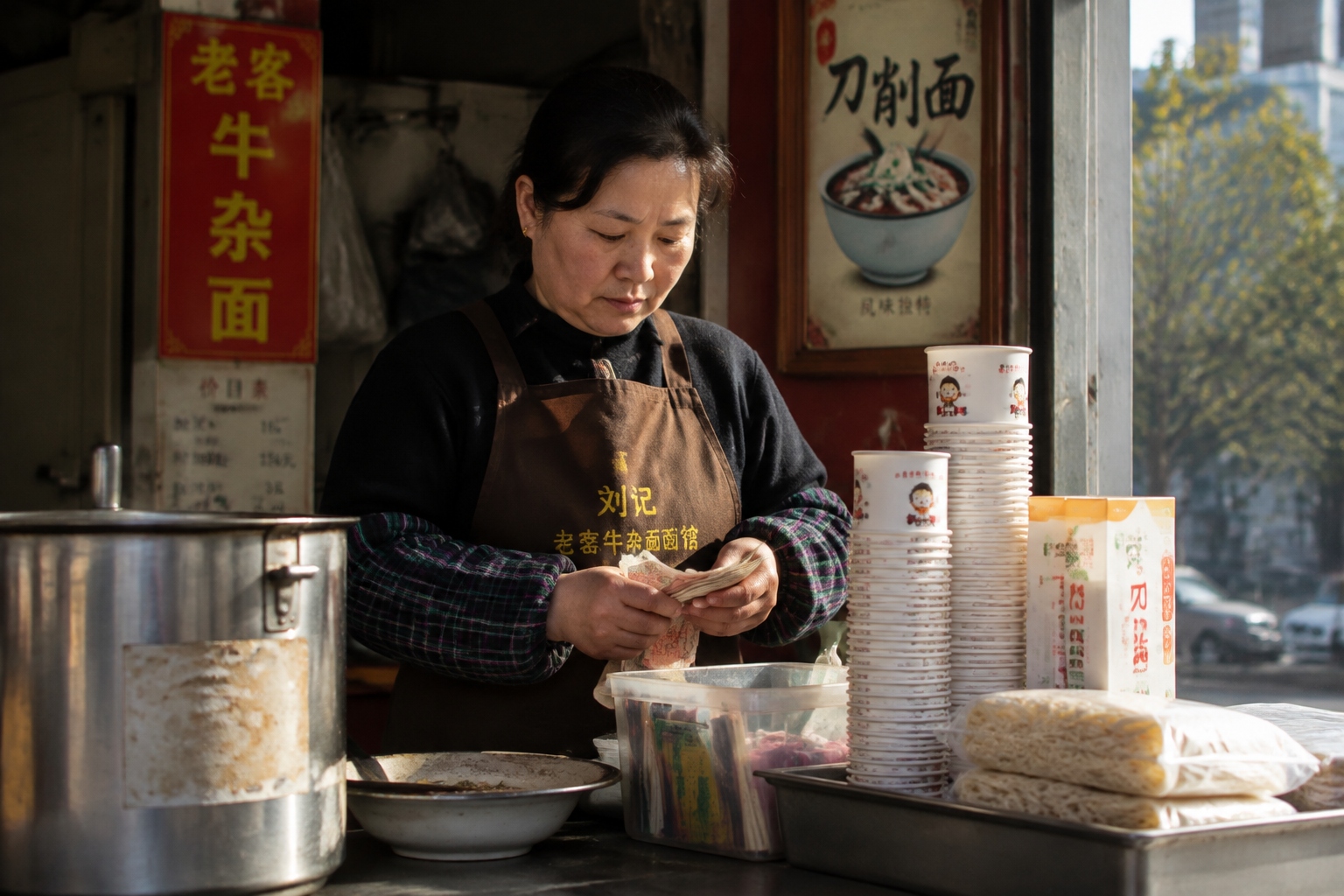
On the cost side, there’s wheat flour from Henan, sesame paste from Hubei’s neighbors, plus oil, soy sauce, pickled mustard greens, and scallions. Then come gas, electricity, water — and rent. A small stall in a decent location can cost 5,000–15,000 yuan per month, depending on foot traffic. The stallholder is usually a couple waking up at 3 a.m. to receive ingredients, boil water, mix the sauce, and stack bowls.
If they’re good and customers queue, daily revenue might hit 1,000–2,000 yuan. Subtract ingredients (about 40%) and rent and utilities (15–20%), and the leftover is labor income — maybe 3,000–8,000 yuan per person per month. Not a fortune, but enough to pay school fees, buy vegetables, and save a little. This is the fluid, invisible backbone of China’s small but lively street economy — the part you don’t see in official statistics.
The Bowl That Keeps the City on Time
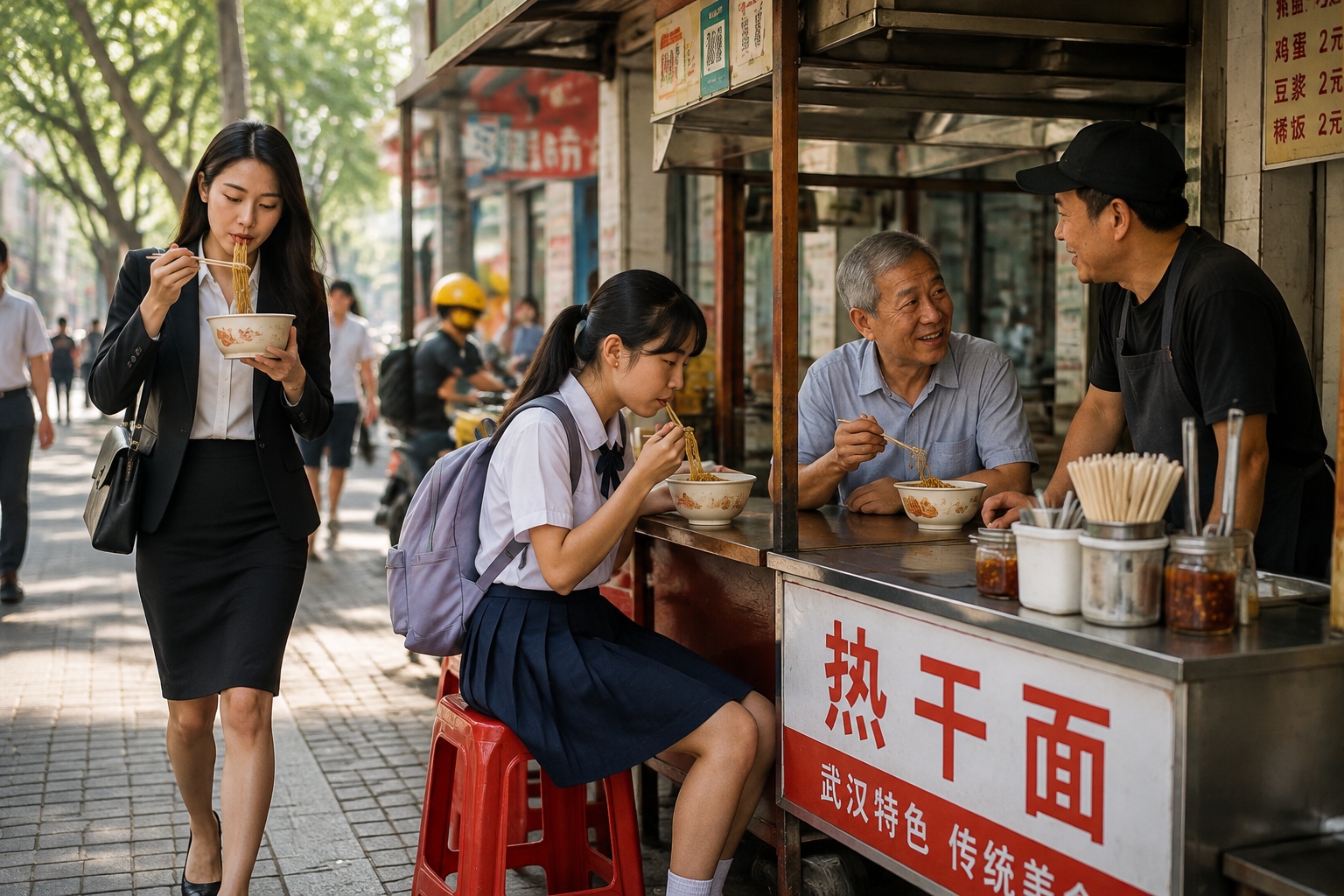
Ask any Wuhaner what they had for breakfast today, and you’ll probably get the same two words: re gan mian. Breakfast is a synchronised performance. At 7 a.m., an office worker in a crumpled shirt nods to the vendor and says, small bowl, extra pickles. She eats while walking, balancing the paper bowl in one hand and checking her phone with the other. A middle-school student sits on a red plastic stool, hunched over the bowl like it’s a final exam. A retired grandfather takes his time, sipping soy milk and chatting with the vendor about the price of cabbage.
All three need different things: speed, fuel, and a socially acceptable place to start the day. Hot dry noodles deliver all three. They’re cheap enough for a student, fast enough for an office worker, and delicious enough to lure a senior out of bed even when he has nowhere to be.
The ‘Involution’ of the Hot Dry Noodle
China even has a word for exhausting competition: neijuan — sometimes translated as involution. The hot dry noodle business is no exception. For decades, the only path to success was better noodles and a loyal queue. Now the game has changed: traditional chains like Cai Lin Ji compete with thousands of street stalls. There are also franchise restaurants with standardised recipes, bright logos, and delivery options — plus instant hot dry noodles in convenience stores. Delivery platforms like Meituan and Eleme have rewritten breakfast habits. You can now order re gan mian to your office, but the noodle doesn’t like it. It gets soggy; sesame paste clumps. The clever shops adapted with sauce-separate packaging, letting you mix everything at your desk. It’s not the same as a steamy stall, but it’s good enough for the smartphone generation.
The real story is how a tiny culinary industry adapts to a changing China: higher rents, tighter food-safety rules, and a younger generation that doesn’t want to sit on a plastic stool. Old-school stalls still offer the purest experience, but they now compete with influencer videos on Xiaohongshu and Douyin, loyalty apps, and carefully staged marketing campaigns. The result is a wonderful mess of old and new.
What Hot Dry Noodles Say About Wuhan
Skip the noodle and you might miss the Wuhan psyche: direct, pragmatic, and unapologetically loud. Hot dry noodles have no broth. They don’t pretend to be something they’re not. They hit you in the face with sesame paste and chili oil, tell you to get on with your day, and never ask for a second date. Compare that to the elegant, leisurely breakfasts of Guangzhou or the elaborate noodle soups of Sichuan. Wuhan’s noodle is the city’s inner voice: it knows you’re in a hurry, but it wants you to taste something real before you go to work.
There’s a running joke in Wuhan: never talk to anyone before their first bowl of hot dry noodles. It’s like caffeine, but oilier. It wakes you up faster than a double espresso — and it doesn’t pretend to be healthy.
Yes, health-conscious foodies complain about the oil. Yes, there are crazy fusion versions — hot dry noodles with cheese, crayfish, even avocado (please don’t). But no matter what you pile on top, the base stays stubbornly itself: thick, chewy, and coated in sesame, saying, This is Wuhan. Deal with it.
Conclusion: More Than Just Breakfast
So what did you just eat? A bowl of hot dry noodles is a time machine, a ledger, a social connector, and a personality test all rolled into one. It might not be the most Instagrammable food in China, and it won’t win a culinary award. But it is the heartbeat of an 11-million-person city that wakes at 6 a.m. to work, eat, and get things done. If you want to understand modern China outside the skyscrapers and malls, start with a plastic stool, a paper bowl, and a noodle that costs less than a dollar but carries the weight of an entire urban economy.
Excuse me, I’m hungry.
Start the discussion at forum.chinacomes.com