
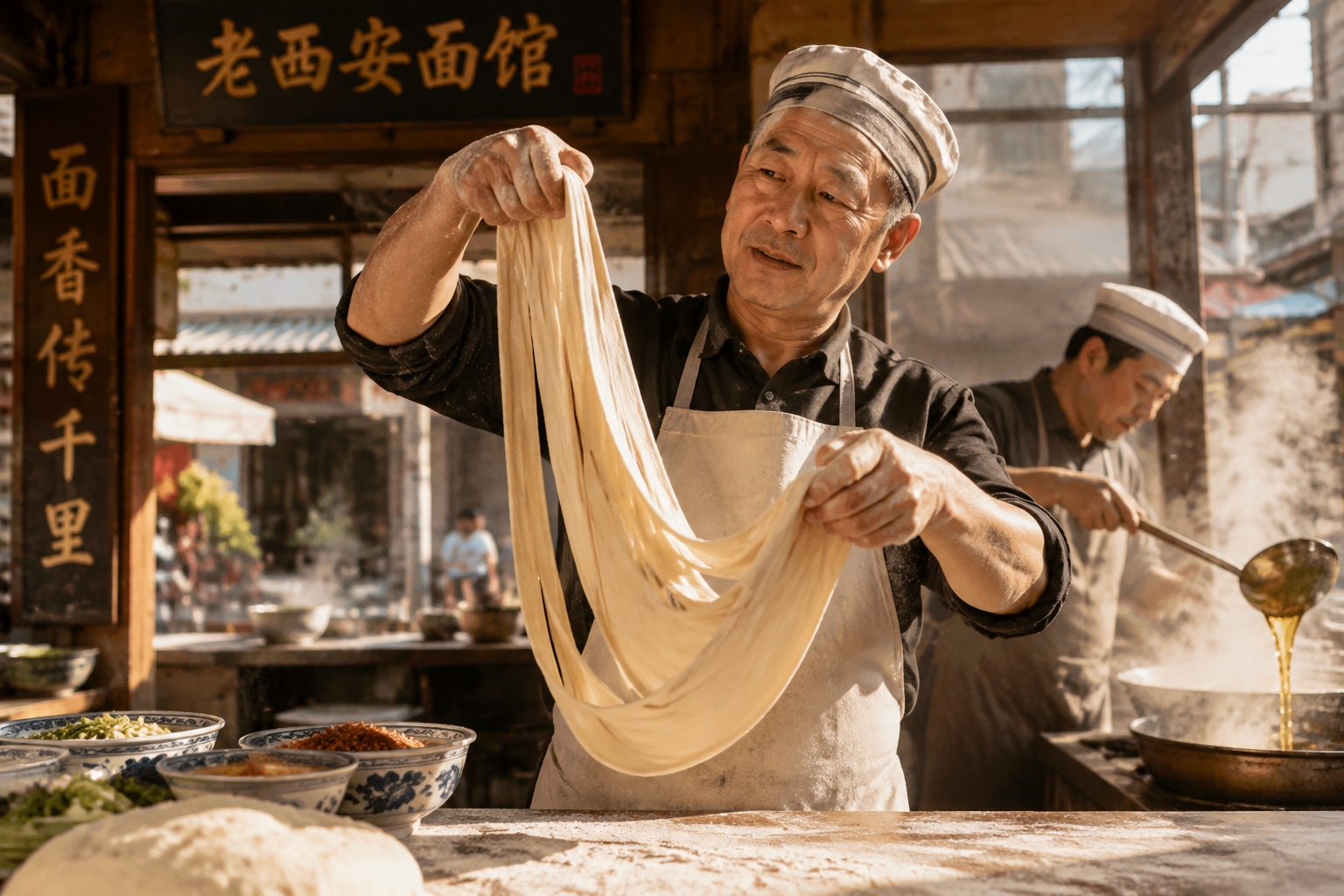

Morning in a Noodle Kitchen
At 5 a.m. in an old neighborhood in Xi’an, the kitchen of “Qin Wei Noodle House” is already awake. The only sound is the slap of dough hitting the counter – pull, fold, slap again. By 6:15, the first bowl of oil-splashed noodles goes out. The wide, belt-like noodles sit under a spoonful of chili flakes, and a ladle of sizzling rapeseed oil is poured over. It hisses, bubbles, and suddenly the whole room smells like roasted chilies and toasted wheat.
That bowl costs about 10 yuan (under $1.50). It fills a grown adult for half a day. And in Shaanxi province, this one humble dish is the backbone of a surprisingly large economy.
Why Shaanxi? Why Noodles so Wide?
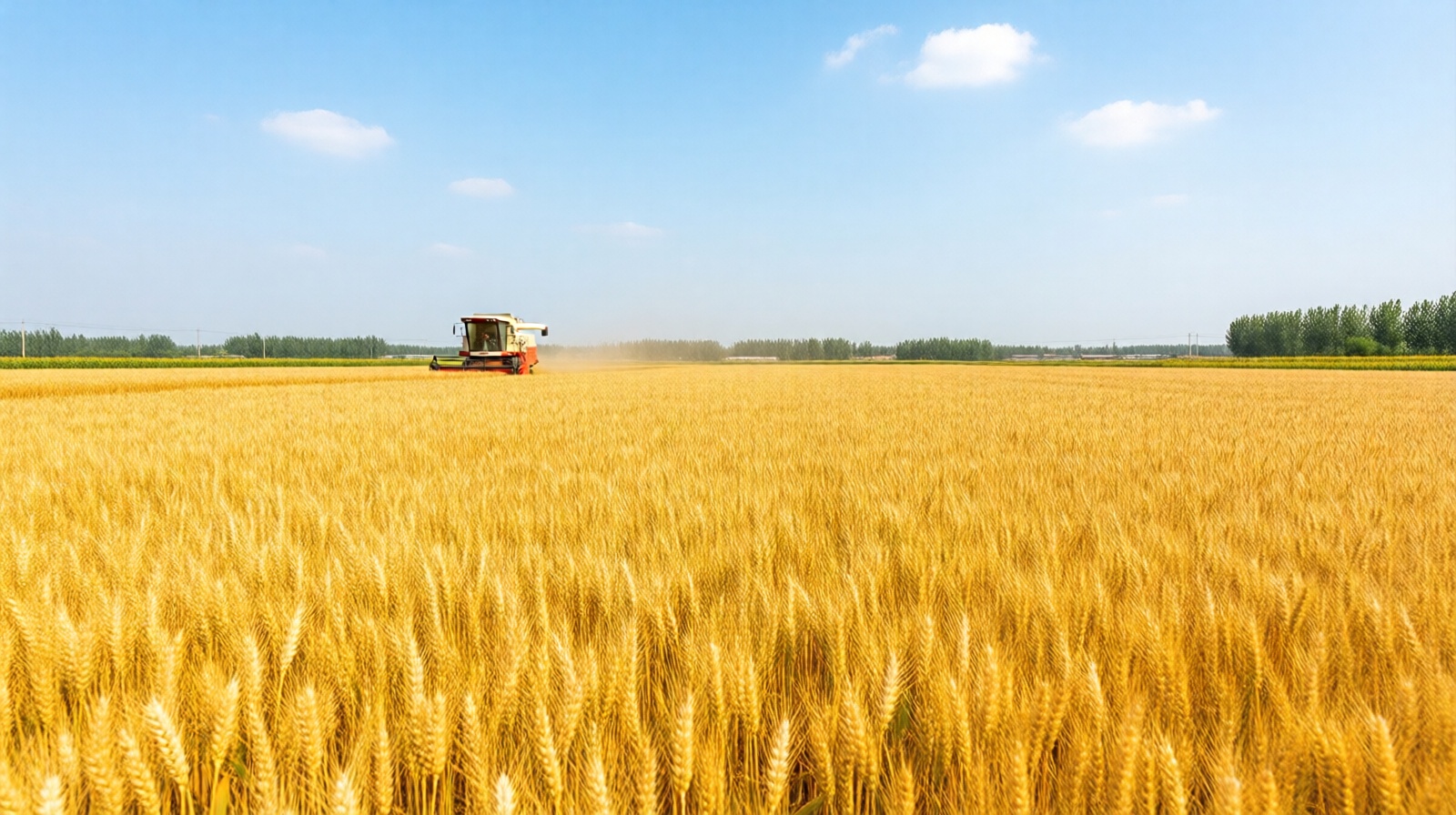
Shaanxi sits in the middle of China, and its central part – the Guanzhong Plain – is a natural wheat basket. For centuries, people here grew wheat and turned it into a daily staple. The climate is dry, which makes wheat a reliable crop and gives the grains a firm, nutty flavor. Over time, local cooks developed noodle styles that matched the land: thick, chewy, and filling.
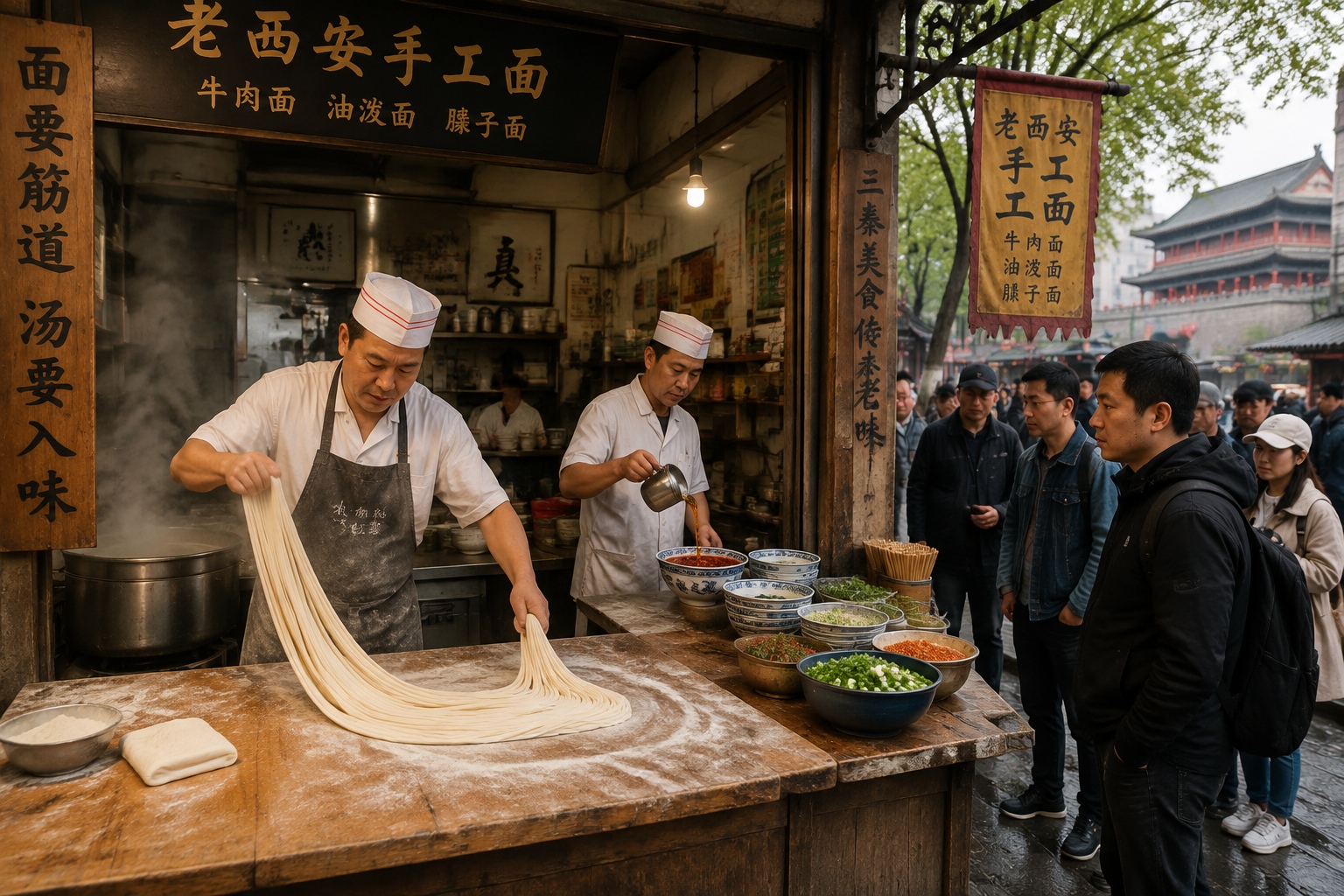
The most famous version is called biangbiang noodles, named after the sound dough makes when it is slapped against a table. The noodles are so wide that locals call them “belt noodles” (裤带面). The classic way to eat them is oil-splashed: boiled noodles, a handful of chili flakes, a pinch of salt and garlic, then hot oil poured over everything. The oil fries the spices and creates a fragrant, smoky layer that coats every strand.
It is not a fancy food. It is daily food. But because it is so central, it creates work at every step of the chain.
From Wheat Fields to Noodle Shops: The Economics of One Bowl
Let’s trace a single bowl. First, the wheat. Guanzhong’s farmers harvest millions of tons of wheat each year. Much of it goes to local mills, which supply flour to noodle shops and factories. In central Shaanxi, a measurable share of rural households still depend on wheat farming, even as many younger people move to cities.
Then comes the noodle production. Xi’an alone has tens of thousands of small noodle restaurants. Each one employs a few cooks, a server or two, and often a person who just makes the dough. Around them sit vegetable suppliers, chili growers, vinegar brewers, garlic sellers, and the makers of the heavy iron woks and spatulas. It is an interconnected web.
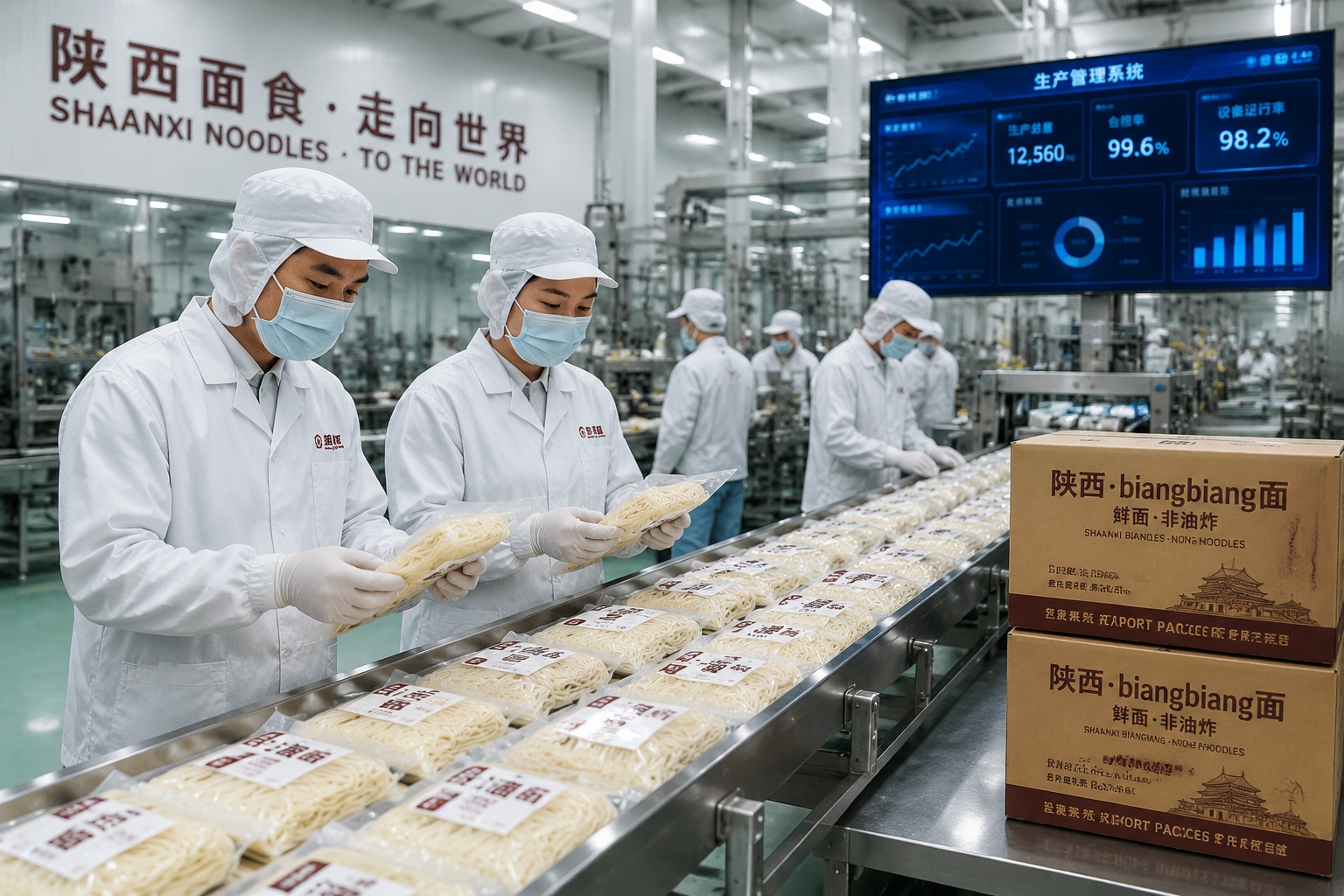
Out in the food-processing zones, factories turn biangbiang noodles into vacuum-packed fresh noodles, frozen pulled noodles, and even instant versions. Some now sell nationwide through e-commerce, and a growing share goes overseas to Chinese grocery stores and online shoppers in North America and Europe.
Delivery platforms add another layer. On a busy lunch hour in Xi’an, thousands of riders wait outside noodle shops, picking up plastic-bagged bowls. In 2023, food delivery orders in Xi’an included millions of servings of noodles per month, with oil-splashed noodles among the top three categories. If you add up the people involved – wheat farmers, mill workers, noodle makers, cooks, servers, riders, food scientists, and package designers – “feeding millions” stops sounding like an exaggeration.
Fast and Faster: How Noodles Adapted to Modern Life
Forty years ago, a noodle shop only served its own neighborhood. Today, the same recipe can travel across time zones. Young people in Shanghai or New York can buy a packet of “ready-to-cook” biangbiang noodles, boil it for four minutes, pour over the included sauce and chili oil, and get a surprisingly close approximation.
There are also new brick-and-mortar chains that standardize the process. They use machines to flatten and cut the dough, but still pour hot oil at the table. This hybrid approach lowers costs while keeping the drama and the smell that customers love.
On Chinese social media, videos of noodle chefs skillfully pulling dough and splashing oil have millions of likes. Short clips with slogans like “China’s noodle province” often trend, drawing foodies to Xi’an. The provincial government has also promoted “Shaanxi noodle” as a cultural brand, sending chefs to food expos and training programs overseas.
But the older generation still prefers the original way. “A machine can’t feel the dough,” says Mr. Li, who has been making noodles for over 30 years. “The humidity changes every day. You need to adjust with your hands.” That belief is why, in any old neighborhood of Xi’an, you will still find tiny shops where a master pulls each bowl by hand, eight seconds from dough to noodle.
What a Bowl of Noodles Means to Outsiders
For a traveler, the bowl is a memory. The first bite is a mix of textures: chewy, sticky, a little rough on the tongue, then the chilies wake you up. Tourists often say it is the most “hearty” food they have in China. It feels rustic and honest, like a meal that has been made the same way for a thousand years.
For locals, it is more personal. A bowl of noodles can taste like home, like a parent’s cooking, like the meal you eat before leaving for college or after coming back from a long trip. It is affordable, which means almost everyone can afford to eat it several times a week. It is also a social equalizer – a CEO and a construction worker might sit at the same long table, slurping the same noodles.
When asked why Shaanxi is called a “noodle province,” most locals point to one thing: the noodles are not a specialty dish, they are the default. You eat noodles for breakfast, lunch, and dinner. You invite friends for noodles when you are happy, and you eat noodles alone when you are sad. The province lives on wheat, and the wheat lives on.
Still Splashing at Seven O’Clock
By 7 p.m., the evening rush at “Qin Wei Noodle House” is over. The big pot of water is still boiling. Mr. Li wipes down the counter and throws a handful of noodles into the pot for himself. He adds chili, garlic, and a splash of hot oil. He does not look tired. He has done this thousands of times.
Outside the window, delivery riders zip through the streets, carrying the same unmistakable smell. In a warehouse on the edge of town, workers seal plastic bags marked “Biangbiang Noodles, Direct from Shaanxi.” And in a village two hours away, a farmer checks his wheat field under the fading sun.
It is easy to think of food as just food. But in this province, that simple bowl of noodles is the thread that ties an economy, a culture, and millions of lives together. The next time you see hot oil splash over chili flakes – whether in Xi’an or on your screen – you will know the story behind it.
Start the discussion at forum.chinacomes.com