
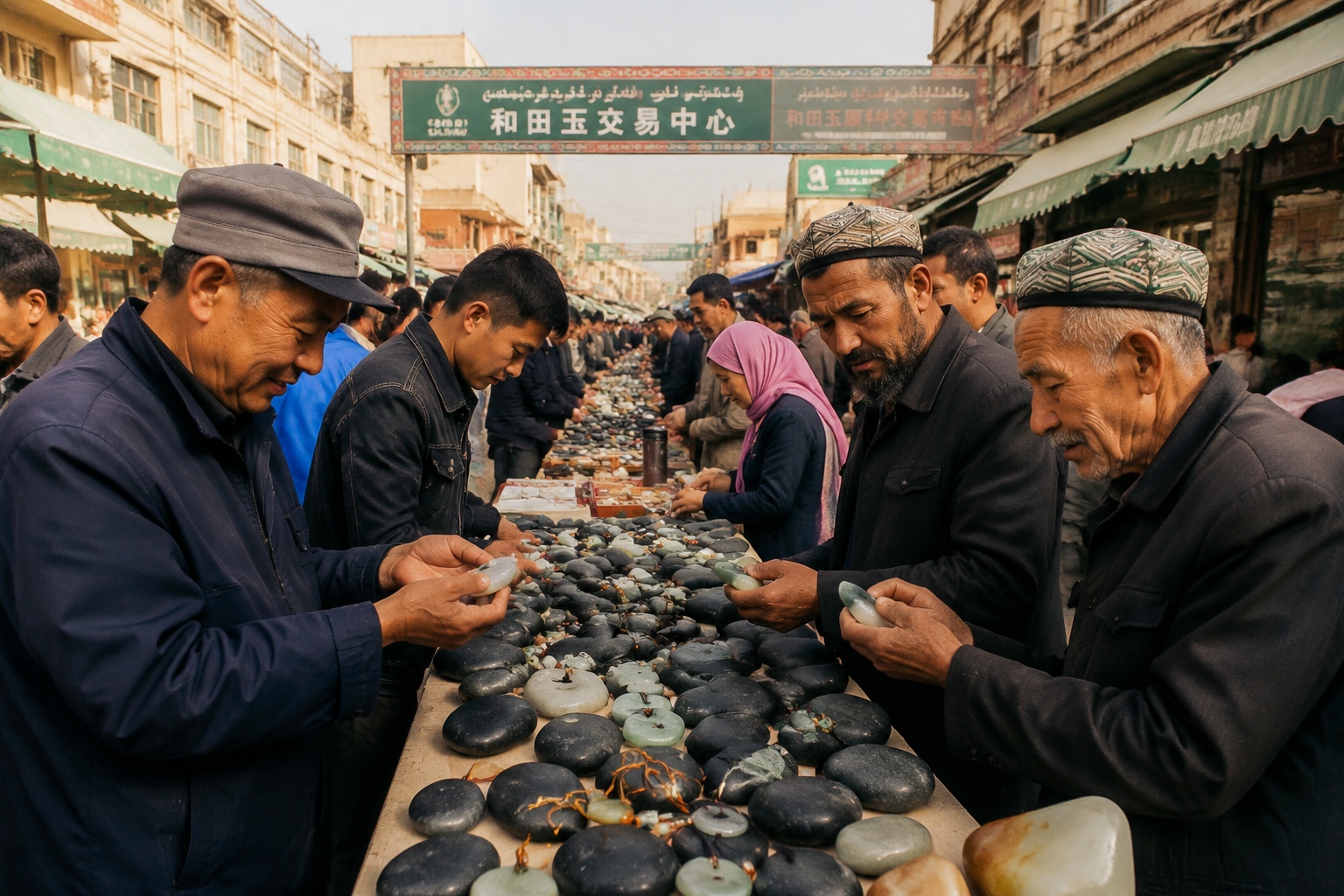

If you wander into a jade market in Hotan, Xinjiang, the first thing that hits you isn’t the price tags. It’s the buckets. Plastic basins of dark river stones, some as small as eggs, others the size of basketballs, sitting on folding tables under bare bulbs. A vendor picks one out, wets it with water, and holds it to the light. “Ten thousand yuan,” he says, with the casual ease of someone ordering tea. You blink. You’ve just entered Hetian jade’s world—a place where a stone can cost as much as a car, and where the same stone might be worth a hundredth of that price by next week.
What makes Hetian jade so special?
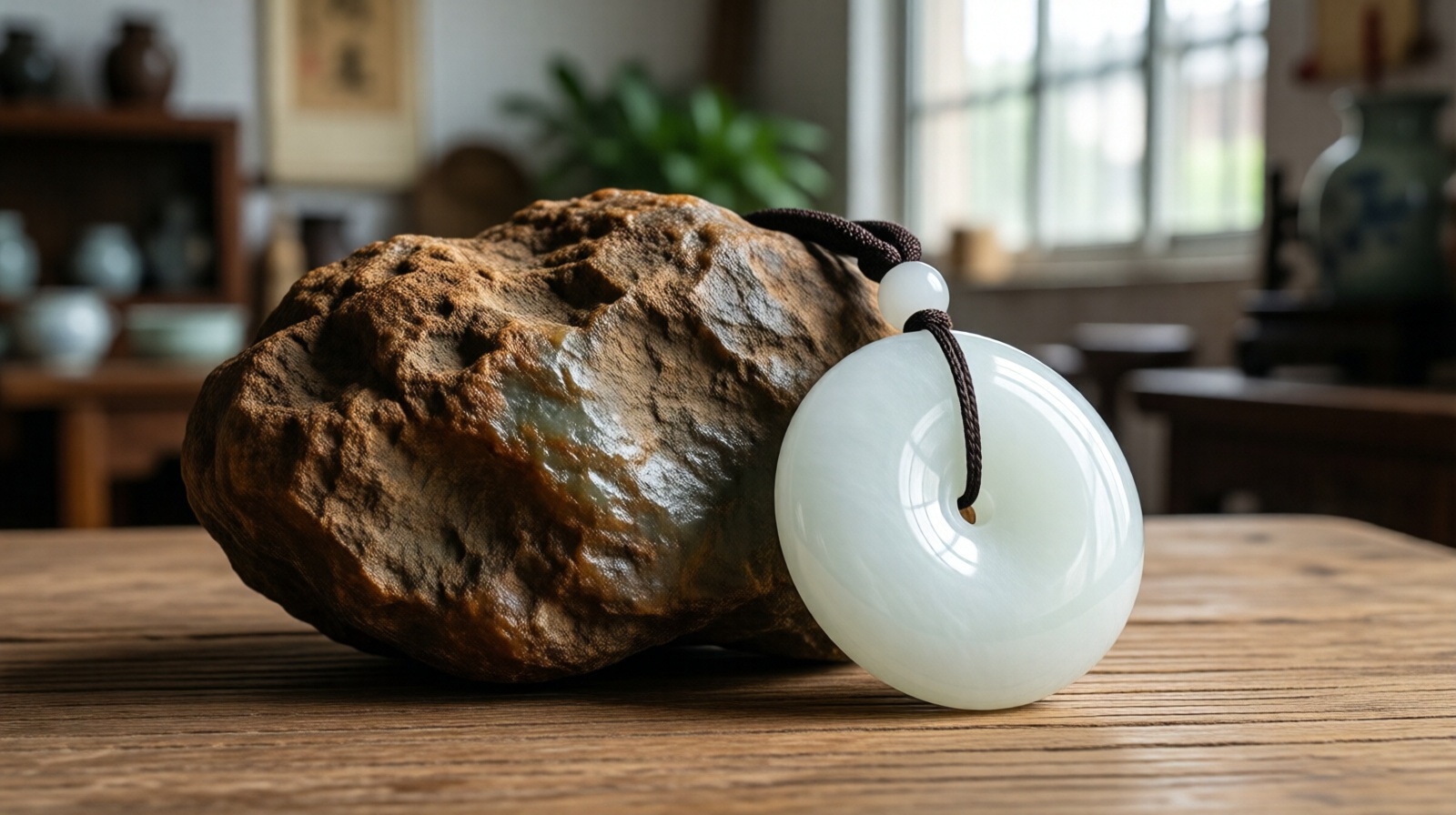
Hetian jade is not the translucent green jadeite you may have seen in Burmese jewelry stores. It’s nephrite, a calcium magnesium silicate that comes in shades of white, green, gray, yellow, and brown. The most famous type, white jade, is prized for a texture that Chinese collectors describe as “mutton fat”—soft, waxy, and smooth, like a piece of buttered happiness.
This stone has been a Chinese obsession for millennia. Emperors carved it into seals, belts, and funeral suits. Poets wrote about its warmth. Confucian philosophers saw in it a metaphor for moral character: straight yet pliant, shiny but not sharp. Today, Hetian jade is still one of the most recognized names in Chinese culture, and it carries a price tag to match.
Where does jade come from? Rivers and mountains, literally
Historically, the best Hetian jade came from rivers in the Kunlun mountain range. The Yurungkash River—the name literally means “White Jade River” in Uyghur—and its neighbor, the Karakash, have been turned over by prospectors for centuries. In the summer, after flood waters recede, divers and families wade into the cold currents, feeling for stones with a smoothness that might hide a treasure. These river stones, called “seed jade” (ziliao), are rounded and polished over thousands of years, and many collectors consider them superior to freshly quarried mountain material because water has already “matured” their structure.
Mountain jade, on the other hand, is blasted or cut from open quarries, often at high altitudes. It can be huge—truck-sized blocks that factories slice into slabs for bracelets, pendants, and tabletop decorations. But seed jade is smaller, rarer, and, for the jeweler, a bit like a lottery ticket with a geological twist.
The million-dollar gamble: “du shi” (betting on stone)
A large part of Hetian jade’s allure is the uncertainty written into its raw form. Most stones are covered by an unremarkable dark brown “skin,” a natural oxide layer that hides the interior. Instead of cutting a stone open and risking a giant disappointment, buyers sometimes trade whole raw stones without knowing what’s inside. That’s “du shi”—literally “gambling on stone.”
“I bought this one for 3,000 yuan,” a dealer told me, holding a small rough stone with a window cut into it. “We opened it halfway, saw white inside. Now it’s worth 300,000.” The word “we” leaned heavily on luck. For every story like that, there are probably twenty people who paid too much and opened a rock full of cracks and brown spots.
The math of the jade business is extreme. A top-grade piece of white Hetian jade the size of a walnut can sell for six figures at auction or in a well-known shop. But the same market has no central pricing: the value depends on the stone’s color, texture, size, and how deeply the seller wants to believe in it. That’s why bargaining in Hotan’s jade markets feels less like buying a product and more like negotiating a peace treaty.
From rough stone to polished luxury
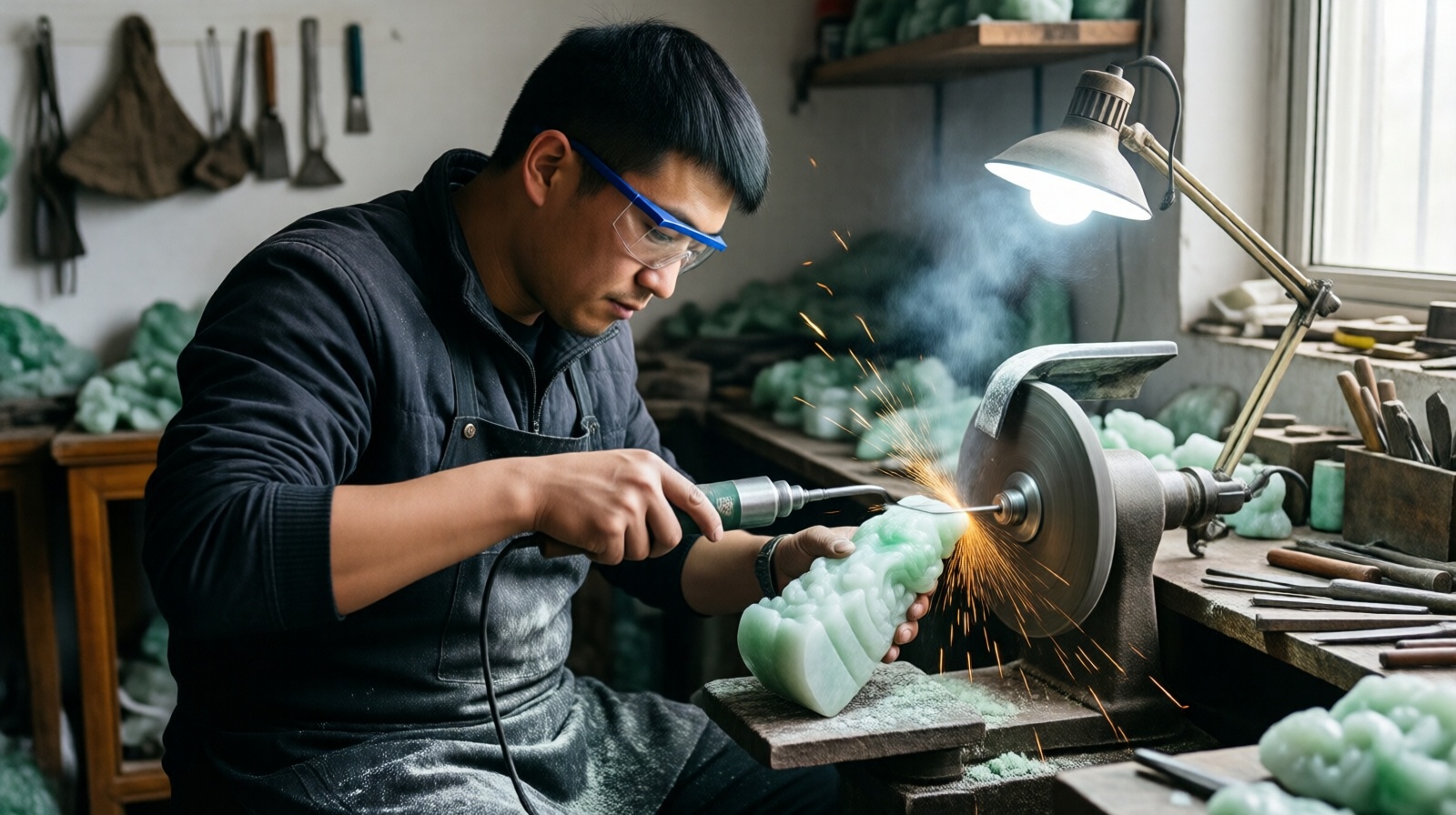
Once the stone is opened, it becomes a canvas for craftspeople. Jade carving is not fast or easy. A skilled carver uses a rotating diamond-tipped tool, dripping water to cool the friction, to grind away the outer layer and shape the surface. The carving might be a classic Chinese vase, a pair of koi fish, or a cabbage—the word “cabbage” (cai) sounds like “wealth” in Chinese, so a jade cabbage is a popular gift for business partners.
Each masterpiece takes weeks or months. And the business model isn’t only about the stone itself. The same rough material can be sliced into bracelets, cords, pendants, or simple plain surface pieces known in the trade as “plain faces” (su mian). A bracelet made from a single piece of white jade, without any carving, is often the most expensive of all, because it shows off the stone’s pristine quality.
Phones, live-streams, and a market that never stops
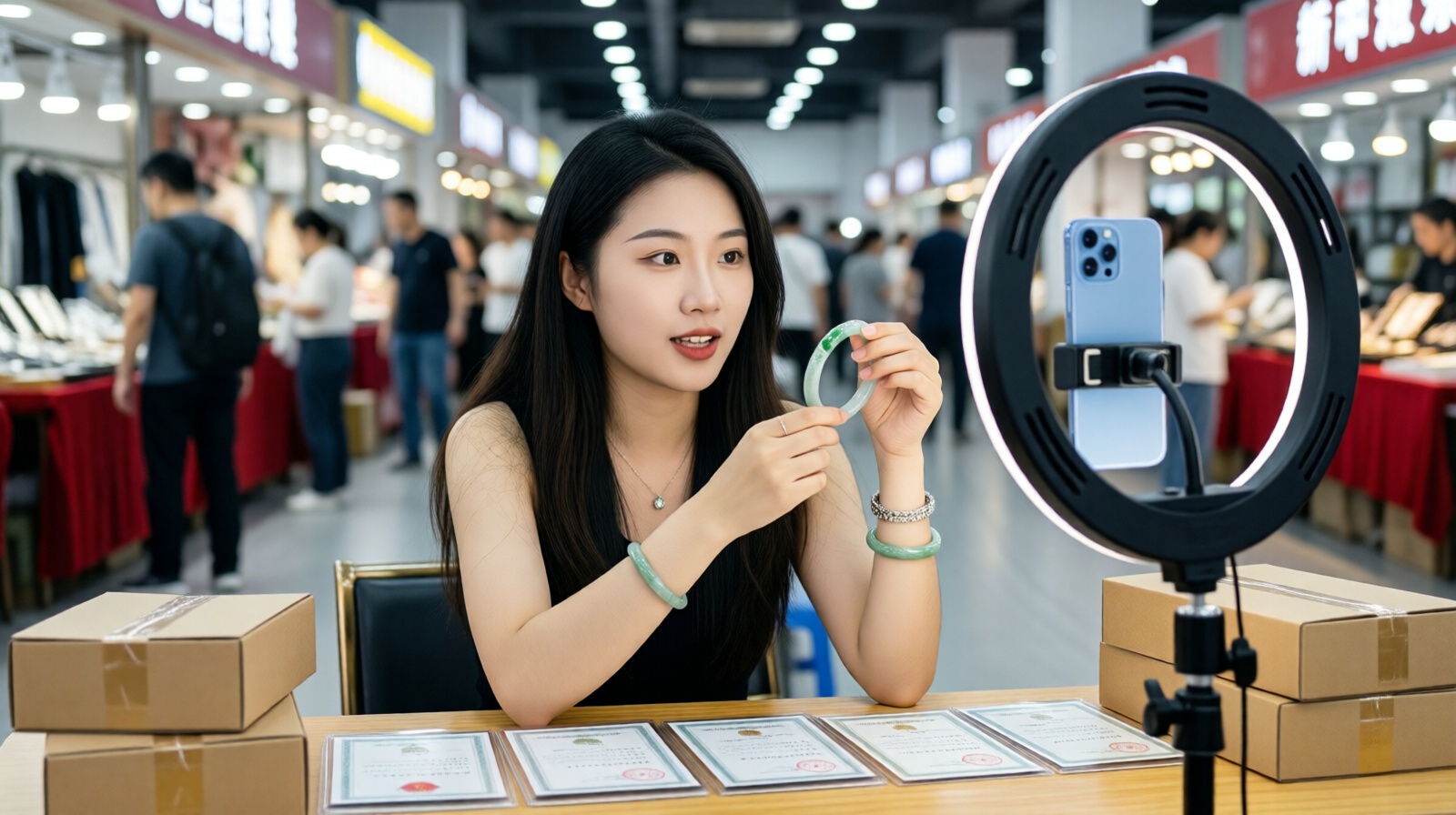
If you think this sounds like a market that belongs in a museum, think again. Much of the modern Hetian jade business happens on smartphones. On Chinese social media and e-commerce apps, live-streaming sellers hold up polished bracelets and pendants under powerful ring lights, turning the socket gently so viewers can check the “water head” (a slang for transparency and glow).
A seller with 50,000 followers might sell out a small batch in an afternoon. The buyers are often far away—factory owners in Guangdong, office workers in Shanghai, grandmothers in Chengdu who collect jade for their granddaughters. The jade travels in a bubble-wrapped box with a certificate from a gem-testing laboratory, but the trust travels through a screen.
Not everything is lovely. Synthetic imitations, dyed quartz, and stones from other provinces sold as “Hetian jade” are common pitfalls. Visitors who want a safe purchase should ask for an official certificate from a recognized lab like the National Gemstone Testing Center (NGTC), and avoid “bargain” items that look too shiny. As one old dealer said to me, “Jade doesn’t shine loudly. It whispers. If it shouts, it’s probably fake.”
A small souvenir, a large story
Hotan’s jade market is a strange but beautiful place: full of weathered hands holding stones, glasses of tea, and a universal human poker face. The million-dollar jade story isn’t really about rocks. It’s about risk, craft, luck, and trust—ingredients that turn a stone into an object of desire.
If you ever get the chance, buy a small jade piece. Not because it will guarantee wealth, but because it will remind you that value is never just a price tag.
Start the discussion at forum.chinacomes.com