

The Phone in Your Pocket Has a Gansu Connection
Take out your smartphone. The vibrant screen, the crisp vibrations, the compact camera lens – all of it depends on a group of obscure metallic elements called rare earths. And a surprising share of those elements passes through an industrial city in northwest China called Baiyin, in Gansu province.
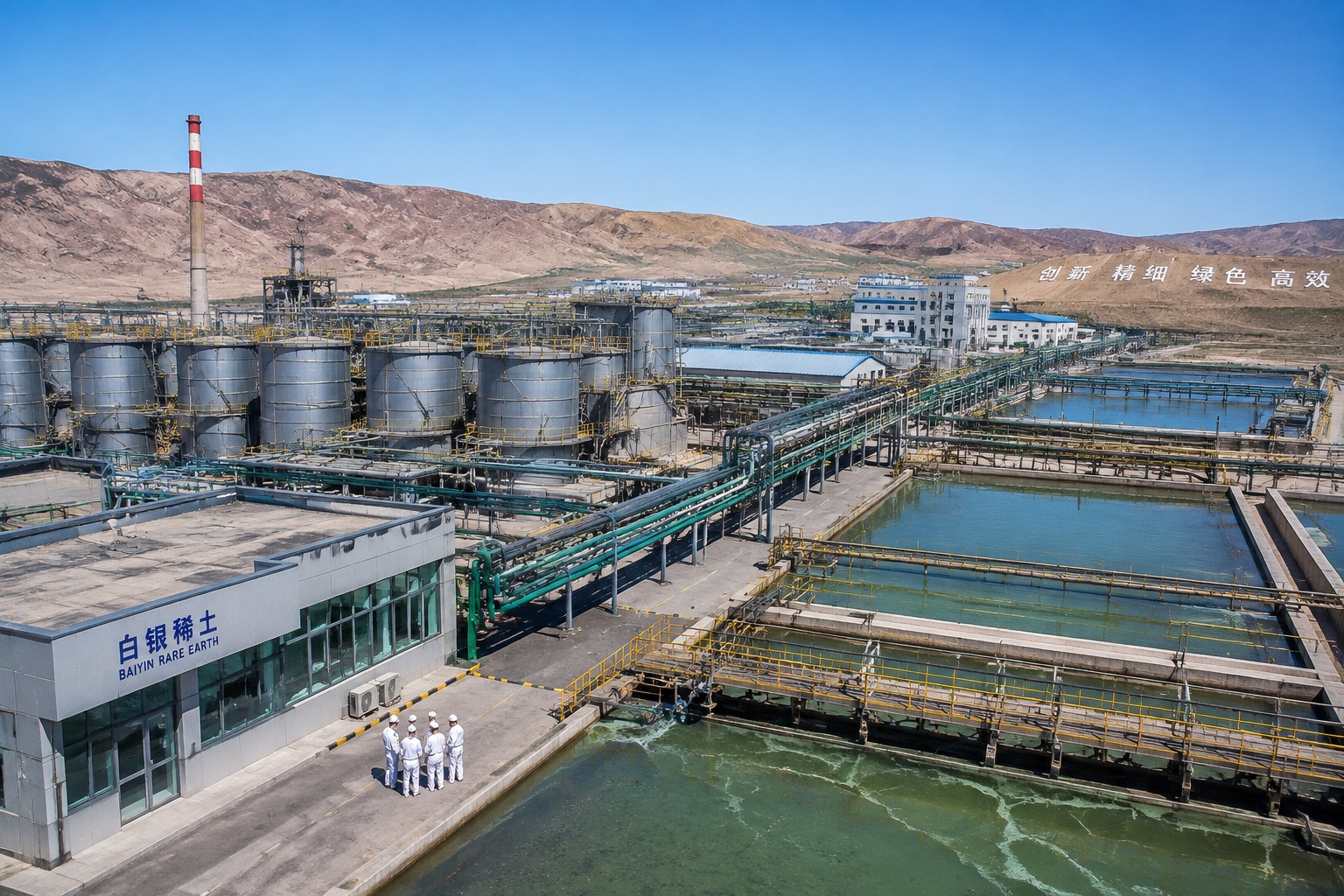
Baiyin is not a name you hear often in global tech discussions. It’s dusty, mountainous, and historically known for mining copper. But inside its factories, a quiet transformation has turned it into one of the most important links in the global rare earth supply chain.
What Exactly Are Rare Earths?
Rare earths are a set of 17 chemical elements on the periodic table – from lanthanum to lutetium. Despite the name, they are not particularly rare in the earth’s crust. Cerium, for example, is more abundant than copper. What makes them ‘rare’ is the difficult process of separating them from one another, because they often occur together in complex ores.
That separation is where the real value lies. A magnet made from neodymium and dysprosium can hold enormous magnetic force in a small size – essential for electric vehicle motors, wind turbines, and the vibration motors in your phone. Phosphors using yttrium and europium create the bright colors on your display. And lanthanum is used in camera lenses and rechargeable batteries.
Why Gansu?
China controls roughly 60% of global rare earth mining and, more crucially, about 90% of refining. That refining capacity is scattered across several provinces, and Gansu is a dedicated player. The Gansu Rare Earth Group, headquartered in Baiyin, operates one of the country’s largest rare earth smelting and separation facilities.
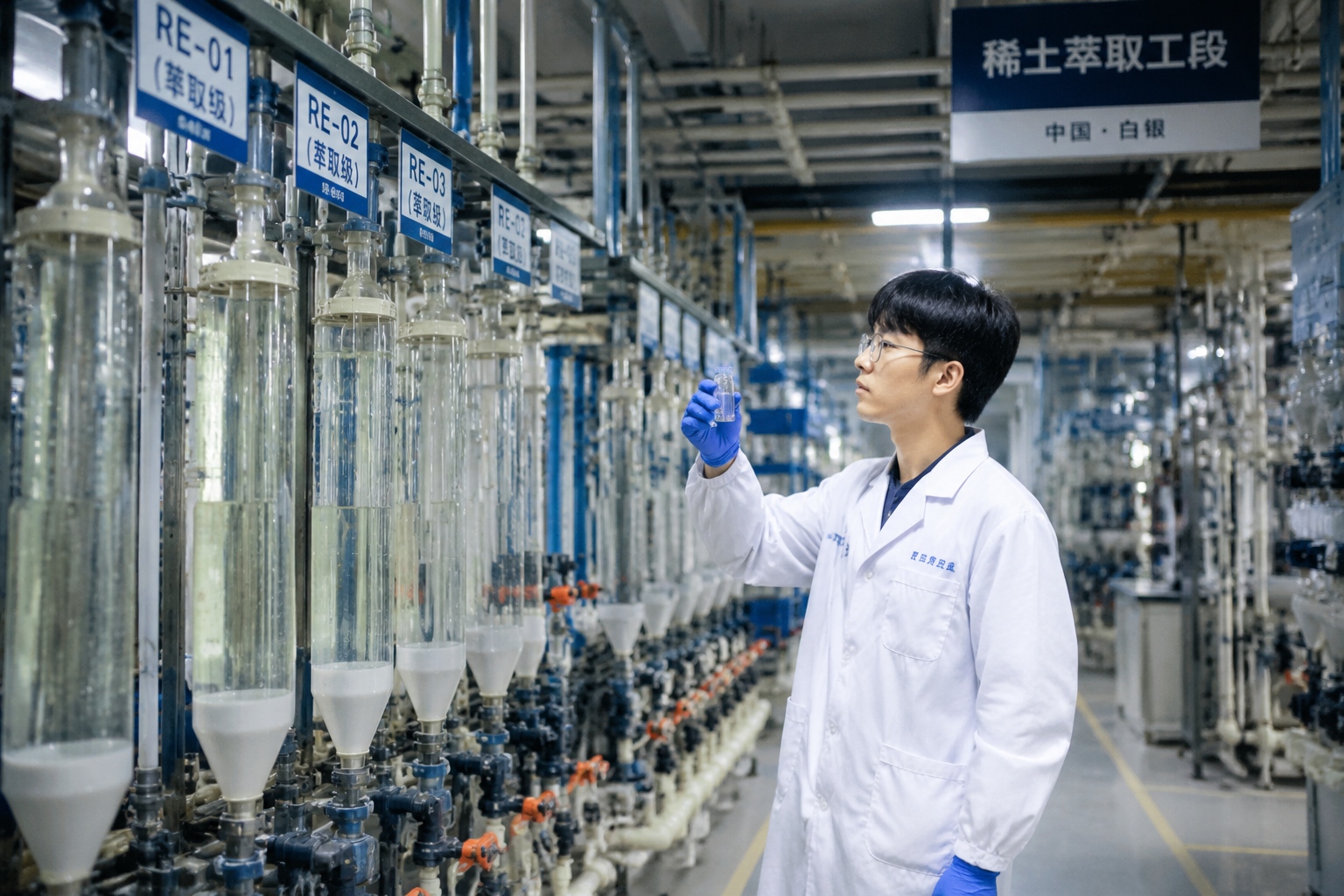
The company processes thousands of tons of rare earth concentrate each year, turning it into high-purity oxides and metals. It’s also a major supplier for magnets, polishing powders, and catalytic materials. The plant itself is a maze of pipes, tanks, and glowing furnaces, where workers in white coveralls monitor extraction columns that separate elements drop by drop.
A Supply Chain That Reaches Into Your Home
Rare earth products from Baiyin don’t carry a ‘Made in Gansu’ label, but they end up inside things you own. The neodymium magnet in your wireless earbuds? It may have been refined from ore processed with equipment manufactured in Gansu. The polish that gives your phone screen its smooth glass? Cerium oxide from rare earth processing is used in almost all glass polishing.
One of Gansu’s strengths is energy. The province is rich in solar and wind power, and it also has a long history of hydroelectric generation on the Yellow River. That matters, because rare earth separation is energy-intensive. Power access helps keep production stable.
The Green Tech Connection
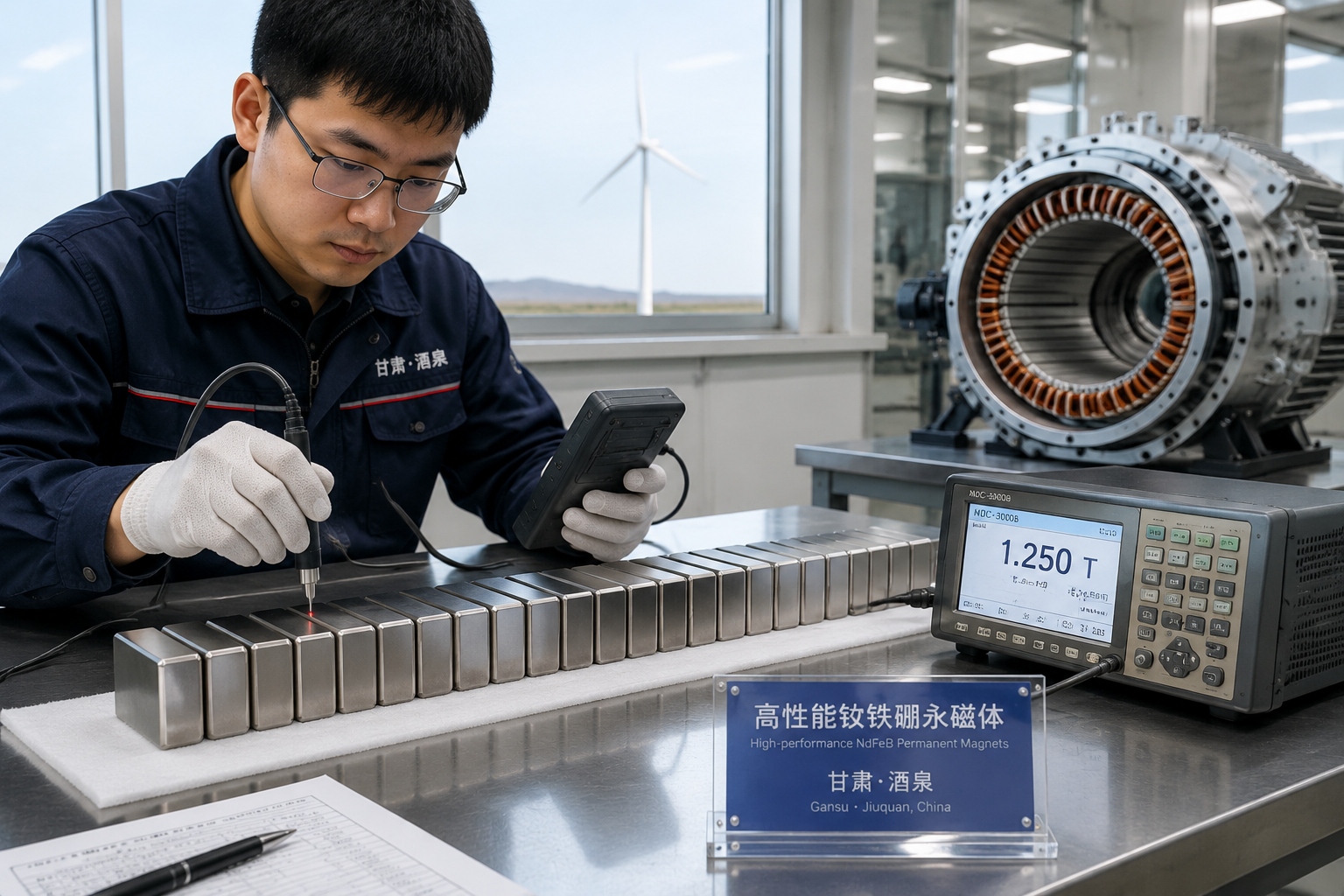
If you drive an electric car or live in a country powered by wind energy, Gansu is quietly part of your everyday life. Every electric vehicle motor uses a permanent magnet that typically contains neodymium and dysprosium. Those magnets are stronger and lighter than older designs, which translates into longer range and better performance.
Wind turbines are even more demanding. A single 3-megawatt turbine can contain about 600 kilograms of rare earth magnets. As the world pushes for renewable energy, demand for these elements is expected to triple by 2030, according to the International Energy Agency. That means the refining centers like Gansu are becoming more strategic, not less.
Defense and Aerospace
Rare earths are also crucial for defense technology. Jet engines, guidance systems, laser rangefinders, and stealth aircraft all rely on rare earth alloys. The US Department of Defense has called rare earths ‘critical minerals’ and is working to build a non-Chinese supply chain, but the process is slow. In the meantime, Gansu remains a key node in the existing network.
Challenges and the Road Ahead
The rapid growth of the rare earth industry has not been without problems. Decades of rushed production left behind polluted soil and groundwater in some areas. The Chinese government has since tightened environmental rules, and many plants, including those in Gansu, have invested in wastewater treatment and solvent recycling.
Another challenge is the resource itself. Gansu does not have a huge amount of rare earth mines. The ore mostly comes from other provinces, like Inner Mongolia to the north. That makes Gansu dependent on supply chains within China. To address this, the province is pushing to move up the value chain by producing more magnet-grade alloys and polishing powders, which are higher-value products than raw oxides.
What’s Next for Gansu?
In a suburb of Baiyin, a new pilot line is producing high-end magnetic materials that could go into cryogenic motors for hydrogen-powered vehicles. Local officials say they want to attract more downstream manufacturers, especially magnet producers, to create a complete ecosystem from separated metals to finished magnets.
For a province long seen as a remote industrial frontier, this is a new identity. The world’s transition to clean energy and advanced electronics is making Gansu more relevant than ever. The next time you hold a strong magnet, remember it might have started its journey in a quiet factory on the edge of the Gobi Desert.
A Hidden Champion Worth Watching
The story of Gansu’s rare earth industry is a reminder that the most consequential supply chains are often invisible. It’s not a glamorous industry. But it underpins the devices we love and the clean energy we need. For international readers, it’s a window into how China’s industrial provinces are adapting to a changing global economy – and why they matter far more than they appear to.
Start the discussion at forum.chinacomes.com