
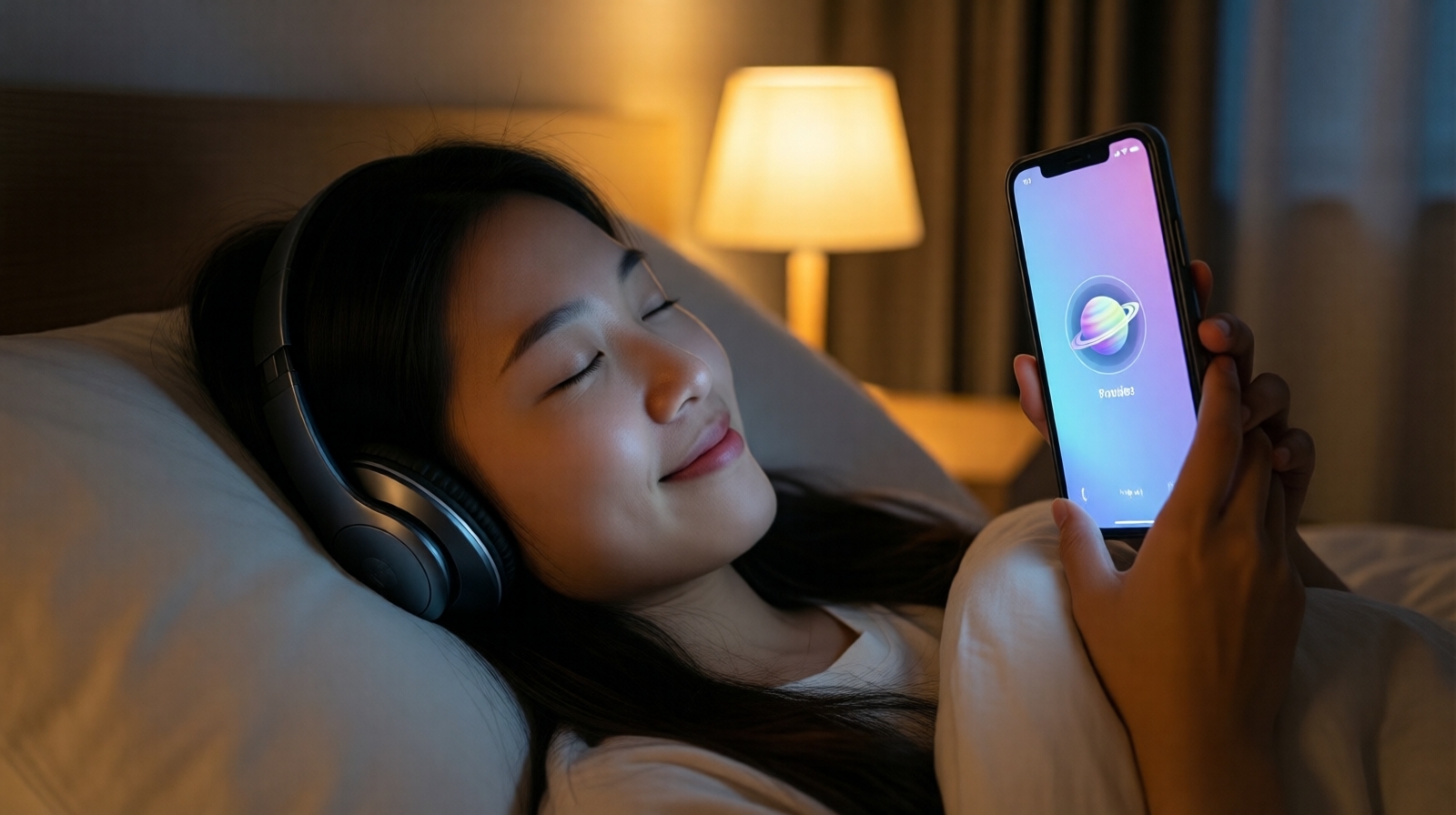

It’s 11 p.m. in Shanghai, and Chen Yue is not asleep.
She’s lying in bed, headphones on, eyes closed. On her phone screen, a soft gradient interface shows a spinning globe. She taps a button labeled “Voice Match.” Within seconds, a low, calm male voice fills her ears: “Hello? You sound like you’re smiling.” They talk for the next 45 minutes—about work, a childhood memory of fireflies, and whether AI can feel loneliness. They never exchange photos or real names. For Chen, a 24‑year‑old graphic designer, this is dating in 2025.

This is not a niche underground scene. Soul, the app she’s using, reports over 100 million registered users, with the majority under 30. TT Voice, another major player, boasts 80 million monthly active users. Together, they are pioneering a phenomenon that many are calling “voice romance”—a way of building intimate relationships through tone, silence, and breath, without the pressure of appearance or the distractions of video.
What Exactly Is Voice Romance?
Voice romance is exactly what it sounds like: forming romantic or deeply emotional connections through live voice conversations, primarily on dedicated social apps. Unlike traditional dating apps (Tinder, Bumble) that rely on photos and bios, or even video‑chat apps like Zoom, these platforms strip away the visual layer entirely. Users create avatars, often cute or abstract, and interact through real‑time voice chat rooms, one‑on‑one matches, or group “party” calls.
The key features: anonymity (you can choose a nickname and never reveal your face), voice‑first matching (the app pairs you based on voice tone, pitch, and even speaking speed), and gamified interactions (virtual gifts, voice‑based games, and “soul rating” systems). On Soul, the slogan is “Soulmate through voice.” On TT Voice, you can join “fishing” rooms where strangers take turns singing or telling stories, and listeners quietly judge or support with virtual roses.
Why Voice, Not Video or Text?
For many young Chinese, the answer is freedom. “On a photo‑based app, I’m constantly judged by my looks,” says Li Wei, a 22‑year‑old university student in Beijing. “But on Soul, no one knows what I look like. They can only hear my voice. I feel like I can be my true self.”
Voice also creates a unique intimacy. Studies in human communication show that the human voice carries emotional nuance that text cannot—trembling, laughter, pauses—and yet it’s less demanding than video, which requires full visual attention. For a generation that grew up on WeChat voice messages, talking into a phone feels natural. It’s also private: you can lie in bed, walk down the street, or sit in a coffee shop while talking, without anyone else knowing you’re on a “date.”
Moreover, the anonymity reduces the fear of rejection. If a voice match doesn’t click, you simply hang up and try again. The low stakes make it easier to open up emotionally.
A Typical Night on Soul
Let’s walk through a real scenario. Open Soul. The first screen shows a “Planet” of recommended users, represented by cartoon avatars. You can swipe to “visit” their planet. Instead of a profile, you see their “voice tag” – a short recording of them saying something (e.g., “I love rainy days”). If you like the sound, you can send a “voice message” or start a live call.
Many users join “voice rooms” – themed chat rooms where up to 8 people can speak. Common themes: “Midnight Storytelling,” “Anxiety Relief,” “Confession Wall.” In these rooms, people share their deepest feelings to strangers. I once joined a room called “The Last Song I Sent to My Ex” – within minutes, a girl was crying while singing a Jay Chou ballad. Others comforted her through their voices.
Then there’s the “Soul Game” – a voice‑based truth or dare where the AI creates questions based on your voice tone. It’s silly, but it breaks the ice.
From Virtual to Real: When Voice Romance Crosses Over
Not all voice connections stay in the digital world. Some users eventually exchange WeChat, share photos, and meet in person. But the transition is often slower and more cautious than traditional online dating. “I’ve been talking to a guy on Soul for three months,” says Chen Yue. “We know each other’s voice, breathing, and even the way we laugh when we’re tired. When we finally met for coffee, it felt like we already knew each other. But I also hear stories where the voice was amazing but the real person was disappointing – that’s why many people prefer to keep it voice only.”
TT Voice even has a “Voice Dating” feature where moderators host speed‑dating sessions. Participants can only speak, not see. If two people match, they are given a private voice room. The platform reports that over 20% of these matches lead to ongoing conversations, and some lead to real relationships.
The Social Impact: A Double‑Edged Voice
On one hand, voice romance is a remedy for loneliness. In a country where many young people face long work hours, intense academic pressure, and social anxiety, having a safe space to talk without judgment is valuable. Mental health professionals note that voice‑only interactions can reduce social anxiety and build communication skills.
On the other hand, critics worry about emotional dependency. “Some users spend hours every night talking to strangers, avoiding real‑world connections,” says Dr. Wang, a psychologist in Shenzhen. “The anonymity can also lead to catfishing, though the voice element makes it harder to fake identity than text.”
Additionally, the platforms are commercialized. Users buy virtual gifts (like “voice diamonds”) to send to favorite voices. Top voice artists can earn thousands of dollars a month. This creates a new economy of “voice influencers,” but also pressure to perform emotional labor.
How to Try Voice Romance Yourself (For Overseas Readers)
Curious to experience this? Here’s a quick guide:
- Download Soul (Soul App) – available on iOS and Android. The interface is in Chinese, but many features are intuitive. You can use a VPN if needed (though the app works in most countries).
- Create an anonymous avatar – choose a cute animal or abstract shape. No need to upload a photo.
- Start with “Voice Match” – tap the “Voice” button and wait for a random partner. The app will match you based on voice tone (it uses AI to analyze voice characteristics).
- Join a voice room – look for rooms with English titles or just listen. Many rooms are open to anyone.
- Send a voice message – you can record a short message to start a conversation.
TT Voice is more game‑oriented, with karaoke rooms and party games. Both apps require a Chinese phone number for full registration, but you can still browse as a guest. For a more authentic experience, consider using a Chinese friend’s number or a virtual SIM.
The Future of Intimacy in the Age of Voice
Voice romance is not just a fad. It reflects a deeper shift in how Chinese youth understand connection: less about surface, more about soul. While Western dating apps remain visually dominant, China’s voice‑first platforms are growing fast, and they are beginning to export their model to Southeast Asia and beyond.
As one Soul user put it, “When you close your eyes and listen, you realize that everyone’s voice is a fingerprint – unique and full of story. I fell in love with a voice before I ever saw the face.”
In a world increasingly mediated by screens, finding love through sound might be the most human thing we can do.
Start the discussion at forum.chinacomes.com